Episode 700
Héctor Tobar, Jena Friedman, and Joseph
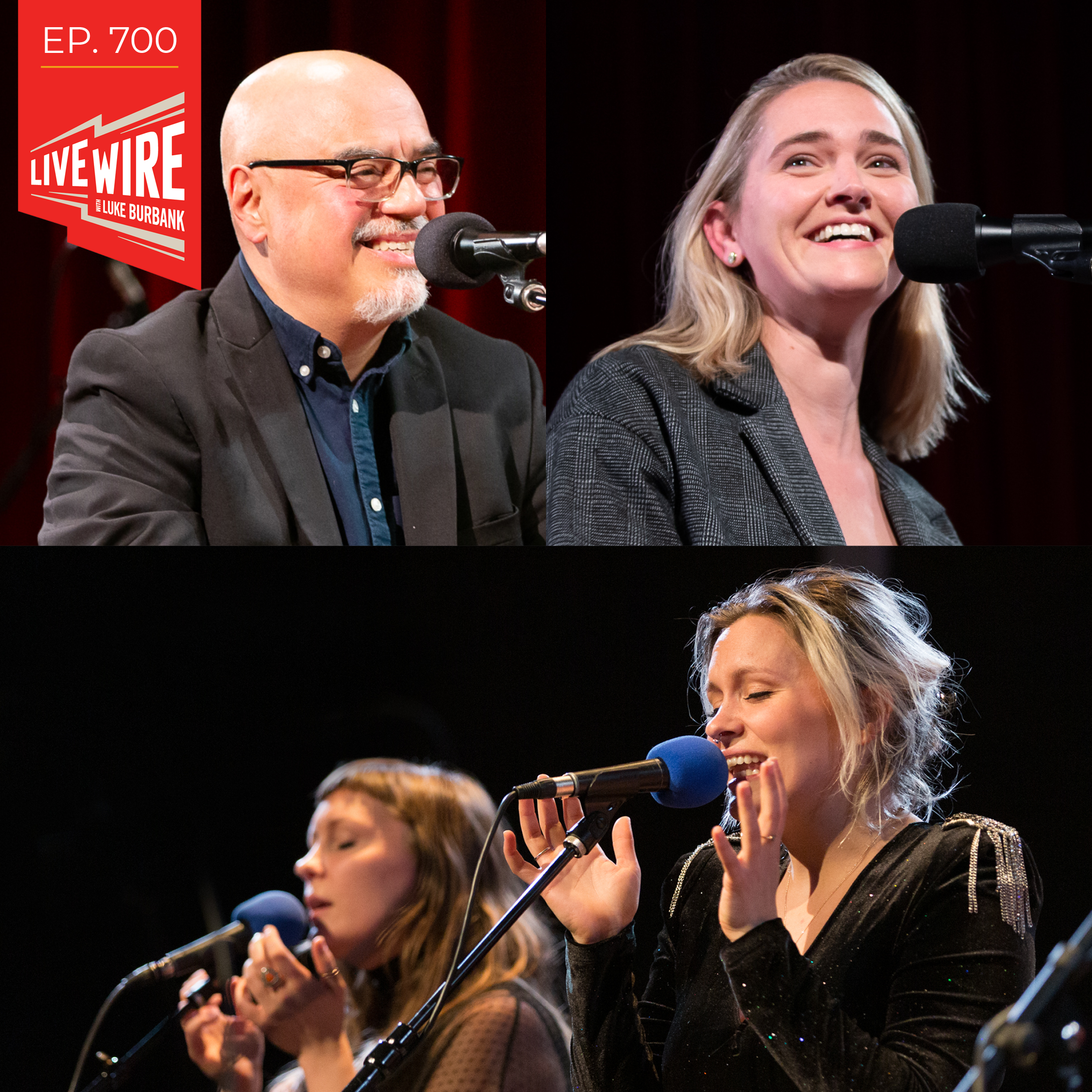
Author Héctor Tobar explores the meanings and myths of the term "Latino" in his sixth book Our Migrant Souls; comedian and writer Jena Friedman (Borat Subsequent Moviefilm) chats about her debut collection of essays Not Funny and recounts the time she put her foot in her comedic mouth; and indie folk trio Joseph performs a cover of Tom Waits' song "Come On Up to the House."
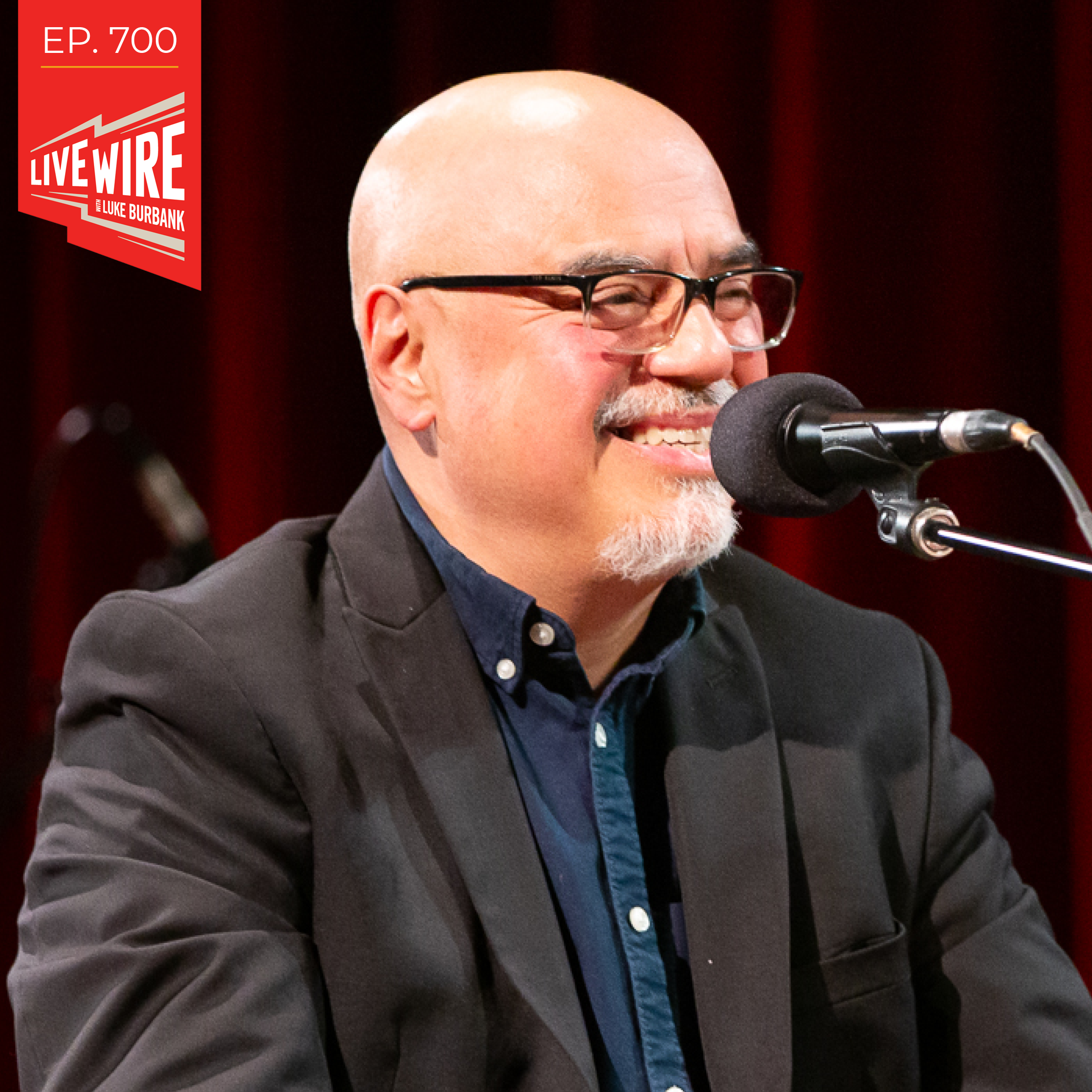
Héctor Tobar
Award-Winning Author
Self-described writer about town and opinionator Héctor Tobar is the author of six books published in fifteen languages, including the critically acclaimed New York Times bestseller, Deep Down Dark: The Untold Stories of 33 Men Buried in a Chilean Mine and the Miracle That Set Them Free. His newest book, Our Migrant Souls: A Meditation on Race and the Meanings and Myths of Latino decodes the meaning of "Latino" as a racial and ethnic identity in the modern United States using Tobar's personal experiences as the son of Guatemalan immigrants and the stories told to him by his Latinx students. Deep Down Dark was also adapted into the film The 33, starring Antonio Banderas, and his short fiction has appeared in Best American Short Stories, Noir, Zyzzyva, and Slate. He is also a professor and has written for or been a contributing editor at multiple award-winning magazines.
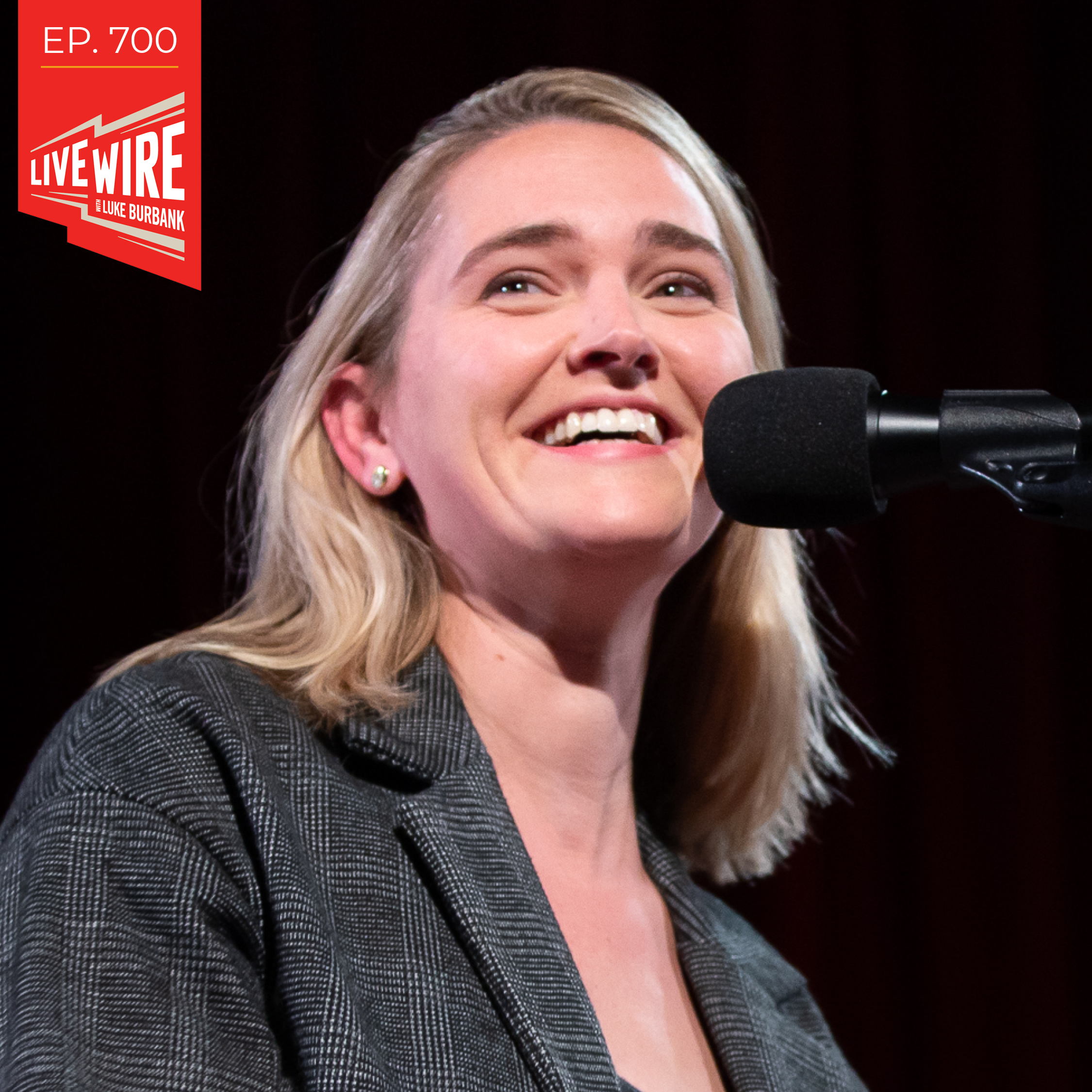
Jena Friedman
Filmmaker, Comedian, and Author
Jena Friedman is the funniest "not funny" comedian, filmmaker, and creative cracking jokes this decade. She is the creator of AMC’s Indefensible, a true crime inspired TV series, Adult Swim's Soft Focus with Jena Friedman, and has also worked on The Daily Show with Jon Stewart and Late Show with David Letterman. Her writing has appeared in The New Yorker, Artnet, and The Guardian while her witty and bold debut essay collection, Not Funny: Essays on Life, Comedy, Culture, Et Cetera highlights her ability to work the line between humor and discomfort in spellbinding style. She was nominated for an Academy Award for Best Adapted Screenplay and won a Writer’s Guild of America award for her work on Borat 2: Subsequent Movie Film.

Joseph
Musical Group
If you like your music beautifully blended and perfectly in sync, then you’re going to love the triple sister act of musical group Joseph. The group, made up of Natalie Schepman and her twin sisters Allison and Meegan Closner, recently released their new album Good Luck, Kid on ATO Records—an effort that Paste called “… the biggest, boldest, most realized thing Joseph have ever released.” The family affair is currently on tour headlining their biggest venues yet, bringing their upbeat anthems and lovely lullabies to audiences across the US. Their new album is The Sun.
-
Luke Burbank: This episode of Live Wire was originally recorded in June of 2023. We hope you like it. Now let's get to the show.
Elena Passarello: From PRX, it's... Live Wire!
Elena Passarello: This week, award-winning author, Héctor Tobar.
Héctor Tobar: Latino is essentially a term that, to a lot of us, feels like a marketing term.
Elena Passarello: And comedian and author, Jena Friedman.
Jena Friedman: I do still think you can joke about anything as long as you're coming from a place of humanity, or not. I mean, I didn't watch the Trump Town Hall, but he seemed to be killing it in that room, so.
Elena Passarello: With music from Joseph and our fabulous house band. I'm your announcer, Elena Passarello, and now, the host of Live Wire, Luke Burbank!
Luke Burbank: Thank you so much, Elena Passarello. Thanks to everyone tuning in all over the country. We have a truly entertaining show in store for you this week, talking to a bunch of interesting folks, including Jena Friedman, who has written a book with a sort of misleading title. It's called Not Funny, although Jena is a very funny person, was actually nominated for an Academy Award for her work on Borat 2, subsequent movie film. And as we were talking about Jena's book, Elena, we realized that you have a story about a time when you were trying to be funny and it did not have the desired effect. We're gonna hear that story coming up in a few. First of course, we got to kick things off with the best news we heard all week. This right here is our little reminder at the top of the show. There is some good news happening out there in the world. Sometimes you just have to look for it. Elena, what's the best news you heard all week?
Elena Passarello: This is a special one. I hope you're ready. It involves a young professional person named Emily Benschoter. She's 29. She lives somewhere near the American Southwest. And she recently, in July, took some kind of job with a forward-facing capacity, front of house in some kind-of service industry position. I think she got the job through an application in which her appearance was not. So when they realized that she had pink hair, they had to let her know that her hairstyle was in violation of the company's quote, natural color policy. And I think they really wanted to keep her or she really wanted to keep the job. And so she said, what do you suggest I do? And they said, wig. And she said oh, challenge accepted. But they didn't say what kind of wig she needed to wear. And they didn't say the quality of wig. So for the past month or so, she has been posting on TikTok the wigs that she has been selecting to wear to her job. All of them are natural colors. One of them is a total vintage 1994 Jennifer Aniston wig. Another one is a slash slash Nikki Sixx kind of Motley Crue style wig. [Luke: Got it.] I think I saw a Richard Simmons wig at one point.
Luke Burbank: We're getting any kind of like a founding father action going on. Any of those constitutional style wigs?
Elena Passarello: Full on George Washington, curls on the side, black ponytail, Ichabod crane style wig. It's in white, which is for some people a natural color. And then there are some that just looks like the wigs natural blonde hair was caught in like an electric socket. And in all these tic tocs, she's wearing what looks like kind of her uniform and these wonderful wigs. And she says she has a new mantra, the worse wig the better. And the coolest thing about this story is that followers have commented on their own little acts of corporate dress code rebellion. There's a hospital in some unnamed town that won't let people have different colored hair, so they all bought matching, I'd like to speak to your manager, Karen wigs, and the whole staff is wearing them. So the dissent is happening amongst the wage earning Americans. At least the ones that are on TikTok. And I just love that level of sass. And I hope that she never runs out of wig options.
Luke Burbank: If you can't beat them, wig them. [Elena: That's right, wig out.] It's the new rallying cry. The best news I saw all week is also another workplace story. It involves, well, kind of a guy named Jeff Simpkins going into a Home Depot in Mount Laurel, New Jersey. Now, Jeff goes to this Home Depot in Mount Laurel a lot because he's a commercial floor installer. And I speak as somebody who's been remodeling a house, you end up living in your local. Home improvement store when you're doing this kind of stuff and Jeff, it also turns out is a real cat lover. In fact, Jeff has two cats. They're named, wait for it, Will and Grace. And as Jeff was wandering the aisles of this Home Depot, he kept noticing cat related stuff in the Home Depot. Like not stuff they sell, like a cat tree, a used litter box. He was like, something's going on here. So he grabs one of those like orange vested employees and says Is there a cat living here? And the person just says, come with me, and leads Jeff to the heating and air conditioning aisle where just sitting like a king is Leo the cat. Who lives in this Home Depot. Turns out the employees of this particular location in New Jersey, somebody adopted slash rescued Leo because they had a mouse problem.
Elena Passarello: Uh-huh.
Luke Burbank: So they got this cat to live there and take care of the mouse population, which apparently is working. [Elena: Oh, good.] But then what happened was Leo had a little skin condition and they had to put some kind of bandage on it. And Leo was kind of like messing with the bandage. So they put a t-shirt on Leo to try to like keep him from messing with his bandage and that's become a whole thing. He's wearing a Hocus Pocus t-shirt currently. Like people come in with outfits for Leo. Jeff started posting pictures. Of Leo and videos on TikTok to draw attention to the idea of rescuing cats these have been viewed like millions of times it's a whole thing people are like coming from far and wide to go to this Home Depot to find and also the thing is Leo just free ranges within the store so you don't know where you will find him necessarily he does sleep in the garden center at night because it's climate controlled they cannot close this depot, Elena. Until they go find Leo and make sure he's in his safe spot in the garden section. He hangs out in the toilet section sometimes.
Luke Burbank: There turns out our cats that are living in a few other home depots, one in Chandler, Arizona, that cat is named cat and roams that home depot. And then there's one also in New Jersey, in Cherry Hill, New Jersey. There's a cat named Oscar that is living in that Home Depot. And all I can say to the Home Depot of Longview, Washington, where I spend most of my time and money, get a cat.
Elena Passarello: Get it, cat!
Luke Burbank: This should be part of every Home Depot experience. Right, exactly, just let them wander in. So that's the best news that I saw this week. All right, our first guest is a Pulitzer Prize winning journalist, acclaimed novelist and contributing writer for the New York Times Opinion Pages. He's also a professor at UC Irvine in California. His latest book, Our Migrant Souls, a Meditation on Race and the Meanings and Myths of Latino, seeks to decode the meaning of the term Latino in the modern United States. Publishers Weekly calls the book probing, heartfelt, lyrical and uncompromising. Héctor Tobar joined us on stage at the Alberta Rose Theatre in Portland, Oregon to talk about the book. Take a listen. Héctor, welcome to the show.
Héctor Tobar: Hey, thanks for having me.
I really enjoyed the book. One of the things that jumped out at me though is like almost one of the first pages is this photo. I presume it's you at Griffith Park, like where the observatory is. For people that don't know, like Rebel Without a Cause backdrop. What's the story with that photograph?
Héctor Tobar: That photograph was taken three or four months after I was born. My mother had been in the United States for about six months. My parents are Guatemalan immigrants. And it was my father playing with his new Polaroid camera. It's a little Polaroid, like a three by five. And my father wanted to take a picture that was his family, his new family in front of this symbol of American science and technology and modernity. They're from, my father's from a very small village in Guatemala and suddenly he's in Los Angeles in front of the Griffith Observatory.
Luke Burbank: What was it like for you growing up, the son of immigrants in Los Angeles? Did you have a sense of that as a kid, that your parents had come from somewhere else?
Héctor Tobar: Oh, absolutely. I mean, my parents told me stories about Guatemala as this land of wonder, volcanoes, military coups, tamales, and that we lived in the United States, which was the greatest country on earth. It was Los Angeles when the freeways were being built. I grew up during the space program. I had my model Saturn V rocket. You know, I had a little space jumpsuit that my parents bought for me. And, you know, I remember watching the moon landing with my mother. My mother was terrified that Neil Armstrong was going to sink into the moon. You know? Really. So yeah, I mean, it was, it was living with the sense of American greatness, but also this romantic sense of where I was from, that Guatemala was a really beautiful place of love.
Luke Burbank: Before we go too much further, I wanna make sure that I'm describing the folks in this book properly. Why do you feel the term Latino is so flawed?
Héctor Tobar: Yeah, Latino is essentially a term that, to a lot of us, feels like a marketing term. It groups together a lot of different kinds of people. I mean, there's nothing really more different than your average Guatemalan guy and your average Cuban person. Cubans are very excitable, Guatemalans are very stoic, but we all have this common relationship with the United States, which is that we're from Latin America. And so the term Latino was invented too. You know, to describe us. But your average Latino person is really a mixture of many things, right? So the European part of us is favored by the term Latin. It says that we have something in common with people from Spain, but also people from Italy, right, that's where Latin comes from. And it ignores the indigeneity that many of us carry. I have ancestors who are Mayan Indians. Many Guatemalans, many Mexicans have ancestors, many Cubans and Dominicans who are African, right, of African descent. And so Latin kind of, Latino erases that.
Luke Burbank: What do you tend to use then in conversation? Like, how have you solved this problem?
Héctor Tobar: Well, I think, you know, I... I think that our race terms, and especially white, you know, no human being is white.
Luke Burbank: I'm really trying tonight with this outfit.
Héctor Tobar: Yeah, you're giving your best shot. But, you know, those terms describe a state of mind, they're creations of history. White was created as a counter to black and it was, you know, it's a product of slavery. That's where that term comes from.
Luke Burbank: Well, so then from a practical standpoint, and you, of course, don't speak for, you only speak for yourself. [Héctor: Yes.] But what feels like an accurate and respectful way for people to talk about this wide, wide range of folks that are from Central and South America?
Héctor Tobar: Well, I think you just have to recognize when you're using them, that's what you're doing. You're making a generalization. I like Latino. Latino's fine with me. Latinx is okay. It's more of a university term. Now they're throwing out Latine, which only people on college campuses use, you know? So, no, I think Latino's good, and the terms are also, they're expressions of solidarity. So, for example, in my family, I'm Guatemalan, my wife is Mexican-American, also calls herself Chicana. Our kids are Guatemalan-Mexican-American Angelenos, which is just easier to say Latino.
Luke Burbank: This is Live Wire from PRX, I'm Luke Burbank, that's Elena Passarello right over there. We are talking to journalist and author Héctor Tobar about his latest book, Our Migrant Souls. When we get back, Héctor is gonna tell us about some of the personal stories that make up the book, including maybe the most iconic video ever of a guy skateboarding to Fleetwood Mac while drinking cranberry juice. Don't go anywhere, that's around the corner here on Live Wire. Welcome back to Live Wire. I'm Luke Burbank here with Elena Passarello. We are listening to a conversation we recorded with celebrated writer Héctor Tobar talking about his book, Our Migrant Souls. Let's get back to that right now. Recorded live at the Alberta Rose Theatre here in Portland, Oregon. One of the things that you talk about in this book is that your family lived like about a hundred feet or so from James Earl Ray, the person who assassinated Dr. Martin Luther King Jr. What memories do you have of that time in your family's life? Were you conscious of that person that was living a hundred feet away from you?
Héctor Tobar: Oh no, absolutely not. I mean, I only put that together 30-40 years later when I read about the King assassination, read some histories about the king assassination. And I saw where he lived and I realized that was the next street over. And so our backyard faced his alley. And so we were with like 200 feet from James Earl Ray and I traced it all together. And to me, James Earl Ray was really transient. When he was plotting the King's assassination, he had escaped from jail in Missouri. And he was living in all these flop house type places and Hollywood, it was in East Hollywood, California, was a real transient place. And so to me, it speaks to the fact that almost all of us, you know, we're living inside American history and we often don't know how our lives overlap with these events. And the really interesting thing about that story of James Earl Ray is that at the same time that I'm living next to James Earl Ray, the guy who drives my mother to the hospital when she's pregnant with me is this African-American guy. From Memphis, and he had escaped Memphis because he had participated in a sit-in protest against segregation in the Memphis Public Library. So he meets my mother in the laundry room of the tenement building where they're living. He's studying Spanish at LA City College, and he tells my mother, look, I see you're pregnant. If you need anything, let me know, and she says to him, well, I could use a ride to the hospital, and then when she goes into labor. She drives in his convertible to LA County General Hospital, and he became my godfather. So, Booker Wade, and I found him 40 years later, thanks to Los Angeles Times and a column that I wrote, and so I'm living next to this white supremacist, but I'm also living next to an NAACP activist for civil rights.
Luke Burbank: We're talking to Héctor Tobar, his latest book is Our Migrant Souls. What were you hoping to really explore as you wrote this book and how did you go out on that journey? Who were you looking to talk to?
Héctor Tobar: Well, you know... I, this is my pandemic book and I watch this incredible documentary, I Am Not Your Negro.
Luke Burbank: Mm-hmm.
Héctor Tobar: By Raoul Peck. And it's the essays of James Baldwin, right, set to these images. And I just heard Baldwin's voice talking about race in America. And I thought, you know, we as Latino people, we don't have a book like that. You know, we don't have this essay that talks about what it means to be brown skinned, Mexican-American, Guatemala, within this story of the United States, the way James Baldwin takes it apart. And so I gave myself the task of writing that book, you know?
Luke Burbank: A simple assignment. [Héctor: Yeah.] The definitive text on it.
Héctor Tobar: Right.
Elena Passarello: Just be like James Baldwin.
Luke Burbank: Right.
Héctor Tobar: Well, you know, I learned that as a little Guatemalan kid, you know, it's like the way you're going to get noticed is do something big. Yeah, you know. And so when I got to the LA Times, right for the front page. And so I wanted to do something. Yeah, it was very ambitious, but I've always been that way.
Luke Burbank: Well, could you read a little bit from the book there was sure I mean there's so many parts of the book that jumped out at me, but there was one section actually sort of towards the end, but I was hoping you could you could share that with folks.
Héctor Tobar: Yeah, this is a story, this isn't another pandemic story. It's about something that I saw, you know, when we were all watching the internet all day long and we were sharing TikToks and Instagrams. And so as the pandemic lingers on, a man from Idaho Falls posts a video on TikTok. In an interview afterward, the creator of this work of art will say he first used the social media platform at the encouragement of his daughter. He lives in a trailer without running water. In Idaho Falls, across the street from his brother's house. At one point in his life, he had been homeless, living in a tent on a dirt road along the Snake River. When his car breaks down on the way to his job at a potato warehouse, he takes the long board he has on his front seat and decides to ride it the rest of the way. On one level, this is a humiliating moment of precarity, as a social scientist might say. A reminder of so many things that have gone wrong in his life. But he turns on his cell phone camera, and in the video that results, Nathan Apodaca transforms his precarity into something else. Stevie Nicks of Fleetwood Macs sings, and he lip syncs to her voice. The effect is like that of drag, a juxtaposition of masculinity and femininity. He's a tough looking dark skinned guy next door. Gang member in the eyes of ignorant strangers, and yet here he is bearing his feminine soul. Underneath the 12 o'clock shadow on his shaved head, you can see the feather tattoo on his skull, which he wears in honor of his Native American mother, a member of the Northern Arapaho tribe. His father is Mexican, and later he will tell an interviewer, I'm Native Mexican.
Luke Burbank: That's Héctor Tobar reading from Our Migrant Souls. One of the things you mentioned in the book, Héctor, is that LA is both the most sort of Latinx city in the US, and it's also the center of the entertainment industry that you write makes billions of dollars telling empire fantasy stories. How do those things coexist in the same place?
Héctor Tobar: Yeah, you know, the thing is that to me, my kids love, you know cosplay and fantasy movies, you know the Marvel universe. And you know I've been watching those for 20 years. The 20 years of my kid's childhood I've watching those movies. And then I read this great quote from Junot Díaz who says essentially all of those movies are really about us, about people of color, right? Star Wars is really an allegory about imperialism, right? There's the evil empire and the, you know the. The resistance is fighting this guerrilla war. And so to me, it's really kind of a sad thing that these stories of people of color, the guerrillas fighting the evil empire become these fantasy stories, and they usually don't have, except for Oscar Isaac, they usually a Latino member in the cast, right? And only recently have there been more people of color in these casts. So to me that is part of what makes those stories so powerful because most of us, many of us have stories of resisting power. Right? If you're Irish, you have a story of resisting the British Empire. If you are Jewish, you'll have stories resisting, right? And so that's what Hollywood is doing with these stories. And it's ironic that this industry is based in Los Angeles because Los Angeles is a Latino city, and there's hardly any Latino people in these movies.
Luke Burbank: One of the things, too, that I was thinking about, having lived in Los Angeles, is that, you know, anyone who comes to the US from somewhere else will have a strong connection to the place they came from, but it seems like it could be different for Latinos because geographically, it's still pretty close, and you have this back and forth migration that can happen sometimes seasonally. The connection, oftentimes, between their life in the US and their life, in the place they were from before the US, is it's closer. Does that impact? In your experience, the way that Latino people experience their time in America because of that back and forth?
Héctor Tobar: It used to, I grew up with that. And I think that was true until the early 2000s. And so yes, people went back and forth. I grew going back and fourth, I'm very lucky. My parents came earlier. They got green cards very quickly. They both became citizens. I was there when they took the citizenship oath. But since the late 1990s, we have this wall. And then we've been militarized and we have their sensors in the ground and there's drones overhead. And so there are literally millions of people who are separated from their relatives. I teach at UC Irvine and every quarter I hear a story of a student describing their parents looking at the grandparents' funeral on FaceTime because they can't go back. Because if you go back, then you're gonna have to come back across that wall, you know, past the border patrol. And so... What the fence has done is it's become this big scar in millions of Latino families, this sort of barrier between halves of families. People don't see each other for a generation or longer.
Elena Passarello: You mentioned your students and one of my favorite parts of the book is the fact that so many of your students get to tell a little bit of their stories as you're doing all this deep research and all of your great interview work from being a master journalist. How did you get these student stories to be a part of the text? Did you interview them or?
Héctor Tobar: Yeah, well, you know, I teach these really big classes. I teach Latino studies, intro to Latino studies class, which is about as big as this auditorium. I have like about two or 300 students sometimes. You know, I'm a writer and I really don't know how to teach anything well besides writing. So part of the assignment is I tell them, as I could tell you, tell me a story about the Latino experience. So most of my students, you know, half of them are Latino. And so they'll tell me his story about their father, their grandmother, whatever. And then I tell them, if you're not Latino, it's okay. Tell me about a Latino friend or tell me about the time that you had tacos for the first time. So this Chinese guy wrote about, I got off the plane at LAX and I went and I saw these flat things and I found out they were called tortillas and it's, you know, that kind of story. And I also tell them, look, this is not like any other assignment. I have to read all of your papers. I am going to spend an entire week reading your papers so they have to be really good. They have to be funny. So you'll get an A if you make me cry or you make me laugh. And, you know, they love it and so I get all kinds of great stories that way.
Luke Burbank: I'm curious, after spending the time you did traveling all over the country, talking to all different kinds of folks who have come here often from somewhere else, or the descendants, do you feel hopeful after having those conversations and meeting those people, or do you a certain amount of despair because of the inequities that still exist in this country and seem pretty intractable? Like, where do you kind of land after this project?
Héctor Tobar: Yeah I think the inequities are really equal opportunity inequities. You know there's a lot of different kinds of poverty in this country. There's a lot white poverty, a lot Latino poverty, a lot of black poverty. And so yeah I think inequities there and you see them across the country but you also see people getting along. You see Latino people living next to black people in New Orleans or you see I am part of my book, takes place here in Oregon. Right? In Woodburn, Oregon, and you see Latino people getting elected to state legislature and, you know, starting parades and organizations. And I'm just really, really hopeful. And to me, the interesting thing was, you, I traveled across the country, I really felt I met so many Latino people that I realized that being Latino really is just another way of being American, you know? And I just really felt more connected to my own country than ever before.
Luke Burbank: Well, I'm glad that as somebody who read you at the LA Times a lot, I am glad that amidst your life in academia, you're still going out and reporting and writing great books like this. The book is Our Migrant Souls. Héctor Tobar, thank you so much for coming on Live Wire.
Héctor Tobar: Thank you, thank you for having me.
That was Héctor Tobar right here on Live Wire. You can read his book, Our Migrant Souls, which is out now. And by the way, it was named a finalist for the Kirkus Prize, which is a top literary award in the book industry. So congrats to Héctor. This is Live Wire from PRX. Now, we're gonna be talking to Jena Friedman about her book, Not Funny, in which she talks about her various attempts at humor. She's a comedy writer and performer as well. But Elena, as we were kind of looking at this week's show, you mentioned that you have a little bit of a story of a time when you tried to be funny and it did not go so great what happened.
Elena Passarello: I don't just have a story, I have myriad stories, but I could just give you one today if you would care to be regaled.
Luke Burbank: Please regale me.
Elena Passarello: When I was a little baby cub writer, the writer that I wanted to be more than anybody else was David Sedaris. I wanted people to feel the way I felt when he was telling me these stories and I was just hanging on his every word and laughing my butt off. And so I sat down, I had an old desktop computer that I kept on my kitchen table in my studio apartment. And I wrote the funniest story I could think of about this dude who would drive his weird van with a sunset on it. To our elementary school, R.D. Head Elementary, Gwinnett County, Georgia, what, what? And he would take groups of students into the woods and play the recorder and make them tea. And we all knew that when you were in fifth grade, this is something that you got to have happen. And I was so excited. And then when it happened, we just were hanging out with this weirdo in the woods while he played the recorder and made tea out of dirt. It was just such a letdown. And then we walked back and my mom, my mom knew his partner and my mum was like, oh, they're getting a divorce. He lives in that van. So I was like this is it. I'm going to write this story. There was an event coming up that my professor asked me to read for and I worked so hard on it and I didn't read it to anyone. And I just was like... This is a yuck, a minute. I cannot wait. When I got up there, it was this big crowd on the Pitt campus and I read the story and nobody laughs. Not a single person laughed and I had to keep going and I was like, I am the worst writer in the world. And then when it was over, people like thunderously applauded and I'm like, oh wow, my friends are here, they're so nice. And then my writing professor came up to me and he was like that was one of the most beautifully sad stories I've ever heard that I've realized. That was what I realized. Some people think that they're sad but are actually very funny, you know, which I think Sedaris has said about himself. Like I think he thinks of himself as a very serious person. But then it just comes out kind of hilarious. And some people think that they're like yucksters, but it turns out they have like a dark, sad core on the inside. Because of course I was telling this story about this poor guy who completely disappointed this group of fifth graders and then got into his van and drove away.
Luke Burbank: But the good news is you are a great writer, people enjoyed it but not for the reasons you were expecting going in.
Elena Passarello: Yeah, yeah. The other lesson of the story is, of course, you need to read your work aloud to other people before you read it aloud to a large crowd, because you don't quite know the effect that it's going to have. So it was a good discovery.
Luke Burbank: And I'm glad it led you to write the amazing books that you have written, which is how you ended up working on this very radio show with me. Speaking of attempts at comedy, these ones may be a little more successful than Elena's. Our next guest is a filmmaker and a creator of the show, Indefensible on AMC, also the show Soft Focus on Adult Swim. She's worked on The Daily Show with Jon Stewart and was nominated for an Academy Award for her work on Borat 2, subsequent movie film, her latest book. Not Funny: Essays on Life, Comedy, Culture, Etcetera was called an entertaining and soulful debut by Publishers Weekly. Jennifer Friedman joined us on stage at the Alberta Rose Theatre to talk about that book. Take a listen. Hello, welcome to the program.
Jena Friedman: Thank you so much for having me. This is so great.
Luke Burbank: You dedicate this book to your mom, who you say is the funniest person that you know. Is that because of what she said about you at your grandmother's funeral?
Jena Friedman: Yes, and a lot of things. I mean, I get my comedy from her. She died, I'm so sorry, it's so sad. I know, I know I'm not being funny. No, it was horrible. And the book is called Not Funny, which is great because it's like this disclaimer. She passed away after I'd finished the book, it was, I don't know, you guys. And I'm trying, here's the thing, I'm tryin' to write jokes about it in my comedy and it's not funny. Like, she died of pancreatic cancer, it was over five weeks, I was so pregnant, it was awful. I know we didn't need to talk about this, but. Right afterwards, my husband was like, you should get on stage and like, you know, try to make comedy out of it. And so I did this show. He supported it, but I did the show and I was like hey everybody, like my mom died and like your mom's gonna die and your mom is gonna die and like. You'll be lucky if your mom dies before you. And no one laughed. It was less of a thanks now. But it was less a joke and just like a sad scene in an indie movie nobody's going to watch.
Luke Burbank: Yeah, first of all, I'm really really sorry that your mom passed away.
Jena Friedman: That doesn't make it feel better, but thank you. Your earnestness doesn't diffuse the tension that I just lobbed into this joyful show by...
Luke Burbank: But I want to point out that what you just described, you going on stage and saying something that you think is gonna be funny and it not working is a real theme in the book. It seems to be your comedic style.
Jena Friedman: Yeah, I mean, it's not working. Yeah. Do you guys know who I am? You don't, it's fine. But...
Luke Burbank: Like you tell a story in the book about a friend of yours who was a comic and you would text back and forth with this comic and you had this sort of go-to joke about like a sort of an illness that somebody could die from.
Jena Friedman: You're being so measured. Mike DeStefano, brilliant comedian, passed away.
Luke Burbank: Take it away, Jena Friedman.
Jena Friedman: I wrote about it. I did my job. I want to hear you.
Luke Burbank: Well... All right. This is an audience of mostly grown-ups. They can handle it. You would make a lot of jokes about AIDS and about people dying of AIDS, and you would make these jokes to your friend, Mike DeStefano.
Jena Friedman: I mean, okay, they weren't jokes about people dying of AIDS. They were jokes about-
Luke Burbank: Now you want to try to contextualize it.
Jena Friedman: Well, they're not making fun of people dying of AIDS. So, you know, tragedy plus time equals AIDS jokes. And when you're a young comic, you just, you talk, I'd personally talk about what I'm afraid of. And I grew up, you kids was like a seminal movie for me. I just had, it was something I was afraid of and Mike was really encouraging to me as a young comic, he's like, joke about anything, anything can be funny. And so they weren't jokes about AIDS, they were jokes about my fear of AIDS. And I would text them to him all the time. You can continue. But I would text those jokes, because he was like a mentor to me and really encouraging and I would text those jokes to him.
Luke Burbank: And then he let you know that his wife had passed away from AIDS.
Jena Friedman: Yeah, yeah, and I write about it in the book.
Luke Burbank: Sort of bounce back from that in the conversation.
Jena Friedman: He was cool, so, no, I just, it's a horrible story, and it's not one I would ever say out loud, which is why books are cool, but, um...
Luke Burbank: When you can't say it out loud.
Jena Friedman: When you can't, say it out loud. I was just being honest. I mean, I think when you're young, he was a mentor to me early on. And he called me, and he was like, did you know my wife died of AIDS? And I was like. And I didn't. And I talk about how I thought effort. I couldn't believe that. And then it was real. And he actually has a story on the moth about it. And it's so, I mean it's incredible if you can listen to it. And Mike DeStefano, again, is his name. He passed away, but I'm so, this is so light. I'm really glad I called the book Not Funny.
Elena Passarello: But the book does talk about so many different ways in which a certain kind of comedian gains their momentum and their creativity from pushing those boundaries, not just with like tragedy or death, but also with like things that are politically, you know, people don't want you to say on television or...
Jena Friedman: Yeah, and that whole conversation and experience with Mike really did, like, inject more humanity, I think, into my comedy. And again, like I think comedians get into trouble for tweets from a decade ago or whatever, but I think when you're a young comic and you're starting out and you are finding your voice, I'm using quotation marks, what does that even mean? Or your point of view, you misstep, you make missteps before you... You need to cross the line to know where it is and make mistakes and... And so that was just one kind of moment on my journey of getting to working on Borat. My missteps before that were that experience with Mike and Mike being so cool to me and talking about how he was not offended by it on any level, but it was an interesting kind of awakening for me.
Luke Burbank: Do you, at this point in your career, have a sort of a different line or way of thinking about what is fine to joke about and what isn't or sort of how to approach these things? Do you think about it differently at this part of your career?
Jena Friedman: I mean, I'm a little, I have more experience under my belt. I do still think you can joke about anything as long as you're coming from a place of humanity or not. I mean I didn't watch the Trump Town Hall, but like he seemed to be killing it in that room. So, or you can just joke about anything if CNN picks your audience. You know, I don't know.
Luke Burbank: We're talking to Jena Friedman about her book, Not Funny. One of the things that you also talk about in the book is this idea of likeability and how that's really often used against women and people of color. But the thing that you wrote also that I thought was really surprising was you say that as a kid, you didn't really care if people liked you or not, which I feel like is the thing that makes most people do comedy. And host radio shows, a desperate need for people liking them. And you didn't have that as a kid?
Jena Friedman: I was cool, I was a cool kid, I just didn't care about that stuff and then when I started to fall in love with comedy I was like I need for people to like me so I can get stage time and get better at this thing I love to do, I need people to get work so I open for these other comics and get paid and pay my rent and likeability became this central thing that I had to care about and it was confusing. And then I think when I turned 30, I just stopped trying to care about it because I realized by that point it was something that I couldn't even control if I wanted to.
Luke Burbank: So there was a window of like six years.
Jena Friedman: Yeah, in my 20s, I was like, no, I don't know why I'm talking like I'm in my twenties, but I just was like the vocal fry. Men love it when a woman's voice is suppressed. You're like, I like that. She's so likable. Hire her.
Luke Burbank: You were doing a show for Adult Swim called Soft Focus.
Jena Friedman: Yeah.
Luke Burbank: And I was watching it this week. It's really funny. Thank you. It's very subversive. What were you kind of like, what were your goals going in? Like what kind of show were you trying to make?
Jena Friedman: So full disclosure, Mike Lazo, who ran Adult Swim, who I really do love because he took a chance on me, but he had gotten for some comments he made about women in comedy. I don't know. And so because of that, they were like, we need to hire a woman. And that happened to me and a lot of my friends where that is how we get work and it's fine. And I was flown down to Atlanta right after Trump became president. And I don't want to go too into it, but there's another show on Adult Swim that was this very alt-righty show. And it was popular, and it was really upsetting. And I just wanted to make the antidote to that show. And I wanted to make guy gamers, who would watch episodes of Rick and Morty and then accidentally watch my show stoned. I wanted it to like. I wanted them to not hate women. So that was my unfunny way in, but then Adult Swim gave me all this leeway to do whatever we wanted, and it became just such a fun, it was such a fine show. It was kind of like a little bit, I don't know if any of you know Nathan Fielder, he's...
Luke Burbank: Yes, Nathan for You.
Jena Friedman: Nathan for You, it had elements of that, but it was like a feminist version of that. And it was my dream show. And then we're about to shoot the third special and then the pandemic happened, so.
Luke Burbank: The book kind of is asking a question of like, particularly in comedy, when does somebody make it? And the book kind of ends with you, you're nominated for an Academy Award for your work on Borat 2, subsequent movie film, and you and your husband are going to all this cool stuff related to it and you're there, you're in the room, it's happening, you're nominating for an Oscar. Now you've got this book out, you're a touring comedian, you have been nominated for an Oscar. Do you feel like you've made it?
Jena Friedman: No, but that's because I haven't. Nobody knows who I am, and it's fine. And I like that. I love anonymity. I just want, like, it's just nice to be able to keep making things and getting paid to make things. It's all I want. I do think, but I, so in the book, I talk about when I worked for The Daily Show and someone asked Jon Stewart, you know, it was his last week and the vibe was relaxed. And somebody was like, Jon. When did you know that you've made it? And he's like, I still don't. And you're like, what? I think that's just what drives comedians to keep making things and keep doing that kind of dissatisfaction with life. No, no, no that's not. I love, I'm great, everything's great. But that's what my point was. I just, I think the idea of making it, it's elusive, it changes. I think it's like it's the same thing with happiness. It's just that. I am happiest when I'm doing work with cool people and making cool things that say things. And I think that's just kind of what you have to hold on to if you're in a creative profession. But making it is like this arbitrary term that the minute that you feel like you have made it, then like you're resting on your laurels and that kind of complacency isn't good for art either.
Luke Burbank: Well, the book is very funny when it's not talking about death. Yeah. The book is Not Funny by Jena Friedman. Jena, thanks so much for coming on Live Wire.
Jena Friedman: Oh, thank you so much. Thank you so much for having me!
Luke Burbank: That was Jena Friedman right here on Live Wire at the Albert Rose Theatre in Portland her memoir Not Funny: Essays on Life, Comedy, Culture, Etcetera is available now i'm luke burbank here with elena pass are all we got to get quick break but don't go anywhere when we come back we are going to hear a Tom Waits cover from the folk trio Joseph. Welcome back to Live Wire. I'm Luke Burbank here with Elena Passarello. All right. It's time for a little station location, identification, examination.
Elena Passarello: Uh oh.
Luke Burbank: I can hear your enthusiasm down the line. This is where I quiz Elena on a place in the country where Live Wire is on the radio. She's got to try to guess where I am talking about. Now this town was designated the hang gliding capital of the West in 1991. Everybody was talking about it.
Elena Passarello: Is it the Dalles, Oregon?
Luke Burbank: You're in the right state. It is not the Dalles, Oregon. How about this name for a geyser? They have a geyser in this town called Old Perpetual.
Elena Passarello: Ooh, geysers. So it's, uh...
Luke Burbank: Feels like the Pepsi to old faithfuls Coke.
Elena Passarello: Old Perpetual. That means it's in the desert-y part of.
Luke Burbank: Think about a wetter desert where a body of water is contained in a kind of circular fashion.
Elena Passarello: Crater Lake! Is it Crater- Crater lake?
Luke Burbank: It has Lake in the title. It's Lakeview, Oregon. I'm going to give it to you.
Elena Passarello: Ayyyyyyyy!
Luke Burbank: You can lead in the lane of the water, and you can give her the point for Lakeview, Oregon, where we are on KOAP. So shout out to everybody listening down in beautiful Lakeview Oregon, the tallest town in Oregon, we're told. You're listening to Live Wire Radio. All right, before we get to our musical guest this week, a little preview of what we are doing on the show next week, we're gonna be joined by best-selling author, playwright, and advice columnist, R. Eric Thomas. I promise you, whether or not you think you know who R. Eric Thomas Is, you've seen his photo. It's in every newspaper and every newspaper website in America because he writes the nationally syndicated column, Ask Eric. He's going to talk to us about how he approaches this job. And how he sort of manages to answer these questions, trying to look at all of the different sides of a relationship. Then we're gonna go to church, folks. Not that kind of church. It's actually the Church of Stop Shopping, which is led by activists Reverend Billy & Savitri D. They mix in performance art, politics, and a sort of a genuine spiritual calling to basically have us all thinking about What is our relationship with consumerism? There was a period of time where a lot of the Starbucks in Manhattan had a laminated sheet that said what to do if Reverend Billy shows up in your Starbucks and starts protesting. We're also gonna hear a sermon from the Reverend Billy and then we've got some fabulous old timey country music from an amazing trio. They're called The Brudi Brothers. They're actually brothers. They're from my hometown of Seattle, Washington and they have this amazing story on how they managed to get millions and maybe even billions of streams online for a song of theirs that unexpectedly blew up. Anyway, make sure you do not miss next week's episode of Live Wire. In the meantime, our musical guest this week, or maybe we should say guests, is a group with roots right here in Oregon. They've got a strong sister bond and even stronger harmonies. They are a trio. They've performed on NPR's Tiny Desk Concerts. They've played TV shows like The Tonight Show and Conan and music festivals like Coachella. This is the band Joseph who joined us on stage at the Alberta Rose Theatre in Portland, Oregon. What song are we going to hear?
Joseph: So we're going to do a song we did not write, but that means a lot to us, that we recently covered and put on an album. It's a Tom Waits song, which we are new to him. And we knew who he was. We just hadn't listened to his music yet. Correct. Just to clarify, not that far under the rock.
Luke Burbank: What Tom Waits song are we gonna hear?
Joseph: This song is called Come On Up To The House.
Luke Burbank: This is the band, Joseph, here on Live Wire.
Joseph: [Joseph performs "Come On Up to the House"]
Luke Burbank: That was the band, Joseph, their newest album, The Sun is out. And that is going to wrap it up for this week's episode of Live Wire. A huge thanks to our guests, Héctor Tobar, Jena Friedman, and Joseph. Live Wire is brought to you in part by Alaska Airlines.
Elena Passarello: Laura Hadden is our executive producer, Heather de Michele is our executive director and our producer and editor is Melanie Sevcenko. Eben Hoffer and Molly Pettit are our technical directors and our house sound is by D. Neil Blake. Tre Hester is our assistant editor. Our house band is Ethan Fox Tucker, Sam Tucker, Ayal Alves, and A. Walker Spring, who also composes our music. This episode was mixed by Molly Pettit and Tre Hester.
Luke Burbank: Additional funding provided by the Oregon Arts Commission, a state agency funded by the state of Oregon and the National Endowment for the Arts. Live Wire was created by Robyn Tenenbaum and Kate Sokoloff. This week, we'd like to thank members Meghan Keys of Portland, Oregon, and Tammy Coulter of Seattle, Washington. For more information about our show or how you can listen to our podcast, head on over to livewireradio.org. I'm Luke Burbank… for Elena Passarello and the whole Live Wire team… thanks for listening, and we will see you next week!
PRX.
