Episode 701
R. Eric Thomas, Reverend Billy & Savitri D, and The Brudi Brothers
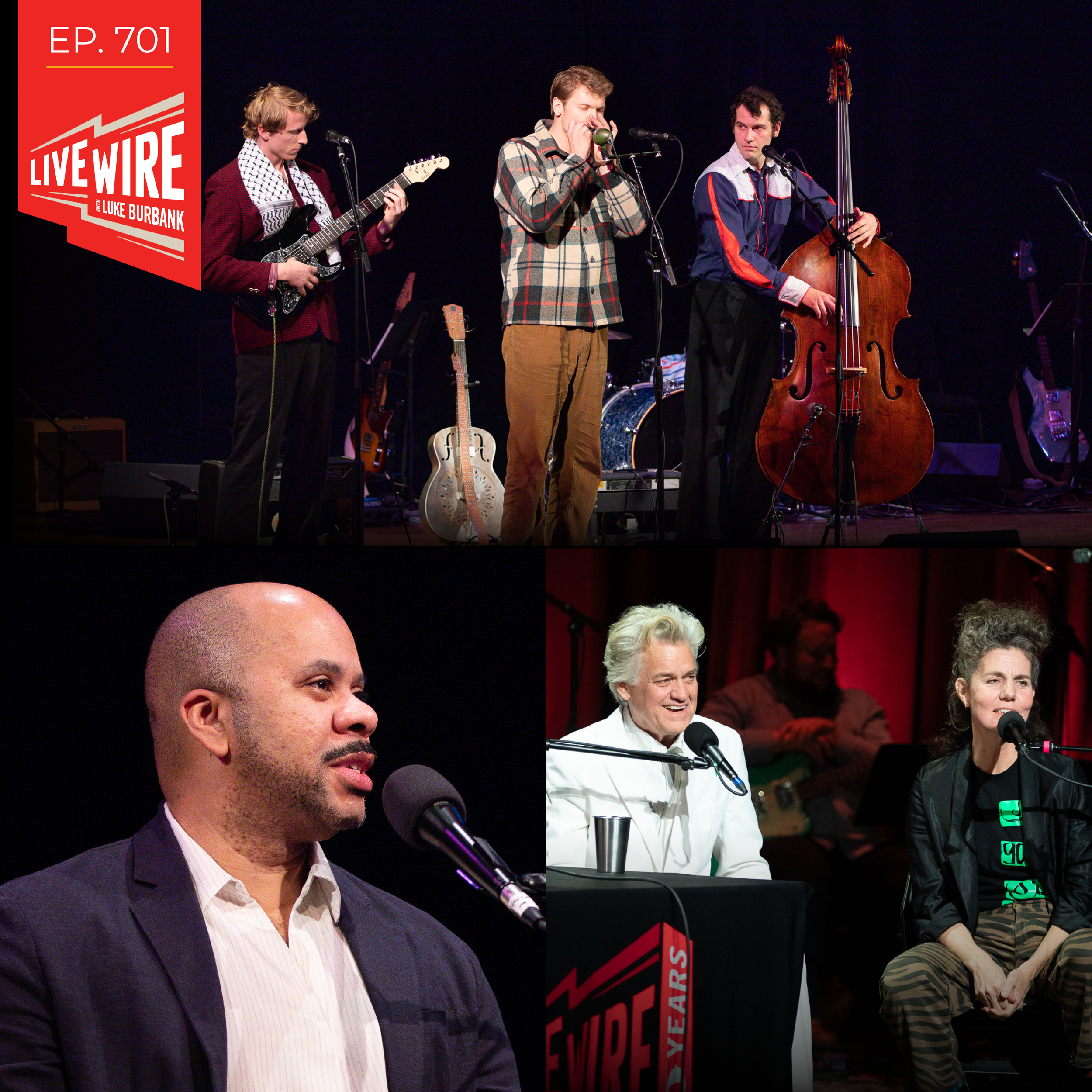
Advice columnist R. Eric Thomas, of the nationally-syndicated column Asking Eric, explains how he leads with empathy when giving advice to strangers—on everything from marital problems to issues with holiday cookies; Reverend Billy and Savitri D, activists and founders of the Church of Stop Shopping, discuss their tireless fight against corporations... and the 100-plus times they've been arrested as a result; and Americana trio The Brudi Brothers perform their viral hit "Me More Cowboy Than You."
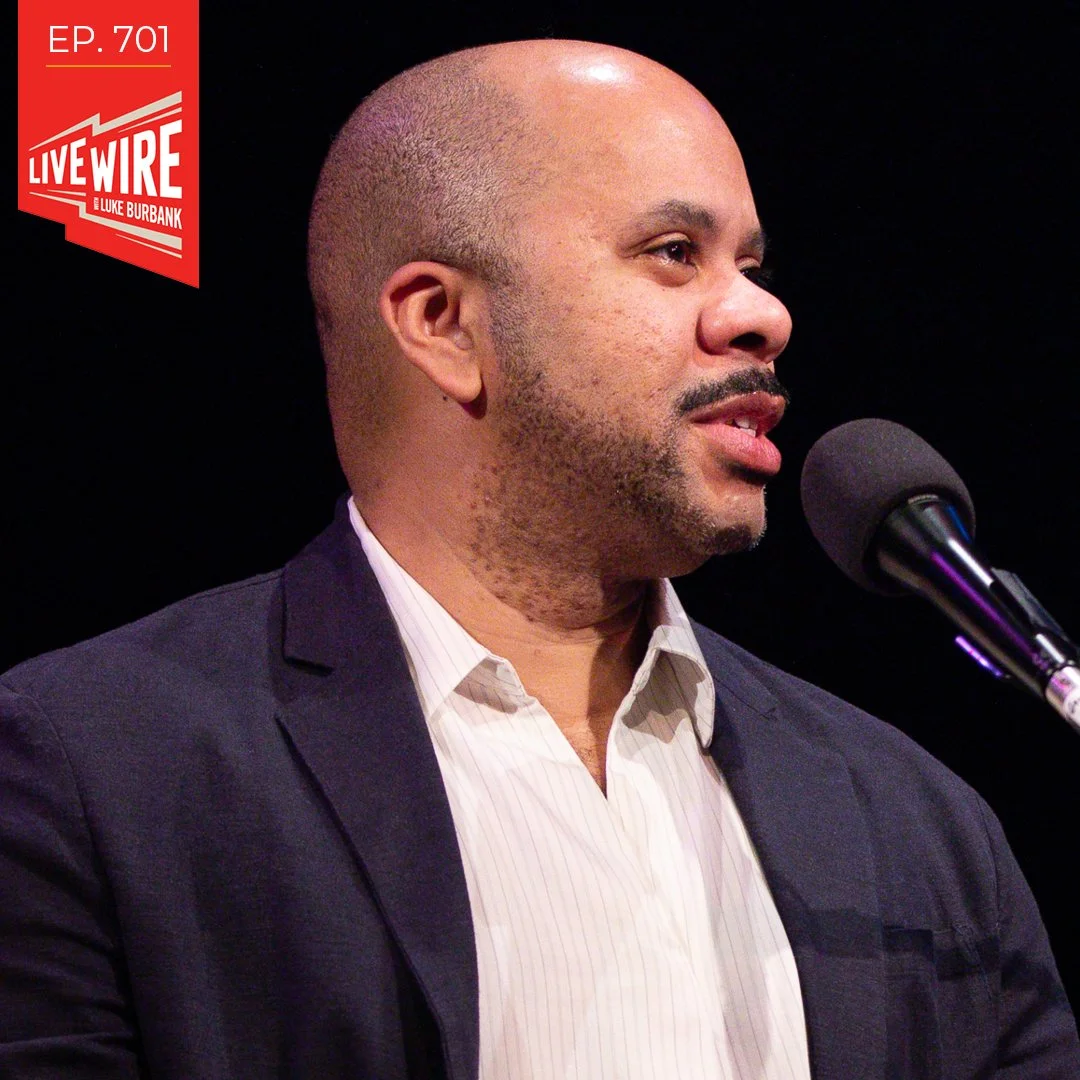
R. Eric Thomas
Bestselling Author and Advice Columnist
R. Eric Thomas is a national bestselling author, television writer, playwright, and nationally syndicated advice columnist. He has worked as a television writer on Dickinson (Apple TV+) and Better Things (FX). He is the national bestselling author of Here For It, or, How to Save Your Soul in America, which was a Read with Jenna club pick featured on Today; his young adult novel Kings of B'More was a 2023 Stonewall Honor book; and his latest book Congratulations, The Best Is Over! became an instant USA Today bestseller. Now, Thomas brings his signature wit and warmth to the advice column “Asking Eric,” drawing on his stint as Slate’s “Dear Prudence” as he dishes out insightful, humorous guidance for navigating relationships, work, and everything in between.
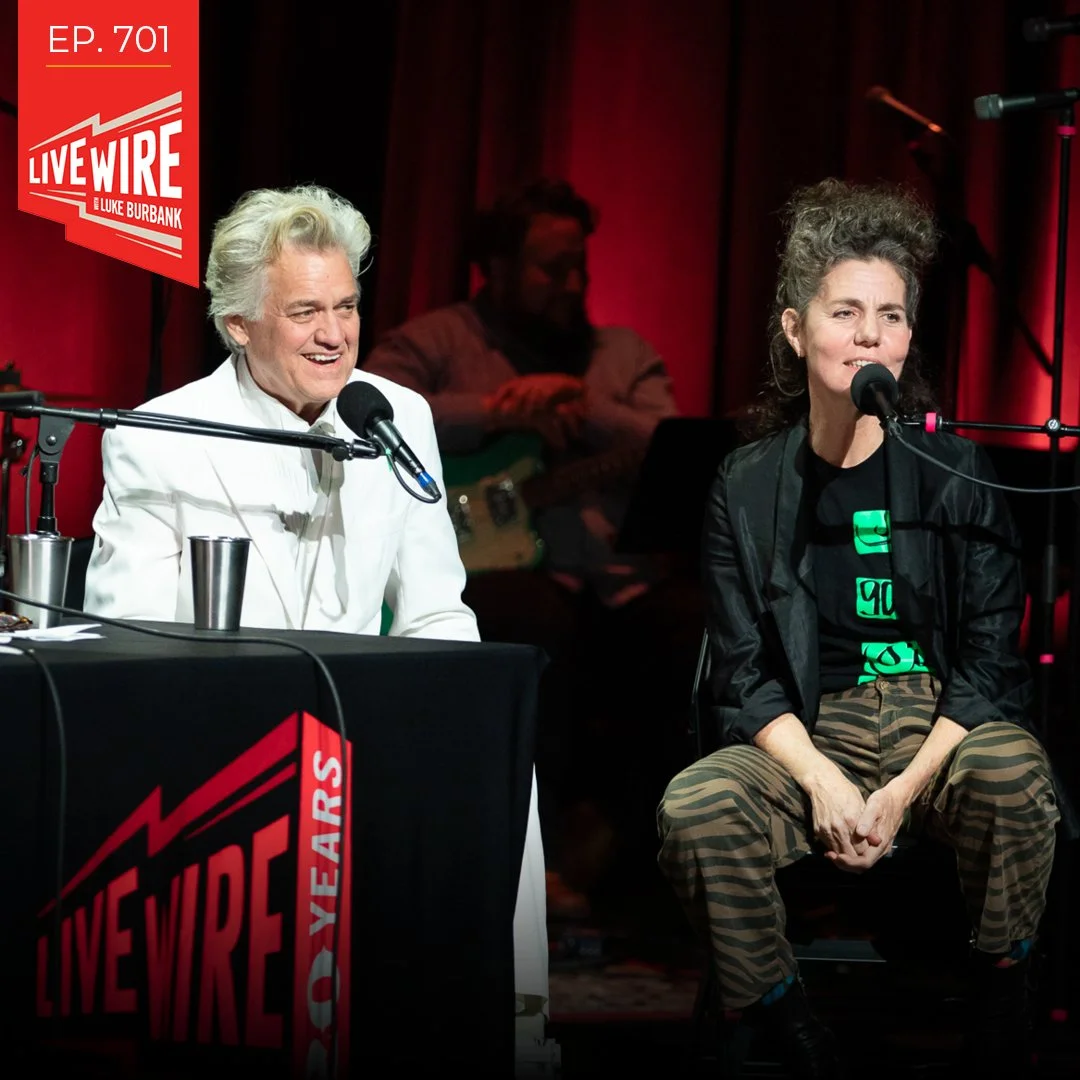
Reverend Billy & Savitri D
Activists and Performers
Blending theater, politics, and genuine spiritual calling, Reverend Billy and the Church of Stop Shopping is a diverse, radical group that urges action to preserve the earth. Directed by Savitri D., the downtown New York collective debuted at Times Square in 1998, with a protest outside Disney stores and proclaimed Mickey Mouse the anti-Christ. Through arrests and performances, the group became a vehicle for anti-consumerism sermons and neighborhood activism. They have been invited by Neil Young three times to open his Love Earth tour, and are featured in the 2025 documentary You Need This, produced by Adam McKay. The strongest idea of Stop Shopping is that the Earth is alive. All are welcome. Earthalujah!
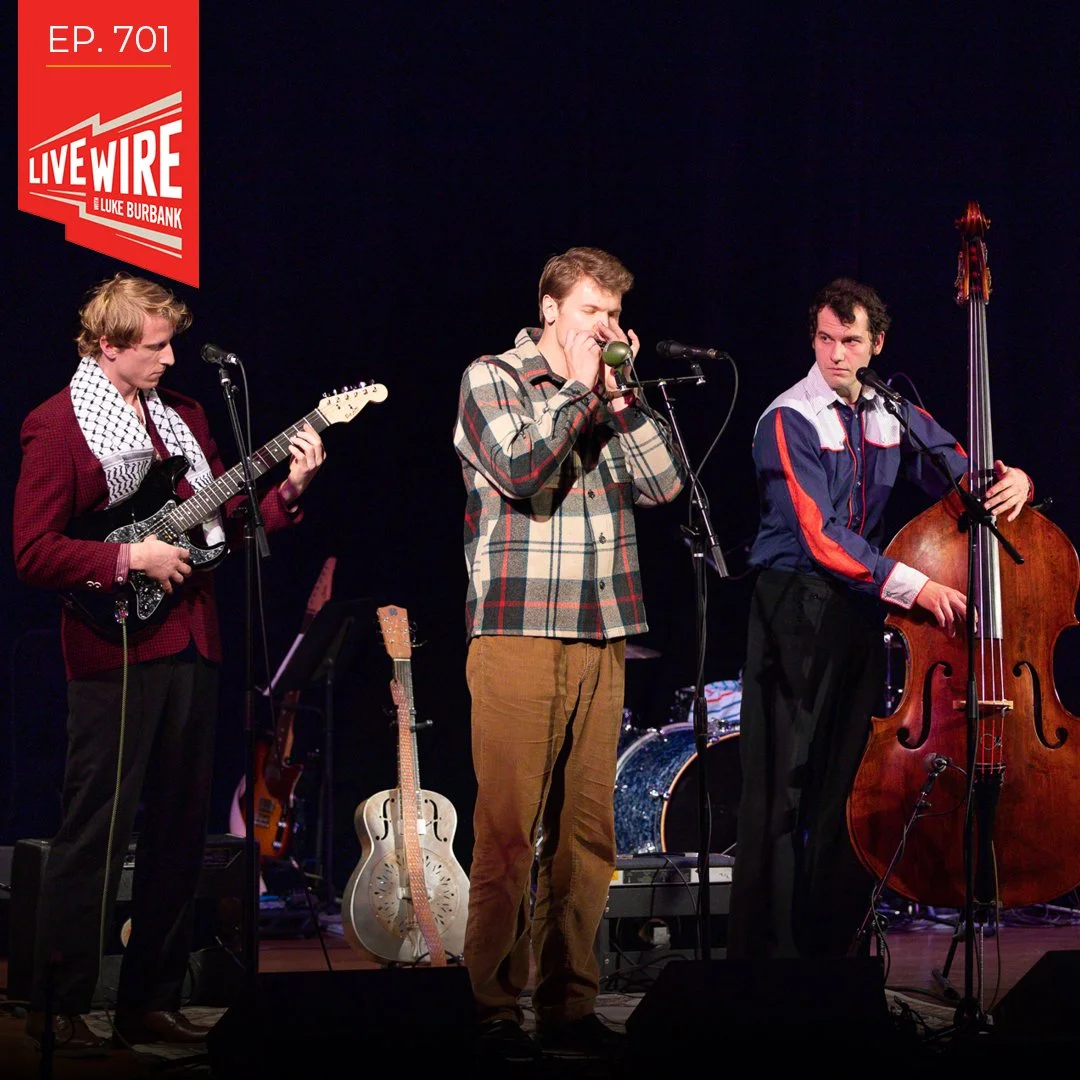
The Brudi Brothers
Dynamic Americana Band
The Brudi Brothers are a dynamic Americana band hailing from Seattle, Washington. Often recognized as the city's favorite buskers and street poets, they are known for their raucous performances and distinctive old-world soul that stands out in the world of modern music. They gained rapid popularity worldwide when a live clip of their latest single, "Me More Cowboy Than You," went viral, garnering over 15 million streams and quickly rising. Comprising of three brothers, Johannes, Conrad, and George, the boys have an inimitable musical and performance dynamic replete with wit and humor. They are all multi instrumentalists and have been playing together since they were kids. They have traveled the world together, their musical commentary drawing from adventures hitchhiking through Europe, living on sailboats, and performing for the Queen of The Netherlands to create their unusually hypnotic sound.
Show Notes
Best News
Elena’s story: “Snohomish High School offers varsity letter for skilled trades — a state first”
Luke’s story: “Can’t carry a tune? This Vancouver Island newcomer is launching choirs for the joyful but tone deaf”
R. Eric Thomas
R. Eric Thomas brings his signature wit and warmth to “Asking Eric,” an advice column tackling life's quandaries. The column is nationally syndicated; you can read it here.
Eric’s 2023 memoir is Congratulations, The Best Is Over.
Eric and Luke discuss advice columns, including Slate’s “Dear Prudence” and the “Ask Ann Landers” column, in addition to mentioning columnists Amy Dickenson and Dan Savage.
Luke references two of Eric’s viral articles. You can find them below:
Reverend Billy & Savitri D
The character of Reverend Billy was developed in the mid 1990s by actor and playwright, William Talen.
We meet the founders of the Church of Stop Shopping—an intersection of activism, performance-art, and spiritual practice focused on eco-justice. Find out more about their work here.
The Brudi Brothers
The musical trio performs their viral break-out song, “Me More Cowboy Than You.”
-
Elena Passarello: From PRX, it's... Live Wire! This week, advice columnist and playwright R. Eric Thomas.
R. Eric Thomas: I don't need to be another voice telling you that you are a bad person. What I can say is I see you person to person, and here's a path out of the situation that you're in.
Elena Passarello: Leaders of the Church of Stop Shopping, Reverend Billy and Savitri D.
Reverend Billy: One lady thought we were robbing the bank, not singing a song about the golden toad and how it went extinct from climate change.
Elena Passarello: With music from The Brudi Brothers and our fabulous house band. I'm your announcer Elena Passarello and now the host of Live Wire, Luke Burbank!
Luke Burbank: Hey, thank you so much, Elena Passarello. Thanks to everyone for tuning in from all over America for this week's episode of Live Wire. We got a good one in store for you. Of course, we're gonna kick things off the way we always do with the best news we heard all week. This is our little check-in, the top of the show, that there is, in fact, some good news happening somewhere on planet Earth, and we're gonna find it. And that's what we did this week. Elena, what's the best news that you heard all week?
Elena Passarello: Okay, I have to start with a question for you, Luke Burbank. When you were in high school, did you letter in anything?
Luke Burbank: I did, but I went to a very small high school where I think everyone got to letter in something. There was like 90 kids in the entire high school. What was your letter in? Well, I lettered in basketball and soccer and in being turned down by people who I asked to go to the junior prom.
Elena Passarello: Oh, okay. Well, aside from that last one, that's kind of the classic letterman situation, like I think in the original sort of construction of what it meant to letter, it was sports. You could only letter in sports and then you'd go to the soda fountain with your letterman sweater on and look like a big man on campus. Years ago, like back when I was in high school, you could letter in other things like I lettered in drama.
Luke Burbank: I remember when they added some of the other classes and clubs, which I thought was a nice addition, by the way.
Elena Passarello: In a lot of places around the country, there are things that students work really hard at in high school that you can't get a letter in, like in Snohomish High School, which has the classic sports and academic letters. But there are people like Elizabeth Bogen and Remus Fox Bailey who are spending most of their high school careers taking skilled trade classes like welding and manufacturing and all the things that we drama and orchestra majors probably should have paid a little more attention to.
Luke Burbank: Turns out there might be more money in welding than community theater.
Elena Passarello: Well, listen to this, not only is Elizabeth Bogen an amazing skilled trades person, she's also a little bit of an activist because she petitioned her school district. And as of this year, at Snohomish High School, you can receive the first letter, high school letter in the state of Washington in skilled trades, which is just such a cool thing, like to letter in welding. And listen to this Elizabeth Bogen already has a job lined up after she graduates. She included the story of her petitioning for this letter situation in her job materials and she's going straight to Boeing in the spring. So another reason to do this is that the Snohomish High School letter is gonna be really well represented by a person who's that successful at 18, right?
Luke Burbank: Now, do you get like a because you know, like if you lettered in a sport at my school You would get like little basketball if that was a little sport or a little football Do you like a welding torch? [Elena: Oh, I hope so.] Like I really think that would take it to another level.
Elena Passarello: Yeah, I don't know what the exact tool is, but whatever it is is gonna be cooler than the mask of comedy and drama that I got on mine for lettering.
Luke Burbank: We need to have a new way of representing the dramatic arts than the comedy and tragedy mask all these years later. Well, speaking of the arts, I've got a story for you. It's actually out of British Columbia where a woman named Sharon Marnell has been embarking on a project to put something together in Canada. Now, actually, the story for her started off when she was living in England a number of years ago. She was actually sitting in a jacuzzi. I guess she had some sort of a like sore shoulder and she was trying to remedy it with the warm waters of the jacuzzi and she was singing and another woman came over and was sitting in the jacuzzi and said, you have a really nice singing voice. In fact, it's so nice that you would not be allowed to join our choir. And Sharon was like, what? That's a weird thing to say to someone in a jacuzzi. And the woman said... Because the choir that I'm in is called a tuneless choir. And it is specifically for people that are not particularly great singers.
Elena Passarello: Nice!
Luke Burbank: And meanwhile, Sharon Marnell had actually gone to college for music and was actually like pretty good at singing and kind of understands music theory, but was very intrigued by this idea of this tuneless choir. So she reached out to some people and she actually started her own tuneless choir in England. She ended up actually starting three of them total. [Elena: Wow.] And has now moved to British Columbia where she's bringing the idea over there. This is like apparently kind of a big thing in England, it was invented. 2016, the idea of the tuneless choir.
Elena Passarello: So you probably don't spend a lot of time in rehearsal trying to get the pitches just right, for example. You focus on other things.
Luke Burbank: There are no rehearsals, Elena, and also no auditions. It's like if you're at like a baseball game and everyone's singing, take me out to the ball game. There is this thing musically that can happen where as long as there are enough people, you tend to find sort of the tune. This is some of the tuneless choir. This is Sharon Marnell leading the tuneless choir. They're singing that I Would Walk 500 Miles song. [Choir Singing] This is Sharon singing. So Sharon's like up there. She's got one of those like headset microphones on and then the music and then surrounding her on the stage is just like literally like a hundred people in matching t-shirts that are singing their absolute hearts out. Occasionally getting close to the tune of the song. [Elena Laughing] But just having the times of their lives. And basically, like, you know, there is this whole sort of group of folks who, and I, I won't name them specifically, but just say I'm related to some people that fall into this category who just absolutely love singing, but we're not maybe blessed with the most natural sense of the tune of a song. I mean, we used karaoke and alcohol for this for many, many years, but it's nice to see that it's a new, a new place that you can go and sing, even if maybe you're not the most talented singer. But you can still have fun up there in British Columbia. So the growth of the tuneless choir, that's the best news that I heard all week. All right, let's welcome our first guest on over to the show. What do you do, Elena, when your husband of 50 plus years insists on peeing off of your patio instead of into a toilet?
Elena Passarello: Move and get divorced.
Luke Burbank: Or okay how about this what about if you need to figure out how to elegantly back out of an agreement to be a gestational carrier for a friend of a friend well here's what you can do you ask our first guest this week he is the national best-selling author television writer playwright and most relevantly for our purposes the guy behind the syndicated advice column known as Asking Eric, this is R. Eric Thomas. Who joined us on stage at the Nordstrom Recital Hall at Benaroya Hall in Seattle recently take a listen. Eric, welcome to the show. [Eric: Thank you.] The last time we had you on the show, you were talking about your memoir. Congratulations, The Best Is Over. It's a lot funnier than the title would make it sound, I want to be clear. But I don't know if you had this, I don't think you had the job at the time. [Eric: I didn't.] How did this come about? How did you become America's advice columnist?
R. Eric Thomas: Well, okay, so you're familiar with the show, Squid Game? [Luke: Yes.] Very similar process. [Luke: Okay.] Yeah, yeah. No, actually, so years ago I wrote a column for Elle magazine that was, it was not advice, it was about politics and pop culture, and so that introduced me to the column space, and so Dear Prudence, the Slate column, reached out to me to substitute for a little bit while their regular columnist was on leave, and I got to do that, which was very fun. And I got to be silly and sassy, but also sort of like. Use a different part of my brain. Years later, they were looking for someone to take over this column and they reached out to me and I didn't really even know, they didn't tell me what it was. They were like, are you interested in a column? And I was like, yes.
Luke Burbank: Would you like to play a most dangerous game? They're like, I don't know.
R. Eric Thomas: Have you heard of print media? I know, I know. And anyway, so it was kind of cloaked in secrecy, which makes a lot of sense, because I think at that time, the column I took over was written by Amy Dickinson for years.
Luke Burbank: Yeah. Ask Amy.
R. Eric Thomas: Ask Amy, very popular. And she had not yet announced her retirement. And so I didn't know what I was auditioning for. They gave me some questions. And they asked me to write my thoughts. And so, I did. And then, they gave me feedback. And it was a back and forth process for a little while. And finally, they were like, OK, we're going to take you into the room and tell you what's going on. It was a Zoom, actually. But yeah. So anyway, the long story short is they found me and I think they were vetting a lot of people and I'm very fortunate that they liked the way that I wrote.
Luke Burbank: Do you remember what any of those like test questions were you like when someone auditions for a role, sometimes they'll remember the moment when like the casting director saw them as the, as the person, did you like nail one of these questions?
R. Eric Thomas: I did, okay, so there were two that I remember very clearly. One was, it was, you know, they were fake questions, you know, one was a mother who was trying to figure out how to buy clothing for their gender nonconforming child. [Luke: Okay.] And they were like, I don't know what to start, I don't want to offend this, that and the third. And I was like, Oh, great. Well, here are these companies that are like run by trans and gender non-conforming or non-binary people that make clothing. Specifically for people like your child. And I think that you can pull a page up and look at it with your child and say, hey, it's just of interest to you. Your birthday's coming up, holidays are coming up. Let's go on a shopping spree.
Luke Burbank: I don't think Ann Landers would have nailed that one.
R. Eric Thomas: I'm sure Ann Landers would have nailed that one. I mean like...
Luke Burbank: Of the five gender non-conforming clothing stores that I tend to frequent, this would be the top.
R. Eric Thomas: Yeah, I mean, Ann Landers did not have access to Google, I guess, for most of her career. And so, like, you know, it's helpful. I mean one of the companies actually was run by a friend of mine, so like, so that kind of helped. [Luke: Right.] But yeah, it is a very different landscape to write a column in than Ann was writing. But you know Ann's column became Amy's column, which is now mine, and so I tell people that I'm Grand Landers.
Luke Burbank: You are listening to Live Wire from PRX. We're talking to R. Eric Thomas about his advice column. It's known as Asking Eric. We've got to take a very quick break, but don't go anywhere. Much more Live Wire coming your way in just a moment. This is Live Wire from PRX, I'm Luke Burbank, here with Elena Passarello. We are playing an interview we recorded with R. Eric Thomas, he's a playwright and author, and also the person behind the Asking Eric advice column, which is in newspapers all over America. Let's jump back into that conversation. We recorded this at the Nordstrom Recital Hall at Benaroya Hall in Seattle, Washington. One thing about these advice columns, the way that I figured out you had the gig was like every time I would look at a newspaper I would see your face. It's like part of the job is there's always a picture of you. It's being the real estate agent of the newspaper. We're gonna see your picture. What's that like for you to have so many people now recognize your face?
R. Eric Thomas: Yeah, I was not prepared for that part because, you know, I'm like shrunk down, you know and it's this headshot from pre-COVID. So like the light was still in my eyes and I'm, like, I can't take a new one. And it's interesting because also when people share the articles online, sometimes the paper, like the picture like blows up huge and I've had people email me and say, your face is too big in my email. And I'm like, oh. That's a problem I can't really help you with. But I will, people, you know, I do a fair number of things. I host the malls and I've written books. And so people will sometimes say to me like, where do I know you from? Which is always a question that I'm like, I don't know. [Luke: That's so loaded.] Yeah, do you think I'm Morgan Freeman? I don't know what you, I dunno, I dunno what's going on. Let's go with anything here. And it used to be I just look like somebody's cousin. I'm, like, oh, I look like your cousin. Didn't matter the race. I just looked like your cousins. But now I say, like, do you read the newspaper? And they're always like, oh, and it's either, it's very interesting, two very different responses. Either, oh I read your column every day, I love it. Or, oh you wrote something I didn't like.
Elena Passarello: Oh, no. Wow.
R. Eric Thomas: And I always feel the need to like apologize a little bit, but also like, thank you for reading. I'm going to go now.
Luke Burbank: It also seems like if you're actually writing responses that are useful, they will be polarizing. Oh yeah, absolutely. Because the alternative is to write something that's just so kind of milk toast. That like, yeah, nobody's mad about it, but also did you even really help the person who was asking for the advice?
R. Eric Thomas: Yeah, yeah.
Elena Passarello: Yeah, that's got to be hard to not just kind of give the people pleasing answer that neutralizes everything because you do want to have it be not a conversation starter, but you want it to be about the muddier parts of human life.
Luke Burbank: Well, for instance, like in tedious cookie tradition, taxes, family ties, a recent question posed to you. [Eric: I recall.] It was someone writing in because they've been making these holiday cookies that are very involved. And the people in their family they've been sending them to are not really getting hyped enough about it, to where they used to send photos of them with the cookies. And now... The person making the cookies texted, did you get the cookies? And the response was, yeah, we got them. And they want to know if they need to keep making the cookie. So I'm sorry, back to Elena's question. How do you figure out how to answer a question like that so that it's useful for everybody?
R. Eric Thomas: Yeah, well, when I started the column, people were like, what qualifies you to give advice? And I would say, which sounds, it's a little flippant, but it's also true, I'm somebody who's made a lot of mistakes. And I don't come at it as I'm an authority. And so, if I was an authority or if I was trying to create some sort of ChatGPT answer, or like, and people do, they write to me sometimes, they're like, are you AI? And I'm like, babe, no. [Elena: Look at the picture.] Look at picture. No, but I just lead with empathy. And sometimes empathy says, hey, I know that you're in this conflict with your sister, with your parents, with your child, and your feelings are valid. But also, I think that maybe you're in the wrong a little bit here. Or you're right, and it's still bad. It's still unfortunate, and you're going to have to just sort of accept it. And, yeah, sometimes those things, a lot of times... When I get a large number of responses every day, which is great, I love the responses and...
Luke Burbank: The radio listeners did not see what Eric did right after he said, I love the responses.
Elena Passarello: It's a little flinch, a little thing.
R. Eric Thomas: Yeah, I should clarify.
Luke Burbank: Tiny flinch.
R. Eric Thomas: I love the responses that are polite. Some people have a tendency to think, if I'm typing into an email box, I can treat you any kind of way. And I want to respond with advice, like, hey, I think that you should consider humans. But that is few and far between. But any case, sometimes the response is people are saying, you should have just taken that person to task. And my feeling is always, there is just so many ways to be told that you're wrong and you're bad in this world, particularly now. I don't need to be another voice telling you that you are a bad person. What I can say is I see you person to person and here's a path out of the situation that you're in.
Luke Burbank: You're listening to Live Wire Radio from PRX. We're talking to R. Eric Thomas, the writer behind the Asking Eric column here from Benaroya Hall in Seattle this week. I heard something the other day about sort of like the mapping software approach to dealing with people who are maybe struggling or maybe doing stuff you don't like, which is if you think about it and you're driving and you have the map on in your car on your phone and you miss your turn, it doesn't yell at you. It just reroutes you. Just keeps rerouting you to where you're trying to go. I feel like that's kind of what you're talking about. Not just like yelling at someone, but just like, just, okay, well there's another turn coming up here. [Elena: Recalculating.] And now there's another turn. We could just, we're just going to keep working our way towards this goal.
R. Eric Thomas: Yes, that's that is a great great metaphor. Like that is exactly what I try to do And and you know there I'm sure there's some mapping softwares that are like you're an idiot. That's a setting you can do exactly. I don't like that. I don't respond well to that and I don't think other people like that every once in a while I might get a little bit arch. But like again I wrote a column for years for Elle magazine where I was very arch. It was just me talking about politics and pop culture from 2016 to 2020. So just a rich text. [Luke: Yeah, those were pretty chill years.] Yeah, absolutely, absolutely. And so like, I can be sassy, sarcastic, sardonic, but this is a person who has such. Is at their wits end to such an extent that they're writing to a stranger in the newspaper I don't think that I don't think that of that is desperate or as pitiful. I think of that as so I feel I see that as an honor that I have to hold really really carefully And so people will say like oh that was a silly question why'd you answer it because somebody has this problem and I take that I take it very seriously.
Luke Burbank: You also recently responded to a question from Uneasy Grandma. Still-married grandson wants to bring his new girlfriend to visit. And I believe the issue was that the grandson was still technically married. Although had been separated for five years, which I thought, you know, calm down, grandma. She didn't want... she didn't... She didn't want him to bring his new girlfriend to the gathering because she felt like it was awkward because he was still technically married. I don't know. You write a lot of these columns. Do you remember sort of roughly what your advice was on that for her? [Eric: Gosh, I don't.] I just read it. So I think what you told her was.
R. Eric Thomas: Yeah, I was like, I could struggle through this, or you could just tell me what to do.
Luke Burbank: Yeah, that was, that really, I really sandbagged you there and I apologize. I'm also low-key auditioning for your job if you ever don't want it. So I had to try to slide in there and show my skills. No, I think you basically said like... Talk to the grandson about what your kind of hopes are for this get together and what you're really looking forward to and listen to him about what he's really looking forward to. Don't start with and don't put like you're not invited in the initial conversations or you know, don't bring your partner. Like just see what you are hoping for and what he is hoping for and if there is something in the middle that can be achieved that fits both of your hopes. That isn't this extreme thing of like don't bring your girlfriend.
R. Eric Thomas: Yeah, yeah, that's good advice. I thought it was very, I was very good.
Luke Burbank: That was very good advice, because that's the kind of thing, I feel like you're really, you're working at a time when family stress is at like an all-time high, you know, these are very, these are very fertile years for the advice columnist who's talking about how do we deal with our family who we don't see eye-to-eye with.
R. Eric Thomas: Absolutely, yeah. And I think so much of it is about conversation. So much of that question is also about taking a step back and saying, I think I haven't acknowledged what my expectations of myself and of you are. So let me voice those and then ask you what yours are. Interestingly, with that question, I remember some of the responses, actually. A lot of people, or some people, wrote to me and said, the son is still married. He shouldn't be allowed to bring a girlfriend to the house. You know, either of you should go. Of a formal divorce or no girlfriends. And, you know, I don't happen to agree, like the girlfriend exists, so let's look at what's reality. But I do recognize that when you're giving advice, you're also reflecting your relationship to the world and to morals and values. Early on in my tenure, there was a couple that was clearly just sort of not aligned. They were kind of icy. But the wife and the couple had essentially a boyfriend. And I said, you are in an open relationship, so you should just formally acknowledge that. People didn't like that. [Luke: Really?] Yeah, and I wasn't saying I'm going to, I'm advocating here's the book on polyamory, but I'm saying let's look at what is in front of us and acknowledge the facts and move from there. So like, this is not a column where I'm gonna give you my own personal morals, but like my compass for the world is gonna be oriented one way, and it might be different than other people's, and that's okay.
Luke Burbank: And it would seem that the readership would skew towards, not always, but it could go towards a group of people that just might, you know, maybe not be as progressive, or as, I mean, again, there's all kinds of people that read the newspaper, but I just wonder about, for instance, there is a rich history of out gay men writing advice columns, Savage Love from right here in Seattle, Washington, Dan Savage. But you're, as an out gay man, writing really like the biggie and the most mainstream. Of these columns that's reaching just like so many people, not somebody who grabbed an alt weekly and is likely coming from a sort of pre-existing worldview. How do you think about how you answer questions and how you advocate for inclusion and for people thinking about relationships difference and gender differences and all that stuff?
R. Eric Thomas: It's interesting. I get a lot of... responses from people who say I wasn't expecting to enjoy your column. What could you know about this? Which like that I appreciate and then sometimes they get really specific, you know Like race or sexual orientation or whatever and I'm like, okay. Thank you. I get I get like I understand. And I don't feel the need to defend myself, but I think one of the opportunities that anybody who has ever felt other or outside has is that you were trained from birth to think not only about how you, as a fully realized person, are operating in the world, but also how other people are operating at you, around you, how they're perceiving you. And so you are always working with an empathetic mind. You know, and so it isn't that I have lived the same life as somebody, you know, a Mormon mom in Utah, but like I have...
Luke Burbank: You can study them now through every reality show. [Eric: Exactly, yeah.] We need you there now, you well-documented species.
R. Eric Thomas: And so, like, if I don't find the answers on Secret Lives of Mormon Wives, I can also just think, this is a person, you know? And I am a person and the person in me sees the person and them. I've also, I've been married. I've tried to relate to people. I've had jobs that didn't work out. You know, these are human problems.
Luke Burbank: R. Eric Thomas Is the person behind Asking Eric. Thank you so much for coming on Live Wire.
R. Eric Thomas: Thank you.
Luke Burbank: Right there was R. Eric Thomas here on Live Wire. You can catch Eric's advice column. It's Asking Eric syndicated in newspapers around the country. And if you're in Baltimore, keep an eye out for a new musical. It's called Extravaganza, which Eric helped create. It will be coming soon to the Baltimore Center stage. Hey, it's Luke, you know what's better than hearing Live Wire? Watching us make the show live. And February 19th, we'll be recording at the Alberta Rose Theatre in Portland with award-winning chef, Sean Sherman, plus writer and culture critic, Chuck Klosterman, and music from Georgia Maq. You can get tickets and more information at livewireradio.org, and we'll see you February 19. You're tuned in to Live Wire. All right, we are gonna try something a little unusual for us here. We're gonna go to church. But not just any church, the Church of Stop Shopping, which is led by Reverend Billy. It blends performance art with politics and a genuine spiritual calling. Now, the ministry debuted back in 1998 in Times Square with a protest outside the Disney Store where they proclaimed Mickey Mouse the Antichrist. And Elena, they have not slowed down since they were even on tour with Neil Young recently here with a prophetic word, as we used to say in the church when I was growing up about the better life that we can all have. Let's take a listen to Reverend Billy. This was recorded live at Revolution Hall in Portland, Oregon, last December.
Reverend Billy: Oh, welcome to the Church of Stop Shopping. Some of our friends in New York call us the Earth Church, but that's good, that works. We love the Earth, we're guided by the Earth. We don't want the Earth to be hurt. We don't want the earth to be poisoned by our products. Stop! Stop shopping! Stop shopping!! Stop it! Stop it!! Stop it!!!
Reverend Billy: Sorry about the spit. It's sacred spirit. We've been shouting that kind of message for over 20 years in our church, and mixed results, obviously. The earth is now in the 29th month of record global heat wave. This whole city's bursting into flames. American consumerism is a driver of this thing we're trying to survive. Stop! Stop! SHOPPING! We can't do it. We're not doing it. We're NOT doing it! We have more carbon in the, we have more poisons, we have more methane, we have more fluorinated gasses. The greenhouse gasses are more and more every year, every month. We're not stopping. 100 million migrants wandering, looking for a home. The droughts, the impossibility of farming, the unpredictability of the seasons. We've got an emergency here. And we want, we want to give to our children and to our loved ones a healthy earth. We want to have a way to live. And the earth wants us to do this, I believe. Don't you believe that? Earthalujah? I think the earth wants to live! But the earth is now in the sixth extinction. 29 months of record heat. It is happening now. The earth is doing what she must do to survive. But I think the earth is calling out to us to join up in some way. But we have to be sensitive to what she's saying. Let's ask the earth to give us the signal. Let's be with the earth, let's live with the Earth. Let's do radical things we couldn't have expected ourselves to do. Now is the time to be radical Americans again. We've done it before. We can do it now. Somebody give me an Earthalujah Earthalujah. Earthalujah. Earthalujah. Earthalujah. Earthalujah. Earthalujah. Earthalujah! Earthalujah!
Reverend Billy: Earthalujah. Amen.
Luke Burbank: A word from Reverend Billy. Reverend, would you come over and take a seat? We also want to welcome to the show the co-founder of the Church of Stop Shopping. Please welcome Savitri D to Live Wire. Savitri D, thank you for being here.
Savitri D: Hey, thanks so much for having us.
Luke Burbank: I cannot tell you how much joy I got from reading your Wikipedia page about the church and about Reverend Billy. The Reverend Billy character debuted on the sidewalk at Times Square in 1998 outside of the Disney store where he proclaimed Mickey Mouse to be the Antichrist. He was arrested multiple times outside the Disney Store when he duct taped Mickey Mouse two across. How many times, together, how many times have both of you been arrested and how many times in front of the Disney store specifically?
Savitri D: Well, it's easy to lose track, to be honest with you, but I think probably accumulate maybe a hundred times. I wouldn't say at the Disney Store, and you know, there's various stages of arrests. There's you know being held, there being held in the car, there is being taken to the precinct, there going downtown to the tombs, there was being held overnight, there being held over two nights. I mean, there's a lot of versions of being arrested.
Luke Burbank: But being that you've both been involved in so much social action and so many of these things, is there a point where it adds up and there you might get some serious time over it, or they generally see it for what it is, which is political speech and performance art and a spiritual practice for you?
Savitri D: Well, we have the First Amendment protecting us.
Luke Burbank: Well, we used to.
Reverend Billy: It's still there. It's still there.
Savitri D: It's 45 words, 45 words. All those freedoms except property.
Reverend Billy: Congress shall make no law.
Reverend Billy & Savitri D: Respecting an establishment of religion, or prohibiting the free exercise thereof, or abridging the freedom of speech, or of the press, or the right of the people peaceably to assemble and petition the government for redress of grievances.
Savitri D: There you go. I mean, Luke, I was just saying, you know, if we can take that chance, we take those risks. You know, we're obviously in a very privileged situation, sort of, you know, the way we look, the lives we lead. So we're willing to take that chance. And yes, sometimes there are, you know, greater charges in front of us. And luckily we live in New York City and are surrounded by incredible attorneys who. Want to support activists and I think thank you to all the attorneys in the world. Thank you.
Reverend Billy: We have some here tonight.
Luke Burbank: It's a public radio show, it's mostly attorneys.
Savitri D: I see you.
Luke Burbank: What do you see? It seems like it's in the name, the Church of Stop Shopping, but I get the sense in talking to you backstage and in just kind of, studying your work a little more, this is more encompassing than just that, just stopping consumerism. What do see this movement is being about for you?
Savitri D: Consumerism is a broad term that encompasses many things, including militarism, including the way we support our shopping with violence overseas. And I think we just wanna drive a little wedge in between people and their shopping, just get people to stop for a second. And of course, we wanna hold corporations accountable because it's not just about our personal perfection. It's not like if I'm a very good person, everything will be fine. We know that's not true, right? We have to hold leaders accountable, we have to whole corporations accountable.
Reverend Billy: One of the distortions of the First Amendment is Citizens United, the saturation advertising, the unlimited funds going to preferred corrupted candidates. They say that 10,000 advertising events take place to the average New Yorker who has a computer.
Luke Burbank: We're talking to the Reverend Billy and Savitri D from the Church of Stop Shopping here on Live Wire this week. There's a pretty incredible photo of you online, Reverend Billy. You're in the sort of ATM vestibule of a Bank of America where you were casting out the demons of bad loans and toxic assets. How did that go? And did security ask you to leave pretty quickly? Well, security.
Reverend Billy: Oftentimes they kind of smile and sort of get it.
Luke Burbank: Right, because they're probably not making a living wage themselves.
Reverend Billy: That's right, and some of the tellers at JPMorgan Chase are on food stamps, whereas Jamie Dimon makes a hundred thousand dollars a day. So you've got real disparity there, classes and races and all over the place. We find people often really nervous, and they're laughing, and they don't know why. Some people cry. One lady thought we were robbing the bank, not singing a song about the golden toad and how it went extinct from climate change. And she called the police, and we got arrested that time.
Savitri D: But you know we sing, so the singing goes a long way towards smoothing out the rough edges in those settings.
Reverend Billy: Have we mentioned that? We have a 30-voice choir.
Luke Burbank: Yes, I know. And a lot of the videos that people want to check out the work of the church, the choir is in attendance. And it's really kind of a beautiful sort of surreal thing, I guess. Do you think about it as performance art? Do you about it is a political action? How do you think of what you're doing?
Reverend Billy: We know we're doing well when, for the first 20 or 30 minutes of one of our services, people don't know what we are.
Savitri D: Yeah, we call it radical instability. It's a kind of wildness. And we try to charge that wildness, that's our job. So performance art is a way to get out of a situation, though. We do pull that card sometimes, like it's just an art project. What does that cause in people?
Elena Passarello: When they are radically de-
Savitri D: Well, in a consumerized society, it opens the way for change, for transformation, because they don't know what it is, right? So in a culture in which everything is given to you as exactly as it is in a category, you know, at a price, in the right aisle, you know with the other sweaters, et cetera, you know radical instability disrupts that and then suddenly, it's as if the milk is suddenly like, not in the refrigerator, you know?
Elena Passarello: Yeah, totally.
Luke Burbank: How do you live your lives? You know, you've made this sort of the point of your life. How do then live your life maybe differently than sort of a lot of typical Americans? Like, what does this look like for you in your actual lived experience?
Savitri D: Well, don't look at my socks too closely. No, I'm just kidding.
Reverend Billy: My socks don't match.
Savitri D:You know, we're all compromised. Like, you know, I just want to say, like, we are all living in this impossible situation, all of us. And so we wake up with that burden and that confusion every day, all of us trying to figure out how to be good people in this situation. And it's hard, right? It's hard for all of. I would just say, like, I try to take my values and integrate them with action. Right, and then that feels like a good day to me. That's how it feels to me, right? And that's what activism is. That's all, being an activist is, right, is integrating your values and your actions. And sometimes I fail for like, you know, 53 weeks in a row.
Luke Burbank: You really sort of were public enemy number one at Starbucks for a good decade or so, if I understand it right. There was a, you would do a lot of events at Starbucks and there was apparently a laminated card in the Starbucks in New York. What to do if Reverend Billy comes into your Starbucks?
Savitri D: That's still so funny.
Reverend Billy: Yes, that was issued from the Seattle headquarters to the managers. And after that, when I guess it just didn't go well for them in terms of our performances inside their cafes, they sent us a letter banning me from all the Starbucks in the world.
Savitri D: You know, but the problem was, at the same time, we had a court case in Los Angeles and we figured out we couldn't actually get to the courthouse without, you know, getting within 250 yards of a Starbucks. So they actually, the only way to get to court house was a hot air balloon and then a canoe down the L.A. River. And we just couldn't figure out how to do it.
Luke Burbank: Obviously, you and the other folks in the Church of Stop Shopping have made this really kind of your life's mission and something that's so central to your identity. I think for a lot of people, it's overwhelming to try to go from being a person who's caught very much in the loop of consumerism and of living this life the way that it's kind of presented to us in the kind of, like you said, monoculture. What is something that somebody could do that would be like one thing that would help them move more towards a more sort of aware way of being in the world?
Reverend Billy: Go outside. Go to the earth. Go to your favorite ecosystem down by the shore, down on the river, up on Mount Hood, wherever you have to go. Just go there, be there with the earth, and slow down.
Savitri D: Or look into the eyes of your lover. Turn away from the advertising. Turn away from the screens that are like just overwhelming you. What is overwhelming you? Ask yourself a simple question. You know, anxiety and this anxiety is promoted. You know it's really a way of life now, right? It separates us from our wisdom. It separates from the things we already know, the things that are in our body, from our realities and our relationships. So I would just say like Do the thing that grounds you in life with another person, with the earth, and let the earth guide you. Because it's pretty basic at this point, right? It's pretty basically. I mean, it's on all of us, right. It's not gonna change without us. We have to do the work ourselves.
Reverend Billy: Earthalujah.
Luke Burbank: Yeah. I think that gets earthalujah. Savitri D and Reverend Billy from the Church of Stop Shopping. Thank you so much for coming on Live Wire. Appreciate you. That was the Reverend Billy and Savitri D recorded live at Revolution Hall in Portland. You can catch Reverend Billy and Savitri on their podcast Earth Riot Radio or online at RevBilly.com, or maybe just, you know, bursting into a Starbucks to make good trouble somewhere near you. You're listening to Live Wire Radio. We've got to take a very quick break, but don't go anywhere. When we come back we're going to talk to The Brudi Brothers about their unlikely musical rise keep it tuned right here more Live Wire in a moment Welcome back to Live Wire. Okay, before we get to this week's musical performance from The Brudi Brothers, a little preview of next week's show. We're gonna be adventuring around. We're going to talk to the poet and author Morgan Parker about her debut collection of essays. You get what you pay for. It has got all kinds of insights into her life and helpful tips, like if you're in Manhattan and you just went to therapy and now you need to find the best store to cry in. That's covered in the book. And then we're going to head actually to one of my very favorite places in Portland, Oregon. It's called the Sports Bra Sports Bar, where we recorded a live wire pop-up. We talked to professional soccer player turned writer, Georgia Cloepfil. And then lastly, but definitely not leastly, we're gonna hear some music from Brazilian sensation Rogê, who's going to play us a tune that will have you dancing or whatever that looks like for you. Anyway, do not miss any of next week's episode of Live Wire. It's going to be great. In the meantime, our musical guest this week, they're a dynamic Americana band hailing from Seattle, Washington, often recognized as the city's favorite buskers and street poets. They're known for their raucous performances and distinctive old world soul kind of stands out in this world of modern music. They are comprised of three brothers, Johannes, Conrad, and George. This is The Brudi Brothers, recorded live at the Eile Ball Nordstrom Recital Hall at Benaroya Hall back in December. Hello, Johannes, Conrad, and George.
The Brudi Brothers: Thanks for having us, and thanks for introducing us as brothers. So many people ask us after shows, are you actually brothers? You know, they say, Johannes and I, we look like Mormon missionaries, and he looks like the guy we're trying to convert.
Luke Burbank: We have to talk a little bit about this song, Me More Cowboy Than You, which you were performing at the Sunset Tavern here in Seattle, an amazing venue by the way, in Ballard. And a clip went up on TikTok and it became hugely viral and popular. And what I noticed is you all seem like peace loving Northwest men and the comment section below that TikTok video is a war zone. Of people debating who is and is not country, who's fake country. I wouldn't imagine that's what you're trying to touch off, but what is that like for you to have this song that's such a hit that has so many people kind of like mixing it up over this question of countryness?
The Brudi Brothers: I think any controversy sparks conversation, and then the AI algorithm just thinks, oh, people like it. The more controversy, the more gigs we get to play. We were honestly, right when this song came out, we had been kicked out of the Ballard market, farmers market, for driving through in a petty cab too many times. Chariot, as they called it. They called it a chariot.
Luke Burbank: I have never heard of anyone being kicked out of the Ballard Market. It's true, they had a vendetta against us. And is it true that you initially weren't even considering recording this song or didn't think too much of it?
The Brudi Brothers: Yeah, we just, well, it's such a mean song and it's so pointed and so well written, might I add.
Luke Burbank: So is that the song that we're gonna hear now?
The Brudi Brothers: No.
Luke Burbank: Okay.
The Brudi Brothers: We are going to play Wagon Wheel? Can you, can somebody cut his mic?
Luke Burbank: Yeah. All right, this is The Brudi Brothers here on Live Wire.
The Brudi Brothers: [The Brudi Brothers perform "Me More Cowboy Than You"]
Luke Burbank: That right there was The Brudi Brothers recorded live at Benaroya Hall in Seattle. You can check out their music and find their tour schedule and other info at BrudiBrothers.com. That's B-R-U-D-I, brothers.com. Alright, that's going to do it for this week's episode of Live Wire. A huge thanks to our guests, Reverend Billy and Savitri D. From the Church of Stop Shopping, plus R.Eric Thomas and The Brudi Brothers.
Elena Passarello: Laura Hadden is our executive producer, Heather de Michele is our Executive Director, and our producer and editor is Melanie Sevcenko. Eben Hoffer is our Technical Director, and Tré Hester is our Assistant Editor.
Luke Burbank: Valentine Keck is our operations manager, and Ashley Park is our marketing manager. Our house sound is by D. Neil Blake and Marcus Benamati. Our house band is Sam Pinkerton, Ayal Alves, Ethan Fox Tucker, and A. Walker Spring, who also composes our music. This show was mixed by Eben Hoffer and Tré Hester.
Elena Passarello: Additional funding provided by The Marie Lamfrom Charitable Foundation Live Wire was created by Robyn Tenenbaum and Kate Sokoloff this week We'd like to thank members David and Melody Bell of Beaverton, Oregon.
Luke Burbank: For more information about our show or how you can listen to our podcast, head on over to LiveWireRadio.org. I'm Luke Burbank… for Elena Passarello and the whole Live Wire team… thank you for listening, and we will see you next week.
PRX.
Staff Credits
Laura Hadden is our Executive Producer, Heather de Michele is our Executive Director, and our Producer and Editor is Melanie Sevcenko. Eben Hoffer is our Technical Director, and Tré Hester is our Assistant Editor. Our house sound is by D. Neil Blake and Marcus Benamati. Valentine Keck is our Operations Manager, Ashley Park is our Marketing Manager, and Andrea Castro-Martinez is our Marketing Associate. Our house band is Ethan Fox Tucker, Ayal Alves, Sam Pinkerton, and A. Walker Spring, who also composes our music. The show was mixed by Eben Hoffer and Tré Hester. Additional funding provided by The Marie Lamfrom Charitable Foundation. Live Wire was created by Robyn Tenenbaum and Kate Sokoloff. This week, we'd like to thank members David and Melody Bell of Beaverton, OR.
