Episode 699
Jeff Hiller, Mohanad Elshieky, and Edna Vázquez

Actor and writer Jeff Hiller dives into his memoir Actress of a Certain Age: My Twenty-Year Trail to Overnight Success, which highlights his awkward youth as a bullied kid in Texas to his Emmy win for HBO's hit series Somebody Somewhere; stand-up comedian Mohanad Elshieky recounts some recent challenges... like getting stuck in his apartment elevator and being tricked into hiking by his wife; and singer-songwriter Edna Vázquez gives us a brief history of mariachi, before performing with Forest Grove High School's ensemble Mariachi Tradición.
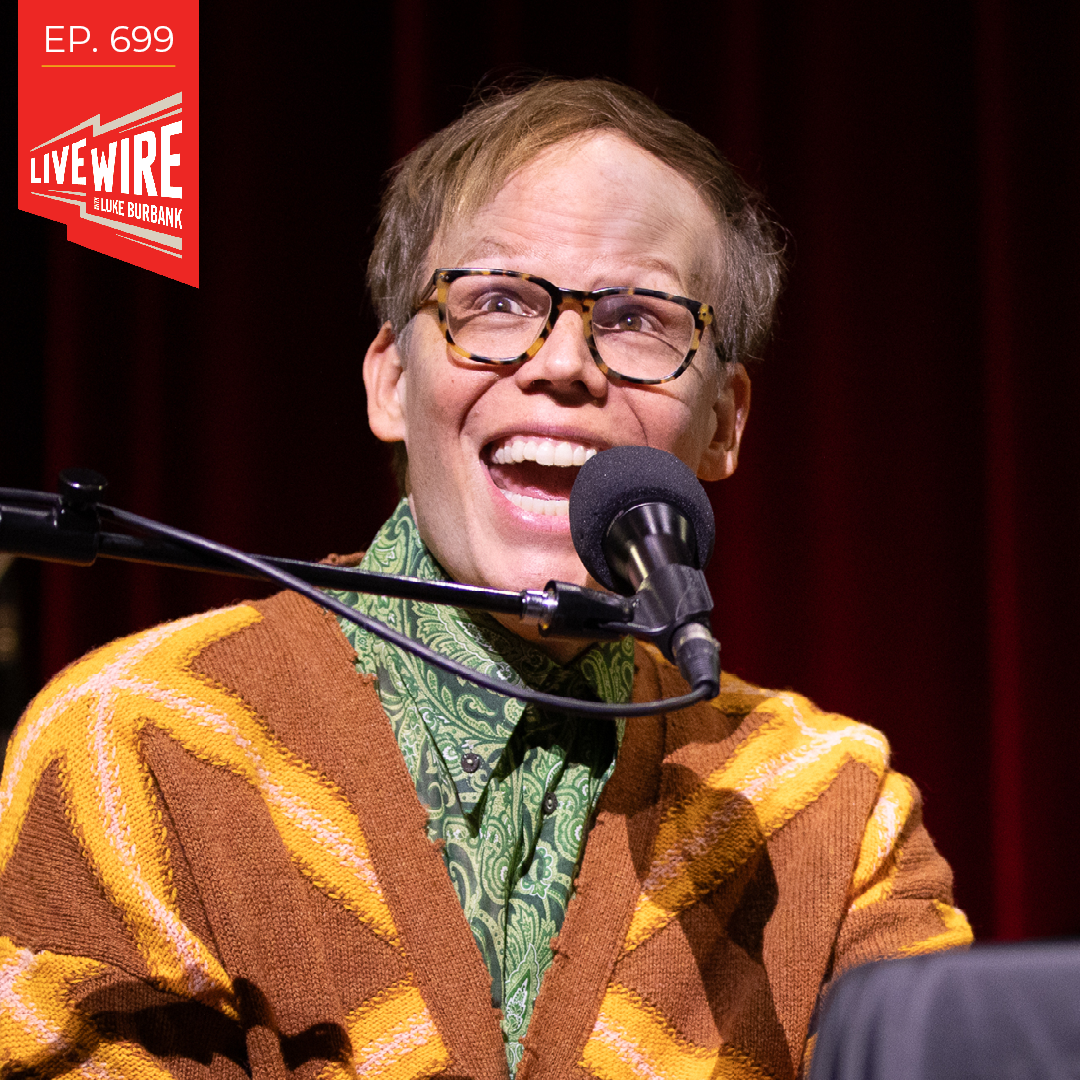
Jeff Hiller
Emmy-Winning Actor and Author
Jeff Hiller is an Emmy Award-winning actor, writer, and comedian who has appeared on TV shows such as HBO’S Somebody Somewhere, American Horror Story: NYC, Crazy Ex-Girlfriend, 30Rock, and Law and Order: CI, among numerous others. His film roles include Greta, Morning Glory, Ghost Town, and Set it Up, and he has performed on Broadway, off-Broadway, in Shakespeare in the Park, Disney musicals, and regional theater. Jeff regularly performs solo shows at Joe’s Pub at the Public Theatre and improvises at The Upright Citizens Brigade Theatre in LA and NYC. His 2025 memoir, Actress of a Certain Age: My Twenty Year Trail to Overnight Success, details his journey from growing up “profoundly gay” in 1980s Texas to his experiences as an inept social worker and how he clawed, scraped, and brawled to Hollywood’s lower middle-tier.
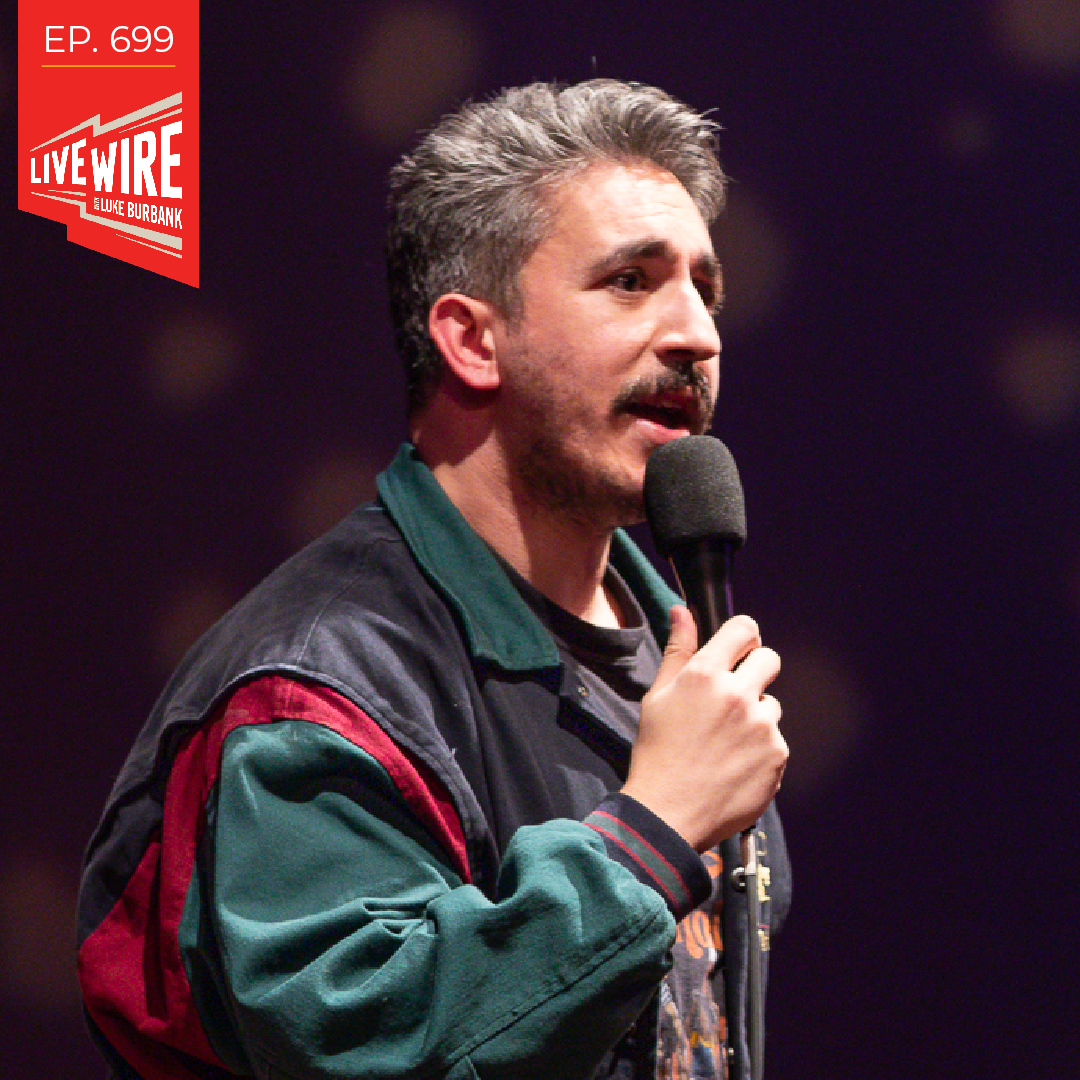
Mohanad Elshieky
Stand-Up Comedian
Mohanad Elshieky is a New York-based, Libyan-born comedian seen on Conan and The Late Show with Stephen Colbert. The Portland Mercury calls him “an undisputed genius of comedy.” He’s a contributing writer on NPR’s Wait Wait… Don’t Tell Me!, and his special No Need to Address Me is now streaming on Apple TV and Amazon Prime.

Edna Vázquez
Singer-Songwriter
Born in Jalisco, Mexico, the birthplace of mariachi, Edna Vázquez was immersed in traditional Mexican folk music from childhood. As a teenager, she relocated to Portland, Oregon, developing a bicultural musical style blending folk, rock, R&B, and Mexican heritage. Since 2017, Edna has toured internationally as special guest singer with Pink Martini, performing at Carnegie Hall and Royal Albert Hall. She's also performed with Gustavo Dudamel and the Los Angeles Philharmonic, and at the Latin Grammys with Flor de Toloache. Her debut traditional Mexican album, Te Esperaba, features mariachi, Norteño, and banda genres recorded in Mexico. As a rare woman leading traditionally male-dominated mariachi ensembles, Edna inspires other women to pursue their musical dreams.
Show Notes
Best News
Elena’s story: “Chimps develop fashion trend by shoving grass in their ears — and in their butts”
Luke’s story: “‘No one knows where it came from’: first wild beaver spotted in Norfolk in 500 years”
Jeff Hiller
Jeff’s book is Actress of a Certain Age: My Twenty-Year Trail to Overnight Success.
Watch Jeff play Joel opposite Bridget Everett on Live Wire’s favorite TV show, Somebody Somewhere.
Mohanad Elshieky
Mohanad performs stand-up.
Edna Vázquez
Edna, accompanied by Mariachi Tradición of Forest Grove High School, performs “El Árbol” off her latest album, Te Esperaba.
-
Elena Passarello: From PRX, it's... Live Wire! This week, actor Jeff Hiller.
Jeff Hiller: People tell me like, oh, I don't know if I wanna watch it. It's gonna make me cry or whatever. It's kind of a hard sell. We're like sweaty middle-aged people eating mayonnaise, you know?
Elena Passarello: Stand-up comedian, Mohanad Elshieky.
Mohanad Elshieky: No more documentaries about the bottom of the ocean. Every creature there looks like a first draft.
Elena Passarello: With music from Edna Vázquez and our fabulous house band. I'm your announcer, Elena Passarello, and now, the host of Live Wire, Luke Burbank.
Luke Burbank: Thank you, Elena Passarello. We've got a phenomenal show for you this week. First, though, of course, we've got to kick things off the way we always like to with the best news we heard all week. Here's the basic idea, the news can be pretty overwhelming, pretty sad a lot of the time. There is good news happening in the world, you just have to look very, very hard for it. And we have, and we found some. Elena, what's the best news you heard all week?
Elena Passarello: Oh, Burbank, I found it. I found it. The best news of the week happened in Zambia at the Chimfunshi Wildlife Orphanage.
Luke Burbank: I already feel like I want to cry.
Elena Passarello: Well, I don't know, if this makes you cry, it will be a very interesting clue into your personality, Burbank. So there's a vibrant chimp community at this wildlife orphanage. It has its own social structure. It's been there for decades, so there are generations and cliques and groups. There's even, at one point back in 2010, there was a style maven. Her name was Julie. Julie was the IT chimp. And... You know, scientists and animal behaviorists are watching the chimps at this orphanage, so there's a teaching aspect to the refuge. Julie, in 2010, started putting grass behind her ear for no apparent biological reason, but then all of her chimp pals started putting the grass behind their ears too. And then, like, all of a sudden...
Luke Burbank: That's exactly like middle school.
Elena Passarello: Yeah, it was.
Luke Burbank: There's like a kid shows up one day just doing something.
Elena Passarello: Yes, it was.
Luke Burbank: Kind of weird, and then if they're cool, everyone starts doing that.
Elena Passarello: It's on Thursdays, we wear pink. Yeah, 100%. And everyone sort of paid attention to this because it was such a very obvious, just completely social activity with no like biological purpose. But it kept up actually for like three years, even after Julie, who not just was a style maven, she was like a style Maven who was somewhat elderly, she passed away and they kept doing it. But then it faded out, as most trends do. Fast forward to now and you know how like we were just talking about this backstage actually how like your trends from high school come back Like y2k is very big now or like I hear rugby shirts are coming back Or like remember Billy Crystal's sweater from When Harry Met Sally.
Luke Burbank: Oh yeah, who can forget? When you find the sweater you want to be with for the rest of your life, you want the rest of your life to start as soon as possible.
Elena Passarello: When Harry Met Sweater. [Luke: Yes.] Yeah, totally. That is happening in Zambia at this wildlife refuge. There is a totally different group of chimps that's kind of run by this male trendsetter named Juma, and they have brought back the grass accessory. But two things are different. One, they've done a little bit of a flare you could do sticks or grass. Two, you don't just have to put it behind your ear. You could also accessorize with grass and sticks by putting it in your butt.
Luke Burbank: Kids these days.
Elena Passarello: Are you gonna cry?
Luke Burbank: I see why that was an odd response from me before I had actually heard the story.
Elena Passarello: So, there's an article about this in the Journal Behavior that came out not long ago, and one of the things that they interviewed the people who worked at the Refuge about, like, why maybe this trend sort of moved south, so to speak, they said, well, you know, chimps do spend a lot of time looking at each other's butts. [Luke: Wow.] Which reminded me of like, you know, we put heart pockets on the back of our jeans, right?
Luke Burbank: Sure. Yeah, they're just accessorizing.
Elena Passarello: Yeah.
Luke Burbank: The best news that I heard is also about an animal sounds like I was trying to move on extra quickly there And that was because I was no Now I feel like the animal that's in my best news story is pretty vanilla compared to the chimps and what they're getting up to This story comes from The Guardian over in Norfolk in England where beavers have been, they haven't had any wild beavers living there for like 500 years, because they, I see what you're trying to do, Elena, and I don't like it, I don't agree with it. They hunted all of these animals, you know, back in the day to make the hats, I mean, you know, like Astoria, Oregon, right? It was like the first permanent settlement, I think, west of the Rockies, at least of people that were coming to this land later on, and it was, John Jacob Astor could like kill all of the beavers in the west and make hats out of them.
Elena Passarello: For the fur trade.
Luke Burbank: So that was also happening in England. And so they haven't seen any wild beavers in this area for 500 years. And then something started happening in this one part of the country. On the River Wensum at Penstorp, it's in this nature reserve near somewhere. It's called apparently Fakenham. They started seeing, this is what the guy who's in charge of the place, he's the reserve's manager. His name is Richard Spowage. He said he first had an inkling that there might be a beaver living there. After a volunteer noticed many trees that had been chewed down into a small pointed stick-like stump.
Elena Passarello: Yeah, that'll do it.
Luke Burbank: That's a sort of a dead giveaway, right?
Elena Passarello: Yeah, if you've watched any Looney Tune, you know that that's exactly what that is.
Luke Burbank: But because there hadn't been any beavers living there for so long, they thought maybe it was kids trying to play a prank. Boy, I mean, that would really be the prank if you were a kid in England going out and doing this. So they set up these like wildlife cams and they just found this one beaver chilling out there. This beaver has the best life of all time because this is the perfect environment for a beaver. This beaver is the only one. For miles and miles and has like all the trees that it can chew on, all of the land that it can build its dam on or do whatever. It is just like living the beaver dream. And now they're trying to figure out how it got there. Because like, this is miles and miles and miles away from anything. And this beavers by itself, they think it might be the result of something called a beaver bombing. You can laugh at that one.
Elena Passarello: [Elena laughing.]
Luke Burbank: That's actually allowed, which is something that people have been doing, I guess, where like people just illegally are releasing or without getting the proper clearance beavers into the wild to try to repopulate them.
Elena Passarello: Yeah, and they make big changes really fast too, like you don't, it doesn't take a lot of beavers to change the landscape entirely.
Luke Burbank: Yeah, they slow down the water, and a lot of what's gone wrong in places like the west in California is because the rivers are just moving very rapidly because they're not being impeded by the beaver dams, and you don't get that kind of shallow water spreading out. Anyway, they're very happy that this beaver is there, even though they don't know how it got there. It did remind me of Operation Geronimo from the 1940s, which you may know about when we dropped beavers from airplanes into the wilds of Idaho. Many beavers died. This Lone Beaver, just kicking it, this is the best news I heard all week. Let's bring our guest out. He's an actor and comedian who's appeared on a slew of TV shows, 30 Rock, Law and Order, American Horror Story, you name it. The thing is though, as he writes in his wonderful memoir, Actress of a Certain Age, My 20 Year Trail to Overnight Success, most of those TV appearances were brief and not that lucrative. And even toyed with maybe giving up acting, then in his mid forties, he was cast as Joel on the HBO show Somebody Somewhere. And things really sorta changed, including his Emmy win this year for best supporting actor in a comedy series. We can't believe he's here with us, but he really is. Please welcome Jeff Hiller to Live Wire.
Jeff Hiller: You know, when you said 20-year trial to overnight sex? It was.
Luke Burbank: You can read that word either way, and it still works, right, for the title of the book. You are uniquely qualified to write a celebrity memoir because you may have read more celebrity memoirs than like any other living person.
Jeff Hiller: Probably not more than any other living person, but I'm up there, yeah. I read a lot of them, yeah.
Luke Burbank: What is it about that particular format? Like each chapter in the book, you start by referencing a celebrity memoir from someone else. What is it about that format that you like so much?
Jeff Hiller: I love hearing other people's stories. That's the less cynical version of an answer. I love to hear about people who led lives that were interesting. And usually, if you have a celebrity memoir, it is. Although sometimes not so much.
Luke Burbank: Do you feel comfortable naming any, let's say, Mrs. From the celebrity memoir genre, as Alex Trebek does?
Jeff Hiller: Oh my god, I gotcha question. Well, Vanna White has one that's kind of... I think, to be fair, I think it was more of like a lifestyle, kind of a manual than it was a memoir. [Luke: Right.] But I do remember her saying, don't waste your time with a water pick, just let the water from the shower run over your teeth. And I was like, what?
Luke Burbank: I can imagine that in, like, the Buddy Epson...Memoir. Not the Vanna White memoir.
Jeff Hiller: Yeah, I don't know, but here's the thing, I haven't used a water pick since.
Luke Burbank: Okay, so I'm wondering then when you set out to write your memoir, Actress of a Certain Age... What did your 10,000 hours, and by the way, that was just Barbra Streisand's book.
Jeff Hiller: That was 48 hours and 15 minutes, and I did listen to it now about halfway through, I did. I cranked her up to 1.5. And she sounded just like she was in What's Up, Doc.
Luke Burbank: What did you set out to do with your book that you sort of using all of the information that you'd accumulated from all the celebrity memoirs you'd read?
Jeff Hiller: Well, I didn't want to write. The boring stuff, like a lot of celebrities think we really care how their grandparents met, and... [Luke: Uh-huh.] We don't, you know? It's always like, they were on the boat, and I'm like, okay, but come on. And I was like, and I gotta talk about how I knew famous people before I was famous. And, but the big thing I wanted to do was be... authentic and be vulnerable and not, I don't, I didn't want to do the like TikTok thing of like, this is the life I want to present to you. I want it to be like, look. It taint perfect. And then when the book came out, it had a typo on the cover.
Luke Burbank: It did. I was so sad that I got a normal one.
Jeff Hiller: Well, you got the galley. Yeah, the galley was fine, by the way. But then the books come for the unveiling or whatever, and it says, actress of a sateen age. Like some vegan replacement meat. And I was like, well, I'm glad I didn't try and come off as someone who has it all together.
Luke Burbank: You're listening to Live Wire from PRX. We're talking to Jeff Hiller. Emmy Award winner Jeff Hiller, published author, phenomenal actor, and the person behind the book, Actress of a Certain Age. We're going to talk to Jeff much more in just a moment. Stay with us. More Live Wire coming your way. Welcome back to Live Wire from PRX. We're here along with the Portland Book Festival this week at the Alberta Rose Theatre in Portland, Oregon. I'm Luke Burbank here with Elena Passarello, and we are talking to actor and comedian Jeff Hiller about his book, Actors of a Certain Age, as well as the HBO show Somebody Somewhere. Let's jump into the part of the celebrity memoir that you say is the worst part, your childhood. You say that as a celebrity memoir goes, that's the part you're least interested in. But I do think you're growing up Lutheran in San Antonio, Texas was somewhat formative from you. When did you first have the sense that you were tall?
Jeff Hiller: Um, I know you asked that as a joke, but there's actually an interesting answer. Um, Uh, you know, I'm. I'm a little girly, and it was the one thing that I had growing up where I could, oh God, every time I go on NPR I cry. And then y'all use it in the promos anyway.
Luke Burbank: Elena, we got another one.
Elena Passarello: Yeah!
Jeff Hiller: There are onions under here, there are onions. It was something that made me not be. And so I was really proud of it. But then when I came out, all the gay guys were like, wait. You're big, but you're girly. No, thank you. And then I was bad. Hahaha!
Luke Burbank: You were, I feel like in the book, you're actually, you were, you write about being bullied a lot, and you're also, I think you're fairly, I don't want to say forgiving, but you have this part of the book where you're talking about someone who bullied you named rat face. And by the end of it, you are...
Jeff Hiller: That was the name I just assigned him.
Luke Burbank: But by the end of it, you're like feeling empathy for rat face. How do you make sense, if you do it all, of what that part of your life was like and the ways that it sort of impacted you?
Jeff Hiller: I just think empathy is good.
Luke Burbank: We got another pro empathy crowd here. At the public radio taping.
Jeff Hiller: I'm radically going to say, I believe in compassion. But in a weird way, right now in our world, that is radical to say. And it's not easy to say I want to feel empathy for people who are mean to me, but I think it's powerful and I think it's important and I try to practice that.
Luke Burbank: And that would be something that you could have picked up during your Lutheran upbringing, the idea of loving those who hate you. Harder when you're a bullied teenager than maybe an adult in retrospect. But talk about the church and how big of a deal that was for you. It was a place, I think you say in the book, that the mean kids had to at least pretend to be nice to you in the church environment. So that was kind of an upgrade.
Jeff Hiller: It was, yeah. And the adults were nice to me too. Like at school, a lot of times the adults weren't. And, but also the church, once again, in our world today, this sort of, the headline of churches are being monopolized by these churches who want to be cruel and punish. And the church that I grew up in was, I don't know if progressive is the right word, but compassionate is. And it was where you went for social justice issues. If you had food insecurity, you went to the church. If you weren't gonna be able to pay your rent that month, the church would help you. If you needed a coat, if you needed childcare, all of those things were provided. And that is the church that I grew up in. And so it took me a long time to realize the church that's been co-opted by a lot of people today, at least, was even out there because in my mind, the church was really a social justice organization. And so when I found out that because I was gay, I could have been a pastor, but you had to be celibate and a straight pastor didn't. I thought that was rude. It was really the first time when I was like, oh, wait, there's hypocrisy in the church or like there are, which I know I'm coming from a place of privilege. I know that a lot of people grew up in churches that were not like that at all. And I completely understand that, but that is the church that I grew up in and I have so many friends who are fighting for poor people, for hip-hop people, for queer people, and they are all... You know, clergy in the church and, um, and they're not people saying, you need to pick one gender as if like, who cares? You know what I mean? Like they're, not doing that. And that's the church that I belong to and love.
Luke Burbank: And also, and I wanna talk about the TV show Somebody Somewhere as well, but there's, you write in the book, I think, about there's a moment in that show where, and for people that don't know, it's, first of all, maybe the best television show ever made.
Elena Passarello: Where you've been.
Luke Burbank: It involves, it involves this, as we say, a chosen family, I guess, in Manhattan, Kansas, and there's this moment where you guys are on a party bus together and you're just enjoying each other's company and enjoying the love and acceptance of the group and your character like says, this is my church. And you improvised that line?
Jeff Hiller: Well, I did. I didn't know I could say that, but then Bridget was saying it in interviews, and I was like, well, I'm just going to run with this. I did because, um, I mean, also, like I said it, and then the showrunners were like, yeah, say that again. But what I loved about it was, uh, you know, my character was having problems with the church because he was feeling a lot of guilt for something he had done in the church and. He was missing his community of church, which there are so many people, queer folks who found a community in a faith situation. And so in my mind, church is about community. It's so much about community and acceptance and love. And that's what they were feeling in that moment. And it was the last season of, or it was last episode of season one and. It was really like their friendship had finally coalesced. And so for him, it was holy, it divine. And that's why he said, this is a church.
Luke Burbank: We're talking to Jeff Hiller, the author of Actress of a Certain Age and also the character Joel on Somebody Somewhere. So in the book, you talk a lot about your time in particularly in New York where you were working some, but not as much as you would have liked and not enough that you felt like really making it, it was really happening. And then things really changed in a major way when Bridget Everett, the kind of like legendary cabaret performer, Joe's Pub, that whole scene. Like says, hey, we're shooting this pilot for this thing, Somebody Somewhere, would you want to try out for it? And I guess knowing you a little bit and knowing you through the book and knowing the character of Joel, it's hard for me to see that they weren't writing that character for you. But like, the crowd agrees for once with me. It's a rare moment, a rare moment of comity between me and the audience. But also, my understanding is you and Bridget knew each other, but you weren't besties, you weren't living together. How could this character have not been written with you in mind?
Jeff Hiller: I don't know, it is really weird, isn't it? Yeah, I mean, like with Bridgette, I was sort of intimidated by her. I certainly wasn't like hanging out with her and like I would get tongue tied and stuff around her because she was like a really big deal in downtown Manhattan. And when I read it, I was like, oh my God, I can play this because I once took this class with the head of ABC casting and Marcy Phillips. She's the best. And she said, you know, if you want to be a series regular, you're gonna wait for a character who's really like you. That's when you'll really get one because they want you to play this for seven to eight years. And I was like... They don't write characters like me. And then they did, and it was shocking. And it felt, you know, that also felt divine. That felt like church, too.
Luke Burbank: It's weird, like, reading the book, like I know how the story ends. I know that you get the role of Joel and you're really good at it and you win an Emmy. It just, you say in the book that if you wouldn't have gotten this job of Joel, you would have kept trying, but it just seemed like it was so important that you got this job. Like, I was nervous for you. Were you super nervous in the audition?
Jeff Hiller: Uh, no, not in the audition, because— I'm just really good at auditioning. And I mean, I think, like, I didn't really know that this would be the thing until I was standing on stage holding an Emmy. You know what I'm saying? And I don't know that will be the think again. You know, it's not like I have another hit lined up that's going to be like, I've got this long-lasting career. Like...
Luke Burbank: Well first of all, wait for the Live Wire bump. [Jeff: Oh.] I mean. Your cell phone is going to start smoking.
Jeff Hiller: I mean, the point is that it's so much better to have a little success, and it's so wonderful to not have to worry about how I'm going to pay my bills in addition to the acting roles that I make. I made the choice to be an artist, and even if I had had no success, I would still be being an artist.
Luke Burbank: Yeah, and that's something that's in the book because he could have told this convenient story of like, it's more dramatic, right, if you're like, and I had just told my agent, don't send me out any more calls and then...
Jeff Hiller: And you would not believe how many celebrity memoirs start that way. [Luke: Yeah.] And so I wanted to kind of fool you and then be like, you know, it wasn't going to quit. I had already put in 25 years. I already didn't have a washer and dryer. And it's who I am.
Luke Burbank: So you're saying that even after Somebody Somewhere was renewed, I mean, you did three seasons, I mean were you getting recognized more? Did it start to feel like, oh, this dream of being a series regular on a hit show is happening? Or was that not? I assume that was your experience, but it sounds like it didn't go exactly that way for you.
Jeff Hiller: Yeah, I mean...I don't know that we are a hit show. I think that the people who watch it love it. And I across the board, which I am so grateful for. But also, it's like people tell me, like, oh, I don't know if I want to watch it. It's going to make me cry or whatever. It's kind of a hard sell. We're not sexy. We're wearing fabulous clothes. We're in an alternate universe. We're like sweaty middle-aged people. Eatin' mayonnaise, you know? And so what you don't know, like, the reason... It does make you cry, but it makes you cry because it's recognizing your humanity. Every time I meet with an executive, they're like, that show could never get made again. And I think, how horrible. That's a beautiful show. It should be made. Yeah. I'm... I think I'm tired. Because. I keep getting weepy and I am talking about a TV show. I don't know.
Luke Burbank: Listen, as a fan of the show and an evangelist for it, I don't think you can overstate actually how really important in the world it is to a lot of people.
Elena Passarello: I do 90% of my crying over TV shows. I thought that was how we were supposed to process our emotions, is just like.
Luke Burbank: Yeah, but you watch like SeaQuest a lot, so that's weird. Okay, we keep mentioning it, but I did think that your Emmy speech was really phenomenal. You got up on stage and I think you said something like this was so gratifying or you said I might cry because for 25 years I've been saying to the world like I'm an actor and the world's been saying how about computers. Did you have a plan to say that line?
Jeff Hiller: Not that line. No, that one just came out of me. And I felt it in that moment. [Luke: Yeah.] It felt like, you know, so shocking, because I don't know anyone who, I don't know the people who win the awards. So it's very odd to be like, I won an award. Like, this is, okay this story is so cheeseball, but let me just say it. I was, um, on set. Playing a guest star on this funny new cheerleading show on NBC. And the PA said to me like, it's not every day we have an Emmy winner on our set. And I was like, oh, who's here? And she met me!
Luke Burbank: That is how you blaze a 20-year trial to overnight success. Jeff Hiller, ladies and gentlemen. That was Jeff Hiller right here on Live Wire. His book, Actress of a Certain Age, My 20-Year Trail to Overnight Success is available right now, and you can stream Somebody Somewhere on HBO Max. Live Wire is brought to you by Powell's Books, a Portland institution since 1971. Powell's offers a selection of new and used books in stores and online at powells.com. All right, our next guest is a New York based comedian seen on Conan and The Late Show with Stephen Colbert. You might have heard him recently on This American Life. He's also a contributing writer over at NPR's Wait, Wait, Don't Tell Me. And he's got a comedy special out, It's No Need to Address Me, which is streaming on Apple TV and Amazon Prime. He is one of our very favorite stand up comedians. And we were so glad he could join us at Benaroya Hall in Seattle recently. This is Mohanad Elshieky here on Live Wire.
Mohanad Elshieky: How are we doing, everyone? Good to see you. So happy to be here in Seattle, man. I love this city. I do travel a lot for comedy, and I was just recently in Ohio. What a state. I'm so happy everyone there gets to vote. No notes on that from me. I don't know if you've heard of Ohio. JD Vance is from there. You know JD Vance, the author. I don't know what he's doing, and I know some of you are like, I know him from the movie, you know, I'm a book guy, huh? But I get back to New York, I was so tired from travel, and I get into my building, I get to the elevator, and it got stuck on the third floor. I don't know if you've been stuck inside an elevator before or not, but I swear to God, it only takes one minute of you being stuck inside for you to be like, I don't even remember what outside looks like. I have no memories outside of here. I don't remember my mom's face or the concept of smell. Everything is foreign to me right now. But it comes with one good perk, which is you finally got to press on the emergency thing. You know what I'm talking about? Every time you walk inside an elevator, you make eye contact and you're like, one day I'll hear the voice. And I finally got the press on it, and a voice came from the other side and said, what can we help you with today? The elevator, what did you think this was about? Like, what kind of help? Oh, what is the standard deduction these days? Do you know? And then they're like, okay, what seems to be the issue? It's not elevating, it's not elevator-ing, it's now doing the thing from the name and if you can have it do that, that would be fantastic. And then you're like okay, how long have you been stuck there for? And that's a good one, I was not prepared. It's my first time. Because let me ask you this, is one minute considered an emergency? I have no idea. I was like, elevator, people are about to make fun of me in the back. My ego got in the way. I was, like, I can't say one minute. They'd be like, oh, no, it's an emergency. Hi, you coward. You egg shell of a man. So instead of saying one minute, I just replied and I said, two weeks. And they're like, excuse me, what did you just say? I'm like, two weeks. Never gotten help faster in my life. I'll tell you that much. When I'm not traveling for comedy, I watch a lot of TV. And most of the TV I watch, I do watch a lot of nature documentaries. I love watching nature documentaries, hell yeah, we have nature here in the audience. I do think, though, we can all agree, no more documentaries about the bottom of the ocean. What goes down there is none of my business. It's against God. Every creature there looks like a first draft. You've seen them. You've see them. You look at them and you're like, I feel like God made you with his non-dominant hand. What's going on here? What happened? I feel like every time God messes up, he'll be like, can you put that stuff down there, and can you promise no one's gonna see it? What do you mean they're diving? They're not supposed to see it. I'll drown them, I swear to God, I swore to me. So leave the bottom of the ocean alone. Don't venture there. Don't go there unless, let's say you're a billionaire. Have fun, my friend. I have, no truly, I don't think they should stop you, King. Have at it. Oxygen is a myth created by the poor. You don't need that. I also, I also I got married at the beginning of this year, which was Thank you. Thank you so much. I love being married. I love my wife so much, she's fantastic. And we travel a lot together. And every time we travel, she has to go hiking. And I know you freaks love that too. And me, myself, I'm more of a flat surface enthusiast. I... I don't think the surface should go like this, up, like that. No, don't do that to me. And she sees that surface going up, and she's like, I must go. And she goes up, and I'm like, come, come down here. What are you doing? Why are we so close to the sky? You know, we're not birds. And last year, we went to Guatemala, and she booked a hike. So excited about it. The whole time she was hyping up the hike. And obviously I wanted to, you know, just be fun and just enjoy the hikes. I was like, I'm not gonna ask any questions about it. I'm just gonna go ahead, the day of the hike, just enjoy it as is, and that's it. Should have asked questions. Should have asked questions. A good question to ask about every hike is how long are we hiking for? That's a good one. That's a good thing to know. That's the good thing before you commit. It was eight hours. It was 8 hours. There is nothing I wanna do nine to five. Absolutely not. Why are we hiking for eight hours? When we started the hike, it was summer. And then we went through so many different seasons by the time we got up. I did not like that. I was struggling during the hike. I was really struggling. And we did the hike within a group. So we had other international tourists with us, travelers. And I don't know if you have traveled internationally recently or not, I did stuff with other tourists. Too many Australians. I'm sorry, what's going on with Australians? They're always on vacation, they're always off. What is going on in Australia? How is the Australian economy even surviving? Like their biggest export in Australia is Australians. That's it. And there was this Australian guy in front of us, and he looked back at us and he was like, hey guys, you gotta catch up. Don't tell me to catch up, you know. You come from a country where the time zone is yesterday. How about you catch up? How about that, huh? Welcome to the present for the first time. How is it?
Mohanad Elshieky: After that hike happened, instead of not going on hikes anymore, my wife would just not tell me if we're about to go on a hike, she would just surprise me with elevation. We would be walking around the city and I'm like, where are we going? And she's like, dinner. I'm, like, I love dinner. Like, how did you know? I love, it was one of my favorite thing, dinner, and as we're walking, I'm, like, man, why is dinner so far? Why? Dinner used to be so close back in the day. What happened to dinner? What happened us as a country? And then she'd be like, hey, do you wanna go up there really quick? And I'm like, oh, what's up there? I don't think dinner is up there. I've never seen dinner that high up. Every dinner I've had so far has been sea level. So what's out there? And then, she was like, let's just go and see. And I feel like, you know, just tell me. Just tell me what's there, just get it out. What's up, there? You looked it up, tell me, and then she was, like, okay, the biggest cross in the country is up that hill. And the thing about that is I don't care. I don't care. I do not care. I am so sorry, could not care less. Is Jesus on it? I don't think he is. He is too busy and I respectfully, even if he was, I still wouldn't go. Cause my wife and I, we both grew up in Muslim families. Like we like him, but like not hike like him. But then we went to the entrance anyway and there were like two police officers standing there and they're like, hey guys, so sorry, it's almost sunset. You can't hike right now. Hiking is illegal. And I was like, maybe police officers need to do that mainly and that's it. Maybe that's the main job because if police officers mainly did that, I'd be like, sure, fund the police, give them more money, double the budget. We need more of them around the country just looking my wife in the eye and be like hiking is illegal, remember that, yeah? Okay. Anyway, my name is Mohanad Elshieky, you guys have been amazing. Thank you so much, have a good night, thank you.
Luke Burbank: Mohanad Elshieky, everyone! That was Mohanad Elshieky. You can check out his special, No Need to Address Me, on Apple TV or Amazon Prime, or catch him in person in a town near you. More info at MohanadElshieky.com. You're tuned in to Live Wire. I'm Luke Burbank. We have to take a very quick break, but stay right where you are. When we return, we are gonna hear some music from Edna Vázquez that you do not wanna miss. More Live Wire in a moment. Hey there, welcome back to Live Wire. Okay, before we get to this week's musical performance from Edna Vázquez, we got a little preview of what's going on on the show next week. We are gonna be talking to the award-winning author and journalist Héctor Tobar about what it means, at least to him, to be Latino in this country. We're gonna talk to Héctor about his time growing up in LA and why he thinks, actually, Star Wars might be the ultimate Latino film. This is part of the discourse. Right now that you're not hearing enough about, the Star Wars as it relates to immigration in this country. We're also gonna talk to comedian and filmmaker Jena Friedman. She's got a memoir called Not Funny, which is a very misleading title because Jena is in fact very funny. Then we are gonna hear a Tom Waits cover from one of our favorite bands. It's the band Joseph. That's all coming up next week on the show. Meanwhile, on this week's Live Wire, our musical guest. Was born in Jalisco, Mexico, which happens to be the birthplace of Mariachi, more on that in a moment, where she was immersed in traditional Mexican folk music from childhood. Now, as a teenager, she relocated to Portland, and since 2017, she's toured internationally as a special guest singer with Pink Martini. She's performed at Carnegie Hall and Royal Albert Hall, among many other places. Her debut traditional Mexican album, Te Esperaba. Is out and available right now and as sort of the rare woman leading a traditionally male-dominated mariachi ensemble she's been inspiring folks to follow their musical dreams including some students in something called Mariachi Tradición which is an ensemble of Forest Grove High School musicians from here in Oregon who joined Edna on stage at Revolution Hall in Portland. Take a listen to this. Edna, welcome back to Live Wire.
Edna Vázquez: Thank you, Luke.
Luke Burbank: It's so nice to see you. This is the most microphones we have ever had on stage. Edna, how did this whole thing come together?
Edna Vázquez: Well, thanks to Lesslie Nuñez. We have a treasure in our community, you know? She's been educating and, you know, having this mariachi program for such a long time. And if she's around, I like to...
Luke Burbank: Yeah, bring her out. Absolutely.
Edna Vázquez: Lesslie, can you? Yes, please. This is Lesslie Nuñez. Director of the Forest Grove Mariachi, Tradición.
Luke Burbank: Lesslie, can I ask you a couple of questions?
Lesslie Nuñez: Of course.
Luke Burbank:About the program? [Lesslie: Sure.] So, we were talking backstage, you said that there's about maybe six or so programs like this in the Oregon Public Schools. [Lesslie: Yes.] Of mariachi programs.
Lesslie Nuñez: Yes, something like that. It's really growing. This is our second year now having a mariachi category in the state competition. Usually there's the orchestra, choir and band competition that happens. And now we have an official category. And this group, they're state champions twice, two years in a row.
Luke Burbank: Nice. Well, thank you so much for bringing your students tonight. We appreciate it.
Lesslie Nuñez: Thank you.
Luke Burbank: All right, Edna. I didn't know, I didn't realize that Jalisco is the birthplace of mariachi music. So did you, was it just sort of in the air when you were growing up there as a young person?
Edna Vázquez: I was born in Golima, which is 30 minutes from Jalisco, where I grew up. And yes, I was introduced as, you know, the, how do you say, cuna, cunas, cuno del mariachi, cradle of mariachi. And the mariachi was born without the trumpets.
Luke Burbank: I think of the trumpet sound as being so associated with the mariachi sound, but that only came in midway through.
Edna Vázquez: Trumpets were added by a famous composer called Silvestre Vargas from Ciudad Guzman Jalisco, which introduced to the mariage, which mariage comes from marriage in a French word. So the whole word is mixed up with Otomi, Native American language from that region in Nahuatl. And so that word mixed up creates mariachi. And that's how the mariachi ensemble was born. And then brought to Mexico City like 250 years ago. And with the addition of the trumpets and gave it another flavor.
Luke Burbank: And now it's at Forest Grove High School, Forest Grove, Oregon, and here on Live Wire. Can you tell us about the song we're gonna hear right now?
Edna Vázquez: Yes, we're gonna hear El Árbol, which is in my newest production. And El Árrbol, I'm not the composer of this song, but I heard my dad singing this song. And I noticed that he was crying. And so this song was very important to him because both of his parents are dead. And this song talks about family and gathering together. And I think we all have that in all communities all over the world, right? That's what we have in common. That's our humanity, besides music.
Luke Burbank: Well, this is Edna Vázquez and Mariachi Tradición here on Live Wire.
Edna Vázquez: [Edna Vázquez and Mariachi Tradición perform "El Árbol"]
Edna Vázquez: Mariachi Tradición. Thank you.
Luke Burbank: That was Edna Vázquez and Mariachi Tradición recorded live at Revolution Hall in Portland, Oregon, right here on Live Wire. All right, that is going to do it for this week's episode of the show. A huge thanks to our guests, Jeff Hiller, Mohanad Elshieky, and Edna Vázquez and Mariachi Tradición. Also special thanks this week to Amanda Bullock and the Portland Book Festival.
Elena Passarello: Laura Hadden is our executive producer, Heather de Michele is our Executive Director, and our producer and editor is Melanie Sevcenko. Eben Hoffer and Leona Kinderman are our technical directors, and Tre Hester is our assistant editor.
Luke Burbank: Our house sound is by D. Neil Blake, and our house band is Ethan Fox Tucker, Ayal Alves, Sam Pinkerton, and A. Walker Spring, who also composes our music. This show was mixed by Eben Hoffer and Tre Hester.
Elena Passarello: Additional funding provided by the Oregon Arts Commission, a state agency funded by the state of Oregon and the National Endowment for the Arts. Live Wire was created by Robyn Tenenbaum and Kate Sokoloff. This week, we'd like to thank member Kevin Snyder of Chandler, Arizona, and member Anne Leland of McLean, Virginia. Woo-hoo! For more information about our show.
Luke Burbank: Or how you can listen to our podcast, head on over to LiveWireRadio.org. I'm Luke Burbank for Elena Passarello and the whole Live Wire crew. Thank you for listening and we will see you next week.
PRX.
Staff Credits
Laura Hadden is our Executive Producer, Heather de Michele is our Executive Director, and our Producer and Editor is Melanie Sevcenko. Eben Hoffer is our Technical Director, with assistance from Leona Kindermann. Our house sound is by D. Neil Blake. Valentine Keck is our Operations Manager, Ashley Park is our Marketing Manager, Tiffany Nyugen is our Intern, and Andrea Castro-Martinez is our Marketing Associate. Our house band is Ethan Fox Tucker, Ayal Alves, Sam Pinkerton, and A. Walker Spring, who also composes our music. The show was mixed by Leona Kindermann, Eben Hoffer, and Tré Hester. Additional funding provided by The Oregon Arts Commission, a state agency funded by the State of Oregon and the National Endowment for the Arts. Live Wire was created by Robyn Tenenbaum and Kate Sokoloff. This week, we'd like to thank members Kevin Snyder of Chandler, AZ and Anne Leland of McLean, VA. Lastly, special thanks to Amanda Bullock and the Portland Book Festival for your support on this episode.
