Episode 724
"Independence Day Special" with Jamie Loftus, Daisy Hernández, and Olive Klug
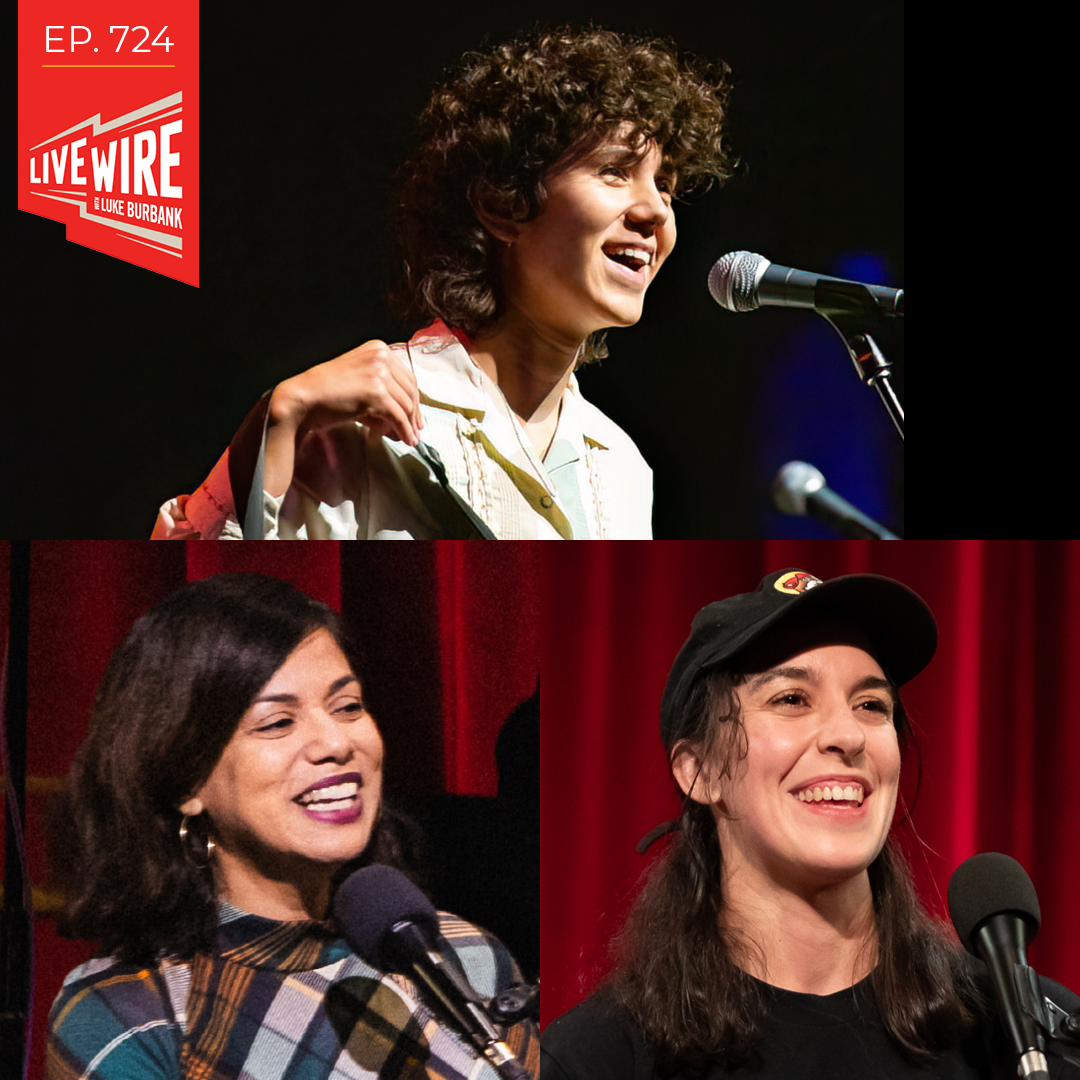
In this "Independence Day Special" podcaster and writer Jamie Loftus takes us on a roadtrip across America to understand the cultural and historical significance of the hot dog; writer Daisy Hernández unpacks her latest book Citizenship: Notes on an American Myth, which explores immigration and national identity; and singer-songwriter Olive Klug performs their single "Song About America."
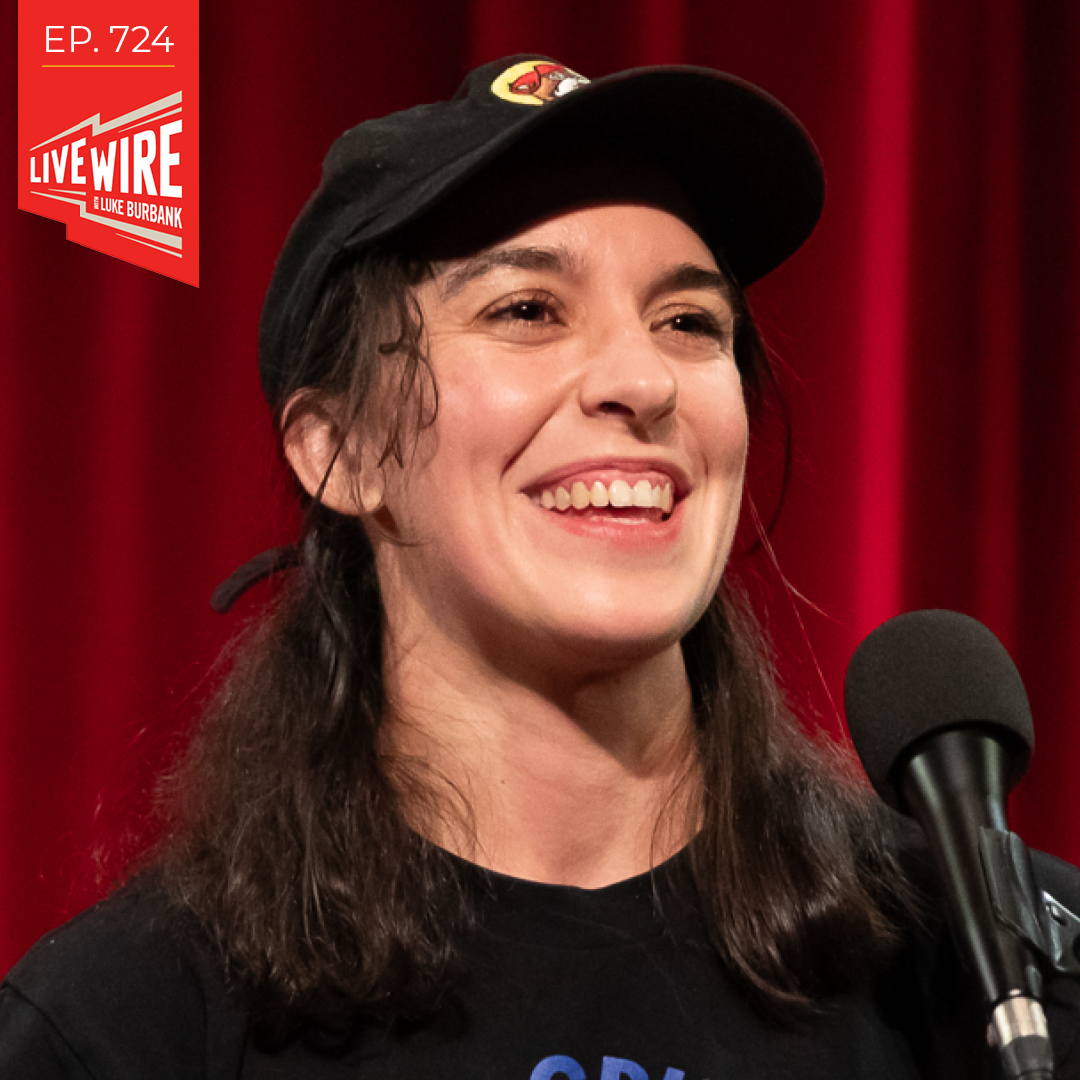
Jamie Loftus
Author and Podcaster
Jamie Loftus is a comedian, Emmy-nominated TV writer, New York Times bestselling author, and podcaster. She writes and hosts popular limited-run podcasts—My Year in Mensa (2019), Lolita Podcast (2020), Aack Cast (2021), and Ghost Church (2022)—and co-hosts, with screenwriter Caitlin Durante, The Bechdel Cast. Her first book, Raw Dog: The Naked Truth About Hot Dogs, was called "a wonderfully weird and wild mashup of history, social commentary, personal revelation and food journalism" by BookPage and "laugh-a-minute" by Kirkus. Her latest project, Sixteenth Minute (of Fame), is a weekly podcast that takes a closer look at the internet's main characters—one part reported, one part interviews, and one part Jamie collapsing her permanently internet-damaged brain—and was named one of "The Best Podcasts of 2024 (So Far)" by Vulture.
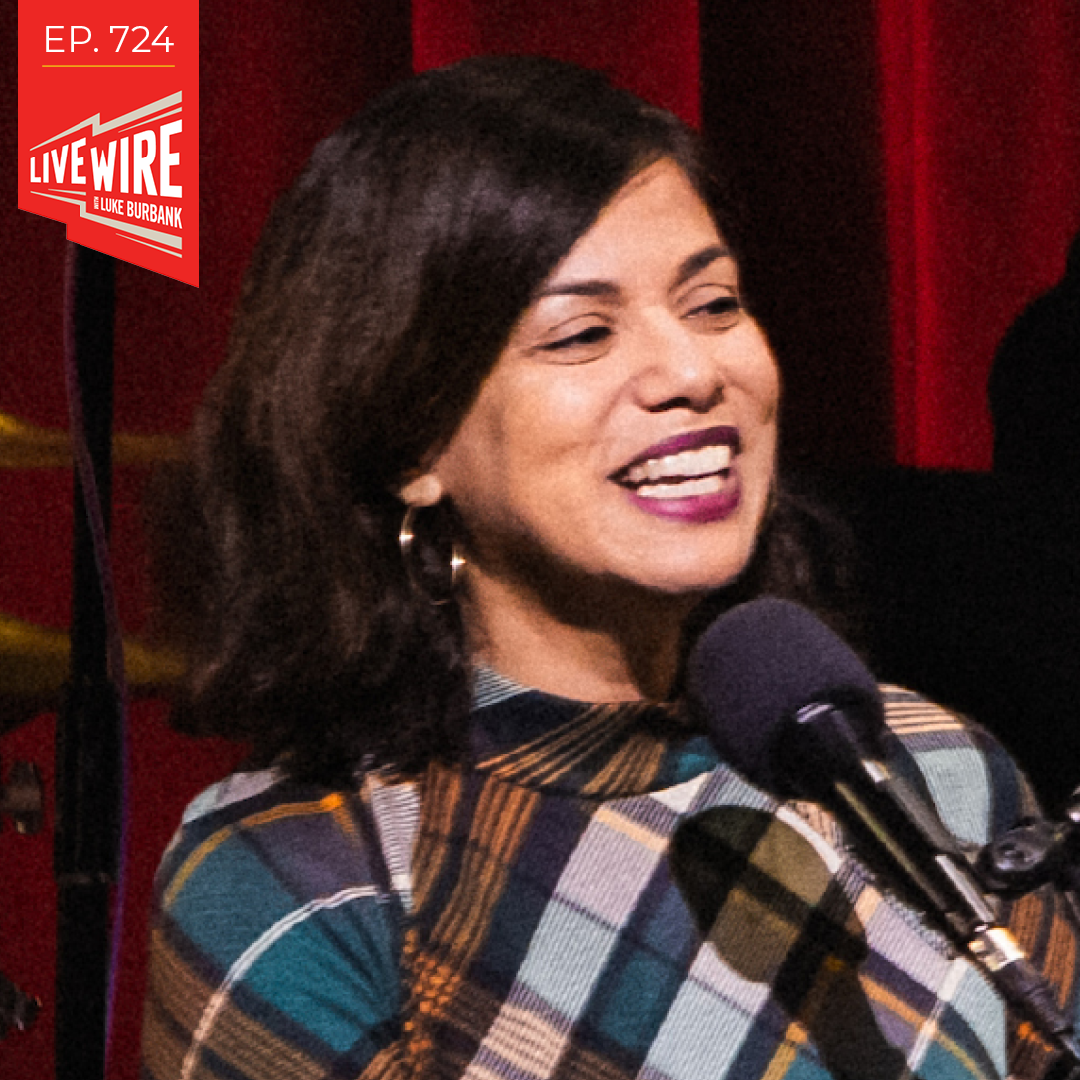
Daisy Hernández
Author and Journalist
Daisy Hernández is the author of The Kissing Bug, winner of the PEN/Jean Stein Book Award and the inaugural title for the National Book Foundation’s Science + Literature Program. Her memoir, A Cup of Water Under My Bed, won Lambda Literary’s Dr. Betty Berzon Emerging Writer Award and was a Publishing Triangle Award finalist. She co-edited the classic feminist anthology Colonize This! and is an associate professor of creative writing at Northwestern University.
Website • Facebook • Instagram • Citizenship
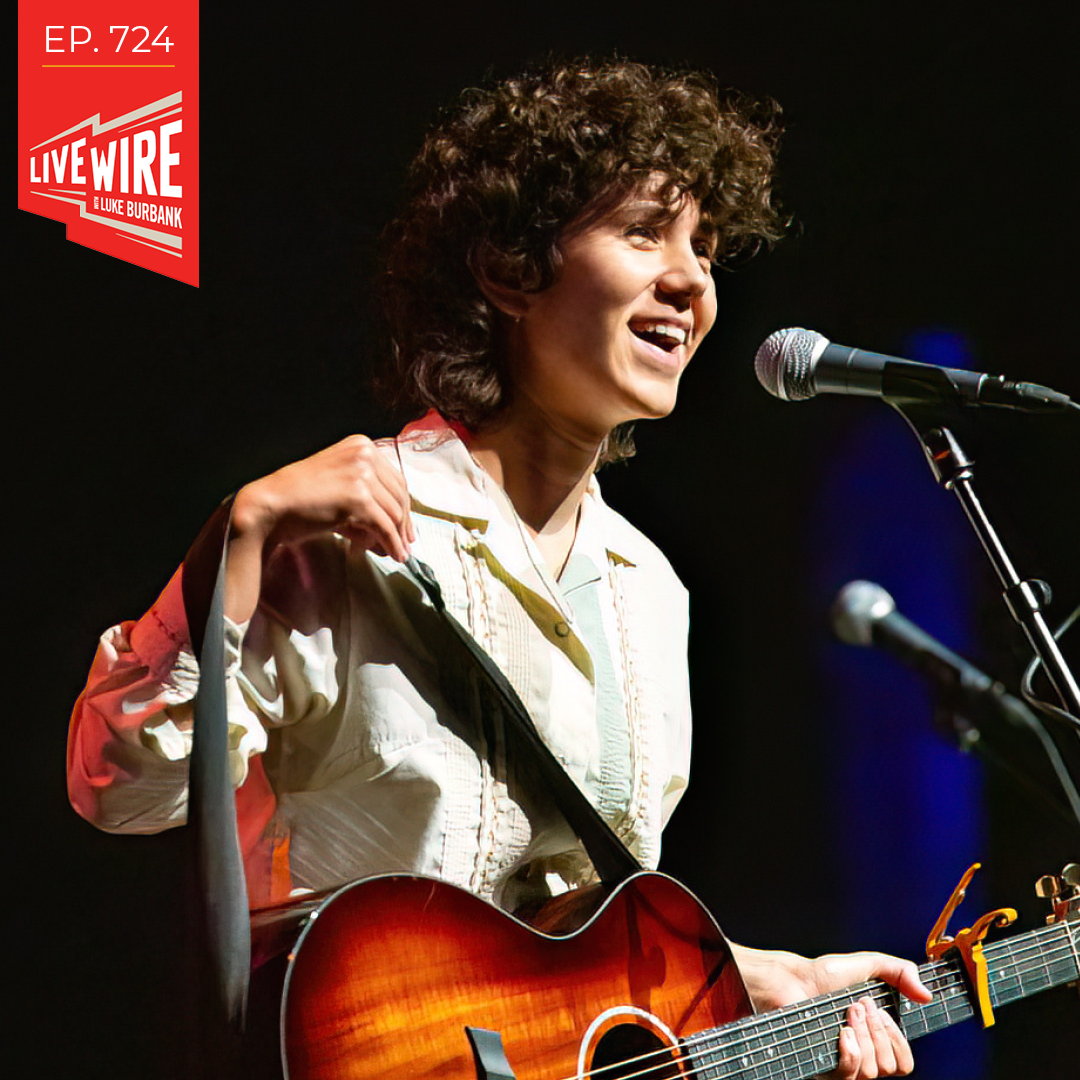
Olive Klug
Singer-Songwriter
A key player in the new wave of contemporary folk singers, Olive Klug makes earnest, queer acoustic folk music with the central goal of allowing listeners to tap into their feelings. Self-styled after genre icons like Joni Mitchell and Brandi Carlile, Olive is known for their beautiful tone and vividly honest storytelling. Their sound is reminiscent of the Golden Age of American Folk Music, but with a uniquely modern lyrical sensibility.
-
Parts of this transcript have been auto-generated.
Elena Passarello: From PRX, it's Live Wire!
This week, author Daisy Hernández. I really wanted to better understand the history of citizenship. I feel like this is a theme that has been at the center of my life, and do I really know what it means, where it comes from, what it looked like in 1790? Writer and podcaster Jamie Loftus. I think it's, like, a nasty hot dog that will make you think, like, "Surely someone needs to answer for their crimes."
Luke Burbank: With music from Olive Klug and our fabulous house band. I'm your announcer, Elena Passarello, and now, the host of Live Wire, Luke Burbank. Thank you so much, Elena Passarello. Thank you to all of you for tuning in to Live Wire from all over this country, where we are doing something a little different on the show this week.
We are celebrating Independence Day, complications and all, with a, a show involving some recent and past guests who are gonna take us on a, a wild tour of this country, from hot dogs to citizenship, the real pillars of this country. First, though, we gotta kick things off the way that we always do, with a little segment we call The Best News We Heard All Week: America Edition.
Best news
Here is the premise of this segment. Of course, some of the news out there is bad, including some of the news here in America. But we are looking for the good news, and we've actually found some on this special Independence Day show, and wanna tell you about it right now. Elena, what is the best news you heard all week?
Elena Passarello: I love my America news. I love it, Luke. I'm so excited to tell the story. Um, I don't know if you know this, but the nation is currently suffering from a strong case of World Cup fever. I've got it bad. I don't know if you can hear it in my voice right now. I have been fully and completely consumed by World Cup fever.
You're febrile for the World Cup. Yes. I guess because all these teams from all over the world are coming here, different cities are hosting and sponsoring them, and the city of Lawrence, Kansas, a town that I love, where parts of my family are from- Rock Chalk Jayhawk ... Rock Chalk Jayhawk, that's gonna come soon, they are hosting the Algeria team.
Lawrence, Kansas, is about 35 miles from Kansas City, Missouri, which is where a lot of World Cup action is taking place. And in February, when the city of Lawrence, Kansas, learned that, um, they were gonna be hosting the Algerian team, they went all out to make this base camp as exciting as possible, and as welcoming as possible for these men and the team.
They had, in Lawrence, Soccer 101 classes, which I should have taken- ... so that everyone was just a little bit more literate about the sport that was being played. They also had classes in the history of the team and in Algerian culture. And then when the group showed up in June [00:09:00] in, in buses, like 400 people welcomed them.
Um, the squad is having little open practices with some of the kids. The KU marching band, Rock Chalk Jayhawk- ... they learned the national anthem, and in my mind at least, they're just playing it at will while the while the team practices. And also, Al- Algerian Americans all over the region from Missouri and Kansas, you know, 'cause the two states are bordering each other right there, they, uh, are coming into Lawrence by the hordes to have block parties and watch parties.
There was a huge land art tribute in the middle of Rock Chalk Park, which turned the entire field into a gigantic Algerian flag, and they even say now, "Rock Chalk Jayhawk, Rock Chalk Algeria." That's so awesome. Somebody said, maybe the mayor or something in this article I read, that, um, they knew how hard it was for the Algerian team to get here, and so they wanted them to feel as welcome as possible, and it's just such great counter-messaging to a lot of sort of information about, you [00:10:00] know, American myopia or whatever, to see this level of engagement with this team.
Luke Burbank: I hope they feel great, and I feel great that Americans did this for them. It has been an incredibly much-needed cross-cultural exchange, I think. Mm-hmm. The best news that I heard all week right here in the US of A takes us to South Carolina. Yeah. My birth state. Uh, Fourth of July, it's Independence Day.
It's all about being able to live your truth and to be independent. Mm-hmm. Did you know that for the last almost 70 years in South Carolina it has been illegal for people under the age of 18 to play pinball? No. Not at all. Yeah. I, I, I think I may have broken the law in South Carolina when I was a wee one.
The history of pinball, it turns out, is kind of fascinating. It was originally kind of a gambling thing where you would just pull, you know, on this little, some device that would pop the ball up, and it would go in whatever hole it happened to go in, and people would stand around and bet on this. Oh my gosh.
It's kind of like a proto-slot machine or [00:11:00] something. Uh-huh. Um, that was during the Great Depression. Then in the 1940s, pinball manufacturers started adding the flippers, and so when they added the flippers, it stopped being a gambling game. It'd be kind of a, kind of a skill game. But by that time, some places, including, uh, South Carolina, had already made it illegal-
for people under the age of 18 because of its gambling origin. And even though no one's ever been, like, arrested for it, there was a certain chilling effect. They talked to a woman named Erin Edwards, and she and her husband were looking to open up a pinball arcade. They're in Aiken, South Carolina. They were looking to open up a radioactive pinball arcade.
Like, that was the name of it. It wasn't irradiated. And they were meeting with the city officials, and one of the city officials said, "Well, what are you gonna do to make sure no young people come there?" And they were like Excuse you? Like, that's the whole demo for the business. Yeah. Yeah. And then this year, Elena, in the South Carolina Senate, a hero stood up.
Senator Ed Sutton called himself a habitual offender of this law- Ooh ... since he often [00:12:00] takes his six-year-old son to play pinball at a local brewery. And then another lawmaker stood up and said, "I'm also violating this rule very frequently with my family," and it worked. Woo-hoo-hoo. This thing passed. The rule change passed 45 to one.
We're not gonna get into why the one guy voted against it. Oh. Long, complicated story involving he's been there a long time, and one time he voted for something else, and it didn't turn out to be what he thought it was gonna be, and they can just never convince him to vote for anything anymore. But it went 45 to one.
And now if you are in South Carolina and you are under the age of 18, you will not be in any trouble with the law if you wanna go enjoy pinball. They, uh, talked to the folks who did eventually open up that pinball arcade, Radioactive, and they said the place is just bursting with kids, and it's so fun because it's a chance for kids to be together versus maybe being on their screens or maybe a little more isolated, as happened a lot during the pandemic.
Also, something that I found really, uh, heartwarming, they have special hours sometimes to allow [00:13:00] kids who are homeschooled to come and hang out at the pinball arcade and socialize. Oh. And as a kid who was homeschooled at times, Elena, and was very poorly socialized because I didn't have any other kids my age to hang out with, I think that is truly a gift to the Aiken, South Carolina community, so.
All right. Kids being able to, uh, enjoy their independence to play pinball whenever and wherever they want in the fine American tradition, that's the best news I heard all week.
All right, let's get our first guest on out here. Elena, is there anything more American than the hot dog? If there is, I don't wanna know about it. No, I see, I think it was actually started out in Germany, if we're being honest. Look, we have a friend of the show who's thought a lot about the subject of hot dogs.
It's Jamie Loftus. She's an Emmy-nominated writer, comedian, and podcaster whose work the New York Times describes as [00:14:00] unexpectedly gripping explorations of niche subjects, which is exactly what she does in her book, Raw Dog: The Naked Truth About Hot Dogs. This is Jamie Loftus recorded at the Alberta Rose Theatre in Portland, Oregon back in June of 2023.
Hi, Jamie. Welcome back to the show. I'm so happy to be back. Um, it turns out that you're not only an amazing podcaster, you're an amazing writer. Um, was there a specific hot dog- ... that you were having, or like a moment where you thought, "Yes, uh, this, this should, nay, this must be a book about hot dogs?" This... I think it's, like, a nasty hot dog that will make you think, like, "Surely someone needs to answer for their crimes."
Jamie Loftus: Because my, my dad, he's, like, sick of me repeating this in public, but he would do these really gnarly, like, boiled hot dogs- Hmm ... that was very, like, [00:15:00] "Dad's around right now." "And he's gonna... He's about to make an attempt, and-" So I always, like, associated this nasty, mushy meat tube with, like- ... "We did it. We're a family."
I don't know. I, I really love, uh, talking and thinking about hot dogs 'cause it is... Like, even when it's disgusting, it always feels very personal, uh- Hmm ... 'cause most people, uh, start eating them when they're very young. Mm-hmm. And it can be a very, very gross food that people will, like, absolutely die for because it reminds them of something, uh, important to them.
Mm-hmm. Um, can you explain what the parameters of, uh, Hot Dog Summer 2021 were? You went on this road trip to just kind of experience different hot dogs in different parts of the country. And, uh, also- Yes ... uh, you don't have a driver's license? Yeah. No. That seems like st- Or a pet sitter. Right. Or... Yes. It seems like step one of a, of an epic road trip would be driver's license.
No, you just need [00:16:00] a, a boyfriend and then Ah, okay. You don't need a driver's license. But yeah, no, my, my ex and myself and our, both of our animals, uh, I, I got hired to write this book, um, shortly after we had been vaccinated. And about, like, a week into the trip, uh, the Delta variant really started kicking up, and it was like we were already kind of stuck.
Hmm. You know? And so it was, it was a very... I think, like, I didn't let myself process it at the time because it's such a silly reason to be outside of your home is to eat 200 hot dogs. But I was contractually obligated to eat 200 hot dogs. And it was like, we have to do it, we have to do it safely, and we have to do it together, and I cannot drive the car.
I think a lot of these, I think a lot of these public radio types, and, and honestly myself included, Jamie, are, are kind of thinking, like, "Aren't hot dogs terrible?" Like, on every level, for us, for the animals. How do you, a socially [00:17:00] conscious entertainer- Mm-hmm ... and writer, Jamie Loftus, square all of that? Well, it's, uh, they're definitely bad for you.
Uh, but, uh- I mean, they're worse for the pig, right? Oh, yeah. Ooh. Arguably. Harder to be... Yeah, I mean, I th- I think that the animals are always going to have sort of the worst deal in hot dogs. Although, there are, uh, an increasing number of, uh, vegan and vegetarian options that don't suck, I swear. Hmm. They exist.
I, I've, I've wandered the earth looking for, like- ... a, a plant-based hot dog that has the snap. Yes, yeah. You talk about the snap a lot in this book. I, I would love to meet the person who can replicate, uh, animal skin breaking in your mouth with a plant. That's all I want. 'Cause that's what it is. I'm a simple man.
And I want someone to make a plant-based thing that reminds me of snapping through the innards of an animal. I tr- I truly think that a, a vegan that could accomplish that is a real sicko. It's a weird mission. But yeah, I [00:18:00] mean, it's... I, I try to say at the beginning of the book, like, vegans are correct, vegetarians are correct.
Meat consumption is always gonna be some sort of mental and ethical compromise. And so when I was researching how hot dogs are made, uh, it was about, uh, 2020 and 2021, um, the meatpacking industry was going through such a horrible time during lockdown especially, because of the Trump executive order to keep meatpacking f- uh, plants open.
Which essentially, that executive order, it was revealed in late 2021, possibly early 2022, that was, like, drafted by the CEOs of Tyson and Smithfield. Hold on. Let me sit down. Let me sit more down. You're telling me- Mm-hmm ... a major agribusiness had a direct line to the Trump White House? Yes, they did. But, but it's so...
I mean, it's like, that's not shocking, and then you read about the individual cases of how in- uh, individual workers and families were affected by [00:19:00] that, and it's stuff that you... that is, like, truly sickening to have to face on a very human level. And that's not to speak of how they treat the animals. Um, and so I think, like, I had to reach a point where I was really hoping by the end, I'm like, "Mm, I'm gonna be such a good person by the time I finish writing this book."
Uh-huh. "I am never gonna eat meat again. Like, I am going to be... I'm going to go clear in this." Right. Um, which I didn't, and I, I still don't really know why. I think that, like, I've never not eaten meat, and it was really... I found it pretty impossible to stop. And so what I have been trying to do is to just not eat from Tyson and Smithfield- Mm-hmm
Luke Burbank: and try to eat, uh, more ethically when I can. All right. Yeah. Well- I guess we'll say goodbye to sponsors Tyson and Smithfield. We had a great run. Sorry about that. Yeah. Um, all right, we gotta take a quick break here on Live Wire. Uh, we're gonna be back, uh, with [00:20:00] Jamie Loftus. Her new book is Raw Dog. We'll be back in just a moment.
Stay with us. Whoo.[00:21:00]
Hey, welcome back to Live Wire from PRX. I'm Luke Burbank here with Elena Passarello. We are at the beautiful Alberto Rose Theatre right here in Portland, Oregon, and we're talking to Jamie Loftus about her new book, Raw Dog: The Naked Truth About Hot Dogs. Let's get into the five hot dogs you can purchase easily in heaven.
Okay. This is basically the Mount Rushmore of hot dogs that you lay out in the book. Um, and, uh, we'll just kinda go through 'em rapid fire. Uh, number one on the list appears to be the Costco hot dog. Okay. What is- What's so special about the Cost- So I need to... I would like to stress easily purchased.
Jamie Loftus: They're not the [00:22:00] best hot dogs. Right. They're just the ones that you can definitely- Are most available ... have. Um, so Costco. Costco, everyone is, uh, always losing their minds every six months about how the CEO of Costco threatened to kill someone. This, this email, right, that comes up all the time. It was a Jim Sinegal, I think, the- Yes
saying he's gonna, like, fire the guy if the price of the hot dog and soda go up by five cents or something. He says he's going to, uh, F-ing murder him. Oh. Yeah. If he... Which is a great story, but I always... Like, people always send that to me, and I was like, there- you gotta consider the hero of this story is- ... a billionaire CEO of Costco.
Um- I also think that story was published in, like, Costco Connections, which is the- Yeah ... newsletter for Costco. Which is the whole thing with, like, I mean, hot dogs and, like, all sorts of marketing, where you're like, "They're making it up," and you're circulating it like you just found out Keanu Reeves was a nice guy for the first time.
Like, I just, I, I, I have higher expectations of [00:23:00] internet users- Hmm ... which is on me. Hmm. Uh, what about the- Oh, what about the Home Depot hot dog? Okay. Depot Dog, that's something special. Uh, so I don't actually know if D- does the Pacific Northwest have Depot Dogs? No. Uh, when I was growing up they did. Okay.
And the way that that little kind of foyer area, you know what I mean? Mm-hmm. Like, you're, you're in the, the Home Depot, but you're not all the way in- Yeah ... would smell like the hot dog cart. Ugh. Oh. It's so good. So they're independently owned hot dog carts outside of Home Depot. Why? Shut up. It's awesome.
It's great. There is, like, certain areas where, like, we do taco stands, we do, like, uh, diff- there's different kinds. There's gyro stands, stuff like that. But, like, Depot Dogs, no matter where you go, everyone is always so thrilled. And, like, there have been, uh, state representatives that have spoken out when Depot Dog stands have closed.
Um- 'Cause Home Depot after a while was like, "What is going on? Like, we're not getting a cut of this." [00:24:00] And then public officials were like, "You cannot shut down that hot dog stand. My aunt loves those hot dogs." What about Hot Dog on a Stick? They also make the list. They do. They ma- they... Because it's an easily gettable hot dog.
Hot Dog on a Stick, you know, is fine. It's, uh, it's- Is that where they wear the hats? That's where they wear the sexy little outfits, yeah. It's a weird one. It's just, like, a sexy little hot dog that comes out a sexy little muscle beach. And you eat it, and you're like, "Nah, fine." Uh, then you have Auntie Anne's.
Yes. Auntie Anne's, fascinating. If no one knows the story of Auntie Anne, it is so wild. She grew up, uh, in an Amish community in Pennsylvania. She and a number of women in her community, uh, were survivors of sexual abuse from a priest in their community. No one saw this twist coming. I swear this ends, uh, with a hot dog.
Uh- I have to cut the tension in the room 'cause it is very scary. So, [00:25:00] so there is an abusive person in their community. They speak to each other about it. They force this priest out of the community, and, uh, Auntie Anne and her husband decide they wanna start a community center for women who have survived sexual abuse, but they don't have any money.
So Auntie Anne decides she's gonna start making pretzels. And now she's a pretzel gajillionaire. And so w- and then she did speak at the Republican National Convention. So- Mm ... you know, it's com- I, yeah, I know what your politics are. But it's hot dogs. Like, you gotta- Yeah, exactly ... I mean, it's an American
story.
Luke Burbank: Yeah. You buy the ticket- It's true ... you take the ride. Yes. It's true. Yeah. We're talking to Jamie
Loftus about her book Raw Dog. Let's talk about a place that you visited that I used to also go to- Ooh ... often, mm, about 2:00 in the morning when I lived in Washington, DC, and that would be Ben's Chili Bowl. Yes. Home of the half-smoke. Mm. Yes. Um, and, uh, what d- what did you think of the hot dog, and also why was that place of [00:26:00] particular interest to you?
Jamie Loftus: Oh, I mean, that business is fascinating for a number of reasons. It's, uh, one of the few Black-owned hot dog businesses that I covered, uh, throughout my travels. There's not many, especially, um, ones that have as huge an impact. There's all of this lore, like DC-based lore, uh, connected to Ben's Chili Bowl, where allegedly, um, MLK began writing the I Have a Dream speech.
Luke Burbank: There's a lot- You can't say that about an Auntie Anne's. No. And there, there's like all, like, like Stokely Carmichael was said to have gone there a lot. Like, there's all of these famous, uh, civil rights figures that would hang out at Ben's Chili Bowl eating a delicious hot dog that will make you poop so much.
Jamie Loftus: Um, and like, having the time of their lives. And they're like, they're... I, I just think it's like really wonderful when hot dog business owners become local celebrities. Mm-hmm. Uh, because almost every sitting president, I think since that business has been open, it's like a part of like, "Okay, I got [00:27:00] voted into office.
Luke Burbank: I have to go to Ben's Chili Bowl to take a picture with this like chili-soaked hot dog." And I think that that's great. I also notice across the country, uh, Jimmy Fallon has been to every hot dog place in the entire world. 'Cause there's a picture of him? Yeah. I was just like, "Go to work." I don't know. It's like really bizarre.
I thought you were gonna say like Guy Fieri or something. He's choosing. I'll be in a random place sometime and just look up and he'll just be there. With like his Oakleys on backwards, just like a- approving of this gas station bathroom I'm in or something. Like, like man, he's been everywhere. There is a place I went to in North Carolina that I don't know what the theming of the restaurant was before Guy Fieri went there, because it seemed like the theme was, "Guy Fieri's been here."
He was everywhere. Uh, you also went to the Nathan's Famous, uh, hot dog- Hell yeah ... competition. Oh. Yeah. Wow. Uh, fans of, uh, people dunking their hot dogs in water- Water ... before they eat them, which is, for some reason, the part [00:28:00] that really- Watch your mouth. ... really upsets me about that whole process, is that, you know, that's the most i- effective way to eat, you know, 50 hot dogs, right?
Jamie Loftus: Is to dunk them in water first. Yes. What did you make of that whole spectacle? Oh, I hated it at first. I, I intentionally like went into that pretty, like, you know, raw. I didn't know very much. I was like, "I'm just gonna let this experience wash over me and see how I feel at the end." 'Cause it's a 10-minute long competition, and I just felt my feelings change in real time.
Luke Burbank: Where it starts- ... and it's like Joey Chestnut wins every year. Mm-hmm. And you know, he like dunk, split, chomp, chomp, swallow. He ate 76 in 10 minutes. Oh. No, you should be cheering. There... But there, like it was so, like I started off so not on his side. I was like, "This is, this should be illegal." And then at some point in the middle I was like, "No, this is a sport."
And- And then the guy on ESPN, I will never forget, it, like you [00:29:00] can check the 2021 broadcast, said that Joey Chestnut eats hot dogs the way Ernest Hemingway wrote novels. Yes. And like- With no adjectives? Like what? That guy, the, the guy who announces them, he's this PR guy from New York, and he- Yeah ... like, inherited this little kind of not particularly notable, like, hot dog eating competition, and then in, and I think he wanted to be a writer, right?
And, and- He did, yeah ... so he now gets out all of his sort of writerly im- instincts in how he describes the competitive eaters. It's so intense. Yeah, it's this guy George Shea, who I think is, made his living kind of being like, "I'm the Vince McMahon of hot dogs." Yeah. And you're like, "Well, I hate that." Like- Don't want that.
Jamie Loftus: But it, like, has the showmanship of, uh, Vince McMahon, and also a lot of the things that people hate about Vince McMahon, uh, because there's, he has this whole history, as does this contest, of [00:30:00] really, uh, making and breaking... Like, lives have been ruined. I'm a huge fan of, uh, Takeru Kobayashi- Mm-hmm ... the greatest hot dog eater to ever do it.
Luke Burbank: Um, and he was, like, really, really screwed over by, uh, by George Shea and by Major League Eating, uh, for reasons that were- That's the name of the league. What's so funny? Yeah, it is called Major League Eating, and we can laugh about that. But, uh, Kobayashi was this amazing eater who came over from Japan, popularized, uh, the hot dog eating contest- Mm-hmm
is a huge reason that it was on ESPN and all this other stuff. And then, uh, once there was a white American champion in the form- Mm ... of Joey Chestnut to present a challenge, uh, George Shea and Major League Eating did everything they could to make Kobayashi's deals worse and worse and worse- Wow ... until he was essentially forced out of the sport.
Mm. I feel so strongly about it. And, uh, not to mention that the women's contest is still broadcast on ESPN3- Yeah ... which makes me wanna shove my hand in a garbage disposal. [00:31:00] Like, why is that? And, and Shea is the one who made it split by gender. It used to be that women would be in the hot dog eating contest along with the men, right?
Yeah, everyone eats food. Like It's so weird that it's split like that. But yeah, that was an intentional decision by George Shea in 2011- Huh ... to split the contest. And originally, um, the women competitors were told at a tea party he threw for them, because he's a bit evil. Mm. So he threw them this tea party, said, "You're gonna be on ESPN3 now.
Uh, the men's prize is still $10,000. Yours is $2,500 now." Wow. "And here's this new pink belt we got you." Right, the belt is pink. Wow, nice. Right? It's technically the Pepto-Bismol belt, but it was still a huge, like, ugh. I mean, what I think is so interesting about this book, and even about this conversation we're having, Jamie, is that this, the hot dog seems like this kind of just silly thing that, you know, we consume mindlessly, and yet we've already touched into, like, two or three really big cultural things around gender and, [00:32:00] and class, and all of the stuff that's tied up in it.
Jamie Loftus: Mm-hmm. Because it's so, uh, sort of inherently American at this point, it also brings with it all of the weirdness of this country, right? Yeah, it's a, it's like a symbol, and we're told that it's a very American symbol, but, like, why? Right. Who did that? And what does an American, like, an American symbol, is that a good thing?
Right. Right. Do we have to feel good about that? And I, I tried to explore it from every way that I could, because I love hot dogs still. They're the best. Uh- I can and have talked about them for hours on end, and I will continue to. But there's also so many, uh, things about, you know, hot dogs that, uh, are connected to, yeah, like systems of exploitation and oppression in America.
Luke Burbank: And also, uh, people have sex on the Wienermobile, so there's a lot going on. God. Jamie Loftus, everyone. The book is Raw Dog.
That was Jamie Loftus recorded [00:33:00] at the Alberta Rose Theatre in Portland, Oregon. Make sure you check out her book. It's so incredible. Raw Dog: The Naked Truth About Hot Dogs. You're listening to Live Wire from PRX. We are celebrating America this week, at least the America that we all hope this country can be.
And a huge part of America's story is the people who have come here from other places, which raises the topic of citizenship. It's a word that we've all heard a lot, but maybe we haven't thought about how actually complex the issue is. Well, thankfully Daisy Hernández has. She's an award-winning writer, and herself a child of immigrants, who decided to dive into the topic for her latest book.
It's called Citizenship: Notes on an American Myth. It's part memoir, part research project, and entirely riveting. Booklist calls it an essential book for these contentious times. Here is Daisy Hernández recorded live at the Alberta Rose Theatre in Portland, Oregon[00:34:00]
Hi, Daisy. Welcome back to Live Wire. Hi. Thank you for having me again. I'm, I'm curious, this book, Citizenship, uh, what was the kind of political climate when you started writing it? Like, we, we kinda know what it is now. We live here. But, like, what, what was going on at the time when you first thought, "I should, I should write a book on the topic"?
Daisy Hernández: I was actually working on my last book, which was during the first Trump administration, and in the process of interviewing people about this parasitic disease that's the topic of that book, I started talking with Latin American immigrants about their access to health insurance in this country. And one woman in particular was telling me that she's, you know, she's a green card holder, but that she didn't h- yet have five years in the United States.
Hmm. And that reminded me that in 1996, Congress made it so that you cannot access Medicaid if you're a green card holder until you've been here for five years. You can't access those federal aid Medicaid dollars. So it really got me thinking, you know, at what point did we decide [00:35:00] that having citizenship, having a particular piece of paper, could determine whether or not you saw a doctor, and at what point in time?
And, uh, I didn't go into the last book, so it became this new book. I see. What was your family's story of citizenship? 'Cause that's, that's woven into this book. Oh, absolutely. My father was a political refugee from Cuba. My mother's from Colombia. I have an uncle from Peru, another uncle from Puerto Rico, family friends from Mexico and Argentina and Guatemala.
Luke Burbank: So I like to tell people I grew up in the United Nations of Latinos. Located in New Jersey. Sure. Not that far from the UN. Yeah, right. But, um, yeah, I grew up in an immigrant family where citizenship was completely at the center of our lives. Something that your mom would tell you stories of at night?
Daisy Hernández: Every night, yes. Other, other people put their children to sleep with tales of, uh, wizards or whatever, fairies, and my mother would tell me her immigration story. Uh, every night she was the hero of the story. Um, the story included monsters, you know, [00:36:00] including her sister, who really pushed her to come to the US, um, and then of course all the challenges that were involved with staying in this country.
Luke Burbank: Um, one of the things that you do so well in your books is kind of you weave in your lived experience with also kind of history and, and things like that, and things with your family. I- uh, what is the... Is it like something is going on in your family, and then you just need to research it, and then you have a book?
Daisy Hernández: Or like, how do you kind of blend these two things together? No, in this case, I really wanted to better understand the history of citizenship. Mm. I feel like this is a theme that has been at the center of my life, and- Mm ... do I really know what it means, where it comes from- Mm ... what it looked like in 1790?
Luke Burbank: So I really started doing the research, and as I was researching, I was realizing, oh, there's these- Mm ... incredible connections with family members. Mm. So when I'm, like, researching about Aristotle, uh, you know, origins of, uh, democracy and citizenship and so forth, I find out, wait, he had a green card in ancient Athens.
Daisy Hernández: It wasn't called a green card, but he [00:37:00] was not a citizen of ancient Athens, and of course, that got me thinking about my favorite uncle- Mm ... um, and his experience of living in the US and having a card that identified him as a resident alien. Mm-hmm. So a lot of times I'm doing the research, and then I see the connections to my own experience.
Luke Burbank: I think a lot of us who like to say, you know, America is a nation of immigrants, it's... That's said in this kind of- Sort of aspirational way and a way of trying to, uh, harken back to what we think of as the good old days of Ellis Island or of like when this nation, uh, was more open to people coming from other places and becoming citizens.
But as you write in the book, it's kind of always sucked. Like, could you give us the- Yes, it has ... kind of the like, the, the sort of brief-ish history of, of, of what this idea of citizenship has looked like throughout this country's history? 'Cause- Yeah ... there's so much more bad stuff in there than I was really thinking about until I read the book.
Daisy Hernández: Yes. Very, very briefly, as early as 1790, Congress decided that you could not naturalize unless you were a free white immigrant. So then that led to d- all these courts, [00:38:00] um, ostensibly run by white judges who had to determine if, "Oh, you from India, are you a white person who can naturalize in this country?"
Um, 100 years later, we had a civil war, which of course was to abolish slavery, but really to also determine the citizenship of Black Americans in this country. Uh, native people as an entire group did not get access, full access to citizenship until 1924. Early 20th century, if you were a woman who married a foreigner, there was a time period in which you would lose your citizenship the moment that you married a foreigner.
Luke Burbank: Um, so yeah, it has been pretty bleak, including in the 1930s when the United States deported about a million Mexican Americans, half of whom were, um, US citizens. Um, that was sort of a silent deportation program. So it has been pretty bleak. Can I give you the good news now or later? Please. Okay. Good God, please.
The good news is that when we think about the social justice movements of the mid-20th century, when we think about the civil rights movement, gay liberation, women's [00:39:00] rights, all of those social justice movements were expanding our understanding of citizenship. We're increasing the rights that people have.
Daisy Hernández: So we don't always talk about those social justice movements as being about citizenship. Mm-hmm. These were folks who were not necessarily immigrants, they were birthright citizens, but they had such limited rights, whether it was because of gender or sexual orientation. And so I want us to remember that we are the authors of this story called citizenship.
Luke Burbank: Yes. We're talking to Daisy Hernández here on Live Wire.
The book is Citizenship: Notes on an American Myth. Uh, something else that you talk about in the book is what you call the other Vietnam, which was, you know, all of these wars that the US was, uh, essentially running or at least strongly influencing in Latin America, and the way that that was displacing and, and ways colonizing whole groups of people who then often ended up here.
You have a line in the book, um, "We're all here because you were there." Mm-hmm. Can you kind of unpack that a little [00:40:00] bit? Yeah, absolutely. So when I was growing up in the 1980s, I was the nerdy kid who was watching, uh, the news every night- Mm ... um, and taking notes essentially. Okay, the notes is pretty nerdy. I was watching the news, but not, not with the
notes.
Daisy Hernández: Journalist in the making. I was, um... And I was watching, um, English language news every night, and then we would also, we're watching Telemundo and Univision, the Spanish language news, and it was like getting reports from two different countries, because on the English language news, I rarely saw any references to Latin America.
But on the Spanish language news, it was about all the civil wars. It was about massacres in El Salvador and Guatemala during those years. Um, there was just so much death and so much violence, and it was very clear even to me, like, "Wait, what role do we have there exactly?" It wasn't spelled out necessarily.
Luke Burbank: But now we know, obviously looking back, um, that we were intimately involved. We were training death squads in El Salvador. We were sending millions of dollars in military aid to these countries. And so of course, people did what [00:41:00] they needed to do. They fled. Um, so yeah, you know, we are here because you were there.
Yeah, there's kind of this idea of, like, colonization meaning that folks in those places become, to some degree, US citizens, right? Because kinda we broke it. Yeah. You know? Yes. And so now there should, there is now a connection. Whether or not there should be, there is now a strong connection between these two places.
Daisy Hernández: Yeah, it was a really powerful moment in my research when I discovered the work of this, um, legal scholar at UCLA, Dr. Achiume, who writes about that, you know, we need to think about the United States as an empire as having been so intimately involved in the day-to-day lives of these countries. So not empire in the way we think of the British Empire or the Spanish Empire, but still, we're deeply involved in these people's lives.
Luke Burbank: And so it means that someone in El Salvador is actually already a member of our political community. Hmm. That when they arrive at the border, they are not a foreigner. Their lives have been so determined, not only by our foreign policy, but [00:42:00] by corporations being allowed to determine so much of the economic situation in their countries.
Yes. Um, there's something else you talk about in the book that I hadn't thought of before, uh, social citizenship. Can you kind of explain that? Yeah, so this is from the work of a socialist named T.H. Marshall writing in the mid-20th century. He talked about there sort of being this triad of citizenship, civil citizenship, political citizenship, and social.
Daisy Hernández: And pol- political and civil are, do you have the right to vote? Do you have the right to own property, to free speech, et cetera. But then he said what we saw in the 20th century was social citizenship. Do you have access to a doctor? Are you able to go to school? Are you able to pay for rent? Um, and so a lot of times when we're talking about issues of racism in this country, of sexism, of xenophobia, what we're talking about is your social citizenship.
Luke Burbank: So I might have a piece of paper, I have a passport that says I'm a citizen of this country, but what exactly can I do with that citizenship? Yeah. We're talking to Daisy Hernández about her book, Citizenship: Notes on an [00:43:00] American Myth. Something else that you're talking about in the book is that this idea of citizenship is almost maybe too broad in the sense that w- depending on what state you live in.
So you could be a citizen, you could have the proper paperwork, but, but if you're not part of that social citizen network or if you're in a place where w- you're not looked out for as a person who's come to this country from somewhere else, it's almost like the question is what state are you a citizen of as much as the US?
Daisy Hernández: Absolutely. Right now it is m- I say we are more a citizen of the state in which we live than we are of the United States, and you see this so viscerally with families that are trying to protect their transgender children. Mm. So we have people who, who have begun to identify themselves as internally displaced political refugees because they're living in Texas, but they have a transgender child that needs gender-affirming care, so they're literally moving themselves to different parts of the country.
Luke Burbank: Um, for women, this is really intense. Anyone who's trying to get pregnant, uh, or c- you know, cares about access to reproductive rights, [00:44:00] your relationship with that will be different r- whether you're living here or if you're living in Florida. I mean, it's just the reality that we're living in right now. Um, speaking of family members of yours, I think it's...
Was it your cousin, Primo? Primo. That you, you talk about who, um, had a green card, so couldn't vote, right, in the presidential election, but was very concerned that Donald Trump would be deprived of the chance to, uh, become president again, I think. He didn't even have a green card yet. Oh, really? Right. So- He, he has some kind of status that he didn't wanna talk about with me.
Daisy Hernández: Yeah. Okay, but couldn't vote. He didn't want me to write about him in the book. Um- Really? Yeah. Well, because, um, uh, you know, you describe him as a gay Latino man- Yes ... who is a Trump supporter, and that just, like, those words don't seem like they should- ... go in that order in a sentence, but, uh, you're not shocked by it.
Luke Burbank: What is it about, uh, him and other people that might fall into that same general description, uh, where it's not shocking to you that they would support the idea of somebody like Donald Trump? Yeah, it's not [00:45:00] shocking because half of my family is Cuban, so I've grown- Mm ... up with a- almost all of them in South Florida voting, voting Republican my entire life.
Daisy Hernández: Um, and in his particular case, he was imprisoned in Cuba for being gay, and he really has and holds onto this story that the reason that happened to him was because of anything having to do with communism and socialism. So he was really afraid of anything like that happening in the United States, to the point that he felt very protected by what Trump was essentially offering, at least verbally, making verbal promises- Mm
um, to him. But as I write in the book, the more that, um... He and I had several conversations about politics. This is before the 2024 election. I really came to also appreciate that he is, he's a gay man and he doesn't necessarily have citizenship, but, um, his partner does, uh, his husband does, and he is white, and he has, like, a very good, comfortable middle-class life in certain ways.
And so he s- see- has this sense of, "I have to protect this. I got this little bit here-" Mm. "... [00:46:00] and now I need to protect it from anybody who might threaten it." Mm-hmm. And what Trump was promising was, "I will protect you, and I'll protect this little bit." Even if it was a lie, many, many, many people believed it.
Luke Burbank: Sure. Yeah. Um, you've spent so much time in the last few years really studying this question of citizenship and the history of it in this country, and I'm just curious, do you feel like right now is... Uh, where would you sort of rank it in terms of the history of this country and are... I guess my question is, are we in one of the absolute worst periods of time, uh, around citizenship, around immigration, around how we treat people in this country who may not have been born here?
Daisy Hernández: Yes, we are. Really? Yep. Yep. We agree, right? Um, yes, we, we- Well, it feels terrible to me, but I'm, you know, I'm but 49 years old. So I've only had so much experience. You've been studying the, the history of the country. You're saying this is, based on your study, this is as bad as it's ever been? April 1st, the Supreme Court will be hearing, um, arguments for a new interpretation of the 14th Amendment.
Luke Burbank: Mm. We haven't had that. Um, [00:47:00] so I, you know, I don't know, can I say this is the worst compared to a moment in time in which we enslaved Black Americans? You know, um, you know, maybe that's a different kind of conversation, but in terms of the last 100 years and ha- since we've had the 14th Amendment, the Trump...
For folks who don't know, the Trump administration is now arguing that the children of undocumented citizens are not covered by the 14th Amendment that grants you citizenship based on being born in this country. So the fact that we've reached that point- Yeah ... um, uh, is pretty revealing about how bleak the situation is right now.
I mean, we've all seen this past year, right, people, uh, y- people with citizenship screaming, you know, um, whether they're dealing with ICE- Mm-hmm ... or something else, you know, "I'm a citizen, I'm a citizen," you know? Kind of trying to... Realizing what the philosopher Hannah Arend- Arendt told us, which is, you know, citizenship is the right to have rights.
And if you don't have a government that will honor and respect your rights, it really calls into question what rights do you have as a citizen? Do you think that the [00:48:00] moment in time that we're in right now is revealing the essential nature of people? Which is to say, xenophobia and a sense of, "I have mine, I don't want anyone else to come take it."
Daisy Hernández: Or do you think it's the politics of our moment? I guess the nature of my question is, do you see any reason why we may be able to actually go in a positive direction long-term on the topic of citizenship? We can always go in a positive direction. Absolutely. We can always go in a positive direction.
And, and you don't have to believe me, you just have to look at our own history, right? There was a point in time in which on paper, uh, Black Americans, Chicanos could on paper vote, but literally they couldn't actually go and vote at the polls, and we are the ones who changed that, right? So there's a point in time in which, uh, a gay man could not marry his partner, let alone adopt children or gr- raise children.
Luke Burbank: That has changed dramatically. So we absolutely, as I said before, we're the authors of the story of citizenship, so we can definitely move it in a positive direction. Well, you are literally the author of the [00:49:00] book Citizenship. You're Daisy Hernández. Thank you so much for coming on Live Wire.
That was Daisy Hernández, recorded live at the Alberto Rose Theatre in Portland, Oregon. Her book, Citizenship: Notes on an American Myth, is available now. You are listening to Live Wire from PRX. We are celebrating the 4th of July this week, and we gotta take a quick break, but don't go anywhere. When we get back, we are going to hear a very touching song, which is literally about America, from singer-songwriter Olive Klug.
Stay with us here on Live Wire.[00:50:00]
Welcome back to Live Wire Radio. I'm Luke Burbank here with Elena Passarello. Okay, before we get to this week's musical performance from Olive Klug on our special 4th of July show, a little preview of next week's program. We're gonna be joined by Aubrey Gordon. [00:51:00] She's the host of the hit podcast Maintenance Phase, which debunks diet and wellness trends and lore from, uh, Ozempic to, uh, whether or not people are actually living into their 100s in those, uh, Blue Zone places that we heard so much about.
Then the writer and multidisciplinary artist Jean Gray will tell us about how she made a puppet show in her apartment that almost broke her as a person. It's all detailed in her book, In My Remaining Years. Then we're gonna get some music from a truly one-of-a-kind musician, Brazilian singer-songwriter Rôxeane.
So make sure you tune in next week for Live Wire. In the meantime, our musical guest this week has a sound that is reminiscent of the golden age of American folk music, which just kinda feels right when you're celebrating the 4th of July. But they've also got uniquely modern lyrical sensibility. How modern?
Uh, well, they've gotten millions of views on TikTok, um, many of them from me. Their latest album is Lost Dog, which they released in 2025. Olive Klug joined us on stage at the Hult Center for the Performing Arts in Eugene, Oregon [00:52:00] back in September of 2023. This was after the release of their first album, which was titled Don't You Dare Make Me Jaded.
Olive Klug: Take a listen Um, Olive, welcome, uh, to Live Wire. Thanks for being here. Thank you so much for having me. I'm really excited to be here. Um, what song are we gonna hear? So I've had a special request actually from Laura, who works at Live Wire, to play a song that's not on my album- Okay ... because it is a bit more of a jaded song at times.
It would never fit on Don't You Dare Make Me Jaded. Um, yeah, this is just a single. It's not on the album, but it's called Song About America, and, um, I wrote it when I was on a solo tour through the United States. And that was when the drag ban was happening in Tennessee, and it was also when just a lot of, uh, talk was going on about banning gender-affirming care, um, in a lot of states that I was driving through.
And, uh, I was also at the same time getting reached out to by different companies to be like, "Oh, be in our Pride [00:53:00] campaign for, like, you know, GoDaddy," which is my website host. Which I was just like- Oh ... this is just s- really intense cognitive dissonance that I'm experiencing right now of like, you know, there's this world where we're really accepted when it's corporations- Mm-hmm
asking us to promote their stuff and then, you know, not actually seen as human by politicians. And so, yeah, I, I don't typically write overtly political music, and so I'm actually a little nervous to play this song today- ... 'cause I'm like, "This isn't n- normally what I do," but if I get a special request, I've gotta fulfill it, so.
Luke Burbank: All right. Yeah. This is Olive Klug here on Live Wire.
Olive Klug: Sucker for convenient and fast. I swear Kansas lasts forever, billboard caught my-[00:54:00]
Thoughts were screaming at me through the glass. Well, they grew me in a bubble, sheltered me from all that rubble and said, "Baby, history is just the past." So I Song about a mirror. It's too big and too daunting[00:55:00]
So I'll settle for a chorus and[00:56:00] [00:57:00]
Luke Burbank: That was Olive Klug, recorded live at the Hult Center for the Performing Arts in beautiful [00:58:00] Eugene, Oregon. You can check out what Olive is up to at oliveklug.com.
All right, that is gonna do it for this week's special Independence Day episode of Live Wire. A huge thanks to our guests, Jamie Loftus, Daisy Hernández, and Olive Klug. Laura Hadden is our executive producer, and our producer and editor is Melanie Sevcenko. Eben Hoffer and Molly Pettit are our technical directors for this episode, Tré Hester is our assistant editor, and Ashley Park is our marketing manager.
Our house sound is by D. Neil Blake, and our house band is Ethan Fox Tucker, A.L. Alves, Sam Tucker, Matt Sheehy, and A. Walker Spring, who also composes our music. This episode was mixed by Molly Pettit, Eben Hoffer, and Tré Hester. Additional funding provided by the Oregon Arts Commission, a state agency funded by the State of Oregon and the National Endowment for the Arts.
Live Wire was created by Robyn Tenenbaum and Kate Sokoloff. And this week we'd like to thank members Cass and Bob Freedland [00:59:00] of Vancouver, Washington. For more information about our show or how you can listen to our podcast, head on over to LiveWireRadio.org. I'm Luke Burbank, for Elena Passarello and the whole Live Wire crew, thank you so much for listening, and we will see you next week.
PRX.
Staff Credits
Laura Hadden is our Executive Producer, and our Producer and Editor is Melanie Sevcenko. Our Technical Directors for this episode are Eben Hoffer and Molly Pettit. Tré Hester is our Assistant Editor, and our House Sound is by D. Neil Blake. Ashley Park is our Marketing Manager. Ezra Veenstra runs our front of house. Our house band is Ethan Fox Tucker, Ayal Alves, Sam Tucker, Matt Sheehy, and A. Walker Spring, who also composes our music. This episode was mixed by Eben Hoffer and Tré Hester. Additional funding provided by the Oregon Arts Commission, a state agency funded by the state of Oregon and the National Endowment for the Arts. This week, we'd like to thank members Cass and Bob Freedland of Vancouver, WA.
