Episode 723
Atsuko Okatsuka, Jack Balderrama Morley, and Tyler Ballgame
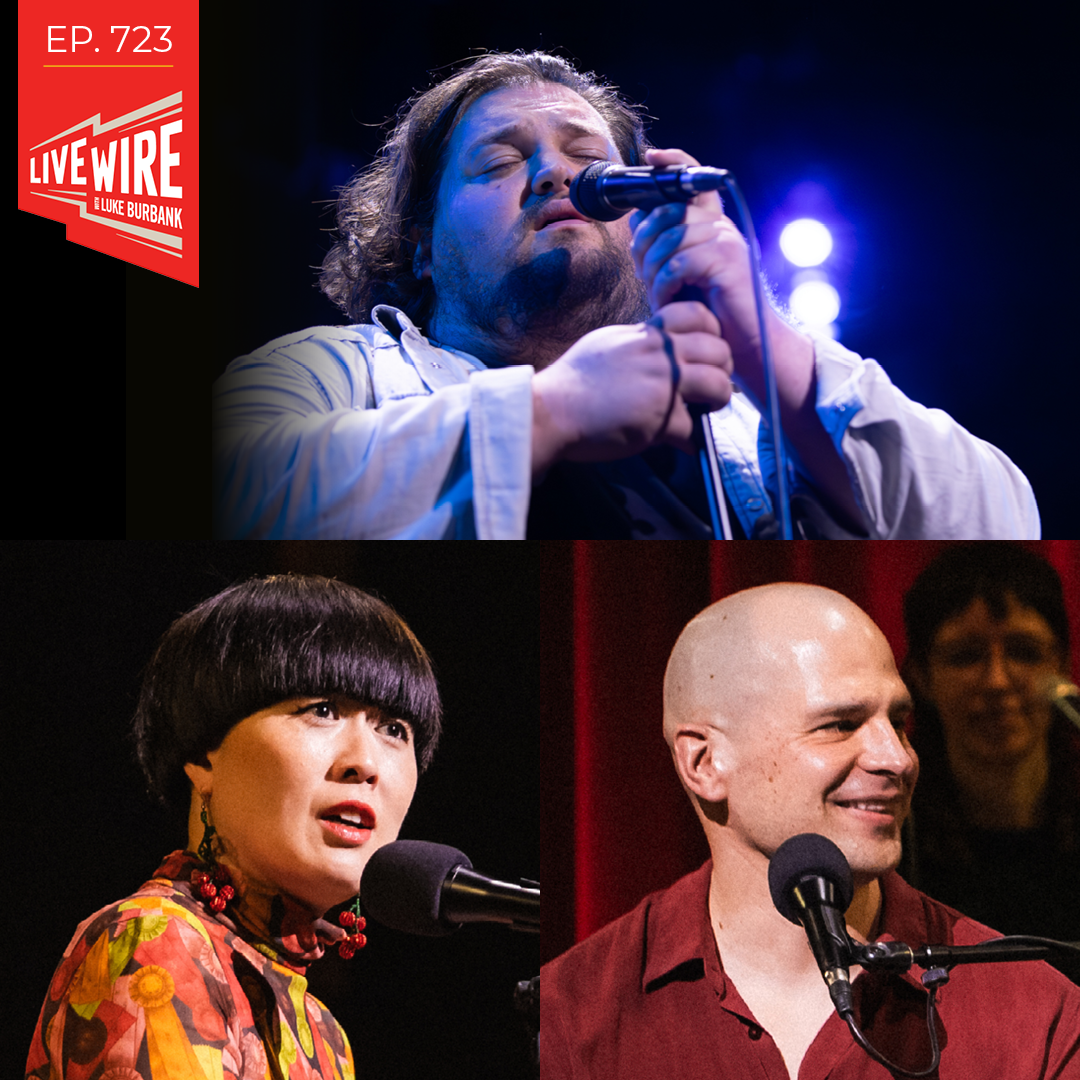
Comedian Atsuko Okatsuka tells us about Craigslist comedy, her trend-setting haircut, and how she never left America after visiting Disneyland as a child; writer Jack Balderrama Morley dives deep into the architecture of reality TV in his new book Dream Facades; and singer Tyler Ballgame performs the title track off his debut album For The First Time, Again.
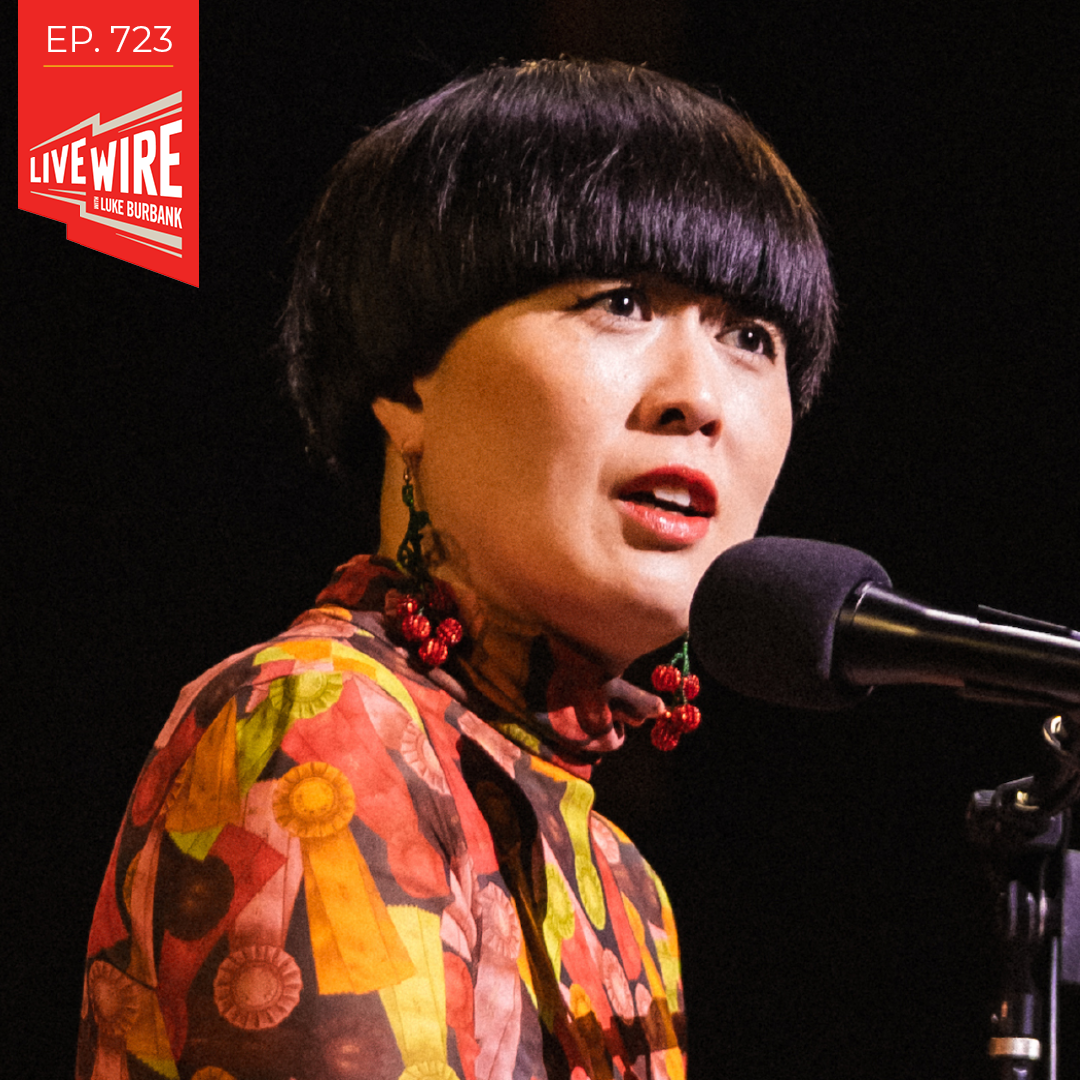
Atsuko Okatsuka
Comedian and Viral Internet Sensation
Atsuko Okatsuka is an award-winning comedian and actress making waves across the globe with her one-of-a-kind humor, boundless energy, and infectious charm. Her highly anticipated second stand-up special, Father, recently premiered on Hulu and internationally on Disney+. It quickly occupied the top ten on the streamer and had multiple clips go viral, making it one of the most talked about specials to debut on the Hularious brand. Following the success of Father, she recently embarked on The Big Bowl tour, which will hit multiple cities across America.
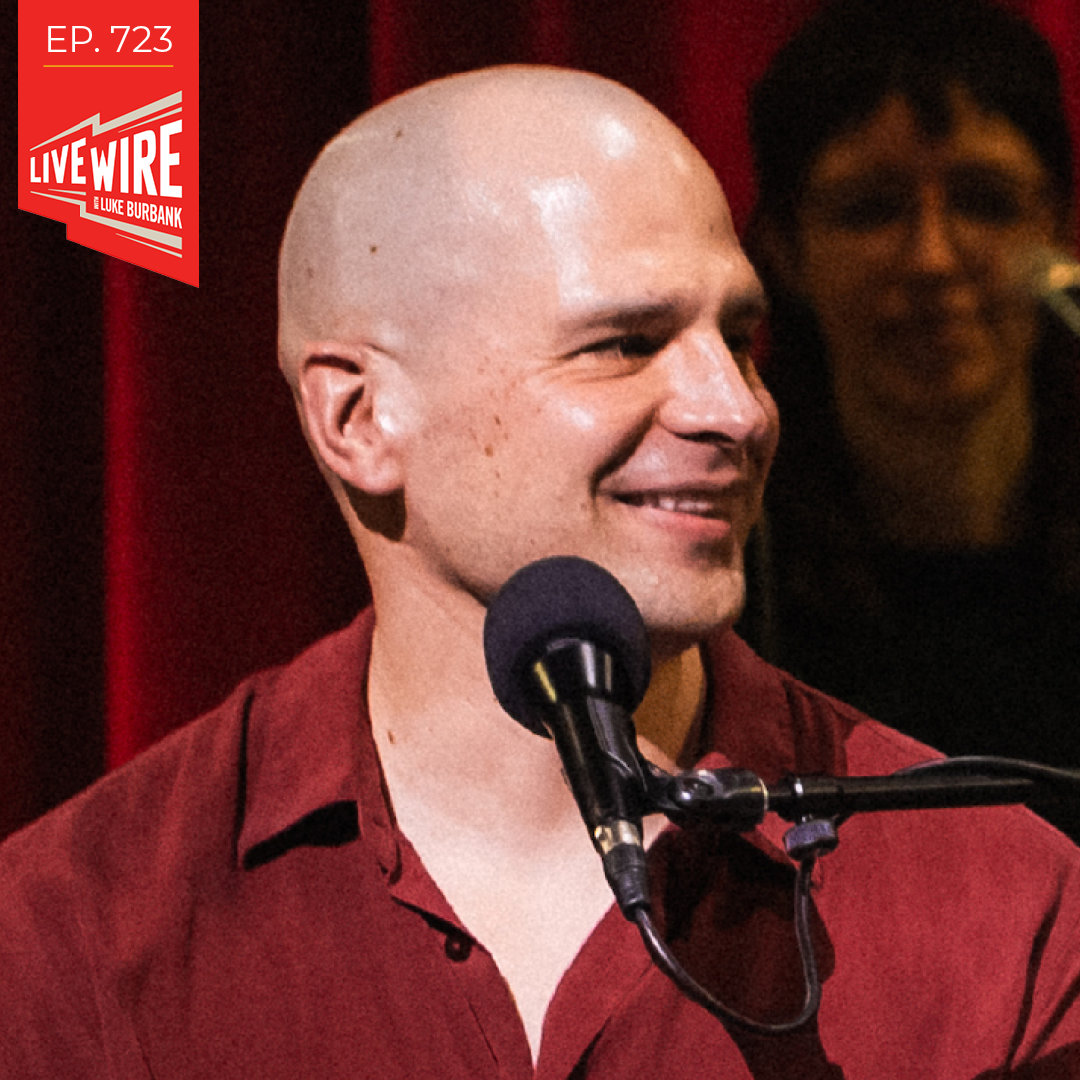
Jack Balderrama Morley
Managing Editor at Dwell, Critic of Reality TV Architecture
Jack Balderrama Morley is a former/ recovering architectural designer and is now the managing editor at Dwell, a preeminent digital and physical magazine dedicated to home design. Their writing has appeared in The New Yorker and The Architect’s Newspaper, among other places. Their new book is called Dream Facades: The Cruel Architecture of Reality TV.
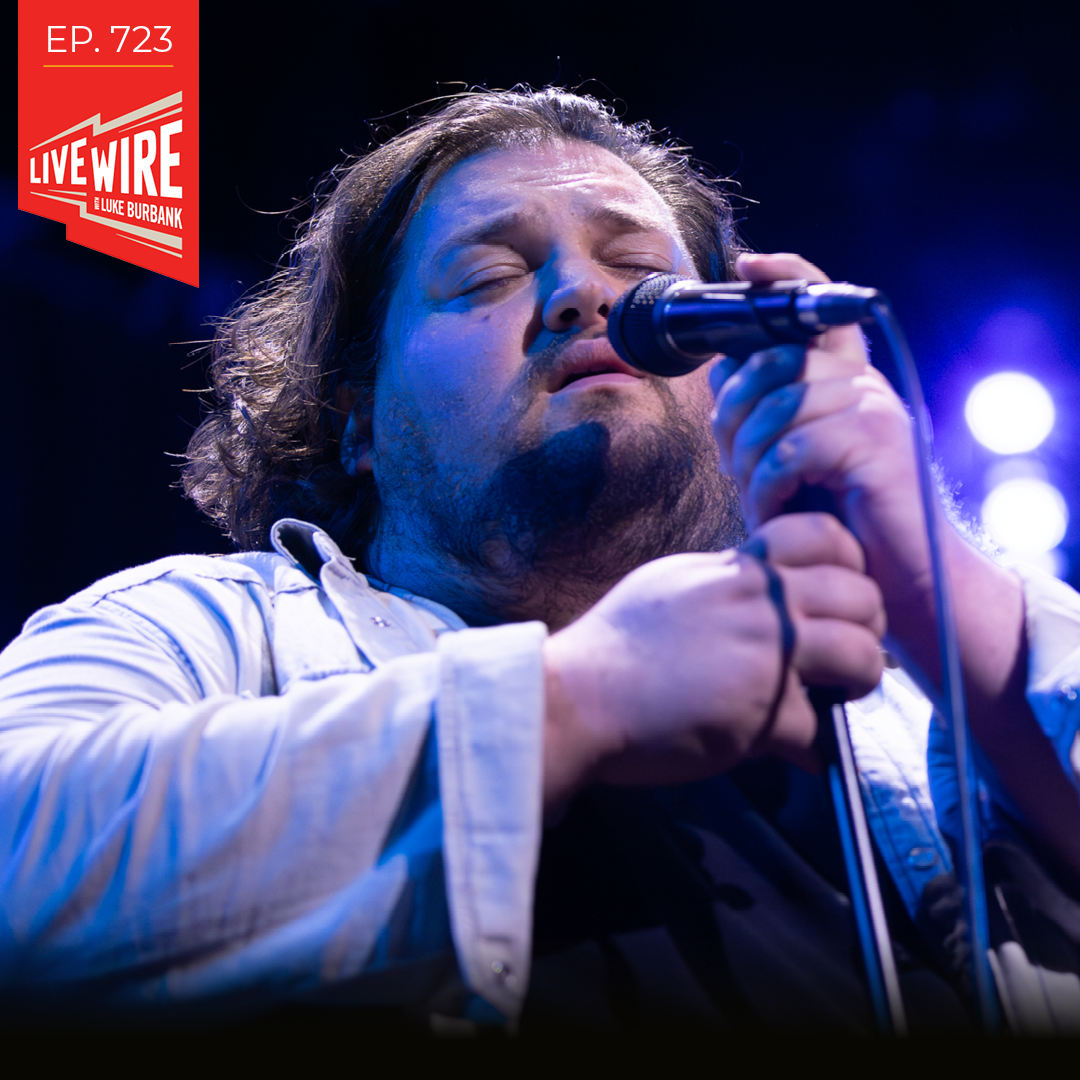
Tyler Ballgame
Powerhouse Singer-Songwriter
Renowned for his live shows, Tyler Ballgame’s music is built on strong melodic hooks and draws subtle inspiration from the 60s and 70s, blending nostalgia and undeniable songcraft. Tyler's stunning debut album For the First Time, Again is a bracing reminder of how great songs delivered by a gifted vocalist can move, captivate and inspire, it boasts 12 finely crafted tunes rooted in classic rock, indie, and Americana. Ballgame’s infectious melodies draw the listener into a story, and his message of belief in one’s true self resonates deep and wide. The album’s lead single, the rhapsodic Lennon-meets-Orbison “I Believe In Love” is out now, alongside the previously released “Got a New Car.”
Show Notes
Best News
Elena’s story: “'I forgot what it's like to be outside': Intensive care ward opens on rooftop”
Luke’s story: “A Federally Protected Robin's Nest Is Holding Up a Ford F-250 Super Duty Sale in Kansas”
Atsuko Okatsuka
Atsuko first appeared on Live Wire in 2020. She was previously featured in Episode 419 and Episode 489.
Her newest comedy special, Father, is available to watch on Hulu and Disney+.
Jack Balderrama Morley
Jack talks about being a lifelong reality TV fan, having gone to design school, and starting to watch certain shows through an architectural lens.
He mentions the show Selling Sunset, as well as designers Frank Gehry and Zaha Hadid.
He also talks about the Kardashian family and house-flipping Fixer Upper (HGTV) hosts Chip and Joanna Gaines.
Jack mentions Hidden Hills, an extremely exclusive gated community in the valley north of Los Angeles where country singer LeAnn Rimes owns a home—and he paints a picture of her riding a horse there, amongst luxury cars.
Another show he dissects is MTV’s The Real World.
Jack and Elena briefly bond over the superiority of The Real Housewives of Atlanta. Chateau Shereé is referenced—a 10,000-square-foot “dream home” mansion that belongs to Shereé Whitfield of The Real Housewives of Atlanta.
Another show Jack writes about in Dream Facades is Fire Island, which is based on the actual location of Fire Island along the Southern shore of Long Island, NY. He talks about its skewed representation of queerness based on expectations of modern masculinity, referencing figures Calvin Klein and David Geffen.
Literary theorist Lauren Berlant, who wrote the book Cruel Optimism, is mentioned.
Tyler Ballgame
Tyler performs “For The First Time, Again,” the title track to his new album.
-
Portions of this transcript have been auto-generated.
Elena Passarello: From PRX, it's Live Wire!
This week, comedian Atsuko Okatsuka.
Atsuko Okatsuka: You drink soda, you run it off, and then y- you feel emotional. You're like, "I'm closer to god." Sweetie, you're dehydrated. You've been in the sun all day.
Elena Passarello: Journalist Jack Balderama Morley.
Jack Balderama Morley: So you have this weird environment where these, you know, half a million dollar cars are racing around, but then you also have, you know, like LeAnn Rimes-
on a horse.
Elena Passarello: With music from Tyler Ballgame and our fabulous house band. I'm your announcer, Elena Passarello, and now the host of Live Wire, Luke Burbank.
Luke Burbank: We have got an absolutely fabulous radio show, uh, ready for you. But first, of course, we gotta kick things off the way we always [00:01:00] do, with a little segment we call The Best News We Heard All Week.
Uh, this is our little reminder right at the top of the show that there is actually, believe it or not some good news happening somewhere on planet Earth. And we have searched high and low, and we actually found some, and we are gonna tell you about it right now. Elena, what is the, uh, best news you've heard all week?
Elena Passarello: Yes. Uh, so this comes from the part of the planet known as London, England.
Luke Burbank: Oh, sure.
Elena Passarello: Uh, which, you know, its National Health Service sort of world-renowned. I believe the National Health Service got a shout-out in the opening ceremonies to the London Summer Olympics. Very, very proud of the, their healthcare there.
Luke Burbank: Yeah. Um, and they've always had these things called hospital gardens, which are opportunities for people that are inpatient to be able to get outside and get some green space. Really, really lovely program. But one type of patient was never able to peruse the hospital gardens, and that's folks in the ICU.
Elena Passarello: And you know, I [00:02:00] always assume the ICU is a thing that you're not in for, for very long, but some people are in the ICU for months and months and months, and they, uh, have no access to fresh air. They've, uh, sometimes they don't even have access to a window. It's a little bit of an electrical issue to get the, to move them at all.
And so King's College Hospital in South London has made the first of its kind in the UK, an ICU-compatible rooftop.
Atsuko Okatsuka: Wow.
Elena Passarello: It's like these beautiful kind of patios of greenery, and then these lovely kind of wooden and canvas awnings that arch over it. Six patients can occupy the rooftop ICU- Hmm ... at a time, and there are these waterproof boxes into which, you know, the folks are obviously probably still in beds when they're wheeled up, but they still have a lot of machines that they need.
And there are these electrical inputs so that they can come up there. Wow. And the first per- patient that went up there was like, "I, I haven't seen the sunshine. I haven't felt the breeze on my face in two months." Wow. Wow. And they think that there's gonna be [00:03:00] research opportunities for this. They're gonna look at those patients and the way that access- Mm-hmm
uh, affects their healing. So there's this lovely kind of scientific benefit from it as well.
Luke Burbank: Absolutely. I mean, I'm, I'm no scientician. Oh, no. But I have to imagine- You're a rocket
Elena Passarello: surgeon.
Luke Burbank: I have to imagine that there would be, uh, a benefit to your health, if only your mental health, you know- Yeah ... to just breathe some fresh air and be around some, some plants.
You know, do, uh, to whatever degree you can, as they say in the parlance of our time, touch grass.
Elena Passarello: Yeah.
Luke Burbank: It's a big thing. Uh, the best news that I heard all week, uh, comes to us from Olathe, Kansas. And I can tell you, Elena, it is pronounced Olathe, Kansas, because I was recently there, and I mispronounced it.
Elena Passarello: Ah.
Luke Burbank: And I was corrected. Uh, at the Olathe Ford Lincoln dealership in Olathe, Kansas, um, uh, one of their salespeople had, uh, recently sold a 2026 Ford F-250 King Ranch truck.
Elena Passarello: That is a
Luke Burbank: big-ass
Speaker 5: car.
Luke Burbank: Good Lord. That's [00:04:00] a... It's about 100K. Well, when you pay all that money, you get really big tires, I guess, on these Ford F-250s, you know, for driving through the field or going on back roads, or as I see where I live, which is out in the country, driving your kids to volleyball- Right
uh, seems to be the main project for these- Yeah, yeah ... these enormous trucks. There's
Speaker 5: a lot of those in Costco parking lots-
Luke Burbank: Yes, that's right ... I've noticed. Yeah. You need to have a lot of Super Duty capacity to- Yeah ... get those blueberry muffins home from Costco. Well, anyway- ... they sold one of these, but before the folks who bought the truck could come take possession of it, one of the folks working at the lot noticed on one of those big giant tires that a robin had started building her nest.
And to their eternal credit, I'm being a bit snarky about truck culture, but somebody at the dealership said, "If we move this nest, or if we let the folks take this truck, we could be in violation of something called the Migratory Bird Treaty Act of 1918." [00:05:00] They did not move the truck. They left the nest there, and then the mama robin laid four eggs- Oh
in the nest, and they are the most brilliant blue. Yeah. I've seen photos of them. This is, of course, all over the internet now. And, uh, so they just, they called the people up who had bought the truck, and they said, "This is a weird one, but could you wait a while to get the truck, uh, because there's a Migratory Bird Act that we don't wanna violate."
And the people said, "Yeah, we'll wait for the truck." Yay. And in fact, this was even cooler because there was a, a local group that, like, takes care of birds or does stuff with them who said, "We think we can move the robin's nest without disturbing this family too much." And the people who were buying the truck said, "We don't wanna do anything that would risk it."
Oh. "Just leave our $100,000 truck there until further notice." So the four eggs have hatched. Oh. There are four baby robins. Their names are Lug Nut- ... Axle- ... Diesel- ... and Turbo.
Speaker 5: Aw, poor Lug Nut. While all the other ones are like, "Arr!" [00:06:00]
Luke Burbank: Yeah, right.
Speaker 5: Lug Nut's like, "Wah, wah." He's
Luke Burbank: like, "Why'd I have to get the most literal tire name?"
But, um, they are there in the nest and, uh, and are being, of course, documented on Facebook and other places, but the people that work at the dealership are so excited about it. Aw. They're going out and interviewing the birds sometimes and stuff. And again, the people who, um, who are gonna take possession of the truck are being very patient, and it's just kind of a lovely story all around.
Mm-hmm. Um, uh, also somebody, I believe it was one of the, uh, people that work at the, at the, the truck lot said, um, that this F-250 King's Ranch can now be described as nest in class. Oh. And just the fact that I got to make that joke on public radio, I think, I think that's the best news I heard all week.
This is Live Wire. Let's get our first guest on out here. She's a comedian and actress who really kind of seems to be [00:07:00] taking over the comedy scene right now with her unique humor, boundless energy, and infectious charm. Her standup special, Father, recently premiered on Hulu and Disney+. And following its success, she's embarked on the Big Bowl tour, which if you have seen her iconic hair, really if you know, you know.
It's a great name. The tour has been hitting multiple cities across America, has been selling out left and right, which is why we are so excited she's stopping by here to be on Live Wire. Please welcome Atsuko Okatsuka back to the show.
Atsuko Okatsuka: Finally. Finally. Oh, sorry, it's just so lonely back there.
Luke Burbank: Atsuko, welcome back to Live Wire, by the way. Um, it was I don't know how many years ago we had you on before, and you were so funny and, and one of the [00:08:00] funniest guests we'd ever had. And then I feel like since then, I have just been watching from afar as your, the rocket ship that is your career has taken off.
Like, every time I'm in Los Angeles, I'm seeing you on billboards. I was in Times Square and you were flashing by. Like, h- are you adjusting to the fact that you're now le- legitimately a famous person?
Atsuko Okatsuka: Oh my gosh. I mean, it all started here. When it all-
Luke Burbank: Mm-hmm. Yes ...
Atsuko Okatsuka: Portland,
Oregon
2019 Mm-hmm.
Luke Burbank: Who can forget?
Atsuko Okatsuka: It was here at this stage-
Luke Burbank: Yeah ...
Atsuko Okatsuka: that you believed in me-
Luke Burbank: Mm-hmm ...
Atsuko Okatsuka: first. And you, I, I, I didn't-
Luke Burbank: Before you believed in yourself.
Atsuko Okatsuka: Yes. No, I know. So I mean, sometimes that is how it goes. Um, no, it's, it's cool, it's cool to find my fellow weirdos. That's truly what I've just done by- Mm.
Right? You know, me being myself, and then y'all being like, "We're [00:09:00] here for it." That says a lot about you, too. You know? It's like, it's great. It's, it's awesome. Yeah, yeah. Like, truly, like, you know, as a stand-up, you can't do it yourself, so. Mm. It's, it's a lot on you guys, too. Yeah.
Luke Burbank: Do you feel, though, like, because, you know, you obviously, the, your writing is so sharp, and, and you have your performance so dialed in.
But is it also just one of those things where you just keep doing it long enough, and eventually things just start lining up for you? Because there are a lot of talented people who don't have the kind of success that you've had. What do you feel like it's kind of broke free for you?
Atsuko Okatsuka: Yeah. You know, it's hard.
I always s- to, like, to find your voice is so hard. Mm. To find who you are. I always say the key to find who you are, you have to know who you're not. Uh, so I found out through that. Uh-huh. You know? Different, oh my God, I one time, you know, years ago, um, dur- well, during, you know, lockdown, right? Yeah. Everyone was trying baking.
Mm. Right? Am I a puzzle person? You [00:10:00] know? Um, I tried planting lettuce. And my husband, you know, had to remind me that that is not my personality, right?
Audience: Uh-huh.
Atsuko Okatsuka: He slapped the lettuce away from my hands.
Which is a kind thing to do to someone you care about because years later you could wake up and be like, "Oh my God, I am not a farmer." Years later. Mm-hmm. You know? But here you are with whole farms. Mm-hmm. And so I think that's what it was. I had to try different things. You know, I was... You know, when you first start doing stand-up, I was trying to sound like other people, you know, um, that I looked up to.
I was trying to sound like Tig Notaro, who's a close friend of mine. Mm-hmm. Um, and you know, is sort of a mentor to me, too. But you know, that's, that's her voice. Like super deadpan. I was trying to do that, you know, too. Mm-hmm. It, it was during the pandemic when we were all locked down that I went online more and started just [00:11:00] talking to camera and doing stand-up on there and doing stand-up on Zoom shows.
And then that, i- you know, inherently I was able to reach more people because everyone was online. And, uh, yeah. That's how I... Kind of everyone started showing up that way.
Luke Burbank: Yeah. Yeah. You, you, I mean, you have had so much success at, at creating really fun content online and doing stuff obviously with your grandmother and stuff where you've b- invented an entire dance craze essentially.
Mm. Um, and then today I was going on Instagram to follow you. Um, and I noticed you have more than 1.7 million followers. Do you even control- Oh,
Atsuko Okatsuka: I'm sorry, Luke. You went to follow me today?
Luke Burbank: Yeah
Well, you had me blocked up until about 4:00 PM this afternoon. Which we need to talk about offstage. Do you, at, like, 1.7 million Instagram followers is a, [00:12:00] it's a small business. Do you post your own stuff? Is there a team of people? Like, that is a valuable asset, that kind of reach on the internet.
Atsuko Okatsuka: I do, I do post my stuff.
You know, sometimes my, my husband, who's like, kinda like an extra arm, he's like, you know, an extra arm of mine. Mm-hmm. Uh, because he super knows me, so- Yeah ... like, he has access to my Instagram, and I would, like, get offstage and see that I've posted on my- You know what I mean? Yeah. On my Instagram stories.
Like, you know, "Me crushing," and I'm like "Oh, wait. What?" That, so that was, like, my husband filming me, and then he had posted it. Sometimes Ryan will be like, "Hey," you know, "maybe not that picture of me sleeping," you know? And I'm like, I'm like, "But the business."
Luke Burbank: Uh, you're listening to Live Wire
Atsuko Okatsuka: from- This power is not good to have. Oh, sorry. You're listening to- No ... Live Wire.
Luke Burbank: Yeah, yeah. Do you wanna do it? Would you like, um, Atsuko- Yes ... could you, could you read this part? It says- You're listening- ... in parenthetically it says, "Interrupt ID." [00:13:00] Will you just read that to take us to the break?
It's in bold.
Atsuko Okatsuka: This is Live Wire from PRX. We're talking to comedian and viral internet sensation Atsuko Okatsuka. We've gotta take a quick break. Don't go anywhere.
Audience: Yeah!
Luke Burbank: There you go.[00:14:00]
Atsuko Okatsuka: Welcome back to Live Wire
I'm near your host, Luke Burbank.
Luke Burbank: Is that what I sound like?
Atsuko Okatsuka: Huh? Oh.
Luke Burbank: Is that an impression of me? Or-
Atsuko Okatsuka: Well, I have an ... And, and Elena [00:15:00] Passarello.
Luke Burbank: Yes.
Atsuko Okatsuka: Did I say that right? Sure.
Luke Burbank: Atsuko, what could you know about having a difficult to pronounce name?
Atsuko Okatsuka: Thank you. Thank you for seeing me
Luke Burbank: We are talking to Atsuko Okatsuka, uh, here with Elena Passarello.
Um, the Big Bowl tour is going on, uh, right now, and also you have this special that's out on Hulu and Disney+, Father, which is so funny, but also so illuminating about your life and about particularly the life that you had, uh, you know, when you were eight years old and you came over to the States. You were brought by your grandmother and your mother, and, uh, it sounds like you thought you were coming for a visit.
You were being sort of gently kidnapped. Um-
Atsuko Okatsuka: Mm-hmm.
Luke Burbank: What did you think of this place when, when you, when you got to LA and you realized, "Oh, I'm actually living here"? Like, what was your life like and what did it feel like for you?
Atsuko Okatsuka: Yeah, it's hard because, um, you know, as a kid you don't know, like, immigration rules.
Um, I just thought, like, "Oh, well, I came here, so I was allowed to."
Audience: [00:16:00] Mm.
Atsuko Okatsuka: You know? There was... The plane took me. You know? I landed.
Audience: Mm-hmm.
Atsuko Okatsuka: I went to Disneyland. No one stopped me, you know? And so, uh, I just thought, you know, yeah, I just thought, "Okay," like this was allowed, the way we came. And so w- I was surprised because my grandma told me it was just gonna be two months, so that was the first surprise, right?
That, oh, oh, suddenly I'm enrolled in a school, you know? Um, right? It's been three months. Uh, and then I found a diary entry, um, when I was 18, um, that so, like, I, I started, I started writing, um, diary entries once I got to the States, right? So it was like, "Month one, oh, we went to Disneyland, it was cool. Month two, we're still here," you know?
And then, and then the next one was like, "Dear diary-" "... I'm 16 now." "I don't [00:17:00] think we're going back anytime soon." And so- ... so those were surprises. And then the, the second, the, like, kinda the other surprise was to find out I was undocumented the whole time. Mm-hmm. Yeah, yeah. Because I, again, like, I, I, you know, I was going to school just like any other kid, you know.
Um, I was able to go to the library. I was going to the movie theater. I just, I, I, I took the bus just like everyone else, so I, I didn't know that I didn't have certain rights. Mm. You know? Yeah.
Luke Burbank: Um, you did have the right to attend, um, Jesus Camp. That- Which is one of the many similarities in our growing up years- Oh
that everyone's talking about. Oh. We both went to Jesus Camp.
Atsuko Okatsuka: Yes.
Luke Burbank: Uh, but you went- Wow ... like, you signed up for it. You wanted to go.
Atsuko Okatsuka: I did want to go,
Luke Burbank: yes. Did you, did you, like, speak in tongues? Like, what went on at this Jesus Camp?
Atsuko Okatsuka: Jesus Camp, oh, f- first off, I... That's how they get immigrants- Mm ... you know, is I went to a, a...
So I'm half Taiwanese, so I speak Chinese as well, and, um, you know, [00:18:00] they go, "Well, I mean, y- y- you want friends, right?" Like, you know, to immigrants, right? That, uh, and I'm like, "I do." And they're like, "Do, do you like free food?" Um- Uh, yeah, I do. And w- we have that too. Uh, we have friends, we have food. We also do free trips.
And then I got, I think I got really into it because it was, I felt like I found my community, right? Um, you know, it was, uh... I, I, I missed Japan a lot, but I couldn't go back because of, like, immigration stuff. And, um, so anyway, just to let you know, I wasn't just, like, into Jesus for fun. Like- And
Luke Burbank: I'm- Like I was
Atsuko Okatsuka: and I'm no lo- Yeah. Luke Burbank-
Luke Burbank: Yeah ...
Atsuko Okatsuka: might have been for fun. Yeah. But yes, no, so at Jesus Camp, I don't know how it was like for you. Did you play, like, these, like, um, nighttime, uh, forest games?
Luke Burbank: Sure. That's-
Atsuko Okatsuka: Did you-
Luke Burbank: That's, that's how I got my daughter.
Atsuko Okatsuka: [00:19:00] Okay. Wow.
Luke Burbank: True story. True story.
Atsuko Okatsuka: Damn.
Luke Burbank: True story. Okay. Um, did-
Atsuko Okatsuka: How, how old were you going...
How old were you?
Luke Burbank: 17.
Atsuko Okatsuka: Oh, yeah.
Luke Burbank: I just felt like it was time
Atsuko Okatsuka: Alone in the forest with- Yeah ... but not so
Luke Burbank: alone.
Atsuko Okatsuka: Not, not so alone. Not so alone. That was the thing. God
Luke Burbank: is watching. Did you feel pressure? Was there an altar call? Did they do, like, a thing where, you know, the play, the music slows down, and it's like, "Please come to the stage if you wanna give your life to Jesus"?
Was it that kind of a scene?
Atsuko Okatsuka: It was the forest game. Really? The forest game. Can I tell you about this forest game? Yes. It, it was like, you know, uh, so during the day, we would play regular sports- Mm-hmm ... like, uh, pin- you know, uh, uh, football. Sorry. I'm so not athletic. Not football. It's like f- uh, the flag football.
Yeah. Okay. Sure. Right? So not as intense. Christians love sports. Christians love, uh, you know, physical activities. Uh-huh. Right? 'Cause it's either [00:20:00] that and then you drink soda- ... and that's it. But- ... like, you know, you need something, so you, you drink soda, you run it off, and then- Yeah ... you feel emotional. You're like, "I'm closer to God."
Sweetie, you're dehydrated. You've been in the sun all day. You're horny. Yeah. You're a teen. And at night, they make you play these forest games. One of them was we had to... They were like, "In China, they are locking up missionaries for bringing Bibles. They are catching them as they go across, you know, into the border of blah blah blah.
That's what you will be playing tonight." Wow. "You will be missionaries." Whoa. This was the game. Did you play this game?
Luke Burbank: No. We were, we were doing it missionary.
Atsuko Okatsuka: Okay. I like your camp. I like your camp.
Luke Burbank: Yeah.
Atsuko Okatsuka: Your camp sounds more fun.
Luke Burbank: There was a lot of pregnancies.
Atsuko Okatsuka: Wow.
Luke Burbank: A bunch of horny Christian teens- Yes ... who were just told, uh, that abstinence was the [00:21:00] answer.
Atsuko Okatsuka: There was not enough physical activities at yours- Yeah ... so we did it ... so everyone was like- More sports ... "Ah, what
Audience: do
Atsuko Okatsuka: we do?"
Luke Burbank: More flag football. "We're on
Atsuko Okatsuka: Sprite."
Luke Burbank: Yes.
Atsuko Okatsuka: Yeah.
Luke Burbank: Um-
Atsuko Okatsuka: Oh my gosh
Luke Burbank: But enough about me. Um, so d- did you, I, I heard you talking about you took a, when you decided you wanted to at least find out more about comedy, you took a c- class you found on Craigslist-
Atsuko Okatsuka: Yes.
Yeah ...
Luke Burbank: for standup. But what was the class like when you showed up? Was it led by a stand-up comedian, and they were teaching you how to write a set? Like, and were you immediately pretty comfortable? Did you show early promise in this class?
Speaker 2: I, I think so. I, I needed, you know, I need, I needed deadlines, and also...
So I know, okay, so I know it sounds, uh, wild, but f- when I wanted to start stand-up, I didn't know... You know, at that time, right, you, you, you're supposed to start showing up to open mics in Los Angeles. Um, and, but open mics were usually, like, you know, like 10:00 PM to, like, 2:00 AM, sometimes in dark [00:22:00] alleyways.
Um, this is how people go missing. You know? Uh, right. And women at that time, you know, you would be, like, the only girl maybe at, like, 1:00 AM. Um, and so I was like, "I d- I don't wanna die." So to, you know, to try doing just a couple minutes at a time is- Yeah ... what you were allowed of jokes. And so that's, I, like, I just, I went on Craigslist to see if there were any classes.
Luke Burbank: Famous safe place, Craigslist.
Speaker 2: Exactly. Unhinged. That's how few places there were for women. Yeah. I said Craigslist is better.
Elena Passarello: It's better. Yeah.
Atsuko Okatsuka: I said, "I've bought furniture on there before." Yeah. That turned out to be real. So luckily it was- Luckily when I showed up to the address, it was actu- it was an all-female stand-up comedy class- Oh, cool
taught by, uh, Lisa Sonstedt, and luckily it was an actual- Yeah ... everything was legit. And yeah, and so it was, it was really great to start in, like, [00:23:00] a s- a safe, very supportive space.
Elena Passarello: What do they- You know? ... teach you? Is it, is it about structure or is it about timing? Like, what are, what are the lessons like?
Atsuko Okatsuka: Yeah, it's like structure, and then there's, there's, like, rules in comedy that, like, you'll start realizing, "Oh, I've known that all my life, I just didn't know-" Mm ... you know, that, like, the rule of threes, for example, you know? Um, an example of that, do you want an example of that?
Luke Burbank: Absolutely.
Atsuko Okatsuka: I would love one.
It's like, uh, let's say, like, okay, so, um, so my name is Atsuko Okatsuka. Uh, my grandma's name is Ying-Shie Lee, and my mom just goes by Linda. So that's, like, rule, uh, the third one is the big, you know, the re- sort of like switch that you wouldn't have seen coming. Things like that that you learn- Cool ... you know?
Luke Burbank: I've heard you say that you are so identified with your particular hairstyle now. I mean, your tour is called The Big Bowl.
Atsuko Okatsuka: Right,
Luke Burbank: yeah. Um, it's, I mean, you have an incredible look. It's a, I think, a big part of, of kind of, um, you [00:24:00] know, your identity online and things like that, but you've also said now you can never change your hairstyle.
Do you feel-
Atsuko Okatsuka: Mm.
Luke Burbank: I mean, do you feel stuck in this hairstyle for the rest of your life, your professional life?
Atsuko Okatsuka: I, I mean, it's on, it's on the T-shirts. And, and also my fans, my fans do show up in, wearing wigs of my bowl cut. Wow. Right? And so how am I supposed to- I tell them they gotta change the wig now, you know?
Right. They already bought it. I think that, you know, in the right phase, I'll, I'll grow it out. Um, I can also maybe get a, a wig of this haircut, too. Yes. Ah, interesting. Um, you know, and just wear it for when I perform. Yeah. I'm, you know, I'm very, I'm very inspired by, you know, my drag queen friends who- Sure
you know, also, um, have, like, a stage persona, and then when they're off, you know. But I'm very me on and off stage, so it's, it's kinda hard.
Luke Burbank: I don't mean to sort of keep obsessing over this, Atsuko, [00:25:00] but I'm just so... I'm such a fan of your work and such a, I'm so excited about the way that your career has really played out for you.
And, and every time I see you having success, I'm just so glad it's happening to somebody who's so talented and such a kind person, kind to come be on little old Live Wire all these years later. Seriously. Aw. Oh, oh. Um-
Audience: Thank you.
Luke Burbank: Like, does this feel the way that you thought it was gonna feel, you know, when you were going to that Craigslist comedy class?
What were your wildest dreams about your stand-up comedy career, and, and how's it feel to have that happen?
Atsuko Okatsuka: Oh, that's so sweet. I didn't actually, you know, to be real, I didn't actually dream big, you know? I didn't dare dream big when I was, you know, a kid to teenager. I didn't know I could, and so I'm really just going with the moment.
And- Mm ... um, yeah. Because I think,
Audience: and you could tell.
Atsuko Okatsuka: You could, you could tell. People are like, "Oh, this girl's improvising." "She's, [00:26:00] she's the most surprised." Um, because I'll, you know, there's... So sometimes people will come up and be like, "Hey, let's, can we take a picture together?" And it's very sweet, but there are, when I say, for some reason, a lot of my fans catch me mid-eating.
That's when, you know, you're most vulnerable. There's food in your mouth. You're sat. Uh, you're famished. And I say yes. And so there's a lot of pictures of me with, like, food on my mouth, I guess. Because afterwards my husband will look at me and be like, "God, Atsuko." "There's crumbs."
Elena Passarello: There's crumbs.
Atsuko Okatsuka: And I'm like, "I just took six pictures."
But, so yeah, I'm not ready for... But it's super new still, I feel like, you know? Mm. And, but I love it. I love meeting my, you know, again, like, fellow, fellow weirdos.
Luke Burbank: Well, I can tell the- Wow ... [00:27:00] the radio audience that, Atsuko, you look flawless. Yes. No crumbs.
Elena Passarello: No crumbs.
Atsuko Okatsuka: Oh, thank you. Yeah.
Luke Burbank: Yeah, I checked before I came out.
Speaker 4: Too bad it's being wasted on a radio show where there's no visual images, but...
Atsuko Okatsuka: I know. I was like, "Oh, I gotta wear earrings." What? But there's a, there's a audience here. Yeah, there are. Yeah. And they, they sure love you. For the, for the audience in
Luke Burbank: front of us. Atsuko Okatsuka- Thank you so much ... here on Live Wire.
Thank you so much. Thank you.
That was Atsuko Okatsuka recorded at the Alberta Rose Theatre in Portland, Oregon. Make sure you check out her latest comedy special, Father, on Hulu and Disney+. And look for her on her Big Bowl tour happening right now.
You're tuned to Live Wire from PRX. All right, let's get our next guest on up here. Now, if you're a reality TV fan, you might have noticed that at some point, the architecture of the show, you know, like the actual houses that the stars are living in, [00:28:00] they kind of become their own characters. I mean, you might not even like The Bachelorette's, like, fantasy suite decor, but maybe you find it oddly calming or aspirational.
Well, our next guest has some theories as to why you might feel that way. He's a former architectural designer turned managing editor over at Dwell Magazine. His writing has appeared in The New Yorker, and now in the new book, Dream Facades: The Cruel Architecture of Reality TV. Take a listen to Jack Balderrama Morley, recorded at the Alberta Rose in Portland, Oregon.
Jack, welcome to Live Wire.
Jack Balderama Morley: Thank you. Thank you so much for having me. It's a pleasure to be here.
Luke Burbank: I really, really enjoyed this book because it does bring together two passions of mine- ... architecture and reality television. Yes. Um, I'm curious about your relationship with reality TV and when you started to actually notice the physical architecture of what was going on on the shows you were watching.
Jack Balderama Morley: Totally. I mean, I've been a lifelong fan of reality TV, uh, growing [00:29:00] up. Yes, I mean- There
Luke Burbank: you go. An ally.
Jack Balderama Morley: Don't cheer for that. It's bad. Uh, but I think the, the architectures on the shows you pick up on. I think, as you said- Mm-hmm ... it's a big character on the shows whether you notice it or not. And then, you know, I went to architecture school, I became a design editor, and I noticed that even among my sort of highfalutin, highbrow design friends, we're watching these shows like Selling Sunset, and looking at these homes.
And, you know, we knew how to talk about Frank Gehry or Zaha Hadid and those homes, but then these weird, like, monsters that we'd see on these- Yeah ... shows were a total mystery.
Luke Burbank: Um, you talk in the book about reality TV creating, like, a, what you call a home-to-home visual connection. What does that mean exactly?
Jack Balderama Morley: Totally. Yeah. That was something I, I realized as I was researching the book, that reality TV is kind of unique in that it actually creates these visual connections between homes. It was one of the first [00:30:00] media, maybe the first media to really do that where you see someone's real home- Mm ... and it's a screen in your home.
Reality TV is innovative in all these ways that I think don't... It's not that I want them to be respected. I don't think, you know, we need a- ... dignify it as a highbrow art form or something. But I think there's a lot of strange and kind of unique stuff that's going on there that w- we also just sort of take in passively.
You know, we sort of just sit back and enjoy and sort of turn our brains off, and these shows just wash over us. But I think there's a lot that's really worth, uh, deconstructing, I guess.
Luke Burbank: You went to architecture school, and you were an architect for a while, and then you... I always, I think of architecture and being an architect as the coolest job you could ever have.
What is it that- Mr.
Elena Passarello: Brady.
Luke Burbank: Yeah. Yes. Thank you. What is it that I, a humble- ... a humble public radio host don't understand about the real day-to-day life existence of an architect, and what about it was not fulfilling for you?
Jack Balderama Morley: Oh, um.
Luke Burbank: And if that's too, and [00:31:00] if that's too personal a question, we can talk, just talk about Selling Sunset.
Jack Balderama Morley: The trauma. No. Architecture is, it, it's interesting because it's really actually a service industry. Like, there is a lot that's really glamorous about it, but, um, and intellectual and, and all that kind of stuff. But a lot of architects, what you're doing is you're doing a service for rich people, you know?
Mm-hmm. And you're designing wealthy people's homes and often, you know, a million-dollar bathroom. And- Mm ... I think you reach the point where you wonder, "Is this what I wanna do with my life?"
Speaker 7: Mm.
Luke Burbank: Well, speaking of million-dollar bathrooms- Mm ... um, in the book you sort of focus on six reality shows and the architecture in those shows, and I wanna try to get to as many of these as we can with our, our time here.
So let's start with the show that's called Selling Sunset- Mm ... which, uh, uh, some of these folks may not be aware of. What is the kinda premise of the show, and what's the architecture tend to be like?
Jack Balderama Morley: Selling Sunset's amazing. It's this... It's sort of a highest form of the real estate shows, where you just see people going and selling homes on the show, and somehow that becomes compelling.
And on Selling Sunset, [00:32:00] partially that's because the homes that they're selling are these giant homes in the Hollywood Hills that have these sliding glass walls, and every surface is just shiny and white. And it's like, it's hard to really wrap your head around that anybody really lives there. Mm. And you, I think you can't really tell, like, "Do I like this?"
Or- "Do I hate this?" Like, "Is this scary? Is this aspirational?" Yes.
Luke Burbank: Am I hungry? Yeah.
Jack Balderama Morley: Yes, all-
Luke Burbank: There's so many questions. Yeah, yeah.
Jack Balderama Morley: Just the panic state that you go into.
Luke Burbank: Yeah. Um, you also write about the Kardashians. Yes. Which doesn't need a lot of explanation. We know who we're keeping up with, uh, here in this life.
But my sense of it is that, you know, they, uh, all have different mansions, and I know that they sort of collab at, you know, at one place. But like, what... How do you describe or how do you think about the sort of architectural theme or vibe of the Kardashian family and why it, it sort of matters to the book?
Jack Balderama Morley: Uh, paranoia. That's like-
Luke Burbank: That's their architectural theme?
Jack Balderama Morley: It is, though. It is. Also they, [00:33:00] so they weirdly, um, Kris and Khloe, so Kris is the mother, and Khloe- Yes,
Luke Burbank: the momager.
Jack Balderama Morley: Yes, the momager. And, they live-
Luke Burbank: Like you don't know that.
Jack Balderama Morley: So they live in these homes that are modern farmhouse style on the exterior, which I thought was really strange because that's, you know, you think of Waco, Texas, and rustic goods, and these old-fashioned sinks and all that stuff. Chip and
Luke Burbank: Joanna Gaines. Yeah, yeah,
Jack Balderama Morley: yeah. Chip and Joanna Gaines.
Luke Burbank: Giant clocks everywhere.
Yeah.
Jack Balderama Morley: Thank you. Shiplap. Yes. Yeah. Yes. Not Kardashians who are so, you know, sleek and everything's pulled back and futuristic. Um, so what was going on there? And then unpacking just the, the history in the Valley, in the strange city of Hidden Hills where they live, which is totally gated, that there is a sort of sense of kind of Western pioneer paranoia where you have to live on this farmstead, everybody else is out to get you.
And you see that on the show where there... whether it's, uh, the paparazzi coming in or [00:34:00] aggressive fans or something like that, and they have to stay in these compounds and stay home. And they work, and they work from home. Just the work they do is putting on a reality show.
Elena Passarello: Right.
Luke Burbank: But the idea of this architecture and it being kind of, you know, like you said, sort of not that sleek, glass, selling sunset, but rather this like farmhouse vibe is, is almost a, a like a, a shell or a, or an armor against the, the reality of what their real life is essentially.
Jack Balderama Morley: Yeah. It, it has this weird history in the area. I mean, Hidden Hills is this extremely exclusive gated community in the Valley north of Los Angeles. Um, but it's also... So you know, total rich people, influencers, very strange cohort there, but it's also an equestrian community. Hmm. So every lot in the city has to leave space for a bridle path for horses to go by and a horse barn, or they have to have a horse barn.
And nothing can be too high, so everything has to feel low and kind of rural. So you have this weird environment where these, you know, [00:35:00] half a million dollar cars are racing around, but then you also have, you know, like LeAnn Rimes- ... on a horse.
Luke Burbank: Uh, we're talking to Jack Balderama Morley about, uh, their book, Dream Facades: The Cruel Architecture of Reality TV.
Um, you also write about The Real World- Yeah ... the MTV show. I was very excited to see this was in the book- Yes ... 'cause The Real World was a biggie for me- Yeah ... in my teens and 20s. Totally. Like, a very aspirational... It's a bunch of young people that are being put together in either, like, the coolest loft ever or, like, some giant house or a great house in San Francisco or wherever.
And, like, it just seemed like a dream life to me- Yeah ... as a fan of hot tubs and arguing. Um, in, set in a dream space. Like, what-
Elena Passarello: There's always a moment when they get to the house for the first time where they run around screaming- Yes ... 'cause they can't believe how, the, the, what the design is. Like, you, you get to- Yes
ogle the house with them- Totally ... when you're watching in your home, like you said. Totally. [00:36:00] Which doesn't look anything like that, right?
Jack Balderama Morley: Totally. I hope.
Luke Burbank: Yeah, what do you see as the significance of the, of the real estate in, in The Real World?
Jack Balderama Morley: Well, The Real World, I, uh, the thing that struck me that I hadn't really thought of was that it starts in New York City.
Uh-huh. And, and it's ostensibly the first reality TV show. And so you think about it, r- reality TV started in New York, in SoHo, in this ar- neighborhood that's supposed to be known for underground artists and minimalism and counterculture stuff. Um, and The Real World, I think, takes that idea of artists working in these lofts- Mm-hmm
at home, and then turns it again where the artwork that these people are creating is their lives just on display. Hmm. And the show becomes the artwork that they're creating, which is a really exciting idea that you go and you live in a loft, and you're creative just by-
Luke Burbank: Existing ...
Jack Balderama Morley: just by- Sitting on a couch, yeah
in the hot tub ... and arguing. And yeah, arguing. That, that can be a creative act, and that's a creative lifestyle. [00:37:00] Just by being a lot. Yeah.
Elena Passarello: Yeah.
Jack Balderama Morley: Yeah. And the, uh, the architecture, that sort of garish- brightness of it, I think i- it ties into that. You know, your personality is supposed to be part of the garish pop that you see around you.
Yeah. And everything is supposed to be this discordant collision of different things, and somehow that's thrilling and exciting- Mm-hmm ... and what we want out of life, you know? Mm-hmm.
Luke Burbank: Um, you, uh, of course, no reality, uh, TV conversation or list would be, uh, complete without a Real Housewives- Mm ... section, and you chose to focus on the, uh, Real Housewives of Atlanta.
Jack Balderama Morley: Yes.
Luke Burbank: Why the Atlanta season?
Jack Balderama Morley: Well, personally, it's my favorite.
Elena Passarello: Amen.
Jack Balderama Morley: Thank you.
See, this is what happens is you find out all the shows people say they don't watch, and then suddenly, "Oh, well, I kind of watch that." Yeah.
Elena Passarello: No, yeah. It's like a, it's like a, a reflex. Uh-huh. It is the best one.
Jack Balderama Morley: It is the best one, and it was also the highest rated one for a long time. Oh. So it really was, I think, like the gold standard of the Real Housewives, and [00:38:00] really pioneered that format.
Um, and then, oh my gosh, Shereé Whitfield and Chateau Shereé- ... is just the icon and the legend. Yeah. And I, I think also a paradigmatic figure for Americans, um, and how they relate to their homes because, you know, she has her Chateau Shereé that she's determined to build over seasons and seasons of the show.
And it's, uh, synonymous with who she is, and it reflects who she is as a person. And, and that really has deep roots within American culture that we're so invested in this idea of home ownership- Mm ... and that you have to own a home to be a real person. Um, but then all of that, of course, is a construction, and was developed as an idea in the 1930s, largely, that Americans should be homeowners, that we're not gonna be communists.
Speaker 3: We're not gonna have that sort of publicly owned property. And no, we're all gonna have our own little homes. We're gonna own them, and then we can be controlled by the economy.
Elena Passarello: Right.
Luke Burbank: Yes. Yeah. Which seems to be working well so far, I'd say. Yeah, it does. It's [00:39:00] turned out great. Um, we're talking to Jack Balderama Morley about, uh, his book, Dream Facades: The Cruel Architecture of Reality TV.
Um, you also write about the show Fire Island. Yes. Um, what, what is it about the, the, the backdrops and the, the, the sort of architecture of that show that, that jumped out to you?
Jack Balderama Morley: So that show, uh, uh, it seemed like maybe, maybe this was reality TV doing something good. You know, it's not just selling the traditional, uh, you know, heteronormative norms of what life could be.
It goes to Fire Island, which is a gay resort island, uh, not far from New York City, and people go out for the summer. And, you know, they can do all kinds of things they don't normally get to do, and y- you're sort of in mixed company in, in straight society. Um, but There's a downside there too, and it ends up not really working out where the area gets developed as a sort of masculine architecture and a- Mm
a masculine modernism that's not gonna be frilly and delicate, and it's gonna be stripped bare so that the area could be [00:40:00] for sort of straight-acting gay guys who wanna be those kinds of masters of society, sort of Calvin Klein, David Geffen. Um, and so even in trying to get away and develop this new alternative, it ends up reproducing a lot of the same norms that exist in the rest of society.
Luke Burbank: Why, why do you say the cruel architecture of reality TV? Like, what's cruel about this?
Jack Balderama Morley: So that comes from, this is a literary theorist, Lauren Berlant, so try to get a little highbrow there.
Luke Burbank: Yes.
Jack Balderama Morley: Cruel Optimism was a book that they wrote about things in general that people become emotionally invested in and optimistic about that are actually counter to their own flourishing.
Mm.
Luke Burbank: Mm.
Jack Balderama Morley: So homeownership is, is kind of along with that. You get invested, or getting married, you really think that this is what's gonna solve things for you, and- I keep
Luke Burbank: trying.
Jack Balderama Morley: It's cruel. See? Yeah. Don't be cruel to yourself. Uh- Yeah ... and I, that's what these homes do. [00:41:00] Uh, it, not just the homes on the shows where they sell the idea that we could have the good life, that we could be just as rich as the Kardashians, or we could live fun and wild like on The Real World.
Mm-hmm. But even our own homes, I think, sell us the idea that we could be safe and happy and autonomous on our own, living in our own little suburban bungalow when, you know, obviously that's not true. We all need each other and to rely on each other and have community.
Luke Burbank: This theory that you have in the book about the physical-digital hybrid home, did you invent that?
Jack Balderama Morley: I sure did.
Luke Burbank: Can you- Ooh. Can you kind of unpack that a little bit?
Jack Balderama Morley: Totally. Yeah, so I, that's going back to the idea that, uh, reality TV has these kind of home-to-home connections. Um, and thinking that, you know, if a typical suburban home used to have a picture window, that got replaced by a TV there. Mm-hmm. Mm.
And now on those TV screens we're seeing these other homes, and these other homes are [00:42:00] fulfilling some of what we're looking for from our own physical homes, whether it's companionship, you know, a place for companionship, a- as The Real World, or, um, giving us a feeling of security and accomplishment. You know, we're cheering along with Sheree Whitfield building her own home.
We feel like we've done it, and we get to sort of microdose that feeling. Mm-hmm. So our physical homes no longer are just the physical homes but have these kind of weird digital appendages sutured onto them. It's like you get the sort of simulation of a feeling of security, but obviously it's just a TV show.
Ugh. It's not really giving it to you, but you get hooked on that drug.
Elena Passarello: What if your TV is just like a screensaver that shows Van Gogh's Sunflowers?
Jack Balderama Morley: You are doing everything right.
Luke Burbank: Wow.
Elena Passarello: I don't have that. I don't know.
Luke Burbank: I think, I think that's a pretty, pretty good place to end. The book is Dream Facades: The Cruel Architecture of Reality TV.
Jack Balderama Morley, thanks for coming on Live Wire.[00:43:00]
That was Jack Valderrama Morley recorded at the Alberta Rose in Portland, Oregon talking about his book Dream Facades: The Cruel Architecture of Reality TV, which is out and available right now. You're tuned into Live Wire. We've gotta take a very quick break, but do not go anywhere. When we return, you'll hear some music from one of my new favorite artists out there.
Speaker 4: His name is Tyler Ballgame, and he's sort of hard to describe. Think Jeff Buckley meets Roy Orbison. It's somehow nostalgic and modern all at the same time. Anyway, just stick around and hear it for yourself, coming up in a moment on Live Wire.[00:44:00]
Luke Burbank: Welcome back to Live Wire. I'm Luke Burbank, here with Elena Passarello. Okay, before we get to this week's musical performance from Tyler Balgame, a little preview of next week's show. We're gonna be celebrating Independence Day with a 4th of July special. Now, yes, we know, things are, um, [00:45:00] let's just say complicated right now in this nation of ours.
Uh, we figured we would take an honest and hopeful look at this place called America that is turning 250, um, but also we thought we would talk about hot dogs, 'cause, like, that's a big thing on the 4th of July. We are gonna be chatting with the podcaster and writer Jamie Loftus, who went on a road trip across the country to explore the weird and wonderful world of hot dogs, which she details in her book Raw Dog: The Naked Truth About Hot Dogs.
Plus, writer Daisy Hernandez will discuss her incredible book Citizenship: Notes on an American Myth. Then, singer-songwriter Olive Klug will take us home with a song. It's literally called Song About America. I know, it's almost too on the nose, but it's actually perfect for our 4th of July show. Coming up next week, do not miss it.
All right, getting to our musical guest for this week. He is an emerging artist whose debut album, For the First Time Again, was released by the legendary label Rough Trade Records. He's known for his infectious melodies that harken [00:46:00] back to the singer-songwriters of the 1960s and '70s. He also has a reputation for unforgettable live performances, which we were lucky enough to witness on stage at the Alberta Rose Theater in Portland, Oregon recently.
This is Tyler Balgame here on Live Wire.
Tyler, it is so nice to see you
Tyler Ballgame: Oh, good to be seen
Luke Burbank: Um, I, I've been wearing out your new record. Like, it has just been in heavy rotation in my house. It's so good. I've been also reading up a little bit on kinda your backstory. So you went to Berkeley College of Music.
Tyler Ballgame: Yeah, technically.
Luke Burbank: Okay Like, you got a diploma from there, but-
Tyler Ballgame: Nope.
Luke Burbank: No.
Tyler Ballgame: Didn't get a diploma .
Luke Burbank: Okay. And then you, you were, you were sorta back in Rhode Island after that and kinda trying to figure out your life and your music?
Tyler Ballgame: Yeah, you know, just moved home, kinda was aimless. You know, always had music keeping me going, but wasn't really sure where I fit in, you know? And, uh, needed...
Actually, the pandemic [00:47:00] happened and, and I felt like there, the world was asking nothing of me now, you know- Mm-hmm ... other than to stay at home. And, uh, gave me a chance to kinda reassess and dream about what my life could look like and where I could go and what I could do, and I took a big gamble, moved to LA having never been there, didn't know anyone, and-
Luke Burbank: Didn't you move to LA by basically lying to a real estate company?
Tyler Ballgame: Yeah. I just responded to an ad and wrote a good email, and they- I said I had a degree and that I had, had done the job before, and I got the job.
Luke Burbank: And that got you out to LA.
Tyler Ballgame: Yeah. It kept the lights on for, like, three years . Wow.
Luke Burbank: So, so you got to LA, and you're working your day job, but you're also playing music all the time with folks.
W- uh, what was the journey of your music once you got to LA and the kinda music you were making?
Tyler Ballgame: Yeah, you know, just, um, was always around the open mics, meeting people, collaborating with people, finding my people, you know? That was- Mm ... so important. I think so much of music and success in general today is kind of attributed to the illusion of [00:48:00] individuality, you know?
And really, I inherently knew I needed to find that community, and finding that community of songwriters and producers and musicians really turned my life into this beautiful, blossoming success filled with amazing people making art, you know?
Luke Burbank: Uh-huh. Well, what song are we gonna hear?
Tyler Ballgame: Yeah, I'm gonna... I figured I'd do, I'd start with the title track of the record, a song that means a lot to me.
It's For the First Time Again.
Luke Burbank: All right. This is Tyler Ballgame here on Live Wire.
Tyler Ballgame (singing): Shook the hand of unbound desire
Leaned in close and love had made its [00:49:00] fools
So many lives never surrender
Oh, I need
We try
To meet you
for the first time again
Catch a fall first time again
Known you forever[00:50:00]
Your fire was and always will be
I learned your name but missed its meaning
Oh, when I do
To feel[00:51:00] [00:52:00]
Luke Burbank: That was Tyler Ballgame live from the Alberta Rose Theatre in Portland, Oregon. His album, For the First Time Again, is available right now
All right. That's gonna do it for this week's episode of the show. A huge thanks to our guests, Atsuko Okatsuka, Jack Balderrama Morley, and Tyler Ballgame. Laura
Elena Passarello: Hadden is our executive producer, and Melanie Sevchenko is our producer and editor. Eben Hoffer is our technical director, Tre Hester is our assistant editor, and Ashley Park is our marketing manager.
Luke Burbank: Our house sound is by D. Neil Blake, and our house band is Ethan Fox Tucker, Sam Pinkerton, Ayal Alves, Matt Sheehy, and A. Walker Spring, who also composes our music. This episode was mixed by Eben Hoffer and Tre Hester.
Elena Passarello: Additional funding provided by the City of Portland's Office of Arts and Culture. Live Wire was created by Robyn Tenenbaum and Kate Sokoloff.
Luke Burbank: This week, we'd like to thank members Lisa Watson of Portland, Oregon, and Charles [00:53:00] Hartley of New York, New York. For more information about our show or how you can listen to our podcast, head on over to LiveWireRadio.org. I'm Luke Burbank, for Elena Passarello and the whole Live Wire team, thank you for listening, and we'll see you next week
Staff Credits
Laura Hadden is our Executive Producer, and our Producer and Editor is Melanie Sevcenko. Eben Hoffer is our Technical Director, and Tré Hester is our Assistant Editor. Ashley Park is our Marketing Manager. Our house sound is by D. Neil Blake. Our house band is Ethan Fox Tucker, Sam Pinkerton, Ayal Alves, Matt Sheehy, and A. Walker Spring, who also composes our music. This episode was mixed by Eben Hoffer and Tré Hester. Additional funding provided by the City of Portland’s Office of Arts and Culture. James F. and Marion L. Miller Foundation. Live Wire was created by Robyn Tenenbaum and Kate Sokoloff. Special thanks this episode to Live Wire members Lisa Watson of Portland, OR and Charles Hartley of New York, NY.
