Murray Hill, Ed Park, and San Gabriel
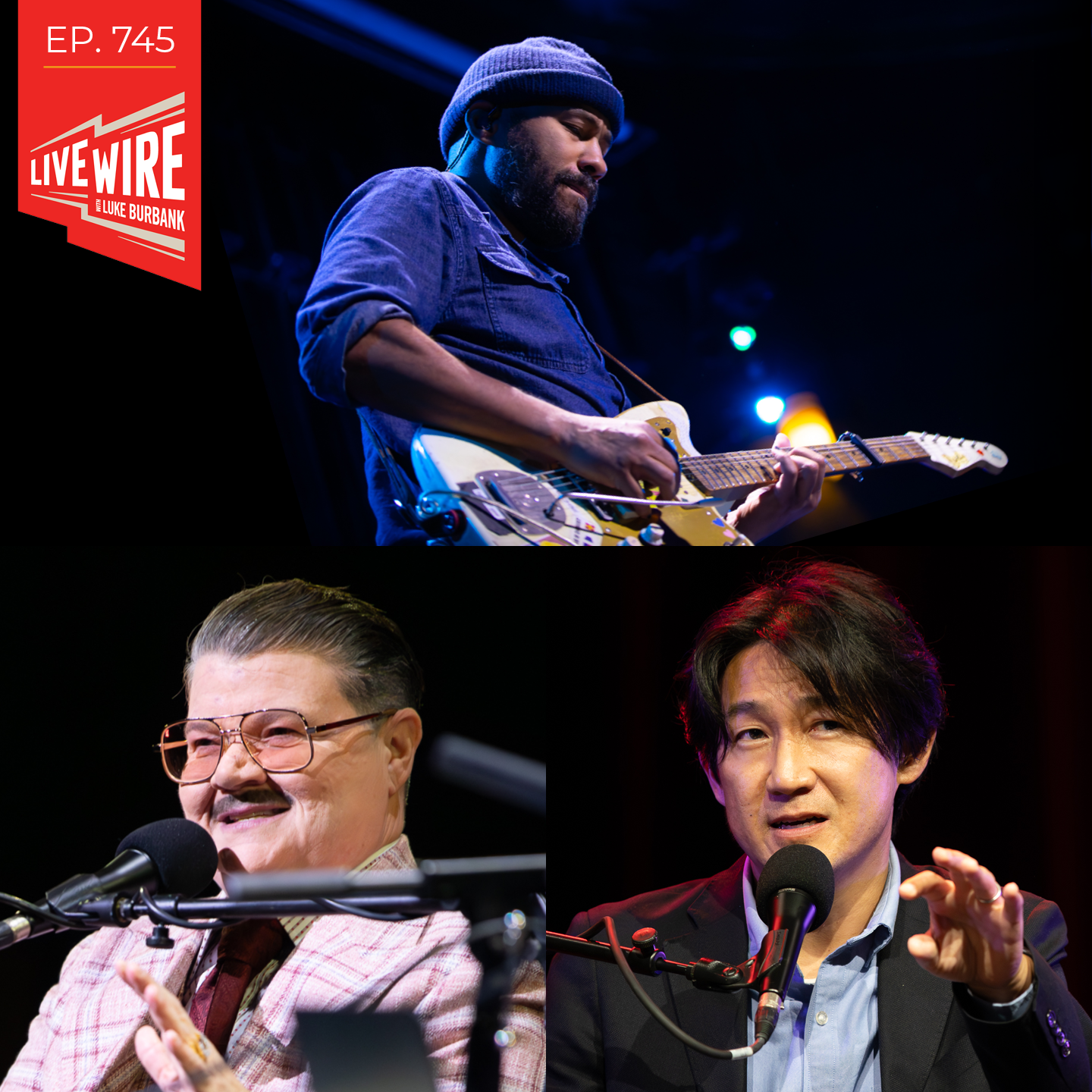
Performer Murray Hill (Somebody Somewhere) explains how his admiration for showbiz legend Johnny Carson and photographer Diane Arbus led him to the stages of queer clubs in New York City; Pulitzer Prize finalist Ed Park reveals how a lost manuscript of spontaneous observations became an experimental memoir... 28 years later; and synth-pop artist San Gabriel performs "Over My Shoulder" from his album Nights and Weekends.
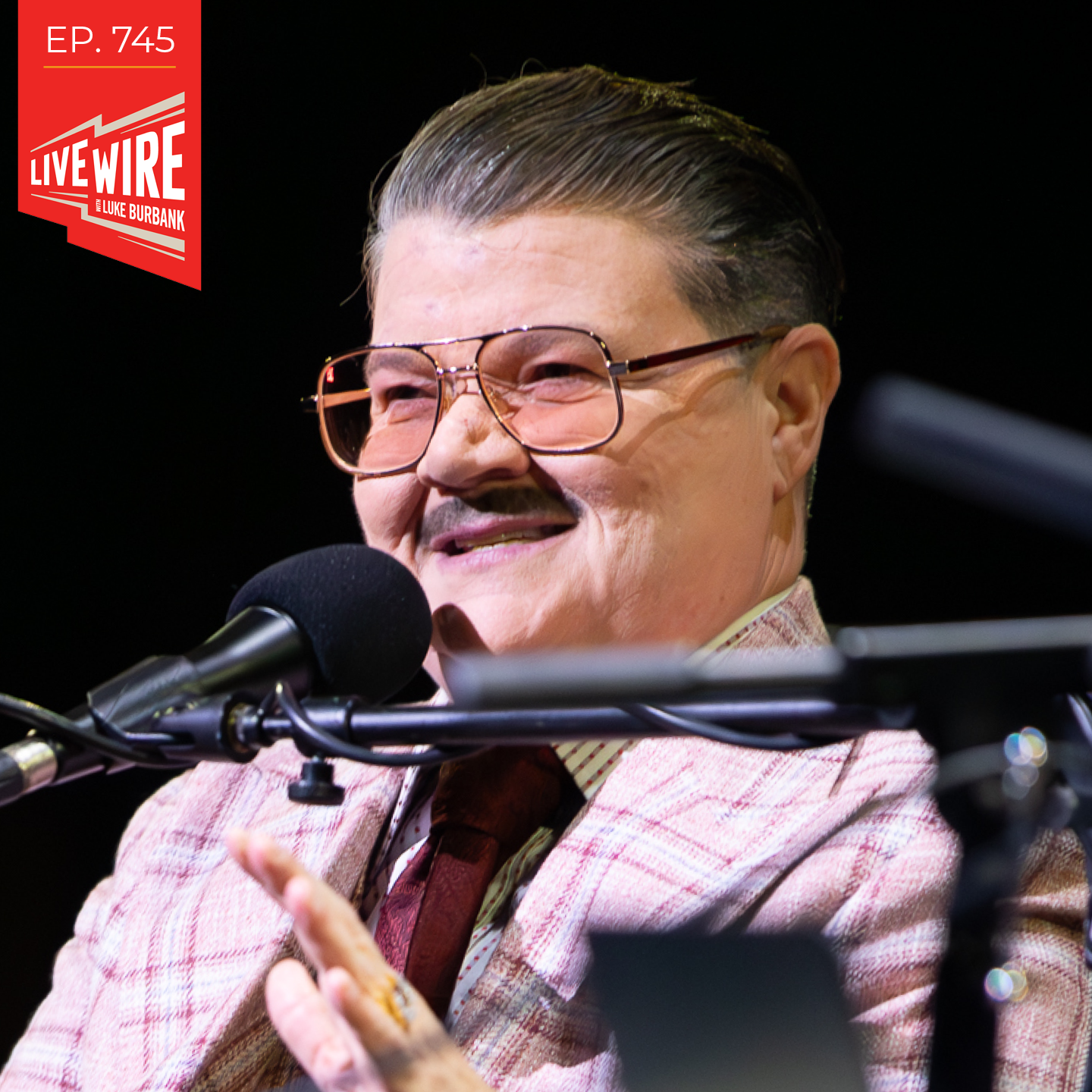
Murray Hill
Veteran Drag King Comedian
Murray Hill is a one-man entertainment machine: comedian, host, actor, writer, and producer with decades of classic showbiz charm. Television audiences know him as Fred Rococo on HBO's Somebody Somewhere as well as from appearances in Life & Beth, Drag Me To Dinner, Elsbeth, Welcome to Flatch, and King of Drag. On film, he starred in Paul Feig's Jackpot! with John Cena and Awkwafina, and will next appear alongside Arnold Schwarzenegger in Man With The Bag. He's also reported for ABC News and Hulu's Pride Across America, and NBC News named him one of the "30 Most Iconic and Influential Drag Performers in Modern History." Library Journal calls his memoir, Showbiz! My Life as a Middle-Aged Man, “laugh-out-loud ridiculous, sweet and wholesome, and heartbreakingly poignant."
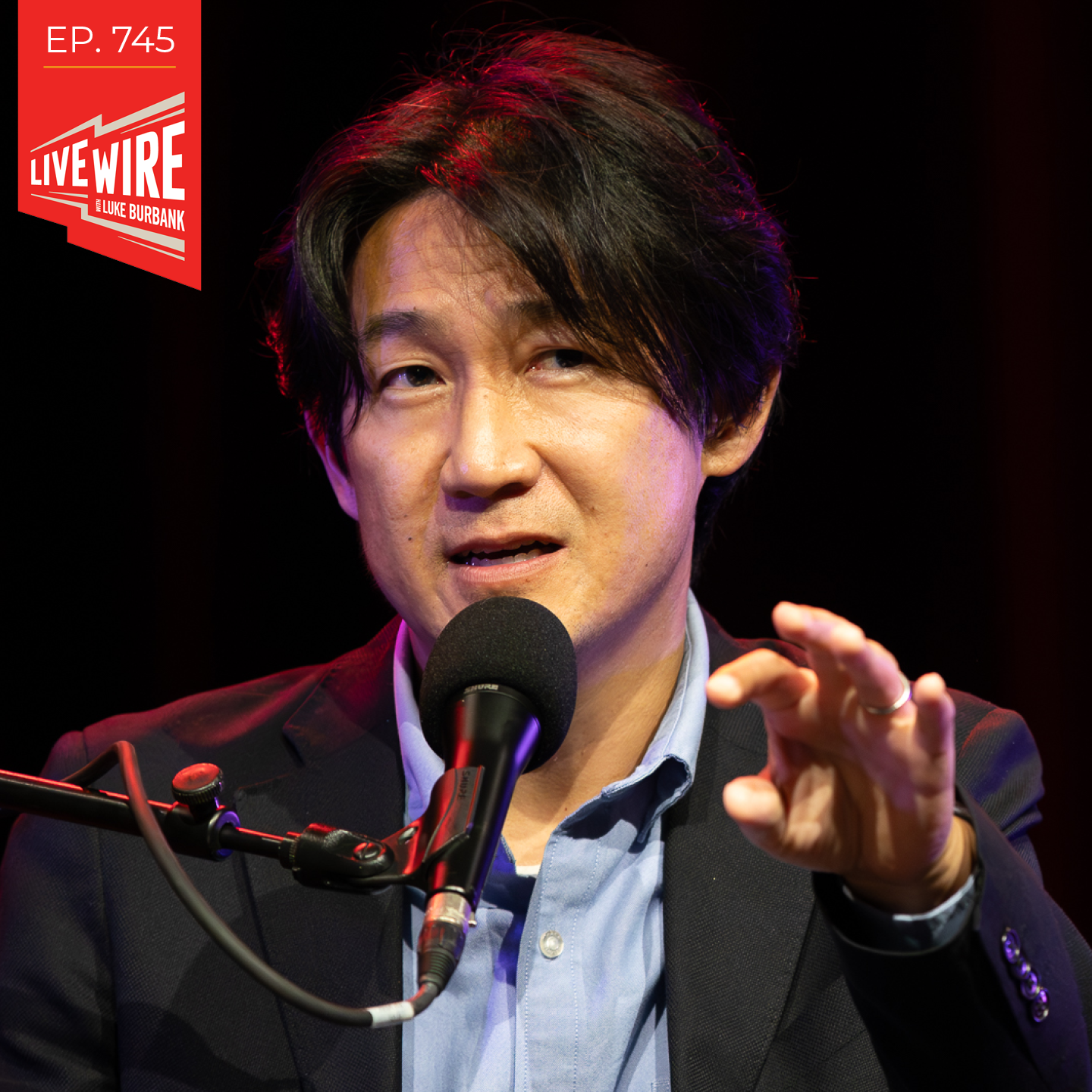
Ed Park
Pulitzer Prize Finalist
Ed Park is the author of the novels Personal Days and Same Bed Different Dreams. He is a founding editor of The Believer, and has worked in newspapers, book publishing, and academia. His writing appears in The New Yorker, The New York Review of Books, Harper’s Magazine, The Atlantic, and elsewhere. Profound, wily, and beautifully wrought, his new book Three Tenses: A Transmission from the Nineties is a meeting of memory and myth, confession and obfuscation, coalescing to offer a singular picture of creativity in action.
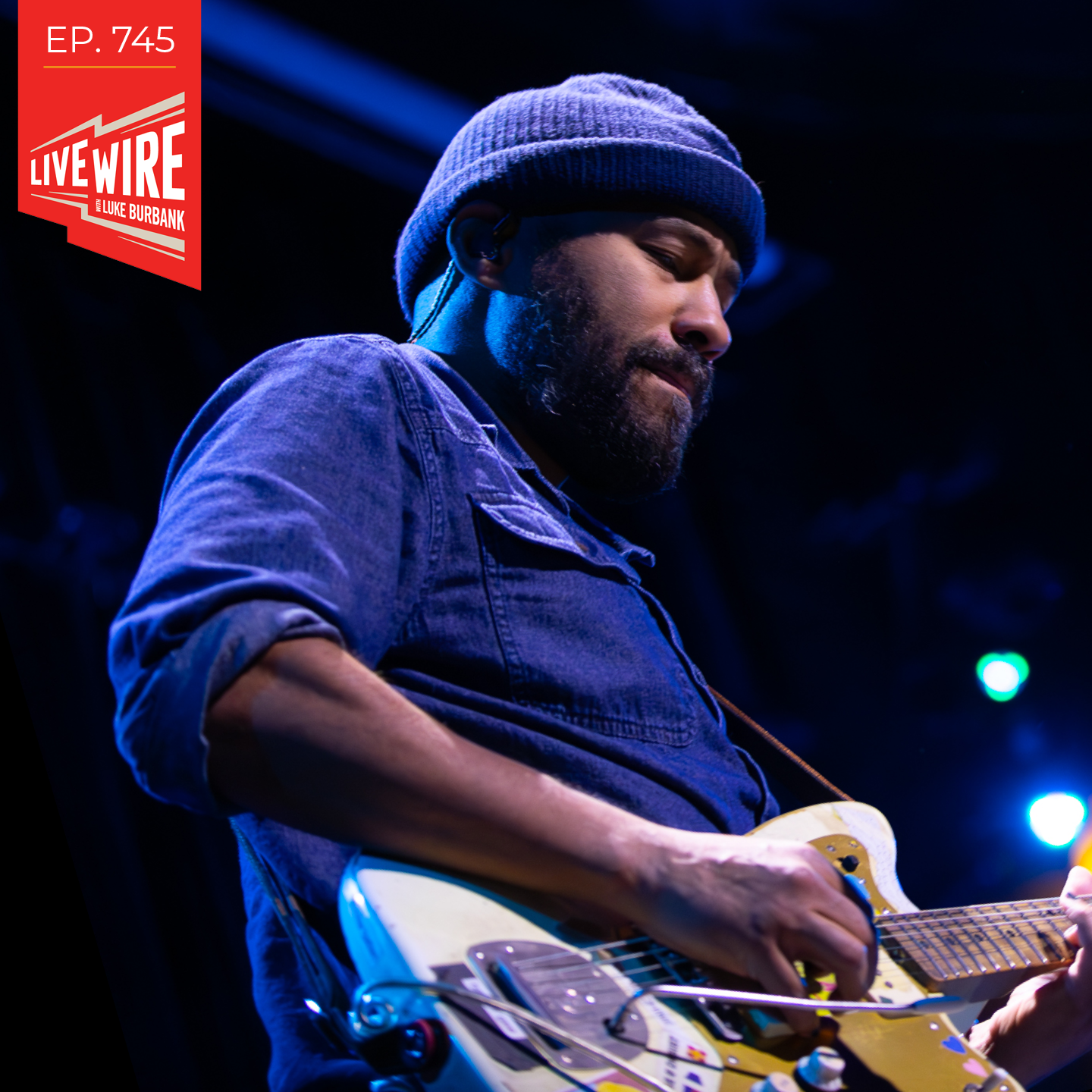
San Gabriel
Synth-Pop Artist
Before he was San Gabriel, writer and music producer James Bookert contributed heavily to the recording, production, and arranging of the Whiskey Shivers’ songs that appeared on the soundtrack to the movie Pitch Perfect 3—collaborating with artists like Harve Mason Jr, Anna Kendrick, EsterDean, and Trinidad James. Following the release of the film, his then-band the Whiskey Shivers’ tour was cancelled due to the COVID-19 pandemic. It is during this time that his new journey as a solo artist began, writing and recording his debut record Nights and Weekends while working at a liquor store in East Austin. This quickly caught the attention of Austin’s NPR affiliate station, who named San Gabriel “KUTX’s Artist of the Month” in January of 2022. A collection of singles later, Bookert started regularly touring with the band Goth Babe as a keyboardist, singer, and guitarist. In 2024, he was selected as the winner of Hyundai’s “Your Journey, Your Track” contest, and his song “Over My Shoulder” was named “Best Synth Pop Song” of the year by the PNW Music Awards.
Show Notes
Best News
Elena’s story: “Inmates drew portraits of shelter dogs. Then the adoptions began.”
Luke’s story: “This Lagan love story has a very happy ending”
Murray Hill
Murray’s new book is Showbiz!: My Life as a Middle-Aged Man.
The following influential figures are mentioned: Johnny Carson, Totie Fields, Don Rickles, Buddy Hackett, Shecky Greene.
When Murray was going to college in Boston, a professor gave him two books that significantly shaped his interests in photography: The Other Side (1993) by Nan Goldin and another book by Diane Arbus.
In New York City, Murray took photos of Wigstock, Lady Bunny’s annual outdoor drag festival that was established in 1984.
One of Murray’s first times photographing drag kings was at a drag king pageant in the Meatpacking District of NYC.
Some of Murray’s own first performances as a drag king were heavily inspired by the campy character of Elvis Presley.
Murray talks about being recognized on the street as his character from Somebody Somewhere, Fred Rococo, and the impact the show has had in terms of creating relatable queer representation on television.
Ed Park
Ed’s new book is Three Tenses: A Transmission from the Nineties.
In a time of experimentation, Ed initially wrote this book out as 1,500 “tiles,” which is what he calls the quick, expressions of writing that just felt good for him to write. He talks about his pivot away from fiction and the accidental making of a memoir.
San Gabriel
James mentions his involvement in Pitch Perfect 3—as a member of a punk rock bluegrass band called Saddle Up.
Listen to San Gabriel’s album, Nights and Weekends.
-
Portions of this transcript have been auto-generated.
Elena Passarello: From PRX, it's... [Live Wire!] This week, performer Murray Hill.
Murray Hill: I exaggerated all the parts about him. Like, I was sweating, and I was, like, popping pills, but they were vitamins... And then the- the vitamins got wet, and I stank. It was disgusting.
Elena Passarello: Writer Ed Park.
Ed Park: I turned away from fiction, and I just was like: Let me try to crystallize certain memories, anecdotes I'd heard from my parents, bits of historical trivia, some jokes.
Elena Passarello: With music from San Gabriel and our fabulous house band. I'm your announcer, Elena Passarello, and now, the host of Live Wire, Luke Burbank!
Luke Burbank: Oh, my goodness gracious. Thank you, Elena Passarello. Thanks to everybody tuning in to radio stations all over this country, and thanks to all of you for coming out to the Alberta Rose Theatre here in Portland, Oregon. This is going to be an absolutely fabulous show this week, uh, so we're gonna get right down to it by starting off the way we like to, a little segment we call The Best News We Heard All Week!
[Best News Theme plays]
Uh, you know, the news can be rough sometimes, but, uh, there is good news out there. We like to go find it for you, uh, here for this segment. Elena, what is the best news you heard all week?
Elena Passarello: Okay, I'm gonna take y'all to Columbus, Ohio- [Luke: Mm-hmm.] where there is an institution known as the Franklin County Animal Shelter and Adoption Center, and it does just what you think it does. It gets, uh, homeless pets places to be. Uh, they get-
Luke Burbank: Unhoused pets.
Elena Passarello: Unhoused pets, pardon me. Uh...
[audience laughs] We are in Portland. [Elena laughs]
Luke Burbank: Yes.
Elena Passarello: This shelter takes in upwards of 10,000 dogs a year.
Luke Burbank: Whoa.
Elena Passarello: A lot of them get adopted right out, but some of them stick around for a long time, a year or maybe more, because, I think a lot of people know this, some dogs just don't present that well when they're in that situation. [Luke: Mm-hmm.] You can't see all the beauty that the dogs are, and- [Luke: Yeah.] Um, you know, uh, I think if I was in that situation, I would not be looking or acting my best at all either. So, totally understand. Enter the Franklin County Corrections Center in Columbus, Ohio. So, this is a partnership between these two community institutions that's been going on for about 15 years. Uh, incarcerated people at the corrections center will come in and bathe the dogs or take care of the facilities... So they've kind of been working together for a while, and a social worker who has ties to both places noticed that there are a lot of people at the corrections center, incarcerated people, who are super artistic. [Luke: Hmm.] They doodle. They make portraits of people and send them to their families. They do- they do a bunch of stuff. A couple of people are, like, licensed tattoo artists, or have art degrees... And so, she thought, "Well, what if we found a way for folks to put their skills to help these dogs get noticed?" [Luke: Yeah.] And so, they gave them colored pencil or black and white pencil and photos of the dogs, and 30 dogs got these, like, super glamour shot- [Luke laughs] portraits of themselves. And it was-
Luke Burbank: Like, drawn by the incarcerated folks?
Elena Passarello: Drawn by the incarcerated folks, who really put their heart and soul into it. [Luke: Yeah.] The quotes are really great. Like, um, you know, like, a- a lot of them had already worked with the dogs or had- had seen dogs that had come in through the center, and these- these portraits are really amazing. It's kind of like, "Draw me like one of your French girls," you know? [Luke and audience laugh] Like, just these sort of, like, noteworthy portraits.
Luke Burbank: It's early in the night for a Titanic reference, but okay. [audience laughs]
Elena Passarello: Yeah, sorry. I had to- I had to throw it out there. Um, my favorite thing that I read is that it gives the folks who are making these portraits an opportunity to be connected to the community. It h- helps them use skills that they're proud of. [Luke: Mm-hmm.] And it's a constructive thing to do, and one of the artists says, "You know, I've been trying to figure out a way to make the rest of my life about giving rather than taking." [Luke: Mm.] So yeah, that's my best news. [audience applauds]
Luke Burbank: Speaking of animals, the best news that I heard all week is also animal-related. [Elena: Hmm.] It takes us over to Ireland, where they had a really big storm this week in the sort of Belfast area. [Elena: Okay.] And, uh, this storm actually blew a couple of swans who were flying somewhere, blew them off course, and they landed on the train tracks. [Elena gasps] And the, uh- it was the Derry to Belfast train had to stop, like, s- come to a screeching halt to not hit these swans that were on the tracks. And so they didn't, thankfully. They got out... they kind of gently, kind of, shooed them along, and then the train kept going. But what they didn't realize was the swans had gone on different sides of the train. [audience reacts] And got separated. [Elena: Oh, no...] And by the time the train was done going by, the swans were now going in different directions looking for each other.
Elena Passarello: Oh, no...
Luke Burbank: And so, one of the swans ends up at the Grand Central terminal, where the workers at the train station are like, "This is not really the place for a swan." [Elena: Yeah.] Uh, so they- they- they get the swan, they put it in this protected area, and then, there's a maintenance train that's going out to where some lake is, like Craigavon. And they're like, "We'll put the swan on the maintenance train and take it out to this lake so it can, you know, kinda do its thing out there." [Elena: Uh-huh.] Um, but the thing is, the other swan was looking for that first swan, and was going the other way, and ended up at a different train station many miles away-
Elena Passarello: Oh my God...
Luke Burbank: Where the workers there were like, "Oh, here's a swan." And this is where a guy named Louie enters the story. [Elena laughs] I don't know why they don't put his last name in the story. But Louie sees the swan, and he remembers hearing something on the radio about swans on the tracks. He gets on the radio, and he's like, "Is there another swan in the system somewhere?" [Elena laughs] And they're like, "Yeah, it's on a maintenance train going to Lake Craigavon." And he's like, "Stop that train." [Elena and audience laugh] And this is a quote from Louie, "Swans mate for life. If they are separated, they will die of a broken heart."
Elena Passarello: Aw... [audience reacts]
Luke Burbank: I don't even know if that's true, but let's just go with it.
[audience laughs]
Elena Passarello: Sure. Yeah, sure.
Luke Burbank: It's a r- It's a sweet sentiment.
Elena Passarello: Yeah. Yeah, why not? Yeah.
Luke Burbank: So, Louie's like, "We gotta reunite these swans." And the guys on the maintenance train are like, "Okay, well, take a train up here." And he's like, "I can't. There's so much debris on the tracks from the storm."
Elena Passarello: Oh no.
Luke Burbank: So Louie gets a van, from the train station, throws the one swan in the back, drives all the way to where the other swan is, reunites them...
Elena Passarello: Aw...
Luke Burbank: Brings them back to his train station, which happens to have a pond next to it where, and there's a photo of it in the article, the swans are still living... together... [audience reacts]
Elena Passarello: Yeah. [Luke: in-] They're not gonna go anywhere after that.
Luke Burbank: No. [Elena laughs]
Elena Passarello: They're done with public transportation- [Luke: Yeah.] altogether.
Luke Burbank: Honestly.
Elena Passarello: Yeah. [audience laughs and applauds]
Luke Burbank: Unfortunately. So, those two swans, uh, living- uh, living out their, uh, golden years on Golden Pond, uh, thanks to Louie. That is the best news I heard all week. [audience applauds]
[Best News theme plays]
All right, let's get our first guest out here. He is a one-man entertainment machine, comedian, host, actor, writer, and producer with decades of classic showbiz charm. TV audiences probably know him as Fred Rococo from Somebody Somewhere on HBO. [audience cheers] NBC News named him one of the 30 most iconic and influential drag performers in modern history, which I didn't know was a thing NBC News was doing, but- [audience laughs] woke is back. [Elena laughs]
Elena Passarello: Yeah.
Luke Burbank: Uh, it's a whole new world. His new memoir is the incredibly readable and entertaining Showbiz!: My Life As a Middle-Aged Man. Please welcome Mr. Showbiz himself, Murray Hill, to Live Wire. [everyone cheers]
[House Band plays an extended intro sting]
Wow. [everyone cheers]
That is, without a doubt, the most confident entrance we have ever had from a guest on this program. It's almost like you've done that before.
Murray Hill: Um, I- no, I think it's just we're in Portland. [Luke and audience laugh] Ok- okay, listen, come on. I don't want any trouble. I- you know, showbiz.
Luke Burbank: Yeah. Showbiz, a word that comes up often in the book, Murray.
Murray Hill: Well, you know, every time I say it, I get five bucks. [Luke and audience laugh]
Luke Burbank: Um, this book is absolutely fantastic. But I have to say, like, your- your persona as an entertainer and stuff, it's so, um... It's funny and snappy and all these things, and you could have written a book that was a bunch of just kinda one-liners, you know, from the Catskills, like: Murray Hill's View of Life. That is not what this book is. This is a really real book about your life that gets into a lot of really important stuff. Why did you go that direction and not just kind of a- a snappy little fun thing?
Murray Hill: Well, first of all, I- I know I look young to the, um, audience- [Luke: Mm-hmm.] listening online... [everyone laughs] But, um...
Luke Burbank: He's- [Murray: You know-] He's about 25, as far as I can tell.
Murray Hill: No. Well, I mean, in this audience, I actually do seem kinda young. But- the-
Luke Burbank: Haha! [audience reacts]
[House Band plays a "ba-dum-tss"]
Hahaha... [everyone laughs]
Murray Hill: You know, there's only two people in this room that know about Catskills comedians, and that's you and me. So, nobody's gonna buy a book doing one-liners. So, um, they also offered me- the publisher Simon & Schuster said, "We're gonna pay you $1,500 to write your real memoir." So I said, "You know what? I'll take it." [Elena laughs]
Luke Burbank: Wow. Couldn't turn it down.
Murray Hill: No. [Elena snorts] Showbiz.
Luke Burbank: Was it-
Murray Hill: Oh! I heard that.
Elena Passarello: Sorry.
Luke Burbank: Yeah.
[audience laughs]
Murray Hill: Are you gonna edit that out?
Luke Burbank: No, no, no. Uh, Elena gets paid every time she snorts.
Elena Passarello: I get paid $1,500 every time I snort. [Luke: Every time she snorts.]
Luke Burbank: That's a big part of the... [snorts]
Murray Hill: Okay. I- I- [Luke: Yeah.] I know you have questions prepared, but- [Luke: Please.] I was given a text message saying that we couldn't talk about certain things, and now—because I say the F-bomb constantly—but now she's talking about blow? And are we allowed to do that?
Luke Burbank: Absolutely.
[audience laughs]
Murray Hill: I thought this was a weed town.
Luke Burbank: If we're- [Elena and audience laugh]
Portland contains multitudes, Murray.
Elena Passarello: Yeah... [audience laughs]
Murray Hill: I haven't seen that yet. All's- all's I've noticed so far is that everyone's friendly, and if I see a straight person, I'm shocked.
[Luke and audience laugh]
Luke Burbank: We're off to a hot start, and it hurts me- [Elena and audience laugh]
Murray Hill: What did I tell you backstage?
Luke Burbank: It- it kills me to break in on this, but we do have to take a very, very quick break. [Elena laughs] When we come back, though, much more with Murray Hill talking about his book Showbiz here on Live Wire. Stay with us. [audience applauds]
Welcome back to Live Wire from PRX. I'm Luke Burbank, here with Elena Passarello. We are at the Alberta Rose Theatre in Portland this week talking to Murray Hill about his book Showbiz!: My Life as a Middle-Aged Man. [audience cheers]
I know- you did have early interest in- in talk shows and- and that kind of energy on the Carson show. In the book you talk about, you know, growing up in Connecticut, and your home life was- was really pretty rough and chaotic, but you would watch Carson, and you would see the way that Dean Martin and Carson, all those folks would kind of relate. And- and what would you think? Like, "That could be me someday"?
Murray Hill: Well, I- I didn't think of it like that because if you could try to imagine it, and if you're in comedy, 99% of the time you- you have some struggles. I grew up in a very, um, repressed town, and my family, um, if they were alive today, they'd be considered MAGA. So, it was- it was- the town was conservative. The family was conservative. I think about it in a cinematic way. It was, like, very dark. It was a very dark childhood. So, when everybody, you know, in the- my house would go to bed, it was, like, 11:00... I would sneak downstairs, and I would turn on... Kids, I didn't even have a remote. You would turn on- turn on a knob. I had to turn on the TV, and I put on Johnny Carson, and he wore these, you know, I'm actually- this is a Carson-inspired suit that I'm wearing, you know, these very colorful plaid suits. Show people are very colorful, but I didn't know anything about that growing up in New England and Irish Catholic. You know, there- there's no joy in that.
[Luke and audience laugh]
If you know, you know. [audience laughs]
Um, so, you know, when he had guests on, it was, you know, Totie Fields, Don Rickles- [Luke: Mm-hmm.] Buddy Hackett- [Luke: Mm-hmm.] Shecky Greene. [Luke: Yeah.] Like, all these huge personalities, and they're all short and fat, as it turns out. Um, and I'd never seen anybody like that, and they were so comfortable with who they were. So, I wasn't like, "I wanna be in show business." I didn't even know what sh- show business was. But I was like, "I wanna find those people, and I wanna be friends with them."
Luke Burbank: And you, you sort of did in a way once y- you go to college in Boston, then you end up in New York, but you're really interested in photography.
You were taking a graduate degree in photography there. It was the School of, um, Visual Arts. But you were taking pictures of people, but at that time, were you thinking of yourself as a performer eventually?
Murray Hill: No, not even that. I think, um, you know, there were a lot of teachers along the way that helped me out, and when I was an undergrad, a teacher in Boston, it was, it was, it was...
We didn't say woke back then. It was PC. It was all, everything was PC, PC. So a professor gave me a book, and it, it seems so innocent, but, uh, he gave me two photography books, um, Nan Goldin's- Mm-hmm ... The Other Side, and, um, a Diane Arbus book. Mm. So, you know, it's much like watching Johnny Carson. I opened up these books, and I was like, "Holy-" What am I looking at here?
Luke Burbank: 'Cause for folks that don't know, those are both photographers that took lots of pictures of people that didn't fit conventionally into our sense of what American life was at that point.
Murray Hill: Yeah, and you know, I, I said, I, I'm, I make a lot of jokes, but there wasn't any internet, and nobody said gay. There was no language.
There... No one said trans, queer. The, like, none of that even existed. So you have to try to think about growing up Catholic, conservative, opening up Nan Goldin's book. And not only is it everybody's queer and doing all kinds of stuff, they're doing all kinds of drugs, they're all hooking up with each other, and they're pictured in such a way that wasn't about their otherness or about discrimination.
It was like, look at these beautiful people that I didn't even know existed. [Luke: Mm-hmm.] But unconsciously, I was aligned with them. [Luke: Mm-hmm.] But I had no awareness.
Luke Burbank: So then you started going, and, and you were... You write in the book about, you know, you're photographing some drag shows and things, and then you go to, um, well, I guess you'd call it, like, a drag king show, and you, you noticed that there was not a lot of kind of, like, fun and humor in that form w- as you were looking at it in New York at that time, and you kinda saw an opportunity?
Murray Hill: So I used to pretend that I was a reporter- [Luke: Mm-hmm.] for The Boston Phoenix. I wanted to find those people in those books. So I went to the queer clubs, and the gay clubs, and the drag queen clubs with my, you know, huge camera. It was, like, 15 pounds, and I would take pictures, and I just loved camp. [Luke: Mm-hmm.] But it was another Johnny Carson situation, where it's like, you know, daytime sucks. Ev- everything's hard. Boston sucks. And then, you know, you go into the nightclub, and, and, and then this darkness, and then you open it up, and it's like The Wizard of Oz. [Luke: Mm-hmm.] It's like people are raging. They're having fun. They're living freely. They're, you know, dressed as women. They're, uh, mu- It's, it was this, like, I had never seen such freedom, but the freedom happened at night.
[Luke and Elena: Mm-hmm.] Like, after hours. [Luke: Yeah.] So, I was very attracted to that, so I took photographs of that. So, I found the people that I kinda wanted to be, but I still was so steeped in repression and ignorance.
Luke Burbank: Well, you, you told one of your friends, "The Indigo Girls are definitely not gay because they sing about God." [Elena snorts] [audience laughs]
That was something Murray Hill said, you all.
Murray Hill: Okay, I don't- I didn't come here to get canceled.
[everyone laughs]
Luke Burbank: So, I'm curious about the-
Murray Hill: Oh yeah. Okay. I was getting to a point. [Luke: Please, go for it.] Thank you. ADHD is a great thing to get diagnosed with during the writing process of the book. [Elena and audience laugh] So, in Boston, you can be a big fish in a little city. In New York, it's like ppbbtt. I'm like, "I'm gonna take pictures of drag queens. No one's ever done that." And they were like, "S- just stop." [audience laughs] So, um, the third day I was in New York, I took pictures of Wigstock. [Luke: Mm-hmm.] This was before RuPaul's Drag Race. It was Lady Bunny's, uh, big drag queen festival on the West Side. And, you know, I was taking photos, and then it just, it, I had an epiphany, and I was like, "Okay, what the hell is-" It is, like, a sea of men, and the only representation of femininity or women were gay men dressed as drag queens. And I was like, "What am I doing? I'm contributing to the invisibility of my own people."
Luke Burbank: Mm.
Elena Passarello: Mm-hmm.
Murray Hill: You know, and we didn't have gender spectrum, those words or anything back then, either, but I was just like, "What's on the other side of this?"
So that's when I saw a listing- [Luke: Mm.] and I'll explain to the young people here. If... Are there any young people here?
Luke Burbank: Yeah!
[audience laughs]
Murray Hill: Are there? So, I'll explain it for the young people. So i- i- you know, in nightlife in New York, they used to have these, like, newsprint magazines. And they would put, they were listings of all the places that you could go in a night to find the homosexuals. [Luke laughs] Is that a... Am I can't... Can you still say that?
Luke Burbank: You sure can.
Murray Hill: [audience laughs]
I found a drag king pageant in the Meatpacking District. That's not a joke. And, um- [audience laughs] And that was- that was a very seedy part of town back then. Now, it's completely gentrified. So, I lied and said I was a photographer for the Village Voice, and I went into this club, and I was like, "I'm, I'm taking, taking pictures of a d- drag pageant."
And it was drag kings, but you know, when I opened that door, it wasn't the big, beautiful, colorful, campy world. It was, you know, heavy bass, you know, dark lighting, and it was all about, like, masculinity and passing and sexuality. [Luke: Mm-hmm.] There, there was no comedy in there. [Luke: Mm-hmm.] So, it was a very different vibe. [audience laughs]
Yeah, I know, we sh- well, there, I'm gonna stay on track 'cause someone laughed, but I could've gone off on that one.
Luke Burbank: Please, no laughter. It will throw Murray off. [audience laughs]
Murray Hill: Mom, is that you? [audience laughs] So, um, you know, and, and part of the whole point of the book and how I became this is, you know, I saw what I didn't see. I know that doesn't make any sense.
Luke Burbank: You noted what you weren't seeing.
Murray Hill: Well, I saw it, though. It's like a- I'm very visual, but I was like, okay, that campy, comic world, that, the way that gay men deal with oppression is a very different way than lesbians deal with oppression. And you know, they're, it's a little different now, but, but there wasn't as much laughing at yourself and humor. It was more about, you know, the seriousness of it and, you know, the masculinity was this. It wasn't, "I'm going to exaggerate masculinity or, you know, make fun of it."
Elena Passarello: One of your earliest selections for an act was Elvis, right?
Murray Hill: Yes.
Elena Passarello: Now, what drew you to that particular form to start out?
Murray Hill: Well, I, I don't, you know, I don't wanna get too theoretical here, but you know how a lot of drag queens if, if, sometimes if they, they're addressed about it's misogynistic in- inherently, they'll be like, "Well, no, I, it, I'm paying homage to these, you know, powerful, you know, starlets or whatever." But, and, but I feel the same way. Like, for me, Elvis is somebody... I mean, I have a TCB tattoo under here. Um-
Luke Burbank: Taking care of business.
Murray Hill: Yeah. [Elena: Mm-hmm.] Showbiz. Um, you know, Elvis is somebody that I looked up to. He is show business. [Elena: Yeah.] But, you know, toward later in his life, he did become, you know, a, like a caricature of himself, and he, he became so big. He became very campy with the big collars, the sweat, and all that stuff. So, my first drag king performances, I chose Elvis, but I also, you know, in the same way from studying the drag queens, I, I mocked him in a way, but out of love. Um, you know, I, I exaggerated all the parts about him. Like, I was sweating, and I was, like, popping pills, but they were vitamins. And then the, the vitamins got wet, and I stank. Yeah. It was disgusting. And I had a, a Elvis suit. I mean, and I just went... That, that was, like, basically all I did my first act. [Elena laughs] Um, so I, I brought, I, I, that was kinda the beginning of bringing the campiness to the other side of the drag world.
Luke Burbank: I, I would be remiss if I didn't ask you a little bit about Somebody Somewhere, which is, I think, one of the best TV shows that's been made- [audience cheers] in my memory. And- And your character, Fred Rococo, is just, uh, is just so special on the show. I've had multiple people say to me Fred is their favorite character, you know, on the show, and that's pretty high praise considering, you know, Bridget Everett and, um, and Jeff Hiller, uh, and all the other cast. Uh, how did you... Did you have to audition for that role? I know you and Bridget knew each other from the Joe's Pub, like, downtown scene, but was that, was Fred written for you?
Murray Hill: The joke is, which is true, um, F- Fred was based on me and Bridget's existing relationship. [Luke: Mm-hmm.] So we were already friends- [Luke: Yeah.] for, like, 25 years.
Um, and then, you know, Bridget constantly reminds me, 'cause you can probably see some of the chemistry on screen, um, is real. Jeff and Bridget torture me, and I torture them more so. [Elena laughs] Um, but, you know, they're like, "Oh, Murray's the only one that didn't have to audition."
Luke Burbank: Ah.
Murray Hill: And, and I'm always like, "Yeah, and if I did, I wouldn't have gotten the part."
[everyone laughs]
Luke Burbank: Right.
Murray Hill: Um-
Luke Burbank: Well, well, 'cause, I mean, I know, I guess the reason I ask that is because Hollywood is so weird, and even though Bridget knew you and obviously wanted you on the show, sometimes in that world it gets weird where they're like, "Okay, we want a, like a Murray Hill, but just a little different," or whatever. So, I mean, I know this was pretty... Was it pretty life-changing for you to be a part of that show?
Murray Hill: Well, you know, it, it's, it was a slow burn, and I think for all of us, um, Jeff, Bridget, and I, you know, we're all similar in age, and we all came up in New York in different little avenues. Like, Jeff came from improv, Bridget was, like, cabaret, and I was, like, downtown queer nightclubs, comedy clubs.
So we were all, you know, trying to make it, um, which was making it in New York City is that you can pay your rent three consecutive months in a row.
Luke Burbank: Yeah.
Murray Hill: Um, but, you know, when we, when we started getting fan bases, then, you know, it was like... I, I mean, things have changed so much since Somebody Somewhere has come out.
You know, we, we used to think, as downtown people, if you got on TV, you made it. Mm-hmm. And, you know, that everything's fine. It, you know, Hollywood is basically extinct now, but that- well, that's another show. So, you know, we made it and it's like, ugh, no, it's too bad. We're going on strike, we're having a pandemic, we're doing this, we're...
Nah. But, um, the difference is that me, Bridget, and Jeff, we all got to be who we always have been- [Luke: Hmm.] and bring that to the show. [Luke: Hmm.] And that's the weird stuff you're talking about in Hollywood is, like, they're not gonna cast her because she's, looks a certain way- [Luke: Uh-huh.] or she has too much weight, or, or we're not gonna cast a real trans person. You know, we're gonna, you know, we're gonna get, uh, you know, Halle Berry to play Murray Hill.
Luke Burbank: Right.
[audience laughs]
Murray Hill: You know.
Luke Burbank: Boy, that would've been a different show.
Elena Passarello: Yeah.
Luke Burbank: Soil scientist, Halle Berry.
[Elena laughs]
Murray Hill: That's actually more believable. [Luke and Elena laugh] But, you know, so we all, all three of us have been othered in different ways. So, the stuff that made us others, I think, is what the magic sauce of that show- [Luke: Yeah.]
Is that we showed everybody who we were in our hearts first. And I think for me, Fred is all heart. So y- they see, people saw Fred and experienced him a- not as a trans man in Kansas, but as this guy with this big heart that's just like everybody else. Mm-hmm. So that's who I am, you know, right here. But the difference that the show made is I got to, in a time where there's so much anti-trans rhetoric- [Luke: Mm-hmm.] It's just disgusting, you know, in this hateful world that we live in, this very positive, loving Fred guy who, who is trans can relate to anybody.
Elena Passarello: Mm-hmm.
Murray Hill: So, you know, that's, that's the gift for me. It's like, you know, I've always believed that if you show people, you know, who you are and that you bleed the same and that you have a big heart, they're not gonna discriminate against you.
And Fred showed me, like, on a, on a much larger level that... that's true.
Luke Burbank: Yeah. [audience applauds]
Murray Hill: And I'll tell you one thing. Yeah. I'll tell, I'll tell you one thing. I know we're in a good part of town and a good part of the country when we went out to coffee this morning at 11:30 and, um, yeah, everyone was panicking 'cause they had to close to switch over for lunch.
And, um, I have been recognized more times today- [Luke: Hm.] [Elena laughs] than I have for the last six weeks doing shows. [audience cheers]
Luke Burbank: Wow.
Murray Hill: And not as, not as Murray, but as Fred.
Elena Passarello: As Fred.
Luke Burbank: As Fred.
Murray Hill: So, Portland, I love you.
Luke Burbank: Absolutely. [Elena: We love you.] That's showbiz for you. Okay. Murray Hill, thanks for coming on Live Wire. [House Band plays music]
That was Murray Hill recorded live at the Alberta Rose Theatre in Portland, Oregon. His book Showbiz!: My Life As a Middle-Aged Man is available right now.
[transition music plays]
This is Live Wire. I'm Luke Burbank here with Elena Passarello. All right, let's say hello to our next guest. He's a Pulitzer Prize finalist and a founding editor of the literary magazine, The Believer. He's also a guy who once misplaced an entire book that he wrote for 20 years. He saved it on a floppy disk, which kind of ended up God knows where.
And if you're one of our younger listeners, we don't really have time to get into what a floppy disk was. It was a thing. Uh, then he finally found the one printout of the book that he had. It was, like, in an envelope somewhere. And the book itself was made up of about 1,500 short entries, which covered everything from Korean spies, uh, to guys, like, hitting on his girlfriend in the 1990s. He calls it an autobiography with lies. It's titled Three Tenses: A Transmission from the Nineties. The Boston Globe calls him a merry prankster who sees straight to the core of our humanity. Uh, this is Ed Park, recorded live at the Kridel Grand Ballroom at the Portland Art Museum in Portland, Oregon.
Ed, welcome to Live Wire.
Ed Park: It's great to be here. I've never, I've never been on radio, so...
Luke Burbank: In all, with all of your- [Ed: Yeah.] I mean, decorated career- [Ed: I know.] as a writer. That's, um, I mean, that's-
Ed Park: You guys, you guys are pioneers.
Luke Burbank: Well, we are. It's long overdue, but we are so glad to have you, and we're huge fans of your work. Um, to, to talk about this book, we also have to kinda talk about the, the story of the book, I guess. But, like, take me back to what was going on in your life when you initially wrote this stuff. Like, how old were you? Kind of wh- what was- Sure ... what was happening for you?
Ed Park: Uh, so this was 1998. I was 28 years old, and I was having kind of a rough go of it.
I was in a long-distance relationship. My, my girlfriend had left, uh, had left New York. Um, I felt like I was at a, um, a dead end career-wise. Personally and professionally, I, I was not, I was not in the best shape. The one thing I wanted to do was, was be a novelist, to write, to write fiction, to write books. And so I wrote a book, and then I wrote another, and these were long, you know, 300, 400-page books that no publisher wanted to touch, right? [Elena: Hm.] And I think that summer, my memory is that I wrote this in the summer, I- Kind of simplified things. I just said, forget about these big, ambitious, uh, you know, novels with, like, dozens of characters, and you need, you know, kind of like the Court of Rose and Thorns or whatever. [Luke: Uh-huh.] Um, it, it wasn't fantasy, but it was... You know, these are very complex things, and just, like, get down to basics and write what you wanna read, write what you think readers would enjoy. And I turned away from fiction, and I just was like, "Let me try to crystallize certain memories," uh, anecdotes from, uh, I, I'd heard from my parents, bits of historical trivia, some jokes.
And, um, and let's see, let's see where, where it gets us. And, you know, the result was these 1,500 very short, um... I call them tiles because you could kind of, you know, buil- you build up the book mosaic-like. Um, but it really was just sort of a pure expression of, of the kind of writing that I liked. And, I mean, the crazy thing is I wrote it really quickly.
Wow. And I just couldn't stop writing. I would sit down, I would write one, I would write another, and, you know, pretty soon, you know, a half hour or even an hour would go by, and that was my, uh, writing for the day. And it, it just felt, it felt good, and it felt like it made you want to write more the next day.
Luke Burbank: Yeah. Uh, did you think you were creating a memoir? Did-- What did you think you were making?
Ed Park: I don't know. I think that, um, you know, as a fiction writer, I felt very uncomfortable with the idea of memoir. Even, even though there were memoirs, obviously, that I thought were, were amazing, I never thought of myself as a memoir writer.
So there, there was some hedging on, on my part, but you know, at a certain point, I thought, "Nobody's gonna read this. Just make it interesting. Just make it fun." You know, I will say, around halfway through, I thought- I really like this, but I can't imagine giving this to a, a publisher, giving this to an editor.
I felt like there was no chance it would be published, so I, I tucked it away.
Luke Burbank: There's this really interesting structure in the book, which is that every, um, little "tile"zz we'll call it, starts with in, I-N. Yeah. Every... In this place, in this time, in this. When did you hit on that as a, as a kind of a device?
Ed Park: I think it was purely accidental, but it was also what ma- allowed me to write the book.
Mm-hmm. So I was, you know, I was writing these, these memories and these observations and, you know, quotations from books, and I realized a lot of them began with in. So like, in New York, I, you know, I eat a bagel or something. [Luke: Yeah.] That's not in the book, but... [Luke and Elena laugh] Um, in, uh, you know, in 1975 I, you know, I go to this elementary school.
But somehow in is just... You know, it's such a simple word. It's two letters, but it immediately gives you something to work with. [Elena: Mm-hmm.] So I kind of compare it to like a sourdough starter. Like you just- {Elena: Right...] kind of can keep using it, and, um, it's, it's just a simple thing. And, you know, it wasn't conscious, but I somehow tricked myself into using it, you know, 1,500 times.
Luke Burbank: Uh, well, can we hear a little bit from the book as we've been talking about it? [Ed: Yeah.] I want folks to get a sense for kinda how the book reads. This is, uh, Ed Park reading from Three Tenses, his new book.
Ed Park: In between painting and glasses of wine, he calls me. He doesn't understand why I don't drink when I write. I tell him it would be stupid, that what I'm after is precision. He says all the great writers wrote while drinking. I say, "Not my great writers." In Rome, I start a sketch of her. I get the eyes wrong, and it looks like a robot. I'd draw antennae and little blots of antique electricity. At first she hates it, then she starts talking in a robot voice. (That's, that was actually my wife, my now wife, yeah.) In New York she's a psychology student. At this point I barely know her anymore. She finishes her thesis on couple separation. A few months later we meet again after what we say were too many years apart. (That's actually also my wife.) Um, in New York, he is partial heir to a chain pharmacy fortune. He tells me that the money has permitted him to retire at 27. His project for the coming years is to start a sports publication. "What's the one type of sports magazine that hasn't already been done?" He asks me. I say, "I don't know." "A biweekly," he says. [Luke and Elena laugh] In the bakery, I sit by the window. A man passes on the street, forehead furrowed. He looks like a cyclops and carries an aquarium tank filled with textbooks. In early January, the streets smell piney, all the Christmas trees gathered by the curb for the dump. In the bakery, I get seasick watching the coffee's black version of the room. In the company car, I'm hypnotized by the taillights. The perspective flattens in the drizzle. I unfocus my eyes and title it New York, January In New York, my eyesight declines. In my vanity, I resist a new prescription because I look better, almost handsome as a type of smudge floating up from any mirror In New York, my friend Jay works on his second novel. "That's it for my 20s," he tells me. "You can squeeze out another one," I tell him. He says he will have used up his store of observations and experiences. "I'll get married and divorced or something," he says. In the bedroom of the apartment on 112th Street, the power goes out. I put the leftover Chinese food outside on the ledge by the fire escape. It's winter, but it's a mild winter. In cafes, in bakeries, I never drink all the coffee. The last third of the cup goes cold. It's the duty I pay to be able to sit and read. In my youth, I acquired books like Tales from the Vulgar Unicorn, Bane of the Black Sword, and The Stars Like Dust. I found them unreadable, and yet I persisted.
Luke Burbank: That is Ed Park reading from Three Tenses: A Transmission from the Nineties.
[audience applauds]
Um, so y- you, you wrote this i- in the, in the late '90s and then you thought, "Well, this is not something publishers are going, uh, to respond well to." So did you just kinda put it out of your mind? Like, what sort of physically happened to this floppy disk it was- [Ed: Yeah...] saved on?
Ed Park: Well, the floppy disk exists somewhere. I think it's in a I think it's in a plastic box, w- um, which I mar- you know, marked like Ed's traveling disks or something. Like, I would have them if I needed to, to go somewhere with my, my files. But I, you know, that's-- I'm sure that's somewhere. But what really happened is I, I made a printout and, um, then I put it in an envelope... And then I lost it.
Luke Burbank: And had you also mentally lost track of it? Like, did you think about this project from time to time?
Ed Park: Occasionally. And I would think of, think of it with some affection, unlike sort of those two other novels that I, that I just could never get published. Like, those sort of scare me. Hmm. If I think about them, I, I cringe a little. But-
Luke Burbank: I- I have a screenplay like that.
[Ed: Oh, okay...] [Elena:Yeah. Yeah.]
That is saved on some old Apple computer that- I don't even know if the cord connects to anything anymore... but it's probably better that way ...
Ed Park: We don't have the hardware anymore. [Luke: Yeah.] Um, but I, you know, I, I would think kind of fondly, but, you know, there was... I was writing other books.
I was get- you know, I was getting published and-
Luke Burbank: And let's just say, being a finalist for the Pulitzer Prize, so having a pretty good time of the career you were having.
Ed Park: Yeah... I mean, it, yeah, it wasn't, it wasn't bad, ultimately. Um- [Luke and Elena laugh] But I, I didn't know, uh, I didn't know where it was. If you asked me where it was, I, I couldn't tell you. And then, really, it was at the height of the pandemic, and I just kind of, New York was in lockdown for a while, and I was just kind of puttering around and I thought, I was like, "Maybe I'll throw out some stuff." I never throw out stuff, but I was like, "Maybe I'll clean out the closet." And there was this envelope, uh, and it was, it had a label from my old employer. And I was like, "Geez, I wonder what's in here." And, it was the, it was the only printout- [Elena: Wow...] of Three Tenses. [Luke: Wow.] And, uh, yeah, so I was just like... I, I think during the, during the pandemic, a lot of us had a lot of time to think about- [Luke: Mm-hmm.] ourselves, but I, I don't think many people had a chance to read, you know, a direct, um, you know, transcript of their, their brain at age 28.
Elena Passarello: Do you feel like you're reading yourself as a writer, or do you f- there's gotta be enough distance, but is it enough distance that you, you're kind of reading someone else's work for pleasure?
Ed Park: It's a little of both. Um, there's definitely more pleasure than, um, perhaps I anticipated. Well, one thing I did was just, you know, I just wanted to have a record of it, like in case I, you know, I lost the, the pages. So I, I actually typed it up again and, um, you know, just to preserve it. But then, you know, by about page 10, I was like, "This is, this is actually pretty good." By about page 20, I'm like, "I think I like this better than the stuff I'm writing now."
Luke Burbank: [Luke and Elena laugh]
I also think that's such an interesting way to- [Ed: Yeah.] re-experience. Yeah. I remember when I was in college, and it would be like, recopying your notes was like a way- [Ed: Yeah...] to fix it in your brain and- [Ed: Totally.] things like that. Like, that's a, a interesting way for, for you to re-engage with the content, right?
Ed Park: Yeah. I mean, I will say, you know, you, you heard a little excerpt. For example, the guy with a, a, looked like a cyclops. He had an aquarium tank full of books. Like, I remember seeing that out the window, thinking it was interesting, writing it down. Never thought of it again. But reading it- [Luke: Hm...] now, I totally re- [Elena: Yeah.] can remember where I was sitting. [Luke: Yeah...] Like, it's funny. It's almost like I freeze-dried these memories for- Yeah ... for, like, later retrieval. I sound like a computer... person. [Elena laughs] But that's kinda what happened.
Elena Passarello: I feel like this is a real writer's thing. Yeah. Like, I would have such a hard time not getting in there and m- and- [Luke: Mm.] [Ed: Yeah...] 2026-ing the sentences.
Ed Park: Yeah.
Elena Passarello: You actually maintained the integrity of that, that former writer- [Ed: Yeah.] and what he wanted. Uh, uh, that, I, for me, that seems like that'd be an, an incredible struggle. [Ed: Yeah.] Did you feel that way?
Ed Park: It wasn't a struggle. And, and you know, the 28-year-old me was no, like, role model or anything. But you know, there's a lot about just being lonely and, you know, sitting, sitting in my, my small apartment listening to the radio. That comes up quite a bit. Um, and I'm, I'm concerned about money. I'm concerned about food. Like, there's, there's a lot of stuff that I, you know, I really haven't thought of in a long time, and I, I feel like if I start, you know, pulling at those threads, and if I start, like, airbrushing it or, you know... I think already the sentences were, you know, I don't think I'll write, in some ways I won't write that well again [Elena: Mm-hmm.] But it was also like, to, to tamper with what happened or the way I recorded what happened would be to dispel whatever magic was there. [Elena: Mm...] And you know, so it is a memoir essentially, but we, y- you know, the subtitle is A Transmission from the Nineties. [Elena laughs] And I just kind of want the purity of that transmission to be, you know, to be there, rather than, you know, the older, quote unquote wiser me trying to get in there and, and, and fix things.
Luke Burbank: What do you think the 28-year-old version of you who, who wrote this book, which, who had those anxieties that you're talking about and didn't know what, uh, your life was gonna look like, what would he think about, uh, you know, 2026 Ed Park?
Ed Park: I mean, you're gonna make me cry. Like, I, I was really, um... I, I do feel like this, r- even though when I wrote it in '98, it, nobody saw it. It was never, it was, it wasn't published. I didn't send it out. But I do feel like it was a turning point. Like, I think, I think I needed to write this book to continue as a writer. [Luke: Mm.] To actually write something that I, that I knew was good, that could be a secret, that, that kind of gave me the, the fuel. Like I said, another decade would pass till I, till I attempted, you know, and finally published a novel. But there was something about this that, um, you know, gave me faith, but I don't know that... You know, it's a, it's still a wonderful surprise to me that it exists today, and I don't think the 28-year-old me, uh, could, would even imagine Three Tenses, you know, being, being a book that people could read.
Luke Burbank: Yeah. Well, we're glad it's in the world, 'cause it's an amazing- [Ed: Thank you.] piece of writing. Um, Ed Park, thank you so much for coming on Live Wire.
Ed Park: Thank you very much. Thanks for having me.
Luke Burbank: [audience applauds] [House Band plays music]
That was Ed Park, recorded live at the Kridel Grand Ballroom at the Portland Art Museum in Portland, Oregon. Uh, his book, Three Tenses: A Transmission from the Nineties, is available now. You're listening to Live Wire. We've gotta take a quick break, but stay tuned. When we return, you're gonna hear some super fun music from one-time liquor store employee, now synth-pop producer, San Gabriel.
Stay with us. More Live Wire just around the corner.
[transition music plays]
Welcome back to Live Wire. I'm your host, Luke Burbank, here with Elena Passarello. Okay, before we get to our musical performance from San Gabriel, a little preview of next week's show. We are gonna chat with the poet and MacArthur Genius Award winner Reginald Dwayne Betts. He spent years working to put books into prisons across America through a program that he calls Freedom Libraries, and his latest collection is called Doggerel, which was published on the 20th anniversary of his own release from prison. He calls it his most personal book. Then we're gonna say hi to the actor and New York Times bestselling author Annabelle Gurwitch. She's gonna be talking about her latest book. It's called The End of My Life is Killing Me, which chronicles her journey after being diagnosed with stage four metastatic lung cancer. We are very happy to report Annabelle is actually doing well, and she's funnier than ever, so you wanna tune in for that. Plus, we've got music from New Mexican singer-songwriter Max Gomez. That is the plan for next week's show, so make sure you catch it. In the meantime, our musical guest this week began writing and recording his debut record, Nights and Weekends, while he was working nights and weekends behind the counter of a liquor store in Austin, Texas. The music caught the attention of Austin's NPR affiliate, who named him Artist of the Month, and the rest is history. Uh, he's toured extensively with the band Goth Babe as their keyboardist and also playing guitar and singing with them. This is San Gabriel, recorded live at the Alberta Rose Theatre in Portland, Oregon.
[audience applauds]
I was, I was so excited when Laura Hadden, our producer, sent along some of your music and said, "Oh, would this be a good fit for the show?" Because, uh, it, it's a style of music that I personally listen to all the time. I'm such a fan of it. How do you kinda describe it to people?
San Gabriel: Uh, I call it psychedelic synth-pop.
Luke Burbank: And you were really writing at least that first album when you were working at the liquor store, or is that just, like, lore?
San Gabriel: No, that's true. Believe it or not, I was a banjo player in a punk rock bluegrass band. And this is a true story, folks. Uh, if you watch the movie Pitch Perfect 3- [Luke: Uh-huh.] we are in that movie. I'm holding- [Luke: What?!] [audience reacts] I'm holding a banjo. Uh, that band was called Saddle Up. Okay. And, um, I was an actor in the movie, and we were in the soundtrack. And then the pandemic hit, and our tours got canceled. I got a job at a liquor store and started recording. I got this synthesizer and a computer.
Luke Burbank: Well, that's what I was wondering. Did you have the synthesizer, like, behind the counter, and when it was a slow, you would just be-
San Gabriel: Oh, yeah, yeah. Absolutely.
[audience laughs]
Luke Burbank: Did you have headphones?
San Gabriel: No, I did it through the speaker. I had an amplifier in there.
Luke Burbank: I have to tell you, that would have been... because again, I'm such a fan of sorta synth wave, uh, music, that would've been my favorite liquor store in Austin, if I could come in and you were just going full San Gabriel on it behind the counter.
San Gabriel: I made a lot of lifelong friends there. It was really cool.
Luke Burbank: Yeah? Um, all right. Well, can we hear a song? What are you gonna play?
San Gabriel: Absolutely, yeah. This song is called Over My Shoulder.
Luke Burbank: All right. This is San Gabriel on Live Wire.
[San Gabriel performs "Over My Shoulder"]
[audience cheers]
San Gabriel: Thank you.
Luke Burbank: That was San Gabriel live from the Alberta Rose Theatre in Portland, Oregon. His album Nights and Weekends is available right now.
All righty. That is gonna do it for this week's episode of Live Wire. A huge thanks to our guests, Murray Hill, Ed Park, and San Gabriel, with a special thanks to our pals at the Portland Book Festival.
Elena Passarello: Laura Hadden is our executive producer, Tim Harkins is our executive director, and our producer and editor is Melanie Sevcenko. Eben Hofer is our technical director, Tré Hester is our assistant editor, and Ashley Park is our marketing manager.
Luke Burbank: Our house sound is by D. Neil Blake, and our house band is Sam Pinkerton, Mike Gamble, Ayal Alves, Ethan Fox Tucker, and A. Walker Spring, who also composes our music. This week's episode was mixed by Eben Hofer and Tré Hester.
Elena Passarello: Additional funding provided by the City of Portland's Office of Arts and Culture. Live Wire was created by Robyn Tenenbaum and Kate Sokoloff.
Luke Burbank: This week, we'd like to thank members Cindy Thompson of Portland, Oregon, and Madeline Strickland of St. Paul, Minnesota. For more information about our show or how you can listen to our podcast, head on over to LiveWireRadio.org. I'm Luke Burbank. For Elena Passarello and the whole Live Wire team, thank you for listening, and we'll see you next week.
PRX.
Staff Credits
Laura Hadden is our Executive Producer, Tim Harkins is our Executive Director, and our Producer and Editor is Melanie Sevcenko. Eben Hoffer is our Technical Director, Tré Hester is our Assistant Editor, and Ashley Park is our Marketing Manager. Our house sound is by D. Neil Blake. Our house band is Sam Pinkerton, Mike Gamble, Ayal Alves, Ethan Fox Tucker, and A. Walker Spring, who also composes our music. This episode was mixed by Eben Hoffer and Tré Hester. Additional funding provided by the City of Portland's Office of Arts and Culture. Live Wire was created by Robyn Tenenbaum and Kate Sokoloff. Special thanks this episode to our pals at the Portland Book Festival as well as the Portland Art Museum. This week’s Live Wire member shout-out goes to Cindy Thompson of Portland, OR and Madeline Strickland of St. Paul, MN.
