Episode 739
Sam Roberts and Gaby Moreno

New York Times obituary writer Sam Roberts (Are They Dead Yet?: The Art of the Obit) discusses the notion of famous last words, the etiquette of the "advanced obituary," and how he once wrote an obit for Jesus Christ himself; plus singer-songwriter Gaby Moreno reveals how she manifested her childhood dreams—which took her from Guatemala to the Grammys and onto Broadway—before performing "New Dawn" from her latest album DUSK.
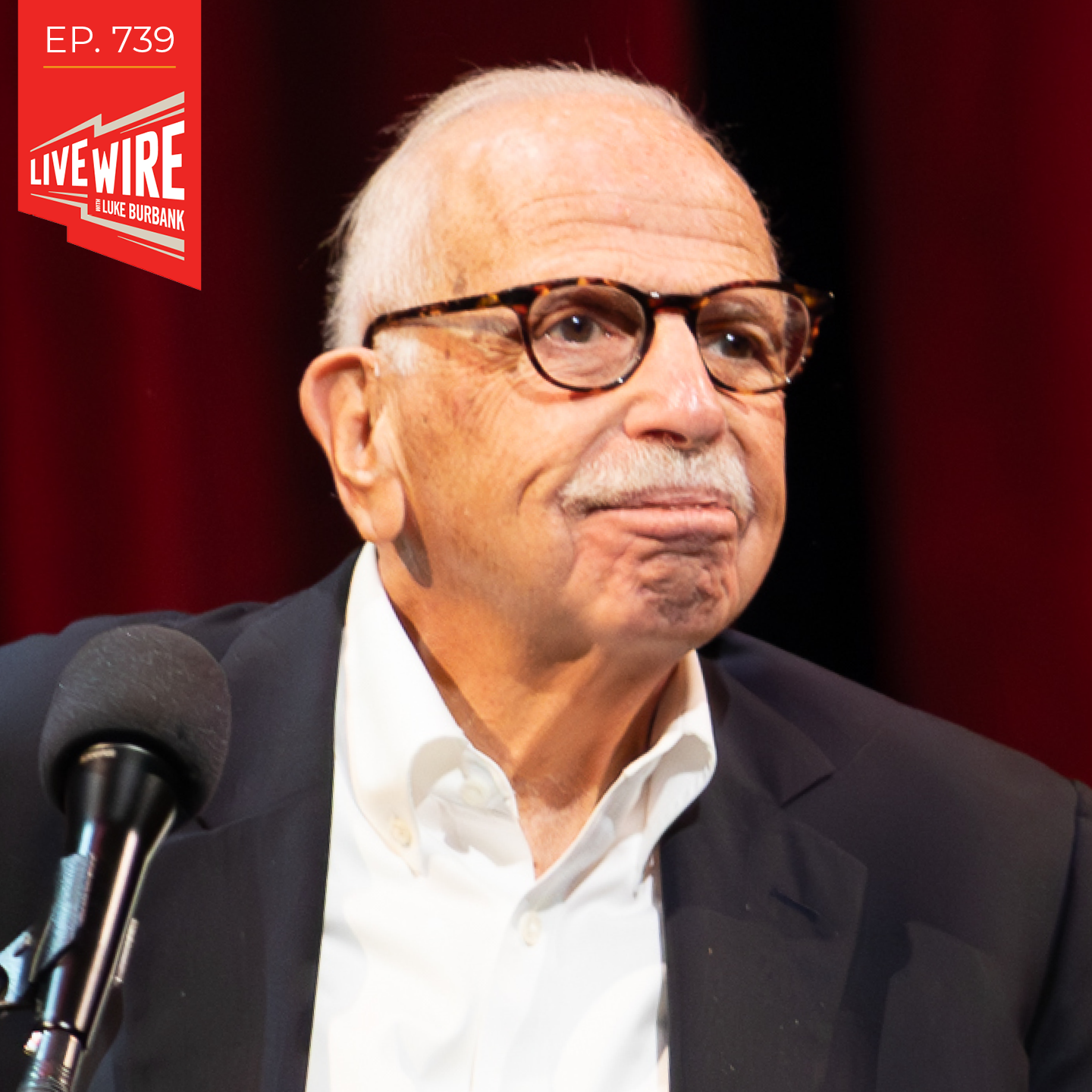
Sam Roberts
NYT Obituarist and Journalist
Sam Roberts, a 50-year veteran of New York journalism, is an obituaries reporter and formerly the Urban Affairs correspondent at the New York Times. He hosts the New York Times’ Close Up, which he inaugurated in 1992, and the podcasts Only in New York, anthologized in a book of the same name, and The Caucus. He is the author of A History of New York in 27 Buildings, A History of New York in 101 Objects, and Grand Central: How a Train Station Transformed America, among others. He has written for The New York Times Magazine, The New Republic, New York, Vanity Fair, and Foreign Affairs.

Gaby Moreno
Grammy-Winning Singer-Songwriter
Grammy and Latin Grammy-winning artist Gaby Moreno is a singer-songwriter and producer whose soulful sound seamlessly blends English and Spanish. Since moving to Los Angeles from her native Guatemala, she has released nine acclaimed albums, won a Grammy Award for X Mí (Vol. 1) (Best Latin Pop Album, 2024), earned two Latin Grammy Awards, and received Grammy nominations for Alegoría and Illusion. Moreno has collaborated and performed with artists including Tracy Chapman, Ani DiFranco, Mavis Staples, Buena Vista Social Club, and Chris Thile. Fresh off her Broadway debut as Persephone in Hadestown, Moreno is returning to the stage this fall with performances in Oregon and Southern California, with additional tour dates to be announced.
-
Portions of this transcript have been auto-generated.
Elena Passarello: From PRX, it's... Live Wire!
This week, obituary writer Sam Roberts.
Sam Roberts: Obituaries are not about death. Uh, death figures in one sentence in the obituaries we write. It's about people's lives and how fascinating they can be.
Elena Passarello: Plus music from Gaby Moreno.
Gaby Moreno: I asked my mother to take me to a record store, and I, and I bought a bunch of compilation CDs, 'cause I didn't know of, you know, what artists to start listening to.
And I brought that back to Guatemala with me, and I would just lock myself in my room and just listen, listen, listen to, to all these incredible artists.
Elena Passarello: I'm your announcer, Elena Passarello. And now, the host of Live Wire, Luke Burbank.
Luke Burbank: Thank you so much, Elena Passarello. Mm-hmm. Thanks for tuning in from all over America to our radio show, and thank you all for coming out to the Patricia Reser Center for the Arts right here in Beaverton, Oregon.
This is going to be a very fun and interesting show, which we're gonna get to in a moment. First, though, we gotta kick things off the way we always do, with a little segment we call The Best News We Heard All Week.
This is where we remind you that there is some good news happening, uh, out there in the world if you, if you look for it, and we do. Elena, what is the best news you heard all week?
Elena Passarello: Okay, so when I say, uh, animal rescue mission, usually you're thinking about an animal being rescued and given the medical care it needs.
Mm-hmm. This is an above and beyond situation that we're talking about here, people. Woodside Wildlife Animal Rescue in Pass Christian, Mississippi, uh, it specifically rescues raccoons. Okay. Um, I love raccoons- Mm-hmm. I do, too ... because they, I think they are super smart- Mm-hmm ... and I think they're gonna outlive us all.
And I think in order to become an adult raccoon, you need a lot of schooling. Like, I think they're really social animals, and I think their mamas teach them a ton of stuff, like how to rob banks. I don't know. Uh-huh. Like, they just seem like they could do anything. They're so-
Luke Burbank: How to climb up the side of a building in Minnesota.
Remember that one? That's right,
Elena Passarello: yeah. It
Luke Burbank: was- That was the MPR raccoon. It was the public radio building. Minnesota Public Radio. It was just up there for, like, a whole day.
Elena Passarello: I was... This is just the life lessons that a raccoon needs- Mm-hmm ... to learn in order to graduate into adulthood are myriad. So at Woodside Wildlife, they recognize this, and not only do they take care of the little kits and bottle feed them and help them, when they're ready to be reaccl- acclimated into the wild, they put them through a six-week raccoon boot camp And at this boot camp, it's run by a former merchant marine, by the way-
named Raquel. She has them learning, the humans are teaching these raccoons how to dig for worms in the dirt, how to split open acorns to find the yumminess inside. They have an on-site pond, and the humans get in kayaks and teach the raccoons how to swim. There's a live quail hunt that the boot campers have to go through.
Um, they learn how to fish. They, I, I guess in the beginning, they kind of are just, like, sticking their hands in the water and nothing happens, and so they have to show the raccoons how to physically grab a fish. They have a scared straight program- ... where not the rescuers, but other humans trap the raccoons and scare the, the...
Well, they're not wearing pants. I guess you can't scare- Yeah ... the pants off a raccoon. Scare the
Luke Burbank: pants onto them.
Elena Passarello: They scare the pants onto the raccoon so that they know how to avoid animal traps, human animal traps in the wild. And if they make it through all this and they're finally ready to go, they have a raccoon graduation where they play Pomp and Circumstance and read all the raccoons' names out as they run into the Mississippi wilderness to live- Oh my God
the rest of their raccoon lives.
Luke Burbank: I love
Elena Passarello: that. Take my money.
Luke Burbank: You know, Elena, a lot of the time when we're looking for the best news, we have to kind of look pretty far, maybe out, you know, into even other countries and stuff. This week, the best news that I heard came right to me- Good ... in my very own driveway because yesterday, you know that, like, uh, maybe about five years or so ago, I bought this old kind of, like, tiny farmhouse.
I've been working on this house with my dad, and, uh, yesterday, I was coming around, I was doing some yard work, and I came around, and there was three women just standing in my driveway- Uh-oh ... looking kind of emotional, and I thought This is the price of fame. These are Live Wire fans. They have-
Elena Passarello: You're like Elvis- They've-
at the gates of Graceland.
Luke Burbank: I guess I do need a security detail.
Elena Passarello: Yeah.
Luke Burbank: This is n- no longer safe for me to be here. Um, I walked up to them and I said, "Hey, how's it going?" And they said, uh, "We hope it's okay if we're standing here, but um, uh, this is our mom." The, the two women, uh, were the daughters of the woman who was standing in the middle, and they, uh, they said, "This is our mom.
Uh, she lived in your house between 1935 and 1950."
Elena Passarello: Wow.
Luke Burbank: And she is 95 years old. Wow. Her name is Carolyn. Oh. And she was incredible. She was so unbelievably sharp, so, uh, unbelievably, uh, you know, sort of able to get around, and said, "Would it be okay if I came down and looked around to see, you know, how the house looks compared to when I was here?"
And I said, "Absolutely." And she gave me a history lesson on the neighborhood, on my house. She was taking me around and showing me all these little details. She went into her childhood bedroom- ... which is still in the house, and I mean, that was just like a very cool experience. She looked in the closet, and the wallpaper that she put up was still in there.
Elena Passarello: Oh my gosh.
Luke Burbank: Which tells you I really need to do some remodeling. Yes. Hmm. She said that when they moved into the house, it did not have electricity or running water. Oh my God. And I said, "Carolyn, I've done most of the work on this house," and that still happens sometimes. Um, so it has not changed as much as you- You're keeping up with
Elena Passarello: the tradition
Luke Burbank: may not have changed as much as you thought. Anyway, she was t- talking about how, you know, she grew up there during World War II, and how they had a victory garden where they got most of their food out of this garden that they were growing on the property. You know, none of the roads were paved, it was all dirt, and she and her siblings would walk down to this one, like, general store that was still, like, four or five miles away down these-
dirt roads. And, uh, and she was talking about this, and it jogged something in my memory, and I remembered that when me and my dad started working on the house and we were tearing a wall open, we found a bunch of these, like, handwritten receipts from this general store- Oh my gosh ... like, down the hill. And I had gotten these, and I didn't really know what to do with them, 'cause they weren't that special to me, but I also kinda, like, didn't wanna throw them away- Yeah
for reasons that I did not understand at the time. I was like, "I don't know. I'm gonna put these in a file somewhere." And so I remembered this when she was talking about going to the store, and I went back and I got, I found these receipts and I brought them out. And these receipts were, you know, handwritten, and they had, like, a pound of sugar.
A pound of lard.
Elena Passarello: Lard.
Luke Burbank: Three yards of calico.
Elena Passarello: Oh. It was like the Oregon Trail shopping trip.
Luke Burbank: Serious Oregon Trail energy. Yeah. And I, I brought these things down and I handed them to her, and she immediately recognized the handwriting on them. And her, uh, her parents' last name, her maiden name was written.
Her husband of, uh, 67 years just passed away recently. Wow. Her maiden name was written on top of these receipts.
Elena Passarello: Oh my gosh.
Luke Burbank: And when, when I tell you they started crying, I started crying. I'm getting emotional thinking about it now. It was such a beautiful moment that was just so totally unexpected and felt like I was getting to connect with, with history, with the history of this house, but also just the history of people-
Elena Passarello: Yeah
Luke Burbank: who are still on this planet who have been through so much. Yeah. And, uh, also I felt very justified in the decision to not throw those things out, 'cause I tend to sorta hoard things. And I feel like this is the ultimate story for people that are holding onto too much stuff- Oh, no ... for no reason.
Elena Passarello: Oh, no. No.
Luke Burbank: 'Cause there may come a day... There may come a day when you are very glad you kept those random general store receipts- ... from inside of the wall of your house. So anyway, that was the best news I heard all week- Awe, so good ... from Carolyn
Uh, you are tuned into Live Wire. Have you ever wondered who is going to get the final word about your life? Well, if you are lucky, it just might be our next guest. He's a 50-year veteran of New York journalism and one of the writers behind The New York Times obituaries section. His latest book is, Are They Dead Yet?
The Art of the Obit. It examines who we remember, how we forget, and where we find the true meaning in a life. Harper's calls it a dirge-ful beach read. And it really is great. It's a great book. Please welcome Sam Roberts to Live Wire.
Sam, welcome to Live Wire.
Sam Roberts: It's a pleasure to be on a show called Live Wire with a book about are they dead yet?
Luke Burbank: Yes, that's right.
Sam Roberts: Also appearing before a live audience-
Luke Burbank: Yes ...
Sam Roberts: which I'm not used to.
Luke Burbank: We're trying to, trying to preserve kind of a yin and yang thing going here. Life and death. I mean, that's one of the things, though, that we really get from the book, is that writing, uh, these obituaries is not very much about the end of the person's life, but about the life that they led.
I mean, is that the first thing they teach you in obituary writing school?
Sam Roberts: Well, I didn't go to obituary writing school. In fact, when I was asked to help reduce the backlog of advance obituaries we have at the Times, I was appalled because I grew up in a culture in Brooklyn where the reaction to death was denial.
Uh- ... when my father died, about six months later, his sister, my aunt, was asked by a neighbor, "How's Arthur doing?" Uh, the best she could muster was, "So-so."
Luke Burbank: Yeah, you write in the book that actually the, the funeral, if you will, of Julius and, uh, Ethel Rosenberg had a huge impact on you as a kid. Like, the processional sort of went by out the corner you were on in Brooklyn?
Sam Roberts: That's right. Uh, my dad took me to the corner of our, uh, block in Brooklyn, and what he wanted to say, what he wanted to impress upon me was, "This is history." You know, "This is something that you ought to absorb, you ought to remember." Uh, and, uh, turned out that, uh, decades later I wound up writing a book, The Brother, about the Rosenberg case.
Uh, so things sort of came full circle. But as you say, you know, obituaries are not about death. Uh, death figures in one sentence in the obituaries we write. It's about people's lives and how fascinating they can be. And, you know, while you tell people at a party, "What do you do? I'm an obituary writer," uh, it's kind of a conversation stopper, needless to say.
But then you remind people that, uh, this is about people's lives, interesting people. Uh, most of the people I write about, in fact, I had never heard of before. Uh, and they turn out to be just fascinating. There are no ordinary lives, I discovered. Everyone has had an impact on family, friends, colleagues, uh, somebody.
Uh, and that's what makes them so interesting.
Luke Burbank: Were you particularly, um, afraid of, uh, dying and death as a, as a young kid and even, even more so than a sort of typical kid?
Sam Roberts: Yeah, I think so. Yes. Uh, I didn't wanna deal with death. Yeah. And one of the things that, though, was so interesting in doing obituaries and in writing this book was I learned a lot about life and death.
Mm. Uh, there were a couple of advance obituaries I wrote, one of John Sexton, the former president of NYU, who's dying of terminal cancer within a couple of months, and I interviewed him for his advance obituary, and the way he embraced life, embraced the fact that he had lived life to the fullest. And then I got a call from, uh, a woman who wanted me to write her advance obituary, and I said, "Well, you know, what's the matter?
You know, how close to death are you?" And she said, "Saturday." And it turned out that she was undergoing assisted suicide.
PRX: Wow.
Sam Roberts: And she wanted people to know, through me as a writer for the Times, and I mention this in the book, uh, why she was doing this. She was suffering from terminal cancer. She said she had suffered enough, uh, and wanted to, uh, present this as an example to people who were in a similar situation, and to be as constructive about it as possible.
Luke Burbank: Well, I actually wanna... When we come back from the break, I wanna find out more about what the editorial system is around who actually, uh, ends up with an obituary in The New York Times, uh, versus, uh, the rest of us. Uh, so we're talking to, uh, Sam Roberts, uh, obituary writer at The New York Times. His book is Are They Dead Yet?
More Live Wire coming your way in just a moment. Stay with us.
Welcome back to Live Wire from PRX. We're at the Patricia Research Center for the Arts in Beaverton, Oregon this week. I'm Luke Burbank here with Elena Passarello, and we're talking to New York Times obituary writer Sam Roberts about his book, Are They Dead Yet? Um, I'm wondering, do you remember the first obituary that you wrote?
Or who it was about?
Sam Roberts: Um, I don't remember the first, but I remember not being pleased that I had to write one.
Luke Burbank: Really?
Sam Roberts: Uh, it was about a colleague, actually. Oh. And, uh, that made it a lot tougher. Uh, I knew more about the person, which, you know, was a plus and a minus. Uh, but, uh, they're tough because unlike most other articles you write, uh, as a journalist, you have to have a degree of empathy.
I get more feedback on obituaries than any other stories I've written, in part because, uh, there's so many facts in them. They're really mini biographies. And also- And
Luke Burbank: they're the last chance to get the facts right on this person- Correct. They're the- ... correctly. This is the final record,
Sam Roberts: essentially. They are the last word, and, uh, families, friends, colleagues are very cognizant of that and are, you know, ready to jump on you if you make a mistake.
Mm-hmm. And we do sometimes. We're human beings. And, uh, when we do that, we try to correct them as soon as possible.
Luke Burbank: Do you really sometimes have family members that wanna get even with the person who has passed away?
Sam Roberts: Oh, yeah, absolutely. Uh, what's surprising, actually, Luke, is how little family members know about the person who just died.
Uh, they get the military, uh, unit wrong. They get their college major wrong, and then, of course, we have to run a correction and say, you know, we screwed up, not them. Uh, but you know, you just try to be as accurate as possible because, again, this is the last word. Uh, and you know, 150,000 people or so die every day in the world.
We have room for three or four obituaries, uh, online and in print, and it's not only a very selective process, it's a very subjective process. Mm-hmm. You know, who gets one? How do you tell a family that, uh, you know, their father, their brother, their son, who's a country doctor, saved dozens of lives, doesn't get a New York Times obituary, but some mass murderer did?
Uh, very tough call. That's the hardest thing about the job, I think.
Luke Burbank: Yeah, what are those conversations like with, I don't know, the other editors or, or you know, whoever it is that you're actually talking to about... Is it just a big list every day of potential folks, and then you just sort of hash out who should actually make the final three?
Sam Roberts: Yeah, there's a list about maybe 50 people, and you could look at that list and say any one of them could qualify, I hate to use the word qualify, but for a Times obituary. And, uh, it's winnowed down, as you say, to three or four. Uh, very subjective, uh, and you know, you try and, and- Find out what makes somebody special.
When I wrote the book, I talked to Anne Rose, the obituary editor- Mm ... of The Economist, and she said she tries to find the soul, the essence of the person. Uh, rather than what other people may have thought of him or her, what was it that motivated this person? And what I try to do when I'm writing an obituary is look for what I call the rosebud moment.
Mm. Ah. Uh, the line from Citizen Kane, the Orson Welles film. Uh, what was it? What was the epiphany? What was the turning point that turned what might have been an ordinary person into someone who qualified or merited an obituary in The New York Times? And that's a fascinating research, uh, job, uh, that makes obituary writing so interesting.
Again, these are about people's lives. Death is one sentence. Mm. Uh, and that's what made the book so interesting to write, too.
Elena Passarello: Do you always find a rosebud moment? Is that just in every life or?
Sam Roberts: Uh, well, you look for one in every life, and you try to find one. I wrote about, um, a, uh, young scientist, a 24-year-old who worked for the Jet Propulsion Laboratory, and he was involved in the moon landing.
And, uh, he was there in the command center, and a red emergency light went on. Uh, and all the senior scientists said, "We've got to abort the mission. Uh, something's gone wrong." And this guy of 24 years old convinced them that it was okay, that this was a false positive, and they should go ahead, and the landing took place successfully.
He died- With 30
Luke Burbank: seconds of fuel left, I believe.
Sam Roberts: Right. That's right. He died decades later anonymously until he got an obit in The New York Times. Wow. Uh, and yet this was that turning point in his life. Uh, he never had to do anything more than that. That was enough- Yeah ... to make him, uh- And to
Elena Passarello: ignore the check engine light of the spaceship.
Sam Roberts: Correct. Yeah. Right. Exactly. Right. The, the sh- the shuttle is in the shop.
Luke Burbank: Yeah. Um, you, you've sort of mentioned the idea of, of an advanced obituary where maybe, um, you know, you even reach out to somebody and, and say, we're, we're... Which could be an awkward conversation, uh, if they're not aware that you're working on their advanced obituary.
Is that ever a difficult phone call to make?
Sam Roberts: Uh, yeah, it is a difficult phone call to make, and sometimes when people are skittish, you say, "I'm just updating your biography."
Luke Burbank: Yeah. There you go.
Sam Roberts: But I think most, uh, readers of The New York Times are sophisticated enough to know that we're doing their advanced obituary, and they are flattered-
Luke Burbank: Yeah
Sam Roberts: the fact that they are being included in that. And also, they wanna get the last word. Uh, they wanna be able to interpret, uh, uh, what they did in their lives, for better or for worse, uh, uh, in a way that is most favorable to them.
Luke Burbank: The other thing is, uh, uh, people might not know this, but most big news organizations have these, you know, files and these running lists of, of these obituaries that are on file for people that are still alive, um, but who, for one reason or another, uh, you know, may pass away at some point, and you update the specifics of that.
I just have this memory of when I worked at NPR, we had this list, and they would assign it to some of us reporters. I think I did Charlton Heston or something. And there was an email that went around to the whole, everyone at NPR, uh, with this list of all the people that we were, you know, working on, and one of the people was both on the list and on the email.
And I remember it was Marianne McPartland, the pianist. Oh. And she said, "I'm still here" To, to, like- Well- ... 1,000 NPR staffers on this list.
Sam Roberts: Well, Luke, the title of the book, Are They Dead Yet?- Yeah ... comes from the fact that we were sitting around the office one day talking about a bunch of people, and we couldn't figure out whether they were still alive or not.
Luke Burbank: Yeah.
Sam Roberts: So I said, "What a great story this is." So I recruited after, you know, some difficulty finding someone because everyone thought the idea was totally tasteless. Uh, uh, Frank Bruni at the time- Sure ... wrote the piece, and among other things, he interviewed Abe Vigoda- ... the actor, uh- Yeah ... and, you know- Fish from Barney Miller
he, he looked dead. Yeah. And Abe Vigoda said to Frank, "You know, I've been dead so long, I've learned to live with it."
Luke Burbank: We're talking to Sam Roberts, uh, obituary writer at The New York Times. Uh, his, uh, latest book is Are They Dead Yet? Um, do you have a sense of how popular the obituary section is in The New York Times? Because it's something that I always find myself reading, whether it's online or if I have the print version.
Am I the only one turning to the obituary section as much as I am?
Sam Roberts: Uh, not at all. Uh, the book begins with, uh, a cartoon from Roz Chast of The New Yorker of a guy over his coffee reading the obituary page, but the headlines don't mention the name of the person who died. It just says, "15 years older than I was," or, "Five years younger than I was."
Yep. And, and people look at obituaries, for one thing, to see how they fare compared to the people who are dead. Of course, in Manhattan, they also look at the obituaries to see what apartments might be vacant.
PRX: Yeah.
Luke Burbank: Um, there's been a project at the Times called, I believe it's called Overlooked No More, because it turns out, this may be news to some of the people here, but for a long time, the obituaries tended to heavily skew towards male and white.
Sam Roberts: Yes.
Luke Burbank: And, and, and there were so many people whose lives came to an end who were notable and were just overlooked at the time.
Tell me about that project.
Sam Roberts: Well, Scott, uh, Joplin, Sylvia Plath, Alan Turing, the physicist, never got the obituaries in The New York Times when they died. And a, uh, editor at The Times, Amy Padnani, said, "Why don't we do people who were overlooked?" Now, s- some of them were overlooked undoubtedly because of racism or sexism or homophobia.
A lot of them were overlooked simply because we didn't know, or didn't know at the time, uh, how important these people were. Uh, so we ran this feature, and we're still running it, and I think it has made up f- for lost time, and it's also increased our awareness today of who we write about. Uh, one of the things I did at The Times was write a obituary of Jesus.
Uh, and I wanted to- Is he dead yet? This was, this was an intellectual exercise. Better late than never.
Luke Burbank: Sure.
Sam Roberts: Uh, an intellectual exercise saying how would The New York Times had covered the death of Jesus in 33 AD or thereabouts. Mm. Uh, and it was a fascinating exercise, 'cause who was this guy? We know who he was today.
We know what impact he had, but was he a, a mystic? Was he a faker? Was he a, a prophet? Uh, and that turned out to be fan- Now, I have to say The New York Times was too skittish to run it, but it did run in Vanity Fair.
Luke Burbank: Ah, yes.
Sam Roberts: Ah. On Easter Sunday.
Luke Burbank: Now this, this is a weird transition coming out of a conversation about Jesus Christ, but how do you handle writing an obituary of someone who- Was not a great person or had real, uh, you know, some real issues in their life, uh, you know, you ... I think you write something to the effect of you, you don't really wanna defame the, the dead in your obituary, but you have to be accurate, right?
You have to be accurate. How do you
Sam Roberts: balance that? And, and under libel laws, you can't defame the dead. Uh, if you look at some of the British obituaries, they are absolutely brutal. Yeah. Uh, but one of the toughest decisions in writing an obituary about someone who had perhaps a checkered career is how you place that episode or that event in context.
What ... How does it fit into the trajectory, the arc of their whole lives? Uh, I did an obituary recently for the Times, I mentioned this in the book too, Charles Rangel, the- Uh-huh ... first Black chairman of the House Ways and Means Committee. Toward the end of his career, he was censured by the House for a, I think, relatively minor ethics violation.
Well, do you describe him as a disgraced former congressman, or do you talk about his career and all the things he accomplished? I figured it was, uh, more fair to do the latter. Uh, we obviously mentioned the censure, we mentioned that he lost his chairmanship, but in the, uh, trajectory of his whole career, there were a lot more accomplishments than there were negatives.
And those are very tough decisions to make, uh, when you're looking at someone's career. Anne Roe, the economist, wrote an obituary of Osama Bin Laden. She mentioned that he liked to take his kids to the beach. Uh, she got so much flack for that, and she said, "That was part of his life." Yeah. That was, you know, maybe it's the banality of evil, but that's what made him a human being, in part, and it was worth mentioning.
Obviously, he was a terrorist who was responsible for the death of thousands of people, but he was also a person, and, uh, readers of ob- obituaries want to know about people's lives and, uh, all the things that go into it.
Elena Passarello: And it seems like that it's a public conversation. Like, you're not just talking at The New York Times about the person and the life they lived, but you're talking to the people who are reading about this, and that, to me, seems like it would be the most difficult part about writing an obituary is talking to multiple audiences at once.
Sam Roberts: That's absolutely true. I ... It's interesting, 'cause there are two questions I never have asked people when I write advance obituaries. One is, what do they think is next after their death? Uh, and of course, it's an ineffable answer. Uh, but I'm reminded of, of Woody Allen, who said, uh, "I don't believe in an afterlife, but I'm taking a change of underwear just in case."
Uh, a- and the other thing that I have not done is ask the families what the last words of the person were. Hmm. Frankly, 'cause I don't believe that most last words- Yeah ... were actually said. If I were dying, I would say, "Help." Or water or, or, or something like that.
Luke Burbank: You wouldn't do the, the Oscar Wilde?
Sam Roberts: The Oscar Wilde is my favorite.
Uh, I don't know if he said this or not, but he would've said it if he could have. He was, uh, dying in a seedy Paris hotel room and supposedly said, "I'm fighting a fight to the death. Either that wallpaper goes or I go."
Luke Burbank: But you think generally speaking, those kind of famous last words are maybe more an invention that we, that we apply to the person along the lines of how we think they would've been-
Sam Roberts: Yeah, I think so.
I mean, Groucho Marx, did he really say, you know, uh, "I'm dying, that's the last thing I would do"? Uh, or Karl Marx, this is more f- credible to me, Karl Marx supposedly said, "You want my last words? Anyone who says last words means they haven't said enough during their life." Uh, obviously Karl Marx did, or thought he did.
Luke Burbank: Yeah. Uh, you're listening to Live Wire Radio. We are talking to Sam Roberts from The New York Times. Okay, Sam, uh, as we've, uh, covered, you've spent years now writing obituaries for The New York Times. We wanna try a little exercise with you, 'cause you're a professional in this area. Um, we wanna see if you can sort of, uh, figure out, uh, these obituaries, these headlines from obituaries that we have found from The New York Times, by the way.
They're not ones that you wrote. But we're calling this exercise Dead Giveaway. Here's how it's gonna work. Uh, I'm gonna read you part of this headline from a real person's obituary. We're gonna give you their name and their age. We're gonna leave out the other interesting detail about their life, and we're gonna see if you can guess what they did to warrant being, uh, remembered in The New York Times, okay?
Mm-hmm. Um, if you get this right, the audience is gonna pay their respects with a round of applause. If you get it wrong, we will observe a moment of silence. Are you ready, Sam Roberts? How about this?
Sam Roberts: Yes, indeed.
Luke Burbank: Okay, headline number one. Don Featherstone, blank, dies at 79. Don Featherstone. Was it Don Featherstone, designer of, uh, the flamingo shaped pool float, dies at 79?
Hmm. Was it Don Featherstone, inventor of the pink plastic flamingo- Hmm ... dies at age 79? Or Don Featherstone, the Flamingo Hotel's official flamingo wrangler- Hmm ... dies at age 79?
Sam Roberts: I'd say the inventor of the pink flamingo.
Luke Burbank: Uh, I would say you're exactly right.
Uh, he, uh, gave this plastic flamingo a scientific name, uh, Phoenicopterus ruber plasticus. Um, and th- starting in the late 1970s, these are dazzling details from the obituary in The New York Times. Starting in the late 1970s, uh, he and his wife Nancy wore matching outfits every day, which she made by hand, many in flamingo print fabric.
Elena Passarello: Yeah.
Sam Roberts: What else, right? No, i- it's very interesting, because most of the people I write obituaries about I have never heard of, needless to say, this one included. And, uh, we now have something at The Times called enhanced bylines, where under the byline it's supposed to say, "This person is writing the story because he has written a biography of- Uh-huh
of someone, or is a scholar of some..." I always wanted to say, "Sam Roberts never heard of this person-" "... until a few hours before he had to write the obituary."
Luke Burbank: Yeah, right.
Sam Roberts: But that's what makes the job so interesting, because you're doing that research literally on deadline, forgive the expression. Uh, and, uh, you find out all these facts.
And the internet has made it to the point where I almost feel I'm cheating. I almost feel guilty, because there is so much available on the internet now, oral histories, video interviews, texts of biographies and memoirs. But I think it really does enrich the obituaries in ways that you couldn't have possibly done before.
Luke Burbank: Yeah. All right. Here is our, our second, uh, question for you. Jane Barb Blank dies at 74. This is back in 2003. Jane Barb, iconic voice of the Baby Got Back intro from the Sir Mix-a-Lot song. Ooh. Jane Barb, voice of Chatty Cathy, dies at age 74, or Jane Barb, the voice of voicemails, dies at age 74.
Sam Roberts: Uh, voicemails.
Luke Burbank: You're absolutely right. Wow. My goodness.
Uh, apparently, uh, Jane recorded a short-lived series of seasonal phone messages from Mrs. Claus- ... which were discontinued after out-of-state parents complained about the long distance charges that kids were running up. They were calling this voicemail of Mrs. Claus that was actually Jane Barb. Uh, and she also recorded messages for the Australian phone company in an Australian accent even though she naturally had a soft Southern accent.
Why, why Sam, did you zero right in on the correct answer? Do you just now have a sixth sense about these things? Uh,
Sam Roberts: I think I may. Uh- You know, going back to the fact that there are no ordinary people, you look at, uh, Thomas Carlyle, the British historian- Mm-hmm ... who came up with the great man or great woman theory of history.
Uh, people who we sort of take for granted ordinarily- Yeah ... uh, do have an important impact on our lives. Mm-hmm. And those people, whether they, uh, invented the plastic fl- flamingo- ... or did, uh, you know, voiceovers for answering machines and things, uh, are part of our culture. Mm-hmm. And collectively, I think obituaries say what we value as a culture, value as a society.
Luke Burbank: Yeah. How about another one? Brad Johns, blank, dies at age 70. Brad Johns, celebrity colorist known for his buttery chunks. Brad Johns... There was an audible gasp from the audience. Brad Johns, uh, creator of the iconic Farrah Flip feathered hair, uh, cut famously worn by Farrah Fawcett, dies at age 70, or Brad Johns, inventor of the recalled Hot Hair Crimper, dies at 70 years old.
Sam Roberts: Hmm, that's a toughie. I'd say the first one.
Luke Burbank: You're absolutely right. It's buttery chunks
Elena Passarello: How?
Sam Roberts: You just- How? Like- How? You know, when you've written 1,600 obituaries- Yeah ... you sort of get a feeling for the people who are dead, uh. Yeah. And are they dead yet?
Luke Burbank: Uh, yeah, Brad Johns, uh, his coloring of hair elevated the tresses of actors, models, and rock stars, famously Carolyn Bessette Kennedy, among others.
Uh, he favored skin-tight leather jumpsuits and platform shoes. Who doesn't? He cons- he considered himself an artist. Uh, his clients often tipped him in cocaine. Um, uh, and he liked to compare his technique, uh, to the works of, uh, Picasso and Ellsworth Kelly. Big, bold, and brash, as he wrote, uh, in his book Dye: A Memoir of Art, Music, Faith, Family, and Hair Color.
Elena Passarello: He should've gone with, "Are they dyed yet?"
Sam Roberts: There you go. That's right. Are they dyed yet? I like that.
Luke Burbank: Um, all right. Here's another one, uh, for Sam Roberts. Uh, John Basinger, blank, dies at age 92. John Basinger, who held the world record for prolific hiccupping, dies at 92. John Basinger, uh, who memorized all 12 books of Paradise Lost, dies at 92.
Or John Basinger, who recited pi to 70,000 decimal places, dies at age 92.
Sam Roberts: Mm, I'd say pi.
Luke Burbank: You are very close. It was Paradise Lost. We finally got you. Oh. He ... Although, that is, somebody else did, uh, memorize pi to 70,000 decimal places. Yeah. So that's a real thing that happened. Uh, this guy apparently figured out a system for memorizing all 12 books of Paradise Lost.
He got the idea after he retired from teaching in 1993. Uh, from his obituary in The New York Times, he began bringing a copy of the poem with him to the gym, and he developed a routine. He would memorize seven new lines on the exercise bike, and while lifting weights, he would review the last 14 lines that he had studied, leaving with a sweaty command of 21 lines of verse per trip to the gym.
Sam Roberts: You wanna say to someone like that, "Get a life,"
Luke Burbank: right? Yeah. I mean, hey, what could make being on the treadmill worse? I know. Memorizing Paradise Lost. Okay. Uh, one last one. Uh, Virginia Oliver, blank, dies at age, uh, 105. Wow. Virginia Oliver, Idaho's potato princess and notorious shut-in, dies at age 105.
Virginia Oliver, Hatch, New Mexico's pepper queen, dies at age 105. Or Virginia Oliver, Maine's lobster lady and folk hero, dies at 105.
Sam Roberts: Lobster lady.
Luke Burbank: Absolutely. You're absolutely right.
That seems like feisty lobster lady energy to live to 105 years old. In the, in the obituary from The New York Times, uh, she was described as a feisty, salty-tongued lobster boat skipper who fishes, or who fished rather, off the New England coast wearing earrings, hot pink lipstick, and an occasional scowl.
Sam Roberts: Now, you ask why people read obituaries. There you go. Yes.
Luke Burbank: Yeah. Do you have, and of course, we, we know it's many, many years away, but do you have some special fast pass that gets you to the front of the line of obituaries when eventually your time comes, Sam? Will you be in The New York Times obituaries?
Sam Roberts: Uh, I think it would be presumptuous of me to think so.
Uh, people say, "Have you written your own obituary?" The answer is no, but I would recommend that people sit down and try doing that. Hmm. Uh, because it gives a very good sense of what your goals are in life, what you've accomplished, uh, how close you've come to meeting them, and I think gives, uh, a very good perspective on life and death.
Uh, and I would recommend that to people. Uh, even if those obituaries never get printed, I think it's a great exercise, uh, for people, uh, in perhaps self-improvement.
Luke Burbank: Yeah. Well, I would recommend everyone do that right after they go get a copy of Sam Roberts' book, Are They Dead Yet? Sam Roberts, thank you so much for coming on Live Wire.
That was New York Times obituary writer Sam Roberts, recorded live at the Alberta Rose Theatre in Portland, Oregon. His book, Are They Dead Yet? The Art of the Obit, is out and available right now.
Live Wire is once again partnering with the Portland Book Festival for a full day event centered around books and storytelling. On November 7th, the Portland Book Festival will offer author panels, a book fair, pop-up events, workshops, readings, and even something new and unexpected. It will also feature an expanded program in collaboration with some of the city's prominent voices in arts and culture, connecting the community through literature, music, food, and visual art.
More details can be found at pdxbookfest.org. That's pdxbookfest.org.
This is Live Wire from PRX. Our musical guest this week is a singer-songwriter and producer whose soulful sound seamlessly blends English and Spanish. Since moving to Los Angeles from her native Guatemala, she's released nine acclaimed albums and won a Grammy Award for Best Latin Pop Album. She's collaborated with all kinds of folks, Tracy Chapman, Ani DiFranco, Mavis Staples, the Buena Vista Social Club, and now she's been on Live Wire because she joined us at the Patricia Reser Center for the Arts in Beaverton, Oregon.
This was fresh off of her Broadway debut as Persephone in Hadestown. Take a listen to Gaby Moreno here on Live Wire Hi, Gaby. Welcome to the show.
Gaby Moreno: Thank you so much.
Luke Burbank: So you mo- how old were you when you moved from Guatemala to the US?
Gaby Moreno: I was 19. You know, born and raised, and, um, I finished my high school, and then I was trying to figure out what to do and...
But I knew that I wanted to, you know, be in music. And I, I fell in love with blues and jazz early on. I was about 13 years old when my, my parents took me to New York, like, just on, on vacation, and I was walking down Times Square, and I, and I heard that music for the first time ever, because that's something that I, I just wasn't exposed to in Guatemala, and it changed my life.
And then I, I just... I asked my mother to take me to a record store, and I, and I bought a bunch of compilation CDs 'cause I didn't know of, you know- ... what artists to start listening to. And I brought that back to Guatemala with me, and I would just lock myself in my room and just listen, listen, listen to, to all these incredible artists.
Luke Burbank: So then you show up in Los Angeles, though, and you're 19 years old- Yeah ... and you have this dream of getting into music. But I have to imagine that there were some sort of lean years or lean months. Like, where do you go when you get to LA as a 19-year-old to try to, like, launch your music career?
Gaby Moreno: Yeah. A lot of things, a lot of things happened.
I, I actually got to LA already signed to a record deal. Okay. So, so I- You had that going for you ... I had that advantage. I had that going for me. But that only lasted, like, a few months because, you know, this is something that would... that happens, um, you know, whenever a new president would come in and the old president would leave.
Like, they didn't want anything to do with a new artist- Mm-hmm ... and they would drop them. Mm-hmm. So I was dropped right away. Oh, wow. So I didn't even get to record anything. I was just- Oh, man. But I got to keep the hefty advance that they gave me, so- So with that, I was able to pay for, for the school and, and, uh, pay for my, my, you know, living expenses to be in LA.
And I was just writing songs. But I was still trying to figure out, like, you know, who I was and what my sound was. You know, that, that took a minute.
Luke Burbank: Well, clearly you figured it out because you won a Grammy in 2024. I mean, what is that? I've actually watched the video of you winning it and talking about it a couple of times.
But, like, is that just a total out-of-body experience? I mean, as a, as a musician, that's, that's the absolute top honor that you can really get. Like, what was that like for you?
Gaby Moreno: Oh, man, it, it was, it was pretty surreal. 'Cause I, I remembered exactly the moment when, when I was... I, I think I was 13 or 14 years old.
I was in, you know, my home in Guatemala, and I was watching the Grammys with my mom. And my mom, she's the one that, like, kept reminding me this, but she said, "You said to me," we were, we were watching the Grammys, and you said to me, "Mom, one day I'm gonna be there."
Luke Burbank: Wow.
Gaby Moreno: So when that happens, you know, you're like, oh, my God, what- Yeah.
What is- Wow ... what's my life?
Luke Burbank: This is Live Wire. We are talking to singer-songwriter and newly minted Broadway star Gaby Moreno. We've gotta take a really quick break, but when we come back, Gaby is gonna play us a song that you do not wanna miss. So stay tuned, more Live Wire coming your way in a moment.
Welcome back to Live Wire. I'm your host, Luke Burbank, here with Elena Passarello. Before the break, we were chatting with the singer-songwriter Gaby Moreno. Let's head back to the Patricia Resource Center for the Arts in Beaverton, Oregon to hear a song from Gaby Moreno. You just got done with your Broadway debut, uh, as part of Hadestown, the Anais Mitchell musical that, uh, you played Persephone.
Were you a musical theater person? Had you been in lots of productions? Did you know how to do this stuff?
Gaby Moreno: So I did a little bit of theater when I was a kid, and there is a video of me when I was around, again, 14, 15 years old, where someone asked me, "What's your biggest dream?" And I said, "To be on Broadway."
Wow. But then when I moved to LA and I started my career, it just, Broadway seemed so, so far away. I mean, the... It was something that, you know, deep, deep, deep down I still thought like, "Oh, it'd be so cool to do it, but not for me anymore. Not for me." And then three years ago, I went to New York, and I went to see Hadestown.
Oh. And I was sitting, like, all the way at the top, and I was just going like, "Oh, my God. I love this musical. It's so amazing." Two years later, last year, my manager gets an email asking, "Hey, is Gaby interested in being Persephone on Hadestown?"
PRX: Wow.
Luke Burbank: And I was just- So you're pretty much, like, two for two at manifesting- Yeah
the two greatest-
Elena Passarello: Yeah ...
Luke Burbank: things that you could've ever dreamed for in your life. Power of manifestation. Yeah.
Elena Passarello: Yeah, what other things can we get you to say out loud right now so that they'll come
Luke Burbank: true? Yeah, exactly. Have you ever dreamed that a public radio variety show would be completely funded for the next 10 years?
Ooh. And if not, could you just, like, have that dream real quick? Give me
PRX: a, give me a piece of paper. Let's, let's write it down
Luke Burbank: right now, right now. Yeah, please. Well, we're so glad that you, uh, decided to step away from the bright lights of Broadway to come be here on Live Wire. Could we hear a, a song?
Gaby Moreno: Yeah, absolutely.
Luke Burbank: What are we gonna hear?
Gaby Moreno: Um, I'm gonna play... I'm gonna start with a song called New Dawn that's off of my latest album called Dusk.
Luke Burbank: Okay. Let's hear that.
Gaby Moreno: All right.
Luke Burbank: This is Gaby Moreno here on Live Wire.
That was Gaby Moreno performing live at the Patricia Reser Center for the Arts in Beaverton, Oregon. You can check out her website. It's gaby-moreno.com, and she's on the social medias at gaby_moreno. All right, before we wrap up this episode of the show, here is what we are doing next week on Live Wire.
We're gonna be joined by actor, writer, and all-around charming fella, Jeff Hiller, to talk about his wonderful memoir, Actress of a Certain Age: My Twenty-Year Trail to Overnight Success, which looks at how he made a career of very sort of brief TV parts and even considered maybe walking away from acting.
That was until he reached his mid-50s and he was cast as Joel on HBO's hit show Somebody Somewhere, which ended up garnering him an Emmy. He's also on the show Widow's Bay that's a big hit. Then we're gonna keep it going with some jokes from the always funny Mohanad Elshieky, one of our favorite guests we've had many times on the program.
And then speaking of favorite guests, we'll round things out with some music from singer and guitarist, Edna Vazquez, whose take on the male-dominated world of mariachi is covered in her latest album. So excited for you to hear this episode of Live Wire next week. It is going to be great.
In the meantime, that's gonna do it for this week's episode of Live Wire. A huge thanks to our guests, Sam Roberts and Gaby Moreno.
Elena Passarello: Laura Hadden is our executive producer. Tim Harkins is our executive director, and our producer and editor is Melanie Sevcenko. Eben Hoffer is our technical director. Tré Hester is our assistant editor, and Ashley Park is our marketing manager.
Luke Burbank: Our house sound is by D. Neil Blake, and our house band is Sam Pinkerton, Ayal Alves, Zach “Pony” Domer, and A. Walker Spring, who composes our music. The show was mixed by Eben Hofer and Tré Hester.
Elena Passarello: Additional funding provided by the James F. and Marion L. Miller Foundation.
Luke Burbank: This week, we'd like to thank members Leslie Anton of Portland, Oregon, and Kathleen Tack of Vancouver, Washington.
For more information about our show or how you can listen to our podcast, head on over to LiveWireRadio.org. I'm Luke Burbank for Elena Passarello and the whole Live Wire crew. Thank you for listening, and we will see you next week!
PRX.
Staff Credits
Laura Hadden is our Executive Producer, Tim Harkins is our Executive Director, and our Producer and Editor is Melanie Sevcenko. Eben Hoffer is our Technical Director, Tré Hester is our Assistant Editor, and Ashley Park is our Marketing Manager. Our house sound is by D. Neil Blake. Our house band is Sam Pinkerton, AL Alves, Zach "Pony" Domer, and A. Walker Spring, who composes our music. This show was mixed by Eben Hoffer and Tré Hester. Additional funding provided by the James F. And Marion L. Miller Foundation. Live Wire was created by Robyn Tenenbaum and Kate Sokoloff. This week, we'd like to thank members Leslie Anton of Portland, OR and Kathleen Tack of Vancouver, WA.
