Episode 737
Eliot Glazer, Paisley Rekdal, and Jonny's Day Out

Comedian and writer Eliot Glazer unpacks his often awkward journey through modern queer life in his collection of essays The Terrible, Horrible, No Good, Very Bad Gay; celebrated poet Paisley Rekdal evokes the beauty and complexities of family legacy in her newest collection Heritance; and indie rock band Jonny's Day Out perform "Cough" from their debut album JDO.
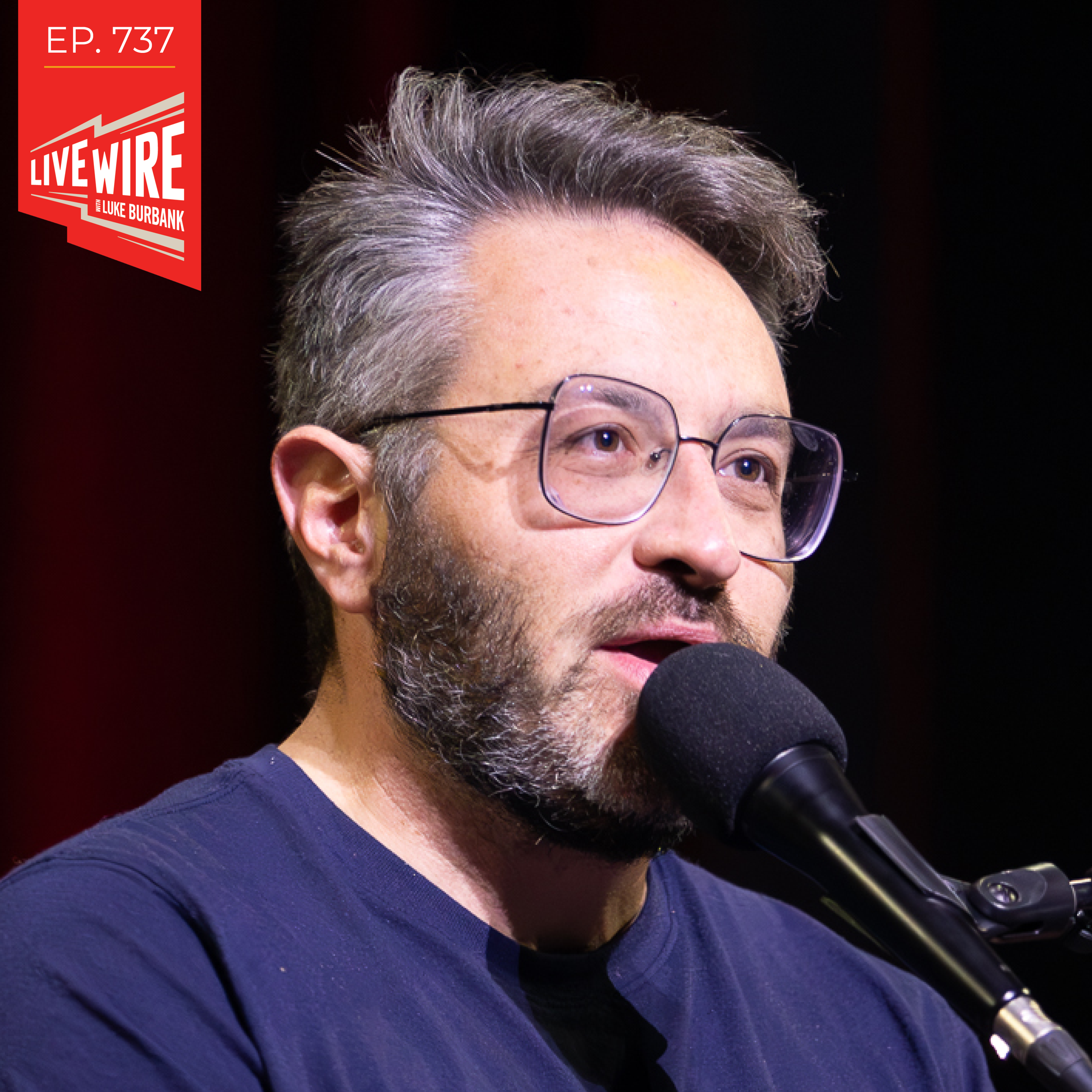
Eliot Glazer
Comedian, Actor, and Writer
Eliot Glazer is a comedian, actor, podcaster, musician, and writer for beloved TV shows including New Girl, Younger, and Broad City, on which he played "Eliot" in his most challenging role to date. His new book The Terrible, Horrible, No Good, Very Bad Gay features laugh-out-loud yet quietly heartbreaking stories that capture the glory, chaos, and contradictions of queer modern life—a rallying cry for anyone who’s ever felt like the odd one out, the minority within the minority, and the one who always seems to “do it wrong.” Kirkus Reviews calls it “hilarious, playful assessments from an antihero living on the fringes of the gay community.”
Instagram • The Terrible, Horrible, No Good, Very Bad Gay • Website
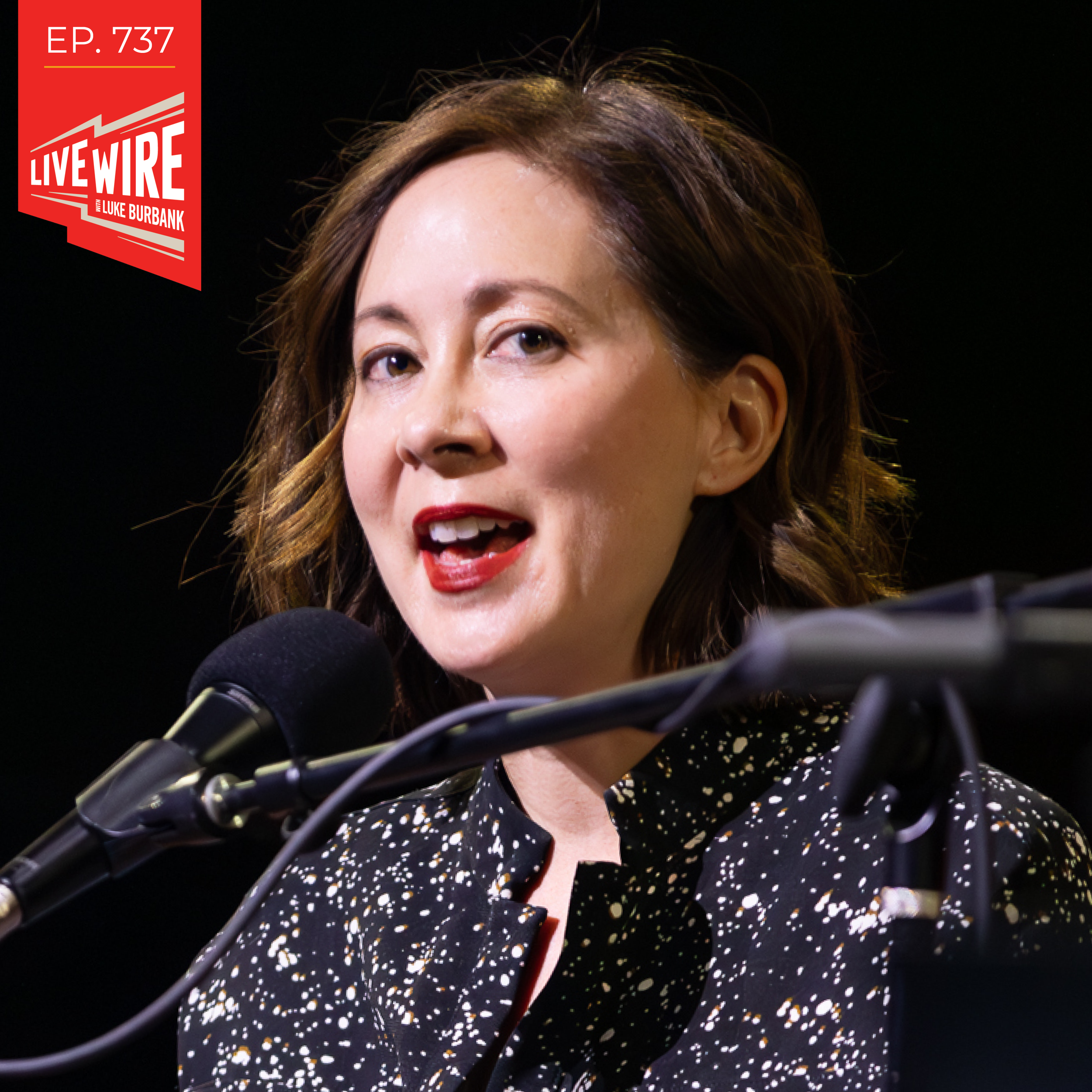
Paisley Rekdal
Poet Extraordinaire
Paisley Rekdal is the author of four books of nonfiction and seven books of poetry, including West: A Translation, which won the 2024 Kingsley Tufts Poetry Award, the Utah Book Award in Poetry, and was longlisted for the National Book Award. The former Utah poet laureate, she directs the American West Center at the University of Utah. Her newest book of poems, Heritance, examines the personal and familial shames we inherit, challenges the reader to contextualize their perspective within the corporeal, and questions what it means to love outside of “the lens of someone else's imagining.”
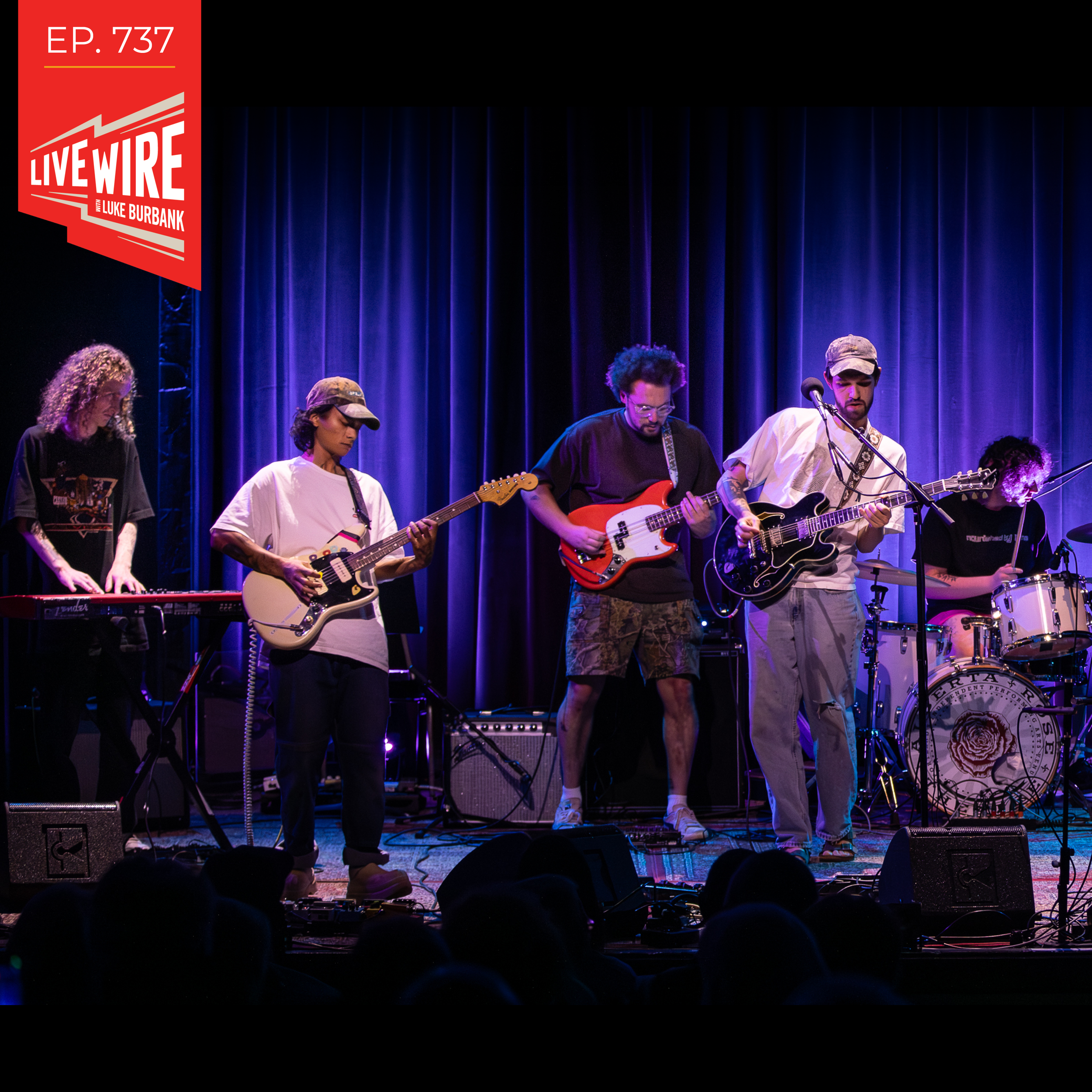
Jonny’s Day Out
Portland Rock Band
Jonny's Day Out is a five-piece Portland rock band built around ambient multi-instrumentalist Eli Goldberg and singer/guitarist/songwriter Avery Haines, who the Portland Mercury hails as "one of the most interesting vocalists in Portland right now, as refreshingly talented as he is flavorful." Drawing on jazz, classical, and folk traditions, the group moves between tender, washed-out ambient passages and sweet horn melodies before erupting into walls of wailing guitar and passionate shouts, a sound the Mercury describes as "tough-to-define guitar-pop." Their debut full-length, JDO, was released in May 2026, and the band has built a devoted local following, playing multiple sets at Pickathon 2026, including a Woods stage set that featured an actual wedding ceremony.
Show Notes
Best News
Elena’s story: “A 78-year-old Nashville songwriter has spent seven years—and 234 hours last month alone—trapping and rescuing red foxes suffering from a severe local mange outbreak.” (Good News Network, citing The Tennessean; mange epidemic also) covered by WKRN)
Luke’s story: “Bodega owner gives kids free food for good grades: ‘I like seeing the smile on their faces’”
Eliot Glazer
Eliot’s new book is The Terrible, Horrible, No Good, Very Bad Gay.
Be sure to check him out in An American Pickle on HBO, as well as the show Broad City, where he played Eliot.
Eliot mentions being a public radio kid and listening to the show New York Kids on WNYC.
In his book, Eliot lists off things (and people) that make him anxious. Comedic actor Dom DeLuise and his noted doppelganger, the celebrity chef Paul Prudhomme, are both included in that list.
Other notable references from the book: Flight of the Navigator (1986), The Golden Girls, and the retail brand Talbots.
Eliot reads us an excerpt about his trip to Fire Island.
Paisley Rekdal
Paisley’s new book is Heritance.
Paisley reads a poem called “The Choice,” which is about her father. She mentions that he was a non-combat Vietnam veteran—and how most men in her family fought in wars up until the first Gulf War. Her uncle also fought in the Vietnam War, being the first Asian American to graduate from the Naval Academy.
She then talks about the political differences between her white father and her mother, who is Chinese American.
The title of the book is the word “heritance,” which Paisley explains is just an older way to say “inheritance.” To her, it also sounds like the word “hesitance.”
Jonny’s Day Out
Listen to the new album from Jonny’s Day Out, JDO.
Avery says the song “Cough” is based on their experiences with the current healthcare system.
-
Portions of this transcript have been auto-generated.
Elena Passarello: From PRX, it's… [Live Wire!]
This week, writer and comedian Eliot Glazer.
Eliot Glazer: So I guess it was just starting with that, like, bookish neurosis that really just helped, helped me flourish in my bad gayness.
Elena Passarello: Poet Paisley Rekdal.
Paisley Rekdal: This is the book that you write when somebody is gone. It's the only book that you can write when you can actually say the things that you really wanted to say. But then when, when that death happens, and it was such a gift to be with my father when he died.
Elena Passarello: With music from Jonny's Day Out and our fabulous house band. I'm your announcer, Elena Passarello, and now, the host of Live Wire, Luke Burbank.
Luke Burbank: Oh my goodness, thank you. Thank you, Elena Passarello. Thanks everybody for tuning in from all over the country, and thank you for coming out to the Alberta Rose Theatre here in Portland, Oregon.
Ah, we've got a humdinger of a show for you this week. Of course, we're gonna kick things off the way we always do with a little something called The Best News We Heard All Week! [Best News theme plays.]
Here's the thing. Uh, uh, the news is pretty rough. It's pretty rough out there. Yeah. But there is good news happening-
Elena Passarello: Yes ...
Luke Burbank: somewhere in the world, and we, uh, spend hours and days and weeks, and sometimes months, searching for it. Yeah. And then we find it, and we bring it to you here on Live Wire. Elena, what is the best news you heard all week?
Elena Passarello: Well, the best news I could find this week is a story about mange.
Luke Burbank: Man- Well-
Elena Passarello: It was a rough one. Uh- Yeah ... but it is actually really good news, and it starts with something a little more palatable. It starts with a venerable Nashville singer-songwriter named Jeff Vandever. He's 78 years old. He has been writing songs since the '70s and '80s.
He's written for Barbara Mandrell, Tim McGraw, and he has a new kind of increase in his followers because he started putting on his Facebook page that has all of his gigs and when he's gonna be performing, his passion side project. Ah. Which is working for Walden's Puddle Fox Rescue, and that goes all around the Nashville area.
You know, Nashville's a pretty big city, um, and it's spreading out bigger and bigger and bigger. And with the deforestation and things that comes with that, the red fox population is sort of kind of a lot more present in- Uh-huh ... suburban and tri-urban areas, and they have been developing mange, this skin disease.
But the good thing is that it's a highly contagious fox transmission disease that is, um, very treatable. Mm. All you have to do is capture the fox, take it to a place that will treat it, and then let it out again.
Luke Burbank: Oh, that's all.
Elena Passarello: Little easier said than done, but not if you're Jeff Vandever. As he has been documenting on his singer-songwriting Facebook page-
he has been trapping foxes for years. In 2025, he spent 234 hours trapping, treating, and releasing 44 foxes. And at press time, the 2026 total is 60 foxes that are now not-
Luke Burbank: Mange-free?
Elena Passarello: Yeah, mange-free, and they're, you know, they're really communal animals. They, they're very territorial. They snuggle. They're very snuggly.
So we really wanna... The, the clearer their skin is, the less- Yeah ... likely this is gonna transmit. And he has, like, 40 times the social media followers he has ever had in his life. So I'm just hoping that Home on the Mange, like, maybe he could make- Uh-huh ... some kind of a song about it or something.
Luke Burbank: Have you seen any clips of foxes laughing?
Elena Passarello: Yes.
Luke Burbank: I mean, if anybody needs a pick-me-up who's hearing this on the radio or whatever, um, pull over, but then just Google, like, the sound of, like, a clip of foxes laughing. It is- Yeah ... the most adorable thing you've ever seen. The best news I heard all week, uh, was happening out on Staten Island in New York, where there is a little neighborhood bodega.
It's called Zach's Finest Deli.
Jonny's Day Out: Mm.
Luke Burbank: And the guy who runs it is a guy named Wael Alselwi. Everybody just calls him Wally. And as often happens in a neighborhood, you know, this bodega is kinda like where all the kids go and hang out. Mm-hmm. It's like the one fun place. They have candy. And a few years ago, there was a particular kid who Wally became really friendly with.
This was a 12-year-old kid named Zamir Davis. Zamir Davis was not doing great at school. Mm-hmm. Wally was kinda taking him under his wing, and Wally said, "If you can improve your grades, in fact, if you can get on the honor roll at your school and prove it to me, I will let you pick anything you want in the bodega."
And so- Zamir went off and improved his grades and got on the honor roll
Elena Passarello: Wow.
Luke Burbank: Brought his report card back, showed it to Wally, and was then allowed to pick anything he wanted in the store. Here's what he went with
Elena Passarello: The cash register.
Luke Burbank: Multiple bags
He's now doing 5 to 10 in Sing Sing.
Elena Passarello: Good job.
Luke Burbank: Zamir picked out bags, uh, multiple bags of spicy sweet chili Doritos- ... a bacon, egg and cheese sandwich, a cookies and cream milkshake topped with Oreos and Hershey pieces, 'cause he's a health nut, obviously.
Elena Passarello: Yeah.
Luke Burbank: Yeah. So what happened was, Wally videotaped this, Zamir running around getting all his stuff in the store, and put it on the internet, and of course the internet got really interested in this.
And kids just start showing up- Oh, no ... at the bodega. Like a lot of kids. And they're just bringing in their report cards. And there's so many kids that Wally's like, "Okay, I guess we're gonna make this a program." He's calling it Grades for Grabs.
Elena Passarello: Aw.
Luke Burbank: You bring in your grades, and then depending on how you've done, you get to pick something out of the store.
And these are a lot of kids that are, you know, coming from some economically marginalized backgrounds, kids that have a lot of challenges. And so this is really incentivizing these kids. It may be working, uh, too well. Um, people have now been coming in from other states- ... to bring their report cards. People have traveled from Illinois, Oklahoma and Canada-
Elena Passarello: Oh, God.
Luke Burbank: to show Wally their grades. D- when the report cards are coming out there are sometimes 300 kids- ... in front of the bodega waiting to show their grades. This is, so their official system is this, this is how, this is how Grades for Grabs works. If you, um, score below 80%, you can come in and show your report card, you can get $10 worth of items.
Whoa. If you're scoring above 90%, you can get your pick of a snack. If you're getting 100%, you get $100 bill. Whoa. This was costing Wally, like, a lot of money. Yeah. He was not-
Elena Passarello: His profit margins.
Luke Burbank: And so he was gonna shut it down, and his brother was like, "Let's just try something." So they did a GoFundMe and they raised half a million dollars- Whoa
on the GoFundMe- Yeah ... for Grades for Grabs. And this is one of the coolest things about it too, is that th- this guy Wally who, um, he and his family, uh, came here from Yemen. And, and he says he sees, he's got children of his own and he really sees his children in a lot of these kids that he's, you know, befriended and is helping out.
So the way that it's structured is if you are a kid and you're failing and then you move your grades up into passing- Mm-hmm ... you get the top tier prize like someone who's getting 100.
Elena Passarello: Oh, I love that.
Luke Burbank: Right?
Elena Passarello: Yes. Yeah. Because y- that, that change is almost as big if not bigger as somebody who goes from an A to an A plus, for example.
Luke Burbank: Absolutely. And so that is the best news that I heard all week.
All right, you're listening to Live Wire Radio. We are at the Alberta Rose Theatre this week. Let's bring our first guest on out. Eliot Glazer is a comedian and actor known for his roles in An American Pickle on HBO, as well as the show Broad City, where he played Eliot. Truly an acting challenge. He's also a musician and he's a writer, uh, with a new book out, The Terrible, Horrible, No Good, Very Bad Gay, which Kirkus calls, "A hilarious, playful assessment from an anti-hero living on the fringes of the gay community."
Please welcome Eliot Glazer to Live Wire.
Hi, Eliot. Hello. The beginning of this book you talk about, um, one of your first jobs was, uh, you were, like, doing some kind of, like, weeding and gardening for, like, your mom's esthetician.
Eliot Glazer: That's right.
Luke Burbank: And you'd be listening to NPR on a little radio in your pocket. I'm wondering- That's right ... did, uh, did that stunt the trajectory of your life to be a 12-year-old kid rocking out that hard to NPR?
Eliot Glazer: Stunt? I think it blossomed my youth. I was always an NPR geek. Really? Yeah. We listened to... I'm from New York, so even early on, um, there was a show on public radio on WNYC called New York Kids. Hmm. And I listened to it so religiously, and I would call in every week- ... to win prizes, and they literally were like, "Dude, you can't win another prize."
They were like, "Why don't you just come into the studio and co-host the show as a kid?" Wow. Which I did. What? Wow. Yeah. And then when I got there, I s- I was... must've been, like, eight, and when I got there the team was, like, you know, excited or just probably like, "Who is this ch- chi- this-" "... elderly child?" Um- ... and they were like, "Oh, we, we were, we had a bet on whether or not you had glasses."
Aw. A lot of people won, a lot of people won.
Luke Burbank: You, um, you write in the book that you were kind of an anxious kid. Um- Yes. ... this is a list of things that you write, uh, you were afraid of: um, alien abduction- ... roller coasters, the texture of marshmallows- Mm-hmm ... the actor Dom DeLuise- ... and his twin, the celebrity chef Paul Prudhomme-
Eliot Glazer: Mm-hmm
Luke Burbank: who I thought were the same person until- Yes ... I was in my mid-20s. Totally.
Eliot Glazer: So did I, of course,
Luke Burbank: as a child. How were they able to operate with impunity as- ... basically the same person? Yes. But why did those kinds of things seem to make you anxious, Eliot Glazer?
Eliot Glazer: I have n- I, I don't know. I'm, like... As a kid I was, I was born so anxious and nervous- Hmm
about everything. I don't think you mentioned, maybe I didn't write it, that I was so afraid of movie trailers- Oh, yeah ... but only in the theaters.
Luke Burbank: Hmm.
Eliot Glazer: So we'd go to see a movie, and I would insist on whichever grown-up that I was with that we stand outside, stand outside the theater and plug my ears- ... until they were done.
My poor parents were like, "Oh, my God, this kid." "This kid."
Elena Passarello: Well, it is a little ominous to be like, "
Luke Burbank: Coming soon." In a
Eliot Glazer: world... I think it w- I mean, as a kid, my reasoning was that they were louder.
Luke Burbank: Uh-huh.
Eliot Glazer: For me it's more so misophonia. Hmm. Hmm. Like, people chewing and food noises.
Paisley Rekdal: Ugh.
Luke Burbank: Um, I wanna find out about more of your anxieties, but we have to take a very short break.
That's okay. My anxiety, my anxiety is when we miss the break here on Live Wire. So let's do that, and then come back with more with Eliot Glazer here on Live Wire. Stay with us.
Hey, welcome back to Live Wire from PRX. We are talking to Eliot Glazer about his new book, The Terrible, Horrible, No Good, Very Bad Gay. Um, when did you first start to have an inkling that y- maybe you were gay?
Eliot Glazer: Oh, when I was? Um- Uh, I think, uh, I might have had, like, a little hint of it when I was a little kid and I would watch Flight of the Navigator.
Luke Burbank: Hmm.
Eliot Glazer: Which was... Does anybody remember that movie? Sure. Yes. Of course. It was, like, a very, I think, like, bizarro version of, I guess, E... Not ET. I, I'm not sure. It was, it was just, um, a sci-fi Disney movie that the kid who was flying the, the n- he was the navigator. Mm-hmm. I was like, "He's fun to look at." Uh-huh. "Oh, he's fun.
He's fun." I didn't r- I mean, I don't think I really connected what was going on. Uh-huh. But then as I got older, I mean, ostensibly by the time I was in middle school, there was... I still remember being like, "One gentleman has a bowl cut." Like, it was the '90s, so he had, like, a mushroom bowl cut. Uh-huh. And I was like, "That is glorious."
"That's a glorious mushroom cut." And I... And at a certain point, it kind of all came together.
Luke Burbank: But, but as you, as you write in the book, you were not ready to, um, maybe, uh, sort of go public with this. No. So your, your way of being in the closet, uh, became to just act like a very elderly person, essentially?
Eliot Glazer: Yeah.
By the time I got to high school, and I write about it in the book, I was trying to deflect because it was the late '90s, Y2K. I grew up, uh, on Long Island, which is a very, um, like, macho-
Luke Burbank: Mm-hmm ...
Eliot Glazer: like, coded place, and so it was a very scary time to be not just thought of as, like, gay, but, like, remotely feminine.
Hmm. That was the vibe, so I was just deflecting, and so my whole thing was to, like, just put on this bit that I was obsessed with old people, which I, I mean, I was. Yeah. You know? Like, I-
Luke Burbank: Well, you know, you wear the mask long enough, it starts to fit, Eliot.
Eliot Glazer: Exactly. But yeah, it was like, it started with The Golden Girls and just being like, "That's my thing," you know?
Yeah. "I love The Golden Girls." And then it, it just kind of coalesced into more and more, and there was cosplay. And, and, um, yeah, eventually my, my fir- I, I was... I'd been working a bunch of, like, part-time jobs in high school, and my biggest, most profitable part-time job was at Talbots. Mm-hmm. So it all kind of- If you know,
Luke Burbank: you know
Eliot Glazer: Yeah,
Luke Burbank: it came together.
Elena Passarello: I have never seen a high school boy anywhere near Talbots. It's-
Eliot Glazer: Not before and not-
Elena Passarello: So-
Eliot Glazer: Neither before nor since. This is... I think they were as confused and delighted as- There's a plaque of you
Luke Burbank: at that Talbots.
Eliot Glazer: Exactly, yes. Holding up a pumpkin duster- ... with Halloween decorations all over it.
Luke Burbank: But then you had this, uh, like, drama teacher- Mm-hmm
who seemed hell-bent on really trying to rip you right on out of the closet, or at least mess- Yeah ... with you a lot.
Eliot Glazer: Yeah, you usually think that, like, a high school drama teacher, sort of beloved to a bunch of people, you know, you'd think that would be a, a safe space for a queer or even secretly queer kid to go, like, with, with his or her, you know, brethren basically.
But, um- Ours, no, she was kind of, uh, focused on, like, finding this, every student's deepest, darkest insecurity and, like, exploding it. So for me, I, I mean, I hadn't been out to anybody. I hadn't said anything like that to any of my closest friends. But she managed to somehow start, like, a whisper campaign - ... that was- Mrs.
Ruckert ... that I was, that I was, uh, I was gay or closeted, and I would watch her, like, whisper to my friends. And so it just destroy- I mean, it just gave me such incredible anxiety in, in high school. Like, it was a real mess.
Luke Burbank: One of the themes of this book is that as a gay man, you've felt like you don't always necessarily fit into whatever the idea of how that should look for a person in their life, hence the title, The Terrible, Horrible, No Good, Very Bad Gay.
Do you think, is that the kind of thing that can start from that sort of experience?
Eliot Glazer: I mean, I guess it could. I think for me, I was just more of, like, a neurotic mess who you know, from the moment of coming out as a freshman in college, I, I literally had a manual. My f- a friend who was a year older than me, who was the only gay guy that I knew, gave me a book about, uh, how, coming out and, like, what that world would look like.
And so it was a manual that I, you know, as a kid who listened to NPR, I took it very literally- Mm-hmm.
Luke Burbank: Yes ...
Eliot Glazer: like doing a book report, and, and followed every chapter to the T, and just failed every step of the way over and over and over. And so I guess it was just starting with that, like, bookish neuroses that really just helped, helped me flourish in my bad
Luke Burbank: gayness.
Well, there's actually, uh, a part of the book here that I thought kind of encapsulates that a little bit, which is you and, you're, you're in your 20s, and you and your boyfriend are gonna go to Fire Island.
Eliot Glazer: Yeah. Fire Island is, um, if you're not familiar, in New York, it's, it's basically parallel to Long Island, and it's essentially, like, the gay beach getaway that is its own sort of Fantasia, um, for gay people in the tri-state area.
Luke Burbank: Could you read a little bit, uh, from the book? Sure. We've actually, uh, conveniently marked it there for you, so you can- I
Eliot Glazer: love a mark.
Luke Burbank: Yeah.
Eliot Glazer: Okay. Yeah. This chapter's called Fire and Fury. "We were both in our late 20s when Jeremy and I decided to move in together. Against all odds, he managed to woo me out of Brooklyn and into Manhattan, and not just Manhattan, but Chelsea, no less, the city's preeminent gayborhood, and the only one that sells poppers infused lattes."
"Chelsea wasn't my vibe, per se, but to quote the criminally underrated Shantu's Deborah Cox, and definitely no one else ever, 'Love can make you do some crazy things.'" Mm. "My relationship with Jeremy lasted about three years, during which time we faced a nervous breakdown, mine; staggering grief, his; Hurricane Sandy, the weather event; and Hurricane Sandy, my mom's hysterectomy."
In many ways, we were proof that opposites do attract. Jeremy was the Bert to my Ernie, the Kirk to my Spock, the Batman to my Robin, so you know who was the bottom.
He excelled at what I call being, quote, "professionally gay." He followed trends, moisturized regularly twice daily, and in packed sweaty bars, he managed to have not a single panic attack. Not one. In 2012, Jeremy suggested we go in, uh, on a summer share on Fire Island, which historically is the gold standard for a communal respite from city life among New York's gays.
For Jeremy, a summer share with friends in the section and gay fantasia known as The Pines was very much on brand, and that brand was definitely a label, whereas my brand was more like what you might find in a pile of random at TJ Maxx. A peekaboo blouse by Larissa who, perhaps, or a damaged blender from the Vanessa Hudgens home collection or something.
And unlike me, Jeremy had a sizable group of fellow gay friends who would join us. They too were exceptional when it came to gay stuff like choosing colognes, planning group vacations, and finding the city's most expensive, least delicious brunches. They had migrated together from Texas to New York City, where they subconsciously seemed to follow the Sex and the City industrial complex, in which you let the most fabulous, whimsical elements of the city fully engulf you, but leave out the parts where you take the bus, acknowledge Queens, or know how to pronounce Yom Kippur.
They walked very fast, held jobs in fashion and PR, and all of them owned more than one winter coat. Luckily, they were genuinely sweet, considerate, and lovely people, a flavor of gay I found new and novel. It tickled me so. They were the perfect crowd for a summer in the Pines. And not to brag, but I had gay friends too.
Still, none of them would entertain the thought of going to Fire Island. They certainly wouldn't own more than one winter coat. Are you literally kidding? My gay friends were primarily from the downtown comedy scene, so we didn't prioritize beach time as much as stage time. Unlike Jeremy's crew, my friends excelled at perpetually feeding their inner black holes endless voids that could be filled only with attention and validation in 7 to 12-minute sets at a parade of dive bars where we were paid in free, watered-down drinks.
But this was my first serious relationship, and it felt like the right thing to do. Normalita stuff. This summer share would be the first time that I visited the Pines as an adult. I grew up about 25 minutes north of the ferry slips to Fire Island's communities, so I was already very familiar. When I was young, we took a day trip to Kismet, the family-friendly section of Fire Island, where I distinctly remember learning that the garnet-colored sand got its unique color from the minerals in the water.
Unlike Jones Beach on the mainland, where the water got its unique hue from Miller Lite and soiled diapers. If you're a queer man yearning to find community, Fire Island, specifically The Pines, is the hub for unfettered freedom, the absolute benchmark and the magic pill, a verdant, testosterone-filled seaside destiny.
What could feel more liberating than arriving on a literal island where the moment you descend from the ferry, the invisible wall dividing you from the world disappears, and suddenly, the minority becomes the majority. In The Pines, your historical otherness melts away. You're among your brethren, and the world flourishes in Technicolor.
Visiting Fire Island can be a downright transformative experience where you fully embrace your community en masse and simply get to be. In other words, you're home. So welcome home. Love that for you. If you need me, I'll be huddled by the AC vents. Daddy needs his Freon fix bad. As the ferry approached the dock on that sunny afternoon on the first of our four weekends in the Pines, I was met with its unmistakable sights and sounds, throbbing dance music, and shirtless gay guys squeezed shoulder to shoulder at the Blue Whale, one of two dockside bars, the other one being the Sip and Twirl.
Jeremy and his crew were naturally fired up by the sight, excited to get the weekend going, but I was immediately throttled into a silent full body panic. A waterfall of flop sweat, the lifetime marker of my social anxiety and natural aversion to humidity, started to pour. The sheer number of human bodies alone, and even worse, bodies with so little body fat on them, sent me reeling.
Even though I was monogamously booed up, the mere prospects of near unlimited conduits to sexual escapades, soul-crushing rejections, a self-diagnosed hypercritical head-to-toe body scan was downright overwhelming, to say the least. We hadn't even docked, but I was ready to swim back to the mainland.
Luke Burbank: Eliot Glazer, reading from his new book…
Something that I was talking to you about backstage, one of my sort of takeaways from the book is that it has a funny title, and you're a comedy writer and a comedian, but there's a lot of real kind of life stuff that's actually slipped in here where you're writing about not feeling like you belong and, and what that's like for a person and, and these kind of, like, bigger themes.
You know, I've s- seen people online saying, "I wish this book was out when I was 20 and trying to figure out what my adult life was gonna look like."
Eliot Glazer: Yeah, and it's funny 'cause I not to pat myself on the back, but I wish I had this book when I was 20 instead of that manual that destroyed me.
Luke Burbank: Yeah.
Eliot Glazer: You know?
Something that genuinely, like, I wrote it. Obviously, it's, like, joke-filled, and I packed it with jokes, but certainly hoping that the book also connects to every gay guy, queer person, queer woman, non-binary person, but ch- genuinely anybody, straight, f- any gender, any- everybody at some point has to feel like the other within their own group.
Mm-hmm. Mm-hmm. You know? And I just feel like as a, as a gay guy, I've spent 20 years just trying to find others who would commiserate with me. Hmm. And I've found it less... I, I haven't found it as much as I've wanted to, only because I think it's a way of self-protection, you know? If we let our guards down, then life can get harder.
So I think even for our own security, we all wanna keep that guard up so things just keep chugging along. Mm-hmm. But for me, I, I don't know if it's 'cause I'm a comedy writer, I'm a neurotic I'm a, you know, annoying Jewish New Yorker, but I couldn't keep this stuff secret, and I, and it so it's followed me through all of my art.
But getting it out in the book in this long form e- as comedic essay style was the most cathartic, and I'm really so pleased to see people reflect it back to me i, in droves. It's so, it's so touching. I really, I, I love it so much.
Luke Burbank: Do you think one of those people will be NBA star Charles Barkley? Because you're- Charles
gonna be doing a podcast that he's producing.
Eliot Glazer: Yes. There's a podcast that I'm doing coming out starting October 6th, uh, called So You Think You Can Sports. And it's a, a full... It's a podcast that's executive produced by Charles Barkley from basketball.
Luke Burbank: Uh-huh.
Eliot Glazer: See you know that much.
Elena Passarello: Mm-hmm, mm-hmm. Good job, good job.
Eliot Glazer: Um, and it's me sitting down with people like Charles, very big world-class athletes and figures from the sports world, um, who let me be a complete idiot and ask them about the thing I know the least, which is sports, balls- ... gravity and how they affect the balls and- Uh-huh ... equipment and yelling and peanuts, and there's so much that goes on in sport.
I'm still trying to understand, like, golf. Yeah. Why?
Luke Burbank: Yeah.
Eliot Glazer: What's the deal? Yeah. Who... Why this? You want to do th- I, like, how is golf not a punishment, you know? I don't understand.
Luke Burbank: Sounds like you're really boning up on this stuff, Eliot, so. I'm
Eliot Glazer: really, I'm learning so
Luke Burbank: much. Uh, the book is The Terrible, Horrible, No Good, Very Bad Gay by Eliot Glazer.
Eliot, thanks for coming on Live Wire.
Eliot Glazer: Thank you. Thank you so much.
Luke Burbank: That was Eliot Glazer, recorded live at the Alberta Rose Theatre in Portland, Oregon. His hilarious and actually very touching book of essays, The Terrible, Horrible, No Good, Very Bad Gay, is out and available right now.
Live Wire is once again partnering with the Portland Book Festival for a full day event centered around books and storytelling. On November 7th, the Portland Book Festival will offer author panels, a book fair, pop-up events, workshops, readings, and even something new and unexpected. It will also feature an expanded program in collaboration with some of the city's prominent voices in arts and culture, connecting the community through literature, music, food, and visual art.
More details can be found at pdxbookfest.org. That's pdxbookfest.org.
This is Live Wire from PRX. I'm Luke Burbank, here with Elena Passarello. All right, let's get to our next guest. She is the author of many, many books, including West: A Translation, which won the Utah Book Award in poetry and was long-listed for the National Book Award. NPR calls her a breathtakingly ambitious poet, which totally tracks, because her latest book, Heritance, aims to, in its own words, question what it means to love outside of the lens of someone else's imagining, which also seems to be the love language that my cat engages in.
Uh, this is Paisley Rekdal, recorded live at the Alberto Rose Theatre in Portland, Oregon.
Paisley, welcome to Live Wire.
Paisley Rekdal: Thank you so much for having me.
Luke Burbank: We're just so happy to have you back. The last time we had you here was for this phenomenal book that you wrote about poetry and how we think about poetry and ways to understand it, which really changed my kind of perspective on the whole thing, which is helpful because I read a lot of poetry for this job.
Paisley Rekdal: Really? [laughs]
Luke Burbank: I wish I would... Yeah, including your latest book- Okay ... Heritance. Oh, thank you. Which, which is dedicated to your father- Mm-hmm ... Thomas Rekdal. Uh, you describe him in the book, I think very vividly, but for people that haven't had a chance to read it yet, can you kinda talk about him and what kind of a person he was and, and just explain him a little bit to folks?
Paisley Rekdal: My dad was a, a complicated man- Mm ... in a lot of ways. Um, he was an autodidact. He loved learning things. You know, he was an accountant at the University of Washington, where I know you went to school too. Mm-hmm. And he, in his spare time, he took Greek and Latin classes, so he was like kinda that kinda guy.
But he also grew up, um, kind of financially fragile, let's just put it that way. And I always tell this story 'cause, like, this, this to me is the epitome of my dad. When I was eight years old, he took me to see Peter Pan, and then I came back and he said, "What did you think about it?" And I was like, "Oh, I loved it.
You know, I, I wanna marry Peter Pan." And my dad looked at me, and his mother had been very beautiful and had been left by two men who took all her money. Mm. So he said, "Honey, one day you're gonna meet a man, and you're gonna fall in love, and then he's gonna take every dime you ever made."
Luke Burbank: Oh. Wow. "
Paisley Rekdal: And so you need to learn about dividends, and you need to learn about stocks."
And the next day he started teaching me to play blackjack, and then he gave me a subscription, no joke, to The Wall Street Journal.
Luke Burbank: Wow.
Paisley Rekdal: That's my dad.
Luke Burbank: Layers.
Paisley Rekdal: Layers. Layers.
Luke Burbank: Uh, there's a poem in this book that I, I think really also kind of puts into perspective or kind of explains some of your feelings. So I thought maybe you could read, uh, here just as we're starting off to kind of frame things for people.
Would you read, uh, The Choice?
Paisley Rekdal: Yeah. I should also mention that, um, my dad had a problem with addiction. The Choice. When my father says that he would save me, not my mother, were our car to crash, I am sixteen and understand love to be an act of thought dissected over a glass of wine, a choice between a mother who had lived, my father said, a full enough life, and a daughter who had children herself to make.
Such strange logic to parse, cold as the silences that made a museum of our house. Would my mother, as my father feared, finally leave us? And would I forget the lessons that he wanted to impart, the Latin and the Greek he studied, his Heart of Darkness pressed on me at high school graduation? What is the future without a mother in it, when one believes history and family each are games of chance?
I don't have a language for this. Neither did my mother, whose anger, even in memory, still renders me silent before her silences. What rages of my own will I indulge? What beauty will I salvage from the dead languages I learned, the small cruelties of the intellect, a father's power? All those poisons I drank, and still drink, like the man I watched listing tonight at the restaurant bar.
I saw him stumble from his seat, pants and jacket creased as if he'd slept in them, letting myself see only when he turned to me, he was my father, mouth open and wet as a baby's, eyes glazed as he stared at me, this woman with a face of rage, or was it absence he found there? Forgiveness, grief? Which of these daughters will he finally name me, I wondered as I offered my arm.
And which of us will he choose to keep?
Luke Burbank: That's Paisley Rekdal reading from Heritance, her new book, here on Live Wire Your mother is also, uh, a big character in this book, if you will, and I'm wondering what was their dynamic like and, and how did you find yourself kind of in between that as a kid?
Paisley Rekdal: Well, here's another story I like to tell.
So my mother is Chinese American. My father was white. Um, I guess he still is in the afterlife. Um . And they didn't have anything politically in common. I didn't have anything politically much in common with my dad either. And my dad would, you know, sit there and he'd watch, you know, the news, and he'd be sitting there with me and my mom and he'd say, "You know, women and minorities, they're just ruining this country."
And my mom and I would look at him like, "Who do you think you're sitting with?" Yeah. You know? Like, "Who made you? What's going on here?" So yeah, they didn't have the best marriage in some respects- Yeah ... but they had the, the thing they shared in common, they had a great sense of humor. Hmm. The two of them were just the funniest people you'll ever meet.
So that's what I remember about my family the most, is this laughing at each other mostly.
Elena Passarello: Did you have, like, an inciting incident for this as a book project? Was it, "Oh, wow, this is the family book"? Or- Oh ... was it those kinds of questions, or did, does it happen in a different way when you're thinking about, like, a big poetry book project?
Paisley Rekdal: You know, I had been writing so many persona poems for, like, the last two books, 'cause I was asked to write about the Transcontinental Railroad, and so I wrote all of these, you know, poems from these railroad workers' perspectives, and I hadn't written anything as myself. Mm-hmm. And then, you know, it began like all poems begin, with a grudge, you know?
Like, let me just say this, you know, I'm gonna say what I think about you, Dad, right now. Yeah. And I mean, and it just exploded, and suddenly it was... You know, I, I was joking sadly to one of my friends, I was like, "This is the book that you write when somebody is gone. It's the only book- Mm ... that you can write when you can actually say the things that you really wanted to say."
But then when, when that death happens, and it was such a gift to be with my father when he died. Mm-hmm. It was such a gift. And we were able to reconcile in certain ways, even though we were like, "We're never gonna be on the same page" in a lot of ways. But, um, then the task of the book was like how do you be as loving as you possibly can to people who, you know, you're just very different from?
Elena Passarello: Well, I was thinking about a nonfiction writer said to me, like, a couple of days ago, uh, who'd just lost her father. Mm. "I, I've been writing this essay because it's helping me understand what I think and feel."
Paisley Rekdal: Exactly.
Elena Passarello: Is it... Does poetry allow for that kind of cogitation, that kind of thinking through?
Paisley Rekdal: Oh, yeah.
That's why these poems are so long. Because it starts with- It st- it starts with an image, and then you keep kind of moving into it. Like, my father was a Vietnam vet, um, a non-combat Vietnam vet. Vietnam was a big part of our family history, 'cause my uncle also fought in Vietnam. I'm... The men in my family all fought in the different wars, even up into the first Gulf War.
Elena Passarello: Wow.
Luke Burbank: And was your uncle the f- highest ranking or first Asian American to graduate from the Naval Academy?
Paisley Rekdal: From the Naval Academy. Wow. And so, you know, that was a point of pride, so, like, the Asian side of my family is very, you know, very patriotic. And, you know, when you're living with all of th- The costs of these wars, war after war after war, you can't help but return and sort of say like, "Was it worth it?"
I mean, for them, I think they saw it as a way of becoming really American. Mm-hmm. Being really part of the American project. Mm-hmm. And so you start with this one image of, like, seeing your cousin graduate. Um, and then you're starting to think about 9/11, and then you're starting to think about the fall of Kabul, and now we can think about yet another war that we're in and we may not get, get out of.
So yeah, you just keep, kinda keep going. But it is a way of finding out what do you think? Mm-hmm. What do you really feel? Mm-hmm. 'Cause the anger disappears very quickly, and it changes- Mm ... to so many other emotions.
Elena Passarello: Wow.
Luke Burbank: You're listening to Live Wire Radio. Uh, we are at the Alberta Rose Theatre this week, talking to Paisley Rekdal about her latest book, Heritance.
I gotta be honest with you, spellcheck did not like that word-
Paisley Rekdal: No,
Luke Burbank: they don't. It is ... when I was writing the questions. And I had to Google it. It is a word.
Paisley Rekdal: Yeah.
Luke Burbank: But it's kind of, of, it's, it's sort of an older word. Why did you choose Heritance as the title of this book?
Paisley Rekdal: I don't know, and now I really regret it because Because everyone asks me this, and it was like, it seemed like such a good idea at the time.
And now it's just like, she-
Luke Burbank: I, I like it. It's memorable. Yeah. Yeah. And, you know, I was carrying this book around on the airplane, and people were asking me about like- Yeah, they- ... what is that word? So.
Paisley Rekdal: Is that person just, does she just not know there's an in in front of it? Like is, does she not have spellcheck?
Yeah. Um, it is an older way of just saying inheritance. But when I hear it, I also hear a ghost of the word he- hesitance. Mm. And then also the idea of an act of inheriting- Oh ... versus this is the thing you actually get, that there's something about choice- Mm ... in what, what values do your family, you know, have?
Are you gonna accept all of them? Um, what values do you have, and do you wanna keep preserving those values? So yeah, I was thinking a lot about that question of choice.
Luke Burbank: You, uh, have written about poetry a lot, and as I mentioned earlier, you know, have really helped change my mind or helped me think about poetry.
I'm wondering, though, I don't know if I asked you this last time, but, like, what do you do when you don't understand a poem? Like what it's about, like what they're saying in the poem.
Paisley Rekdal: Yeah. Here's the dark, the dark secret, you know. There's many poems I don't understand. I, I do this for a living, you know? So when I'll be in front of a class, I will admit to my students oftentimes, I'm like, "There's parts of a poem that I may never be able to understand."
Um, and I would also say not every poem is for everybody. Mm. And I think we have to kinda relieve ourselves of that anxiety, like yours. You know, we make poetry a chore. You know, like- Yeah ... you gotta be responsible for all of it. You have to understand every part of it. I mean, the thing about a poem, if it's really good, is you can go back to it at different points in time in your life.
And so I'm like, "If I don't understand it now, I'll, I'll look for what I can understand, and I'll wait." Mm-hmm. I'll wait, you know, come back to it in a few years. Maybe I'll love it. Maybe I'll still be, you know, in the mystery.
Elena Passarello: I always think of it as, like, I've never learned anything about sports- ... but I've watched sports for so long.
I, I, you know, some of us can really get into the stats- Hmm ... of a basketball game, and some of us can have a great time watching the players and watching the ball go this way and that way- Yeah ... and the cheering. Like, I don't think all of poetry is like that, but I think th- it's okay to engage with art, uh, as just a, an observant, open person who likes- Yeah
to be in community, and, uh, there's so many returns
Paisley Rekdal: for that. I hadn't thought about this, but sometimes there... I feel this way about baseball. Like, I have no idea what's going on out there. Yeah. But I love baseball games. They go on forever. Someone throws T-shirts at you out of a cannon. Yes. Uh-huh. Everyone gets hot dogs.
There's, like, a beer- Yes ... session. It, it's fantastic, and, you know, you're there for the experience. So there are definitely poems- Right ... that I'm like, "Okay, we're just, we're here for the T-shirt and the beer." Yeah. We're here for the hot dogs. Like, that's, that we're here for the hot dogs, the T-shirt, and the beer.
That's totally fine.
Luke Burbank: That is, I mean, that is a relief because I think, and that this goes for poetry, painting, any sort, dance, any sort of art- Mm. Mm-hmm ... you know, that I think people sometimes, myself included, think, "Well, you have to understand it."
Paisley Rekdal: Or you're an idiot.
Luke Burbank: Or you're an idiot- Yeah ... or it's, it doesn't have value- Yeah, you're not allowed
to you or whatever. Yeah. Yeah. But it's like saying, "I don't understand it" is also an okay thing, and that doesn't have to ruin your experience.
Paisley Rekdal: Yeah, it doesn't have to ruin the pleasure of it, too. Mm-hmm. I mean, how many of us go to concerts, and we love music, and then everyone's arguing about what the lyrics are because no one actually knows what the lyrics are?
Yeah. But you have a very deep relationship to that song. Yeah. 'Cause you can still read tone. I mean, you still have a sense of, like, how it makes you feel. Yeah. And that's good enough.
Elena Passarello: Yeah.
Luke Burbank: This is such a really personal book for you, and as you said, you were working out a lot of your feelings around your parents and relationships that you had been in, and, you know, just all these different aspects of your life and your history.
And I'm wondering- Mm ... if the writing, if you feel differently about that stuff or somehow if there was a catharsis- At the end of this process, 'cause I feel like I just know a lot more about you and about how you feel about your world and your experience from this book. Is there something about writing this that then leaves you different at the end of it and in like a, I don't know, better place?
Yeah. Or is that kind of, is that, is that a, like a simplistic reading of how this works?
Paisley Rekdal: No, no. It's not simplistic at all because when you write about, you know, a parent that has alcohol addiction and you write about, you know, a parent that flies into rages, it, that's a book that could easily, I think... And even as p- I was writing some parts of those poems, I thought, "This, this could sound too blamey.
This could be like you did this to me." But writing the book gives you so much more understanding and compassion and love for the people that- Mm-hmm ... you know, 'cause you're part of that family. And again, I think one of the things that they taught me throughout was sort of like you get to sort of choose who you wanna be.
Mm-hmm. And you can take an, the bits and pieces of us that you want, and that's a great gift. So yeah, I'm really grateful to my parents for that.
Luke Burbank: Yeah. It is a great book. It's, uh, it's absolutely fascinating and just so deeply human. The book is Heritance by Paisley Rekdal. Paisley, thanks for coming back on Live Wire.
Paisley Rekdal: Thank you so much.
Luke Burbank: That was Paisley Rekdal right here on Live Wire. Her latest book of poetry, Heritance, is available right now. You are listening to Live Wire. We have to take a very quick break, but do not go anywhere. When we come back, we're gonna hear some music from indie rockers Jonny's Day Out. They are super good.
They are super sweet folks as well, and I can't wait for you to hear their music. Stay with us. More Live Wire in just a moment.
Welcome back to Live Wire. I'm your host, Luke Burbank, here with Elena Passarello. All right, before we get to our musical guest this week, a little preview of what we are doing next week on the show. We're gonna be spending most of the hour with the literary legend that is Susan Orlean. Of course, you know Susan Orlean.
She's a staff writer at The New Yorker. She is really one of America's great nonfiction writers, and she might be the only great nonfiction writer to be portrayed by Meryl Streep on the silver screen. That was from the movie Adaptation, which was loosely based on Susan's book, The Orchid Thief. Susan joined us for a special event as part of the Portland Book Festival.
She was talking about her career and her latest book, Joy Ride: A Memoir, so we're gonna talk about that. Plus, no episode of Live Wire would be complete without a little music, so we're gonna hear a song from one of Austin's most beloved singer-songwriters. It's David Ramirez. It's gonna be an amazing show next week on Live Wire, so do not miss it.
In the meantime, our musical guest this week is a five-piece rock band from right here in Portland, Oregon, that draws on jazz and classical and folk traditions, among a bunch of others, to make their tunes. The Portland Mercury took a crack at describing their sound as tough-to-define guitar pop, which I think is a little bit of a cop-out, because it's very easy to say what their music is.
It's kinda weird, and it totally slaps. Their debut full-length album, JDO, was released earlier this year, and they joined us at the Alberta Rose Theatre in Portland, Oregon. This right here, this is Jonny's Day Out. Take a listen.
Hello there, welcome to the show.
Jonny's Day Out: How you doing? We're so happy to be here. Y- Um, thank you for having us, my friend.
Luke Burbank: You were, you were telling me backstage that, um, a number of members of the band Jonny's Day Out were, as young people, trapped in the back of Volvos and other liberally coded cars- ... in the Portland area, being subjected to public radio.
It's- So this is real, this is real full circle for you?
Jonny's Day Out: It's true, my friend. You, you had a, a large part in raising us, whether you know it or not. Oh, stop.
Luke Burbank: Um, well, I have been loving this new album of yours. It's, uh, it's so great. It's got so many different dimensions to it. I'm wondering, like, how did you all come together and, and start playing together as a band?
I know you've all been doing different things in Portland for a time.
Jonny's Day Out: Yeah, three of us are, are childhood friends. We've been in bands together for long time through the years. Um, and this, this project is sort of the last four years, the most modern conglomeration of all of our creative thoughts together.
Luke Burbank: I feel like, um, on this, this new album, JDO, there's a lot of references to horses. What was going on? Yeah. Were you guys spending time at Portland Meadows? Does somebody have a gambling problem? What's happening?
Jonny's Day Out: Well, the, the first record, the first, uh, EP that we put out, um, had a, a, a bunny mask, um, in the studio that we were recording in.
Um, and so we ran with that theme for that EP. The second EP, there was a, a bear mask in the studio. And so we were like, "Okay, what's the coincidence here? That's very strange." Got a full-size bear costume, and that was the theme for the next two years. And we were searching for a long time for the mascot for this, this first record of ours, and I kind of got obsessed with these old jockeys, um, and these stories of old racehorses and how it related to my own life as well, just sort of like the, um, very elegant introduction into, uh, adulthood
Luke Burbank: Uh-huh
Jonny's Day Out: um, and work life and work-life balance and all of that, and feeling like you're on a track of sorts. Yeah, so the horse, uh, we, we built the costume. Um, and it's, it's pretty awesome, I think.
Luke Burbank: Where's the horse costume right now?
Jonny's Day Out: It's in our car.
Luke Burbank: Uh, what song are we gonna hear now?
Jonny's Day Out: We're gonna hear a song called Cough.
Um, this is sort of a, loosely about the, uh, the healthcare system and our experience with it.
Luke Burbank: Okay. This is Jonny's Day Out here on Live Wire.
[Jonny’s Day Out performs “Cough.”]
That was Jonny's Day Out, recorded live at the Alberta Rose Theatre in Portland, Oregon. Their debut album, JDO, is available right now, and I cannot recommend it highly enough
All righty. That's gonna do it for this week's episode of Live Wire. A huge thanks to our guests, Paisley Rekdal, Eliot Glazer, and Jonny's Day Out.
Elena Passarello: Laura Hadden is our executive producer, Tim Harkins is our executive director, and our producer and editor is Melanie Sevcenko. Eben Hoffer is our technical director, Tré Hester is our assistant editor, and Ashley Park is our marketing manager.
Luke Burbank: Our house sound is by D. Neil Blake, and our house band is Sam Pinkerton, Ayal Alves, Pony, and A. Walker Spring, who also composes our music. This episode was mixed by Eben Hoffer and Tré Hester.
Elena Passarello: Additional funding provided by the City of Portland's Office of Arts and Culture. Live Wire was created by Robyn Tenenbaum and Kate Sokoloff.
Luke Burbank: This week we'd like to thank members Lisa Kroll of Portland, Oregon, and Barbara Schwartz of Seattle, Washington. For more information about our show or how you can listen to our podcast, head on over to LiveWireRadio.org. I'm Luke Burbank, for Elena Passarello and the whole Live Wire team, thank you for listening, and we will see you next week.
PRX.
Staff Credits
Laura Hadden is our Executive Producer, Tim Harkins is our Executive Director, and our Producer and Editor is Melanie Sevcenko. Eben Hoffer is our Technical Director, Tré Hester is our Assistant Editor, and Ashley Park is our Marketing Manager. Our house sound is by D. Neil Blake. Our house band is Sam Pinkerton, Ayal Alves, Zach “Pony” Domer, and A. Walker Spring, who also composes our music. This episode was mixed by Eben Hoffer and Tré Hester. Additional funding provided by the City of Portland's Office of Arts and Culture. Live Wire was created by Robyn Tenenbaum and Kate Sokoloff. Special thanks this episode to Live Wire members Lisa Kroll of Portland, OR and Barbara Schwartz of Seattle, WA.
