Lindy West, Angela Nissel, and Pedro the Lion

Author Lindy West discusses her road-trip memoir, Adult Braces: Driving Myself Sane, and the online backlash sparked by the relationship choices she details in the book; writer Angela Nissel unpacks her new book, Good Grief, Pass the Bread, Mom Is Dead—a reckoning with her complicated relationship with her mother, particularly her role as caretaker in her mother's final days; and indie rockers Pedro the Lion perform "Modesto" from their latest album, Santa Cruz.

Lindy West
Writer and Humorist
Lindy West is the author of the New York Times bestselling memoir Shrill, as well as the essay collections The Witches Are Coming and Shit, Actually. Her latest memoir is Adult Braces: Driving Myself Sane. Lindy is a former contributing opinion writer for The New York Times, and her work has appeared in This American Life, The Guardian, Cosmopolitan, GQ, Vulture, Jezebel, among others. She is the co-host of the comedy podcast Text Me Back and the author of the e-mail newsletter Butt News. Lindy was a writer and executive producer on Shrill, the Hulu comedy adapted from her memoir, and she co-wrote and produced the independent feature film Thin Skin. She lives on the Olympic Peninsula in rural Washington state.
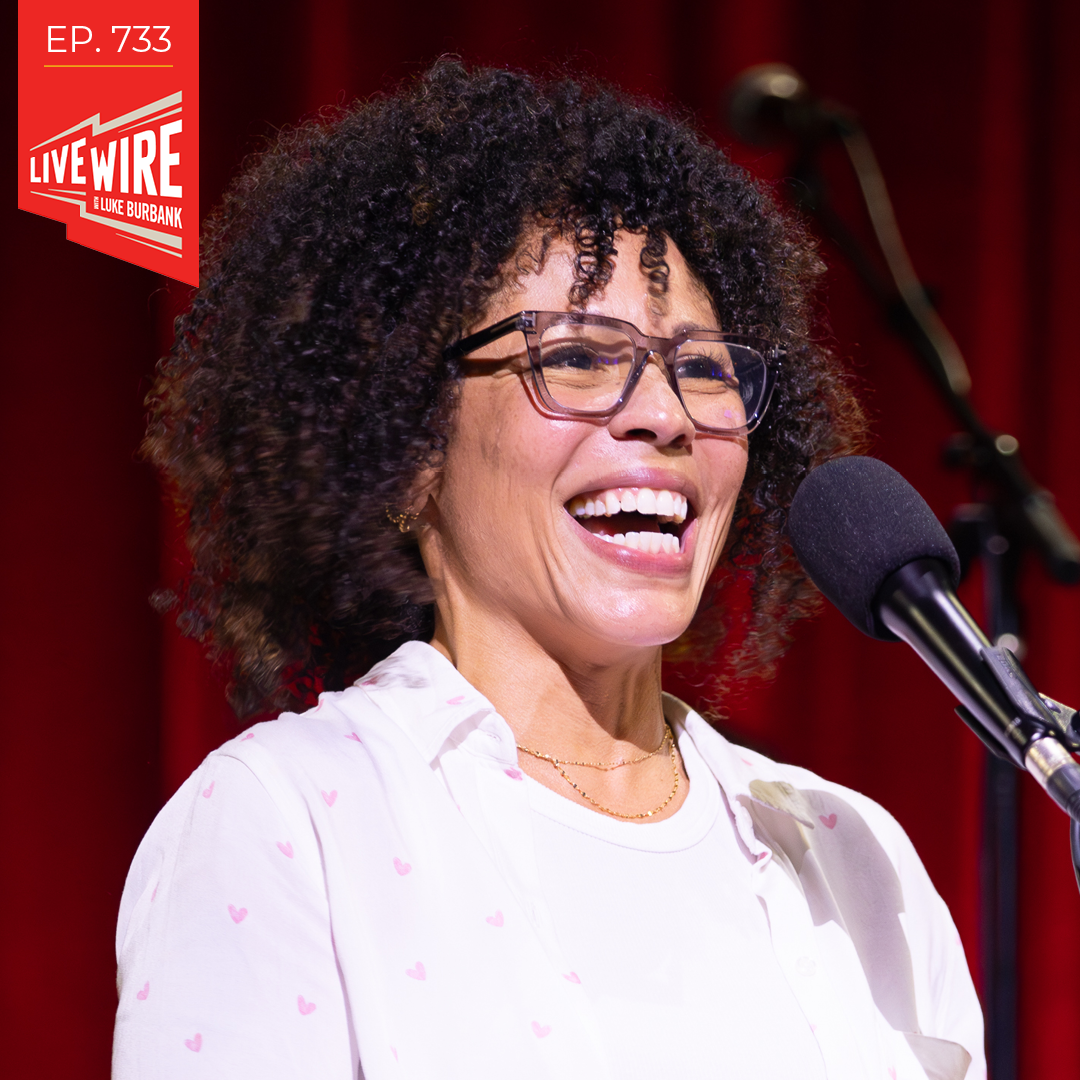
Angela Nissel
Bestselling Author
Angela Nissel is author of the national bestselling comedic memoirs The Broke Diaries and Mixed, and a prolific television producer and writer whose credits include The Other Black Girl, Mixed-ish, and Scrubs. Prior to her television career, she had illustrious careers as a temp for the IRS, a stripper, and a "sleep apnea auditor" watching people snore overnight in a local hospital. She lives in Los Angeles and enjoys beating people half her age in video games.
In her new poignant and hilarious memoir, Angela chronicles her odyssey as she tries to remain "like her mother" in the face of grief. Delightfully self-deprecating, unsparing in its honesty, yet filled with wacky humor and joy, Good Grief, Pass the Bread, Mom is Dead is an unforgettable portrait of love, yearning, loss, and resilience that reveals the indelible power of introspection to save our lives.
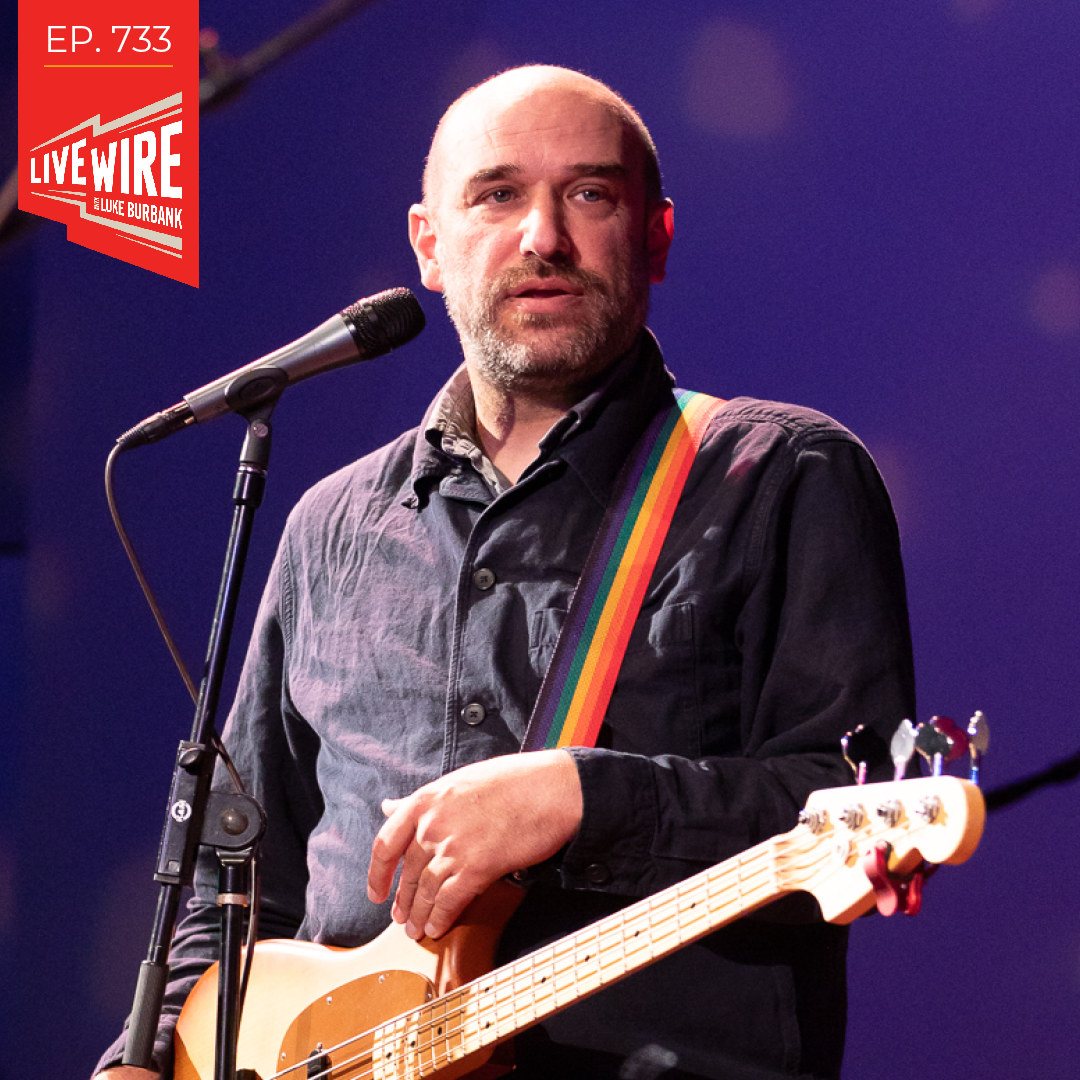
Pedro the Lion
Singer-Songwriter
Pedro the Lion, led by David Bazan, is an indie rock project renowned for its introspective songwriting. Formed in Seattle in the late 1990s, the band gained a following for Bazan's incisive lyrics exploring faith, doubt, and personal growth. After an 11-year hiatus, Bazan revived Pedro the Lion in 2019 with "Phoenix," initiating an autobiographical album series. This musical memoir continued with 2022's "Havasu" and 2024's "Santa Cruz," each delving deeper into Bazan's formative experiences. The latest release, "Santa Cruz," covers Bazan's teenage years and early adulthood. Described by Pitchfork as "densely packed and deeply sincere," it features standout tracks like "Modesto," named one of "The Best Songs of 2024 (So Far)" by NPR's All Songs Considered. Paste Magazine hails "Santa Cruz" as "the good stuff," praising Bazan for "coming into his own, figuring out who he is and shaping the musical identity that has carried him through more or less until now."
Show Notes
Best News
Elena’s story: Zion becomes first national park to own an all-terrain wheelchair
Luke’s story: “Grammy-winning songwriting legend Diane Warren adopts ‘Wilbur’ the rogue WeHo pig”
Lindy West
Lindy’s new memoir is Adult Braces: Driving Myself Sane.
Angela Nissel
Angela’s new book is Good Grief, Pass the Bread, Mom is Dead.
Pedro the Lion
Members of Pedro the Lion perform "Modesto" from their latest album, Santa Cruz.
-
Portions of this transcript have been auto-generated.
Elena Passarello: From PRX, it's...
Live Wire!
This week, author Lindy West.
Lindy West: When someone has, has laid themselves bare, usually people say, "Oh, I'm gonna be gentle with that person." Mm-hmm. And I really exploit that. And it didn't work this time at all.
Elena Passarello: Writer Angela Nissel.
Angela Nissel: If you're grieving and you go on online grief groups, people are like, "When feathers appear, your loved ones are near," and they say all these things.
And I literally volunteered at an animal rescue and did not see one feather.
Elena Passarello: With music from Pedro the Lion and our fabulous house band. I'm your announcer, Elena Passarello, and now, the host of Live Wire, Luke Burbank.
Luke Burbank: Hey, thank you so much, Elena Passarello. Thanks to all of our listeners for tuning in from all over this great country.
We have a heck of a show in store for you this week. Some old friends of the program are swinging by, but we've gotta start things off the way we always do, with a little round of the best news we heard all week.
This is our reminder that there is occasionally good news happening in the world, the world that we live in, and we found it for you, and we're gonna tell you about it. Laneor, what is the best news that you heard all week?
Elena Passarello: I hope you're sitting down, Burbank.
Luke Burbank: I always am.
Elena Passarello: Yeah, me too. Well, my best news is political in nature, and it's still a best news.
It's about a bill that f- was ratified into law called the EXPLORE Act, which passed the House and the Senate back in 2024, but the past couple of years it's been ramping up and becoming a real thing. And what the EXPLORE Act is, is an encouragement for our national parks to become more accessible, so using technology and information systems to allow as many people of various abilities to come to America's national parks as possible.
It was a bipartisan effort, and one of the things that we're seeing now that's a result of the EXPLORE Act is Zion National Park just got this thing, the first of a few hopefully. It's a new all-terrain wheelchair. It's called the Extreme Motus All-Terrain, the ultimate off-road wheelchair.
Luke Burbank: Heck yeah.
Elena Passarello: It was amazing.
I looked this bad boy up, and it's, you know, like several thousand dollars depending on what model you, you have. I don't know what kind the government has invested in, but it looks like a, a straight-up hog. It's got these two big back wheels and then a big, huge front power wheel. So it's like a tripod kind of a situation, and it's a push- a pushable one.
But on Zion Park's website, they had a picture of a park employee, like, manipulating one down [00:03:00] a really difficult-looking set of kind of natural earth stairs. It goes on sand. It goes on snow. It goes on dirt. It goes on mud. Eg- it goes basically, like, 16 of the 20 trails in Zion it can handle. This is a first-come, first-served chair that's available to anyone.
It comes with a parking pass. I don't think you call to reserve. I think you just kinda show up, and they're hoping to get more of those. And one of the reasons why I think this is such incredible news, obviously it means more people get to see the national parks, but you know, a quarter of the US population is considered disabled.
And it's just such a reality that, you know, n- none of us are gonna have the same body that we have now for the rest of our lives. We're all going to live with changing abilities. So I just love the idea that people are considering this very s- significant portion of the population and, and advocating for them so that they can have fun and see the world and appreciate the environment and love nature [00:04:00] without the barriers that make that a lot less plausible.
Luke Burbank: Glad to hear more people are gonna get to enjoy all of the various parts of, uh, of Zion National Park. The best news that I saw this week takes us to West Hollywood, Elena. Have you heard about the WeHo Pig?
Elena Passarello: No.
Luke Burbank: Well, as so many things in my life arrive upon my consciousness, this was by way of TikTok. I saw A guy on a bike.
Well, it's really his perspective, so you just are looking at a small pig that is running through the streets of West Hollywood. And the guy- ... who's on his bike, which is like an e-bike, is following behind the pig. His name was Jamal Harrison, by the way, and he's just saying, "There's a pig in West Hollywood.
We gotta catch the pig. Come back, pig." He is following- ... the pig as it's running through West Hollywood, barely avoiding cars and people and all these kinds of things, and he's keeping up with it 'cause he's on his bike. Amazingly, they were able [00:05:00] to corral this little, they think it's an 11-week-old pig, and get it safely to an animal shelter there in, uh, the area.
And so the pig was, uh, staying there, and they, there was news stories about it. The video of this guy chasing the pig went viral, and the owners of the pig had, I think it was, like, five or six days to identify themselves and come and claim their little pig. They couldn't figure out whose pig this was, and so eventually the pig went up for adoption.
And you know who adopted the pig? Are you familiar, Elena, with such songs as If I Could Turn Back Time by Cher, or Because You Loved Me by Celine Dion, or Nothing's Gonna Stop Us Now by Starship, or even-
Elena Passarello: Oh, my God ...
Luke Burbank: I Don't Want to Miss a Thing by Aerosmith?
Lindy West: Yes.
Luke Burbank: Diane Warren-
Elena Passarello: Diane Warren, Diane
Luke Burbank: Warren. The songwriter of those and many other songs adopted the WeHo pig.
Her animal rescue that she runs won the auction. Uh, it's an auction because, of course, they're also trying to raise money, so this is [00:06:00] a good thing. They outbid everyone else to get the WeHo pig, who will now be living out its days with the woman who brought us such songs as- ... uh, Rhythm of the Night by DeBarge.
Elena Passarello: She better write a song about that pig. To the beat of the rhythm of the pig.
Luke Burbank: Until then, that is the best news I heard all week.
You're tuned to Live Wire. Our first guest is a TV producer and writer whose credits include Scrubs, The Boondocks, and Mixed-ish. She's also the author of two bestselling comedic memoirs, The Broke Diaries and Mixed. And her skills as a comedic memoirist really got a workout when she took on her latest book.
It's called Good Grief, Pass the Bread, Mom is Dead, which details her life trying to take care of her mom and her own sanity after her mom's cancer diagnosis. This book somehow manages to find an [00:07:00] immense amount of humor in the midst of a very, very tragic year of her life. This is Angela Nissel, recorded live at the Alberta Rose Theater in Portland, Oregon.
Angela, welcome to the show. Thank you. Okay, let's, let's kinda start our conversation where this book starts, which is you're back in Philly where you grew up. You're visiting your mom for Christmas, which is kind of the tradition, and, um, you did not know at the time that she had cancer, and she doesn't, did not know at the time that your television career was sort of stalling out a little bit.
Well, well first of all, how did these various cats get let out of these various bags for both of you?
Angela Nissel: Mothers lie so much. My mom was a nurse- Mm-hmm ... and when she had cancer she did everything to try to conceal it from me. Mm-hmm. She also married a crazy man, which is in the book, and she tried to conceal that from me, too.
And, but, um, [00:08:00] it, she finally, because I gave her a really horrible Christmas present, which I thought was great. Her, she used to wear heavy hoop earrings in the '70s, I guess people did. Yeah. And one of them ripped, and she missed her hoop earrings, so I'm like, "Congratulations, I got you a surgery for your ear," and she's like, "
PRX: Already got a surgery."
Angela Nissel: Aw. I'm like, "What kind of surgery?" "Just a little one." And she kept lying.
Luke Burbank: And then, like, we go a year later in the book, and now you're back there. So you found out that she had cancer, but, uh, she was telling you it was gonna be fine. Her no-good husband was saying it's gonna be fine. Well, first of all, he tries to hit your brother with a hammer, which turns out to be kind of a good thing.
Angela Nissel: It was awesome. Thank God he did that. '
Luke Burbank: Cause he had to go to jail for a long weekend, and you could start this plot to get your mom out of there.
Angela Nissel: Yes. My p- my plan was to rescue my mom and cure cancer, which-
Luke Burbank: Yeah ... I mean- A modest, a modest proposal.
Angela Nissel: My life was kind of falling apart at that point. I was 35. I was divorced.
[00:09:00] I didn't have a job. I was losing my home. And so when my mom finally said, "I have cancer," for some reason in my brain I was like, "That's the one. I can cure that one." I see. "I
Luke Burbank: can fix them." Yeah. But so y- at this point, your mom was, was really, really, really sick and, and you decided, "Okay, I'm gonna get her back to LA with me," even though, like you said, at that moment your life was not going super great.
Like, I mean, did you... Were you worried about what was gonna happen when you got to Los Angeles with her?
Angela Nissel: Was I... Not only was I worried, the worst thing I thought could ever happen when she landed with... and came to my house happened. I don't know if people know, are familiar with the foreclosure process on a home, but one day there's a man standing outside of your home taking pictures, I guess, to make sure you don't burn it down before they can take it from you.
And so I'm pulling up with my mom in Los Angeles, and there's a man taking pictures of my house, and I lied and I said, "Ooh, that's just paparazzi. Get [00:10:00] ready to live in LA." "Live the good life."
Luke Burbank: Right. Because she had really been so proud of you, and you had worked on the TV show Scrubs, which everybody loves, and, and she was so proud of her daughter, this big successful Hollywood writer-producer.
So obviously it was, like, for you, very important that she continue to believe that. Can you kinda describe the relationship that you had with your mom? There's obviously a tremendous amount of love there, but also you were raised in different eras and had a different set of circumstances around your lives.
Angela Nissel: Yes. My mom, she came of age in... She was born in 1946, and when she came of age, she saw girls her color getting spit on and, and just sitting on the back of the bus trying to get to work, and you can't even do that because people are calling you names. And she went down and she fought in the Civil Rights Era.
And so for her, having access to education and a job, especially a job with a pension, was something that was always kept from her. So [00:11:00] to my mom, whenever I talked to her, she was very much like, "How's the job? How's work?" Hmm. Because that's what made you successful in America, and that was what was kept from her generation.
Hmm. And so for her to have gone through everything she did in the '60s and coming up For me to not have a job for a week was like the entire civil rights movement failed.
Elena Passarello: But no pressure. Yeah, right.
Luke Burbank: You're listening to Live Wire from PRX. We are talking to the writer Angela Nissel about her latest book, Good Grief, Pass the Bread, Mom is Dead.
Don't go anywhere. When we come back from this short break, Angela will tell us about what she considers to be the worst billboard in Los Angeles. And I used to live in LA, and that is really saying something, 'cause they got a lot of very lame billboards. Anyway, more Live Wire in just a moment.[00:12:00] [00:13:00]
Welcome back to Live Wire from PRX. I'm your host, Luke Burbank, here with Elena Passarello. We are talking to Angela Nissel about her memoir, Good Grief, Pass the Bread, Mom is Dead. We recorded this at the Alberta Rose Theater in Portland, Oregon. Check it out Um, your, your mom's actual time in Los Angeles was pretty brief because her illness was really, really advanced.
And I know that e- even though you've written about it and I guess maybe reprocessed it, it still must be sort of a blur. What do you remember about that time of her being in your home and, and reaching the end of her life?
Angela Nissel: I remember it being the actual best time of my life- Mm We're all working so hard.
We're all so concentrated on, like you said, keeping up those appearances. And when you know that you have an exact e- expiration date- Mm-hmm ... it makes things so much more vulnerable and real. Mm-hmm. And so for the first time [00:14:00] in her life, I saw her just sitting, watching birds, watching trees, reading poems to each other.
It was the type of mother-daughter relationship I wish we could have had more of. But I cherish those last six weeks I had with her- Mm. Yeah ... so much. Mm-hmm.
Luke Burbank: You know, uh, your, your mom did, uh, pass away, um, but that's like the midpoint of the book, which, uh, to me it's like this is really a book about your relationship with her, but also a book about your relationship with grief.
Mm. 'Cause that's the second half of the book.
Angela Nissel: Yeah, it was a lot of customer service while you're crying. Yeah. Real, like, I feel so bad for people now. This was 15 years ago. I had to talk to people online about, "Can you please cancel my mother's credit card?" And I would say things like... They would say, "What's the reason?"
"She's dead." "Don't say that." Hung up. Like, because the- Right,
Luke Burbank: like it was a threat or something.
Angela Nissel: Yes, exactly. No. Wow. Like, the chatbots were programmed to hang up if you said certain words. So I'm like, "How can I say this without-" Right "... [00:15:00] triggering it, but tell the truth?" And no one told me it would be so much paperwork.
Yeah. Like, they should have a service that just someone comes in and does that for you. Yeah. Yeah. And that people would bring up the worst moments of your life Mm ... because they don't know what else to say.
Luke Burbank: Yeah. You, you developed a real hate-hate relationship with a billboard in your neighborhood that's- Oh, God
and they still have these everywhere in LA. Every time I'm there I see them. And they're supposed to be inspirational. It's like a, a violin prodigy or somebody d- doing something amazing, and then it says, "Courage. Pass it on" or- Oh, yeah ... "Resilience. Pass it on." Yeah, yeah. And why, why was that something that was like, you know, bugging you in those days?
Angela Nissel: Because my... They decided to put up a billboard that had a young girl, maybe 16, surfing. And her caption was, "She beat cancer."
Luke Burbank: Oh. "
Angela Nissel: Perseverance. Pass it on."
Luke Burbank: Ooh. Yeah.
Angela Nissel: Right, you guys? I'm like, "My mom tried to persevere." I just took it as such a punch in the face, you know? It's like-
Luke Burbank: Yeah, I know, I know people who've [00:16:00] lost loved ones to cancer who have a really hard time with that framing of like, "You're kicking its ass.
You're fighting it." And of course, whatever people need to do personally to, to align themselves with this challenge, that's of course fine. But this idea that if someone passes away from it, they didn't kick its ass enough- Right ... it's gotta be tough for the people that, that love them.
Angela Nissel: Exactly. And I think just as a society, we need to look at the words we use around it.
Mm. Because it's, we celebrate survivors and we say, "Kick its butt." It's not a boxing match. It's a deadly disease. Mm-hmm. So whatever way you feel like you need to deal with it, deal with it. You know, ju- don't make it seem like you need to knock somebody out while you're- Yeah ... suffering.
Luke Burbank: Yeah. One of the things that you write about in the book too is that in your tw- I think it was your 20s, you had a period where you had very, very intense depression, and in fact you were hospitalized.
And were, were you in the hospital that your mom also worked at, or next to where, or close to where your mom... What was the proximity of that whole thing?
Angela Nissel: Couple floors
Lindy West: away.
Luke Burbank: Wow. Wow. What was [00:17:00] that like for you? What was that like for your relationship with your mom?
Angela Nissel: Oh, yeah, you talk about disappointment.
Yeah. It was very... Again, my mom and I are from very different generations. Mm-hmm. And for her, it was either a failure f- in raising me or a failure for me to have a close and comfortable relationship with Jesus.
Luke Burbank: Oh, 'cause she was very- Yes ... very Christian, very, church was a central part of her life. Yes. You said her hat collection was bigger than everything else in
Angela Nissel: her- It was amazing, yes.
Wow. But
Luke Burbank: I, I think she also had friends, you write in the book, who, um, would s- would come up to you and say she visited you, you know, and they know that, they knew that she cared so much about you, and when you were hospitalized she was visiting you even though this was hard for her probably to wrap her mind around, you know?
It sounds like she did, in her own way, really try to show up for you.
Angela Nissel: Yeah, she, she totally showed up for me, and I think as a child I had a certain way and a certain thing that I learned about mental illness that I wanted her to show up in a different way, you know? Hmm, yeah. And so it was, yes, she showed up and she tried, but I think for her [00:18:00] coming up, again, it was, "I've given her so many opportunities," and no one in my generation was depressed and on Prozac because you didn't have it.
I'm sure a lot of you would be. Right, yeah. So- Yeah ... it was, she showed up in the best possible way that she could.
Luke Burbank: Um, chapter 16 of the book is titled Short Psychotic Break. I think it's when you decide to reach out to a psychic therapist.
Angela Nissel: Because if you're grieving-
Luke Burbank: This is, this is after your mother has passed away?
Angela Nissel: Yes. If you're grieving and you go on online grief groups, people are like, "When feathers appear, your loved ones are near," and they say all these things. And I literally volunteered at an animal rescue and did not see one feather. And so I- Geez ... so I call this woman who's supposed to channel my mom, and, um, sh- long story short, she ended up channeling the wrong person.
Luke Burbank: I- honestly, it felt like she was really channeling a Black, a, a maternal stereotype.
Angela Nissel: Yes.
Luke Burbank: Like, she was like, "And when you get together for Soul Food Sunday," [00:19:00] which was not a thing your mom did.
Angela Nissel: My mom never... We had greens from a can. Yeah. Like, my mom could not cook, like, so she, and she said that were, those were literally her final words, the psychic, and she was so proud of those words.
Oof. "Make sure you save a seat for your mom. It's Soul Food Sunday." And I'm thinking, "My mom always made take- got takeout- Right ... and used microwave food," and we never-
Luke Burbank: Probably like
Angela Nissel: a cheese
Luke Burbank: steak- Yeah ... from Pat and Geno's.
Angela Nissel: Exactly. And we never hardly ate together. She worked too much. Yeah. So, like, I don't know what seat to save, but I just said thank you, and I paid.
Luke Burbank: Um, the epilogue of this book I think is really helpful because you, you sort of just talk about your experience and also things that you wish you would've known about, um, when you were at the v- very beginning of this journey of grief and stuff. I guess if there's somebody, you know, hundreds of thousands of people are gonna hear this on the radio, if there's somebody out there who's, who's dealing with grief right now, um, who's just maybe getting into it, is there anything that you can share with them or something you wish you would've known 15 years ago when you were at the very beginning of it?
Angela Nissel: I wish as a [00:20:00] woman I had learned more to have boundaries and to feel comfortable telling people what I needed. Mm. Because during grief, there's a lot of making other people- Comfortable when you're uncomfortable, when they say silly things to you or when they hang up on you because you said the word death.
Yeah. And I really wish I had to work that muscle beforehand so that I could say, "That's not helpful right now," or, "That is helpful."
Luke Burbank: Mm-hmm. Yeah. So basically boundaries and, and trying to figure out a way to take care of yourself, one's self in the midst of this. Because that was something I was struck by in the book, is how much, after your mom passed away, you're trying to manage other people's experiences.
Yes. Whether it's people who wanna have a memorial in Philadelphia, whether it's just, like, you know, her no-good ex-husband.
Angela Nissel: I was struck by how much we as a society put on grieving people. Mm-hmm. Mm. Because my experience with it was just, "Oh, I'm so sorry they passed," and you get to walk away.
Luke Burbank: Yeah.
Angela Nissel: But no, the emotional load and the paperwork load was more than I ever, ever [00:21:00] expected.
Mm.
Luke Burbank: Yeah. Well, I wanna mention too that the book is very funny. As you can tell, hearing Angela talk and with Angela's career, which by the way, has bounced back fine. Job stuff cool. Yeah. Everything is cool now.
Angela Nissel: They took
Elena Passarello: that billboard down. The
Luke Burbank: billboard- Right. ... has been torched to the ground. So things have turned out, uh, okay, but the book is quite a journey.
It's Good Grief: Pass the Bread, Mom is Dead by Angela Nissel. Angela, thank you so much for coming on Live Wire. Thank you. Thank you so much. Thank you.
That was Angela Nissl recorded at the Alberta Rose Theater in Portland, Oregon. Her memoir Good Grief, Pass the Bread, Mom is Dead is out and available right now.
You're tuned in to Live Wire. Our next guest is a writer whose wit and vulnerability have earned her a legion of very, very engaged fans, including me. Uh, this is all thanks to her columns and her New York [00:22:00] Times memoir, Shrill, which was adapted into the Hulu series that we all watched. It also turned her into a sort of beacon for women who felt that maybe they had been apologizing for themselves for too long.
But here's the thing about being someone else's symbol of self-actualization: it doesn't always match your inner life, which is an experience that she explores in her new memoir, Adult Braces: Driving Myself Sane, which involves a cross-country road trip that she took as her marriage and her sense of self were hanging by a thread.
Uh, the result is something that is honest and funny and heartbreaking, and also something that the internet really took notice of, as we're gonna discuss. Uh, this is Lindy West, recorded live at the Patricia Reser Center for the Arts in Beaverton, Oregon.[00:23:00]
Lindy, welcome to the program.
Lindy West: Thank you for having me.
Luke Burbank: It's so great to see you. You're one of our favorite guests. You're one of my, one of my oldest friends, uh, in adult life who also does this kind of sort of work- Yeah ... and media stuff, so I feel like we get to talk to you a lot, but it's, uh, never enough.
Let's start at the kinda beginning of this book. The jumping-off point appears to be a lie perpetrated by the Beach Boys, and by, as you point out, the worst Beach Boy- ... Mike Love.
Lindy West: That's right.
Luke Burbank: How did this start?
Lindy West: Um, so when I was little, I had a lot of VHS tapes that were sort of, like, garbage taped off the TV at random, and on one of these tapes, there was a little video of the Muppets singing the song Kokomo.
Uh-huh. Um, Kermit sings it, and then the Muppets act it out, and, um, and I was like... And I knew nothing of the, the boys from the Beach- Yeah ... at that time. I didn't know anything about Mike Love. Uh, and I heard this song, and I was like, "That's the greatest song I've ever heard in my [00:24:00] life." No need to make any more songs.
Luke Burbank: Yeah.
Lindy West: It's settled.
Luke Burbank: Aruba, Jamaica, ooh, I wanna take ya.
Lindy West: Oh. Um, Bermuda, Bahama, come on, pretty mama.
Luke Burbank: Yeah, yeah,
Lindy West: yeah. It's like, uh, like, it, it, there was so much adventure in it, you know? Yeah. I love a list.
Luke Burbank: Mm-hmm. So you had this dream of Kokomo in your head- Yeah ... and then when you hit, uh, a pretty difficult point in your life, in your personal life- Yeah
you thought, "Well, I'll just drive to Kokomo-" Right ... before finding out...
Lindy West: Yeah, there is no such thing. Yeah. There's no such place. Mike Love lied. Yeah. Uh, so the big conceit of the book is I, I have this moment where I'm, like, in crisis, and then I was like, "Oh, I know to cure my malaise. I have to go, I have to go to Kokomo, and I shall drive there in a van."
So then I, I Google mapped it. I g- I don't know. I was like, "Where's... How long does it take to get to Kokomo?" [00:25:00] And the internet was like, "To get where?" And it was like, Mike Love made it up. And so then, um, I, I drove, just went to Key West instead. Yeah. Which was fine.
Luke Burbank: Now, what was kind of going on in your personal life that, that had you feeling like you needed to just kinda get out of town?
Lindy West: Yeah. So I mean, to be honest, to pull back the curtain, I kinda compressed the timeline. What happened was 2012, uh-
Luke Burbank: Right. It's really compressed.
Elena Passarello: The Beach Boys' Kokomo was on the radio.
Lindy West: Yeah, yeah. Yeah. No, but basically, like, for, for the length of my relationship, which now I've, I've been with my husband for 15 years, uh, for the whole time we, like, technically had sort of a non-monog situation, you know?
Luke Burbank: That's non-monogamous-
Lindy West: Yeah ... for people that aren't cool in the know. If you're not,
Luke Burbank: like,
Lindy West: from the subculture like I am. Um, and but we had just, like, never really [00:26:00] carpe'd the DM. So he would be like, "Hey, I think we should discuss this." Mm-hmm. And I would be like, "If we do, I'll die." And he was like, "Okay. Well, uh, do you wanna, like, break up or stay together?"
And I would be like, "If we break up, I'll die, FYI." And so then it just sort of like became this, like, large communication problem that, that lasted a long time. And then eventually I was like, "I- look, if you have any relationships with anyone else, I just don't wanna know about it." Yeah. "Because we have our nice life.
We're, like, actually very happy. There's just this sort of thing where I'm not sure how I feel about it."
Luke Burbank: Because before you got married, right, Aham, your husband, said to you, "I am polyamorous. I'm not ever gonna be somebody-"
Lindy West: Oh,
Luke Burbank: yeah ... and, and you were, as you write in the book, very skeptical of that. It wasn't something you thought you wanted for your life, but you wanted to be with him more than you, uh, you know, wanted to push back on this thing.
Lindy West: Yeah, I kinda. I mean, at the very beginning I was... 'Cause he [00:27:00] said it, like, the very, like, day one, you know? And I was like, "Yeah, me too. I also have other boyfriends," you know? Like, I was like- ... "Yeah." And then, um- And then eventually I didn't have other boyfriends, and then I was like, "Mm." But, uh, mm, I, I didn't know how to get there, and I just felt like I was sort of busy and stressed already.
Yeah. And I was like, "I... This seems like a whole thing." So I really avoided it in a, in a, a toxic manner.
Luke Burbank: Well, and one of the things you write about in the book was that, 'cause at that time you didn't want Aham to pursue his kind of polyamory. You thought, "I will be such a martyr."
Lindy West: Right. "
Luke Burbank: I will earn so much money for this family and give up so much of my own happiness that if he were to act on this, he would be a terrible person."
Lindy West: Yes. A g- a good idea, right?
Luke Burbank: Yeah. I,
Lindy West: I- I
Luke Burbank: don't see any flaws in that plan ...
Lindy West: a good idea to hold your spouse hostage. No, I mean, I, I, I, I didn't really think of it, I think, so [00:28:00] explicitly. Mm. But I was just like, you know, I think as a person, as, like, a fat lady, I didn't have super high self-esteem in certain ways, and I was like, um, you know, I, I, I didn't know how to interpret this sort of stated desire of his as anything but me being deficient.
Mm. And so my, the only way I knew how to respond to it was to, yeah, like, try to be perfect angel in kind of a manipulative w- I see now a kind of a manipulative way. Mm. Um, and that's not to say that- Um, look, mistakes were made on both sides. Which you can read about in the book, Adult Braces. Yes. Yes. Whoo.
But, but yeah, I think, um, I, I, I didn't understand until I started going to therapy that controlling people through guilt is still controlling people. Yeah. You know? Mm-hmm.
Luke Burbank: Yeah.
Lindy West: Even if you're doing it in a way that feels [00:29:00] sneaky.
Luke Burbank: Right. Well, so you get out onto the road, and you have not been on the road for, like, that long.
Is it, what, maybe 11 hours or something? Yeah. And you get a call from your husband, who says, uh, "I need to go to the hospital. I'm having gastroenterological issues." Yeah. And, and the person who's gonna come take care of him is a woman named Roya, who he's been, um, having a relationship as well, which was kind of something that was initially really, really hard for you.
Lindy West: Yeah. So when I say I compressed the timeline, I think that the way people read the book is, like, my husband was like, "I have a secret girlfriend." And then I was like, "I'm leaving." But it was really, there were, like, two years in between- Yeah ... where we, like, went to couples therapy for, like, twice a week for so long.
And, and then, so, like, I knew about Roya. Mm-hmm. Um, I, I had really settled into it, and I was, like, actually feeling okay, but I still, I had to just get... I was having, for many other reasons, like, I gotta get out of my life. And so yeah, so I leave, and then Aham's intestines explode, and I was like, [00:30:00] "Okay, I'm gonna hop behind the wheel, and I'll head home."
And then he was like, "No, Roya's gonna come." Mm. And, and she had sent me this very nice text being like, "Have a good time on your trip. Um, you know, I know it's gonna be hard to be away, but I hope you have a f- f-" She sent me, like, a very, like, evolved, beautiful, kind text, and I was like, "Yeah, yeah, whatever." Um, but yeah, so then Aham was like- For
Luke Burbank: the radio listeners, Lindy did a motion with her hand that I don't- I don't actually know what it was, but the audience seemed to like it.
Lindy West: Um, and then A- Aham was like, "Don't ruin your trip just because I ate too much fiber," you know? Yeah. Or not enough. They don't exactly know- ... what diverticulitis is. So, um, in the backlash of the book, people read this moment as a, a cruelty that Aham did to me, when that's not how it felt at all. I was like, I, I was like, "I'm gonna come back, I'm gonna [00:31:00] come back," which was a toxic impulse.
Like, I'm gonna ruin my trip so that this other part of our life doesn't become more real, you know? Mm-hmm. And I didn't wa- I didn't wanna go home. I didn't wanna go home and sit at the hospital. With a constipated guy.
Luke Burbank: With a constipated
Lindy West: guy. Who only maybe needed surgery. Like, I-
Luke Burbank: Yeah.
Lindy West: And Aham was like, "Please don't do it.
Please," like s- this, this trip meant a lot to me, and he knew that. Yeah. And he was like, "Please stay on your trip. Roya can come sit at, in the hospital next to a constipated guy." And she did.
Luke Burbank: Yeah. We're talking to Lindy West here on Live Wire this week about her new book, Adult Braces: Driving Myself Sane. I mean, the book is kind of part, it's, it's sort of part travelogue, it's part, um, obviously you just working through a lot of your own feelings about yourself and, and about your marriage and about non-monogamy.
I had received the advance copy of the book. Uh, and I had not yet sat down to read it, but [00:32:00] that was, uh, uh, roughly the same week that the internet decided to completely explode, or at least the part of the internet that I look at, about this book. The people that were very, I guess, sort of critical/defensive of you were saying, "Well, this person has, you know, been sort of, like, brainwashed," or, uh, "She's just pretending that the, that she's become comfortable and, in fact, values this relationship with, with Roya and her husband."
Well, I guess you're not not used to having people on the internet come for you and be mean, but those were, like, trolls. Those are, like, trolls who just didn't like you existing. These are, like, your people.
Lindy West: Yeah.
Luke Burbank: What was that like for you?
Lindy West: It r- it sucks really bad. Yeah. I hated it so much. I, um, I'm very good at dealing with bad people who don't like me.
I, I, I used to say this when I wrote, like, political op-eds. Like, I don't care if a million trolls leave a horrible comment, but if someone in good faith- Mm-hmm ... says, "You messed this up," you know, "This take is [00:33:00] wrong and harmful," I mean, that's the, the guess I'll die. Like, that's the worst feeling that I've ever- Mm-hmm
had, and this was like that on this huge scale, except it wasn't even about politics. It was about my, my personal life. Yeah. And, um, it's, uh, it might be the, it might be the hardest thing I've ever been through professionally. Mm.
Luke Burbank: I can imagine. I mean, like, you know, when I did actually sit down and read the book, I was really struck at how honest you are in the book about obviously yourself, but also your husband.
It's like I was imagining this was gonna be some weird, like, free pass. No. I'm... And then the other thing is he reads all these chapters before you send them to the publisher, right? What is it like to hand him the chapter where you're calling him like kind of an
Lindy West: I honestly, he, uh, w- his main piece of feedback was that I wasn't mean enough.
He almost predict- Like, he was like, "If you are, if you are soft on me," because we're now, what? Five, six years, seven years down [00:34:00] the line from when this was all actually happening. He's like, "If you, if you go too easy on me, um, people are gonna freak out and say that you're sort of sugarcoating this."
Luke Burbank: Because I should clarify to people if you haven't read the book yet, you had these sort of rules around your non-monogamy, and he violated those, uh, in a pretty extreme way that was hurtful to you, not because of the non-monogamy, but because of how it happened.
But you talk about that in the book.
Lindy West: Yeah. And it also is a really big tangled knot of like both of us talking past each other- Mm-hmm ... and not being honest and... This is what the book is about. Like, I, I just don't know what to say to Mm-hmm. Like, yes, I was also mad. It's in the book. I-
Luke Burbank: Yeah.
Elena Passarello: You're, you're being mad in the book.
Lindy West: The book is mad.
Luke Burbank: It's really mad.
Lindy West: Um, but then also, the thing that was really disorienting to me was, was sort of realizing that, um, people were not ready to meet me at the, the finish line where I had ended up, you know? Yeah. [00:35:00] A- and I don't know if that's a failure of, of my writing or, or p- other people's, uh, own baggage or what, or some combination.
But it was really weird because all my other books, when they've, were about to come out, I was like, "Oh boy, I don't know if this book is good. I'm scared. I don't wanna deal with this. I hope no one reads this." This book, I was like, "Oh boy, this book is great." "I can't wait for this book to come out.
Everybody's gonna love it. Everyone's gonna say 10 out of 10. No notes. Uh, this book rocks." I was truly, I was like looking with confidence. I was like, "I'm not even afraid of my Goodreads page." Wow. Oh. Yeah. And then I, I truly-
Luke Burbank: Only this crowd would get that joke, by the way.
Lindy West: Um, and I feel kinda silly, but I really was, I really was taken by surprise.
Luke Burbank: Well, can I just say, it's a really well-written book. Thanks. I think it's your best book. Thank you. And like- I can understand why your thought was like, [00:36:00] "Wow, I really nailed this one."
Lindy West: Thank you. And the other thing that was weird is everyone was like, "Oh, this book was such a freaking bummer." Uh, g- uh, I was like, it's so-
Luke Burbank: Listen, somebody just yelled it's funny from the audience, so that means it must be funny.
Lindy West: Well, my, my perception of my own book was that it's a really joyful, funny book. Yeah. Yeah. And then people were like, "This was such a slog. DNF. This woman needs therapy." First of all, did you... I guess- Yeah ... you DNF'd, but don't worry. I'm in it.
Elena Passarello: Do you think it's hard for people to read unfinished stories?
Sometimes I just wonder if it's we're, we're just taught to want this narrative, and we're taught to want this fixed person, and we're this fixed relationship, and like- Yeah ... that's not what writing is. That's not what book is. You know? Like, it's- Mm ... book is this is me now or close to now, and I'm gonna do what I can to, to show the knot, right?
Right.
Lindy West: Yeah. And, and I got, I got mixed feedback. I got both critiques. Like, some people were like, "Wow, she wraps it up [00:37:00] with a fake bow. She sucks." And then other people were like, "She is writing from the thick of pain." "And the story never finishes." And I was like, first of all, okay, like this all happened five...
The road trip was five years ago. It just felt like, well, no. You know what? Here's my smart thing I'll say. Once you become the Internet's little chew toy- Oh ... um, it becomes recreational. Mm-hmm. And so people are nitpicking- Yeah ... every, for fun, every little
Luke Burbank: detail. 'Cause the
Lindy West: fun game we're now playing is- Exactly
Luke Burbank: have a thought about Lindy.
Lindy West: Exactly. Right. And like, I get it actually. That's fine. That's kind of part of the, the life cycle of the Internet. But it, it, it was, like it's a very personal book. Mm. It's very vulnerable, and usually vulnerability works really well for me as kind of a shield. Like, people do maybe, um, take a moment to think, oh, the, when, when [00:38:00] someone has, has laid themselves bare.
Usually people say, "Oh, I'm gonna be gentle with that person." Mm-hmm. And I really exploit that. Um, and- And it didn't work this time at all.
What? Um, and I don't know. It was just so weird because people kept being like, like, "Account for all of these things that, that I, all these suspicions that I have about your marriage, and I want receipts," and people were demanding all the, like more details. And I just, I was like, "I didn't give you enough?"
Mm.
Luke Burbank: Yeah.
Lindy West: I, I gave you so much in this book. Mm. Yeah. But there was just this hunger for more because it was fun.
Luke Burbank: Yeah. You're listening to Live Wire from PRX. We're talking to Lindy West about her latest book, Adult Braces. We do have to take a very quick break here at the Patricia Research Center for the Arts, but stay with us.
More Live Wire in just a moment.[00:39:00] [00:40:00]
Welcome back to Live Wire from PRX. I'm Luke Burbank, here with Elena Passarello. We're at The Reser in Beaverton this week, talking to our friend Lindy West about her latest book, Adult Braces: Driving Myself Sane. Actually, Lindy, it is a road trip book, as we've talked about, and we were thinking that, um, you know, you've spent a lot of time on the road.
You might be sort of, uh, our special expert on the topic. You drove from Seattle to Key West, and you talk about a lot of places that you actually stopped in the book, including The Precious Moments Chapel in Carthage, Missouri, which is as unhinged as it sounds. Yeah. Mm-hmm. Little wide-eyed-
Lindy West: It's a, a real church-
but everything is Precious Moments figurines.
Luke Burbank: Um, reenacting, uh, s- scenes from the Bible. Yeah. They don't do the crucifixion, do they? Yes. Oh.
Lindy West: They
Luke Burbank: do it all. [00:41:00] Ay-ay-ay. Uh, so we know that you've seen a lot out there on the road, Lindy, and we thought we would do this little exercise, uh- ... regarding American roadside attractions.
Okay, some of these are real, some of these we made up. I'm scared. We'd like you to, we'd like you to try to guess if the place we're telling you about, the roadside attraction, is real, and then whether or not, if it's real, would you actually wanna go pull off the road and check this out? Okay. We're calling this little exercise Smash the Brakes or Pass.
Okay. Smash or pass. Okay, so here's the first one. The National Mustard Museum in Middleton, Wisconsin. Over 6,700 mustards from 70 countries. Free admission.
Lindy West: I believe that to be real.
Luke Burbank: It is absolutely real.
Lindy West: And I would smash the brakes.
Luke Burbank: Absolutely. I have been to the National Mustard Museum- ... and it is as great as it sounds.
I spent, I think, between $100 and $200 on mustard in the gift shop- ... and had it mailed to my house.
Lindy West: Do they offer memberships? 'Cause-
Luke Burbank: I didn't even [00:42:00] ask. Mm. How about this? Barney Smith's Toilet Seat Art Museum in Colony, Texas. Is this a real place with over 1,400 decorated toilet seats created by a retired plumber over 70 years ago?
One of the toilet seats is made with a fragment of the Challenger Space Shuttle.
Lindy West: Luke, that's a real place. Yeah.
Luke Burbank: It sure is. Yeah.
Lindy West: Yeah.
Luke Burbank: Would you, would you smash the brakes?
Lindy West: Obviously.
Luke Burbank: I mean-
Lindy West: Obviously ...
Luke Burbank: a retired plumber. That's, to me, the dazzling detail that I love. That's a good one. Okay. Is this a real place?
The Vent Haven Museum in Fort Mitchell, Kentucky, the world's only ventriloquist museum. Over 1,000 dummies sit in rooms waiting for visitors. Is this real? The Vent Haven Museum, 1,000 ventriloquist dummies sitting in rooms waiting for you.
Lindy West: I feel like the name is too weird for you to have made it up.
Luke Burbank: Yeah.
Lindy West: Mm. Vent [00:43:00] Haven.
Luke Burbank: Yeah.
Lindy West: I'm gonna say it's real.
Luke Burbank: You're absolutely right. It's real. Yes. Mm-hmm, mm-hmm. Would you smash the brakes, or would you just keep on moving past those 1,000- I would pa-
Lindy West: I would keep on rolling.
Luke Burbank: Yeah. Smart.
Lindy West: That's, that's 1,001 too many dummies in a room- Yeah ... for me.
Luke Burbank: How about the Institute for Unfinished Craft Projects in Provo, Utah?
Lindy West: Oh.
Luke Burbank: A museum of half-completed quilts, abandoned scrapbooks, and knitting projects that never made it past the first row.
Lindy West: That's fake.
Luke Burbank: It is fake. You're absolutely right. Okay. Ah. Would you go to that, though, or would it just give you agita to see something that we've all done, which is start a project and not finish it?
Lindy West: I would go to it. Yeah. I would go to it. I would go to it. They should have that, but it should be like, um, you know, like you can take someone else's project- Finish it ... and finish it. And finish it. Yeah. And leave
Elena Passarello: your own.
Lindy West: Yeah.
Luke Burbank: That's actually a good idea.
Lindy West: Right? Yeah.
Luke Burbank: How about the world's largest collection of refrigerator magnets in Gatlinburg, Tennessee?
Mm. Over 14,000 magnets [00:44:00] organized by sentiment, including a separate wing for magnets that are lewd. As in risque.
Lindy West: Ooh. I think that's real.
Luke Burbank: That is fake.
Lindy West: No, I wanna go see all the magnets.
Luke Burbank: I know, I want it to. I know.
Lindy West: I was gonna say fake until you said the lewd room- Yeah ... and then I thought, ooh.
Luke Burbank: I can imagine- Lewd
it's like, like the back of the, like, video store when I was a kid- Yeah ... with the beaded curtain. Go back to look at the lewd refrigerator magnets.
Lindy West: I thought maybe I could manifest it being real.
Luke Burbank: All right. How about, uh, the International Banana Museum in Mecca, California. Over 20,000 banana-themed items on display, making it the world's largest collection of banana memorabilia.
Admission includes a banana. Is it real?
Lindy West: I've lost all of my compass. Um, I don't know. The Thousand Dummies think it's real.
Luke Burbank: It is, in fact, a real place. Wow.
Lindy West: I'm not going. I don't want- You're not going? It, it's just, like, little items [00:45:00] shaped like bananas?
Luke Burbank: It appears to be. Largest collection of banana memorabilia.
Memorabilia? Yeah.
Lindy West: Let's
Elena Passarello: commemorate
Luke Burbank: bananas. Yeah, remember that banana we had? Yeah, I've got this lewd refrigerator magnet to remind me of it. Uh,
Lindy West: I w- it is sort of inherently lewd, so I will go, yes.
Luke Burbank: Okay, excellent. I will go. So you will smash the in- the Banana Museum.
Lindy West: That's right.
Luke Burbank: Well, there you go, Lindy, lots of ideas for your next road trip.
Lindy West: Thank you.
Luke Burbank: And again, great job on the book. We love you.
Lindy West: I love you. Thank you.
Luke Burbank: It's
Lindy West: Lindy West,
PRX: everyone, right here on Live Wire.
Luke Burbank: That was Lindy West recorded at the Patricia Resource Center for the Arts in Beaverton, Oregon right here on Live Wire. Her memoir, Adult Braces: Driving Myself Sane, is out right now. You're tuned into Live Wire. Before we get to this week's musical performance from Pedro the Lion, we got a little preview of what we're doing next week on the show.
We're gonna be joined by Alexis Okeowo, [00:46:00] who is a staff writer for The New Yorker, and will be chatting with us about her latest book. It's called Blessings and Disasters: A Story of Alabama. Uh, in the book, she looks into the complexity of her home state of Alabama. That's where she grew up, the daughter of Nigerian immigrants.
Then we are gonna head back to Minnesota, where if you remember, we just were a couple of weeks ago, because we have got more Maria Bamford for you. This time, Maria is gonna answer a questionnaire that she wrote for Vulture Magazine, questions like, "What would your religion be if you could make up your own?"
Then we're gonna round out the hour with a tune from Seattle's alternative music staple, Pete Droge, from his rootsy Americana latest album, Fade Away Blue. That's all coming up next week on the show, so do not miss it. In the meantime, our musical guest this week hails from Seattle, Washington, like I do, and has been playing as Pedro the Lion, and also [00:47:00] himself as Dave Bazan, for over three decades.
His latest release, Santa Cruz, covers his teenage years and early adulthood, which is a particularly notable topic to me because I was there for some of it because Dave and I went to the same church youth group together. Pitchfork calls the album densely packed and deeply sincere, and I could not agree more.
Here is Pedro the Lion, recorded live at Benaroya Hall in Seattle, Washington.
[Pedro the Lion performs “Modesto.”]
Luke Burbank: That was Pedro the Lion here on Live Wire, recorded live at Benaroya Hall in Seattle, Washington. Their album Santa Cruz is out and available right now. All right, that's gonna do it for this week's episode of the show. A huge thanks to our guests, Lindy West, Angela Nissel, and Pedro the Lion.
Elena Passarello: Laura Hadden is our Executive Producer, Tim Harkins is our Executive Director, and our Producer and Editor is Melanie Sevcenko. Eben Hoffer is our Technical Director, Tré Hester is our Assistant Editor, and Ashley Park is our Marketing Manager.
Luke Burbank: Our house sound is by D. Neil Blake, and our house band is Ayal Alves, Mike Gamble, Danny Aley, Sam Pinkerton, Ethan Fox Tucker, Rachel Brashear, and A. Walker Spring, who also composes our music. This episode was mixed by Eben Hoffer and Tré Hester.
Elena Passarello: Additional funding provided by the Oregon Arts Commission, a state agency funded by the state of Oregon and the National Endowment for the Arts. Live Wire was created by Robyn Tenenbaum and Kate Sokoloff.
Luke Burbank: This week, we'd like to thank members Kurtis Clark of Portland, Oregon, and Kerri Hoffman of Northfield, Vermont. For more information about our show or how you can listen to our podcast, head on over to LiveWireRadio.org. I'm Luke Burbank. For Elena Passarello and the whole Live Wire team, thank you for listening, and we will see you next week.
PRX.
Staff Credits
Laura Hadden is our Executive Producer, Tim Harkins is our Executive Director, and our Producer and Editor is Melanie Sevcenko. Eben Hoffer is our Technical Director, and Tré Hester is our Assistant Editor. Ashley Park is our Marketing Manager. Our house sound is by D. Neil Blake. Our house band is Ayal Alves, Mike Gamble, Danny Aley, Sam Pinkerton, Ethan Fox Tucker, Rachel Brashear, and A. Walker Spring, who also composes our music. This episode was mixed by Eben Hoffer and Tré Hester. Additional funding provided by the Oregon Arts Commission, a state agency funded by the state of Oregon and the National Endowment for the Arts. Live Wire was created by Robyn Tenenbaum and Kate Sokoloff. Special thanks this episode to Live Wire members Kurtis Clark of Portland, OR and Kerri Hoffman of Northfield, VT.
