Episode 728
W. Kamau Bell, Rick Steves, and Edna Vázquez
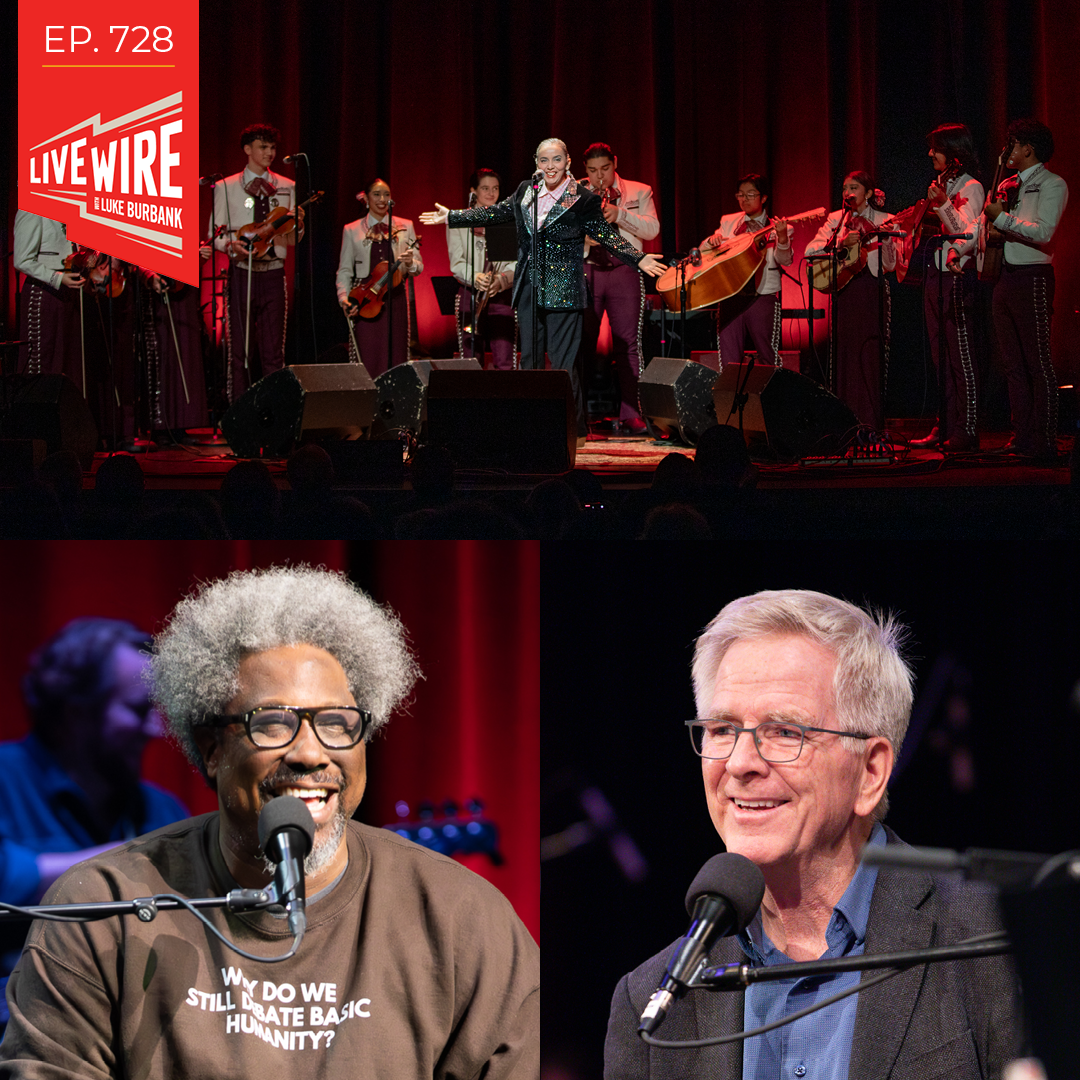
Podcaster W. Kamau Bell (Who's With Me?) explains why he's a comedian first... despite his reputation for having difficult conversations with groups like the KKK; travel writer Rick Steves admits he was surprised to find himself a plot point in Apple TV’s “Pluribus;" and singer-songwriter Edna Vázquez, alongside a group of high school mariachi musicians, performs "Lindo Colima" from her album of traditional Mexican music Te Esperaba.
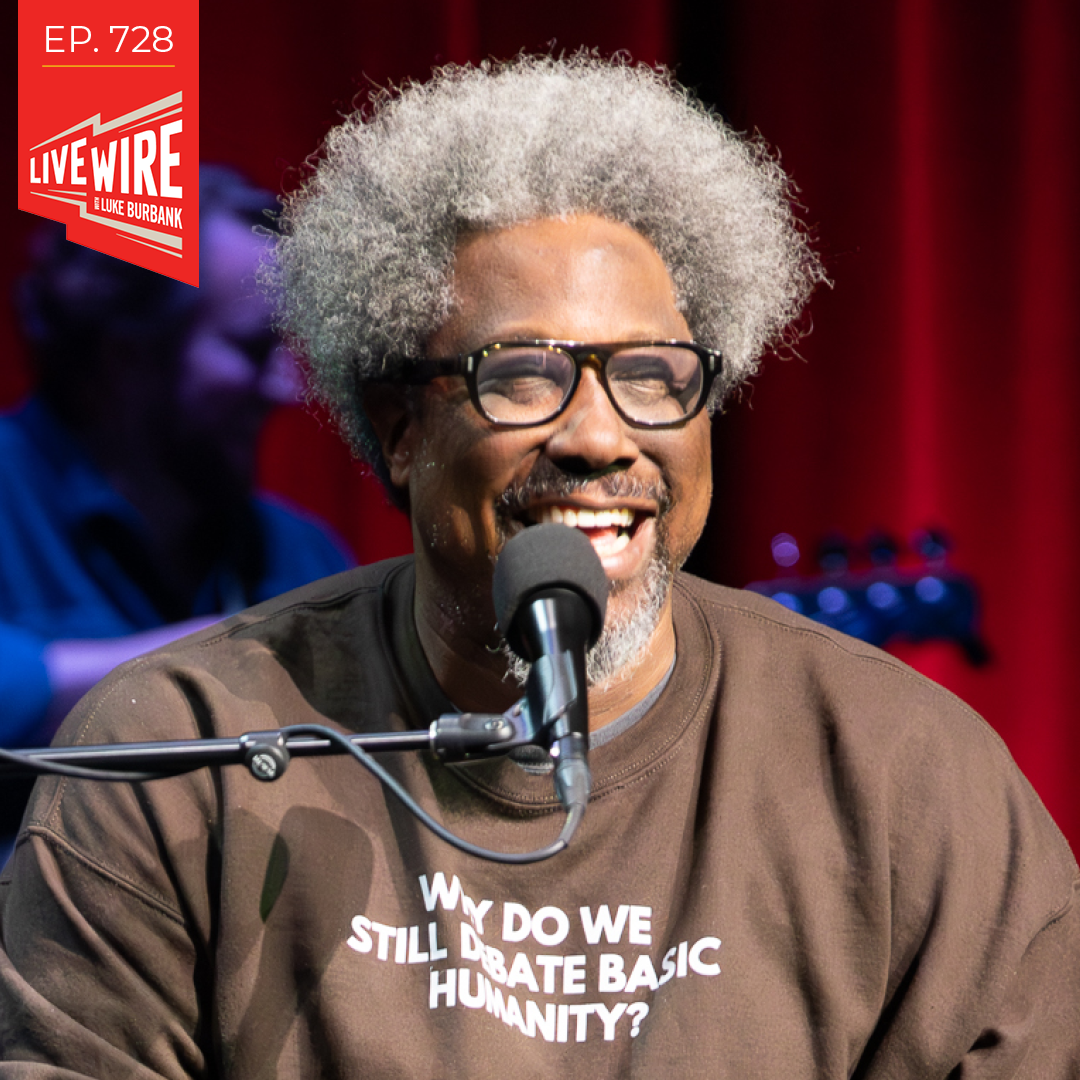
W. Kamau Bell
Podcaster and Comedian
W. Kamau Bell is a podcaster, stand-up comedian, director, producer, and dad. His new weekly podcast is called Who’s With Me?, inspired by his popular Substack newsletter of the same name. For seven seasons, Kamau was the host and executive producer of the five-time Emmy Award-winning CNN docuseries United Shades of America. He won a Peabody Award for his Showtime docuseries We Need To Talk About Cosby. He is also the co-author of the New York Times bestselling book Do The Work: An Antiracist Activity Book. His first book was his memoir with the easy-to-remember title: The Awkward Thoughts of W. Kamau Bell: Tales of a 6' 4", African American, Heterosexual, Cisgender, Left-Leaning, Asthmatic, Black and Proud Blerd, Mama's Boy, Dad, and Stand-Up Comedian. Kamau has released two comedy specials, and he also recently directed and produced the HBO documentary 1000% Me: Growing Up Mixed. In addition to being the ACLU’s Celebrity Ambassador for Racial Justice, Kamau is on the board of directors of DonorsChoose—a non-profit that helps teachers raise money for class projects, and Live Free—a non-profit dedicated to ending gun violence, mass incarceration, and mass criminalization. He lives in Oakland, California. He cares a lot… maybe too much.
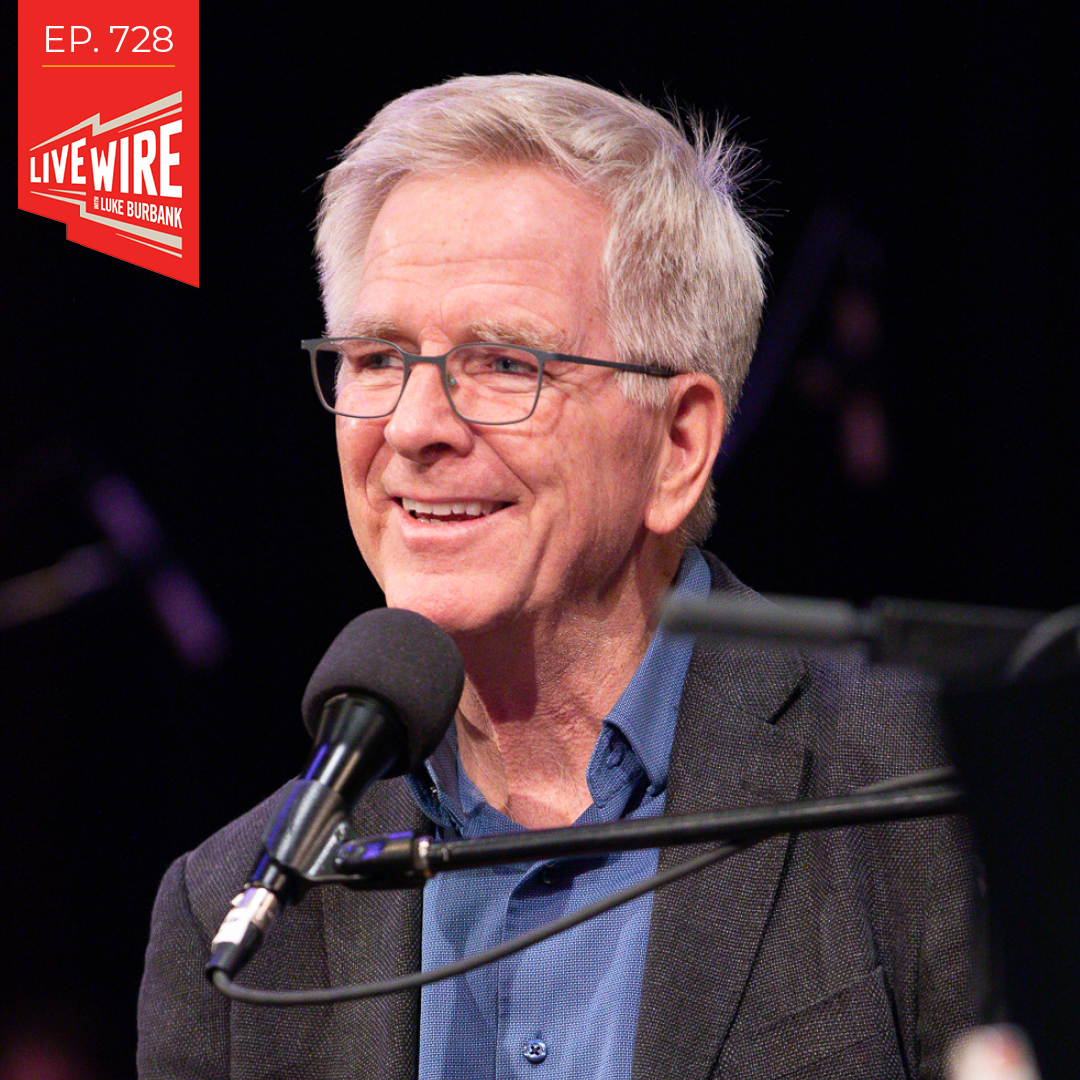
Rick Steves
Travel Titan and Writer
Since 1973, Rick Steves has spent about four months a year exploring Europe. His mission: to empower Americans to have European trips that are fun, affordable, and culturally broadening. Rick produces a best-selling guidebook series, a public television series, and a public radio show, and organizes small-group tours that take over 30,000 travelers to Europe annually. He does all of this with the help of more than 100 well-traveled staff members at Rick Steves' Europe in Edmonds, WA (near Seattle). When not on the road, Rick is active in his church and with advocacy groups focused on economic and social justice, drug policy reform, and ending hunger. To recharge, Rick plays piano, relaxes at his family cabin in the Cascade Mountains, and spends time with his son Andy, daughter Jackie, and his grandson...baby Atlas.
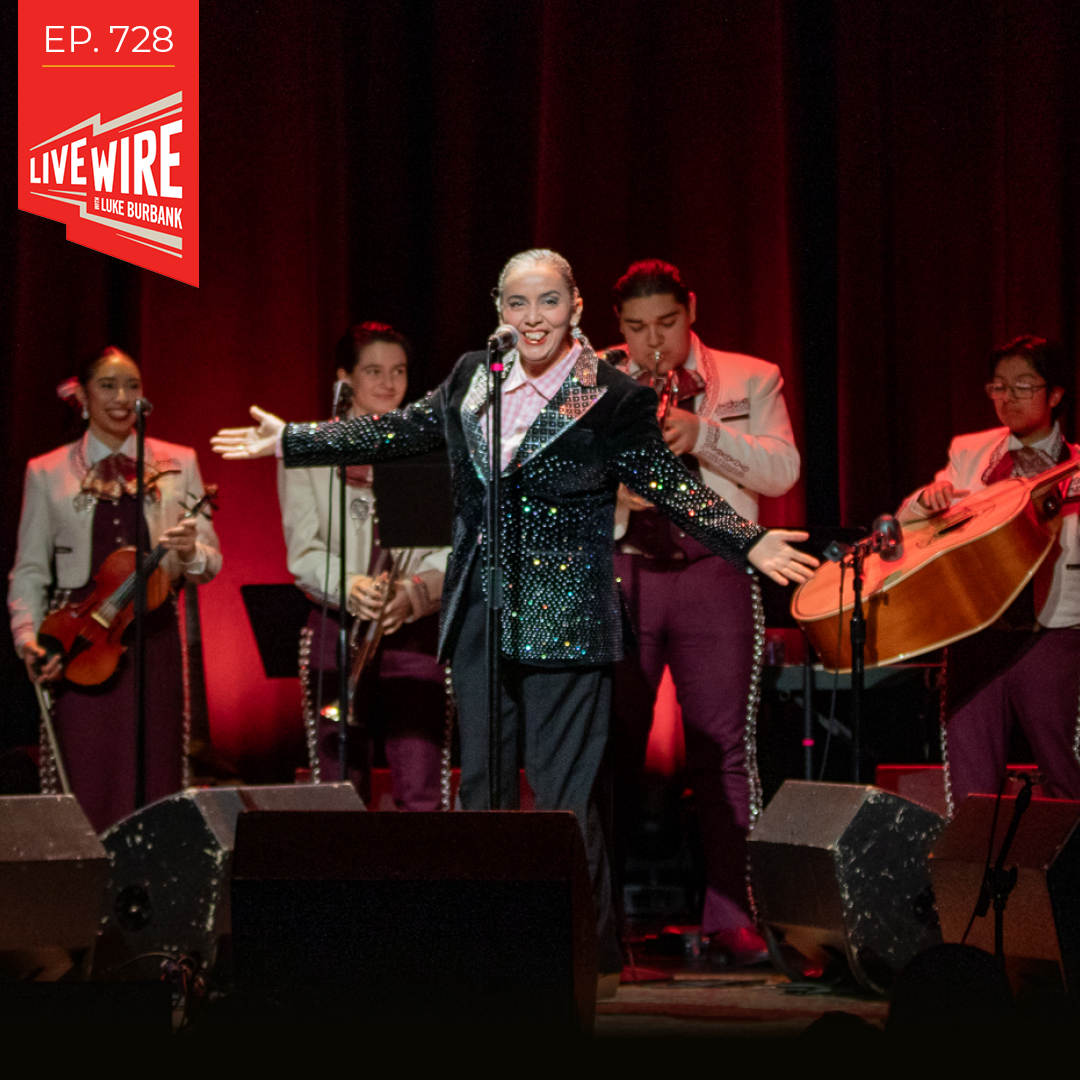
Edna Vázquez
Singer-Songwriter
Born in Jalisco, Mexico, the birthplace of mariachi, Edna Vázquez was immersed in traditional Mexican folk music from childhood. As a teenager, she relocated to Portland, Oregon, developing a bicultural musical style blending folk, rock, R&B, and Mexican heritage. Since 2017, Edna has toured internationally as special guest singer with Pink Martini, performing at Carnegie Hall and Royal Albert Hall. She's also performed with Gustavo Dudamel and the Los Angeles Philharmonic, and at the Latin Grammys with Flor de Toloache. Her debut traditional Mexican album, Te Esperaba, features mariachi, Norteño, and banda genres recorded in Mexico. As a rare woman leading traditionally male-dominated mariachi ensembles, Edna inspires other women to pursue their musical dreams.
Website • Instagram • Facebook • Te Esperaba
Show Notes
Best News
Elena’s story: “Florida Mailed 77-Year-Old Woman a License Plate That Reads “SQZ A55” – She Kept It”
Luke’s story: “‘Hot Jimothy Summer’: Mutant raccoon is scurrying through Seattle’s yards — and into city’s heart”
W. Kamau Bell
W. Kamau Bell’s new podcast Who’s With Me? is available on YouTube, Apple Podcasts, Spotify, and Pocket Casts.
You can keep up with all things WKB by subscribing to his Substack newsletter of the same name.
Rick Steves
Rick’s latest book is called On the Hippie Trail: Istanbul to Kathmandu & the Making of a Travel Writer.
He also mentions his bestselling Rick Steves Italy.
Edna Vázquez
Accompanied by Forest Grove High School’s Mariachi Tradición, Edna performs the song “Lindo Colima” from her latest album Te Esperaba.
-
Portions of this transcript have been auto-generated.
Elena Passarello: From PRX, it's... Live Wire!
This week, comedian and podcaster W. Kamau Bell.
W. Kamau Bell: We really know there's a lot of people in this country who are against us, and I wanna know who's with me. We may have nuanced disagreements, but I just wanna know if you're with me, we can figure it out.
Elena Passarello: Travel writer Rick Steves.
Rick Steves: There's only one guidebook that outsells my Rick Steves Italy book, and it's the guidebook to Disney World, and it's really good for la-la land, but I write for a smaller market. It's called reality travel.
Elena Passarello: With music from Edna Vázquez and our fabulous house band. I'm your announcer, Elena Passarello, and now, the host of Live Wire, Luke Burbank.
Luke Burbank: Thank you so much, Elena Passarello. Thanks to everybody for tuning in from all over America to our little radio show for you. We've got a great one in store this week.
First, though, of course, we gotta kick things off the way we like to, with the best news we heard all week.
[Best News jingle plays.]
This is our little reminder at the top of the show that, in fact, there is good news happening on the planet, and, um, sometimes you just gotta look hard for it. And we have, and we have found those stories, and we're presenting them now. Elena, what is the best news you heard all week?
Elena Passarello: Oh, this, this is good news just because it makes me laugh I have always wanted a driver's license vanity plate.
Have you ever had one, Luke Burbank?
Luke Burbank: No, but I was in Ohio recently, and I drove by someone whose vanity plate was Ebola. Bold choice.
Elena Passarello: Yeah, Ebola-d choice.
Luke Burbank: I, seriously, I don't know what... Um, I, as a kid, of course, wanted, like, a cool vanity plate, but then I became an adult, and honestly, I never looked up how to do it.
Elena Passarello: Yeah, I think it's expensive in all but, like... There's, like, one state where it's free or something. Not free in Florida, but plenty of people in Florida get vanity license plates. There's even a monitoring body that checks Florida license plate- Uh-huh ... vanity plate applications for lewdness or inappropriateness.
But there is a hole in the monitoring system, and that's the randomly generated license plates, the regular free license plates.
Luke Burbank: Just the, like, roll of the dice.
Elena Passarello: Yes, uh, unmonitored or loosely monitored, or they haven't figured out the program to properly scan it, and that is how 76-year-old Pompano Beach resident Nancy Dello Stritch ended up with a license plate that says SQZ, so squeeze, A55.
And I, I saw a picture of this license plate, and the fives, the particular typeface or font or whatever of Florida's license plate system, those fives really do look like S's. So the first clip I saw was a very, very lovely, uh, very proper-seeming older woman kind of telling a news crew that she just, like, she says something like, "How am I supposed to go around my retirement community with a license plate that says this?"
Luke Burbank: Squeeze A55.
Elena Passarello: Squeeze A55. She, um, reported it, and it... I do think that the Florida Department of Transportation was happy to issue a free replacement, but the best news I heard all week is that she changed her mind.
Luke Burbank: She's keeping it.
Elena Passarello: She, her... She says her sons couldn't stop laughing, and then she decided that it might be fun to get a few extra honks, you know, when she's driving around.
She's got, like, a red Hyundai. Uh, and you know what? More power to her. I think that's hilarious, and anyone who doesn't like it can kiss my A55.
Luke Burbank: Yeah, you gotta have some fun in life. I'm glad that she's embracing it. Uh, the best news that I've seen this week, three words for you, Elena: hot Jimothy summer.
Elena Passarello: Oh, yeah.
Oh, yeah.
Luke Burbank: You up on Jimothy?
Elena Passarello: I am on board.
Luke Burbank: I was raised in Seattle, so I feel a particular sense of pride about this raccoon named Jimothy that has completely lit up the internet of late. A woman, uh, in Seattle named, uh, Kianna Hall- Saw this raccoon running, um, through the yard and took a video of it and said like, "What am I seeing here?"
Put it on Instagram. Because Jimothy has what they think is something called short spine syndrome. And what he basically looks like, if you are one of the few people on Earth who hasn't seen Jimothy yet, almost like a beach ball or something. He's almost like a perfect circle.
Elena Passarello: Mm-hmm. Yeah, and he's missing, his tail is short, right?
So it adds to the, the circleness.
Luke Burbank: It is quite uncanny. It almost looks cryptozoological.
Elena Passarello: Yes.
Luke Burbank: Looks like he should be tagging along with Sasquatch- ... in grainy footage in the distance, in the, uh, the woods of Washington. But, um, he's been in the neighborhoods. And, um, one of the things that's really cute is it seems like Jimothy is doing just fine even though he's got this kind of spinal thing going on.
His, uh, with his family, uh, some accounts are that the family does not tend to go in trees- Hmm ... because it's tough for Jimothy.
Elena Passarello: Aw.
Luke Burbank: So it sounds like the, the, the family is making accommodations for Jimothy. The city of Seattle made a, did a proclamation making it Jimothy Day. Uh, my alma mater, the University of Washington, gave Jimothy an honorary doctorate, which honestly they haven't done that for me.
Elena Passarello: Yeah, that's a lot for a young raccoon.
Luke Burbank: The Seattle Mariners have this, like, mascot race where they have different kinds of fish and salmon run in a race. They added Jimothy- ... to the race.
Elena Passarello: So did they make a Jimothy costume?
Luke Burbank: They sort of modified an existing raccoon costume. I kind of wish that the person playing Jimothy would've gotten down on all fours.
Would've been a little bit more lifelike.
Elena Passarello: The gait is very that. The gait is very hands and knees kind of a thing.
Luke Burbank: It, this appears to be the story and the sort of animal that we needed this summer. Not just in Seattle, but everywhere. I mean, people are getting tattoos of Jimothy. Just like fully embracing hot Jimothy summer.
And again, it just seems like one of those things that everything else going on in the world that feels not great, this little guy, Jimothy, thriving. And again, having the name Jimothy. I don't know if any of this would've happened if his name was Randy.
Elena Passarello: Right. Jimothy just kind of presses your funny bone a little bit.
It, there's, it's so funny.
Luke Burbank: It absolutely does, and I just love it. And again, I love, it's like the perfect Seattle animal. Being from Seattle, I tell you, there will be at least four bands that are formed this summer that are called Jimothy.
Elena Passarello: Jimothy and the Short Spines. Yeah.
Luke Burbank: That's gonna be, that's gonna be the new hot name in Seattle.
Anyway, Jimothy out there thriving and making our summer a little better. That's the best news that I heard all week.
This is Live Wire. Okay, our first guest's resume is really, really impressive, I'm gonna be honest. He's a Peabody Award winner, four-time Emmy winner, two-time, uh, New York Times bestselling author, official ambassador of the band Fishbone, self-proclaimed number one Bruce Lee expert in the non-Asian division.
The thing, though, he's also done that really, really just eats me up with jealousy, he won Celebrity Jeopardy!. You might also know him from his CNN docuseries, United Shades of America, and these days he's launching a weekly podcast called Who's With Me? Take a listen to our friend W. Kamau Bell, recorded live at the Patricia Reser Center for the Arts in Beaverton, Oregon.
Kamau, welcome back to the show. Uh, you got a new podcast, Who's With Me?, also the name of your Substack that I subscribe to. Um, d- uh, did, did you approach the, the producers of this, the Pushkin Industries? Did they approach you? How did this podcast happen?
W. Kamau Bell: So I've had many, many podcast lives. I was most recently the host of the ACLU's podcast At Liberty.
Uh, before that I had Politically Re-Active with one Hari Kondabolu. Yes. Ah. Friend of the show. Yes. This is his area of the country. Hmm. Uh, and I had a podcast with my friend Kevin Avery, Denzel Washington is the Greatest Actor of All Time, Period.
Luke Burbank: Yep. Uh-huh.
W. Kamau Bell: Which, which is just a true statement in a podcast.
And so, but this is the first time I've ever had one that was my own. Hmm. And so I really just started from I wanna have something where I can do what I want to, talk to who I wanna do. I'm an only child, this is perfect. Actually, a g- guy, Justin Richmond, who actually hosts one of the main podcasts... Y- oh good.
Great. Yeah.
Luke Burbank: Clap,
W. Kamau Bell: yes.
Luke Burbank: Justin Richmond-heads in the house. Whoo-hoo.
W. Kamau Bell: Yes. Who I met when he was in, uh, he, at UC Berkeley. He was actually just, like, a radio engineer going to school at UC Berkeley, and became a character on my Denzel Washington podcast. Hmm. He- we called him Black Judgment. Oh,
Luke Burbank: yeah. So- No one's ever called me that
W. Kamau Bell: no, and they will not.
Luke Burbank: All right.
W. Kamau Bell: Not o- not on my watch. [Everyone laughs.]
So, s- so Black Judgment, and, has h- worked with Malcolm Gladwell for years. So really I was like, "I wanna work with Black Judgment again," as we all do.
Luke Burbank: Mm-hmm. Mm-hmm.
W. Kamau Bell: And, uh, he w- and he works with Malcolm Gladwell, so that's, it sort of is a, it's, it's not what you know, it's who you know, and who you called Black Judgment when they were a UC Berkeley student.
Luke Burbank: You have
W. Kamau Bell: a- Thank you, one person with a good laugh.
Luke Burbank: You have done all these other podcasts, so you know kind of the world of podcasting, but I, I mean, did you have a moment of thinking, like, "Okay, another podcast added to the discourse. How am I gonna try to make this something that's interesting for you to do, interesting for the listeners, somehow do something that's not being done out there?"
W. Kamau Bell: I mean, here's the weird thing about me. Because I'm an only child, I don't really care about you people.
Luke Burbank: Okay.
W. Kamau Bell: I know it's weird for a standup comic to say I'm not really worried about the audience. I mean, I like to check in with them, are you still... You know? But I really was like, I wanna ha- Well, here's two things.
One, I wanted to have conversations with people I care about. We've done a bunch of them so far. They came... First one was Delroy Lindo.
Luke Burbank: Yes, the
W. Kamau Bell: legend. Uh, second one was my congressman, Lateefah Simon. Next week is Ted Danson. These are all people who I care about and wanna talk to, who either I know a little bit or know a lot.
And so it's really about, these are conversations I wouldn't have unless I booked them for a podcast.
Luke Burbank: Right.
W. Kamau Bell: I can't just call Ted Danson and be like, "Hey, man, you wanna talk for about an hour?" I don't know him like that yet. But, uh, and then as I was sort of getting into the mulling it over, I realized Marc Maron had retired, and somebody needs to make- Uh-huh
male-led comedian podcasts great again. Yes. All right?
Luke Burbank: That's right.
W. Kamau Bell: That's right. Somebody needs to step into the hole that Marc Maron left behind. Yeah. We can't let Joe Rogan take it over, so.
Luke Burbank: No. Nature abhors a vacuum,
W. Kamau Bell: right? So it's- Yeah, nature abhors a sensitive, liberal, male vacuum. There
Luke Burbank: you go. And you're here to fill it.
W. Kamau Bell: A progressive man with jokes. Mm.
Luke Burbank: We're talking to W. Kamau Bell about his new podcast here on Live Wire. This week we're at the Patricia Reser Center for the Arts in Beaverton, Oregon. We've gotta take a very quick break, but stick around. Much more Live Wire coming your way in just a moment.
Welcome back to Live Wire from PRX. We're at the Patricia Reser Center for the Arts in Beaverton, Oregon. We're talking to W. Kamau Bell about his new podcast, Who's With Me? He's also got a Substack, uh, titled Who's With Me? That's really, really great, a good read. Um, you are just starting to release some episodes of the show and as, uh, as we mentioned, uh, the actor, uh, Delroy Lindo, uh, was, uh, one of your first guests.
Do you get nervous before talking to somebody like that?
W. Kamau Bell: I mean, uh, yes. I mean, I get nervous all the time. I'm just a nervous person.
Luke Burbank: Really? You don't seem... When m- in my knowing you, you don't come off as nervous. Are you hiding it?
W. Kamau Bell: I mean, I'm 6'4", so people just get nervous around me.
Luke Burbank: Uh-huh.
W. Kamau Bell: So they don't see my nerves, but inside- Interesting
I'm like, "Yeah!"
Luke Burbank: Uh, y-
W. Kamau Bell: uh, yeah, I mean, I, I don't want people to feel like I'm wasting their time- Mm ... is really. That's... I don't want... So Delroy Lindo, I'd met him a couple times. We sort of became friendly, but not friends, and I'm, I'm the kind of podcast host who, like, I text you, go, "If... What do you need to drink?"
And he was like, "Pineapple juice." I'm like, "Shit, I don't have pineapple juice." So I ran out and ran to gas station to gas station- ... to find that man some pineapple juice. That is
Rick Steves: a very random- Yeah ...
Luke Burbank: backstage drink
W. Kamau Bell: request. I s- Yeah ... he's Delroy Lindo. He's an Academy nominated actor. Yeah, absolutely. I mean, you gonna s- if he wants pineapple juice- Yeah, we're getting him pineapple juice
I have pi- I'm cutting out my swears.
Luke Burbank: Thank you.
W. Kamau Bell: Uh, no, so like, I, like, I had Kristen Kish was a guest on the podcast. Uh-huh. And I got a text from, uh, her assistant saying Kristen wanted a coffee, and I brought the coffee, and I gave it to Kristen. I was like, "How's the coffee?" She's like, "Wait, you got the coffee?"
It's like, "You wanted coffee. I had to go get the coffee." So I'm- I'd
Luke Burbank: like to point out that backstage here at the Reser, when I went into the green room, Kamau was also filling the coffee maker with water- Yeah ... as a guest here. You are really on- Yeah ... the ball with the coffee.
W. Kamau Bell: Yeah. That's also a function of being a husband- Uh-huh
and if there's no water in the coffee maker in my house, I get... It's my problem. Right. So my wife will not stand for that, so yes.
Luke Burbank: Are you... One of the things that I've noticed about, uh, how you were introduced often for interviews and other things is that they're like, "W. Kamau Bell, he'll just talk to anyone.
He'll talk to the KKK. He loves it. It's his favorite thing." He loves it. He, he, he gets more power from talking to people that have horrible points of view. Ah. Are you, like... Are you kinda, like, ready... Have you taken a break from that? Is it nice to talk to people that you actually, like, are excited to talk to versus someone that you're gonna have to have almost, like, a, you know, I don't know, a sort of verbal- I mean, I do-
cage match with?
W. Kamau Bell: I do like intentional conversations. I don't mind conversations where we might have, like, actual disagreements, as long as they're legit good faith disagreements. Yeah, yeah. Uh, and I think with the KKK, they really don't like Black people, so that's a good faith disagreement. That's, that's generous.
Uh, they're not pretending. They're not pretending. So-
That's a very, mm, that's a very Oregon-y, Portland area- Yeah ... response right there. It was the crunchy sound. Yeah. I know we're not Portland proper, but, you know. Yes. It's a very, "Ooh-ah, ooh-ah, ooh-ah." Ooh-ha. Um, so, but the funny thing about that specifically is that, so we did the first episode of United Shades of me talking to the Klan, and I would say every season, we were on for seven years, every season, the top of every season, CNN would be like, "So you think you might wanna talk to the Klan again?"
I know, right? "How about the Klan?" I was like, "What are we gonna do, a where are they now Klan edition? Is that what we're gonna do?" I think they're still Klanning. Some of 'em are in Trump's cabinet. Um- Yeah Too soon? What was that? Too right now? Oh.
Luke Burbank: But, I mean, are you then, like, I don't wanna say annoyed with, but are you...
Uh, did you ever mean to take on the reputation as the guy who goes and talks to people who have politically and culturally very toxic opinions?
W. Kamau Bell: No. I talked to the Klan because I was a guy without a job whose wife was pregnant with our second kid.
Luke Burbank: Uh-huh. Mm-hmm.
W. Kamau Bell: And I needed a job.
Luke Burbank: Yeah.
W. Kamau Bell: If I had said... If I thought country club was gonna get me the job- Uh-huh
I would've talked to golfers at the country club.
Luke Burbank: Right. Mm-hmm. Right.
W. Kamau Bell: I was pretty sure that at the time, here's the bar. It was Bourdain- Mm-hmm ... at CNN who was doing all kinds of things. It was Lisa Ling, who was an actual journalist. Yeah. And it was, like, Morgan Spurlock, who was really doing these deep dives into people.
I was like, "I gotta find a move that they're not gonna do."
Luke Burbank: Yeah. Mm-hmm. And
W. Kamau Bell: so really it was like, I suggested the Klan, and I don't m- I mean, I talk to, like, people, uh, people, uh, Islamophobes. I talk to anti-gay pe- I talk to lots of people, but it's not about putting myself in... People give me a lot of crap for putting myself in dangerous situations, and I th- but I, it was...
I don't want to do that.
Luke Burbank: Yeah.
W. Kamau Bell: Really at this point, the whole idea behind Who's With Me is, like, we really know there's a lot of people in this country who are against us. Mm-hmm. And I wanna know who's with me. We may have nuanced disagreements, but I just wanna know, if you're with me, we can figure it out.
Luke Burbank: Yeah. [Elena: Mm-hmm. Mm-hmm.] You, did you get your start in stand-up comedy? Was that your first kind of... Because you do a bunch of different things- Yeah ... but I still think of you, because back when I met you, you were doing stand-up a lot. Yeah,
W. Kamau Bell: I, I did it's funny you say my start. I was so bad for so many years. Yes, well, I did, I, I wanted to be a stand-up comedian because of Eddie Murphy on Saturday Night Live.
And I actually took a break for five years, but I came back last year. At the core of all of this is actually a stand-up comedian. So if, if there was no s- such thing as white supremacy and racism in America, I would be an only child stand-up comedian.
Luke Burbank: You got three daughters, and, uh, I've heard you've been bringing them on stage sometimes when you do stand-up.
Are they, like, performing with you? Well, how does that work?
W. Kamau Bell: Yeah, so my oldest daughter, who just turned 15, uh, sings and plays guitar, and is a very, like, artful and s- popular person, which is weird for me, 'cause I wasn't, so sometimes I'm intimidated by her. Uh- ... she's very, like, easy in the world, and thinks everybody likes her all the time, and they do.
I don't know how to deal with her. My middle kid is, like, a little bit like me, where she's in her head all the time, so I would... sh- but she wants to be... She would wanna come to the shows, and so I'd bring her to the shows, and she would sit in a booth above the stage. And sometimes I would check in with her, like, "How was that joke?
Was that good?" And she would talk back. And then sometimes she would correct me. Hmm. And then one time, I told a story. She's like, "That's not how it went." And so she finished it and it, and it was funnier that way. So then we moved to a bigger theater at the Berkeley Rep, which was, like, several hundred people, and I was like, "You need a seat on stage."
And so she had a seat on stage where she was, like, had a spotlight- Wow ... and she had her notebook that she would count every time I swore. And then she would come up and do a couple bits with me. I mean, it's the greatest thing ever. I mean, it's just like, you know- Yeah ... these kids like to eat every day, they might as well help make the money, you know what I'm saying?
So- Right.
Luke Burbank: Do they, do- And
W. Kamau Bell: it puts me in the position of not being the stand-up comedian who leaves his family to go do stand-up comedy. Right. Yeah. 'Cause that always end up with the special, like, "Welp, I'm divorced now." Yeah. Right. And so I don't really wanna do that special.
Luke Burbank: Do your kids think that you are funny?
W. Kamau Bell: Yes.
Luke Burbank: Oh,
W. Kamau Bell: that's-
Elena Passarello: Yay. Congratulations.
W. Kamau Bell: Yeah, there's, I mean, come... I, first of all, I am funny. I, I don't like the question, really.
Luke Burbank: Well, I was hoping that you were gonna say no so that it would make the fact that my daughter has never thought I was funny just what ha- Kids, you know? But you're saying no. If you're objectively funny.
No, they don't,
W. Kamau Bell: they don't think I'm cool.
Luke Burbank: Oh, okay.
W. Kamau Bell: But they will laugh at me.
Luke Burbank: At you or with you?
W. Kamau Bell: I, I'm a comedian. If it's at, I'm taking the laugh. I'm owning the laugh. I did that on purpose. Thank you for that. Right. No, they, no, they will laugh. We... No, they... And then they will do things that I'm like, "Can I, can I borrow that and do that on stage?"
And then I have to negotiate. My seven-year-old, I have to pr- every time I want a joke, I have to take her to the candy shop and she gets whatever she wants. Yeah, yeah. So no, they're, we are a funny family.
Luke Burbank: Um, were you a jokey kid? Were you using comedy as some sort of, I don't know, way to get more allowance from your parents or- No
stave off bullies or whatever?
W. Kamau Bell: No. No, I was... Again, I'm an only child. I was mostly raised by my mom. I mean, my dad was around, he was in Alabama, but it was mostly a single-parent home. I was a really quiet kid. Hmm. And didn't... My, I would make my mom laugh, but if other people came in, she'd be like, "Do that thing."
I'd be like, "No." And so she'd be like, "You... Ugh." Uh, but yeah, I was... The biggest laugh I ever got from my dad for years was when I told him I was g- doing stand-up comedy. But he was like, "But you were never funny. You're not funny." He told other people, like he's, he's... I don't know, Kamau? They're like, "I don't know what you're talking about."
Like, he told my cousin Nora, his niece, that I was doing stand-up comedy. She goes, "Yeah, Kamau was always funny." Nora professionally goes by N.K. Jemisin.
Luke Burbank: Oh, wow.
W. Kamau Bell: Yeah. Yeah. Yeah. N.K. Jemisin is my cousin, like, so we grew up together, so. Wow. Oh, wow. That's cool. And I, I let her know I was funny, and I gave her all her ideas for her books.
Anyway, let's talk about- How, how
Elena Passarello: funny is she? She's
W. Kamau Bell: not that funny. She's very serious.
Luke Burbank: We're talking to W. Kamau Bell on Live Wire this week. Um, speaking of, uh, comedy or what is a, currently passing for a version of comedy, Netflix has really gotten into these celebrity roasts. They had the Roast of- Mm
Tom Brady and, and they recently had the Roast of Kevin Hart, which, uh, involved, uh, a, a number of white comedians making jokes. And I... If you didn't see it, first of all, congratulations. But this is on Netflix, white comedians making jokes about the murder of George Floyd, and about lynching, and things like that.
Uh, I mean, I guess we can agree that cancel culture is not a real thing, because those comedians are not-
W. Kamau Bell: Once again, more proof cancel culture is not real. Uh, if, if we needed more proof. Yeah, more proof it's not real.
Luke Burbank: I, I mean, what, what do you make of the sort of state of comedy, at least as it relates to that story and what's going on with that?
W. Kamau Bell: First of all, I'm just curious, 'cause this is a very, uh, Oregon room. How many people here ha- know the Kevin Hart roast, watched some piece of it, by applause? That's what I was expecting. Okay. So Netflix is a platform.
Okay. So m- you remember TV. Uh...
So I would say the bigger story for a room like this is the idea that, like, there was a time when TV wanted our respect, and it was about making good things that you wanted to see, and like- Prestige ... and prestige television was a big thing. Now, the thing that used to be TV just wants your attention. Mm.
And so Netflix, which is the biggest platform in the world, will just do things to get your eyeballs. So the, the biggest indicator that they don't care about whether or not you like the Kevin Hart roast is that it was nearly three hours long.
Elena Passarello: Mm. Mm.
W. Kamau Bell: You don't... Yeah, you don't need three hours of anything-
that is not, like, uh, doesn't have Martin Scorsese's name at the end of it or something, you know what I
Luke Burbank: mean? And, and sometimes not even that.
W. Kamau Bell: Not even that, yeah. It's just, the fact that it's three hours of comics saying the mean thing, meanest things they can say about each other. Yeah. And the roasts come from the Friars Club back in New York City.
When it used to be a private invitation-only affair with friends, and you all make fun of your friends, and it was a thing that happened in a room. Then in the '60s and '70s, Dean Martin had a roast show that was on TV, but it was still, like, this rat pack group of friends making fun of each other. But roast jokes are always gonna be crass and racist and sexist and homophobic.
That's just what they do. But then Comedy Central took them over, and they became about who's the biggest celebrity we can get- And what comedians are just good writers at being mean. Mm-hmm.
Luke Burbank: Mm-hmm.
W. Kamau Bell: And then you get to the Netflix thing where there's now just a group of roast comedians who show up to say the meanest things, whether...
And it's not, there's no spirit of, like, we're friends or there's anything happening. And then you have the, at, at the center of that is a comedian named Tony Hinchcliffe.
Luke Burbank: Yeah.
W. Kamau Bell: Fair. Uh, who has never told a legitimately funny joke in his life.
Luke Burbank: And he's got this, um, thing out of Austin called Kill Tony- Which is this, like, very, very-
W. Kamau Bell: Which is ba- he turned an open mic into content.
It's just open micers going on stage. Yeah. And then they make fun of the open micers. But again, because it's like a car wreck, Netflix is like, "We'll air it." Yeah. So, 'cause Netflix, it doesn't want... They want your attention, they don't want your respect. And that's the same thing with CBS. They want your attention, not your respect with the Barry Wises and the Ellisons So for me, part of starting the podcast was like, I wanna find the small audience of people who still feel like I respect them and they want my respect too.
Mm.
Luke Burbank: Yeah.
W. Kamau Bell: Because right now, the, the Kevin Hart roast has proven that it's not about even, even having talented people in a room doing what they do best. It's just about creating a car crash that we all can't look away from.
Luke Burbank: And then talk about with all this, like- And then talk about- Yeah ... earned media.
Like, I mean, in a way we're doing them exactly what they want.
W. Kamau Bell: Well, it's also, but I think we need to pay attention because Netflix also had Mike Tyson box a 20-year-old. You know what I mean? That's right. Yeah. Like, it's just like the biggest things they do is it's live and it lasts for hours and hours.
And I will be at home, be like, "
Elena Passarello: It
W. Kamau Bell: is on for free right now. I did already pay for the Netflix. I will-" Yeah. But, and so, but I think we have to really be aware that, like, this is going to, this is coursing our culture, and it's no accident that it's happening under the Trump administration.
Luke Burbank: Do you think this stuff is cyclical or comes in waves?
In other words, we had a, a moment a few years ago where we were having meaningful conversations about like, "Hey, jokes matter." And again, nobody was really canceled. Louis CK sells out Madison Square Garden all the time. Yeah. But there was-
W. Kamau Bell: He's got a Netflix special. Oh, my
Luke Burbank: God ... there was a conversation in the public space that was like, "Hey, when you say stuff on stage, uh, we are allowed to respond to what you said on stage."
That was, that was a conversation that was happening. Some people were calling that wokeism or language police or whatever. Really, it was just a moment where there was some room to respond to what people were saying. Now we have white guys telling, you know, jokes about the, the most, uh, sort of inappropriate things it would seem to me on Netflix.
Like, are we gonna work through that cycle and get back to a discourse, or are we just... I mean, is this thing just gonna continue to go off the rails?
W. Kamau Bell: Uh, we're not gonna work through it if we don't work through fascism.
Luke Burbank: Mm. Okay.
W. Kamau Bell: Like, if we don't work through the fascist takeover of this country, where... I mean, Trump is literally having conversations about putting himself on the $250 bill.
Elena Passarello: Mm-hmm.
Luke Burbank: Yes.
W. Kamau Bell: Yeah. And which I was like, "That's not even a thing." Yeah. They're gonna invent a thing to put his face. So I think that's why I wanna connect it to the broader conversation, 'cause I think there's this idea that in com- in America we go back and forth and there's like a pendulum. But, you know, people go to visit Rome for the ruins.
Luke Burbank: Right. Wow.
W. Kamau Bell: And I don't think that we're, I don't think it's too much to say that eventually America might be a place like, "Remember when that place was a thing?" Mm-hmm. Anyway, here we are in whatever the next place is, and I will happily be a refugee, wherever that is. I'm putting in my status for... I'm a Black man in America, I feel like we should be group refugees to wherever the next place is.
We'll bring you culture and inv- invent a new musical style.
Luke Burbank: You heard it here first. W. Kamau Bell available to come to your country ASAP.
W. Kamau Bell: Yeah, no.
Luke Burbank: The podcast and the Substack is Who's With Me? W. Kamau Bell, everybody.
That was W. Kamau Bell recorded live at the Patricia Reser Center for the Arts in Beaverton, Oregon. Make sure you check out his podcast, Who's With Me?, wherever it is you cast your pods.
You're listening to Live Wire. All right, our next guest might be the most famous traveler since, I don't know, Gulliver? Although, as far as we know, he has not been tied down by an army of tiny people yet. If that did happen, though, we'd hear about it on his wildly popular TV show, Rick Steves' Europe, or maybe on his public radio show, or in one of the many guidebooks that he writes.
Since 1973, he's spent at least a third of every year exploring Europe and bringing us all along with him. We consider him Live Wire's official travel correspondent. This is the one and only Rick Steves, recorded live at Benaroya Hall in Seattle.
This happened last year when we had you on the show. Ooh. It was the closest thing to having, uh, you know, a Neil Diamond or something. Yeah, yeah.
Elena Passarello: People were,
Luke Burbank: people were throwing garments on- It was
Elena Passarello: like a Tom Jones show.
Luke Burbank: Thank you. Yeah. That's a even better comparison. Rick, welcome back to the show.
Rick Steves: Thank you.
I think, I think the welcome is there's a lot of travelers in this room, and this is a great traveling city. Yes,
Luke Burbank: yes. Okay, so what, what have you been up to? Where in the world have you traveled since you were last on the show about a year ago?
Rick Steves: I think a year ago I was all excited about producing four one-hour shows on what I consider the four greatest cities in Europe.
We do 40 different itineraries with all the tours that I take around Europe, and there's four cities that get a one-week tour dedicated just to them. Okay, and- And I think three of- What are those
Luke Burbank: cities? ...
Rick Steves: three are predictable. London, Paris, Rome, and the fourth would be Istanbul.
Luke Burbank: Oh, wow.
Rick Steves: Ooh. I, I absolutely love all those cities.
And it takes a... You know, what we've done for 30 years on public television is make half-hour episodes. In a great city like that, it's very frustrating because you can't do the, the, the city in... If you try to do it in a half hour, you're gonna wanna come back and do it again, and it's just all discombobulated.
It needs an hour.
Edna Vázquez: Mm-hmm.
Rick Steves: So we went over to Europe and, and worked very hard filming in those cities, and it was so much fun, and we did that. And that's, uh, that's just airing all over public broadcasting now. And, uh, we filmed, uh, the most decadent show I've ever made, which is a gourmet barge tour floating in a canal through Burgundy past the best vineyards in the world.
Ooh.
Luke Burbank: Wow.
Rick Steves: And it's just a boutique little hotel on a former industrial age barge that's turned into a two-bedroom hotel. And, uh, there's a crew of three: the captain, the first mate, and the chef. And you can... The cool thing about a barge tour is you can get out and walk or bike about the same speed as the barge.
Luke Burbank: Uh-huh.
Rick Steves: And you just tell the... You, you just tell the crew, "I'll, I'll meet you three locks up the way." Mm. And a lot of people don't realize you could go from the Mediterranean to the Atlantic across France on canals, 'cause they got all these locks, and they have a continental divide. Mm-hmm. At the very top, I understand there's a long, long tunnel, and then it's just locks all the way stair-stepping back down.
Mm. You could go all the way to Moscow by, on the, on rivers and barges from Marseilles. Wow. I wouldn't wanna do that, but
Luke Burbank: you can. You know, uh, my mom, uh, Susie Burbank, is very envious of your job. Like, when she's talking about the, the best job to have, she regularly mentions you because she's like, "He's eating this great food.
He's in all these beautiful places." And I, as a person who also dabbles in some amount of television making, I try to explain, yeah, but it is not as much fun as it looks when you're making the television, uh, versus when you're watching it on TV. What do people not understand about being Rick Steves when you're working in Europe making the TV show, in particular?
Rick Steves: Well, every show we've ever done has a great meal in it. That's sort of a requirement. Mm-hmm. I love that. But I don't... I can't remember eating one of those beautiful looking meals still hot.
Luke Burbank: Uh-huh.
Rick Steves: You know? Yeah. It takes a while to shoot that. And you've gotta get really good at- Just savoring what used to be hot food.
'Cause the camera's on. You know what it's like- Yeah, yeah ... when the camera's on. And, uh, you're, you know, you're worried about stupid things, uh, like not stepping on the other person's lines. I'm really good at stepping on... Uh, quote, "Rick, stop stepping on her lines," you know? Well, it's 'cause I'm excited to talk, and when you converse, you step on each other's lines.
That's kind of fun. But for TV, you shouldn't do that, and you shouldn't do a lot of things when you're just trying to look natural while you're enjoying a great cold meal.
Luke Burbank: Yeah. And they... Invariably, you're posed in a really awkward position that you would not be in in regular life, but it looks better for the camera.
Yeah. It somehow is, you know, presenting better. Uh, yeah, it's, it is... It's obviously a dream job, but it, it is work, right?
Rick Steves: Oh, it's so intense work, and I absolutely love it. It's a creative challenge. You can never get it done. It takes six days to produce a half-hour show. We've produced 150 of those. And, uh, every time you see, um, me on my show, I've always, I always, uh, with a local guide.
Here's my friend and fellow tour guide, Alfio, or my friend and fellow tour guide, Christina. And, uh, people, people, um, wonder how I, I know all these people, but, and have all these friends, but I'm just paying them to be my friends, you see. Uh, and it's one of the great things- Yeah ... is to hang out with these wonderful people who are so smart.
Yeah. And guides are big personalities. Uh-huh. They love their work. And I just, that's the delight for me, is to be able to... over there, work with my crew. We have a real small crew, the cameraman, the producer, and me, and then usually one guide with us. Um, but then on top of that, there's, um, writing the guidebooks and updating that material.
And that's my favorite part of my work. Uh, and I do it a- alone except for the guide I'm working with in that city. And, um, it's just a big garden to take care of when you've got guidebooks for all of Europe, and you've gotta go and make sure everything is just right, pull out all the weeds and make sure the flowers are all together and so on.
And, and, uh, you get a lot of feedback from people. I'm lucky I get work where I get direct feedback from people who are enjoying what I'm doing or, or not, and I hear about it. And, um, I just love that work. So I could stop doing that if I wanted to now, but I just, um, it's the most enjoyable thing for me.
Luke Burbank: Do people, like, reach out to you if they went somewhere that's recommended by you, either on the TV show or the guidebook, and then they don't have a good time? Do they tell you, like, "You should take that out of the book"?
Rick Steves: More often they'll tell me, "Why don't you do this?" I see. That, that I went to and I didn't have a good time, and it's not in my book.
Uh-huh. And people think if I do Spain, I should have Valencia. Mm. Uh, or if I do, um, Italy, I should have Bologna. Mm. Those are two great cities, but my rationale is Americans have the shortest vacations in the rich world, and we've gotta cut through the superlatives and understand how to use our vacation time smartly, and I do not do things that don't make the cut for the first 30 days in that country.
Luke Burbank: Mm. So you're really thinking about this in a practical way of, like, you would like, I know this about you, more Americans to travel abroad more and experience more of the world, and if you can advise them in a way that is efficient for them and that encourages that happening, that's what you're trying to do.
Rick Steves: Yes. The typical American when they travel, they go to Orlando, they go to Vegas, they go to Cancun, they go to Mazatlan, they go back to Orlando. The, there's only one guidebook that outsells my Rick Steves Italy book in, in the whole publishing world in the United States, and it's the guidebook to Disney World.
Huh. Oh. And, and, and that is la-la land, and it's really good for la-la land, but I write for a smaller market. It's called reality travel, you know? But, um, my challenge is to get people just go, go to a country that speaks a different language, you know, use your passport, and have a good time. If they don't have a good time, they'll go back home and, and never try it again.
But I think a good traveler is gonna find a way to go again and again and again, and pretty soon they become a friend with the world. Uh, they have this dual citizenship, a keener appreciation of what it means to be an American, as well as kind of a global citizenship, and I think that makes the world a better place.
Luke Burbank: We're at Benaroya Hall in Seattle Seattle, Washington this week, and we are talking, uh, to Rick Steves. Um, I have been watching this show called Pluribus lately. Oh. It's a big hit show, and they keep mentioning you. I'm wondering if you've been hearing about this. Do you know that, that you're being mentioned on Pluribus a
Rick Steves: lot?
It's the weirdest thing because if you haven't seen Pluribus, it's a dystopian, horrible world where everybody has become, like, robotic except for 12 people.
Luke Burbank: Yes.
Rick Steves: And there's only one little glimpse of normal, what we consider happy-go-lucky life, and it's Rick Steves' travel guidebooks. Yeah. Now, I have no idea.
I'm not into that whole world. I don't know. Somebody writing that script must have thought, "There's a lot of options we could choose from."
Luke Burbank: Mm-hmm. "
Rick Steves: What random person are we gonna include in this-" "... crazy script?" And, uh, of, of course, people are starting to tell me about it. Yeah. And it's, it's a cool show.
Elena Passarello: So you had no idea until- I,
Rick Steves: I had no idea.
Elena Passarello: Wow.
Rick Steves: I mean, 'cause, you know, you get in, you get in on Jeopardy!. Yeah. You get, uh, in The New York Times crossword puzzle. What was the- You get on Luke Burbank Show. Yeah, yeah. But to be in a dystopian nightmare- Yeah,
Luke Burbank: yeah ...
Rick Steves: where they only have one little memory of the, the, the life they once had.
Luke Burbank: Yes.
Rick Steves: And it keeps coming back to a hotel they went to because of my guidebook.
Luke Burbank: Yeah.
Rick Steves: That's weird.
Luke Burbank: Which is, by the way, I don't even know if it's a hotel you would've recommended. It's like an ice- No, it's not. That's a- Oh, the ice hotel. It's like a crazy ice hotel. Right, right. The-
Rick Steves: That was the funny thing 'cause that's the last place I would recommend. So they didn't really know... They probably didn't travel on my guidebook, but they figured, uh, some people have.
Luke Burbank: You don't seem like a person who's, uh, particularly, uh, obsessed with yourself or certainly obsessed with being famous, and yet you've found yourself a really known person, at least in a lotta places.
Rick Steves: Uh, well, I absolutely love it. Um, it's, uh, it's, it's a compliment because they've enjoyed their travels. I get, I get, uh...
People just, people have so much fun traveling, they wanna thank somebody for it. Yeah, yeah. And even if I don't write about it, they'll thank me. And, and I-
Luke Burbank: For the idea of travel ...
Rick Steves: it's just the i- yeah, I don't know why. And, um, it's people, people need encouragement to get out there. People need, um, you know, people wanna have somebody to cut through the superlatives.
That's a big part of the job is you only have a, a, a month in England. You should not go to Oxford and Cambridge. You should go to one or the other, and then how to make that choice. Uh, I get so tired of hearing people say you could spend a lifetime in Florence. Well, of course you could, but I'm an American.
I have 1.5 days. Now, how should I use that time, you see? Hmm. Yeah. So I've really made a point of trying to understand the fears and apprehensions of my travelers. Mm. And I speak only English, and I think that's a real plus for me- Mm ... because I know what it's like to be confused in Estonia. Mm.
Luke Burbank: Well, I'm wondering if you've detected a shift- Ethel, as an American, um, uh, traveling in Europe when our current government has done so much to really alienate other countries and really change the image of America in the world, um, is that something that you can feel palpably in the experience of being an American other places?
Rick Steves: You know, I've, I go around the country giving a lot of talks, and that's on people's minds. They're nervous about going to Europe, and you would think you should be nervous about going to countries that have been our friends for generations, and suddenly for no apparent reason, well, for no logical reason-
um, we've turned our backs on these friends. They're somewhere between disappointed and betrayed. Mm. And when we go over there, you'd think they might be upset with us. But I'll tell you, we take 30,000 Americans around Europe on our tours every year. Uh, I've got 150 European guides that do these tours for us, and I'm in close touch with the people that trust us with their vacations and these guides, and I've not heard a peep about anybody who's angry at a particular American because of what our president is doing to our brand of America around the world.
Europeans are confused, they're curious, they're concerned. Um, they, all, all of them almost have had a chance where they elected somebody that was kind of- Yeah ... buffoonish or embarrassing. Um-
Luke Burbank: Right, 'cause they're older countries, so they've- They know that ... just have a longer life cycle They know that ... and they've, almost all of them, had somebody like this who somehow got the reins at some point.
Rick Steves: But Luke, very few have done it twice.
So, so it, it, it really saddens me. It's complicated for, um, our guides in Europe to, because there's, there's a, a devi- there's a metaphorical wall in our country, just like there's a wall in Belfast and there's a wall in Jerusalem and so on. And, uh, uh, we have in travel, in tourism, there's a very up-to-date notion of quality guiding.
It's called dual narrative tourism. You can't visit a place with a wall and have any valid opinion about that wall unless you've talked to people on both sides of the wall. Talk to a Catholic community person, talk to a Protestant community person, and then you understand what's the dynamic in Belfast.
Go to the Holy Land, talk to an Israeli guide and talk to a Palestinian guide, then you can have an opinion of that wall. And there are metaphorical walls all around the country, and we've got one in our country, too, and, uh, we need to make a point of having that dual narrative approach so we can understand the baggage of other people and their worldview.
And, uh, I think it's very constructive and it's a beautiful challenge
Luke Burbank: You're listening to Live Wire from PRX. We are talking to the travel writer Rick Steves. We've gotta take a quick break, but don't go anywhere. Coming up, more conversation with Rick where he will actually reveal his favorite countries to visit. He doesn't like to do that. He's gonna do it for us here on Live Wire in a moment.
Stay with us.
Welcome back to Live Wire. I'm your host, Luke Burbank, here with Elena Passarello. We are talking to the travel writer Rick Steves, recorded live at Benaroya Hall in Seattle. Let's jump back into that conversation now. I- is there anywhere left on planet Earth that you would really like to visit and haven't?
Rick Steves: There are so many places I would like to visit that I haven't, but when s- when I have to make a decision about where I'm gonna go, I'm just a... It's a very strange thing. If you write guidebooks or make TV shows or take tours, and people like what you do, you feel burdened in a beautiful way- You gotta play the hits
by the responsibility to do it better. So Europe is my beat, even though my favorite countries would be India, Indonesia, Japan, uh, Sri Lanka. But I go to Europe because it's a big market, it's the wading pool for world exploration, I'm well connected there, I've got a degree in European history, I've got friends and tour guides all over, and I can help Americans venture beyond Orlando.
Um, and, um- ... it's, it's just, I never get tired of it. Every year or two, I fi- I find new frontiers in travel fun in Europe that I didn't even consider before. Hmm. And it's good news, because a lot of people try to see everything in one trip, and I say, "That's folly. You're just gonna be frustrated." Mm-hmm. Enjoy what you can, be efficient, and don't go too slow, and don't go too fast.
Uh, you can cover a lot, but you'll never exhaust Europe of what it has to offer, and that is a blessing. The idea that you can learn more about your home sometimes by leaving it and looking at it from a distance. Mm-hmm. The same reason Muhammad, 1,400 years ago, said, "Don't tell me how educated you are, tell me how much you've traveled."
Hmm. That's the pinnacle of travel. That's what I call travel as a political act, and I... That's the theme of my talk when I go around the country, and that's what I encourage my European guides to, um, enjoy sharing with their Americans, to help them embrace culture shock. Mm-hmm. A lot of people try to avoid culture shock, but it's a constructive thing.
It just needs to be curated, you see. Yeah. And that's, that's what really is raising the bar for a guide. Yeah. Because the default is fun in the sun, and duty-free shopping, and just go to the beach. And that's okay, but that's being a tourist. And then you can be a traveler, and you can be a pilgrim. Mm-hmm.
You can see the road as playground, the road as school, or the road as church or mosque or synagogue. Mm-hmm. Hmm. And the good thing is you don't have to do all of any of it. You can mix it up any way you like. That just carbonates the travel experience. Mm-hmm. That's incredible news. Rick Steves, thank
Luke Burbank: you so much for coming on Live Wire.
That was the legend, the GOAT, Rick Steves, recorded live at Benaroya Hall in Seattle. You can find out what Rick is up to, and he's always up to something, over at ricksteves.com.
You are listening to Live Wire. Before we get to this week's musical performance from Edna Vázquez, a little preview of what we are doing on the program next week. We are gonna be talking to Live Wire royalty. That's right, the one, the only Paul F. Tompkins is gonna stop by. You probably know Paul from his many, many podcasts, including Spontaneous Nation and Comedy Bang Bang.
He's also got his live variety show that he tours around. It's called Varietopia. It's incredible. Uh, we're gonna hear about that. And, uh, also, we're gonna have a little surprise during the program. It involves glitter, which this interview with Paul was recorded a good while ago at this point, and I will tell you this: I am still finding pieces of glitter in my laptop computer from this event that you are gonna hear next week on the show.
Then we're gonna hear some music from our friend Meklit, the singer-songwriter who blends jazz, soul, folk, and influences from her East African roots in Ethiopia. It's gonna be a corker of a show next week. Don't miss it. In the meantime, our musical guest this week was born in Jalisco, Mexico, which is the birthplace of mariachi, which is gonna be relevant in a moment.
Uh, she was immersed there in traditional Mexican folk music from childhood. As a teenager, she relocated to Portland, and since 2017, she's toured internationally as a special guest singer with Pink Martini, performing at Carnegie Hall and Royal Albert Hall, among many other places. Her debut album of traditional Mexican music, Te Esperaba, is out and available right now, and she is the rare woman leading a traditionally male-dominated mariachi ensemble.
She's been inspiring people to follow their musical dreams, including some young folks from Mariachi Tradición, which is an ensemble of high school students from Forest Grove, Oregon, who joined Edna Vázquez on stage at Revolution Hall in Portland, Oregon. Listen to this
Edna, what song are we going to hear?
Edna Vázquez: We are going to hear Lindo Colima, which speaks about a region, the, the beautifulness of a region. So Colima is in the west coast of Mexico, near towards the Pacific Ocean, in the middle of the Mexican Republic.
[Edna performs "Lindo Colima."]
Thank you so much. Thank you. This is Forest Grove High School Mariachi Tradición
Luke Burbank: That was Edna Vázquez and the kids from Mariachi Tradición, recorded live at Revolution Hall in Portland, Oregon. Her latest album, Te Esperaba, is out and available right now.
That is gonna do it for this week's episode of Live Wire. A huge thanks to our guests, W. Kamau Bell, Rick Steves, and Edna Vázquez, plus Mariachi Tradición.
Elena Passarello: Laura Hadden is our executive producer, and Melanie Sevcenko is our producer and editor. Eben Hoffer is our technical director, Tré Hester is our assistant editor, and Ashley Park is our marketing manager.
Luke Burbank: Our house sound is by D. Neil Blake, and our house band is Ethan Fox Tucker, Sam Pinkerton, Ayal Alves, and A. Walker Spring, who also composes our music. This week's episode was mixed by Eben Hoffer and Tré Hester.
Elena Passarello: Additional funding provided by the Marie Lamfrom Charitable Foundation. Live Wire was created by Robyn Tenenbaum and Kate Sokoloff.
Luke Burbank: This week, we'd like to thank members John Hopp of Sacramento, California, and Sigrid Casey of Portland, Oregon. For more information about our show or how you can listen to our podcast, head on over to livewireradio.org. I'm Luke Burbank for Elena Passarello, and the whole Live Wire team, thank you for listening, and we will see you next week.
PRX.
Staff Credits
Laura Hadden is our Executive Producer, and our Producer and Editor is Melanie Sevcenko. Eben Hoffer is our Technical Director, and Tré Hester is our Assistant Editor. Ashley Park is our Marketing Manager. Our house sound is by D. Neil Blake. Our house band is Ethan Fox Tucker, Sam Pinkerton, Ayal Alves, and A. Walker Spring, who also composes our music. This episode was mixed by Eben Hoffer and Tré Hester. Additional funding provided by the Marie Lamfrom Charitable Foundation. Live Wire was created by Robyn Tenenbaum and Kate Sokoloff. This week, we’d like to thank Live Wire members John Hopp of Sacramento, CA and Sigrid Casey of Portland, OR.
