Episode 726
Jeff Chang and Okaidja Afroso
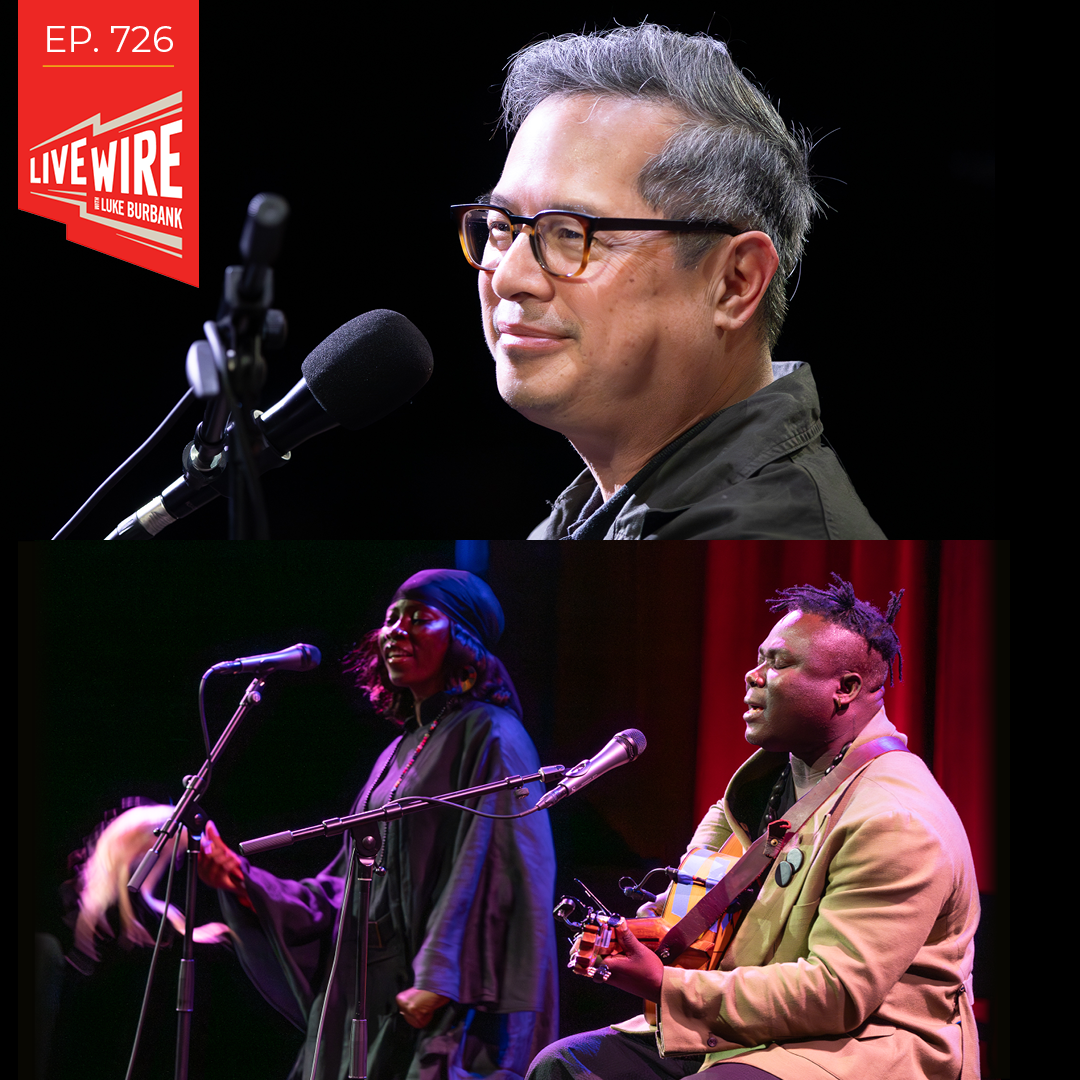
Writer and cultural critic Jeff Chang breaks down this latest book Water Mirror Echo: Bruce Lee and the Making of Asian America, which explores the life and legacy of the martial arts icon—from his days as a pesky college kid in Seattle to teetering on the brink of Hollywood stardom; plus, Ghanaian singer and guitarist Okaidja Afroso explains how he uses his native language of Gã to create a new musical sensibility, before performing his song "Nū Ké Là" (Water and Fire) from his Ancient Africa Wisdom Trilogy.
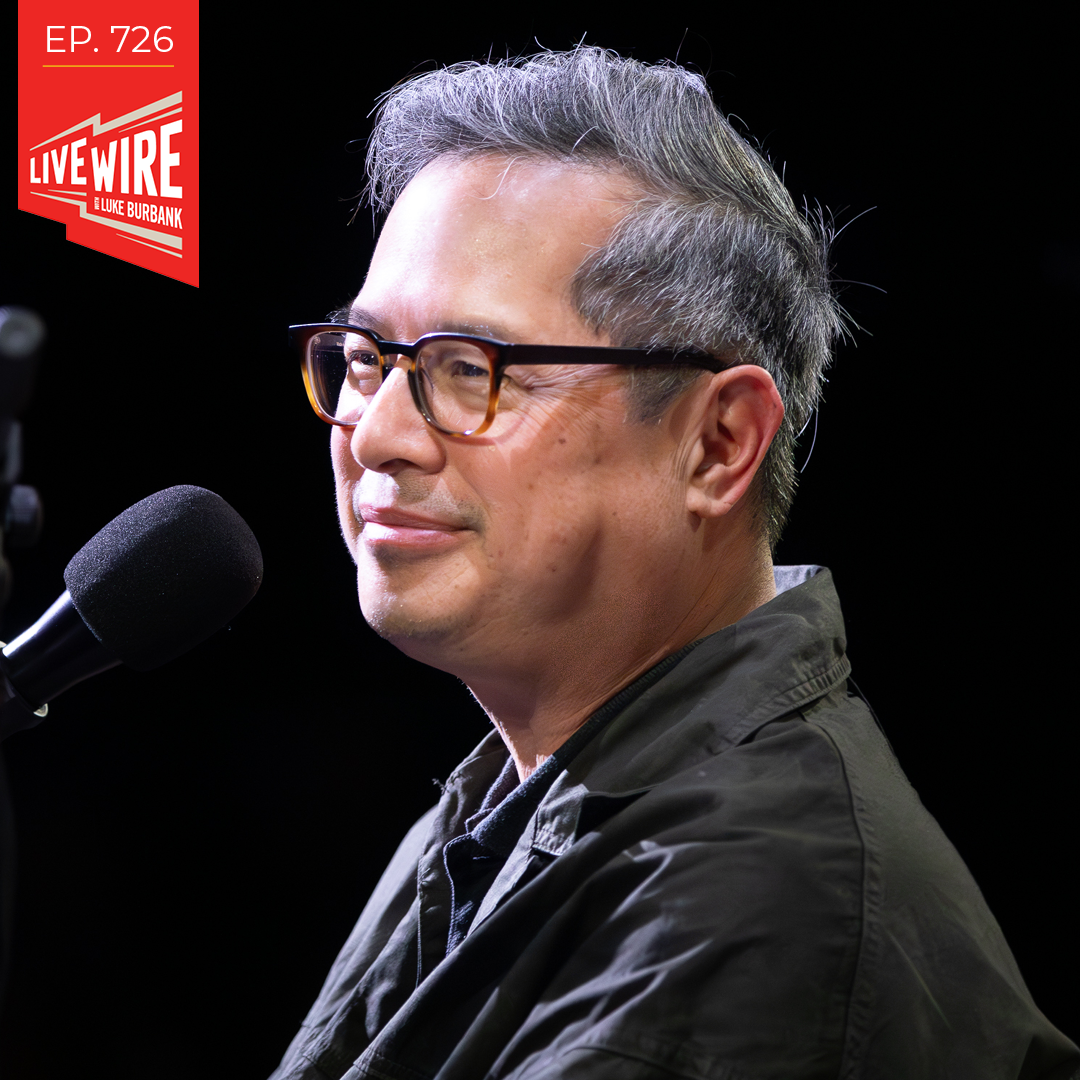
Jeff Chang
Writer, Host, and Cultural Organizer
Jeff Chang’s first book, Can’t Stop Won’t Stop: A History of the Hip-Hop Generation, was named one of the best American nonfiction books of the last quarter century. He has been a USA Ford Fellow in Literature and, among numerous other honors, has won the American Book Award and the Asian American Literary Award. Chang has written three other acclaimed bestsellers on American history and culture, music, and the arts. In May 2019, he and director Bao Nguyen created a four-episode digital series adaptation of his award-winning book We Gon’ Be Alright for PBS’ Indie Lens Storycast. Chang was featured in Nguyen’s ESPN Bruce Lee documentary, Be Water; the PBS series, Asian Americans; and Lisa Ling’s CNN series, This Is Life.
Website • Instagram • Bluesky • Facebook • Substack • Water Mirror Echo
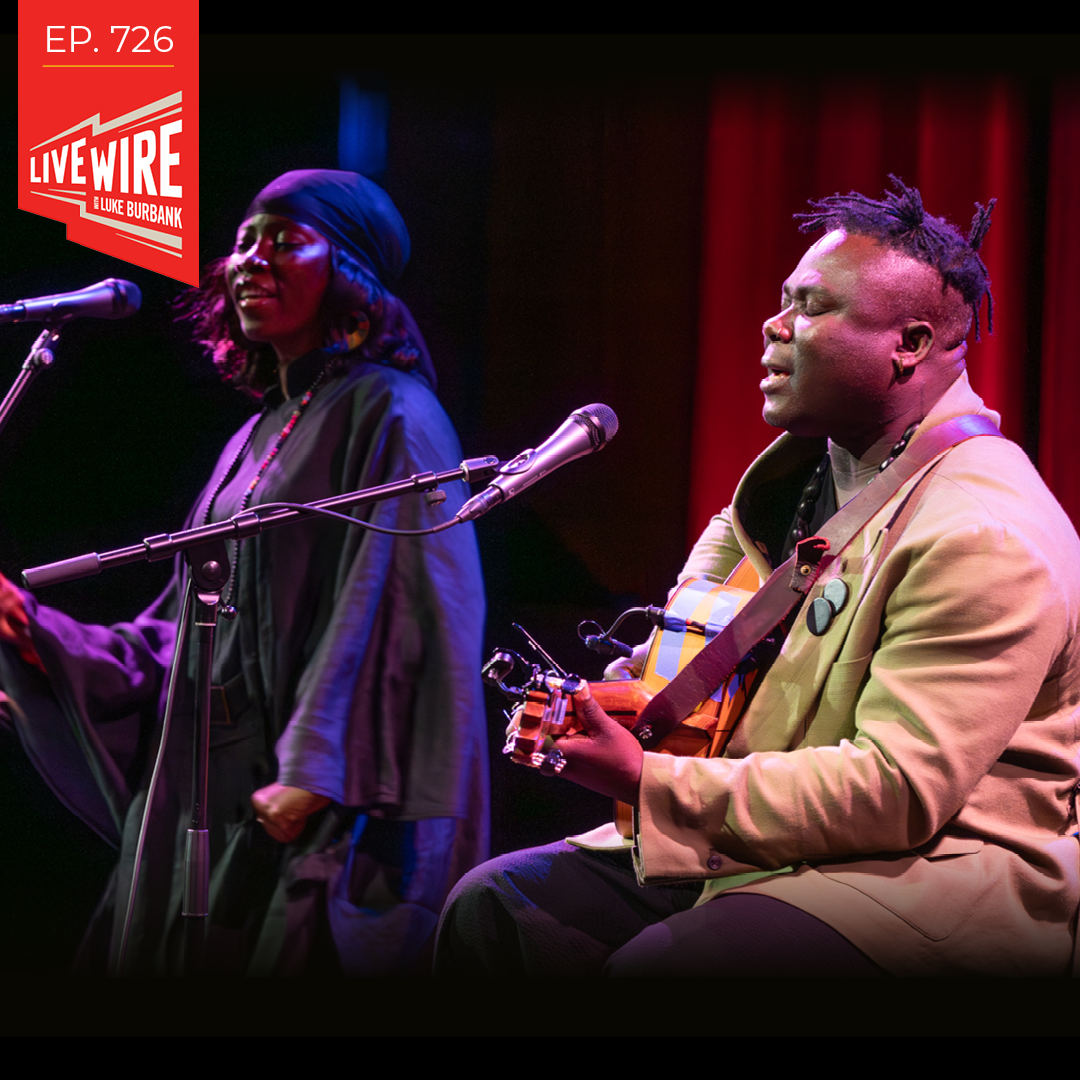
Okaidja Afroso
“Afro-Zeng” Musician
Internationally acclaimed singer, percussionist, guitarist, and dancer Okaidja Afroso creates modern African music that effortlessly flows between tradition and innovation; He “is an artist with staying power.” (Afropop Worldwide) With roots in the traditions of the Ga-Dangme people of Ghana and a spirit shaped by decades of global travel and collaboration, he invites audiences into a celebration of humanity’s shared rhythms with music that defies borders. An artist who “sings about cycles of nature and human life… his music exults in modern technology and cultural fusions.” (The New York Times) Okaidja’s work is at once deeply rooted in heritage and fearlessly contemporary. His sound—a spicy, rhythmic blend of indigenous traditions, ambient textures, and what he calls “Afro-Zeng”—channels the primal pulse of African percussion through the lens of a modern global citizen with expansive influences.
Show Notes
Best News
Elena’s story: “Scientists find yeast in frozen mummy's guts, use it to make sourdough bread”
Luke’s story: “Is there a pianist in the house? Audience member steps up to perform in La La Land in Sydney”
Jeff Chang
Jeff talks about the knowledge and research of Bruce Lee that ultimately went into his new book Water Mirror Echo: Bruce Lee and the Making of Asian America.
Throughout his life, Bruce Lee involved himself with many kinds of fighting culture, including Beimo and Wing Chun. He combined practices from fencing, karate, judo, jujitsu, and others—a concept that we now recognize as mixed martial arts.
Films mentioned: Dragon: The Bruce Lee Story, Enter the Dragon, Fist of Fury, The Kid, and The Green Hornet
Despite Bruce popularizing kung fu in America, he did not land a very fitting role in the show Kung Fu due to his appearance. He was never able to fulfill his dreams of breaking out in Hollywood before passing away at 32.
Jeff and Elena discuss Star Wars and the influence of Asian philosophy in franchises like it.
Bruce’s famous maxim, “Be water, my friend,” is from a Daoist book called the Liezi.
Okaidja Afroso
Okaidja performs his song “Nū Ké Là” (which means “Water and Fire”) from his Ancient Africa Wisdom Trilogy. It can be heard on the album Àbòr Édiń.
-
Elena Passarello: From PRX, it's... Live Wire!
This week, cultural critic Jeff Chang...
Jeff Chang: So he's blending in fencing, like, karate, judo, jujitsu, all of these things. They're like experimenting, right? And this becomes sort of what is known today as mixed martial arts.
Elena Passarello: With music from Okaidja Afroso...
Okaidja Afroso: I started dancing first. Music came way later. My dancing was actually really bad. [Luke laughs.]
I sh- I shouldn't be dancing in public. [Audience laughs.]
Elena Passarello: And our fabulous house band. I'm your announcer, Elena Passarello, and now the host of Live Wire, Luke Burbank!
Luke Burbank: We've got an incredible show in store for you this week. Can't wait, uh, for you to experience it. But of course, we gotta start things off the way we always do, with a little segment we call: The Best News We Heard All Week. [Best News Theme plays.]
Here's the, uh, basic idea behind this segment. Uh, everything is terrible.
Elena Passarello: Yes.
Luke Burbank: And, uh, every day is a new fresh hell. [Elena: Always.] But, but- [Audience laughs.] But there is still some good news occasionally occurring, sometimes deep in caves. Sometimes-
Elena Passarello: Oh, appropriate.
Luke Burbank: Oh, really?
Elena Passarello: Yes.
Luke Burbank: Oh, I guess I'll find out more. I didn't know how on the nose I was with that. [Elena laughs.]
Uh, sometimes we have to look really, really hard for it, but we have found some good news stories and want to share them with you, uh, right here at the top of the show. Elena, what is the best news that you heard all week?
Elena Passarello: Okay, my best news is that I made a new friend.
Luke Burbank: Hmm.
Elena Passarello: We are internet friends. [Audience woos.]
Luke Burbank: Okay.
Elena Passarello: And it's a very one-sided relationship because I just learned about him on the internet, and he's been dead for 5,300 years.
Luke Burbank: Okay. Okay.
Elena Passarello: Um, his name is Oetzi the Iceman. Okay. He died on the Austro- what is now the Austro-Italian border about 5,300 years ago. [Luke: Okay.] He was frozen in the Alps. What a way to go.
And he was discovered in 1991 by some hikers, and they've just been researching on this guy ever since.
Luke Burbank: Okay.
Elena Passarello: Uh, saw a picture of him. I think he's a redhead. Either that or that's just what your bones look like after 5,300 years. One of his feet goes this way, and one of his feet goes this way...
Luke Burbank: uh-huh.
Elena Passarello: But he's still pretty cute.
Um- [Audience laughs.] So they've been researching on him for the past 35 years, and some of the recent research has gone into this word that I didn't know until recently, but now I feel like I hear it all the time: microbiomes.
Luke Burbank: Oh, yes. Sure.
Elena Passarello: Like your gut- [Luke: Yeah.] microbiome. [Luke: Yeah.] And you're supposed to eat beans...? I don't know. What are you supposed to-
Luke Burbank: Things that have, like- that are fermented are good for your biome.
Elena Passarello: Oh, so, so whiskey!
Luke Burbank: Good gut health. Wh- yeah. [Audience laughs.] Whiskey counts. [Elena laughs.] Uh, like, probiotic yogurt, whatever Jamie Lee Curtis is eating. [Elena: Oh, yeah. Yeah.] This is all good for the gut biome.
Elena Passarello: So, they're looking at Oetzi the Iceman's gut biome, uh, recently.
Um, I'm thinking maybe around 2020, and I'll tell you why in just a second. [Luke laughs.] They found both ancient and modern microbes inside of him, and one of the cultures that they found inside of him is five millennia old yeast. Yeah. Uh, it's just this- it's bacteria, and it forms these large cultures, and it just sort of spreads around the remaining tissues that this iceman has.
There are four different yeasts that they've taken from him, and they just put them in a fridge in, uh, a lab in the north of Italy. Very kind of important that it's Italian because one of the things that they've done with these yeasts is figured out if they could make bread. [Audience reacts and laughs.] What's the best kind of bread in the 2020s to make?
[Audience Member: Sourdough!] Sourdough bread. They made a sourdough starter from the gut biome of my pal, Oetzi the Iceman... I'm sorry to say that their first few tries were not very good, but- And I, I, uh-
Luke Burbank: Wait, so someone was tasting it? [Elena: Uh-] When you say "not very good," somebody was-
Elena Passarello: They didn't- they didn't specify, but in my brain, they were tasting it.
Luke Burbank: I, I think so. [Audience laughs.]
Elena Passarello: Yeah. I think beer might be next, but they're also using it for replacing microbiomes in the human system... that we don't have anymore.
Luke Burbank: Oh...
Elena Passarello: So- so there is some good that's coming out of it, but also... bread.
Luke Burbank: Wow, so they are just, like, partying off of this dude's body. [Elena: Yeah.] They're making bread, they're making beer...
Elena Passarello: Yeah. [Audience laughs.] It's like a-
Luke Burbank: He's just like a human, like, you know, charcuterie board.
Elena Passarello: He's like- [Audience laughs.] Remember in the '90s where, like, they'd just pay some poor model- [Luke: Yes.] to lay with sushi on them? [Luke: Yes. Yes.] That's him. Yeah.
Luke Burbank: Yeah. Wow, that's incredible. [Elena laughs.] Uh, the best news that I heard all week actually, uh, happened in Australia.
Uh, the other night, uh, there was this production of La La Land live. Okay, you know the movie La La Land? [Elena: Yeah.] With Ryan Gosling and Emma Stone. It's this musical, uh, with all these dance numbers. It's, like, this incredible film. [Elena: Yeah.] And so, what they've been doing is taking this big orchestra around the world, and people will come out, and they'll show La La Land, and then the orchestra will play along live- [Elena: Oh, yeah.]
with the film, and play these, like, big, important parts of the- of the movie. And they were doing this in Australia, and, uh, the crowd was there, big crowd. It was a lovely night. Then they went to intermission, and then the intermission was kinda going, like, longer than people were expecting. [Elena: Uh-oh.] And eventually, the conductor, a guy named Justin Hurwitz, comes out to the stage by himself and says, "Our piano player has become ill. Can anyone in the theater sight-read piano music?" [Audience reacts. Elena laughs.] And the- so backstage, apparently, when the piano player got sick, they were like, well, does- I mean, this is a huge orchestra. Someone else-
Elena Passarello: Yeah.
Luke Burbank: This is what this Hurwitz guy said. He thought, "Somebody who plays strings also plays piano." No, apparently not. [Elena laughs.] Or they knew how hard the piano part was.
Then, they started calling pianists in Australia, and everybody was a minimum of 20 minutes away. [Elena: Oh, no.] And the crowd was getting restless. And so this- this director... By the way, Justin Hurwitz is not just traveling with the production. He's the composer of the music. He's an Oscar-winning- [Elena: Oh...] composer for La La Land.
Elena Passarello: He made the score.
Luke Burbank: He made the score and conducted the orchestra, so he, like, really knows this stuff. He said he just thought, "Well, we have 3,000 people in this theater."
Elena Passarello: Oh my God.
Luke Burbank: "Maybe one of them plays piano." And one of them did. [Audience reacts.] A 21-year-old- [Elena: Oh!] student, a guy at the University of Sydney, uh, studying politics and international studies- a guy named Sterling Nasa... [
Elena:
Elena Passarello: Okay...]
Luke Burbank: who volunteered. And I should say, Sterling did not so much volunteer as was forced into it by his date.
Elena Passarello: Oh!
Luke Burbank: Who raised his hand for him. [Audience laughs.]
Elena Passarello: That sounds like something that would happen in the movie La La Land.
Luke Burbank: I mean, seriously.
Elena Passarello: Doesn't it? Like, she's so boisterous, and he's- [Luke: Yes.] Yeah, yeah.
Luke Burbank: So Sterling goes up there, and you can tell that, like, the director is still kind of a little bit worried because this is, like, really kind of hard.
[Elena: Oh my God.]
Uh, the director said, "I kept asking, uh, can-" He said, "I wanted to make sure the person coming up wasn't just overly confident... [Elena laughs.] because that was gonna be awkward. I kept asking, 'Are you sure? Can you really sight read?'" And this guy was like, "Yeah, I- I think I can." So, uh, he gets up there. He's looking out at this big crowd of people. He's playing the music. It's sort of relatively simple at first. He's doing okay. He's keeping up with it. But on the music is this big solo that he has to do, which is supposed to kind of, like, sync up with Ryan Gosling's character, like, playing this really complicated piece. The director, Hurwitz, said, "The synth solo is really technical, and I thought even a really high-level professional sight reader would probably not be able to do it." [Elena laughs.]
"As it was coming up, I was thinking, 'Oh no, how is he gonna be able to handle this solo?'" Sterling Nasa told the Australian Broadcasting Corporation he was thinking the same thing. [Audience laughs.]
Oh, this is where the story gets really cool, is that this kid... kinda, like, he's got this fork in the road. He's, like, seeing this big chunk of music coming up- [Elena: Yeah...] that he's never tried to play before. [Elena: Oh, God.] And he's like, "There's no way I'm gonna really be able to pull this off note for note." So when he gets to the part, that part, he just starts improvving. [Elena gasps.]
And he just starts going on all these riffs and flights of fancy, and the orchestra picks up with him- [Elena gasps.] because they're a professional orchestra! So, all of a sudden, this cool new piece of art is being created that is new and original in the room, and- and it ends up being this huge hit. And I feel like it's kind of almost, like, instructive in a way, right?
[Elena: Yeah.] Like, sometimes, you're- there's something, and there's a sort of traditional or normal response to it that maybe isn't gonna work for you... [Elena: Yeah.] and you have to get kinda creative. You have to trust your gut. [Elena: Mhm.] You have to trust your gut biome. [Elena: Hey.] Anyway, this kid, Sterling Nasa, is, like, the toast of Australia right now.
[Elena: Yeah.] He's being- and got a standing ovation, by the way, after his big improv sesh.
Elena Passarello: [Laughs.] They better still be standing up.
Luke Burbank: They are. He's still, like, he's... Like, people are saying that he should become a professional musician now. [Elena: Mm.] And he's- I- you know, he's still a student in college, but he really, really did something incredible that night.
Which also, along with it just being kind of a life lesson, I think it just teaches you that people can do amazing things when they put their mind to it, and when you have enough people in a room. To that end, I'm wondering, can anyone in this room host a public radio show... [audience laughs] sight-reading scripts that you've never read before?
Because I've got some stuff I've gotta do... [Elena laughs] in about 20 minutes. So, uh... No? No, no takers? All right, fine. [Elena: No? Okay.] I'll finish the show. Anyway, that's the best news I heard all week, Sterling Nasa.
All right, you're listening to Live Wire. We are gonna welcome our first guest on out, whose first book, Can't Stop, Won't Stop: A History of the Hip Hop Generation, was named one of the best American nonfiction books of the last quarter century. Wh- which is the point at which I would've been like, "I'm done writing books." [Elena laughs.] "I did it. Everybody leave me alone." That is not what Jeff Chang did. He went on to write a bunch more amazing books, including his latest, Water Mirror Echo: Bruce Lee and the Making of Asian America, which examines Bruce Lee's legacy and very existence, which broke barriers and helped shape the idea of what it means to be Asian in America.
It was named one of the best books of the year by Publishers Weekly and is receiving rave reviews all over. We are so excited to have him here on the show. Please welcome Jeff Chang to Live Wire. [House Bands plays. Audience applauds.]
Jeff, welcome to the show.
Jeff Chang: Thanks so much for having me.
Luke Burbank: I just tore through this book. Now it is- and you're an incredible writer, you're also a- a great student of history- it is- it's an impressive tome, okay? [laughter] When it came in the mail, I said, "Boy-"
Jeff Chang: Meaning it's very big and heavy.
Luke Burbank: It's- I was like... [Jeff: Right.] "This is a lot of book." And then, I sat down, and in, like, two- two sessions, I read right through it because... wow. It's like, so- the story is so well told. There's so much stuff in there that, of course, I wouldn't have known. In fact, you, you start the book by saying, "Bruce Lee is perhaps the most famous person in the world about whom so little is known." Did you have that opinion, or were you thinking that might be the case before you actually went through the process of researching and writing this book?
Jeff Chang: Yeah, I mean, I- I think that I held... and I, you know, I was five years old on the playground trying to be Bruce Lee like every other kid.
Luke Burbank: In- in Hawaii?
Jeff Chang: In Hawaii, yeah.
Yeah. Um, and, uh, getting hurt a lot. [Jeff, Luke, and Elena laugh.] Waving around, like, toilet paper nunchakus and stuff like that. [Luke: Yeah.] Um, but yeah, I- I- I think that, you know, we saw movies like Dragon: The Bruce Lee Story or, um, you know, different types of things that kind of created a lot of mythologies around him. [Luke: Mhm.] And so, when I started researching the book, I actually had to undo a lot of those things. You know, I was meeting a lot of the people who are still surviving who were his friends and his family members, and just learning all kinds of new things about him. And at the end, it still felt like there was a lot of mysteries that I'll nev- I'll still never be able to resolve. But certainly the journey that I had taken took me very far from the Bruce Lee that I thought I knew when I started the process.
Luke Burbank: I have a million more questions for you, Jeff. [Jeff: Okay.] We gotta do a quick break here 'cause we're making a radio show. [Jeff: Sure.] This is Live Wire from PRX. Uh, we're at the Alberta Rose Theatre this week. We're talking to Jeff Chang about his latest book, Water Mirror Echo: Bruce Lee and the Making of Asian America.
Quick break, and then back with more Live Wire in just a moment.
Welcome back to Live Wire from PRX Here. We are at the Alberta Rose Theatre. Luke Burbank here with Elena Passarello. We're talking to Jeff Chang about his book, Water Mirror Echo: Bruce Lee and the Making of Asian America. Uh, how- how involved was the research for this book? How long did it take to write this?
Jeff Chang: I don't... [laughs]
Luke Burbank: I bet you- [Elena laughs.] I bet you, the next thing you're gonna say is, "A long time."
Jeff Chang: Oh yeah, yeah.
Luke Burbank: No one's ever had that response and been like, "Two weeks."
Jeff Chang: Right, right, right. Very, very, very long time. I actually haven't gone back and looked at the original contract that I signed- [Luke: Oh, boy.] Uh, because, I mean, it hurts in some ways, you know? There's a lot of people that I didn't get to talk to. [Luke: Hm.] [Elena: Hm.] Actually. They passed away. [Elena: Yeah.] Um, Bruce would've been, what, 1940... Uh, Asian, bad at math. So, it's like... [Luke laughs.] He would've been, like, [audience laughs] what, 86 this year? [Luke: Yeah.] He's gonna be 86 this year. [Luke: Yeah.] And so, a lot of his peers and contemporaries, um, have passed away. [Elena: Hm.] And so, I didn't wanna think about that. But yeah, a really, really long time.
Elena Passarello: If you have these mysteries about him, and he is this kind of unknown figure, what kinds of materials teach you so that you can write the book?
Jeff Chang: Great question. Well, so, you know, I started off in hip hop journalism.
Elena Passarello: Yeah.
Jeff Chang: Uh, which was, like, early on, it was just a lot of record reviews going, like, "That record was dope." [Luke: Hm. Ha!] "That record was wack." [Luke and Elena laugh.] You know, like, just like stuff like that. But, so, what I did was I actually started with the martial arts magazines. [Elena: Mhm.] [Luke: Hm.] Uh, you know, the first draft of history and stuff.
Luke Burbank: Like Black Belt and things like that?
Jeff Chang: Yeah, exactly. [Luke: Yeah.] Black Belt, and, uh, I don't know... Karate Magazine, and, uh, Fighting Star. I don't... Stuff like that. [Luke: Yeah.] All these zines that had come out at that time, and, uh, really picked up, of course, after 1973. [Elena: Hm.] After Bruce dies, like, there's just this efflorescence, actually, of magazines that are trying to capitalize on that love for Bruce Lee, the desire to see Bruce Lee again.
All the pictures and... but they interviewed a lot of his friends, and they interviewed him. He was first a magazine star, uh, before he was a TV star, um, and, and then a movie star, of course. And, uh, yeah, so I started with that, and then eventually I started interviewing a lot of his friends. And the really interesting thing about it was at the, from the very beginning, like, his friends were not impressed with him.
Luke Burbank: Right. [Elena laughs.] This was- [Elena: That's right.] Like, something that comes out in the book is that- [Jeff: Yeah.] a young Bruce Lee, particularly in his sort of college era, was pretty annoying. [Elena: Yeah.] [Jeff and Elena laugh.] Like, you know, depending on the circumstances, he really wanted to always tell you about his martial arts skills. [Jeff: Yeah.] And it was, like, he was sort of obsessed with it.
He would go around the hub at the University of Washington, where I also went, and just kinda, like, sorta get into it with everyone. He'd be doing the... Like, the girls kinda, they sorta liked him, but they also didn't know what was going on with him. [Jeff: Yeah, yeah.] Like, this is not the, the, like... I don't know, the Bruce Lee that I've seen in, like, Enter the Dragon or whatever.
Jeff Chang: Right, or Fist of Fury where he's just, like, you know- [Luke: Yeah.] yoked and just like- [Luke: Exactly.] [Elena laughs.] ready to fight. It w- this was a Bruce Lee that was going up to people and going, "Punch me." [Elena: Hm.] [Audience laughs.] Yeah. And people are like, "Pu- pu- punch you?" [Luke and Elena laugh.] He'd be like, "Yeah, punch me. Just punch me." You know, some people would be like, "Uh, okay."
The first interviews that I did was with, uh, his first love, the woman that he wanted to marry. Um, this Japanese American woman who had been through the camps, the concentration camps. Um, a, a just fierce woman named Amy Sambo, and, uh, she was just like, "Yeah, he was really awkward."
Luke Burbank: Yeah. [Audience laughs.]
Jeff Chang: Like, you know, he was always talking about martial arts, and he'd, like, we'd just be like, "Bruce, we don't, we're not talking about that right now."
[Luke: Right.] Um, so talking to a lot of his UDub friends and that kind of thing was, like, this sort of reset, you know? Like- [Elena: Mhm.] this moment where I'm just like, "Oh, he's not like that grand hero that, you know, "I'm, like, trying to kick people when I'm six years old," and, um, it was the kind of thing where it was like, oh, he was a real... human being.
He was just like, he was just like us, but maybe a little bit more awkward.
Luke Burbank: But it was so humanizing. [Jeff: Yeah.] You know? [Jeff: Yeah.] I just found it so, it ma- it made me really, like, like him, admire him even more- [Jeff: Yeah.] because you could see the, the journey, that he didn't come out of the womb fully, like, [Jeff laughs] a badass. Uh, something that a lot of folks like myself maybe wouldn't have known, uh, until reading this book is that, so Bruce Lee is born in San Francisco in 1940- [Jeff: That's right.]
But then, almost immediately goes back to Hong Kong where he's raised, and he's like a child movie star over there. [Jeff: Right.]
Jeff Chang: Yeah, absolutely.
Luke Burbank: What was his life like in those early years?
Jeff Chang: Well, his, his father was one of the most famous comedians of the time, and this is a period where Cantonese opera, uh, is moving from the stage to the film.
Uh, after the Chinese Civil War ends, everybody is fleeing China. The movie industry in Shanghai shuts down and moves to Hong Kong. [Elena: Mhm.] Um, and so his father from the very beginning is, like, one of the central stars, and so Bruce is always going to the set, and he's playing around and stuff, and they're like, "That kid has a lot of energy."
Like- [laughter] "Could- can we maybe put him in this-" you know, "this movie," and stuff. And so, at the age of nine, he stars in a movie called The Kid, and he plays this street orphan [Elena: Mm...] who's kinda... it's- it's very hip hop. He's- he's just sorta- he's rough around the edges and stuff, and his father's gone, his uncle's raising him and stuff.
His uncle's kind of like, um, he's a nerd, and he's sort of, uh, like, I don't know, he's just not a real strong figure. Um, it's all about the orphan. And so, he becomes this sensation right away. And so, he's a nepo baby, right? [Luke: Right.] [Elena laughs.] And he's a child actor. [Elena laughs.] Uh, and you know, there's a lot of stuff that- [Luke: Baggage.] we know about. Yeah. [Elena: Yeah.]
Luke Burbank: So, he's a phenomenal dancer-
Jeff Chang: Yes, yes...
Luke Burbank: Uh, in Hong Kong. [Jeff: Yes. Yes, yes.] Like, in his, you know, winning these competitions and is, uh, quite the, you know, object of affection for this. Like, was he gonna try to be a professional dancer, or was it just made him more, like, uh, castable in movies?
Jeff Chang: He was sort of a teen idol.
Luke Burbank: Mm.
Jeff Chang: But you know, he was also- he was so... He had kind of this dual personality. Like... [Elena: Mm.] On the one hand, he's playing these nerds. He has very thick glasses 'cause he actually has very poor eyesight. [Elena: Mhm.] Um, and he's- but he's a great dancer. He's just amazing, magnetic on screen when he dances. And so in his teens, you know, they have him coming out with these thick glasses, sort of a cardigan vest, you know, as a nerd. And then he gets on the dance floor, and he just tears it up.
Elena Passarello: He was the Urkel of 1950s- [Jeff: Right.] Hong Kong cinema. [Audience laughs.]
Jeff Chang: But if you can imagine Urkel, like, doing the best Running Man- [Luke: Yes.] [Audience laughs.] Or the Smurf, or something like that. [Elena: Yeah.] [Luke: And the Roger Rabbit?] Right, or the Roger Rabbit, yeah. All of that stuff. [Luke: Thank you.] He was just... the Cha Cha was the dance at the time, and he could, he could just... He had notebooks of, like, 100 different Cha Cha steps that he would use. Um, but at the same time, he loves the taste of blood. He loves to fight. [Elena: Mm.] And so, he's also kind of learning this martial art called Wing Chun, and there's a whole bunch of folks who have poured into the colony from all these different schools. So they're walking around the streets going, "Uh, your teacher, he's no good. He's- your style is no good. I can beat you."
And, and the other guy is going, "Yeah, you're terrible. Let's fight tomorrow." And it's just like a kung fu movie, right? [Audience and Elena laugh.] And that was literally the culture that they made. They made this fight culture, uh, and Bruce loved it, you know? And then, of course, everybody grows up and they make kung fu movies later on.
[Elena: Mhm.] Like a decade later. But the thing is, he's on the one hand getting into trouble, like getting into all these fights as part of this Beimo fight culture, and then, he's also this teen idol. [Elena: Mm.] So something's gotta give at some point. [Luke: Yeah.] He gets into too many fights and his parents are like, "Uh-uh. We're sending you back to the US. You're gonna be 18, selective service. You gotta, you know, assert your American citizenship." Um, he was a birthright citizen, by the way. [Luke: Right.] [Elena: Mm.] Uh, and so-
Luke Burbank: Given the name Bruce by, like, the midwife or something?
Jeff Chang: Um, well, yeah, that was ... the story was- it's been told in a couple of different ways. The story that I kind of believe is that- it came up from Grace, his mother's friend- [Luke: Ah.] in Chinatown where they are. [Elena: Mm...] So anyway, yeah. So he's back on, like, a slow boat to San Francisco at the age of 18.
Elena Passarello: Mm.
Jeff Chang: Yeah.
Luke Burbank: And then ends up pretty quickly thereafter in Seattle.
Jeff Chang: Right, 'cause he's- He's about to get into fights, so his parents are like, "No, we're sending you to Seattle. Less people, less, you know..." [Elena: Mhm.] "You're Chinese, less trouble." You know.
Luke Burbank: To kind of, like, sort of apprentice under a, I'm from Seattle, this Seattle legend named Ruby Chow. [Jeff: Right...] Um, and he works at her restaurant, and it turns out she's not, like, crazy nice to him. [Jeff and Elena laugh.]
'Cause he's like, you know, she needs someone to work there- [Jeff: Yeah.] and she's trying to kinda keep him, you know, uh, sort of on the straight and narrow. Um, but something that you write about in the book that I thought was interesting was he's spending a lot of time with folks, uh, Asian American folks and people from other minority communities, and something that it sounds like, uh, a lot of the people that he's hanging out with are struck by is his way of being in the world.
[Jeff: Mm.] Um, and that is because he didn't grow up a minority.
Jeff Chang: That's right. Yeah.
Luke Burbank: What was that- And how did that help him sort of in how he operated in the United States?
Jeff Chang: I think it goes both ways, right? He, he comes in, he has the confidence of somebody who has come up in a colonial situation- But part of the majority, uh, and fighting in the streets, and the son of a very famous actor.
Um, privilege. He has a driver. He has somebody cooking for him. Um, and he comes-
Luke Burbank: That's back in Hong Kong.
Jeff Chang: In Hong Kong, right.
Luke Burbank: When he gets to the States, it's pretty hard scrabble.
Jeff Chang: When he... Right. When he comes to the States, he's cutting carrots. [Luke: Yeah, yeah.] He's peeling shrimp. He's, you know, giving tea to the white elite, 'cause that's who Ruby Chow is serving in her restaurant. So, he's actually now at the bottom. [Luke and Elena: Mhm.] Right? He's at the very, very bottom. He's starting to look at Ruby like, "Oh, she's like a- she's like a capitalist. She's making... She's exploiting all of us." [Elena: Mm.] He's, like, sounding almost Marxist in a way. [Elena: Mm.] And he's living in the Central District, which is racially segregated. It's where all the poorer folks live, all the folks of color live. And so he's meeting Black folks, Japanese folks, right? Black folks who've been beaten by police. [Luke: Mhm.] Japanese American folks who have been incarcerated. And they're all impressed with his kung fu, but also, like you said, he- they're also impressed with his, his sort of sense of self. [Elena: Mm.] Like, he carries himself. He's going down the street and the, the cops pull him over and, uh, and the, the, the cops are like, "What are you laughing at?" And Bruce is getting ready to punch him through the window. [Elena laughs.] And Taki's like, "No, you don't do that." [Luke: Yeah.] You know? "We're gonna end up not just, you know, in jail, but dead under the jail." [Elena: Yeah.] Um, he has to learn all those kinds of things, right? [Luke: Mm.] So I think that the confidence is what attracts folks to him. He becomes a teacher at the age of 19.
Luke Burbank: Yeah, he's got this kind of, like, motley crew-
Jeff Chang: Yeah...
Luke Burbank: -of guys that are all clearly very into him. [Jeff: Yeah.] And, like, that guy Taki is, like, way older than him, and-
Jeff Chang: 18 years older, yeah.
Luke Burbank: He's got these, uh, again, people that have, you know, are just looking for something to belong to and are very interested in different styles of martial arts. He's just got this little- I don't wanna say gang, 'cause that makes it sound sinister, but just, like- [Jeff: No, it was-] a crew of dudes.
Jeff Chang: Yeah, it definitely was, like, that kind of a vibe, though. [Elena: Mm.] Like, they liked to get together and fight, you know? So that's what they did. They got together every week, and they would practice, and they'd bloody each other up, and... [Elena: Mm.] And they'd all go and eat afterwards. [Elena and audience laugh.]
Luke Burbank: What... I mean, this is the part of the book that I particularly geeked out on growing up in Seattle, and, you know, all those neighborhoods are neighborhoods that I, you know, grew up in and schools that I went to and stuff.
He goes to the University of Washington, wants to study acting or drama. That never really comes together. He's- then he's opening martial arts studios and closing them, and he gets to this moment where there is the, like, biggest ever martial arts demonstration probably that's happened in the US- [Jeff: Right.] in California. [Jeff: Mhm.] And, like, he just blows everyone away. What is he doing that day that's just so, like, unique?
Jeff Chang: Well, one thing that's happening is this is, like, the first big national championship, and, uh, Ed Parker, this Kanaka Maoli, this Native Hawaiian guy, has brought together folks from all these different type of styles, and what he's trying to do is to really break Asian martial arts big. And so his idea is, "Let's have a competition." Uh, this is kinda like the plot of Enter the Dragon, but without the nefarious, like, uh, slaves and drugs and all that kind of stuff. Um, but basically, he brings all them together, and Bruce is like, "I don't fight." Like, "I don't fight for competition. If you're gonna fight me, I'm gonna, like, kill you."
Elena Passarello: Mm.
Jeff Chang: Right? "That's what I'm, that's the reason I'm gonna get into a fight." And so Ed's like, "Okay. All right, all right. Cool, cool, cool." [Luke and audience laugh.] "Calm down. We wanna have you do a presentation about your philosophy." Right? Like, "why you're mixing these different types of styles." Like, he's basically, his message is: you wanna be efficient. You don't wanna be sitting there in a horse stance waiting for somebody to throw a punch at you. It's not gonna work. [Elena: Mm.] Like, you wanna end the fight as soon as possible, and that's why he's been working with all these folks who know these different types of skills and styles.
Luke Burbank: Like, his big thing is, why not throw a punch that also blocks? [Jeff: Right...] So it's one move...
Jeff Chang: The intercepting fist, you know? Jeet Kune Do. [Luke: Yeah.] That's his idea.
Luke Burbank: Like, efficiency.
Jeff Chang: It's taken from fencing. So he's blending in fencing, like, karate, judo, jujitsu, all of these things. They're, like, experimenting, right? And this becomes sort of what is known today as mixed martial arts. [Elena: Mm.] But he's out there, and he's giving this demonstration, and he's pissing off half the crowd because they're in their schools waiting for their sensei or their sifu to tell them what to do next, and he's like, "Why are you waiting?" [Elena: Mhm.] [Luke: Hm.] Like, "You can do this yourself." And so, he's pissing off a lot of sifus and senseis. [Elena laughs.]
And then the other folks are like, "This is..." It's the '60s. "This is our- this is our kinda talk," right? [Luke: Right.] [Elena: Right.] Like, "Right on, brother." [Luke: Yeah.] So... he does this thing, he does the one-inch punch. [Luke: Mm.] Right? Which is just this punch where he just puts the person here and punches them, and then they go flying back-
Luke Burbank: He barely moves.
Jeff Chang: 20 feet. Yeah.
Luke Burbank: His fist is only going an inch.
Elena Passarello: It's like- [Jeff: Right.] putting your card in an ATM. [Jeff: Right.] That's the distance between... [Jeff laughs.] Yeah.
Luke Burbank: Except the ATM flies back [Jeff and Elena laugh] 10 feet after you do it.
Elena Passarello: Hits the bank, yeah.
Luke Burbank: It's almost like it-
Jeff Chang: To the other side of the bank, yeah.
Luke Burbank: It defies the laws of physics, basically- [Jeff: Yes, yes.] when people see it. And he- he- he's a big hit at this show, but then, uh, it turns out at the show is a guy who's, like, a hairdresser to the stars?
[Luke laughs.] You know?
Jeff Chang: Jay, Jay Sebring. Yes. Yes.
Luke Burbank: Who- who is like, "Oh, that guy's amazing." [Jeff: Yes.] And then that, in a roundabout way, leads to him getting cast in The Green Hornet as Kato.
Jeff Chang: Absolutely, yeah. And he was up for the part of Number One Son of Charlie Chan.
Luke Burbank: Oh, right, before that.
Jeff Chang: Right. So, I mean, these are the roles that they're affording Asian Americans at that point. [Luke: Right.] You can be the evil villain, like Fu Manchu, or you could be the model minority, Charlie Chan. [Luke: Mm.] But then you can't even be that. Like, those guys have to be played by white guys.
Elena Passarello: Yeah, Charlie Chan. Yeah.
Jeff Chang: In yellowface, right? [Elena: Yeah.] You could be the backup to Charlie Chan, or you can be the assistant to Fu Manchu. [Elena: Mm...] That's, like- that's the best that you can do as an Asian male.
Luke Burbank: Yeah.
Jeff Chang: Uh, so this is gonna be the first Asian male lead, and of course, like, they're not ready for it.
So they're like, "We'll give you the sidekick to the Green Hornet."
Luke Burbank: 'Cause Batman is, like, this breakout hit. Nobody expects, this is, like, the- [Jeff: Yeah.] you know, Adam West- [Jeff: Yeah.] campy Batman, [Elena: Mhm.] and everyone's like, "Oh, this is... We love this." [Jeff: Yeah.] So they're like, "We gotta get more of this, like, superhero stuff," so they do the Green Lantern- Green Hornet rather- [Jeff: Green Hornet, yeah.] with his sort of sidekick, Kato. Was he, um... Was Bruce Lee conflicted at all? I mean, obviously he needed the job, and- and it was good for his career, but he was- he was a person who was very self-possessed and was very aware of how he was being perceived. What was his- [Jeff: Right.] What were his thoughts about playing this? He didn't wanna be, I believe you write in the book, the "Asian Tonto."
Jeff Chang: Right, right. And I think that he eventually realized that's kind of what he was playing. [Luke and Elena: Mm.] But I think he went in, you know, eyes wide open, trying to play the game. Uh, you know, he gets an acting coach. They get the scripts. The acting coach and him sit down. They're like, "Where's your lines?" He's like, "Oh, I guess I don't have any lines."
Elena Passarello: Mm.
Jeff Chang: You know? They didn't give him any lines because nobody bothered to think about what an Oriental would say-
Elena Passarello: Right.
Jeff Chang: On, like, national TV. Um, and so, you know, he has to kinda work through it, and... and I think that he plays the game at first. Um, what happens is, is he's always saving the Green Hornet's butt. [Luke: Right.] Because the Green Hornet, he's like a backseat boss, you know? [Elena laughs.] [Luke: Yeah.] He's like... he's basically like, "Drive. Drive, Kato." [Elena laughs.] Like, "Kung fu, Kato." Like, "Save me, Kato." And, and so the kids are watching, and they're like, "Oh, we know who the real hero is."
Luke Burbank: Right. [Elena: Mhm.] Like, the Kato merch starts, like, outselling- [Elena: Mhm.] the Green Hornet because people are like, "Wait, actually Kato is way better."
Jeff Chang: Right, exactly. They love Kato. And so eventually they're like, "Okay, Bruce, what are your ideas?" And- [Elena: Mm.] that's where he's able to kinda work a little bit of Asian philosophy and Asian fighting arts into... into the Green Hornet.
Luke Burbank: And even though the Green Hornet, it- it goes one season, and then after that, Bruce Lee is now kind of looking for acting work again. He's now teaching martial arts to, like, Steve McQueen and Roman Polanski. [Elena: Yeah.] [Jeff: Right...] For, like, a lot of money. [Jeff: Yeah.] So that's good. He's, like, friends with Kareem Abdul-Jabbar. [Jeff: Yeah.] But he... Meanwhile, in Hong Kong, they've started showing the Green Hornet. They're calling it The Kato Show. [Jeff: Right. Right.] [Elena: Mhm.] [Jeff: They know.] They're like, "This guy." Yeah. "They know what's up." [Jeff: Yeah.] So he goes back to Hong Kong for, like, an anniversary of his father's passing, I believe, and all this- everyone's like, "Oh my God, Bruce Lee is here."
Jeff Chang: Yeah.
Luke Burbank: So he starts making... Or he's approached to make some films over there, and that's when his career really-
Jeff Chang: Really takes off.
Luke Burbank: Goes to another level. What's happening for him then?
Jeff Chang: Well, what it is is he's... You know, he really wants to break in the US, he wants to break in Hollywood. [Elena: Mhm.] So he goes out for a part, uh, for a TV show that's called Kung Fu.
Luke Burbank: Huh, interesting.
Jeff Chang: And of course, he's the-
Luke Burbank: You'd think you'd want, like, a kung fu master who happens to be Asian American to play that role, Jeff. [Elena laughs.]
Jeff Chang: He's, like the, the guy that's popularized kung fu. [Luke: Yeah.] Right? He's... and every Asian American actor is looking at this going, "Oh, he acts, he does kung fu, that's...
We're not even going out for this part." And they say, "We can't understand what he's saying." [Elena: Mm.] Now Bruce had- Bruce has a British accent.
Luke Burbank: Yeah.
Jeff Chang: Right? It's just that he doesn't have the right face.
Elena Passarello: Right.
Jeff Chang: Um, so, they give it to, of course, a white guy. They give it to David Carradine, who they... tape up his eyes, and they darken his skin. And David Carradine says later on, "I stooped on the set so I could be more Oriental."
Elena Passarello: Jeez.
Jeff Chang: Um, and he realizes at that point, "Oh, that's how they see me." [Elena: Mhm.] [Luke: Hm.] Like, "I see myself as a main character. Uh, Hong Kong, Golden Harvest, they're willing to give me a shot. I've gone and made this movie. It's become a record-breaking movie in Asia. Like, it's broken all of the records. It's the top of the box office. Um, but they won't give me this part in the US." And so, he decides that he's gonna try to stay in Hong Kong. But he's always got his eye on Hollywood. [Elena: Mm.]
Luke Burbank: And he's making these movies, and the, he has this tremendous run- [Jeff: Yeah.] of making these films that are making, you know, millions and millions, breaking box office records, and are really sensations all over the world. And he's finally sort of wrapped shooting on Enter the Dragon, which is gonna be really his big ... He's having this fight about it, what it's gonna be called, and- [Jeff: Yeah.] he's able to win that argument, which speaks to his, you know, the, the authority that he has. And then, uh, of course, he- he passes away totally unexpectedly, very suddenly, at the age of 32.
Jeff Chang: Yes...
Luke Burbank: And- and, um, I mean, which I would imagine is, as happens with- with people when they- when they die at a young age, they're sort of frozen in time and in the- kind of in a snapshot for us. I mean, do you think that's part of the mystique of Bruce Lee, is that we only know him at his most, at the height of his kind of Bruce Lee-ness?
Jeff Chang: Yeah, absolutely. I- you know, I think it's also a part of the story of that particular period. I mean, there's another contemporary of his from Seattle who comes up at the same time. [Luke: Mhm.] Similar type of story. Like, Jimi Hendrix has to go- [Luke: Uh-huh.] overseas to be seen- [Elena: Mm...] and become a- a star, and then comes back and dies, um, young, very early, way before his time. [Elena: Mm.] Um, and so, like, Jimi and Bruce are kind of frozen in time for that particular period. And, and I think it's especially melancholy for Asian Americans because, you know, he breaks through.
Elena Passarello: Mhm.
Jeff Chang: Uh, there is no stereotype of Asians as martial artists before Bruce Lee, right? [Luke: Uh huh.] Bruce Lee makes it, right? [Luke: Wow.] [Elena: Wow.] And so the stereotype then happens after Bruce Lee. But there's just that one breakthrough, and so that's a stereotype. We don't get- [Elena: Mm.] the range of- of representations that we wanted. [Elena: Mhm.] If Bruce had lived, like, what could he have done? Could he have starred in a movie with Sophia Loren or- [Elena: Yeah.] Elvis Presley, or, all of these types of things were there.
Elena Passarello: Do you ever do that in your brain? Like ca- [Jeff: Oh, man...] like, think about the movies that were made in the 15 years after he died and cast him in, like, you know, The Thomas Crown Affair [Jeff laughs] or something? [Jeff: Yeah, yeah, yeah.] Do you have a list of movies that you wish he would've done?
Jeff Chang: Ah! Yeah.
Elena Passarello: Like, "Damn, like, he could've been really, really good in Star Wars or- [Jeff laughs] or whatever.
Jeff Chang: Well, and actually, there's so much Asian philosophy in Star Wars.
Elena Passarello: Yeah.
Jeff Chang: Right?
Luke Burbank: Mhm.
Elena Passarello: Yeah.
Jeff Chang: Um, I mean, George Lucas was, you know, studying a lot of that, and a lot of the folks were... I- you know, and again, this is one of those things I try not to think too hard about 'cause it just hurts too much. [Luke: Mm.] [Elena: Yeah.] Like, it takes another generation to get to Brandon, his son trying to break through- [Luke: Yeah.] and this sort of efflorescence of Asian American films in the early 1990s. [Elena: Mhm.] And then Brandon gets killed.
Luke Burbank: On the set in a totally tragic freak accident with a... a weapon that's supposed to be shooting a blank, and it ends up killing him.
Jeff Chang: Yes.
Luke Burbank: I mean, just the- the tragedy of that lineage is really hard to process. There's something, uh, that you write about in the book, and you- I guess you were kind of alluding to it, Jeff, which is to think about Bruce Lee as, um, the- the sort of way he was perceived in Hong Kong, or to think about the way he's perceived maybe by white Americans is kind of- or Amer- Americans who are non-Asian is- is maybe missing the group of people he was maybe the most important to, which would be Asian Americans. [Jeff: Right.] Like, that category of folks and- and- and he was something really special to folks like yourself.
Jeff Chang: Absolutely. And I think that, you know, in sort of reverse engineering the book, you know, thinking about what he means to us as an Asian American was also a way to understand, uh, why Bruce continues to actually be so important to so many people all around the world. And it's that he represents an underdog.
Luke Burbank: Mm.
Jeff Chang: Right? And it's not because of the way he grew up in Hong Kong, and it's not because he assimilated and became just like a white person... It's because he experienced life as a racial minority, as an Asian American for 12 years in the US, and went through these things, that he undergoes this transformation to identify with folks who are downtrodden.
And I think that's this process of Asian Americanization that a lot of us kinda go through. And so that's the point of view that I kinda wanted to write the book from.
Luke Burbank: Yeah. You- the title of the book is Water Mirror Echo. Why did you choose those... those words?
Jeff Chang: Well, we all- maybe most of us know, you know, Bruce's famous maxim, you know, "Be like water, my friend." [Luke: Mhm.] Like, "Be water, my friend." It's part of this passage in the Liezi, which is a Daoist book, and I think Bruce read this probably when he was about 17 or 18, 'cause when I was looking at his papers, it kind of repeats over and over again. This is like a riddle that he's trying to solve- [Elena: Mm...] his entire life, and it's three lines. And the three lines are, "Moving, be like water. Still, be like a mirror. Respond, like an echo." [Elena: Mm.] And he lived, I think... like water. He was trying to figure out- [Luke: Yeah.] how to, like, get in, right? Uh, you got doors set up around you? We're gonna go around this, right? We're gonna- we're gonna be elusive, we're gonna be adaptable, we're gonna try to be like water to try to break in. Um, but I don't think he ever really got to... the tragedy of his life is that I don't think he ever really got to feel like what it would mean to be like a mirror, right? [Elena: Mm...] He was absolutely a mirror to aspirations and ambitions of so many folks, right? Um, Asian Americans and so many other folks. [Luke: Yeah.] And then of course, now we're here on a stage talking about him, where we aren't talking about Steve McQueen or James Coburn, who were the biggest stars of that particular time.
Luke Burbank: Yeah. Yeah.
Elena Passarello: Mm.
Luke Burbank: It's an incredible book. It's Water Mirror Echo: Bruce Lee and the Making of Asian America by Jeff Chang. Jeff, thank you so much for coming on Live Wire.
Jeff Chang: Thank you. [Audience applauds.]
Luke Burbank: Jeff Chang, recorded at the Alberta Rose Theatre. His book Water Mirror Echo: Bruce Lee and the Making of Asian America is available right now. Can't recommend it highly enough. Go pick it up. [Music rolls in.] It's Live Wire from PRX. Our musical guest this week is a singer, percussionist, guitarist, and dancer who has transformed the deep rhythmic traditions of Ghana's Gâdangbe people into something that is entirely his own. The New York Times says his music exults in modern technology and cultural fusions, which is totally what I was gonna say, but then, they beat me to it. So, just take a listen for yourself. This is Okaidja Afroso recorded live at the Patricia Reser Center for the Arts in Beaverton, Oregon [applause]. Welcome to the show.
Okaidja Afroso: Thank you.
Luke Burbank: I've been having such a- a great time this week listening to your music and,-and getting familiar with- with the form, which I wasn't familiar with before. What can you tell me about it? When did you start playing music, just in your life?
Okaidja Afroso: I started dancing first. [Luke: Okay.] Music came way later. My dancing was actually really bad. I sh- I shouldn't be dancing in public. [Audience laughs.] But I- I didn't care because, uh, it made me feel something that I don't feel otherwise, so I kept dancing. And then, after I got a teeny bit better, I, um, [laughs] I joined the National Dance Company-
Luke Burbank: Wow.
Okaidja Afroso: Uh, at, uh, University of Ghana. They thought I was not good. [Luke and audience laughs.]
But if they train me, I could be better. And so that's how my journey started. Music, uh, just, um, happened to be playing in my head all the time. And, uh, for instance, I would take the guitar, uh, or I would play guitar- lines with my mouth, uh, to people, and they couldn't play quite what I want. So I thought, "Hey, let me teach myself to play the guitar."
And so I hop on YouTube. [Luke and Okaidja laugh.] About seven years ago, and the rest has been a journey.
Luke Burbank: Did you realize that you were also creating a kind of a bit of a new genre, or you were creating this fusion?
Okaidja Afroso: You know, I've been in America for about 26 years, and so I soaked up a lot of music, uh, from American music, uh- to, uh, South America and, and also where I- I came from, Ghana. But at some point, I wanted to take that out of my head to be able to create something that I can call my own. I was looking for my own voice. [Luke: Mm.] And I think, uh, all the influences have made my music, um, what it is today.
Luke Burbank: How do you create a song? What's... Where do you usually start?
Okaidja Afroso: Usually, I think, uh, it comes with the melody on the guitar. Um, and since, uh, a lot of times, uh, those of us from the continent- I say the continent, you know, from Africa, everything is being pre-programmed for us. If you're from Africa, you should play music a certain way. [Luke: Mm.] You should sing a certain way. [Luke: Mm.] You should have your harmonies be a certain way. And I'm like, "You know, I live in 2026 and not 1901, so I- I want to also show that I'm also, um, evolving." I see beaut- beauty in architecture. I see beauty in all the things- [Luke: Mm.] that everyone sees, and I want to, uh, use this instrument to the fullest ability I can. So, always, uh, comes with a guitar and melody on the guitar, and then I bring that to the words, which the language Gã is really, really suffering. So I want to help to, uh, keep the language alive. So, I only sing in Gã. I'm biased about that, but I speak to my audience in English. Um, so the melodies come first, then I wrap the- the words to the melodies that I'm playing, and that's what makes my music a little bit, yeah, unique. [Luke: Yeah.]
Luke Burbank: This is Live Wire. We are talking to the musician, Okaidja Afroso. Uh, we gotta take a very quick break, but when we come back, Okaidja will play us a song that you do not wanna miss. Trust me on this one. So stick around right where you are. We've got more Live Wire coming your way in just a moment. [Music plays.] Welcome back to Live Wire. I'm Luke Burbank. All right, before we get to our musical performance from Okaidja Afroso, a quick preview of what we are doing next week on the program. We're talking to Sam Sanders, who you know from the Sam Sanders Show. He covers all things pop culture, including his theory that the show In Living Color, from my generation, you know that show, it was Homey D. Clown, Fire Marshal Bill, all that stuff. Sam says it's one of the most influential TV shows of all time. Uh, then we're gonna talk to the filmmaker Sandi DuBowski, American director and film producer, about his latest documentary. It's called Sabbath Queen, and it follows the life of a rabbi who uses drag performance as part of the God-optional congregation that he founded. A really interesting idea. Then, we're gonna hear some music, including some amazing banjo stylings from the folk duo The Lowest Pair. They will also share with us a story about how they once played a medical marijuana farmers market, and, um, forgot their lyrics for reasons that you can probably guess. So don't miss next week's episode of Live Wire. It's gonna be a great one. Okay, before the break, uh, we were chatting with Ghanaian musician and dancer Okaidja Afroso. Uh, let's actually take a listen to that song that we've been promoting. Uh, this performance was recorded live at the Patricia Reser Center for the Arts in Beaverton, Oregon. Check this out. [Transition music fades.] Well, let's hear a song. What song are you gonna play?
Okaidja Afroso: I'm gonna play a song from, um, second edition of the trilogy. Um, the second edition is called Àbòr Édiń, Melanin Earth Garden, and this song is called Nū Ké Là. Nū Ké Là, Water and Fire.
[Okaidja Afroso performs his song "Water and Fire."]
[Audience applauds.]
Thank you. Thank you.
Luke Burbank: That was Okaidja Afroso performing live at the Patricia Reser Center for the Arts in Beaverton, Oregon.
And that is gonna do it for this week's episode of Live Wire. A huge thanks to our guests, Jeff Chang and Okaidja Afroso.
Elena Passarello: Laura Hadden is our executive producer, and Melanie Sevcenko is our producer and editor. Eben Hoffer is our technical director, Tré Hester is our assistant editor, and Ashley Park is our marketing manager.
Luke Burbank: Our house sound is by D. Neil Blake, and our house band is Sam Pinkerton, Ayal Alves, Ethan Fox Tucker, and A. Walker Spring, who also composes our music. The show was mixed by Eben Hoffer and Tré Hester.
Elena Passarello: Additional funding provided by the James F. and Marion L. Miller Foundation. Live Wire was created by Robyn Tenenbaum and Kate Sokoloff.
Luke Burbank: This week, we'd like to thank members Shira Fadeley of Eugene, Oregon and Tim Harkins of Carson, Washington. For more information about our show or how you can listen to our podcast, head on over to LiveWireRadio.org. I'm Luke Burbank, for Elena Passarello and the whole Live Wire team, thanks for listening, and we'll see you next week!
PRX.
Staff Credits
Laura Hadden is our Executive Producer, and our Producer and Editor is Melanie Sevcenko. Eben Hoffer is our Technical Director. Tré Hester is our Assistant Editor, and our House Sound is by D. Neil Blake. Ashley Park is our Marketing Manager. Ezra Veenstra runs our front of house. Our house band is Sam Pinkerton, Ethan Fox Tucker, Ayal Alves, and A. Walker Spring, who also composes our music. This episode was mixed by Eben Hoffer and Tré Hester. Additional funding provided by the James F. and Marion L. Miller Foundation. This week, we'd like to thank members Shira Fadeley of Eugene, OR and Tim Harkins of Carson, WA.
