Episode 721
Sarah Marshall, Camille Dungy, and Kassa Overall

Podcaster Sarah Marshall (You're Wrong About) unpacks her latest series The Devil You Know, which dissects the tangled web of Satanic Panic in the 1980s and 90s... and why it still lingers today; poet Camille Dungy explores living and loving as a Black woman and mother in present day America with her latest collection America, A Love Story; and drummer Kassa Overall interprets classic 1990s hip hop as new jazz standards.
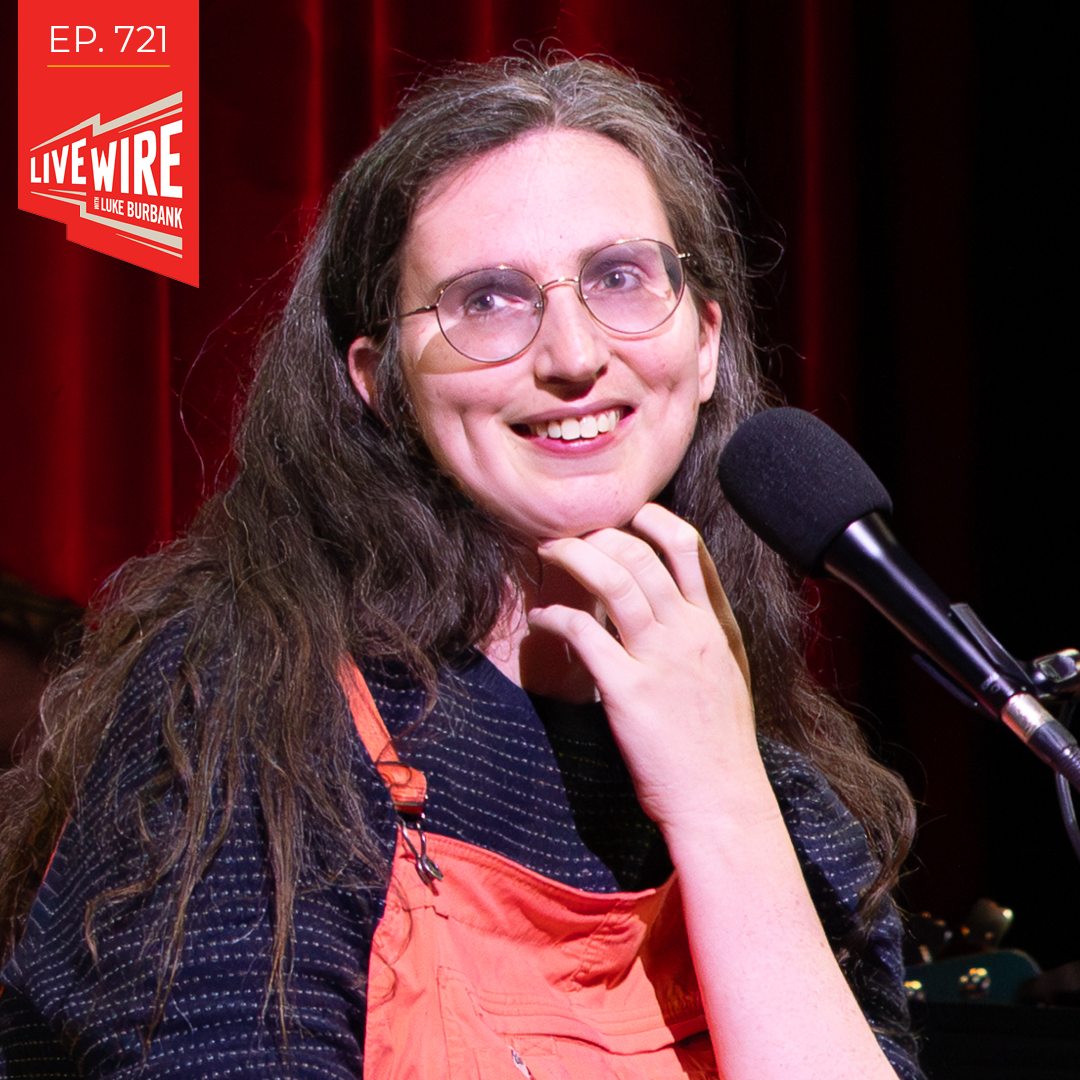
Sarah Marshall
Podcaster and Media Critic
Sarah Marshall is a writer, podcaster, and media critic focused on setting straight our collective memory—or at least getting to the bottom of why we believe and in turn define ourselves by popular narrative and myth. Why is the maligned woman a staple of our news media? Why do we believe that serial killers are brilliant? How do we keep stumbling into all these moral panics? These are some of the questions that propel Sarah forward. She is the host of the popular modern history podcast You’re Wrong About, which has been highlighted in The New Yorker, The Guardian, and Time Magazine. Her latest project, The Devil You Know, is an 8-part podcast with the CBC that explores the tangled web of the Satanic Panic and its continued impact in culture today.
Website • The Devil You Know • You’re Wrong About • Instagram
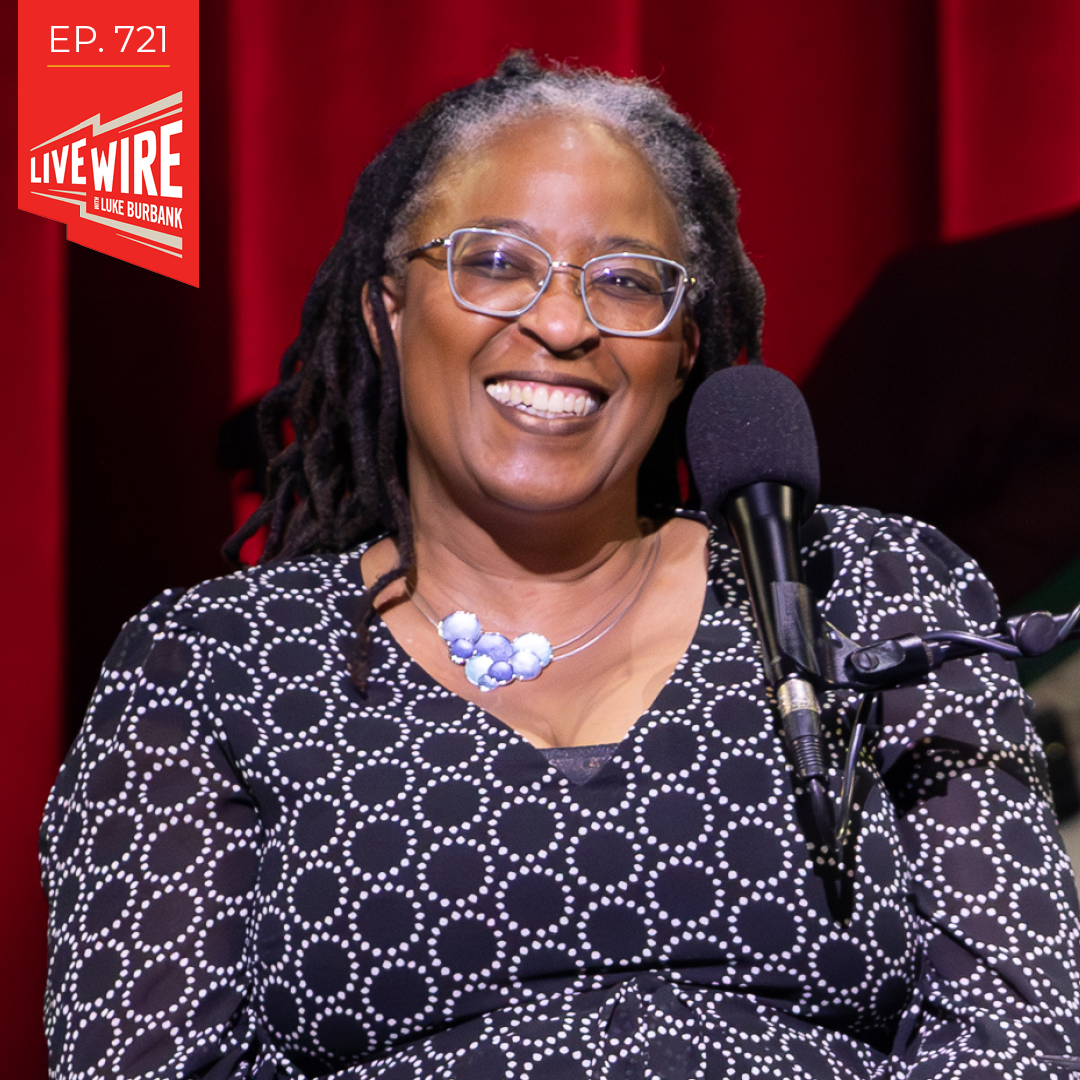
Camille Dungy
Author and Poet
Camille T. Dungy is the author of Soil: The Story of a Black Mother’s Garden. Soil was named book of the month by Hudsons Booksellers, received the 2024 Award of Excellence in Garden and Nature Writing from The Council on Botanical and Horticultural Libraries, and was on the short list for the PEN/Jean Stein Award. Dungy has also written four collections of poetry, including Trophic Cascade, winner of the Colorado Book Award, and the essay collection Guidebook to Relative Strangers: Journeys into Race, Motherhood, and History, a finalist for the National Book Critics Circle Award. She edited Black Nature: Four Centuries of African American Nature Poetry, the first anthology to bring African American environmental poetry to national attention. She also co-edited the From the Fishouse poetry anthology and served as assistant editor for Gathering Ground: Celebrating Cave Canem’s First Decade. Her work has appeared in Best American Poetry, 100 Best African American Poems, Best American Essays, The 1619 Project, All We Can Save: Truth, Courage, and Solutions for the Climate Crisis, over 40 other anthologies, plus dozens of venues including The New Yorker, Poetry, Literary Hub, The Paris Review, and Poets.org. You may know her as the host of Immaterial, a podcast from the Metropolitan Museum of Art and Magnificent Noise. A University Distinguished Professor at Colorado State University, Dungy’s honors include the Academy of American Poets Fellowship, a Guggenheim Fellowship, an American Book Award, an Honorary Doctorate from SUNY ESF, and fellowships from the NEA in both prose and poetry.
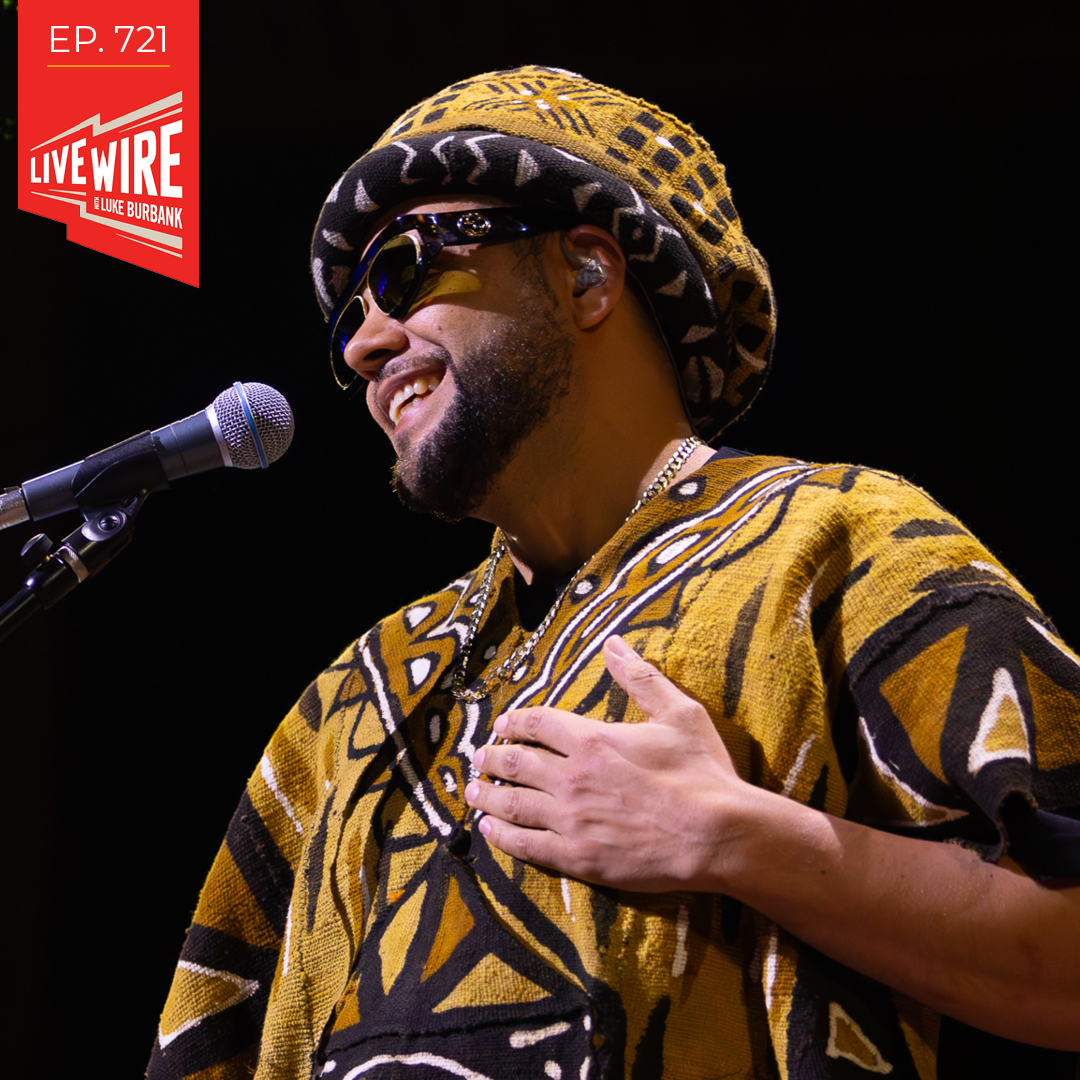
Kassa Overall
GRAMMY-Nominated Jazz Artist
Kassa Overall is a drummer, rapper, and producer redefining the boundaries of jazz. Raised in Seattle, he studied at the Oberlin Conservatory before touring with Jon Batiste, Vijay Iyer, and Gary Bartz, among others. On CREAM, his fourth solo album, he pays homage to the twin passions of his youth—hip-hop and jazz drums in the tradition of Elvin Jones—transforming beloved songs from the 90s and aughts into timeless standards that are rhythmically adventurous, witty, and often sublime. He has appeared on NPR's Tiny Desk Concert series, and his live performances have drawn praise from Gilles Peterson, Thom Yorke, and Iggy Pop. He is a 2025 recipient of the Doris Duke Foundation Prize.
Show Notes
Best News
Elena’s story: “Dad Goes Viral for Brutally Honest Perfume Reviews During Daughter's Birthday Party in Ulta”
Luke’s story: “He was teaching CPR, then went into cardiac arrest. His students saved him”
Sarah Marshall
Sarah talks about her latest podcast, The Devil You Know.
Camille Dungy
Camille reads poems from her new book, America, A Love Story.
Kassa Overall
Kassa’s trio performs an improvised mishmash of the songs “Freedom Jazz Dance,” “Put Your Hands Where My Eyes Could See” (Busta Rhymes), and “Nefertiti” (Miles Davis), with lyrics from his own track “Ready to Ball” from his 2023 album ANIMALS.
-
Portions of this transcript have been auto-generated.
Elena Passarello: From PRX, it's... [Live Wire!] This week, podcaster Sarah Marshall.
Sarah Marshall: I mean, it is that maybe very American combination of s- something seeming very silly until you're being taken to prison because of it- Yeah ... and then you're like, "Oh, no."
Elena Passarello: Writer Camille Dungy.
Camille Dungy: It's frustrating, but not particularly surprising if you live in this country with your eyes open, that we cycle through these violences, as well as these celebrations.
Elena Passarello: With music from Kassa Overall and our fabulous house band. I'm your announcer, Elena Passarello, and now, the host of Live Wire, Luke Burbank.
Luke Burbank: Thank you, Elena Passarello. Thanks to everybody for tuning in from all over America, and for these fine folks for coming out to the Alberta Rose Theatre in Portland, Oregon.
It's gonna be a phenomenal show this week for you all. Uh, we gotta start things off, though, the way we like to each and every week, with a little thing we call The Best News We Heard All Week!
Uh, this is our little reminder right at the top of the show that there is, in fact, occasionally good news happening somewhere on this planet.
Elena Passarello: Yeah.
Luke Burbank: And, um, it's, it, it's good for the soul- Yeah ... to be reminded of that. So we find those stories, we present them to you here at the top of the program. Elena, what is the best news you heard all week?
Elena Passarello: Dad news.
Luke Burbank: Okay.
Elena Passarello: Best dad news.
Luke Burbank: Nice.
Elena Passarello: Uh, there's a gentleman named Tim Richards who has an 11-year-old daughter, and a few years ago she got really into beauty. You know, the young kids now are- Oh, yeah ... really interested in skincare, and—
Luke Burbank: Sure. It's a lot of get ready with me, a lot of get un-ready with me.
Elena Passarello: Yes. I think it's the TikToks that's inspiring this.
Mm-hmm. And speaking of TikTok, Tim Richards himself has a TikTok account.
Luke Burbank: Okay…
Elena Passarello: But he had only posted on it, like, three times, and he couldn't figure out what to do with it. So his daughter decides to have her 11th birthday party at Ulta, which is this kind of, like—
Luke Burbank: It's like a giant makeup kind of store [Elena: Yeah…] at the mall.
Elena Passarello: Basically. Makeup, hair, uh, products- Mm-hmm ... uh, fragrance- Ah, okay ... which is kind of very important. All right. And, um, I think a lot of other young people were invited to this party, and they just kind of abandoned poor Tim. Uh, just Dad alone in Ulta Beauty. Well, he decided to entertain himself by going around and smelling all the perfumes and doing these TikTok reviews of them.
He decided that Sabrina Carpenter's latest fragrance is not very good.
Luke Burbank: Okay.
Elena Passarello: Uh, but then he spritzed some of a new Bridgerton-themed fragrance on himself while doing a kind of a hoity-toity accent, and he decided it was fabulous. Put it and some other reviews on the internet. Uh-huh. I don't think his daughter knew anything, knew anything about it, but the video completely blew up, and he is now TikTok Fragrance Dad.
Which is just... And he, he has no idea why it went viral. He's very proud. He thinks his daughter is maybe into it, but might be mortified. Mm-hmm. And it just makes me think of my husband, and I don't have any daughters o- other than female cats. And so whenever I wanna go shopping, he has to be my shopping buddy.
Yeah. And h- he is so much happier to go with me to the stores that have scented candles. Because he just goes over there and smells-
Luke Burbank: Uh-huh ...
Elena Passarello: candles for a really long time. Yeah. So I feel like if there's any kind of thing that maybe your male partner doesn't wanna do, you should just give them things to smell.
Luke Burbank: Yeah.
Elena Passarello: Maybe, uh, the CPA if your husband- Uh-huh ... doesn't really like to pay attention to taxes. Maybe there could be some kind of a- Mm-hmm ... a smell bath along with you filing your W-2s. Yeah. I'm just, I'm just spitballing here.
Luke Burbank: Absolutely. It's like a dog, you know. You take a dog for a walk and they're smelling everything. It's how they experience their world. That's right. You're saying that's essentially your husband.
Elena Passarello: It seems like it's entertaining, uh, middle-aged men- Yeah ... across the nation- Yeah ... based on this study of two people that I have done.
Luke Burbank: Uh, the best news, uh, that I heard all week, uh, took place recently in Appleton, Wisconsin.
There was a guy there named Carl Arps, and Carl Arps teaches a CPR class. And he was teaching this to, uh, different folks that were there taking the class, and he was at the part of the curriculum where he was teaching them about signs that someone might be going into cardiac arrest.
Elena Passarello: Okay.
Luke Burbank: What are the things that you might notice if someone is having a heart attack or going into a cardiac event?
And he was really getting into it. Uh, his hands started curling outward. Oh, yeah. His face contorted in this certain way. And I didn't know this could be part of it, he began snoring.
Elena Passarello: What?
Luke Burbank: Yeah. Which led some of the people in the class to think maybe he was joking, maybe he was just really going over the top with his demonstration.
In fact, one of them, who sensed something was off, was a firefighter who was there getting his EMT training. His name is Logan Lehrer. And, um, Elena, I just want to say, without objectifying Logan, he's really- Hubba hubba ... well-written for the part of hero firefighter.
Elena Passarello: Yeah. Yeah. Like, like a hot EMT mustache- [Luke: Yes.] and a sleeve of tattoos.
Luke Burbank: Yes. Really leaning into the stereotype. Logan sensed that something was wrong, and this was not just, uh, Carl really showing them the, uh, signs of a cardiac arrest. It was Carl having a full heart attack, like lost consciousness on the ground. All six students- ... surround him, start doing CPR and the defibrillator.
Elena Passarello: Wow. Which
Luke Burbank: that one...
Elena Passarello: I hope they got to that part of the lesson.
Luke Burbank: I- it's unclear, but it worked. They kept him li- alive, or at least, you know, his body functioning at a minimal amount until the real trained EMTs got there. The Red Cross says that less than 10% of people who suffer a cardiac event outside of a hospital setting survive.
Whoa. And this guy, Carl Arps, who by the way survived, went to the hospital, had a triple bypass- ... and was teaching the class seven days later-
Elena Passarello: No...
Luke Burbank: said that he's been doing this for years and years and years, and he said he can count on o- I mean, he's not just teaching the class, but been doing, you know, EMT stuff.
He said he can count on less than, uh, you know, on one hand the number of people who've been through something like he's been through, where their life was actually able to be saved. Wow. So he counts himself incredibly lucky that his students that he taught- Yeah ... were so good at this. And then he said something at the end that I thought was kind of like, we have a lot of teachers who listen.
You're a professor, Elena. Uh, he said, uh, Carl said, "I often am up there thinking, is anyone listening to me in this classroom?"
"Well, now I know they're actually listening and they're paying attention." Yay. And thank God they were. So Carl Arps sticking around for a few more years. That's the best news I heard all week. Woo-hoo.
This is Live Wire. Let's get our first guest on out here. Uh, she's a writer, podcaster, and media critic who reexamines the stories that have gripped a nation, ruined a few lives, and then quietly disappear from the conversation. She's the host of the popular modern history podcast You're Wrong About, which is a perennial top podcast pick on many sites.
Now her latest project is The Devil You Know. It's an eight-part podcast with the CBC that digs into how the Satanic Panic started, why it spread, and why it actually never quite went away. Please welcome Sarah Marshall back to Live Wire.
Sarah, welcome to the show.
Sarah Marshall: Thank you so much for having me.
Luke Burbank: It's great to see you again. I devoured this podcast- ... not unrelated to the fact that I grew up as an evangelical kid who was taught that there were Satanists hiding around every corner. So this was the first I was learning that that probably wasn't true.
Um, which was a lot for me to process. Yeah. Um, because it's been thrown around so much in so many different ways, um, how do you, how do you define the term Satanic panic as it relates to this series that you're doing?
Sarah Marshall: Yeah. This is an interesting one. So I mean, I started researching this topic about 15 years ago now, 12, 15, something like that.
Um, and at the time it felt like this interesting relic from the '80s that we hadn't fully reckoned with again, where, you know, in a very mainstream way, people were being warned that yes, you know, Satanists are infiltrating daycare centers and nursery schools, and this was something that was on the mainstream news, and that psychologists and, you know, people who maybe could have known better were feeling very credulous about.
And I had no idea when I started researching this chapter in history that it would make such a pronounced comeback. Um, but it feels like we're living through kind of a second wave of that, and it's, you know, we talk about it in the show. There's a lot of things that make it different, but yeah, fundamentally it was trying to get back to this time in history that I think really shaped the present in ways that we hadn't fully reckoned with yet.
Luke Burbank: Yeah. There's a much larger conversation in the show about sort of the purpose that moral panics serve- Yeah ... in a society, and it's easy... And again, I kind of have this, like, weird fond nostalgia about it because I went to- Yeah ... you know, a Christian school where they would make us watch these videotapes every year called Hells Bells that were, like, about Satanic lyrics in rock music, and it all seems so silly, but in fact, this is really something where you have, as you sort of point out in the series, you have sort of a, a, a group of folks who feel like their idea of traditional life is being challenged.
Yeah. And they've gotta find something to kinda blame for that and to focus on because they just want things to stay sort of how they've always been, and this is now where that energy gets, gets sort of pointed towards. Can you talk about that?
Sarah Marshall: Yeah. I mean, it is that maybe very American combination of s- something seeming very silly until you're being taken to prison because of it, and then- [Luke: Yeah.] you're like, "Oh, no." [Elena: Yeah.] If we were gonna destroy lives, I didn't think we'd do so in such a silly way. Um, but- Looking in the face of that original sort of 1980s Satanic panic, you can see middle America being vulnerable to being sold a story about Satanism where actually, you know, in this way that you can sort of label as family values but that can get into some insidious ideas just like we're seeing now.
It's really getting rebranded as the fault of all of these single moms, all these gay people, all of these kind of underdogs within American society who we would like to be to blame for everything that we're scared of. Fundamentally there's, I think, something about any moral panic, even one that doesn't rise to this level of absurdity, where the goal is to sort of look at all of the problems that already exist within society and then say, "No, it's actually, it's that the lesbians are witches and then they're chanting in a forest."
Luke Burbank: Right. [Audience Member: Woo!]
Sarah Marshall: "And if we find them-"
Luke Burbank: Rather than...
[Sarah laughs.]
Sarah Marshall: “And if we find them, then we can party with them."
Luke Burbank: That, uh, after party, uh- Sounds great ... in the woods. We'll see you there. Um, you're listening to Live Wire from PRX. We're talking to Sarah Marshall, the podcaster, about her new, uh, CBC series, The Devil You Know.
We have to take a very quick break, but more in a moment including the role Patrick Swayze may have played in all of this. Stick around. More Live Wire in a moment.
Welcome back to Live Wire from PRX. We're at the Alberta Rose Theatre in Portland, Oregon this week talking to Sarah Marshall, um, about, uh, her latest project, The Devil You Know, a podcast about the, uh, Satanic panic. You start the series with a story of this woman who's kind of like a visiting photography teacher- [Sarah: Mm-hmm.] at a high school, I think in Kentucky. [Sarah: Mm-hmm.] This is in the '80s.
Sarah Marshall: Hazard, Kentucky. Yeah, late '80s.
Luke Burbank: And, um, she gets run out of town because of a, a Satanism scare that may or may not have its roots in a Patrick Swayze film. Can you please unpack that?
Sarah Marshall: I, I can't believe I have to even explain the connection- Yeah
but sure. Um-
Luke Burbank: For the few who don't know the story.
Sarah Marshall: Yeah. For the, I- For the few people who c- who don't intuit why Patrick Swayze would scare people in this way. So okay. So there's this very small town, Hazard, Kentucky, it's in East Kentucky. Um, and a [00:20:00] stranger has come to town with the purpose of teaching photography skills to people in the area, including high schoolers, and at the same time, something kind of odd is going around, and there's these rumors that someone was trying to buy all these black dresses, like a bunch of them all at once, or a bunch of black fabric.
The accounts are differing locally. Um, but so it's a, it's a small town where there aren't that many new things typically, and now two unusual things happen at once. And so
Elena Passarello: So yeah, they gotta go together.
Sarah Marshall: So they gotta go together, and why would you want black dresses or black fabric? Because you're a Satanist, and because you need them for your rituals and for all of the chanting in the woods.
And why would you want to come from the big city to teach photography skills to people? You wouldn't wanna help people. That's unreasonable. You, she must be a Satanist. And it all fits together. And so, sh- yeah, she, [00:21:00] she left town truly fearing about what could happen to her if she lingered. And the reason that someone had been buying black fabric or black dresses was because a Patrick Swayze movie was being shot in the area, and they needed them for a funeral scene.
Um, and that goes to something that is, again, very present in our lives now, which is seeing people confidently assert that because they can't think of another reason for something to be happening, it's impossible for it not to be the first thing that popped into their head. Right. Especially based on- Right
what they've been told to fear. Something sinister. Yeah.
Elena Passarello: Yeah.
Luke Burbank: There is a very seminal book in this sort of genre called Michelle Remembers, which could almost be its whole own series. Yeah. But it was, uh, you know, based on, I guess, sort of allegedly true events where- Mm-hmm ... a, a woman, uh, starts to go to a psychiatrist, and then th- they uncover these, these sort of hidden or repressed memories of hers of all these really elaborate and, and, and gory sort of ceremonies that she was part of.
They fall in love in real life. Mm. The people that wrote the book. Do you, do you wonder if they fell in love? I see you kind of shaking your head somewhat- Well, I, I mean- ... doubtfully ...
Sarah Marshall: yeah, they re- they remained married, you know, for, for the rest of, um, the psychiatrist's life. He passed away, um, about 20 years ago, and Michelle was not available for comment.
Um, but it's a... Yeah, the story is just so wild 'cause it is... You know, I realize that the '70s were a, a- an exciting time to be an unethical psychiatrist. But- But even then, you really weren't supposed to do that, you know? And it's really, and the book is so compelling because there's this, this is such an interesting part of the Satanic Panic too, is sort of believe victims, believe the chil- we believe the children.
And what's interesting is that very consistently in these cases, if people start saying, "You know, actually, I'm starting to feel like maybe all of the hypnosis or the, the sort of guided [00:23:00] meditation that we did, and the ideas that you gave to me, and the suggestions that you, you gave to me about why I would be seeking therapy," because we also see this sort of wave of Satanic Panic-oriented therapy in the '80s where, you know, for me as, as a woman in, say, 1985, if I were seeking therapy, it would really be quite likely for any random therapist I went to to be like, "So you're a woman, and you have issues, and that's probably, there's a good chance that's caused by Satanic abuse."
Because why would you have issues if it wasn't for Satanists? Right. This is a very fun society
Luke Burbank: we created again. And if you couldn't remember, if you couldn't remember the particular Satanic events, that's just because you had buried them.
Sarah Marshall: Yeah. And so there's this assumption that people probably, um, have repressed memories and that that is probably more important, um, to what they're going through than the things, you know, the trauma that they can actively recall and, and want to talk about.
Certainly in the case of Michelle [00:24:00] Remembers and so many others, you can see Michelle throughout this book, which is really heartbreaking to read, saying, "I really don't wanna keep going with this therapy. My life is falling apart. This is awful. Please, can we stop?" And her therapist is like, "No." No. "We gotta find these Satanists."
Luke Burbank: Yeah. And then that sort of spawns, or it's happening maybe concurrently with this whole cottage industry of, like, Satanism experts, which are getting access to police departments and, like, training law enforcement and showing up on Oprah. Yeah, Sally Jessy. And, like-- yeah. You know what I mean? There was just this, it seems like there was this blind acceptance of people with, like, no formal training who are just now experts on this kind of abuse.
Sarah Marshall: Yeah. It's something that you can make money doing it, and it also allows you to feel like a good person because you're finding the worst villain that you could possibly be looking for. And I think, I mean, Satan is about the most cartoony villain in a way that you could come up with. It's, it's Satan. And that that can be a diversion from, you know, the problems that are more complicated to look at.
Because if, you know, you look at what's, what's affecting kids, it's, it's largely not something, uh, far off in the distance or, you know, witchcraft or something like that. It's the fact that this is a hard world and a hard country to be a kid in for reasons that I don't have to bum you out by listing, and a lot of them haven't really changed since we started freaking out about Satan back then.
And but I- it's ... Those are hard problems with hard solutions, and I think part of what I wanted to do with the show is, is show that it's understandable to wanna be able to sort of fix things by finding one scary villain and taking them out in one fell swoop. But that's why it's important that we watch horror movies and action movies, because then we can explore those urges safely in a theater, and then we can go back to work and-
do boring stuff all day.
Luke Burbank: Right.
Uh, this is Live Wire. We're talking to, uh, Sarah Marshall. Okay, uh, Sarah, as we've already alluded to, a big part of the Satanic Panic in the '80s was this idea of, um, what was called back-masking. It was this idea that, like, the theory was that, uh, there were all these songs out there where the artists had embedded messages in the song, and if you played the song backwards-
you would pick up some sort of a, a command or a directive about something having to do with Satan. [Sarah: Mm-hmm.] And as a kid who was looking for this in many songs, I gotta tell you, these messages are a major stretch. We're gonna play you the supposed satanic messaging in the song. We're gonna play the song backwards, and then you just have to try to figure out what even is the song.
Like, what is the source material? [Sarah: Oh, boy.] Um, but here we go. This is the first one. I'll give you a little hint, too. This is a, a more recent song, okay? Okay. But somebody has decided that if you play this part of this song backwards, it says, "The stars above, above, he models on the arts of Lucifer."
[An unknown song plays backwards.]
Luke Burbank: Did you... I mean, that's a slam dunk, honestly. I think I heard every, every syllable.
Sarah Marshall: That's as good as it's gonna get, yeah. Yeah.
Luke Burbank: Can you name the song that supposedly has that message- Oh my God ... back masked into it?
Sarah Marshall: Okay. Could this possibly be Ariana Grande? That's all I have.
Luke Burbank: You're in the right era. Okay.
You're close. It's actually, anybody in the audience, any guesses? [Paparazzi.] Paparazzi. Okay. Of course. We found a Satanist. Get him outta here.
All right. Oh, man. Uh, here's another one. Uh, supposedly the satanic lyrics that, uh, are embedded backwards in this song, and this is an older one now. Now we're going back- Okay ... even before the '80s by a little bit. Uh, supposedly this says, "Satan, he hears this. He had me believe him."
I mean, one of the things about this backmasking is it is absolute doggerel.
Like, the l- the... Because they're trying to reverse engineer it from the sounds- Yeah ... the lyrics are so bad. They're not what I would write if I was writing a message in honor of, uh, Satan. Yeah. But okay. "Satan, he hears this. He had me believe him."
[An unknown song plays backwards.]
Sarah Marshall: Why am I enjoying these so much? Is this Hotel California?
Luke Burbank: Hotel California!
That is absolutely... See, that's how you play the game, Sarah. [Woo!]
Sarah Marshall: And like, what a wonderfully creepy song forwards already.
Luke Burbank: I was gonna say!
Elena Passarello: Yeah! You can't fight Satan and you can check out- Yeah ... but you can never leave? It’s right there…
Luke Burbank: Yeah, yeah. They, they s- like, what is it? They, they sl- they slash him with the steely knives, but they just can't kill the beast.
Can't kill the beast. That's pretty Satany forward, honestly.
Sarah Marshall: Yeah, yeah. Yeah, that was- It, and yet I also love they're always like, "It's just, it's just about fame," and it's like, yeah- Mm ... fame is pretty creepy. Yeah.
Luke Burbank: Okay, here's, uh, the final one. Um, this one, the, the, the back mask lyric is allegedly, and I will say if anything, it's a bit on the repetitive side.
"I love Satan, I love Satan, I love Satan, I love Satan."
Elena Passarello: Ah.
[An unknown song plays backwards.]
Sarah Marshall: That's fun. Um…
Luke Burbank: I mean, I feel less safe in the world… having heard that.
Sarah Marshall: Yeah. What? God.
Luke Burbank: Don't work too hard on this because I- Yeah. I think it's unlikely you'll get it.
Sarah Marshall: Okay, so I'm feeling this is, like this is more obscure.
I'm just gonna, um, say The Wreck of the Edmund Fitzgerald.
Luke Burbank: Oh, God. Whoa. That would be-
Elena Passarello: Wouldn't that be amazing? ...
Luke Burbank: an incredible development in the story of that song.
Sarah Marshall: Has anyone checked?
Elena Passarello: No, no.
Luke Burbank: It's not actually a, like a pop music song as much as it's associated with, I guess you would say an animated product that's also celebrated on playing cards…
Pokemon theme.
Music: Gotta catch 'em all. Gotta catch 'em all. Yeah. Gotta catch 'em all. Gotta catch 'em all.
Luke Burbank: Yeah. That's forwards. I can't tell the difference. Oh. And then just for, uh, just for funsies, this is one last bit of backmasking, and it's actually very easy to tell what the person is saying because this is the band ELO, and they intentionally, Jeff Lynne intentionally wanted to do this- Oh
on one of the records. So this is played backwards. This is what it sounds like.
Music: The music is reversible. But time is not.
Luke Burbank: They, and Jeff Lynne was never seen again after that. Yeah. So anyway, Sarah Marshall, what a sport. The podcast is The Devil You Know. Do check it out. Sarah, thank you so much for coming on Live Wire.
That was Sarah Marshall, recorded live at the Alberta Rose Theatre in Portland, Oregon. Make sure to check out her podcast, The Devil You Know, wherever you get that kind of stuff.
You're tuned into Live Wire from PRX. Our next guest is a poet and author whose work is known for how it holds tension and tenderness in equal measure. She's written four collections of poetry, a book about urban gardening, and the essay collection Guidebook to Relative Strangers: Journeys into Race, Motherhood, and History, which was a finalist for the National Book Critics Circle Award.
Her latest work, America: A Love Story, is her first book of poetry in almost a decade. This is Camille Dungy, who we talked to at the Alberta Rose Theatre in Portland, Oregon.
Camille, welcome back to Live Wire.
Camille Dungy: Thank you for having me back.
Luke Burbank: It is so nice to see you again.
Camille Dungy: Yay.
Luke Burbank: I really enjoyed this book. Um, it, uh, it took you, I've heard, a- about 10 years to write or, you know, almost 10 years to write. First of all, why did it take 10 years, and is it hard to keep the thread going over the course of 10 years, you know, for a particular kind of book?
Camille Dungy: Well, I mean, it's a love story. Hmm. So we like those to be long.
Luke Burbank: Yes, ideally.
Camille Dungy: Mm-hmm. Ongoing, um, and evolving. And so the story's just kind of kept. It wasn't quite finished, and then one of the loves that I'm exploring- Hmm ... is mother-daughter. Hmm. And I, I realized when I finally was ready to release it, my daughter also moved out of our house at the same time.
So it kind of closed that chapter. Hmm. Mm-hmm. And then I let the book go at the same time, you know?
Luke Burbank: Mm-hmm. Mm-hmm. Um, did you know initially when you were starting to work on these poems that motherhood was gonna be a big theme of the book?
Camille Dungy: I don't know. I think I'm the kind of writer that I, I like to just write regularly, and to do that, I need to write what's on my mind.
Mm-hmm. And, you know, I, I, I had a person. [laughs]
Luke Burbank: Yeah.
Camille Dungy: So that was on my mind a lot.
Luke Burbank: Yeah.
Camille Dungy: And so it's, it's not surprising, but it wasn't necessarily what I set out to do. I didn't say, "Now I'm gonna write about motherhood," any more than I thought I'm gonna write about w- what it means to be Black in America, which is also on my mind and shows up a lot in the book, right?
Yeah. So it's just what, what are the things that are constantly in my view, and then how can I make those something that I can hold and see, and, I don't know, feel- Mm-hmm ... a little bit more clearly.
Luke Burbank: Could we hear a poem from the book?
Camille Dungy: You can hear a poem from the book. All right. So you're, you're on the motherhood angle, so that's, that's, that's where we're gonna go.
Okay. So, um, there's a little... There's a big word here, uh, in the title. This is one of my favorite college words. I was at, I was in a lecture, and the professor was at the board talking about, "This was the prelapsarian story," and I had to look it up, which means he wasn't the best professor, right? And like-
Luke Burbank: I had never heard that word or
Camille Dungy: experienced it- It's, it's-
until I read this book ... before the fall, before the fall of Adam and Eve and, like, before all the sins of man show up, just so you know. So now you have this word, prelapsarian. It's the title of the poem. That's why I gave you all that information. “Prelapsarian. That first night, we slept without disturbance. Ray into a father, me into a mother, Callie into Callie. All of us knocked out by the work of being born. But the second night, we realized how excruciating our situation truly was. Impossible. Ray couldn't sleep on the uncomfortable chair that reclined into an uncomfortable bed. My bed's mattress was unevenly deflated. The baby refused her plexiglass bassinet. I imagined a princess asleep in a casket. I nursed her and tried to replace her. Ray rocked her and tried to replace her. I nursed her again. Ray made a sling of his robe, nestled the bawling baby against his bare skin. She slept, it seemed, just a moment. I nursed her again. I wondered if she was taking advantage of us. "She's three days old," said the nurse. "If she's acting hungry, she's probably hungry. She's too young to lie to you yet." [Applause]
Elena Passarello: Lovely.
Luke Burbank: Camille Dungy Reading from America, A Love Story, her new collection of poems here on Live Wire. Now you were, you were writing obviously before you had your daughter, uh, and then after.
In fact, there's a poem in the book, I'm kinda paraphrasing, where I think you write, "I thought there was gonna be a lot more time for sort of..." I forget the exact word you use, but-
Camille Dungy: Yeah, I thought, like, I thought parenthood was gonna be this reflective time. Yeah. But it's a now-centered endeavor. Yes. You know?
That's right. You, like, you might be worried about tomorrow, but you're worried about making sure tomorrow happens right now.
Luke Burbank: Yeah.
Camille Dungy: You know?
Luke Burbank: Well, other than being obviously a big topic for you because, like you said, it's right in sort of the, the forefront of your mind at all times, has it, did it change also how you thought about writing or what the stakes were for you for the writing?
There's this other person in the world now.
Camille Dungy: Yeah. One of the things that changed was method. And so that poem that I just read is one of these s- uh, a bunch of poems in this book that are exactly 700 characters long. Huh. Because I discovered that the average mother loses 700 hours of sleep in the first year of their child's life, which is a lot of sleep.
It's a, in fact, February in a leap year-
Elena Passarello: Whoa...
Camille Dungy: amount of sleep. Like, it's so much sleep. Um, and so I just started writing these poems that had this weird little constraint of being exactly 700 characters long, and it's super persnickety and really hard to do, but also totally invisible. I don't tell you, except for I just did.
But I normally don't tell you- Uh-huh ... which poems it is, so it's like this invisible labor also. Hm. Hm.
Luke Burbank: Mm-hmm. Right. Uh, we're talking to Camille Dungy here on Live Wire. Uh, her latest book is America, A Love Story. Um, this book is not just about motherhood, it's about, uh, you know, connection and, and place. And, uh, I'm wondering if it was hard for you or challenging for you at times to write about connection and place and togetherness in a place like the United States that over the last 10 years has, has been the way it is, particularly towards people of color.
Camille Dungy: Yeah. So one of the things that has been an interesting response is that this, this book feels so current- Hm ... even though I've written it over a period of, of a, a decade, and some of the poems were written in another iteration of an im- you know- Yes ... like a time or whatever. And like it turns out, we're a cyclical nation, right?
Yeah. And so a lot of the things that make it difficult to demand love, achieve love, just s- settle and rest, keep coming back. And so it's frustrating- Yeah ... but not particularly surprising if you live in this country with your eyes open, that we cycle through these violences as well as these celebrations.
Luke Burbank: Well, that's, there's a poem, it's, I think the final poem of the book, Let Me, which when I read it I thought, "She must have written this right before they, they published the book." And then I was looking in the notes and it had been, uh, you know, it had been written many years previous. And, and to your point, it feels very relevant.
Could we hear that poem?
Camille Dungy: We can hear that poem. “Let me.”
“Let me tell you, America, this one last thing. I will never be finished dreaming about you. I had a lover once, if you could call him that. I drove to his apartment in a faraway town like the lost bear who wandered to our cul-de-sac that summer smoke from the burning mountain altered our air. I don't know what became of her. I drove to so many apartments in the day. America, this is really the very last thing. He'd stocked up for our weekend together on food he knew I would like: vegetarian pad thai, some black bean and sweet potato chili, coconut ice cream, a bag of caramel popcorn, loads of Malbec. He wanted to make me happy, but he drank until I would have been a fool not to be afraid. I'd been drinking plenty, too. It was too late to drive myself anywhere safe. I watched him finger a brick as if to throw it at my head. Maybe that's a metaphor. Maybe that's what happened. America, sometimes it's hard to tell the difference with you. All I could do was lock myself inside his small bedroom. I pushed a chest against the door and listened as he threw his body at the wood, listened as he tore apart the pillow I had sewn him. He'd been good to me, but this was like waiting for the walls to ignite. You've heard that, America? In a firestorm, some houses burn from the inside out. An ember caught in the eaves, wormed through the chinking, will flare in the insulation on the frame until everything in the house succumbs to the blaze. In the morning, I found him on the couch, legs too long, arms spilling to the carpet, knuckles bruised in the same pattern as a hole in the drywall, every wine bottle empty, each container of food opened, eaten, or destroyed "I didn't want you to have this," he whispered. If he could not consume my body, the food he'd given me to eat would have to do. Have you ever seen a person walk through the ruins of a burnt out home? Please believe me, I am not making light of such suffering, America. Maybe the dream I still can't get over is that so far I have made it out alive.”
Luke Burbank: Camille T. Dungy reading from America: A Love Story here on Live Wire.
At the very, very end of this book, you write, "Perhaps one day I will write a simple love story, but this is the United States, and I am who I am." Do you hold any hope that there will be a day that you can just write a straight-up simple love story?
Camille Dungy: Wow. I guess not.
Luke Burbank: I mean, that's an answer.
Camille Dungy: I wanna be able to say yes, but my response to that question suggests that maybe not.
But maybe it could be simpler. Like, we don't have to make it as complicated- ... as we do, right?
Luke Burbank: Right. Maybe the follow-up question then is what keeps you going when you, like a lot of us, are struck by this feeling that things may not always get better? Yeah. You know? Maybe it doesn't bend towards justice as we sort of have hoped.
So what keeps you going in the face of that?
Camille Dungy: It's, it's a question of scale and scope and where I look, right? So I can look at home, and I can look at those places where I really can get love and be loved and, and love others. So I can look at my husband, my child, my parents, my friends, the, like the, this core, my community.
And then, and then each time that grows, we can get a little larger and wider, and then like, as with any kind of tension, there'll be a moment where it falls apart. Yeah. But maybe we can grow that circle of love a little bit and a little bit and a little bit until it gets really bigger and better.
Luke Burbank: Yeah.
Mm-hmm. Start that by grabbing a copy of this book. It's America: A Love Story by Camille T. Dungy. Camille, thank you so much for coming on Live Wire.
Camille Dungy: Thank you so much. Appreciate you. Thanks for having me.
Luke Burbank: You're listening to Live Wire. A little preview of what we are doing on the show next week. We're gonna be talking to the bestselling author Melissa Febos about her latest book. Here was the project. Melissa decided she was going to voluntarily stay celibate for 90 days, but actually found it to be so revelatory that she continued this on for a long time and wrote this book called The Dry Season about it. Then we will chat with the journalist Evan Ratliff about his mind-bending podcast Shell Game. Here's what he did. He created an AI version of himself, complete with a voice clone that sounded just like him, and then he unleashed this AI version of himself on friends, family, a therapist, and, uh, we're gonna hear how that went. Uh, then we'll get some music from the very fun psychedelic cumbia band Tropa Magica. So we got a lot of Live Wire coming your way next week. Do not miss it. We have to take a very quick break, but stick around because when we come back, we are gonna hear some incredible music from jazz drummer Kassa Overall, who's gonna do things with both hip-hop and jazz that will make you hear and feel things based on those genres, but in a totally new way, so don't go anywhere.
More Live Wire in just a moment.
Welcome back to Live Wire. I'm Luke Burbank here with Elena Passarello. Okay, our musical guest this week is a drummer, rapper, and producer from Seattle. He's toured with Jon Batiste, among many others, and he's appeared on the NPR Tiny Desk Concert series. He's also a 2025 recipient of the Doris Duke Foundation Prize.
His latest album is CREAM. It's his fourth solo album, and on it he pays homage to the twin passions of his youth growing up in Seattle: hip hop and jazz drums in the tradition of Elvin Jones, transforming beloved hip hop songs from the '90s and aughts into timeless standards that are rhythmically adventurous, witty, and often sublime.
Uh, this is Kassa Overall, who joined us live at the Alberta Rose Theatre in Portland, Oregon. Check this out.
Kassa Overall: Hey, hey!
Luke Burbank: Hey, welcome to the show.
Kassa Overall: Thanks for having me. This is awesome.
Luke Burbank: Okay. Can we talk about this album, Cream? I have been enjoying it so much. As, like, a hip-hop head and a, a kind of a, I would say, emerging jazz fan, I mean, there's a lot about the form that I don't know, I found it so interesting the way that you were able to, you know, play your interpretation of some of these songs that I was aware of, but in a way that was, like, not a cover, but just had echoes of things that were familiar to me, like this perfect balance. How did you figure that out? And can you maybe explain for the audience what the concept of the album is?
Kassa Overall: Yeah. Um, well first off, thank you. Um, so in a nutshell, we took s- uh, rap songs from the '90s and we performed them like it was a jazz record in the '60s- Mm ... like a Blue Note record or something. And, um, the thing about that is there's actually a tradition of that.
You know, if you look at people like Miles Davis and John Coltrane, they would take the songs that were popular at the time and then use those as vehicles to improvise. And the, the thing about that is if you don't do something like that, then people might not have a way in. So when you play something that people know, they, they have a anchor point to understand how far you're going.
Luke Burbank: And is it almost a little bit of a, I don't wanna say a trapdoor, but it's like somebody sees a track on the record is Big Poppa, and maybe they're thinking about the Biggie version or whatever, and then two minutes later they're just listening to really, really good jazz.
Kassa Overall: Absolutely. So we're utilizing the harmony, we're utilizing the melody, we're utilizing the rhythm. But it's like we're taking them like ingredients, you know? And the thing about music is that, um, when you're a improviser or a spontaneous composer, as I would like to call it, there's no limit. There's no like, "Oh, I ran out of ideas." You know what I mean? There's never, there's never a lack of ideas. It's actually the opposite. You're trying to find a way to contain it. So when you take a song like Big Poppa, it gives you a framework to work within. 'Cause as a jazz musician, like we're... You know, we can play a lot of notes. [Luke: Yeah.] So-
Luke Burbank: We could be, we could be here for hours.
Kassa Overall: Yeah, yeah, yeah. So, so it really gives you a space to say, okay, just like a painter or something, you know, like I'm gonna deal with these colors or I'm gonna deal with these historical contexts- Mm-hmm ... and then build off of that.
Luke Burbank: Um, can we hear a song? [Kassa: Yeah.] What are we gonna hear?
Kassa Overall: Okay. So this one, in, in the spirit of improvisation, this one is partially Freedom Jazz Dance and Busta Rhymes', uh, Put Your Hands Where My Eyes Could See. [Luke: Uh-huh.] But- [faint cheering] Thank you. Shout out to Busta. Uh, but since we've been touring this last tour, we started putting Nefertiti, which is a Miles Davis song, over that foundation. So we kind of replaced Freedom Jazz Dance with Nefertiti, and then, um, I'm putting some of my lyrics from another song of mine, Ready To Ball.
So it's like a whole mishmash. So this is kind of a, a new thing right here, right now. [Luke: Alright…] Yeah.
Luke Burbank: It's Kassa Overall here on Live Wire.
[Kassa Overall and his trio improvise a song.]
Luke Burbank: That was Kassa Overall live at the Alberta Rose Theatre in Portland, Oregon. His incredible album CREAM is available right now.
Alright. That is going to do it for this week's episode of Live Wire. A huge thanks to our guests, Sarah Marshall, Camille Dungy, and Kassa Overall.
Elena Passarello: Laura Hadden is our executive producer, and Melanie Sevchenko is our producer and editor. Eben Hoffer is our technical director, Tré Hester is our assistant editor, Valentine Keck is our operations director, and Ashley Park is our marketing manager.
Luke Burbank: Our house sound is by D. Neil Blake, and our house band is Sam Pinkerton, Ethan Fox Tucker, Rachel Brashear, and A. Walker Spring, who also composes our music. This episode was mixed by Eben Hoffer and Tré Hester.
Elena Passarello: Additional funding provided by the James F. and Marion L. Miller Foundation. Live Wire was created by Robyn Tenenbaum and Kate Sokoloff.
Luke Burbank: For more information about our show or how you can listen to our podcast, head on over to livewireradio.org. I'm Luke Burbank. For Elena Passarello and the whole Live Wire team, thank you for listening, and we will see you next week!
PRX.
Staff Credits
Laura Hadden is our Executive Producer, and our Producer and Editor is Melanie Sevcenko. Eben Hoffer is our Technical Director, and Tré Hester is our Assistant Editor. Valentine Keck is our Operations Director, and Ashley Park is our Marketing Manager. Our house sound is by D. Neil Blake. Our house band is Sam Pinkerton, Ethan Fox Tucker, Rachel Brashear, and A. Walker Spring, who also composes our music. This episode was mixed by Eben Hoffer and Tré Hester. Additional funding provided by the James F. and Marion L. Miller Foundation. Live Wire was created by Robyn Tenenbaum and Kate Sokoloff. Special thanks this episode to Live Wire members Becky Robbins of Portland, OR and Jeffrey Parnaby of Dallas, TX.
