Episode 719
Earlonne Woods & Nigel Poor, Dylan Adler, and Margo Cilker
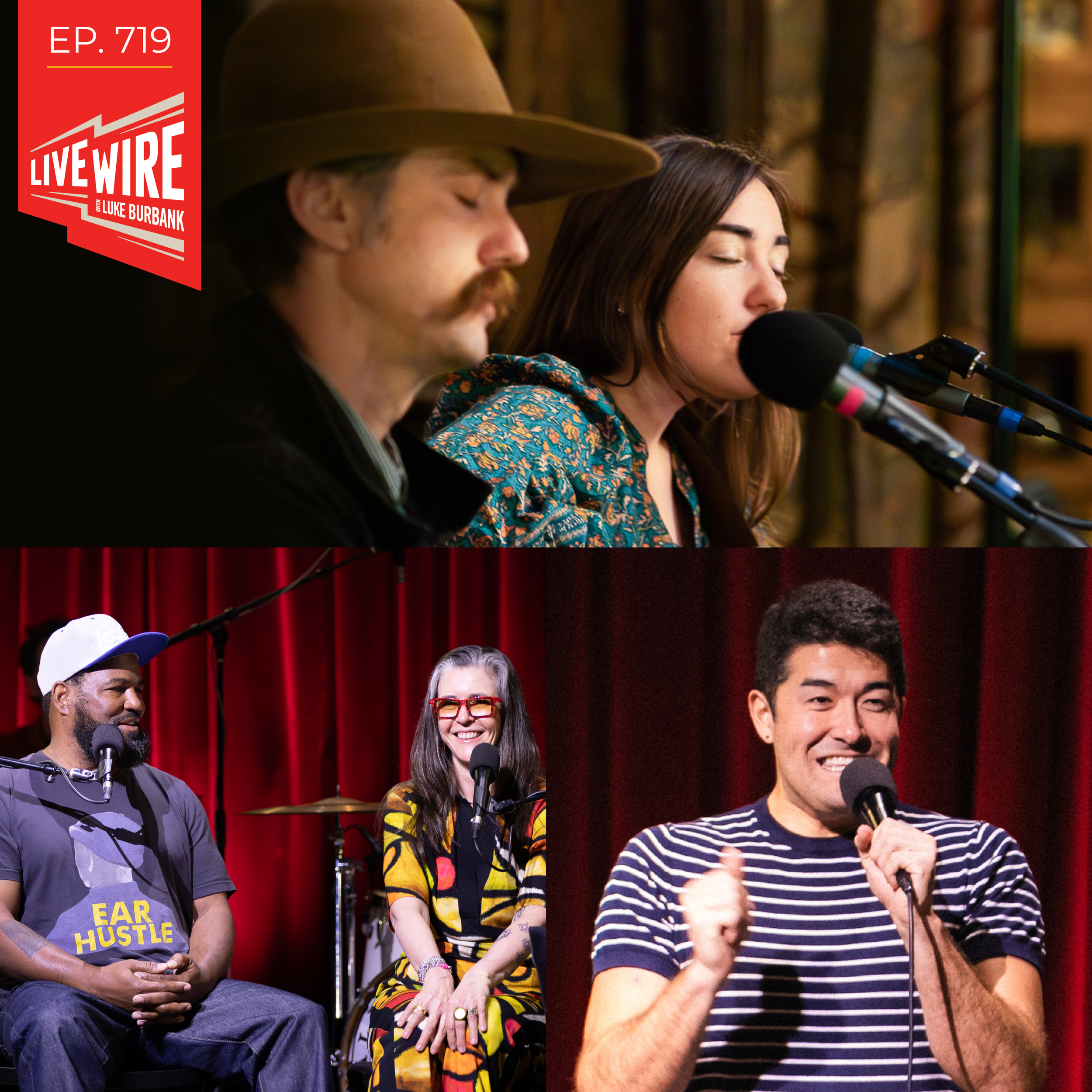
Earlonne Woods & Nigel Poor discuss how they launched their award-winning podcast Ear Hustle while Earlonne was still incarcerated—and why the stories they share inside and outside of prison are not about redemption; stand-up comedian Dylan Adler reveals what he considers a real missed opportunity on this college application essay; and singer-songwriter Margo Cilker chats about signing her first artist to her new label—her husband Forrest VanTuyl, who joined her to perform "Lowland Trail."
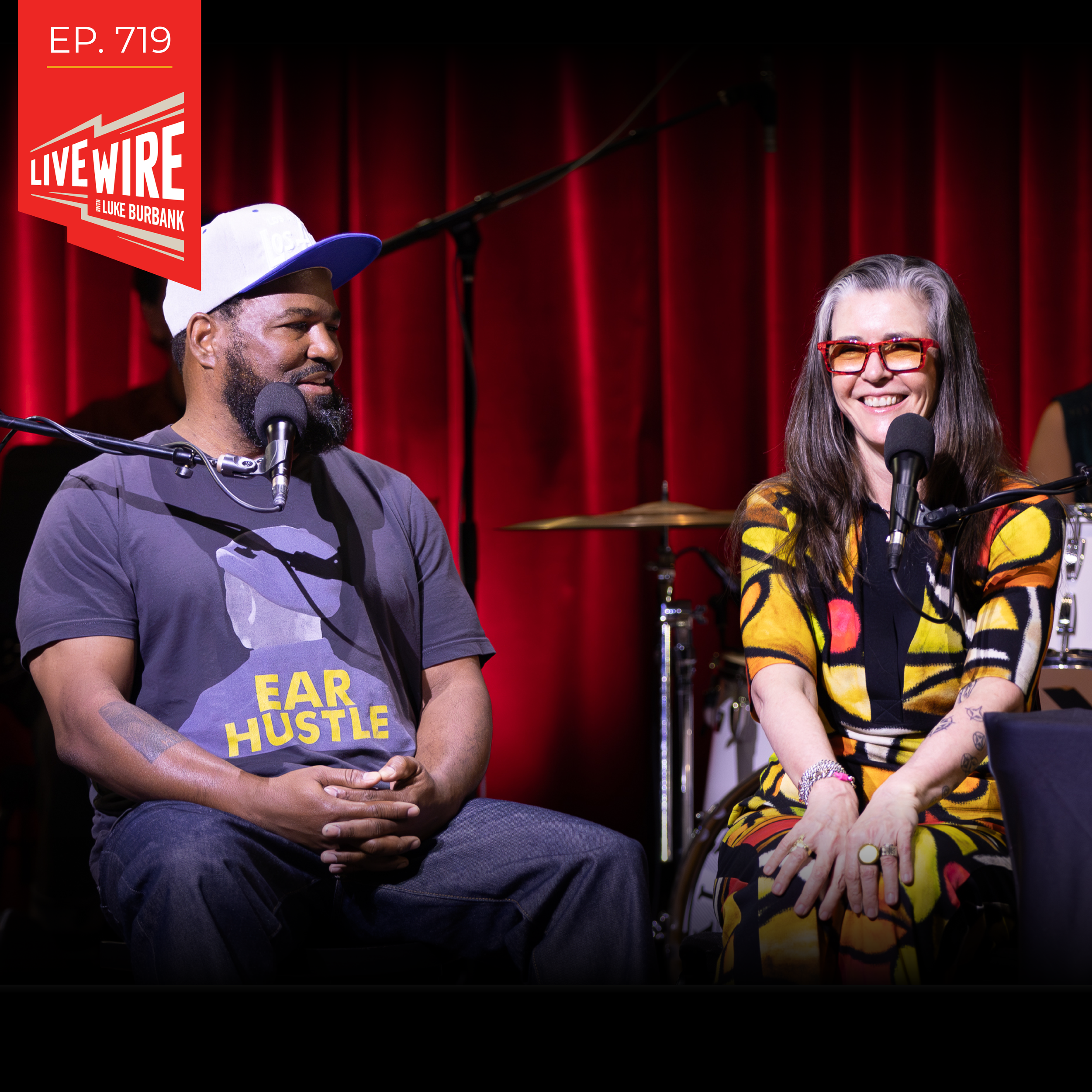
Earlonne Woods & Nigel Poor
Co-Creators of Ear Hustle
Co-founded by Bay Area artist Nigel Poor and Earlonne Woods—who was serving a 31-years-to-life sentence at the time—along with Antwan Williams, Ear Hustle launched in 2017 as the first podcast created and produced in prison, featuring stories of the daily realities of life inside California's San Quentin State Prison, shared by those living it. In 2020, Ear Hustle was named a finalist for a Pulitzer Prize in audio reporting—the first time the category was recognized—for bringing audiences "a consistently surprising and beautifully crafted series on life behind bars." Earlonne and Nigel are also the co-authors of This Is Ear Hustle: Unflinching Stories of Everyday Prison Life, a book inspired by the podcast which was selected by the San Francisco Public Library for its One City One Book citywide community reading program in 2022.
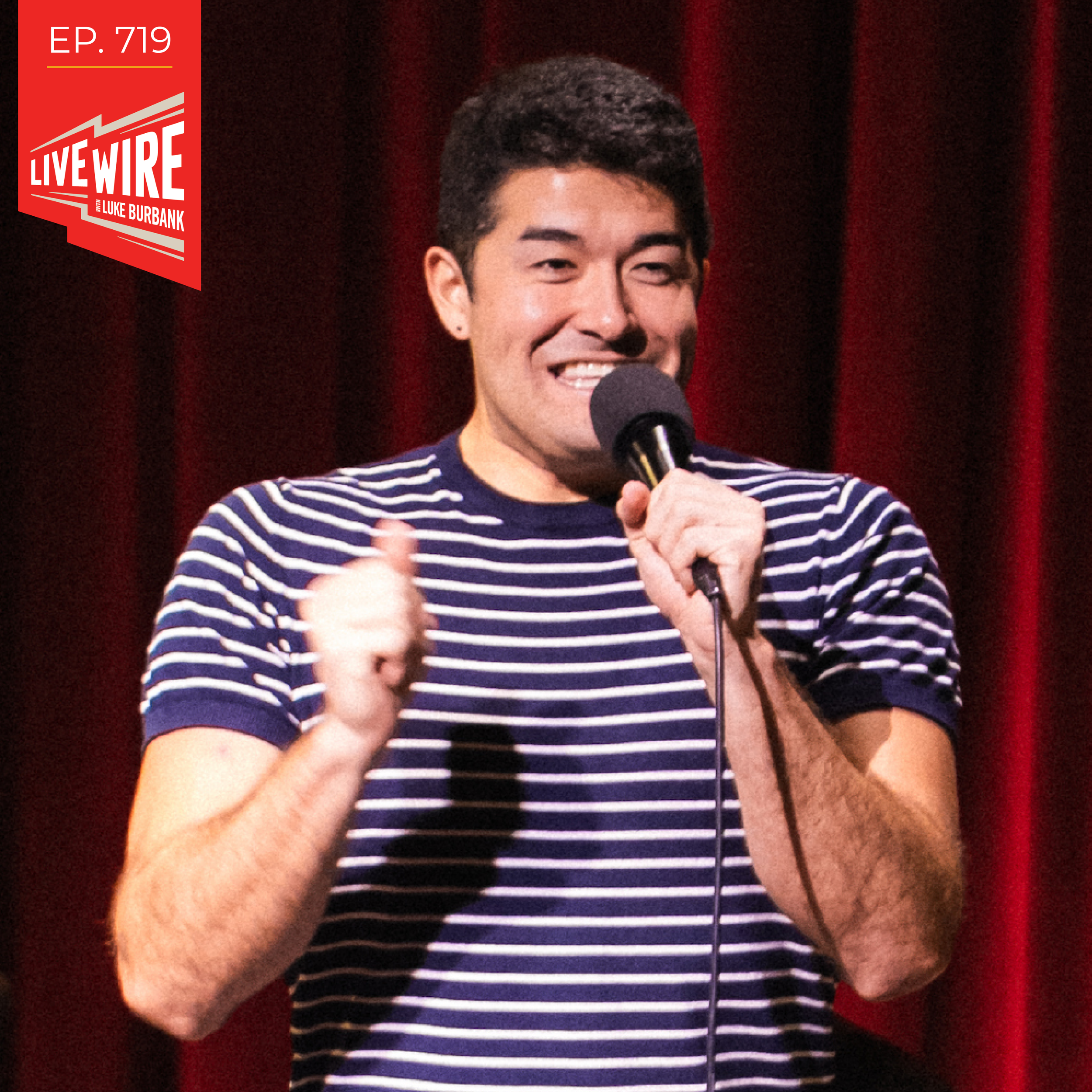
Dylan Adler
Stand-Up Comedian
Dylan Adler is a comedian, actor, writer, and musician based in NYC and LA. He was a writer on the Late Late Show with James Corden, where he also performed stand-up. He has performed stand-up on Comedy Central, Netflix is a Joke, Just for Laughs Montreal as a “New Face,” and was named a “Comic You Should and Will Know” by Vulture Magazine. He frequently opens for Atsuko Okatsuka and tours around the country with his hour “Haus of Dy-Lan.” He will be touring his show this year in the fall and will be performing and recording his hour in San Francisco!
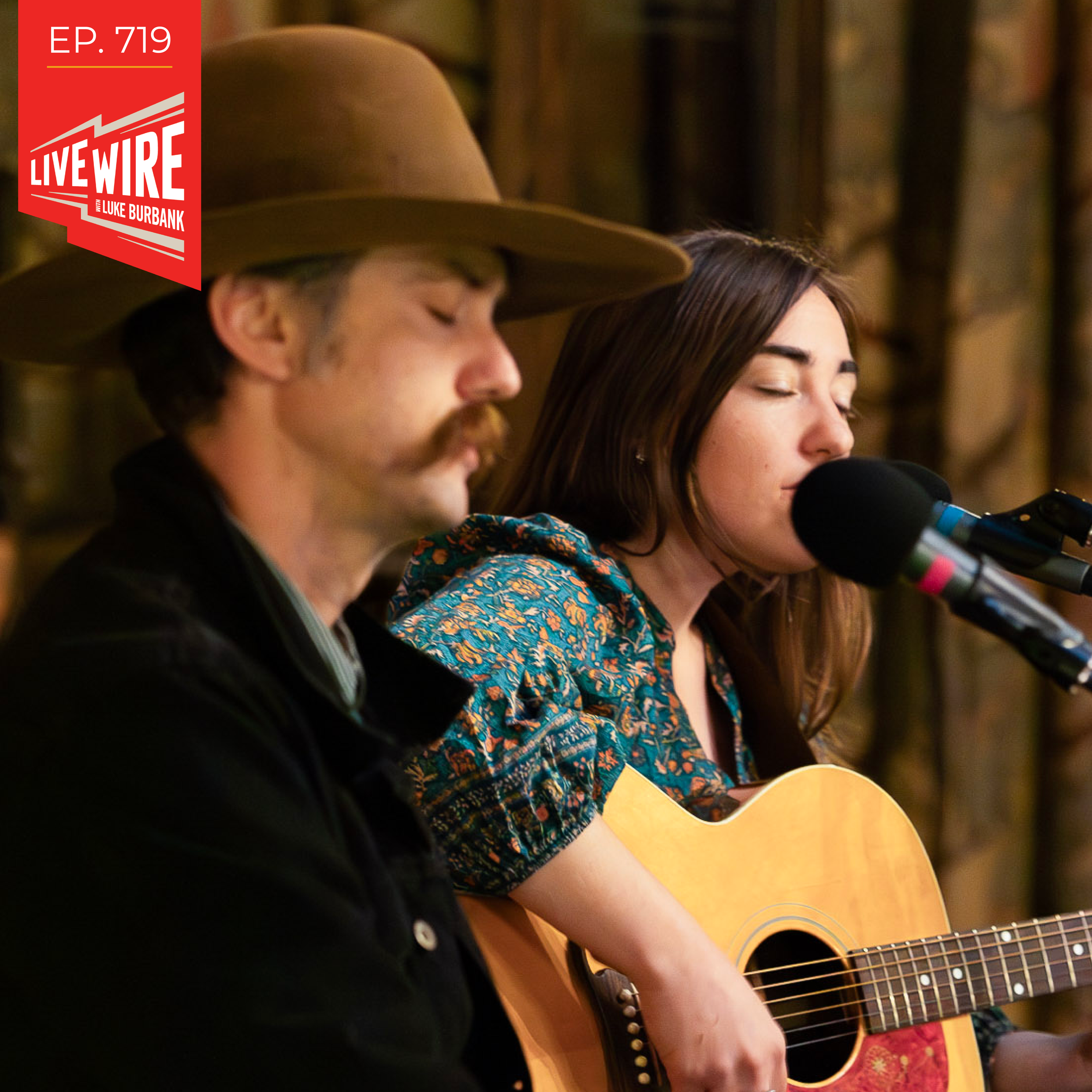
Margo Cilker & Forrest VanTuyl
Singer-Songwriter
Margo Cilker and Forrest VanTuyl alternate between two kinds of seasonal work: ranching and touring. The ranching mostly happens in the Mountain West while the touring has taken them all over the US and Europe, often playing in each other's bands. Conveniently, they're married (to each other). Collectively, they have been featured in The New York Times, The Guardian, the Oxford American, and Rolling Stone, toured with the Drive-by Truckers, and played festivals such as Calgary Folk, the Shetland Folk Festival, and the Cowboy Poetry Gathering in Elko, NV. Margo’s most recent solo record is Valley of Heart's Delight (Fluff & Gravy, 2023), and Forrest’s is Old Trails (Fossil Records, 2025).
Show Notes
Best News
Elena’s story: “Rooster Becomes The Most Expensive Ever Sold At A Local Auction For Heartwarming Reason”
Luke’s story: “Six Decades Ago, a Boy Stole Medieval Tiles From an English Monastery. He Just Returned the Illicit Souvenirs”
Earlonne Woods & Nigel Poor
Earlonne Woods and Nigel Poor co-created the first podcast ever launched and produced from prison, Ear Hustle.
Their project started in 2017 at San Quentin Rehabilitation Center specifically, which is where Earlonne was incarcerated at the time. Nigel was visiting the media lab he was working at as a photography professor.
Now, they use their show to share inspiring stories from inside and outside the prison system.
The Ear Hustle podcast was named a finalist for a Pulitzer Prize in 2020.
Check out their book This is Ear Hustle: Unflinching Stories of Everyday Prison Life.
Nigel talks about how their initial goal was just to make a show that could be played in each of California’s 33 adult correctional facilities. However, things took a turn after they won the inaugural Radiotopia Podquest contest in 2016 with just a concept and a trailer—which means they beat over 1,500 other international entries. PRX and Radiotopia then came in to bring their idea to life, and now, Ear Hustle is heard in over 1,500 prisons across the country.
The sample clip we played features Tam Nyugen, one of members of their “inside team” of incarcerated producers.
In reference to that conversation, Nigel explains and demonstrates what she calls a “hand hug,” which is a way she can show that she cares about people like Tam without potentially raising the concern of “overfamiliarity.”
In 2018, Earlonne’s 31-years-to-life sentence was commuted by California Governor Jerry Brown, specifically citing the podcast as evidence of a changed life. Earlonne then interviewed the governor for Ear Hustle. Six years later in 2024, Earlonne was officially pardoned by California Governor Gavin Newsom.
Dylan Adler
Dylan performs high-energy stand-up comedy from his “Haus of Dy-lan,” infused with singing, dancing, and dips.
He references British pop sensation Dua Lipa, the musical Cats, Mulan, and Wicked.
Margo Cilker & Forrest VanTuyl
The musical duo perform "Lowland Trail” for our Speakeasy Series crowd at the Multnomah Whiskey Library.
-
Parts of this transcript have been auto-generated.
Elena Passarello: From PRX, it's...
Audience: Live Wire!
Elena Passarello: This week, podcasters Earlonne Woods and Nigel Poor.
Nigel Poor: Life in prison is as complicated inside as it is outside. People laugh. People have families. People go through hard times. It can be depressing, but it's many things.
Elena Passarello: Stand-up comedian Dylan Adler. "
Dylan Adler: "I've actually never said your name out loud before... is it pronounced Dylon?" I was like, "Now it is!!! Dylon."
Elena Passarello: With music from Margo Cilker and our fabulous house band. I'm your announcer, Elena Passarello, and now the host of Live Wire, Luke Burbank.
Luke Burbank: Thank you so much, Elena Passarello. Thanks to everyone for tuning in from all over the country. We have a great show in store for you this week.
We gotta kick things off, though, the way we always do, with the best news we heard all week. Best news. This is our little reminder at the top of the show that there is some good news that happens occasionally on this planet, or maybe just this solar system. Have we ever had to go outside of, outside of the Earth to find some good news, Elena?
Elena Passarello: Well, I mean, I bet there's some pretty cool stuff happening in space, but luckily I think we got to stay Earthbound, at least this week.
Luke Burbank: Yeah, that's a good sign. We can find a couple of things here on planet Earth. We find those stories. We present them to you. It's the best news we heard all week. Elena, what is the best news you heard all week?
Elena Passarello: Okay, this one is gonna be hard not to burst into tears while I do it. It's a lovely story from Ranburn, Alabama. Uh, I don't know very much about the place, but I do know that they have a lively livestock auction there. And a few weeks ago, the old Claiborne County Sale Barn had their regular livestock auction, and a man walked in with a rooster.
In my brain, the rooster is under his arm.
Luke Burbank: Yes. It's the only place to carry a rooster.
Elena Passarello: But there, maybe there was some kind of rooster-carrying case involved. Um, and he said that he was raising money for a local family in the town who had a baby, an infant son named Brantley, who needed major surgery because he was diagnosed with a heart condition.
Very little baby in the hospital, and he wanted to help the family out by auctioning off his rooster to make a little money that he could give. That right there is the best news I've heard all week. But there's more. So somebody bought the rooster in the auction for, like, 70 bucks, and then that person immediately put the rooster back up for auction And then it happened again, and then it happened again.
And just all these people in this community in Alabama just kept re-auctioning and re-auctioning and re-auctioning the rooster until they had raised over $5,000 for this family.
Luke Burbank: Oh, that's incredible.
Elena Passarello: And apparently the whole... I don't know if anybody's ever said this phrase before, but the whole livestock auction was crying.
They were all in tears because they were just part... I mean, I can imagine the, the, uh, energy in the room- Yeah ... must have been so glorious and infectious. And the report I read actually says that the baby is stable and doing better. Oh, great. And the donations were so deeply felt. That love was so deeply felt.
Also, I wanna add, this rooster was very good-looking. So, uh- Yeah,
Luke Burbank: I think that probably helped.
Elena Passarello: Yeah, I mean, I know that the cause was the reason that they were donating, but this rooster, I think everybody just wanted to get their hands on this rooster for a little bit before they auctioned it off to somebody else.
Luke Burbank: Oh, that's great when you hear people coming together to take care of folks in the community. The story that I saw this week that I thought was the best news actually comes from England, where there's a guy named Simon White. He's about 68 years old now, and he's going through some of his old stuff, some of his old belongings, and he finds a toffee tin, and it's got these, like, broken tiles in it, which were, um, like a picture of, like, a dragon and kind of a beastly face.
And he's looking at these tiles and he's like, "Where did these come from?" And then he realizes, "Oh yeah, I stole these from a historical site in Shropshire-"
Elena Passarello: Oh no.
Luke Burbank: When I was nine years old," because, and he's very clear to point this out multiple times in the story, his father was encouraging him to steal the tiles.
Elena Passarello: Oh my God.
Luke Burbank: So the family, like, in the 1960s had visited, uh, this, uh, place in the West Midlands, it's in the county of Shropshire, called Wenlock Priory, if I'm saying that right.
Elena Passarello: Mm-hmm.
Luke Burbank: And basically it was a place where you had, uh, nuns and monks living. But because the dad was a terrible influence- ... told the kid, "Yeah, grab some of these tiles off of this heritage site."
Elena Passarello: It was a different time.
Luke Burbank: It was a very different time, but then here was the thing: It was such a long ago time that Simon White initially had no idea, like, where the tiles were from. They used to go to a lot of places as a family and visit a lot of things, and he couldn't remember where he had stolen the tiles from.
Enter Simon's mom, meticulous note-taker. She kept a diary of pretty much every single day of her life, so they were able to go back and find in her diary where they were that day in 1967.
Elena Passarello: Oh my gosh, that is so cool.
Luke Burbank: Right? Which was this place, the Wenlock, uh, Priory. So they were able to, like, narrow it down to where they actually were, and they- he reached out to the English Heritage organization.
They put him in touch with one of their experts on the matter, a guy named Matty Cambridge. And Matty Cambridge was able to, uh, meet him and, uh, bring him and the tiles back to the original location, which, uh, had been a 13th century church and library, which is actually in ruins now today. So it was very cool that they were able to get these tiles back because, A, they didn't have them and they wanted them, and B, because they've been in a toffee tin, they were very well preserved.
Whoa. These are the best examples of these tiles anywhere, and they're very specific to this location. This was not being done all over England. It was mostly just happening at this one place. So they actually now got some very nicely preserved tiles from this kid's thievery 60 years ago.
Elena Passarello: That's awesome.
Luke Burbank: I think the big takeaway from this story is that moms rule and dads drool. Okay? You got the dad is encouraging the theft of the tiles, and then thankfully, the mom was so meticulous with the notes, they were able to figure out where the tiles came from and then reunite them.
Elena Passarello: Yeah. Moms keep records, dads encourage larceny.
That's what we learned.
Luke Burbank: Yes, exactly. So the fact that these, uh, tiles were well-preserved and reunited, uh, with their rightful home, that's the best news that I heard all week. Best News.
All right. Let's get our first guests on over here. Now, in 2017, they did something truly unique. They launched a podcast that was actually good. And not just good, but meaningful, because it was the first podcast ever created and produced in prison, San Quentin Rehabilitation Center to be specific, in California.
Now, the show features the daily realities and life for folks inside San Quentin, and it's actually produced in large part by incarcerated people who are living there. In 2020, the show Ear Hustle was named a finalist for a Pulitzer Prize. They've also co-authored the book This Is Ear Hustle: Unflinching Stories of Everyday Prison Life.
Here is Earlonne Woods and Nigel Poor, recorded live at the Alberta Rose Theatre in Portland, Oregon. Take a listen.
Hello, Nigel and Earlonne. Welcome to Live Wire.
Nigel Poor: Thanks for having us. Yeah,
Earlonne Woods: thanks for having us.
Luke Burbank: How did, how did you two meet? Earlonne, I know you were incarcerated at the time, but Nigel, what were you doing at- Yes ... San Quentin? What, and do you guys remember the actual first time you, you, you met each other?
Earlonne Woods: Well, I always say she was s- uh, gliding across the yard. And, uh, she was a professor there, and I was, uh, incarcerated Uh, and she... I was working in a media lab. Mm-hmm. Um, and she came over and wanted to document her class, which was a class of photography, and we couldn't do it on the... Well, we could do it, but there wasn't enough space to house the video, so we decided to do audio.
Mm-hmm. And that's, that's how we- Really? That's how we ended up meeting. Yes. Yeah.
Luke Burbank: And I understand, you know, because you'd been incarcerated for a significant amount of time. Is it really true you didn't, Earlonne, know what a podcast was at that time?
Nigel Poor: Can I just tell this story? Please. 'Cause it's great. Um, sorry, Earlonne.
I, well, this is- She took it from you, Luke. Yeah. All right. Sorry. I should apologize to you. Hey, that's all right. I'm sorry. Um, so we had worked on this radio show for a while, and I wanted to change and do something that was more from the perspective of an artist, and I thought we should do a podcast. So Earlonne and I had gotten to know each other, and we got along really well.
And I said to Earlonne, "Do you wanna do a podcast?" And he said, "Yes." And then the next thing he said is, "What's a podcast?"
Luke Burbank: But Earlonne, you had also- Y- ... gotten transferred to San Quentin because of some of the programs there, right?
Earlonne Woods: Yes. Uh, well, my intention was to always go to San Quentin, but it don't work like that in prison.
Oh, really? You know what I'm saying? Nah, it don't. It don't, so.
Luke Burbank: They're kinda into being in charge?
Earlonne Woods: Well, yeah, they, you know. It was like I was in this one prison for, like, 12 years, and they wouldn't transfer me. So, um, when you spend a lot of time in a place, you realize how to get around the security stuff.
Mm-hmm. So, um... [Audience laughs.]
Nigel Poor: Nicely said.
Earlonne Woods: I, I, I recognized that they didn't have a psych program, and I watched about 10 Zoloft commercials. [Audience laughs.]
Luke Burbank: So you figured out how to present...
Earlonne Woods: Whatever that ball was doing…
Luke Burbank: Yeah.
Earlonne Woods: I went in there and just told the psych, like, "Man, I can't sleep. I'm depressed." Um, I, I just, whatever that ball was saying, I went in there and it worked.
A- And it literally worked. But I, I knew one thing not to say. Not to say, like, "I hear voices. I do..." Mm. Don't do that one. No. Every- everybody suffers from depression sometimes, so-
Luke Burbank: Sure ...
Earlonne Woods: I played that at, you know, as my situation, and I got up out of there, like, 60 days later.
Luke Burbank: So that was effective.
Earlonne Woods: That was very effective, but what I realized is that everybody in prison need to go talk to the psych.
Yeah. Because it's a different perspective from a prisoner or a correctional officer. You actually talking to someone that's, you know, trying to help you advance in life.
Luke Burbank: Mm. And do you mean that everybody who's incarcerated could use a chance to express their feelings to somebody who's a therapist, or do you mean it's just the best way to get transferred- No
to another prison?
Earlonne Woods: No. I, I mean, that, it worked out. It worked out. But I think individuals definitely need to talk to a therapist.
Luke Burbank: Yeah.
Earlonne Woods: Mm-hmm.
Luke Burbank: That's something that I wanna talk about after the break with Ear Hustle that I just find so compelling, is the way that the people that you're talking to, many of whom are going through incredibly stressful things and are incarcerated and have been treated, uh, in an inhumane way, it sometimes feels like it's the first time that person's been able to really talk about their experience and get that off their chest a little bit.
Uh, you're listening to Live Wire Radio from PRX. We are talking to Nigel Poor and Earlonne Woods from the Ear Hustle podcast. We got much more coming your way in just a moment. Stay with us.
Welcome back to Live Wire from PRX. I'm Luke Burbank, here with Elena Passarello. We are talking to Earlonne Woods and Nigel Poor, the folks behind the podcast Ear Hustle. Um, now, you, you started this podcast in 2017. Mm-hmm. And I remember just being in the sort of world of podcasting and the public radio community, and everybody was talking about this.
It was really a revelation and something that was unlike anything, uh, anybody had heard. Were you surprised at the way that it took off?
Nigel Poor: I think we'll answer this in different ways. I was very surprised, yeah. Our, because our original idea was to do a podcast to just play inside the California Department of Corrections prison system, which is, like, 34 prisons.
Earlonne Woods: About that.
Nigel Poor: Yeah. 34,
Earlonne Woods: 35.
Nigel Poor: So that was the dream, but then we heard about a podcast contest that Radiotopia was putting on, and we got permission from the administration to apply to do it. And out of 15... Well, you do the numbers. You're the numbers guy.
Earlonne Woods: Oh. Out of 1,537 entries in 53 different countries- We end up winning.
Nigel Poor: Yeah.
Earlonne Woods: Wow. And- Indeed.
Nigel Poor: But after we won, we said to each other, "Oh, mm, now we gotta figure out how to do a podcast." So you
Luke Burbank: hadn't actually... This was a pitch. You hadn't actually made a show
Nigel Poor: yet. We had made a, a, a two-minute- Trailer ... trailer. And we had made an episode, but neither of us have a background in audio.
Luke Burbank: Yeah, you're a photography professor.
Nigel Poor: I'm a professor. Yeah, so we taught each other how to make a podcast, along with bas- uh, eventually some help from, from PRX. But we had the idea. We knew what we wanted to do. On October 5th, 2015, we came up with the idea, and we wrote out exactly what it was gonna be, and it turned out to be exactly that.
We just had to learn all the- Technical ... the technical stuff.
Luke Burbank: Did this go the way you thought it was gonna go, Earlonne?
Earlonne Woods: Exactly.
Luke Burbank: Mm.
Earlonne Woods: Like, seriously. Yeah, no, it, it was... Hey, it was a trip because remember, Carrie- Mm-hmm ... after we won- Mm ... um, PRX and Radiotopia came in, and I asked him, I said, "What is a successful podcast?
Like, how many downloads do you need?" And he was like, "30,000, you'll be doing good." I'm like, "Nah, we gonna hit a million."
Earlonne Woods: He was like, "Eh, you know, yeah." First month, 1.5 million downloads.
Elena Passarello: Yeahhh!
Earlonne Woods: Wow. I mean, I was... In, in my mind, I'm only thinking, like, it is two-point-something million people that's incarcerated across the US, and if each one of those individuals got five family members- Yeah
you know- Mm ... somebody gonna listen in. Yeah. So that was my thought process.
Nigel Poor: Yeah.
Luke Burbank: I was curious about that as far as the listenership to the show, uh, who, who are people who are incarcerated. It obviously varies from institution to institution, but what is the access, like, to a podcast- Okay ... just to listen to it for an incarcerated person?
Nigel Poor: Oh. When it came out, it only was played inside the prisons in California because they have this closed circuit station. Mm-hmm. So it was in all those prisons. And then for some reason, um, the p- the prison system in the United Kingdom got interested, and it was playing in all the prisons, in 114 prisons there.
And then it was in sporadic prisons. But recently, this really incredible thing happened. There's a, a tablet that is now in all of the prisons and jails, well, like, over in 1,400, 1,500. 1,500
Earlonne Woods: jails, yeah.
Nigel Poor: And they have a, um, a service called the DOVA, which is educational system. So now Ear Hustle is heard in, uh, uh, you know, 1,500 prisons and jails across the country.
Luke Burbank: That's amazing. Which is amazing. So it's in the tablet now.
Nigel Poor: Yeah.
Earlonne Woods: Yeah, it's in the tablet.
Nigel Poor: Yeah.
Luke Burbank: And- Which for people that, for people that don't know, typically incarcerated people, there'll, there'll be this tablet that you can try to use to communicate with your family. There's some content on there, but it's heavily regulated.
Mm-hmm. But this now has Ear Hustle on it. Yeah.
Nigel Poor: So,
Earlonne Woods: and, and- Yeah ... and I believe they give them out for free.
Nigel Poor: Like, these they give out for free.
Luke Burbank: Wow.
Nigel Poor: So- Yeah, it's a really great
Earlonne Woods: program ... and we just, we just got some stats, I think, last month or the month before. It said that Ear Hustle has been listened to in jails and prison- 1 mil- 1.1 million hours
Nigel Poor: Isn't that crazy?
Hours. Wow. Yeah. Hours. I was like, "That can't be right." Wow. But no,
Earlonne Woods: yeah.
Luke Burbank: Yeah. Well, I wanna actually, for folks that haven't had a chance to hear the show, I wanted to just play a little clip here. But I wanna try to set it up if I can. Because you have producers that work on the show who are incarcerated people.
One of them is, is Tam Nguyen, right? Mm-hmm. Yep. Who's in San Quentin, and he, uh, has been there for a long time, for, for over 20 years for, um, for a crime that he committed when he was pretty young. And he, uh, was gonna be in there for an indefinite amount of time, but then there was a change in the law which created a possibility that he might be able to be paroled or, or released, uh, early.
And so there was gonna be a hearing about that. Mm-hmm. And that hearing had been delayed and delayed and delayed for, like, over a year. And then finally the day comes, and his, um... Earlonne, I know you're down, you're down in, like, Los Angeles. Mm-hmm. And, and, um, Nigel, you were, you were up in San Quentin. And his girlfriend is, is trying to sit in on the hearing and, and this incredibly stressful, important moment in his life and, and, and everyone's life really comes up, and there's, like, a Zoom problem.
They can't get his face on the video. So the judge just says, "I don't know. Come back in two months." And, and this, Nigel, is, is you talking to Tam right when, uh, he has gotten that news. Can we play that?
Nigel Poor: Okay. It's 11:30. Tam just came back. I heard a heavy sigh.
Tam: Yeah. I'm just, I'm tired. They pushed me to May 29th, and it took them three hours to do that for some reason.
It's just a little bit of a, like, a punch. I was like, damn. It- It's been over a year now.
Nigel Poor: Yeah.
Tam: I felt like, like the wind taken out of me. I go, damn, I was, like, banking on this, right? I was gonna try, you know, just, like, go to Disneyland. Yeah. Eat a steak.
Nigel Poor: Get your churro.
Tam: Yeah, get my churro. Get my girl the little- The ears
the, the Minnie Mouse ears. Yeah. Yeah, so.
Nigel Poor: Damn.
Tam: Now I just have to wait.
Nigel Poor: Yeah. It sucks. Um...
Tam: Yeah. It's kinda like- It,
Nigel Poor: it's-
Tam: I know. Yeah ...
Nigel Poor: sorry. I wish it, I mean- Yeah. Of course, everyone wishes we could change what happened.
Tam: Yeah.
Nigel Poor: Um...
Tam: However, you know what? I tried to take a guy's life. You know what? I don't have nothing coming.
I wish I had it, but, you know.
Nigel Poor: Yeah.
Tam: Yeah. And then I'm trying not to fo- Like, I try to be grateful because, you know what, I'm fortunate. I have a... I'm a... I appreciate you guys showing up. It means a lot to me. Like- Yeah ... even though, like, it's just, I'm telling you, like, I haven't had a life where people support me a lot.
Nigel Poor: I'm glad you feel that way, 'cause I was worried it would actually be more pressure to feel like, oh, there's people waiting. Now I've gotta tell them again what happened, and I'm dealing with my own feelings around it. So I'm glad you didn't feel like it was extra
Tam: pressure. No. It, it means a lot to me. Oh.
I'm telling you, like, I don't have a lot of friends.
Nigel Poor: Yeah.
Tam: My girl thought it was sweet, too.
Nigel Poor: Yeah.
Luke Burbank: That's a, a clip from the Ear Hustle podcast here on Live Wire. Um, I'm wondering, uh, listening to you, Nigel, in that moment, and Earlonne in other points in the show when I hear you talking to folks who are going through something as intense as that, how do you...
Have you kinda learned how to sorta like hold space for them and be with someone in those moments?
Nigel Poor: Yeah. Do you wanna talk about it first?
Earlonne Woods: Me personally, I try to tell people, like, "Don't have your hopes up for every court hearing. It's just a hearing, you know? It's not the decision." So, you know, each, each time an individual have a court appearance, they gonna feel that they, a decision is gonna be made that day, but that's not how courts run.
So I just try to keep individuals on that thought because individuals be dejected after a court date, and it don't go they way, and they get continuances and continuances. So it really, it really break cats down.
Nigel Poor: Yeah. We do hear a lot of difficult things. I mean, that was hard because of a disappointment.
Um, there's all kinds of stuff that we have to talk to people about, and I just try to be as present- Mm ... as possible and have open body language and open facial expression. You c- one thing that's really hard is you can't touch people. So I can't hug somebody. Um, I can't show too much emotion because you can't be over-familiar with people, so you have to figure out what that line is.
Um, and I just am genuine about how I feel. Like, I was sad. I didn't hide that from Tam. And, um, as I said, you can't touch people, so, uh, I've come up with this... Can I demonstrate this- Please ... thing I do? The hand hug. Oh. So, so this, can you see what we're doing?
Luke Burbank: Yeah, they're kind of placing- Yeah ... Nigel and Earlonne have their hands together kind of in a, like a st- a, a still shot of a high five.
Nigel Poor: Yeah, and then our thumbs are wrapped around
Luke Burbank: each other. And you're allowed, and you're allowed to do that without-
Nigel Poor: No.
Luke Burbank: Oh.
Nigel Poor: So. Oh, no, I d- well, maybe I am. But to me- ... that's what I call a hand hug. Mm. So when I d- I showed that to Tam, and I did that with Tam. Mm. And he knew that was the way I could give him a hug.
Luke Burbank: Yeah.
Nigel Poor: And so it was quiet. It was small. Yes, it is accepted to do that, but there's a deeper meaning behind it. And so you find ways that are appropriate to show that you care without being what is called over-familiar by the prison system.
Luke Burbank: I mean, another thing that it brings up is, and, you know, people, we talk about the carceral system in this country.
There's, there's solitary, which is so obviously dehumanizing and damaging to people. There's mandatory minimum. There's all this stuff around the law and the way we treat people. But there's a small thing like the complete disrespect for the time of somebody who's incarcerated. Mm-hmm. Because, like, if the idea is they don't really matter, it doesn't matter that w- just, let's just do this in 60 days.
Yeah. And, and the judge, um, you know, no shade to that judge, but they'll be out living their life, and everyone who's not incarcerated will be out in their world. This person's life is totally on hold.
Nigel Poor: Yeah.
Luke Burbank: And that seems to happen all the time with different things.
Nigel Poor: All the time. I mean, I, I feel like people that are in prison have really learned what disappointment is- Mm
and how to, how to deal with it. Like, I, I, I've never seen anyone throw a fit because something like that has happened to them, and I, I really respect that, to learn how to deal with disappointment, 'cause it happens over and over and over again.
Earlonne Woods: Mm. And I think the mindset in prison is you hope for the best, but you prepare for the worst.
Mm-hmm. You know? But you gonna always keep your hopes up that it's gonna work out. Um- Mm ... 'cause that's what keep you going, hope.
Luke Burbank: Mm-hmm. Well, on the subject of which, Earlonne, your story is, like, so incredible, and you can tell me if I have the timeline and the various elements of this, uh, correct, but my sense of it is that, um, you know, when you started doing Ear Hustle, you were still incarcerated.
Mm-hmm. And the, the, the plan, as it were, based on your crimes and what your sentence was, for, was for you to be in San Quentin for much longer, potentially before you'd be up for, uh, possible parole. And then by 2018, Governor Jerry Brown of California had commuted your sentence, specifically citing the podcast as evidence of how your life had changed, and you got out.
Like, that's- Yeah ... crazy.
Earlonne Woods: Yeah, my first-
Luke Burbank: You podcasted your way out of prison?
Earlonne Woods I podcasted my way out.
Elena Passarello: That's a good podcast.
Luke Burbank: Yeah.
Earlonne Woods: Hey, I knew, hey, I knew it was something about San Quentin, you know?
Luke Burbank: Yeah, right.
Earlonne Woods: Um, but yeah, my first parole hearing, not saying I was gonna get out, my first parole hearing was November 2028.
Luke Burbank: That's what you were scheduled for.
Earlonne Woods: That's what I was scheduled for. Wow.
Luke Burbank: You would not, as, well, you certainly wouldn't be sitting here, you wouldn't even be up for your first possible chance at parole for another however many years that is.
Earlonne Woods: Yeah, no, y'all probably would've got a video or something of me- Yeah
as a hijinx to bring about. But, no. Yeah, that was my first hearing. And then, um, when Ear Hustle happened, I think it became kinda big for the system.
Luke Burbank: Hm.
Earlonne Woods: And I had submitted a, a, a commutation application, and usually these things take, like, years to hear. My, I, I res- I turned it in, um, the day that I was arrested, which was December 28.
I turned it in that day, and within 11 days, I was sitting in front of somebody from the governor's office-
Elena Passarello: Wow ...
Earlonne Woods: being interviewed for the commutation. So I think it was, like, 13 days maybe, something like that. Wow. It was real fast. Um, and it took about a year to, no, about 11 months for the process to go through.
Yeah. And the day before Thanksgiving in 2018, I got a call from the governor's office. Not, not like I got a call, like they called me, but they called the prison, and I had to go down there and get on the phone, and they was like, "The governor just wants you to know that, uh, he's granting your application, um, and you will be released forthwith on parole."
And they was like, after all the legalities was said- Everybody in the background was like, "We love Ear Hustle."
Luke Burbank: And then you ended up interviewing Jerry Brown?
Earlonne Woods: Jerry Brown, as soon as I got out, yeah.
Luke Burbank: That is really full circle.
Earlonne Woods: Yeah, as soon as I got out, I interviewed him. Then I went back after he was out and talked to, uh, Governor Newsom.
Um, and I think on my sixth year out, Governor Newsom pardoned me.
Luke Burbank: Hmm.
Speaker 8: Wow.
Luke Burbank: Yeah.
Earlonne Woods: Which I don't, I don't know what it mean yet. What do you mean? I, I, I still can't get TSA pre-check, but-
Nigel Poor: Yeah. Which is actually a big concern for us 'cause we travel a lot. Yeah. So he always says, "I'm going to the privilege line."
And what do I al- what
Earlonne Woods: do I always
Nigel Poor: say to you? Yeah, you s- you go to the privilege line. No,
Earlonne Woods: I j- I just ...
Luke Burbank: What, um, what are you hoping that the show is able to sort of inform... I think, again, so many of us who are not incarcerated spend so little time thinking about these Americans who are incarcerated and how they're being treated.
What, what are you hoping Ear Hustle is able to bring to the, to the wider world of people that aren't in jail or prison?
Nigel Poor: Yeah. Well, our original goal was to do a show that was about the everyday life in prison as a way to show the commonalities of life between people who are incarcerated and people outside.
And our directive is not to intentionally try to change people's minds- Hmm ... but to tell stories that give people the ingredients to come up with their own decision about what they think should happen in prison. And I think when you can relate to somebody through your own experience, you see them in a different way.
And so th- that is my goal, is to show commonalities, and to also say that life in prison is as complicated i- inside as it is outside, that people laugh, people have families, people go through hard times. It can be depressing, but it's many things. And to not tell stories about crime, to not overtly say the prison system is messed up, um, and to not just tell stories about redemption.
Stories about redemption really bother me. Um, I think they're pat, and I think they give the message to people that redemption is the only thing that matters. And the complication before people make change, or maybe they never make change, are where the really interesting stories are. So we stay away from those topics and concentrate on the everyday.
And we love to work with complicated stories, people that you might have mixed feelings about, um, but you're gonna be able to see something in them that you can relate to
Luke Burbank: What about for you, Earlonne?
Earlonne Woods: I can't go... She just said it.
Luke Burbank: Nice. Sorry. Well, I would just say, as a fan of the show, I defy anybody to listen to Ear Hustle- Yeah
and not have it impact the way that they think about incarcerated people. Whatever that is, it will have an impact, and it's an amazing show. Thanks for doing it. Yeah. Thank you. Nigel Poor and Earlonne Woods right here on Live Wire.
That was Earlonne Woods and Nigel Poor, recorded live at the Alberta Rose Theater in Portland. Make sure you check out their incredible podcast, Ear Hustle, wherever you get your shows.
This is Live Wire from PRX. Our next guest is a comedian and musician who was most recently a writer on The Late Late Show with James Corden as a sports correspondent, where he also performed stand-up. He's appeared on Comedy Central. He's been named a comic you should and will know by Vulture Magazine, and he was recently a tour opener for the comedian Atsuko Okatsuka.
Take a listen to Dylan Adler, recorded live at the Alberta Rose Theater in Portland, Oregon.
Dylan Adler: Oh, my goodness. Thank you. I'm so happy to be here. I'm honored. This is amazing. Okay, before I start my stand-up set, I'm very curious about this room. Um, make some noise if you are queer.
I'm, I'm not, but I support you gays. Yes, keep fighting. Your love is beautiful. No, I'm gay. Could you imagine? I am... I am gay and have an identical gay twin brother. I know. My mom's uterus is a Dua Lipa concert. I don't- ... know what happened. Our sonogram, we were like
Um- My, my brother and I, we are actually, we're very close. We're really like best friends, and I think it's because we were actually the very first people we each ever came out to. This is 100% true. Like, sophomore year of high school, he came up to me, he was shaking. He was like, "Uh, Dylan, I don't know, I think I actually might be attracted to guys."
And I was like, "Ew."
"Don't ever say that again." "Ah!" You know? But then- ... a full year later, I was like, "Same."
Um, I grew up in the San Francisco Bay Area. Whoo. I'm from the Bay Area, which is Asia. It's Asia. Um, I call it Asian Wakanda, and it's true. Um, I, uh, I loved the, the, the school that I went to was very racially diverse. I enjoyed it. In sophomore year of high school, we actually changed our mascot to better reflect our diverse student body.
So we went from James the Cougar to El Gato the Cat.
That just translates to The Cat. The Cat. The Cat. And our school chant went like this. The Cat, The Cat, The Cat, The Cat, purr, kitty, kitty, kitty, kitty, Cat, Ca-Cat, Ca-Cat, The Cat, The Cat, purr, the purr, the purr, purr. Biblioteca.
Yes. That's, that's from Cats. I, um- You know, I feel, you know, grew up in the Bay Area, so parents were liberal. Our grandparents, uh, not so much. And we recently had to come out to our Japanese grandparents. My brother had a boyfriend, they were coming to visit. My mom decided she would be the one to do it, so she pulled my grandma, my obachan aside.
She was like, "Obachan, I have to let you know something. Max and Dylan are both gay." And she was like, "Well, obviously."
"As kids, they stole my wigs to dress up as Mulan, so I-" "Also, Mulan is Chinese, not Japanese, so culturally inaccurate, but still gay. Um- "I think that's okay." We were like, "Oh, my God, Obachan, thank you so much. We didn't expect this at all. We love you." And she said, "I love you guys." Aw. Then my mom was like, "You never told me that before.
I love you. "I could be gay." We were shocked that our grandparents were even remotely accepting. You know, they just grew up in a different generation. My grandma and her family, they survived Japanese internment during World War II. At the exact same time, my grandpa was in Japan. He signed up to be a kamikaze pilot for the Japanese Imperial Army.
That is 100% true, and I didn't put that in my college essay like a dumb-dumb. Like, I could've gone to Harvard. I could've titled that The War in Me. Are you- ... kidding me, Alberta Rose Theatre? I could've submitted a song. I could've submitted a song with my application. Half colonizer, half colonized. Half internment, half wanna fly.
But I'm trying to make peace with the Jewish-American pilot inside of me. Hey, Mr. Harvard, this is my Pearl Harbor. Whoa. Thank you. That's from Wicked. Deleted song. I, um, so we are very clo- I'm ve- I'm very close with the Japanese side of my family, and my grandpa, my ojichan, uh, eight months ago, unfortunately, he did pass away.
And my mom texted me while it was happening. She was like, "We don't know how much more time Ojichan has left. Do you wanna FaceTime to say a final goodbye?" I was like, "Oh my God, yes, of course." I was on FaceTime with my ojichan. I was like, "Ojichan, I love you so much. Thank you for everything you've done for our family."
And I really wanted to tell him thank you in Japanese, but my half-white self could not remember what thank you in Japanese was. So what came out of my mouth was gracias.
Uh, domo arigracias, abuejichan. Ohayou gozaimochisisimas, abuejichan. Suavemente, besame. Que quiero sentir tus labios, besame. Ojichan, no kamikaze, let's get loud.
I was cut out of the will. So I actually, I've never been out of the United States until last year when I was able to open for Atsuko Totsuka in Europe. Give it up for Atsuko. She's the best. It was so much fun. I took the train from London to Edinburgh. It was one of the prettiest train rides I've ever taken in my entire life.
And on the train, there was a Filipino grandma that sat down right next to me. We were chit-chatting it up. We were gossiping. It was amazing. Then there was a Scottish couple that walked up to us and said, "You are in our seats." "Don't you know to check the ticket number? I mean, serious." Like, so- Sorry, Shrek.
So we, um, we check our tickets. We are fully in their seats. I was ready to get up, but this grandma held my hand, looked them in the eye and said, "No English."
Then I was forced to be like, "No English." Like- I became her Filipino grandson in that moment, you know? The craziest part of that story, I fully spoke to both of them in English- ... before saying, "No English." So here is how that interaction went. Like, "Sir, stop screaming at us in the middle of the train. This is so inappropriate.
Fine, fine, fine, I'm getting up. No English."
I, um, okay. The, um, I'm actually currently in a relationship. I'm in love. Aw. And it's, it's the first time I've been in love. It's amazing, and what that's done for me, it has humanized straight love. Does that make sense? I'm li- is this what Jim and Pam feel all along? Oh, wow. Love is love, I guess. Um, it was his birthday, and he was, uh, I was driving him.
He was to my right. Um, I was so nervous 'cause I'm like, "Oh, my God. He's gonna say 'I love you.' He's gonna say 'I love you.'" My heart was beating out my chest. He turned to me, and he was like, "You have autism, right?" I was like,
"Excuse me? Maybe I do now. I-" "... will go on TikTok and get diagnosed." Ugh. All right, so the final thing I'm gonna say, I was, uh, I was recently doing a show in beautiful Burbank, California. I... It was hosted by a very kind white woman named Susan, and before I got on stage, she came up to me. She was like, "I'm so happy you're doing our show.
I am so sorry. I've actually never said your name out loud before. Is it pronounced Dylon?" I was like, "Now it is. Dylon." Dylon is my diversity scholarship name. Yes, I am Dylon. From now on. Thank you, Susan. No, I love Dylon, okay? When you all stepped foot in the Alberta Rose Theatre-
you also stepped foot in the house of Dylon. The house of Dylon. Ga-ga, ga-ga-ga. The house of Dylon. Ga-da-ga-da-ga-ga. Dylan is over. He's over. He's gone. Dylan is dead 'cause now it's Dylon. I've been Dylon Adler. Give it up for your incredible host. Thank you for having me.
Luke Burbank: That was Dylan Adler, recorded live at the Alberta Rose Theatre in Portland.
You can find out when Dylan is coming to a town near you at DylanAdler.com. You are listening to Live Wire. We have to take a very quick break, but stay tuned, 'cause when we come back, you're gonna hear from singer-songwriter Margo Cilker, who joined us for a very special performance from inside a whiskey library.
Yeah, that is a real place in Portland, and we were there. Uh, Margo is gonna be accompanied by her musician/cowboy husband, Forrest Van Tyle. Uh, he is not just one of those, uh, you know, all hat and no cattle cowboys. No, he's really a cowboy, like, rides a horse and makes cows go to places. So they're gonna sing us some songs coming up in a moment here on Live Wire.
Welcome back to Live Wire. Okay, before we get to this week's musical performance from Margo Cilker, a little preview of what we're doing on the show next week. We are going to be talking to the legendary chef and food scientist Kenji Lopez-Alt about his quest to sample every teriyaki joint in Seattle.
Uh, we're also gonna talk to a music journalist, Ann Powers, and find out why she initially thought she did not want to write a book about Joni Mitchell when her publisher approached her with the idea. She came around on it and wrote a great book about Joni. Then we've got some music from singer-songwriter and former Yale acapella singer, Khatumu.
So that is the plan for next week's show. Make sure you tune in for that. All right, let's get to our musical guest this week, shall we? Along with her musician husband, Forrest VanTuyl, singer-songwriter Margo Cilker alternates between two kinds of seasonal work: ranching and touring. The ranching mostly happens in the Mountain West, while the touring has taken her all over the US and Europe, sometimes alongside such acts as Drive-By Truckers.
With two critically acclaimed albums under her belt, she's received praise from the likes of Rolling Stone, Pitchfork, and The Guardian. Margo and Forrest joined us for a very special event recorded live at the Multnomah Whiskey Library in Portland, Oregon. Take a listen to this.
You all are married and, uh, and, and collaborate. Are you able to give each other honest musical feedback without hurting each other? 'Cause I've been in marriages that failed, and that wasn't even with musical feedback happening. Plural. If we brought that into it, we would've had no chance. Like, how do you talk to each other about your music and give constructive criticism?
Margo Cilker: Well, we were honest with each other about our music from day one, and, uh, I think that sort of helped. We also- Got engaged four days into a tour. So...
Forrest VanTuyl: Yeah. Uh-huh.
Luke Burbank: It, i- if you don't mind me asking, what were the circumstances of the engagement? Like, who, who... Um, did you propose, Forrest?
Forrest VanTuyl: Yeah, I think so.
Luke Burbank: Okay.
Forrest VanTuyl: Yeah.
Luke Burbank: Was there a, like, a ring involved? Or was this just- Oh, no ... sort of like an agreement? So this, did you do the, the whole sort of on one knee kind of a deal?
Forrest VanTuyl: Uh, no, we were sitting in the, in the minivan.
Luke Burbank: Where all romance happens.
Forrest VanTuyl: Yep. Yep. Uh-
Luke Burbank: Actually, the minivan is usually after the romance, because you have children-
and you need to get them around in a vehicle.
Forrest VanTuyl: Yeah, we're a little bit, uh, a little bit backwards in that way. But, uh, yeah, you know, we had just played a, a show, um, in Point Arena, California, and we were... Like, the day after the show, we were just hanging out on the cliffs above the ocean. Uh, and I just guess I made some kinda offhanded joke about, "Hey, why don't we just get married?"
And, uh, we had known each other for four days.
Luke Burbank: Oh. I, I thought that- ... you were already... You knew each other for a long time, it was four days into the tour. No, this was four days into knowing each other.
Margo Cilker: It was a, it was a, a har- Mm. Yeah, a cold start.
Luke Burbank: Yeah. Yeah. I believe, I believe the kids call that a hard launch.
It was a very hard launch. Yeah. Wow. Yeah. Well, congratulations. Thanks. Thanks. And, and, um, you know, as they say, membership has its privileges, because Margo, you've started a new record label and signed your first artist?
Margo Cilker: That's right. You're looking at him.
Luke Burbank: Yeah. Wow. That's
Forrest VanTuyl: right.
Luke Burbank: What is that like, actually, to, you know, to go from being an artist who's on a label to actually trying to run one yourself?
Margo Cilker: Um, it's just, yeah, building a business from the ground up. But, um, you know, the, the goal is so clear, to just bring people together at the, at shows, you know? And that's really what fuels us. Everyone that's working on this project, it's like just getting people together in real life, and that sort of hearkens to the name Fossil Records.
Luke Burbank: Fossil Records. How, how'd you come up with that name? Why'd that one strike you?
Margo Cilker: Well, we're underground rock.
Luke Burbank: It's kind of a slow soaker. But all right.
Forrest VanTuyl: The people like it. Yeah. The people like it. Yeah.
Luke Burbank: Yeah. Um, we're talking to Margo Cilker and Forrest Van Tyle here on Live Wire, coming to you from the Multnomah Whiskey Library, uh, this week. Um, Margo, I was sort of reading up on your, uh, your musical history a little bit and your journey, and I have to say, like, the first time I heard you on the radio, I thought, "Well, this person was raised in the back of a bar near Lake Pontchartrain, where, like, Lucinda Williams worked as a gruff but loving bartender."
But you actually grew up, like, in the suburbs of California you've talked about. Mm-hmm. When did you start to go towards this style of music, and when did it start to really resonate with you?
Margo Cilker: Um, well, that's a good question. Um- I j- I, um, I grew up in a family of... There, you know, there was music. I grew up singing in church.
I would sing with my Nana Esther and all the cousins together, and my sister sings with me. Um, so there's always this background of music, and it was a little out of place to be in the suburbs of San Francisco doing that kind of thing, you know? I don't think you're even allowed to really, like, have a campfire in Los Altos, California.
Luke Burbank: Very dangerous.
Margo Cilker: I know that there are windows when you're allowed to do that. But that's, yeah, that's a little, um, different. But yeah, I started touring around. I went to Montana, and people were very receptive to songs like Delta Dawn, you know? They're like, "Bring the Tanya Tucker. Let's go."
Luke Burbank: Well, can we hear a song?
Margo Cilker: Yeah. This song is called Lowland Trail, and, uh, Forrest here is gonna play the lick for us.
[Margo Cilker and Forrest VanTuyl play “Lowland Trail.”]
Luke Burbank: That was Margot Cilker along with Forrest VanTuyl, recorded live at the Multnomah Whiskey Library in Portland, Oregon. You can find out when Margo is gonna be near you by going to margotCilkermusic.com.
All right, that's gonna do it for this week's episode of Live Wire. A huge thanks to our guests, Earlonne Woods and Nigel Poor, plus Dylan Adler and Margo Cilker. A special thanks to the Multnomah Whiskey Library.
Elena Passarello: Laura Hadden is our executive producer, and Melanie Sevchenko is our producer and editor.
Eben Hoffer is our technical director. Tre Hester is our assistant editor. Valentine Keck is our operations director, and Ashley Park is our marketing manager.
Luke Burbank: Our house sound is by D. Neil Blake, and our house band is Ayal Alves, Matt Sheehy, Ethan Fox Tucker, and A. Walker Spring, who also composes our music.
This episode was mixed by Eben Hoffer and Tre Hester.
Elena Passarello: Additional funding provided by the Marie Lamfrom Charitable Foundation. Live Wire was created by Robyn Tenenbaum and Kate Sokoloff.
Luke Burbank: This week we'd like to thank members Kirsty Bennett of Arlington, MA and Carol Turtle of Portland, OR.
For more information about our show or how you can listen to our podcast, head on over to livewireradio.org. I'm Luke Burbank. For Elena Passarello and the whole Live Wire crew, thank you for listening, and we will see you next week.
PRX.
Staff Credits
Laura Hadden is our Executive Producer, and our Producer and Editor is Melanie Sevcenko. Eben Hoffer is our Technical Director, and Tré Hester is our Assistant Editor. Valentine Keck is our Operations Manager, and Ashley Park is our Marketing Manager. Our house sound is by D. Neil Blake. Our house band is Ethan Fox Tucker, Ayal Alves, Matt Sheehy, and A. Walker Spring, who also composes our music. This episode was mixed by Eben Hoffer and Tré Hester. Additional funding provided by the Marie Lamfrom Charitable Foundation. Live Wire was created by Robyn Tenenbaum and Kate Sokoloff. This week, we’d like to thank members Kirsty Bennett of Arlington, MA and Carol Turtle of Portland, OR.
