Episode 717
Avery Trufelman, Kyle Kinane, and Johnny Franco and His Real Brother Dom
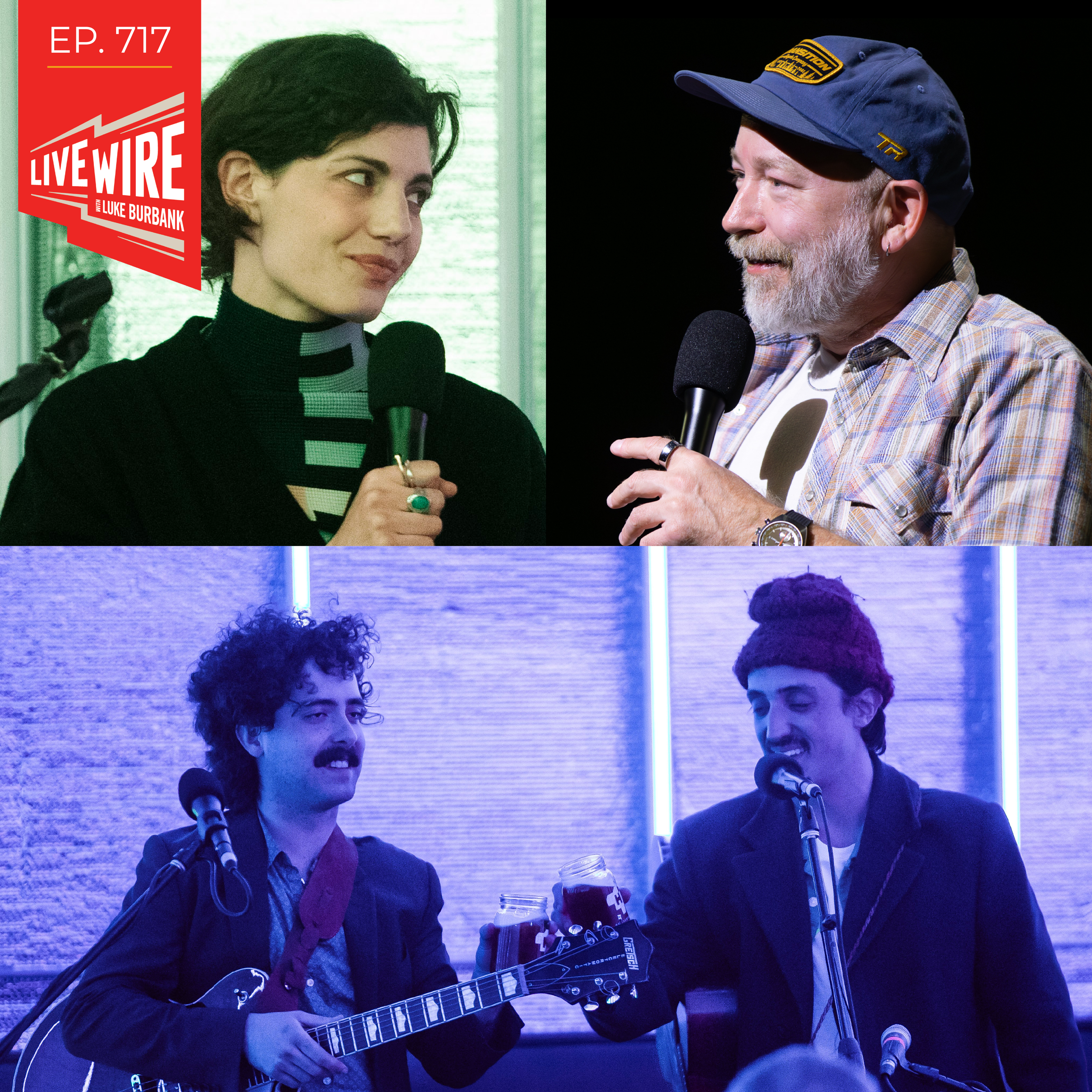
Avery Trufelman, creator and host of the fashion podcast Articles of Interest, unpacks how the US military of World War II came to shape menswear as we know it today; stand-up comedian Kyle Kinane comes to terms with the amount of micro (and macro) plastics in this body; and Brazilian musical duo Johnny Franco and His Real Brother Dom deliver their delightful shtick with tunes, jokes, and old-school radio charm.
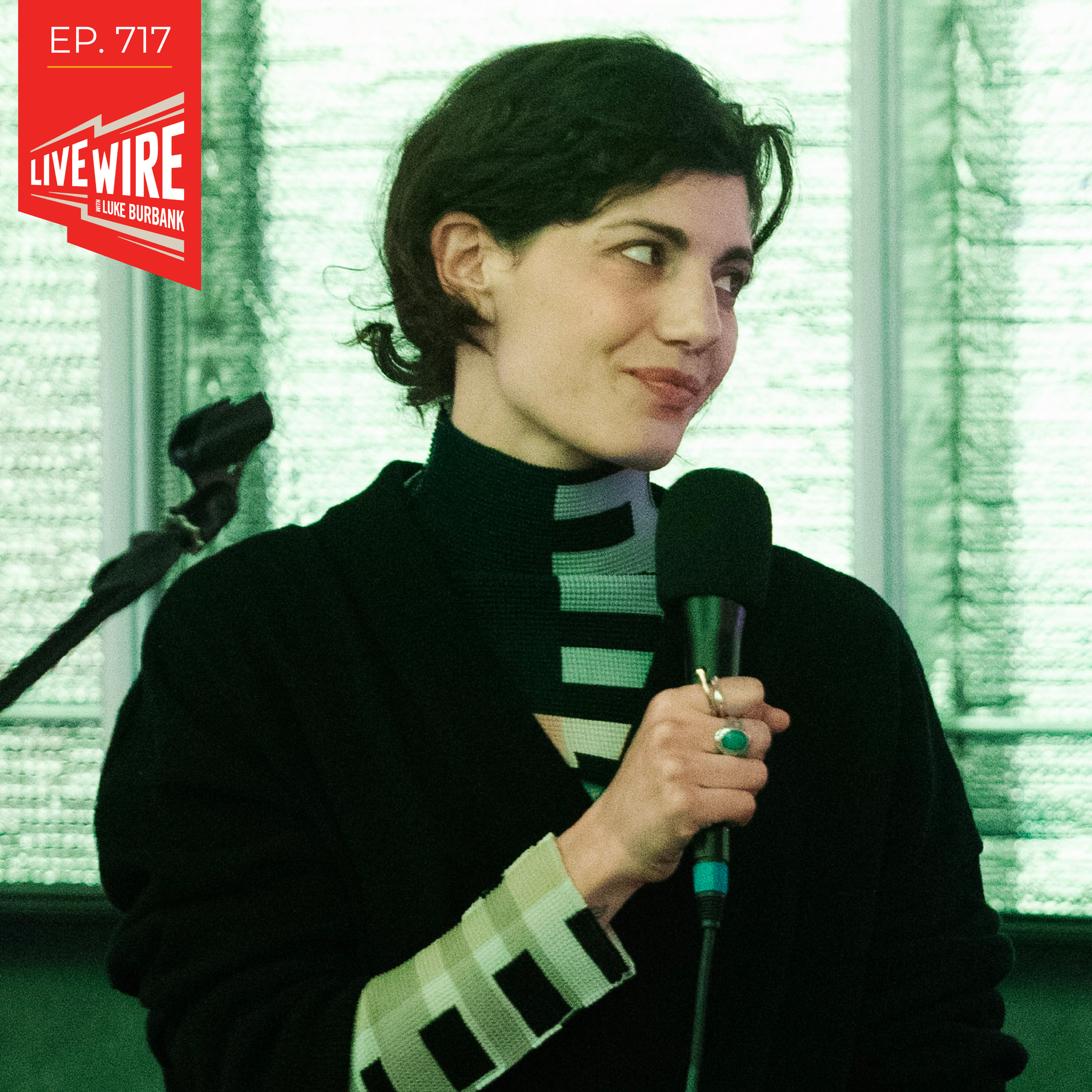
Avery Trufelman
Podcast Host and Producer
Avery Trufelman is the host and producer of the Radiotopia podcast Articles of Interest, a spin-off series of 99% Invisible, which she is well known for her work on. Her newest project was named one of the best podcasts of the year by The New Yorker, The New York Times, The Atlantic, and many others. She was named one of the 500 most important people by the trade journal Business of Fashion.
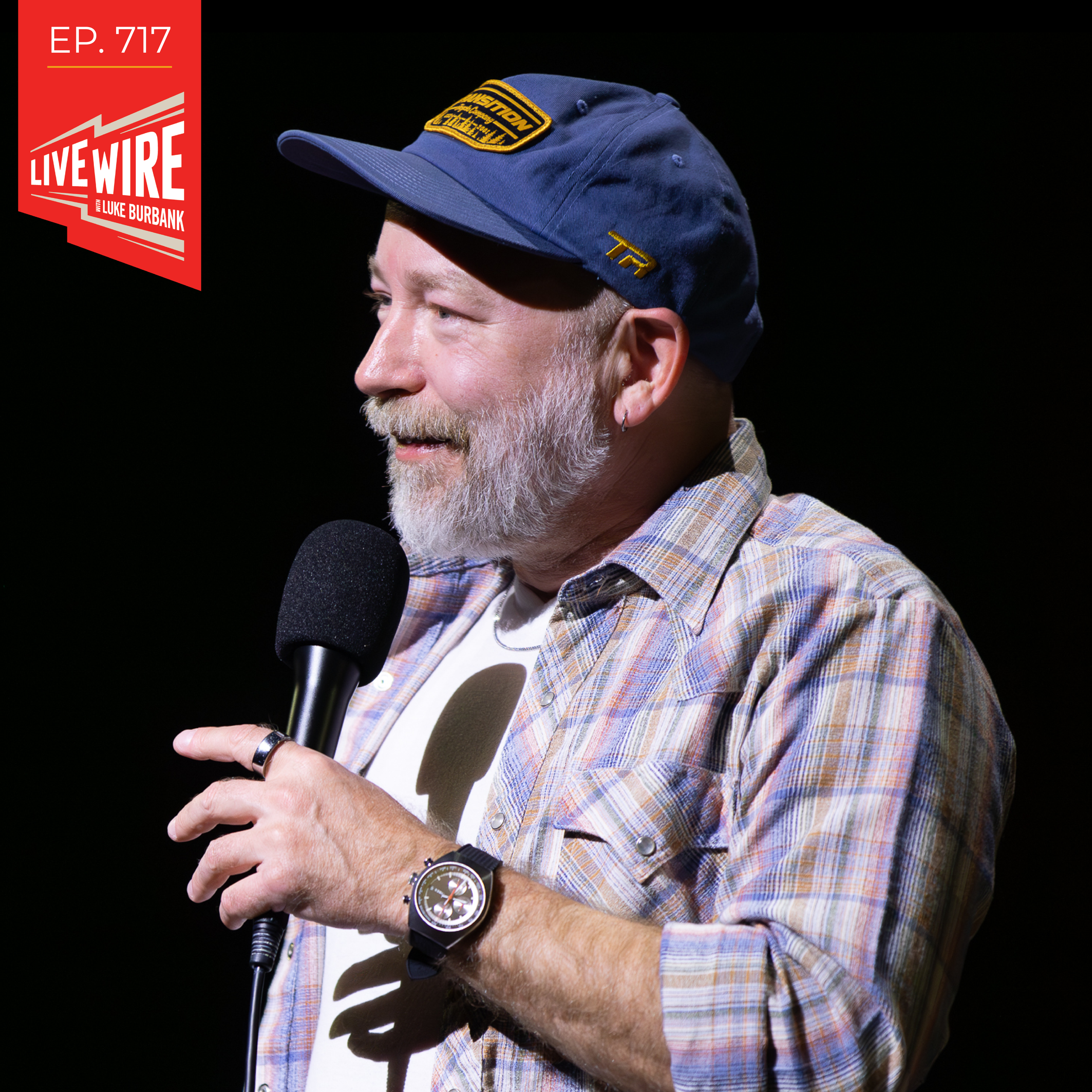
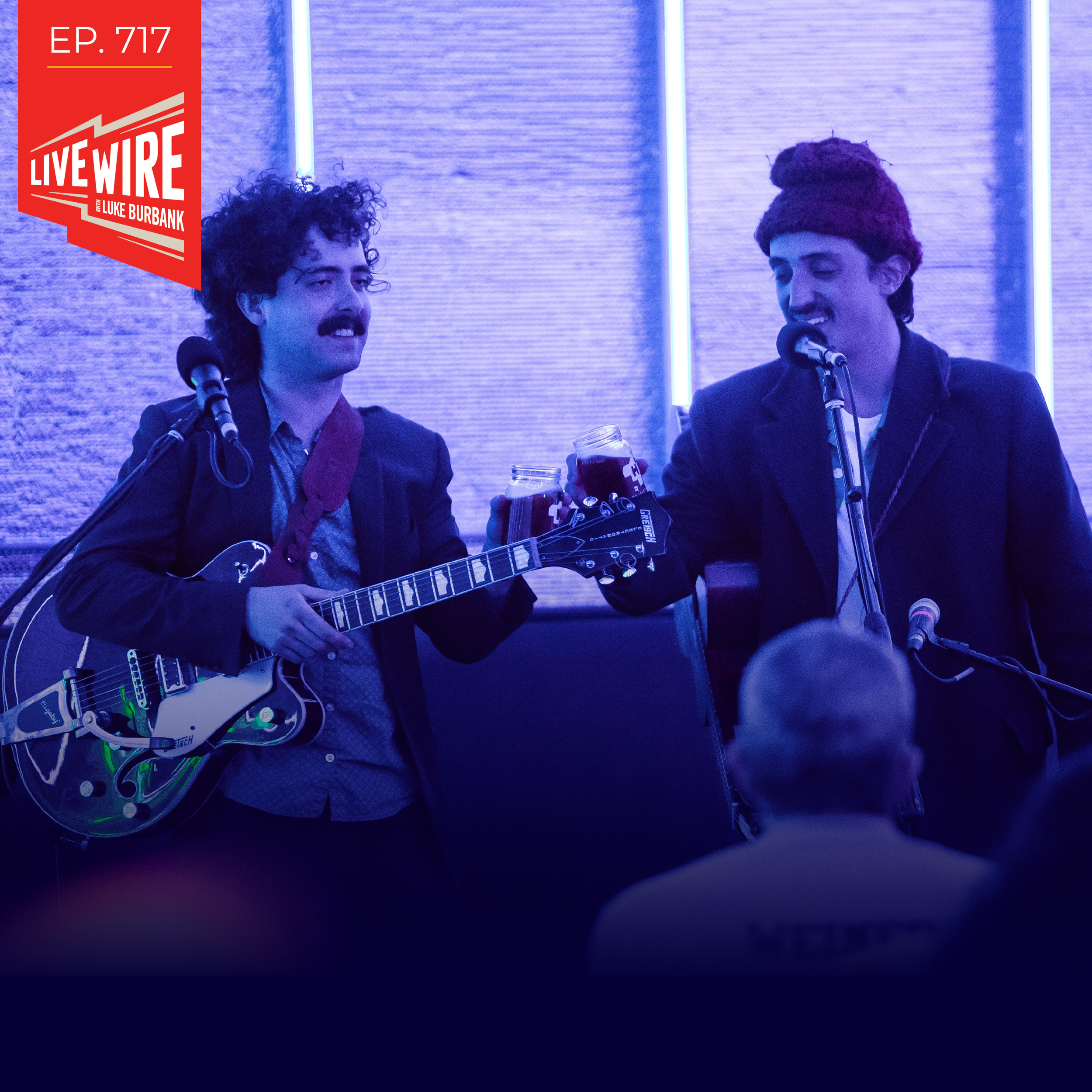
Johnny Franco and His Real Brother Dom
Musicians and Professional Entertainers
Walk down any street in Portland, Oregon and you are sure to encounter a mustachioed Brazilian rock and roll troubadour named Johnny Franco and (his real brother) Dom. This duo of São Paulo natives is shaking up the Portland scene with charm and charisma, developing a cult following for their high energy performance and music. Serving up 5-day weekends every week, no stage is too big or too small for their iconic and hilarious brand of entertainment.
Show Notes
Best News
Elena’s story: “Stranded Coffee Truck Owner Goes Viral Thanks to a Kangaroo”
Luke’s story: “Bakery Owner Goes Viral for Kids’ Voiceovers: ‘Daddy’s a Poopy Pants’”
Avery Trufelman
Avery and Luke talk about Avery’s celebrated podcast about fashion, Articles of Interest.
These are the pants that Avery wore for our interview, sent to her by designer August Duncan.
Avery describes her process of investigating the military history of contemporary casual menswear, including her visit to Buck Mason headquarters.
If you’re in the Pacific Northwest, take a trip down the gorge and visit the French Vogue dolls at the Maryhill Museum of Art in Goldendale, Washington!
Kyle Kinane
Kyle performs stand-up comedy.
Johnny Franco and His Real Brother Dom
The musical duo and entertainers Johnny Franco and His Real Brother Dom play two songs: “Why Am I So Mean?” and their version of “Rollin’” by Randy Newman.
-
Elena Passarello: From PRX, it's... [Live Wire!] This week, podcaster Avery Trufelman.
Avery Trufelman: When we're talking about fashion, we're really talking about supply chains. We're talking about labor.
Elena Passarello: Stand-up comedian Kyle Kinane.
Kyle Kinane: There's real issues going on out there. And that's why when somebody wants me to get worked up about microplastics, I'm like, not now. That's a good time problem.
Elena Passarello: With music from Johnny Franco and His Real Brother Dom, and our fabulous house band. I'm your announcer, Elena Passarello, and now, the host of Live Wire… Luke Burbank!
Luke Burbank: Thank you so much, Elena Passarello. Thanks everyone for tuning in from all over the country. Welcome to Live Wire. We have a really fun, very artsy show in store for you this week. Firstly, we gotta kick things off the way we always do, with the best news we heard all week. [Best News jingle plays.] This is our little reminder at the top of the show that yes, there is good news. It does happen occasionally. You just got to look pretty hard, which is what we do. And then we bring it to you, Elena, what's the best news that you've heard all week?
Elena Passarello: Okay, here's some Texas best news. A woman outside of Abilene, Texas named Carlie Butler runs a coffee company that has like a trailer that goes to different events and serves coffee. She was on her way to a wedding in North Texas, and the axle of that trailer that holds the coffee cart broke. And so she was just kind of sitting on the side of the road for hours and hours and then—you know, have you ever waited for a tow truck for a really, really long time in an area where you can't get out and get coffee? And you know how you start to get kind of a little delusional? Like time slows down, the songs on the radio start driving you crazy… So put yourself in that mindset because that's where Carlie was, looks out the window, and what does she see hippity hoppity down the access road… but a kang-a-freaking-roo. In Texas. In North Texas.
Luke Burbank: I would have definitely assumed it was a hallucination or a mirage of some kind.
Elena Passarello: It definitely seems like it would just, like, if she didn't have her cell phone, I would have assumed that she dreamed it up, but she posted a video, it went viral. She said it's the first time that her coffee company, after lots of social media techniques has ever gone viral, but she's got this cell phone video of a rainy window. And then there's all these cars kind of whizzing by a few hundred yards away. She kind of pulled off to the side. And then this kangaroo. Just leaping around. It goes one way, goes another way. It almost goes into traffic. She says it was just kind of keeping her company for like an hour. And then it just hopped back in through these gates of this property where I'm assuming it lives one of those kind of Texas game ranch situations. And she got on with her day. But golly, I mean, that's even better than AAA to have a kangaroo come and keep you company while you're stuck on the side of a Texas road.
Luke Burbank: I drove through the outback of Australia once, and I was obsessed with seeing a kangaroo kind of out in its natural environment. I would go on a jog each morning on this trip and one day, finally towards the end of the trip, I'm out near a place called Tennant Creek in the middle of Australia and a kangaroo and its baby are hanging out, and they see me, and they just go hopping up over this hill and the way they were gliding was just incredible, their physicality and they go over the hill. And I go jogging up after him and I come to the top of the hill and I look over and there are probably 200 angry kangaroos… on the other side of the hill that this kangaroo had told them about, told them about me and I stopped and I was like, I want no part of this. I just turned around. It went from my dream encounter to mildly terrifying in just a few minutes.
Elena Passarello: Wow, yeah, your dream was to see one. By the way, I believe the collective noun for kangaroos is a mob of kangaroas, so that's exactly what you saw.
Luke Burbank: And they were mobbing, Elena. They were mobbin. So I'm glad our friend down there in Texas saw the right amount of kangaroos because a lot of them can be a little on the scary side. You were talking about that post going viral and actually going viral on the internet is the best news story that I saw this week as well, but it involves a guy who owns a bakery in Everett, Washington. His name is Nechirvan Zebari. He was working as a nurse but he had this love of baking and this real talent for it. Uh, particularly things from Kurdistan where he was born, uh, he moved with his family to the U.S. when he was five years old, but you know how it is running a business. It can be tough to get attention. His business is called Alida's bakery. And so he decided to start posting some stuff on social media, which is something that businesses do these days, but nobody was really paying that much attention to his videos either until he had the bright idea to let his kids do the voiceover for his bakery videos. And his kids are Mira, who is nine, Aya, who is six, and Malek, who is three.
Elena Passarello: Awww.
Luke Burbank: So what these videos are is the dad, uh, Nechirvan, making these unbelievably looking pastries and all kinds of cool items while the kids are just riffing, they do not know how to pronounce any of the food. They rarely stay on topic. [Elena laughs.] It's just so entertaining. Let me play you the kids, uh Malek, Aya, and Mira just kind of voicing over. Now just imagine this guy's kneading dough and cooking these phenomenal looking things, and then the audio is just this…
Best News Audio: This is the day of the life of our daddy. Welcome to his bakery. [Inaudible]
Luke Burbank: That kid is trying to say baklava, by the way. The thing about the videos is they do have subtitles, which you definitely need for Malek. Malek is a little tough to follow, but here's some more.
Best News Audio: He turns all the doughs to croissants. I love daddy croissants. He have the best croissan. [Inaudible] in the oven.
Luke Burbank: Now, you might have thought you heard him saying he's a poopy pants, which is a whole thing. Malek loves to call the dad poopy pants for some reason. And in fact, when this dad was interviewed, he said, I didn't know about putting the first video up because it's a bakery. Do we want the kids saying poopy pants? But he did anyway. And that video was viewed 13 million times. [Elena: Oh, my God!] And the subsequent videos he's put out have been viewed even more. And in fact, now, “daddy is a poopy pants” is a whole thing on the internet. He's got t-shirts. There are like millions and millions and millions of views of these videos. They've also now had tons of customers showing up because again, I can't overstate, the food looks incredible. The narration though is really taking it to another level. This is the dad asking Malek, why are you calling me poopy pants? What is this all about?
Best News Audio: [Dad:] Malek, why do you call me a poopy pants? [Malek:] Because. [Dad:] Because why? [Malek:] Because I love you. [Dad:] Oh buddy, what do you love about me? [Malek:] Because you make me laugh. [Dad:] If you love me so much, then why do you call me a poopy pants? [Malek:] Because you're my best friend, Daddy. Daddy just poopy pants… [Inaudible]
Luke Burbank: So things are going really well right now at Alida's Bakery in Everett, Washington. Like I said, tons of customers, tons of views of the videos, and they're having a success. So by the way, they're also now getting to spend more time together when they're recording the voiceovers. Half of the voice overs are the kids telling their dad they miss him and he needs to come home from the bakery.
Elena Passarello: Oh [laughs], well, he's poopy-pants’ing all the way to the bank, you know?
Luke Burbank: That’s right. So this seems like a lovely family and they're having some business success and—and the kids have gone viral, as they say. So that right there. That's the best news I've heard all week! [Best News jingle plays.] Alright, let's get our first guest on over to the show this week. She is the host and the producer of the podcast Articles of Interest, which is a show about what we wear. But let me tell you, it's about a lot more than that. It explores everything from the yuppification of the military field jacket to the reason why so many women's clothes have those weird holes cut out of the shoulders. The show has been named one of the best podcasts of the year by The New York Times, The Atlantic and a lot of other places. The New Yorker calls her “casual but wise, curious but authoritative, friendly but respectful of our intelligence with a velvety, fun to hear voice.” She was also named one of the 500 most important people by the Trade Journal, Business of Fashion. Take a listen to Avery Trufelman, who joined us for a very special event at Hopscotch, an immersive art experience in Portland, Oregon.
Luke Burbank: Avery, welcome back to Live Wire.
Avery Trufelman: Thank you so much for having me. This is so cool.
Luke Burbank: I was a little nervous about what I was going to wear today. We're at Hopscotch in Portland. This is not our typical venue. So it's a little bit more of a casual affair. But you're somebody who really knows from fashion. And I was trying to strike the exact balance of not overdoing it, not underdoing it. How did you pick your outfit that you're wearing today?
Avery Trufelman: Oh, well, I mean, no one can see you on the radio, and no one can see me on the radio, which is great. It's how I can get away with being a fashion plate on a podcast. But this is, um, you know, what's funny is these, these are skateboard pants that a designer sent to me. He's so awesome. He's like this 19 year old designer, and he was like, check out these pants I made. And he just like sent them to me to write about them. And I just thought they were so great. His name is... August Duncan, and I love them. I just wear them all the time. And I get clothes like this sometimes from like interesting people.
Luke Burbank: You know, even more than normal, it feels like the entire world is falling apart. And I'm wondering, if you're able to make the case for why clothing, apparel, fashion… why that's something that people should care about when everything else just seems to be absolutely falling apart?
Avery Trufelman: Oh yeah, I know, sometimes it's like, oh, I feel like I'm fiddling as the world burns, but it really is a part of it, because when we're talking about fashion, we're really talking about supply chains. We're talking about labor. It's a huge section of the population that works in the fashion industry. It's a huge section of resources that is allocated to clothing. It's a huge part of how we read people and understand each other, and to minimize it and say that it doesn't count—You're talking about a huge section of the global workforce, a huge percentage of agriculture that you're saying doesn't matter. You know, I was just talking to a rancher today who was talking about how much of the hide from beef production is sent off to leather manufacturers. It touches every single part of what we do, and it's all dictated by what's in style, and what's on trend, and what we're looking towards. And if we're like, oh, that doesn't matter, that's frivolous. We're disregarding these huge market forces that determine how so many people eat and make a living. It really is like this hidden force that determines so much of the world. The most obvious definition of fashion is clothes. But so many things have fashion. There are fashions in cars. There are fashions in foods. Like, fashions and tastes are how we determine we live in our time. The most visible way we see it manifest is in what we wear. It's vitally important.
Luke Burbank: Well, one of the things about the podcast, Articles of Interest, and the Substack, too, that I always find so illuminating is that, yes, we're talking about a jacket or something, but what we're also then finding out is all of this history of the world and this country as sort of viewed through this object. Did you know when you started the show, like, was that something you always thought was gonna be the case?
Avery Trufelman: Kind of a little bit. Well, I started working for this podcast about architecture and design called 99% Invisible. [Luke: Yes. Beloved.] And so... Beloved! But there's this very rich tradition in architecture and design history of really looking at the origins of things and the materiality of things and whatever material history, understanding how everything relates to every little thing. I think there's this famous tweet that was like, ‘I remember the first time having a hot dog. To understand the hot dog, we first need to go back to when Walter Hot Dog invented the hotdog.’ That's design writing, right? You have to like go back in time and understand where it came from. And so when I was working for 99% Invisible, I was like, well, why don't we apply this to clothing? There doesn't seem to be this sort of history of design writing as it applies to fashion because it just seems like it's part and parcel with this world of design. So I had this idea, but I don't think I realized how deep it would go. Because, you know, we didn't have control over this building we're in, but we all controlled what we decided to wear this morning. You know, it's so much more personal and much more individual. There's so many more decisions that are made around clothing. It's a much more intimate medium than. Industrial design or architecture or even graphic design.
Luke Burbank: You're listening to Live Wire from PRX. We're talking to Avery Trufelman about her podcast, Articles of Interest. We have to take a very quick break, but do not change the dial, because when we come back… Do people still use dials anymore on the radio? When we come back, Avery is gonna give us the fascinating history of why so much of the fashion behind menswear brands actually got its start in the military. So stick around, more Live Wire coming your way in a moment. Welcome back to Live Wire from PRX. I'm your host, Luke Burbank here with Elena Passarello. We are talking to the podcaster Avery Trufelman about her podcast, Articles of Interest, which we recorded at the immersive art space Hopscotch in Portland, Oregon. Let's get back into that. You did a whole season of your show about gear and really it was tracing the, I mean, I think you say in one of the episodes that pretty much every—almost every piece of like particularly male fashion is related back to something from a military uniform?
Avery Trufelman: Almost everything. It was so interesting. So I went to this menswear brand called Buck Mason. They're known for making pretty standard classic menswear. They even say “standard classics updated.” And I went their headquarters in LA, and they were like, do you want to see our military stuff? I was like, what? Your military stuff? And they brought me to this room that was just full of all this old military gear, and they're like, oh yeah this is what all our stuff is based off of. Like even down to the stitch count they will like replicate sleeves. And the designer the head designer said, oh yeah whether any menswear brand acknowledges it or not, all menswear stuff is based off of 20th century military clothing. Why? Why is that? And of course there's an easy answer, right? You could be like, well, you know, manliness, right. But, you now, I started dipping my little pinky toe in and then immediately saw this connection between the military and the outdoor industry. It's like this great American story that I ended up exploring over seven episodes and really, you, spoiler alert, the answer is in large part because of military surplus, because the United States military made so many clothes. I think our military was 12 million strong. Basically, we didn't expect the atomic bomb. We thought World War II was gonna go on for years and years and year and years. The war ended earlier than we thought. We had all this extra clothing. There were all these surplus dealers who were buying all these extra clothes for a song, selling them off. Everyone was wearing military surplus. This is a whole generation of people beyond a generation. They were selling this military surplus through the 60s.
Luke Burbank: That’s how Banana Republic started.
Avery Trufelman: This is how it is. No, literally! [Luke: It's from the show.] The Banana Republic began as a military surplus dealer. This is what clothing was. This became what menswear was for generations. It became the blueprint for menswear. And we still haven't gotten away from it. And it just became, when we think of what is classic and what looks good, it is military clothing. This is where it came from.
Luke Burbank: Just to jump back a little bit, by the way, we're talking to Avery Trufelman, the person behind the Articles of Interest podcast here on Live Wire this week. This is a little before that World War II stuff, but I mean, I'm still not emotionally recovering from learning that L.L. Bean, his name was Leon Leonwood Bean.
Avery Trufelman: I know, why would you shorten that? Why would you shorten that? It's so good.
Luke Burbank: But you had this, as you talk about on this gear series that you did on the show, how there was this thought among the sort of, I don't know, the Teddy Roosevelt types of the world that you didn't want to go buy your clothes from a store because, I dunno, you were wussing out or you were gonna get hornswoggled in some way. And then eventually, the Abercrombie and Fitch guys and Leon Leonwood Bean, they sort of said, no, no. We'll tell you the kind of, like, essentially performance clothes of that era that you can wear to go outdoors and do stuff. And that was really the beginnings of thinking about, again, technical specifications of clothing, what clothing could do, something that we think about with like Gore-Tex and stuff that's so huge now. The story of how that all came about is fascinating.
Avery Trufelman: Yeah, that was like the great switcheroo. And that was something that America sort of like gave to the world. It used to be that you didn't want to buy clothes. That was considered cheating. Like if you were a real outdoorsy person, you were supposed to make your own buckskin suit, which everybody secretly bought from indigenous women and never acknowledged. And it was like in all the guidebooks that you were supposed to be able to like. Survive by your own wits in the wilderness and make your own stuff. And it was Abercrombie and Fitch that was the first to say. And they were headquartered in New York City. They were like, come to our store and our expert salespeople will guide you. Because when you think about it, it's sort of weird that to this day, if you want to go out into the wilderness, the first place you go is the store. You go buy stuff to go sleep in the woods. But this is where that sort of came from. The salespeople became the experts. And you go and you ask the salespeople, what's the best tent? At that point, what's best gun? And the actual brands became the authority. Oh, we have tested this for you. We have made sure. We will take care of you. And it became this reassurance that you can trust these brands. And then. You were mentioning Gore-Tex, it became this symbol of pride to have these certain ingredient brands on your jacket or on your tent that was almost level of insurance that you would pay extra for and be like, oh, it's Gore-tex. It's like you're paying for a degree of comfort. But that was a very slow evolution. And the thing that's so interesting is that a lot of these brands came out of the military. But I think the thing that was fascinating to me... A lot of these brands were made in collaboration with civilian brands. Like, our guy, Leon Leon Wood Bean, was actually contracted by the US military. Like, he was asked, you know, all right, we're sending guys into the wilderness, how can we best prepare them?
Luke Burbank: We're here in Portland this week, we're at Hopscotch, but we're not that far from Goldendale, Washington, which is where something called the Mary Hill Museum is. And this comes up in one of the episodes of your show because of this very interesting collection of what looks like kind of old dusty dolls, but which actually play this hugely important role in like preserving culture in France. Like tell me a little bit about this.
Avery Trufelman: Y'all are so lucky you live near Goldendale, Washington. It's the coolest thing. [Audience laughs.]
Luke Burbank: I don't know if those are words that have ever been said, but...
Avery Trufelman: You are so lucky. [Luke: And now they are.] You have to go. OK. So you live near this incredible collection of these miniature dolls that saved French fashion after World War II. Because when the Nazis took over France, they wanted to move the capital of fashion to Berlin. And the couture houses all went dark. And so as soon as France was liberated, the government wanted to really rev it up and start it up again, but they didn’t have anything. They didn't have any materials. They really just needed to get clients first and foremost. So they revived this practice that used to be used actually by royals. Royals used to receive little miniature dolls that were shipped to them. And they would be wearing models of gowns. And royals could pick which gowns they wanted. And so French couturiers, big, big fancy houses. All made exact models of their next season's couture in exact miniature, with all their seamstresses working in exact miniatures, and they made this complete collection and they paraded it all around the world to show everyone that France was back. Their couturiers could still do all their beading, all of their feather work, all their hat work, all of the shoes were completely intact. And then they brought these dolls all around the United States, and they went on this whirlwind tour all the way to the city of Paris department store in San Francisco. And then mysteriously, they ended up in a basement at the Mary Hill Museum of Art in Goldendale, Washington, where they were completely forgotten about and collected dust in a basement until the 80s.
Luke Burbank: And you've got this woman who's working at Maryhill. And then this other, like a very elegant French lady shows up in Goldendale and is like, show me to the dolls.
Avery Trufelman: Yeah, so this this woman named Linda, I found out about these dolls and I was like, who can I get to talk to me about the dolls? This is such an interesting story. And like, everyone was dead, you know, everyone was French and dead and I couldn't find them. And I was, like, man, I really would like to tell this story. And I was trying to find someone I was looking in the thank-yous of these books. And I found this one woman who was, like, thanked in the credits. And so it turns out she got a job to be the director of this museum called the Mary Hill Museum. She said yes. She didn't know what she said yes to. Turns out it's in the middle of nowhere in the Columbia River Gorge. Like half of her job was getting snakes out of the building. And so she finds these like creepy dolls in the basement full of dust. And I was like, I don't know what these are, I'll deal with them later. And then, you know, half of the people who went to this museum were like tourists who found it by accident. And then one day in comes a woman wearing like stilettos holding a tiny dog who was like I hear you have the dolls. And It turns out this was the American correspondent for French Vogue, who had heard about the dolls and then immediately like whisks Linda away on this whirlwind tour to like revive the dolls in France. And Linda is suddenly living the fantasy that these dolls embody. It's this amazing story. Like if you think fashion is frivolous, you have to see the dolls and you'll know that it's as. Jaw dropping as any sculpture, any painting, any art form you can imagine. It's unbelievable.
Luke Burbank: But then also, the story of these two women and their friendship and the fact that you have this one woman who is American and not maybe overly cultured when it starts off, and this other woman who's picking her up at the airport and taking her to the place where she gets her pearls and fixing her up with them. [Avery: Oh, yes.]
Avery Trufelman: Oh yes, you have to get a pearl necklace made, yes.
Luke Burbank: You know, and this sort of way that for a time, this museum curator from Goldendale, Washington is living the high life in Paris and she's changing some ways for the better, some ways not for the best. It's exactly what the show does so well, which is it starts in one place and it always ends up somewhere where I didn't expect it to go. But it's very informative and entertaining all the way. So congratulations again on articles of interest. Avery Trufelman here on Live Wire everybody. That was Avery Trufelman right here on Live Wire. You can listen to her incredible podcast, articles of interest, wherever you get that kind of stuff. Hey there Live Wire listeners, it's Luke letting you know that we are returning to the Patricia Reser Center for the Arts in beautiful Beaverton, Oregon on May 29th with author Lindy West talking about her memoir, Adult Braces, plus comedian and activist W. Kamau Bell, and we've got music from Okaidja Afroso and a whole lot more. Get your tickets right now while they last at LiveWireRadio.org, and we will see you May 29 at the Reser. This is Live Wire. All right, our next guest is a standup comedian whose bio states that he has never killed Tony or experienced Joe Rogan, which if you know what that means, that's actually high praise. He did though once meet Morris the Cat from the Meow Mix commercials, which is pretty cool. He's released five standup comedy specials including Whiskey Icarus, I Liked His Old Stuff Better, and his most recent Dirt Nap. He's also appeared on Conan, The Tonight Show, and Netflix's the stand-ups this is Kyle Kinane recorded live at the Alberta Rose Theatre in Portland, Oregon.
Kyle Kinane: Thank you so much. All right, let's get into this. Let's just talk about this week. Tuesday, I was at the Fred Meyers by my house and I was checking out and the clerk pointed, he goes, hey, do you want the senior discount? And he pointed at a little sign. So 55 and over for a senior discount and I'm 49. And I said, hey I got six years left. And he just didn't even look at me. He says, nobody knows how much they have left. All right, yeah, man, hook me up with that discount then, I guess. We're gonna be morale, you know what, you can put these crest white strips back. Optimism got those in my cart and you kind of squashed that. It's exciting, we're around for the end. This isn't as wild as we get to see it. It's not even because of what's, it's been foretold that it's the end, historians, we already called a period in time the middle ages. You can't know that. You can't watch a movie you've never seen and been like, this is the middle of the movie. You gotta know end points. And so we're doomed. So let's have a good time. Charge up them credit cards, everybody. You don't have to pay them back. That's, there's plenty to be concerned about and scared of in the world. And that's why I need to filter out the fake problems that they're trying to push in. There's real issues going on out there. And that why when somebody wants me to get worked up about microplastics, I'm like, not now. That's a good time problem. That's when things are going okay. Then I'll worry about the little itty bitty plastics. There's bigger fish to fry, right? That's like, oh, there's fluoride in the water or there's not, I don't know. And it's good or it's bad. When things are fine, when World War III isn't imminent, I'll worried about the plastic and the fluorides. Also, I'm 49, I have consumed regular sized plastic at this point. And I'm doing okay. I got at least 14 pen caps floating around in here. That's just from junior high alone. I was a nervous student. You scare me before I tell you, I'm chewing on the back of a Bic. Boo, ooh, right down. And I am glad they're in there. Keeps things loose. It's like tennis balls in the dryer. Keeps it broken up. Bunch of buttons. You drop Skittles on the couch one time seven years ago, you're optimistic at night, you know? Watching a movie, that's probably one. Whoop, nah. A little round and smooth, just take it down. What was I gonna find the shirt it belonged to? Just put it down there. Let me have it. We're all gonna live forever, it's all right. Yeah, I don't, I dunno, there's too much to be scared about. Yeah, yeah, I'm worried about my own little corner of the world. This is what happened the last year for me. Let's see what happened. Well, last year, I stopped drinking and I bought a house. No, what are you clapping about? It's terrible. My comedic timing's okay. My lifestyle timing, terrible. That's awful. Oh, they're dismantling democracy? I guess I'll have a Diet Coke and a mortgage about it. I started drinking again. I can't get out from home to the house, but I start drinking again Because why not? Well, I shouldn't own a house. You need to know stuff when you own a house that needs a furnace. I bought a telescope. I'll be warmed by the potential of the cosmos, thank you very much. So I always wanted to be a telescope guy, but I lived in apartments, you know. Can't be a telescoped guy. You don't have a sky, you have neighbors. So for a long time I was a binoculars guy. Same hobby different vibe I bought a big telescope, big boy, big one. And I bought ladder the same day that I bought the telescope. So I was like, hell yeah, man, I'm gonna get this thing on the roof. Because I guess I don't know how telescopes work. Like, yeah, the box says we're gonna be able to see the rings around Saturn with this thing, but I bet another 12 feet this thing's really gonna pop off. I get this thing on the garage, we're not gonna have to squint through it. All right, let's try this one, see where you're at. I think one of the greatest travesties this administration has committed is trying to make me have sympathy for the TSA. I don't know how we feel about that. Remember how we hated them until three weeks ago? They're not getting paid. Well, yeah, for what? That guy's just staring at an x-ray of my dirty panties for too long. You can't bring this bottle of water in. What if I dump it on the dirty clothes? Then you could take it through. Do you know that's okay? You could bring all the wet laundry through TSA you want. You got a nice bottle of scotch, just dump it onto some shirts. You can wring it out into your mouth right on the flight. I will say, I bet the TSA are the best gift givers in history though. That's gotta be a great Christmas if you got a TSA agent around. They confiscate it. They're not getting rid of that stuff. That's getting wrapped up, throwing under the tree. What'd you get me for Christmas? I got you 12 switch blades and a bearded dragon egg. I don't know. And every shift, they just let you rummage around in the bin for a while. It's a baby capuchin monkey and 3.8 ounces of Nona's tomato sauce. I'll say this, I have to admit to myself that I am no longer maturing, which I'm not happy about. I could try and force it, but it's not working. I'm trying, like I mentioned, 49. A lot of my friends are listening to jazz now, and it's, it's gonna take. I'm sorry. I'm sorry for you fans out there. It's either sleepy or panicky. Those are the two kinds that I've found. It either sounds like a lullaby, or oh, that bass player fell down the stairs. And I'm trying, I'm new to the Pacific Northwest by a few years. I'm tryin' to drink the beers that everybody likes here now, and they're not goin' down easy. I like the fun colorful cans, but the craft beer, it always tastes like somebody tried walnuts for the first time, didn't like it, and then spit it into my mouth. That's what it tastes like. It's not good. It's hazy? No, it's murky. Call it what it is. It's murky. And it shouldn't be. I'm at the brewery. I'm looking at all the machinery you got to make it not look like that. Why does it look like that? I don't want to drink a drink that looks like something a concerned citizen holds up at a town hall because they started fracking two counties over. If it's so safe, then you try it, Mr. Mayor! All right, thank you guys very much for listening to me. I appreciate you. Kyle Kinane, right here on Live Wire.
Luke Burbank: That was Kyle Kinane, recorded live at the Alberta Rose Theatre in Portland, Oregon. You can check out Kyle and when he will be coming to a city near you by going to kylekinane.com and his latest comedy special Dirt Nap is available right now. This is Live Wire. Let's get to our musical act this week. They are brothers. They're a duo from Sao Paulo, Brazil, but they've been shaking up the Portland music scene with their charm and charisma and incredible performances. There is no stage that is too large or too small for these guys. In fact, we didn't even have a stage for them when they joined us at Hopscotch in Portland, Oregon to play us some music. Take a listen to Johnny Franco and His Real Brother Dom here on Live Wire.
[Johnny Franco and His Real Brother Dom perform the song “Why Am I So Mean?”]
Johnny Franco: Hey Dom, did you hear anybody go ahhh? This is usually where the crowd goes... [Crowd: Ahhh.]
Johnny Franco: Just like that. Some of them clap along. Come on. [Song continues.] A little faster! Come on, baby! [Crowd claps along.]
Johnny Franco: All right, that's enough. You want to clap the whole song? [Laughter]
[Song continues.]
Luke Burbank: Johnny Franco and His Real Brother Dom here on Live Wire at Hopscotch, an immersive art gallery in Portland this week. You all are kind of legendary here in Portland for just the sheer number of shows that you play every year and the variety of different places that you played them. Have you played anywhere particularly interesting of late? I mean, aside from this immersive art gallery here for Live Wire? Johnny Franco: Luke, first of all, thank you very much for having us in your show. I can't believe that we made it back. The rumors after we appeared for the first time was like, well, that was a good run for the two of you. Okay, now answering your question, almost everything you said is true. We play a lot of shows in a lot of interesting places. We performed 374 shows in the year 2025. [Cheers and applause.] Just listen to that crowd.
Luke Burbank: I'm no calendar expert, but that is more shows than days in a year. So there were days you were playing multiple shows to get to that number.
Johnny Franco: There were multiple days in which we were playing multiple shows in the day. That's why amongst those 374 shows, we were also able to take three days off. Wow. Wow!
Luke Burbank: Beautiful.
Johnny Franco: And we performed places in Portland that shall never be named in the microphones, but I am sure that some of the people here tonight, I can tell by the size of their eyeballs that they were there.
Luke Burbank: This is Live Wire. We are hanging out with the entertainers, Johnny Franco, and his real brother, Dom. We got to take a quick break, but do not go anywhere. When we come back, we'll talk more with Johnny and Dom and get some music here on Live Wires. Stay with us. Welcome back to live wire art before we get to some music from Johnny Franco and His Real Brother Dom, a little preview of what we're doing on the show next week we're gonna talk with the writer Gabe Henry about his book enough is enough i have to clarify that enough is spelled the in you the book details the five hundred year history of something called the simplified spelling movement folks like Ben Franklin and Mark Twain were actually really big on this. They wanted us to just spell things in the English language. More intuitively, so it would be kind of easier, and yet they got some very strange results, which Gabe is gonna tell us about. We're also gonna hear some poetry from William Nuʻutupu Giles, and we'll get some music from the Austin-based soul-funk band Sir Woman. So make sure you do not miss next week's episode of Live Wire. In the meantime, before the break, we were listening to a little bit of Johnny Franco and His Real Brother Dom. They are brothers, as the name would indicate. They're from Sao Paulo, Brazil. And boy, they just really kind of, they do their own thing. You kind of put a quarter in them and let them go, which is exactly what happened at Hopscotch, the immersive art space in Portland, Oregon, where we got to talk and listen to Johnny Franco and his real brother, Dom. Check it out.
Johnny Franco: Well, I have made a terrible mistake here at this performance. And as a professional entertainer, that is in the title of the band is Johnny Franco, the professional entertainers, and his real brother, Dom. I should probably remedy this problem immediately if I want to continue on with this career. And that is I haven't introduced myself properly. I know I have received an introduction, but I went right into the to the act and and forgot to give you a glimpse into the man behind the music. And it's only fair that I do that for our relationship. Not that it's going to help our relationship, but it's fair that do so. And so I'll give you a couple of details about myself. My real name is João Vitor Gariani Franco. But that's of course too long and too complicated. It's too foreign, it's too sexy. So I'm going with Johnny Franco, because that's good for business. But I do envy the name João Vitor Gariani Franco, and I wish I could use it on the stage, because it evokes something greater than who I really am. I think it paints the picture of a person who is escaping the law oftenly, with a nice piece of art under his arms. João Vitor Franco, he did it again. But I am no outlaw, even though the current administration may think so. Neither is my brother or my parents. They never went to jail as much as we wanted them to. See, when we were growing up, me and my brother, we were convinced that if only we could get our parents into jail, everything would be okay. No more problems. We don't think like that anymore. We've grown up now and now we do like most hip Brazilians and whenever we have a problem with a family member, we just send them up to the Amazon for a psychedelic retreat. They come back different. What? I see some eyebrows going together at that statement. We don't have Florida, okay? You take Florida for granted, it's a beautiful concept. Anybody can understand it. You're tired of your relative's opinions about the world and their little ways, so you send them somewhere where they can be with their own and do little fun activities. Same reason why they sent you to Portland. Because Portland is the Florida of the liberal children. I'd like to propose a big cheers here all together. And those who have still drinking your hands or a ghost of it, come on, let's raise it. Even those who don't think there's reasons to cheer, come on now, lift it up, I'll give it to you… [Audience members raise their glass with Johnny.] It's bad out there. It's going down, and it's not going back up. It's just down. That's why we cheers, friends. This is as good as it gets. [Laughter] Enjoy your life tonight. Cheers!
[Johnny Franco and His Real Brother Dom perform their version of the song “Rollin’” by Randy Newman.]
Johnny Franco: I want everybody singing together. [Everyone sings along.]
Johnny Franco: I'll give the key for the ladies. [Higher pitch: Rollin'...]
Johnny Franco: Thank you very much.
Luke Burbank: That was Johnny Franco and His Real Brother Dom who is his real brother recorded live at hopscotch in Portland Oregon an incredible immersive art space by the way if you're ever in Portland should check it out. You can find out what Johnny and Dom are up to on Instagram. These are lively feeds. Take it from me as someone who follows them. It's at Johnny the Franco and then at real brother dom if you want more Johnny Franco, and his Real Brother Dom. All right, that's gonna do it for this week's episode of Live Wire, a huge thanks to our guests, Avery Trufelman, Kyle Kinane, and Johnny Franco and His Real Brother Dom. Special thanks as well to Hopscotch.
Elena Passarello: Laura Hadden is our executive producer, and Melanie Sevcenko is our producer and editor. Eben Hoffer is our technical director, Tré Hester is our assistant editor, Valentine Keck is our operations director, and Ashley Park is our marketing manager.
Luke Burbank: Our House Sound is by D. Neil Blake, and A. Walker Spring composes our music. This episode was mixed by Eben Hoffer and Tré Hester.
Elena Passarello: Additional funding provided by the Oregon Arts Commission, a state agency funded by the State of Oregon and the National Endowment for the Arts. Live Wire was created by Robyn Tenenbaum and Kate Sokoloff.
Luke Burbank: We'd like to thank members Kirk and Kim Boys of Sammamish, Washington. For more information about our show or how you can listen to our podcast, head on over to LiveWireRadio.org. I'm Luke Burbank, for Elena Passarello and the whole Live WIRE crew, thank you for listening and we will see you next week.
PRX.
Staff Credits
Laura Hadden is our Executive Producer, and our Producer and Editor is Melanie Sevcenko. Eben Hoffer is our Technical Director, and Tré Hester is our Assistant Editor. Our house sound is by D. Neil Blake. Valentine Keck is our Operations Manager and Ashley Park is our Marketing Manager. Our house band is Ethan Fox Tucker, Ayal Alves, Matt Sheehy, and A. Walker Spring, who also composes our music. This episode was mixed by Eben Hoffer and Tré Hester. Additional funding provided by the Oregon Arts Commission, a state agency funded by the State of Oregon and the National Endowment for the Arts. Live Wire was created by Robyn Tenenbaum and Kate Sokoloff. This week, we’d like to thank members Kirk and Kim Boys of Sammamish, WA.
