Episode 713
Chuck Klosterman, Sasha Debevec-McKenney, and Laura Gibson
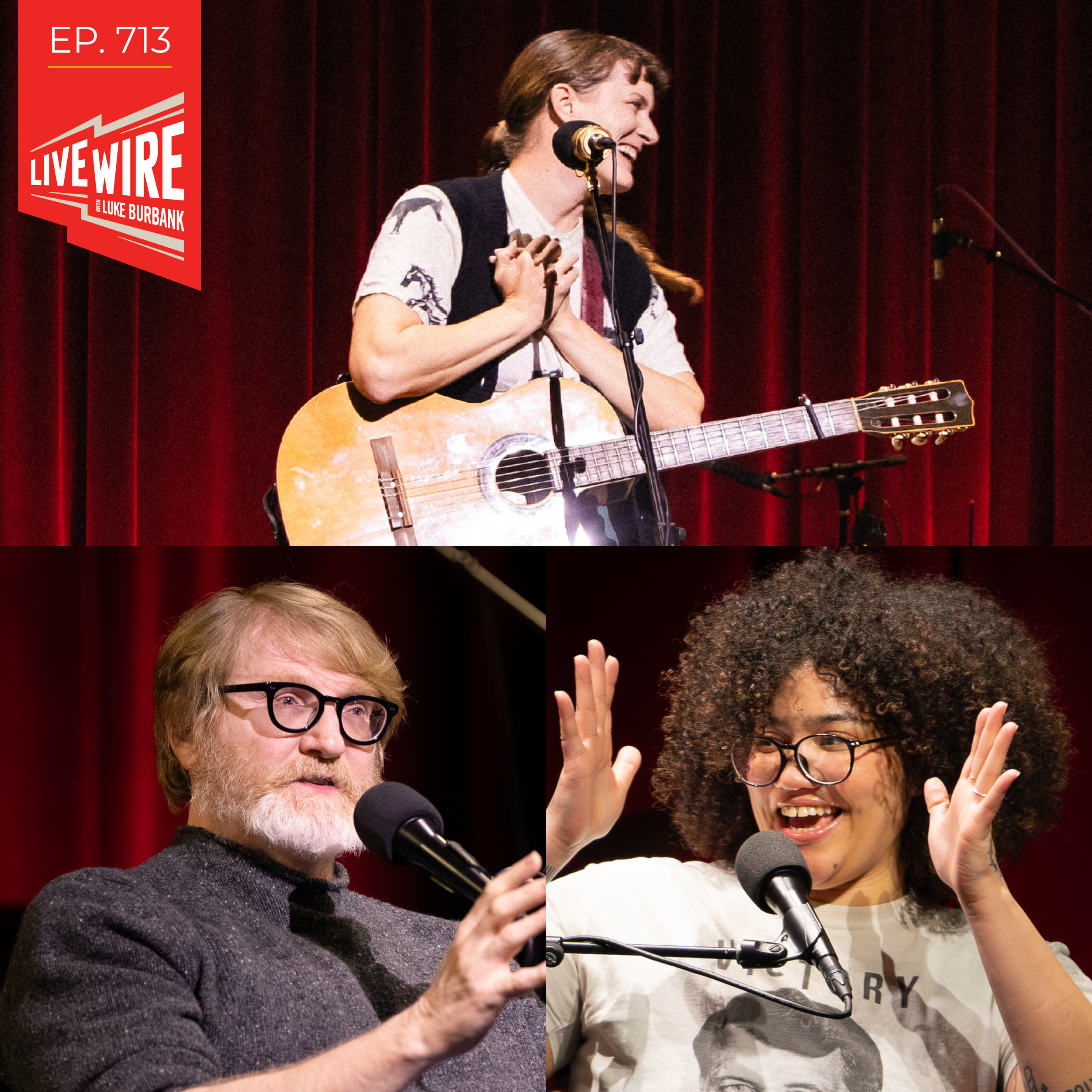
Author and essayist Chuck Klosterman tackles the game of football in his economically titled new book Football, which examines the sport's cultural dominance in America and why, one day, that might change; poet Sasha Debevec-McKenney explains why her debut collection Joy Is My Middle Name includes U.S. Presidents, stand-up comedy one-liners, and the movie Babe; and indie singer-songwriter Laura Gibson gives us an update on her gardening practice before performing a new, unreleased song titled "Sylvia."
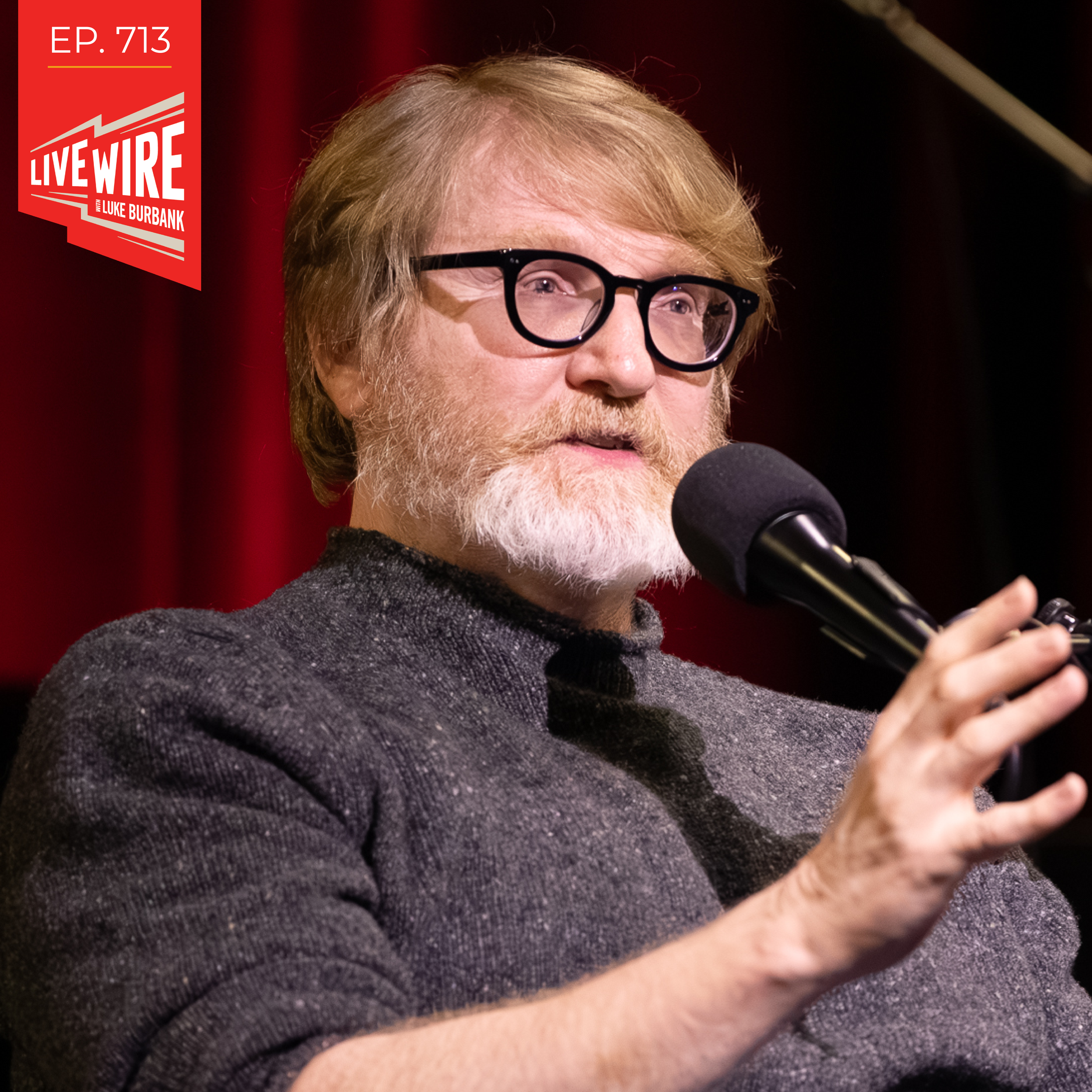
Chuck Klosterman
Bestselling Author and Journalist
Chuck Klosterman is the bestselling author of nine nonfiction books (including Football; X; The Nineties; Sex, Drugs, and Cocoa Puffs; and But What If We’re Wrong?), two novels (Downtown Owl and The Visible Man), and the short story collection Raised in Captivity. He has written for The New York Times, The Washington Post, GQ (London), Esquire, Spin, The Guardian (London), The Believer, and ESPN. Klosterman served as the Ethicist for The New York Times Magazine for three years and was an original founder of the website Grantland with Bill Simmons.
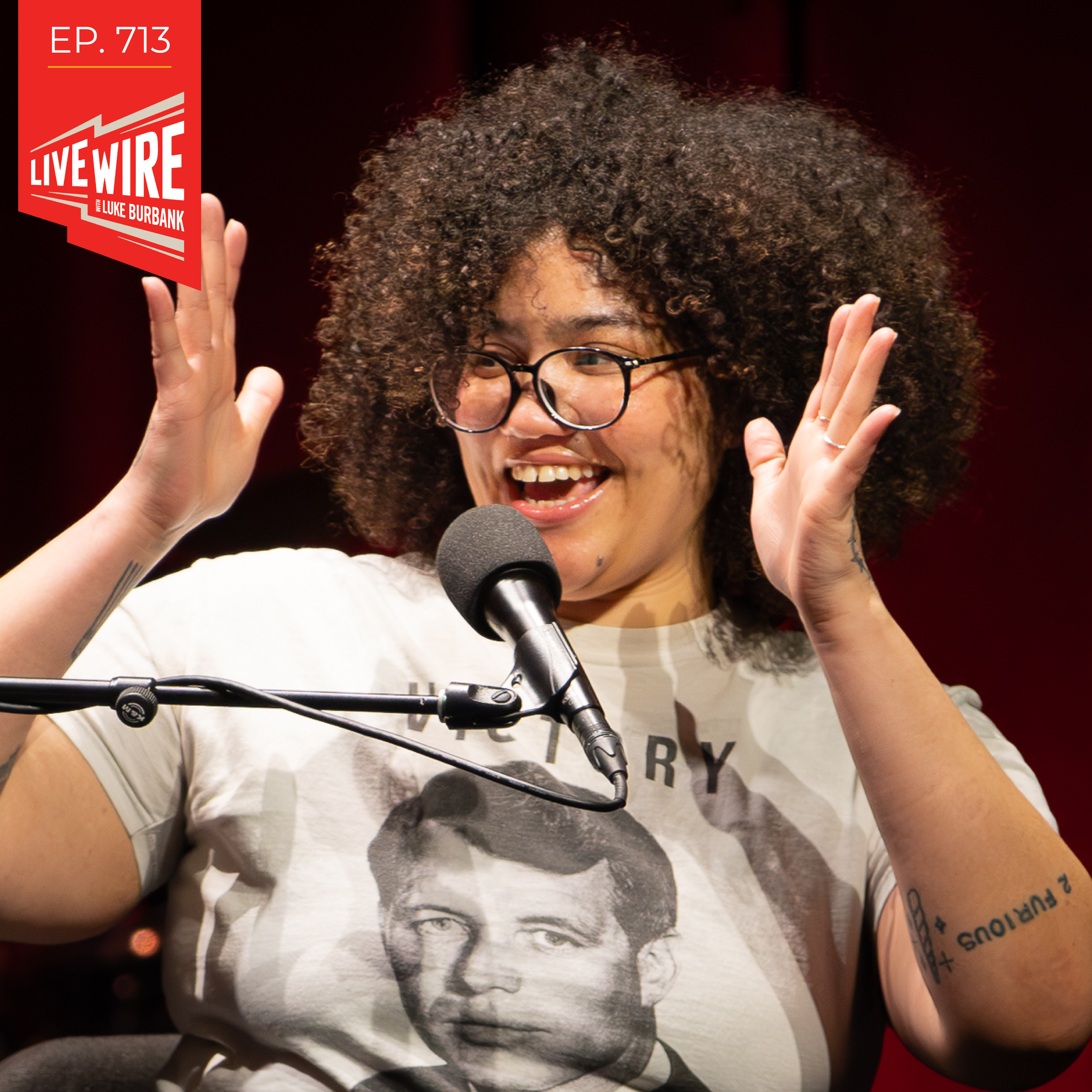
Sasha Debevec-McKenney
Poet
Sasha Debevec-McKenney’s debut poetry collection, Joy Is My Middle Name, was called an Essential Read of 2025 by The New Yorker. Her poems have appeared in The New Yorker, New York Review of Books, and Yale Review. She was the 2020–2021 Jay C. and Ruth Halls Poetry Fellow at the University of Wisconsin and a 2023-2025 Creative Writing Fellow at Emory University. She was born in Hartford, Connecticut.
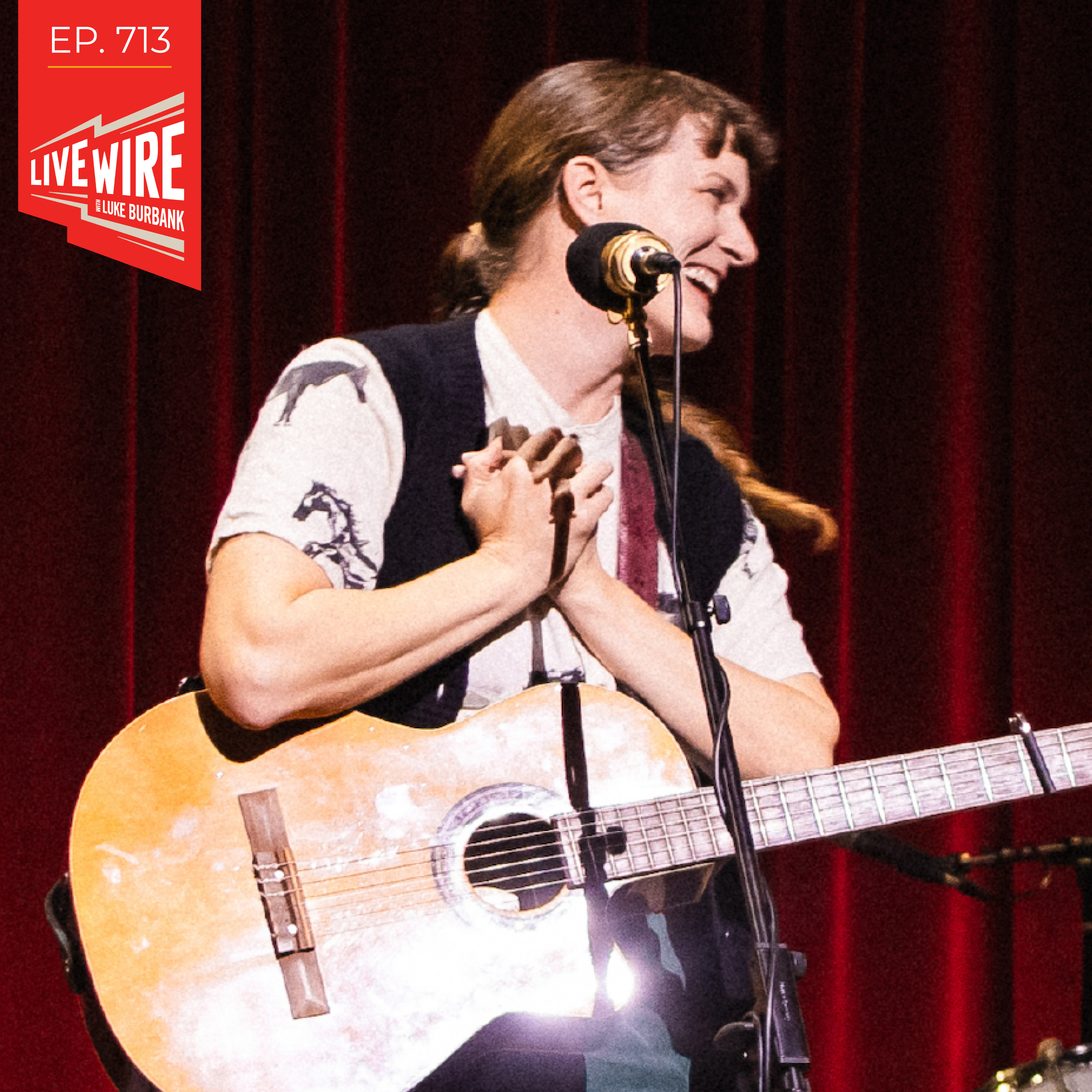
Laura Gibson
Beloved Singer-Songwriter and OG Tiny Desk Performer
Laura Gibson is an internationally acclaimed multi-instrumentalist, singer-songwriter, producer and writer, born and raised in the small Oregon logging town of Coquille. Both literary and raw, with a love of traditional folk music and a bent toward experimentation, she has performed on four continents and had the distinct honor of playing the very first (and 200th) NPR Tiny Desk Concert. The New York Times has described her themes as “longing and instinct, and whether they can ever converge.” Her most recent album Goners (Barsuk/City Slang) was praised by NPR as “a gripping collection of songs about accountability and grief.” The Fader called it, "so incessantly beautiful that one cannot help but want to gently crack it open to get to its beating core.” Between albums three and four, Gibson earned an MFA in fiction writing from Hunter College, completing her thesis in the back of a tour van. Her essays have appeared in Talkhouse, the Los Angeles Review, and Oregon Humanities Magazine, and she was a 2020 recipient of the McElheny Award from MIT for her work on the Timber Wars podcast. She is currently prepping a new album while very slowly working on a book.
Show Notes
Best News
Elena’s story: “Students cram in Amsterdam’s Concertgebouw as musicians play”
Luke’s story: “Bananas galore in Orkney after store orders 38,000 by mistake”
Bonus: jam out to some Harry Chapin: “30,000 Pounds of Bananas”
Chuck Klosterman
Chuck’s new book is Football.
Sasha Debevec-McKenney
Sasha reads “What Am I Afraid Of?” and “Stand Up Routine” from her new book of poetry, Joy Is My Middle Name.
Sasha, Luke, and Elena talk about some important influences for the book, including stand-up comic Rory Scovol and presidential biographer Robert Caro.
Laura Gibson
Laura plays a new, unreleased song, “Sylvia.”
-
Elena Passarello: From PRX, it's... Live Wire! This week, writer Chuck Klosterman.
Chuck Klosterman: I guess I shouldn't be surprised by this. How upset people are by the premise that someone is saying football won't be mega-popular when they're dead.
Elena Passarello: Poet Sasha Debevec-McKenney.
Sasha Debevec-McKenney: I think sometimes people think of poetry as inaccessible. So a title is a good place to be like, here's what's going on.
Elena Passarello: With music from Laura Gibson and our fabulous house band. I'm your announcer, Elena Passarello, and now the host of Live Wire, Luke Burbank.
Luke Burbank: Thank you so much, Elena Passarello. Thanks to everyone for tuning in from all over America for this week's Live Wire. We got a great show in store for you. We got to kick things off though, the way that we always do with the best news we heard all week. This is our little reminder at the top of the show. Helene, I keep thinking someday we won't have to do this segment, but it's more relevant than ever.
Elena Passarello: We won't have to start the show by saying maybe you need some best news gee I wonder why.
Luke Burbank: Exactly there is good news happening out there in the world Elena what is the best news you've heard all week.
Elena Passarello: Okay, the best news is the news. The worst news is that I'm going to have to pronounce Dutch words. So stick with me, Burbank. This is a classical music story from Amsterdam. They have a huge concert hall there called the Royal Concertgebouw, which I think just means the Royal concert hall. But it's known around the world for its supreme acoustics and all the world-class musicians that it attracts. And like most symphonies and classical music spaces, they're always on the lookout for ways to bring younger generations into the venue, which can be kind of tricky.
Luke Burbank: Yeah, it can seem a little stuffy if you're a, you know, teenager.
Elena Passarello: Or not for you. So during the pandemic, when students were looking for places to study, the Royal Concertgebouw opened up their doors because it's a big, massive cavernous space. And then they were like, well, if everybody's here studying in our beautiful plush red velvet chairs, why don't we have a couple of musicians come and play music for them? And of course, that was extremely soothing, classical music, you know. If it's not opera, it doesn't have any words in it, so it doesn' t crowd your language center. And the students, the college students around Amsterdam were really into it. So now, it's a regular thing. Certain afternoons, folks can pay under $3, it's like two euros, and they come in, the wifi is posted everywhere, you can get a cup of coffee and come and sit down, and the footage is great. It's of these very studious looking younger adults with their laptops out. Huddled together, working through problems and equations. And then on the stage are these two or three musicians in their beautiful concert gear, like long dresses, playing cello, like Paco Bell's Canon in D, which we used to call Taco Bell's Cannon in D when I was an orc dork growing up in Gwinnett County, Georgia. They also play like Studio Ghibli soundtrack music. [Luke: Nice.] So yeah, it just seems like such a great way to meet people who love music where they are. And I hope that we have something like that close to me soon and I can pretend to be a young person and go participate.
Luke Burbank: I got really fortunate because growing up my very best friend Peter Williams was a very serious cellist. So I was sort of dragged to so many classical music performances throughout my teenage years and I ended up really loving that style of music. But if not for that, I mean, I would have no exposure to it.
Elena Passarello: Yeah, it's such a great part of human culture and Western culture, so any chance to get people closer to it is such a good idea.
Luke Burbank: Love that. The best news that I heard all week comes to us from the Orkney Islands off of Scotland. When I say Scotland, what do you think of Elena?
Elena Passarello: Plaid.
Luke Burbank: BANANAS. There's a Tesco in Kirkwall on the Orkney Islands, where the guy was trying to order 380 kilograms of bananas. That's about the amount of bananas they sell at that Tesco in a given week, but there was a typo and they ended up sending him 380 wholesale boxes of bananas, which is over 38,000 bananas.
Elena Passarello: That's like the Harry Chapin song. 30,000 pounds of bananas.
Luke Burbank: Exactly. Here's the issue: 38,000 bananas is more than twice the number of bananas that there are people that live in Kirkwall. So the whole island is trying to figure out what to do with it. They can't send the bananas back because there was some storms. And so the return ferry was not able to go back to the mainland. So they've got all these like Facebook groups that have popped up for like tips on what to do with bananas like make banana bread or you know freeze the fruit or chop them up or all these things. They've got like kids soccer teams are showing up to get the bananas. Retiree groups. All kinds of different people are just grabbing as many bananas as they can take because they got too many bananas. [Elena: Yes, smoothies for everyone, right.] Exactly. They need to do what my mom was a big banana bread maker when I was a kid and I think it was because she would often buy marked down bananas that were very very bruised and unappealing at the grocery store and then she would freeze the bananas until she decided to make some banana bread. And I remember she would pull this chunk of frozen bananas out of the freezer. And she would, she had this joke she would do where she would pretend she was really mad at the bananas and she'd throw the entire ice ball down onto the kitchen floor and say, I've had it with these bananas.
Elena Passarello: That's what they're saying in the Orkney Islands right now, too.
Luke Burbank: That's right. The thing is, Elena, this is not the first time they've had a problem like this. A couple of years ago, a guy was trying to order some Easter eggs. [Elena: Oh, no.] He's trying to order 80 Easter eggs for his shop. They sent him 720 Easter eggs.
Elena Passarello: Oh, too bad they didn't have that in the banana at the same time, because you could make some kind of a bundt cake or something.
Luke Burbank: Some sort of a parfait of some kind or some sort of dessert, but anyway So it sounds like everybody is banding together to make use of these bananas and everything is turning out great for these folks. Free Bananas for people in Kirkwall. That's the best news that I heard all week. All right, let's invite our first guest on over to the show. He is probably the only person who both served as the ethicist for the New York Times Magazine and also self-identifies as a football psychotic, which is something that he explores in depth in his latest book, the very economically titled Football, which is a deep dive on the sport that has come to dominate life in this country despite being designed kind of terribly, actually. Esquire calls this another masterwork from one of our greatest minds. Take a listen to Chuck Klosterman, recorded live at the Alberta Rose Theatre in Portland, Oregon. Hello, Chuck, welcome back to the show.
Chuck Klosterman: Great to be back.
Luke Burbank: You have described yourself as being kind of a football psychotic. What is the most football psychotic thing you've done, or what is an example of this in your life?
Chuck Klosterman: Well, I mean, mostly just the amount of lying that liking football requires me to do. In what ways? Well, okay, like let's say it was football season now. And instead of being on stage, I was invited to be here tonight. It's like someone's guest. And I would think to myself, like there's some game tonight in the Sun Belt. Where if a team continues to win, they will still not make the playoffs, but people will argue that they should. And I should probably watch this game. So I'll have to tell people that somehow I'm doing something like, oh, I don't know, I mean, my kid has tuberculosis or something. I come up with some reason not to go out. I do like, it's almost a relief when football season ends, because I no longer have to make up all these reasons not to.
Luke Burbank: This book, Football of yours, you say that living people are not really the target audience for this book. Who is the target audiences in your mind?
Chuck Klosterman: Yeah, this is like a new marketing technique I'm attempting to have the book appeal to people who don't exist. My idea with this book sort of is it was kind of like all the things that I've thought about football for 45 years. Like I was unconsciously thinking about this almost my whole life. And then at one point I decided I wanted to do a sports book and it seemed very clear to me that it had to be football. Because you consider basketball for a brief moment, right? Well, yeah, I mean, basketball when I was growing up was my favorite sport. As a sport in a vacuum, I think basketball is a better game. But like writing about sports and culture in America, to pick anything other than football is just insane. It would be like if I was like, well, I'm gonna do my like all-encompassing book about how music. Has informed the American experience. So I'm writing about reggae. That would make no sense, right? It would make sense to do that. So if you're going to write about sports in a meaningful, kind of sociocultural way, football is the only choice in this country. It's not just the most popular sport. It is more popular than all the other sports combined. One thing that I mention in this book, it's kind of a known thing, that in the year 2023 of the hundred most watched television broadcasts in the country, 93 were NFL games, and then three more were college games. And everything else in society fits into those last four slots, you know what I'm saying? There's no comparison of that with any other sport. There's not a comparison of this in other countries. Like you know, soccer is the dominant sport in Europe and South America. It doesn't have this kind of sort of consumer popularity in terms of that it just kind of overtakes not just the other games around it, but everything else to experience. Baseball is huge in Japan, but there would never be a situation where 93 of the most watched television shows in Japan are baseball games. That would never happen.
Luke Burbank: Well, you put forward a really interesting theory in this book about why that's the case for football, which I wanna talk about after this quick break. That's called a forward promotion, people. It's Live Wire from PRX. We're talking to Chuck Klosterman about his new book, Football. We're gonna take a quick break, but we'll be back with much more Live Wire with Chuck in just a moment. Stay with us. Welcome back to Live Wire from PRX. We're at the Alberta Roads Theatre in Portland. I'm Luke Burbank here with Elena Passarello. We are talking to the great Chuck Klosterman about his latest book. It's called Football. You actually played football as a kid, but you point out in this book that that actually is an increasingly more unique scenario, which is to say most people don't play football, and fewer and fewer people are, and that's one of the weird things about the popularity of the sport. Most people don't have a strong personal connection to it, having grown up doing it. And it's also, you point out, impossible to recreate. Like, in normal life, unless you're in an NFL game or a college game. You have no way of making that kind of thing happen.
Chuck Klosterman: It's a unique aspect of the game in the sense that it's very difficult to simulate it recreationally. Like, you know, if you're a high school basketball player, you can go to a gym and get into a pick-up game, and it might feel in many ways similar to the game you played when you were a younger person. If you ran track in high school, you could always go for a run, you know, you golf your whole life. Almost every other sport there is, there's some way, even if it was like you've played baseball and now you can play slow-pitch softball, which isn't the same but similar. But football isn't like that at all. I mean, if we took 22 people from the audience here and we broke them into two teams and said, okay, we're going to figure out a way to stage a football game, it would take several hours just for everyone to figure where they're supposed to stand. Like, what plays are we going to use? We've got to get all these officials. The game begins. Six people go to the hospital immediately. I mean it's like. Because every every version of football that is not official is sort of it's I hate to say fake but sort of is it only works for the kids in high school playing the small sliver of people who play at college and the very small slither of pros here in Canada and stuff that's it those are like you know like like the number of people in this country who can actually play football not even I don't mean the ability to have the opportunity to is extremely small And then kind of paradoxically, it is by far the most popular thing to consume as entertainment. I mean, there are so many things about football that are so counterintuitive that it would make no sense if you explained it to someone who had never heard of it before. And yet all of those sort of incongruities together sort of make it so much more interesting it separates from the rest of society.
Luke Burbank: Yeah, like you point out that if you were inventing football in 2026, you would never make the rules the way they are. You would never show it on TV the way they do. Like, what are the things about football that seem like a deficiency that actually for some reason make it pop.
Chuck Klosterman: Well, I mean, okay, this is the most obvious one is that so the game takes about three to three and a half hours on television and in 2011 the Wall Street Journal did this sort of I guess research project where these guys measured how much football actually happens in those three and half hours? And it's 11 minutes. [Luke:This is confirming the suspicion of a lot of non-football fans.] No, exactly. Because whenever this comes up, this is always used as a way to just sort of detract from the sport. It does sound crazy if we were, say, focus grouping a new sport, and my thing was like, okay, here's the deal. It's going to take all afternoon. And most of the time, guys are just standing around while the clock is moving. People would be like, I think you got to kind of retool this or whatever. You'd say, but here's the thing our conscious brain tells us that what we want is non-stop excitement that we want wall-to-wall action that's what we're sort of conditioned to think that we desire but that's not what we wants subconsciously subconsciously we want little moments of intense energy with these periods where we can think about what we saw and what we might see next you know a football play lasts say four to six seconds but it's like it's hyperkinetic it's very violent There's 22 guys. Moving kind of in a rehearsed way you're hearing collisions you can't actually see there are often moments where say the quarterback throws the ball deep and everybody is unaware if the guy is open or covered or he's throwing it a ball away we have no idea the way it is shown on television and then it stops and there's you can think about what you saw maybe have the Let's explain it to you and you can think about what's going to happen next. And you can sort of contextualize what it means in the larger game. And you can look at your phone and you can drink and you talk to your friend about the football game or about something else entirely. You can daydream about your job and then immediately re-engage for these five seconds of intensity. And they're so intense and so violent that it gives the illusion, or at least maybe the sensation, of almost nonstop action. Like you've witnessed something that you feel almost like you're watching a like, you know, this almost a continual mechanical process or something. But that's not how it is. That's one of these interesting things about the game. Cause you would have never invented it with that intention. I mean, football was invented after the civil war. Um, and though it's kind of hard to verify, it's a very strange thing, but people after the Civil War were like, what are our young men going to do now? They're not going to face adversity and see their friends die. Like, they're not going to have the conflict of warfare. We need to create a simulation of this, so they create football. Then football kind of evolves on its own for 70 years. And then about 1950, it collides with the rise of television. And that's when all this happens, and that's what changes everything. Because football is a mediated event, even when there's no media involved. What do you mean by that? I mean that when you're, like if I said to the audience right now, it's like, close your eyes. And imagine a football game. Everybody just do this for five seconds, like imagine a football game. Now in all likelihood, there are people here who've played football. There's certainly many people here who've attended football games.
Luke Burbank: I don't know if you know that much about our audience, Chuck.
Chuck Klosterman: Well. They might have children who did or whatever, they went to high school with a place where it was popular. Regardless, the thing is, I'm guessing most of you when I said that, imagine seeing what you see on television. Even though this event lives in your reality, the two-dimensional simulation of that, it kind of overwrites your actual experience. And I think people now do this all the time, transposing it in your mind automatically to how it looks on television. A camera shot from midfield down for the players are moving horizontally across the stage. All the things that we sort of describe football as a television product is how we process it in our mind.
Luke Burbank: Do you think football is the greatest television show ever created?
Chuck Klosterman: I think that it is the best thing ever made for television, yes. Particularly at the lowest level. At the highest level it gets complicated. You know, great World Series game. Great Final Four game, a good episode of Succession, a good episode have Lost, or whatever the case may be.
Luke Burbank: Now you got these people back. Throw in some Rick Steves it's written out of your hands.
Chuck Klosterman: At, at like the highest level, everything kind of becomes almost as tie. You can all kind of, you know, but at the lowest level, a bad football game is watchable in a way that sort of defies logic because of the form of it. Like we think what we like from television is the content, but I think what really affects people's relationship to art is the form of the thing. And like the formal construction of football is accidentally perfect for television. And that's why this has happened. That's why it is so dominant in our culture. It is kind of the forced marriage with television.
Luke Burbank: Now, there was a kind of a lot of speculation, I don't know, 10 years ago from a lot of smart people, Malcolm Gladwell comes to mind, that football was gonna go away pretty quickly and this is because of people suffering brain injuries from playing the sport. How and why were those predictions wrong?
Chuck Klosterman: Well, a few things. One is that I think that a lot of the people making that argument exaggerated the degree to which people would feel a moral problem about this. It was almost as though they perceived that that, well, if this bothers me, it must bother everybody. I mean, people are always kind of projecting their feelings on other people. Another thing was that the you know, they said like, well it's going to change the way these guys hit. We got to teach kids to tackle differently. I never thought that would work. I was like, that will never happen. Kind of did. They have made some adjustments. I think one of the biggest changes is that every time a guy would come forward with interesting research about CTE, the NFL would immediately hire him. This was a very smart, diabolical move that anytime that there's a person who might have the ability to criticize the idea, say like, Oh, we need you come come work for us now. That's part of why it went away.
Luke Burbank: The thing is, even though maybe those predictions of football going away in the near term maybe didn't turn out to be true, your premise of this book is that football is going to go away. It's just gonna take longer. Why do you think football, for all of its sort of popularity now, will maybe not be around in 70 years?
Chuck Klosterman: Well, you know, it is interesting that every time I get interviewed, people really get into that fact. They really want to talk about that aspect of the book. Now that's partially my fault because I made it the beginning in the end of the book. [Luke: Well, yeah.] You know, uh, but also what is interesting is what I am essentially saying is two generations from now. So I kind of use the year 2070 where I, I kind of think two things will happen. And it's a long section of the book at the end, but it's like one has to do with, I think there's going to be changes. In sort of the economic relationship specifically with television advertising to these things. And because pro football and now college football is both sort of in this situation where it can only get bigger. It cannot stay the biggest sport. It's gotta be bigger, bigger, bigger, it's gotta expand. It kind of puts it in a precarious position economically if anything goes wrong. And my... Secondary suspicion is that as the average person has less of a real relationship to football, and what I mean by real is that they only see it as an entertainment distraction. They didn't play, but also none of their friends played. Their dad didn't played. Like their only understanding of it is as something they watch on television on Sundays and Saturdays, a video game they play, something to gamble on, the fantasy league that's in their office. It has no application to the game itself. And when that happens, when there is this sort of labor shutdown in 2070, which right now would make people lose their minds, I don't think that will happen to people in that time. I think people will be like, Oh, well I'll watch something else. And football won't just won't be like it's gone forever, but it will recede from the center of the culture. But the also the weird thing to me is that I'm saying this is going to happen in 2070. Right? So what I'm basically saying is like the way things are now will not be this way in the future. And people are like, no! It will be exactly the same.
Luke Burbank: By the way, people, none of whom will be here.
Elena Passarello: Right, right.
Chuck Klosterman: Well, no, it's really been surprised. I shouldn't say it surprised me. I guess I shouldn't be surprised by this. How upset people are by the premise that someone is saying football won't be mega popular when they're dead. Ha ha ha! Like it does it really does illustrate how meaningful it is to people like yeah I mean, I kind of feel like you can make a bunch of arguments why I might be wrong about this I probably will be I'm wrong about lots of stuff. However, yeah, the point in my favor is that like what in the history of mankind has stayed mega popular forever Nothing nothing that you know, of course that and you know as the society changes and it's gonna change the biggest things are the are the least sort of suited to change the least flexible small things are able to sort of evolve, but big things just kind of implode and that's what's going to happen at some point when I will be dead and so will you.
Luke Burbank: That's right. Final question. I don't know if this is really fair to ask you to try to weigh in on but you're good at this stuff So let's try do you think? Whenever football kind of moves off of the center stage of our lives in whenever this point is when most of us are Not here and and they're trying to look back on the era of when football was so dominant Were our lives made better by the existence of football or worse? Like is it a net positive or negative in your opinion?
Chuck Klosterman: You know, I do think in some ways it is close, simply, and the reason I say that is because anything that big and that dominant seems in some way troubling, right, like nothing in society should be that sort of culturally all-encompassing or whatever. But I wouldn't have written the book if I didn't believe that overall football is a net positive for society for a whole bunch of reasons, you know? Some of them are kind of superficial, I think, but some of them more profound. An argument that is often made against football will be like, you guys are all sitting around on Sunday watching these people pretend they hurt each other for nothing, it's all an exhibition in a lot of ways. There's so many more important things happening in the world. But you're always doing this thing where we're sort of like, well, you know, it's, this is just something that has been invented to keep people from thinking about things that really matter. But when we talk about things, that really matters, what are we talking about? Well, the lives of other people, right? The value of other people's lives. Well, what makes anyone's life valuable? It's things like art, fashion, you know music, football. Sports, these things. If you're going to find meaning in life you can find it through anything and the fact that football seems to be the thing that Americans are most able to access as a way to give their life sort of something that they can care about where the stakes are low but their intensity can be high they can have the all the feelings you would have you know about 9/11 or whatever but you can put it into this you know game between Michigan, Ohio State or whatever and sort of pretend that that meaning is the same. Like I do think that is valuable. And this is one situation where the magnitude of something changes the meaning. Like football becomes more important because of the magnitude of its popularity, which you can't say about most other things.
Luke Burbank: The book is Football by Chuck Klosterman. It's a great read. Chuck, thank you so much for coming on Live Wire. That was Chuck Klosterman, recorded live at the Alberta Rose Theatre in Portland. His latest book, Football, is available right now. Hey there, Live Wire listeners, it's Luke. Letting you know that we are gonna be back at the Alberta Rose Theatre in Portland, Oregon on May 14th with a great lineup of guests. Podcaster Sarah Marshall of the You're Wrong About podcast will be there. Now, she's got a new series. It's all about satanic panic. It's a fascinating show. Plus we're gonna have the author Camille Dungy stopping by. She's got a new collection of poetry, which is her first in nearly a decade. Then humorist and writer Angela Nissel. On her latest memoir and some music from jazz performer Kassa Overall. You can get your tickets right now at livewireradio.org and we'll see you on May 14th. This is Live Wire from PRX. Okay, our next guest's debut poetry collection, Joy is My Middle Name, was called an essential read by the New Yorker, which also describes the book as being a sharp, funny debut by turns zany and deadpanic, static and enraged. Her poems perfectly describe that experience of sort of crawling through your 20s and then emerging into your 30s without figuring out as much as you thought you were going to. It's also about US presidents. And the movie, Babe. Take a listen to this. It's Sasha Debevec-McKenney, recorded live at the Patricia Reser Center for the Arts in Beaverton, Oregon. Hello Sasha, welcome to Live Wire.
Sasha Debevec-McKenney: Hi, thank you for having me.
Luke Burbank: I absolutely love this book of poetry. Joy is My Middle Name. It is like, it is just so funny and heartfelt and just covers such a kind of wide range of topics and moments in your life. And U.S. Presidents. When did your like real fascination with U. S. Presidents start?
Sasha Debevec-McKenney: When I was like four years old, because me and my little brother used to fight over the placemats. And I was, like, I want the president's one probably because he wanted it. And then I just got, like really obsessed and I grew up in Hartford, Connecticut and Windsor, Connecticut, technically. And, you know, like my parents were nerds and they wanted to bring me to museums all the time. So we went to the FDR museum. It's like my first memory. It was like being at the FDR museum.
Luke Burbank: I like your first conscious memory as a kid. Mine was my parents buying the sound of music on vinyl at a JC Penney in Eureka, California. That's the first like thing I can remember of life. Yours is.
Sasha Debevec-McKenney: Yeah, I was really scared because there were like bomb noises and I was like this is scary.
Luke Burbank: Oh, right.
Sasha Debevec-McKenney: And then I went home and I literally named all my dolls for like five years, Eleanor.
Luke Burbank: You've got a really great poem in this book about Lyndon Johnson. I'm wondering what it is about, I mean, you've traveled to Austin to visit the museum down there and the library and everything. What is it Lyndon Johnson that has you so interested, I guess?
Sasha Debevec-McKenney: Well, I think I read the Robert Caro biographies, and he's just...
Luke Burbank: The famously, extremely long Robert Caro books.
Elena Passarello: Like, if you were moving, they would take up an entire box.
Sasha Debevec-McKenney: And I just think he doesn't make sense. And so you're like, maybe I can figure this out, but then I don't think you can. But then maybe you can, it's like just, I don't know. They all have mommy issues and stuff.
Luke Burbank: The titles of the poems in this book are really phenomenal. I Don't Have a Racist Bone in My Body is one of them. I Don't Want to Fall in Love Because I Don't Want to Gain Weight is another one. I'm curious, do you write the poem and then come up with the name of the poem or do you ever have a name and then what's the process?
Sasha Debevec-McKenney: I think sometimes people think of poetry as inaccessible. So a title is a good place to be like, here's what's going on, now we can start. Like here's the information you need to know to enter the poem. And also sometimes I think my poems come from like, instead of being like, what do I wanna write about? It's like, what have I been thinking about? Instead of being, I wanna write a poem, what should it be? You're like, oh, I've texted my friends. Five times the same joke like maybe that should be in a poem you know and so a lot of times that's where the title comes from because I just was like I kept laughing at something or couldn't stop thinking about something you know.
Luke Burbank: Can we actually hear a poem from the book?
Sasha Debevec-McKenney: Yeah. Okay, this is called What Am I Afraid Of? The silence, the thoughts that come with it, the sinking suspicion that something more is wrong with me than anyone knows, including myself, including the doctor who hooked me up to the EKG machine and said that though my heartbeat was irregular. The irregularity was normal. It was nothing to worry about. The doctor told me there are two kinds of people, unhealthy people who refuse to get help and healthy people who always think they're dying. Nobody's in between. But I've met so many kinds of people. People who stretch before they get out of bed. People who walk through life unstretched. People who think their body is a house and people who don't think of their body at all. People who peel their carrots. People who don't, people who stand on the roof and let the wind make them cry, people who are afraid to cry, people who step on all the leaves on the sidewalk, people who look straight ahead. There are people who aren't like me. They don't know the names of all the different apples. Once when I was cashiering, a woman said to me, wow, you really know your kale. And once, at the butcher shop, a man said to his dog, that's the nice lady who smells like meat. And I'm afraid I don't know what kind of person I am. I thought I would get a chance to do my life over in all the ways anyone could think of. Dying would be like changing the channel. I hate that you can't hold on to anything. I was washing an apple and then I was coring it and then it was cut and that was weeks ago now. It was a Honeycrisp and it lived up to its name.
Luke Burbank: Sasha Debevec-McKenney reading from her book, Joy is My Middle Name, there's a line in this book that just absolutely blew my mind. And I think maybe it's a lie that you sort of borrowed from somewhere else. But it's basically saying, if the apocalypse happens, it wouldn't be the worst thing. Because if everybody dies at once, it's like nobody died.
Sasha Debevec-McKenney: Yeah, I believe that.
Luke Burbank: Maybe because of the current political climate that really rocked my world.
Sasha Debevec-McKenney: Yeah, I think that was from Rory Scovel. The stand-up. The first poem in the book is like a collage poem of 100 stand- up lines and that was one of them because you hear stuff like that and you're like that should be in a poem.
Luke Burbank: Right. And you listen to a lot of stand-up comedy, like, as a kid, and also as a person just who was making poetry, but you're, like listening to, like Daniel Tosh in your...
Sasha Debevec-McKenney: Yes, literally. Yeah. And I think, you know, I like to make people laugh. And like, when I was in high school, I read a poem once about to like my college, my other students about getting my teeth knocked out. And everyone was like, that's gross. And it felt so good to get a reaction, you know, and like, I think people think poems can only make you sad. But it's also it's nice to make if you will ask.
Luke Burbank: Have you tried stand-up comedy?
Sasha Debevec-McKenney: No, maybe I should. I have one poem that kind of has a punchline, so maybe I'll try it out.
Elena Passarello: Does a poetry punchline, is it subject to the same rules as a standup punchline or is it a different breed of cat?
Sasha Debevec-McKenney: So but maybe it's harder because the last line of a poem it always feels like it's gonna hit you over the head anyways You know so you got to be careful
Luke Burbank: Could we hear another poem? Could we here Stand Up Routine?
Sasha Debevec-McKenney: Absolutely also I wrote this in probably like April 2020. So that's the mental state.
Luke Burbank: Okay, so this is pandemic-era, Sasha, or like, yeah.
Sasha Debevec-McKenney: Not that I'm less crazy now, but... This is called stand-up routine. I was watching Babe last night. You know, the movie where the pig herds sheep? And I can't stop thinking about the people in the crowd at the sheep herding competition, who saw the pig herd sheep. I mean, go re-watch the movie. You can see some of these extras giving the performance of a lifetime. Their lives change on their faces. They've just seen something truly. Remarkable, like imagine you've been going to sheep herding competitions your whole life, you grew up doing it, your father did it, his father, and now you want your grandson to herd sheep, it's only right and natural. And so one Sunday, you take him to lunch at your favorite diner, and you tell your favorite waitress you don't need another refill, and then the two of you drive out to the sheep herder competition, and you sit smugly on the benches knowing exactly what to expect. And then the pig comes out and herds the sheep. It's almost as if, and you feel crazy for thinking this, the pig is actually talking to the sheep? Your face opens, your world changes. What sporting event could ever top this? One weekend, your grandson invites you to his football game. He never got into herding sheep after all, and that's fine because you love him. And he scores the final goal, and the team lifts him up on their shoulders, and the whole time you're thinking, well, this isn't as impressive as when I saw the pig hurt sheep. It's true, you're proud of your grandson, he's got a scholarship in the fall, but it isn't impressive, nothing is. You used to love the bacon and tomato sandwich at the diner, and the bacon was thick, and the black pepper was freshly ground, salt flake. Fat, but it's not as good as when you saw the pig herd sheep. I don't think they use freshly ground pepper anymore, you say to your grandson. I mean, the sandwich is still good, but it isn't as good at the time we saw the Pig. He finishes. He makes eye contact with the waitress. Talking about that pig again, Gary, she asks. Dropping the check, you pay the check. You kiss your grandson on the cheek. He leaves for school tomorrow. You promise yourself you will relearn how to be impressed by your life. You will try to see something every day that could possibly be better than seeing the pig herd sheep. You go to the grocery store. You buy white bread, name brand mayonnaise, thick cut bacon. You thank God it's tomato season. You remake the sandwich from the diner exactly the way you like it. It isn't even hard. The sandwich is perfect. You're impressed by yourself. By your innate ability to make a punchline of the world right back, you laugh out loud into your empty kitchen.
Luke Burbank: That's Sasha Debevec-McKenney here on Live Wire. Reading from her book of poetry, Joy is My Middle Name, I feel like what really struck me about that is this idea that when something really good is happening, a moment, a relationship, a radio show recording, when something is so sort of perfect, it's bittersweet because, you know, everything's gonna pale in comparison to it.
Sasha Debevec-McKenney: I visited a class and they had read that poem and I was like, I don't even know. I didn't really know exactly what that was about to me, like when I was writing it. And they're like, oh, well, it was about you being scared that the world wasn't gonna go back to normal. And I was, like, thank you. Thank you for telling me that. It was so easy for them to see that.
Luke Burbank: Right. Something else about this book that I really appreciated was sort of at the end of the book where maybe the acknowledgments would be or bibliography or whatever, you kind of go back and explain a little bit about each poem and kind of what you were thinking or like the fact that one of them is like you said a bunch of comedy punch lines from other comedians that you sort of put together and I as a person who's not particularly smart would really like for all poets in the world to start doing this, because it was so... Helpful and it caused me to enjoy the work even more, having some more understanding around it.
Sasha Debevec-McKenney: Yeah, that's what I want. I think to be understood, probably, maybe.
Luke Burbank: But is that normal? Have I mostly just been reading poets that don't do that?
Sasha Debevec-McKenney: I never want to be like, I did that first because I haven't read every book, right? You know, like, but I grew up a history nerd. Like every book I ever read that I loved, it was like, here's all this other stuff in the back, you know, the extra facts like the Robert Caro biographies. It was like those are the notes are like the 500 pages. It's like clearly all the stuff he didn't want to cut out of the book. They told him to and that was the energy I wanted in the notes. Like, I think I have like a. Like a forward, you know, like can't stop talking energy. And I didn't, I wanted that to like keep going. And then, you know in the back of the book, I would have got to be like, I didn't really like this poem, but my editor liked it, or like put in extra information or like the truth, because I think a lot of people also think that poems are true. And I'm like, oh, actually that was a lie or whatever. Like, yeah, and it's fun.
Luke Burbank: Well, every page of it is just absolutely riveting and fun and heartbreaking and all the things you would hope that a reading experience would be. It's super good. The book is, Joy is My Middle Name, Sasha Debevec-McKenney. Thanks for coming on Live Wire. That was Sasha Debevec-McKenney, recorded live at the Patricia Reser Center for the Arts in Beaverton, Oregon. Her poetry collection, Joy is My Middle Name, is available right now. You're listening to Live Wire. We gotta take a very quick break, but do not go anywhere. When we come back, indie rock legend Laura Gibson will, wait, let me check this. Yeah, promote her gardening skills. I'm not kidding. That's mostly what we talked about, but then she also played some amazing music. Stick around, more Live Wire coming your way in a moment. Welcome back to Live Wire, I'm Luke Burbank. Okay, before we get to this week's musical performance from Laura Gibson, a little preview of next week's show, we are gonna be celebrating National Poetry Month with some of our very favorite poets. We've got the celebrated essayist and cultural critic, Hanif Abdurraqib, who's gonna read us a poem about a ghost in his house, which he says is a true story, we're also gonna hear some readings from the poet laureate of Oregon at one time, Anis Mojganii and bestselling author Kaveh Akbar. Then we've got a conversation with the one-time poet laureate of Utah, Paisley Rekdal, about her latest book, which actually teaches you how to look at poetry forensically, so make sure you tune in for that. Plus, we'll have some music from singer-songwriter Kasey Anderson. That is next week on Live Wire. In the meantime, this week's musical guest is an internationally acclaimed multi-instrumentalist, singer- songwriter, producer, and writer who actually played on the very first NPR Tiny Desk concert. And look how that turned out for them. Between her third and fourth album, she went off and earned an MFA in fiction writing, completing her thesis in the back of a tour van. Fader says her most recent album, Goners, is so incessantly beautiful that one cannot help but want to gently crack it open and get to its beating core. She is currently working on a new book and a new album. This is Laura Gibson, recorded live at the Alberta Rose Theatre in Portland, Oregon.
Laura Gibson: Hello.
Luke Burbank: Hey, Laura. All right. It is so nice to see you, it's been too long.
Laura Gibson: It's been too long, it's been a little while since I've had, well I don't have like a record to promote, I thought maybe I could promote gardening as a thing to do.
Luke Burbank: Yes, absolutely. I'm all ears. What's going on with you and the subject of gardening?
Laura Gibson: Well, I live quite close to the Alberta Rose, so I actually sound checked and then went and did some weeding in my yard and then came back. No, so, I was in a little creative rut last summer kind of between projects trying to figure out what I was going to do and just sort of getting into the songs that I've just been working on recording. And so I started gardening. My mom is a master gardener, so she had great advice. And it was really nice because I just, I got working on the front yard and Portland is so encouraging. And so it was this moment that I wasn't sure what I was doing and suddenly everybody that walked by would say, you're doing a good job.
Luke Burbank: Oh, nice.
Laura Gibson: And then it's the thing you always want to hear, and then people would walk by and be like, you're making good choices and your hard work will pay off. And so it was very, very, it was very affirming. And you can tell. And I also was like, I started it as this thing that was my, and this is just for me. It's not for, because I've spent a lot of my life on stage and receiving attention from people. And it's very nice. But I didn't mean to garden to that way, but it ended up being very, very affirmy. And I know this, I know, because my backyard is quite I became quite overgrown, it's like a mullet.
Luke Burbank: You are growing.
Elena Passarello: They can't see that. You can't get your compliments in the backyard.
Luke Burbank: You were gardening towards the affirmation, which was the front yard.
Laura Gibson: It's true. Yeah, I just can't get away. I just made a stage out of my front yard.
Luke Burbank: Well, Laura, what song are we going to hear?
Laura Gibson: I'm playing new stuff, potentially terrible idea to try out new songs on on the radio, but this is a song called Sylvia.
Luke Burbank: All right, this is Laura Gibson here on Live Wire.
Laura Gibson: [Laura Gibson performs "Sylvia"]
Luke Burbank: Oh my goodness. Laura Gibson right here on Live Wire.
Luke Burbank: That was Laura Gibson recorded live at the Alberta Rose Theatre in Portland, Oregon. Be on the lookout for Laura's new album and book. They're both on the horizon. All right, that's going to do it for this week's episode of Live Wire. A huge thanks to our guests, Chuck Klosterman, Sasha Debevec-McKenney, and Laura Gibson.
Elena Passarello: Laura Hadden is our executive producer, and Melanie Sevcenko is our producer and editor. Eben Hoffer is our technical director, Tré Hester is our assistant editor, Valentine Keck is our operations manager, and Ashley Park is our marketing manager.
Luke Burbank: Our House Sound is by D. Neil Blake And Aaron Tomasko. And our house band is Ethan Fox Tucker, Ben Grace, Jacob Miller, Alex Radakovich, Ayal Alvez, Sam Pinkerton, and A. Walker Spring, who also composes our music. This episode was mixed by Eben Hoffer and Tré Hester.
Elena Passarello: Funding provided by The Marie Lamfrom Charitable Foundation. Live Wire was created by Robyn Tenenbaum and Kate Sokoloff.
Luke Burbank: This week, we'd like to thank members, Heidi McNamee of Portland, Oregon, and Duncan Haas of Seattle, Washington. For more information about our show or how you can listen to our podcast, head on over to LiveWireRadio.org. I'm Luke Burbank for Elena Passarello and the whole Live Wire team. Thank you for listening and we will see you next week.
PRX.
Staff Credits
Laura Hadden is our Executive Producer, Heather de Michele is our Executive Director, and our Producer and Editor is Melanie Sevcenko. Eben Hoffer is our Technical Director, and Tré Hester is our Assistant Editor. Our house sound is by D. Neil Blake and Aaron Tomasko. Valentine Keck is our Operations Manager, Ashley Park is our Marketing Manager, and Andrea Castro-Martinez is our Marketing Associate. Our house band is Ethan Fox Tucker, Ben Grace, Jacob Miller, Alex Radakovich, Ayal Alvez, Sam Pinkerton, and A. Walker Spring, who also composes our music. The show was mixed by Eben Hoffer and Tré Hester. Additional funding provided by The Marie Lamfrom Charitable Foundation. Live Wire was created by Robyn Tenenbaum and Kate Sokoloff. This week we’d like to thank members Heidi McNamee of Portland, OR and Duncan Haas of Seattle, WA.
