Episode 711
Guy Branum, Julian Brave NoiseCat, and Georgia Maq

Comedian, actor, and TV writer Guy Branum tells us why he ran away from Jeopardy! host Ken Jennings, then dives deep into his Instagram series Things Only the Old Gays Remember; writer and filmmaker Julian Brave NoiseCat discusses his book We Survived the Night, which weaves oral history, reportage, and the legend of the "Trickster Coyote" to tell tale of modern Indigenous life; and singer-songwriter Georgia Maq, formerly of Australian indie rock trio Camp Cope, gives a soaring performance of her single "Tropical Lush Ice."
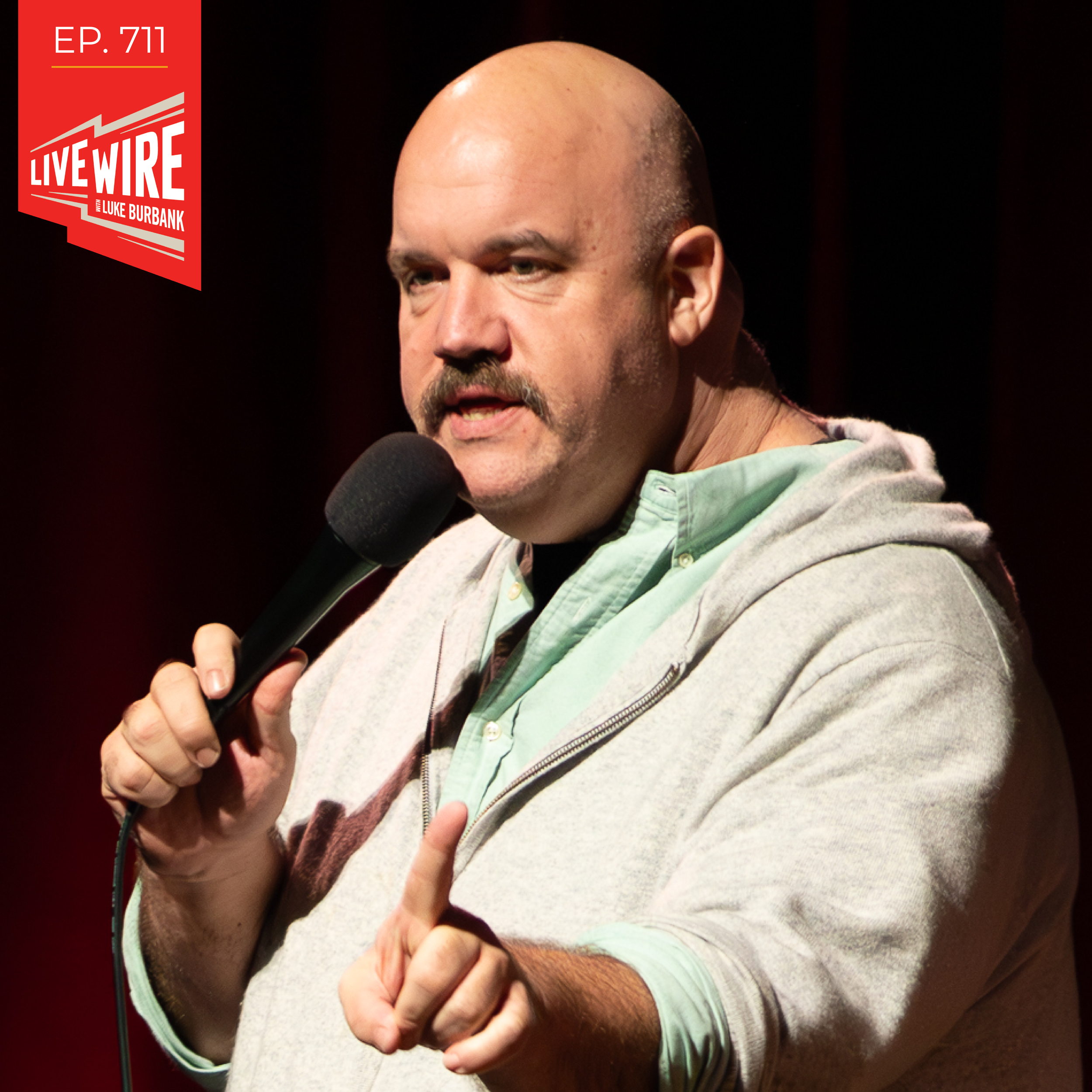
Guy Branum
Comedian and TV Writer
Guy Branum is the creator and host of truTV’s Talk Show The Game Show, a mashup pitting comedians and celebrities against each other for “Best Guest of the Night.” He recently starred in Bros with Billy Eichner and wrote for Mel Brooks’ History of the World, Part II. His book My Life As A Goddess made NPR’s 2018 Good Reads List. You may know him as “Staff Homosexual” on Chelsea Lately or from No Strings Attached. As a TV writer, Guy was supervising producer on The Other Two, wrote for The Mindy Project, Hacks, and numerous other shows including A League of Their Own and Q-Force.
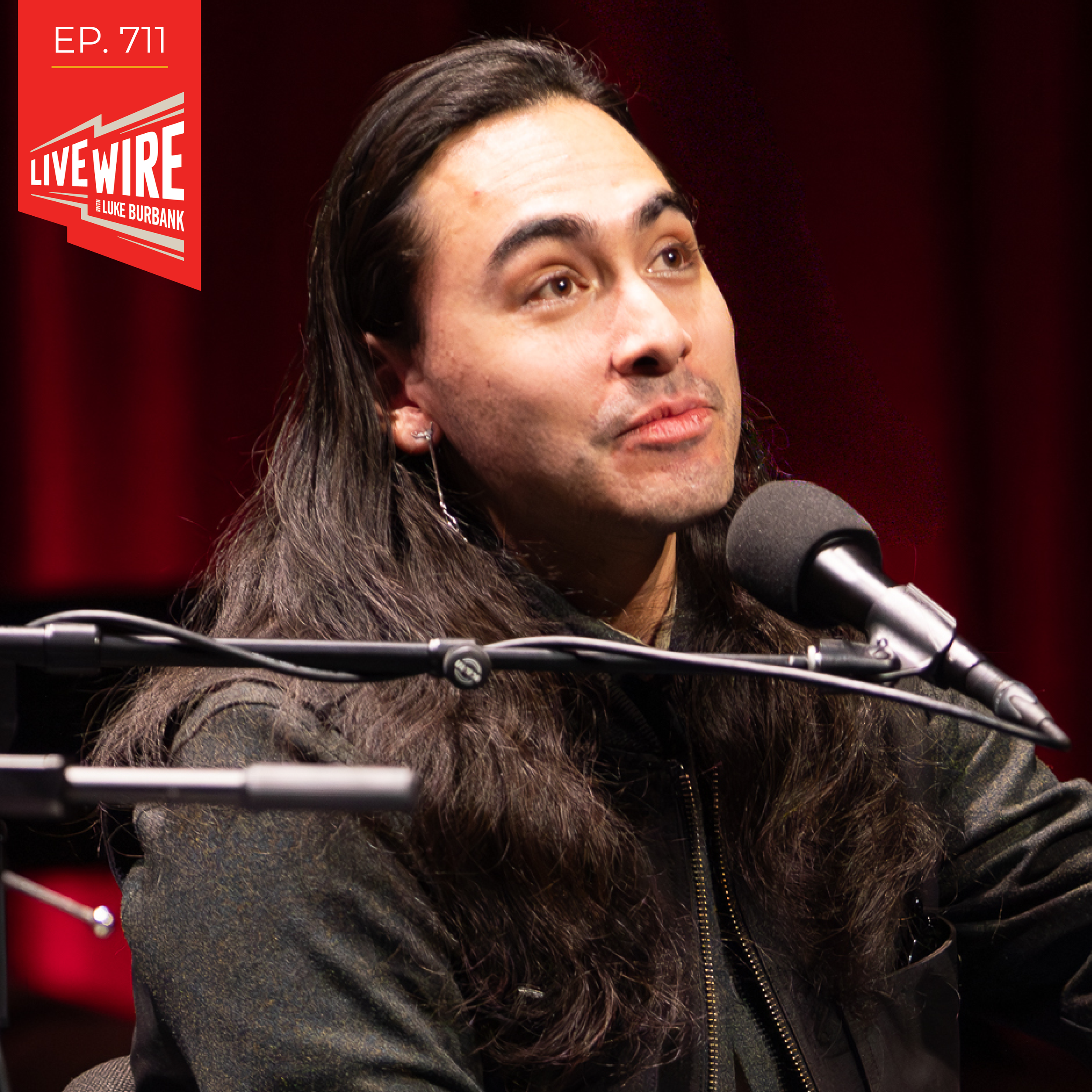
Julian Brave NoiseCat
Writer and Oscar-Nominated Filmmaker
Julian Brave NoiseCat is a writer, Oscar-nominated filmmaker, champion powwow dancer, and student of Salish art and history. His writing has appeared in dozens of publications, including The New York Times, The Washington Post, and The New Yorker. NoiseCat has been recognized with numerous awards, including the 2022 American Mosaic Journalism Prize and many National Native Media Awards. He was a finalist for the Livingston Award and multiple Canadian National Magazine Awards and was named to the TIME100 Next list in 2021. His first documentary, Sugarcane, was nominated for an Academy Award for Best Documentary. Directed alongside Emily Kassie, Sugarcane premiered at the 2024 Sundance Film Festival, where NoiseCat and Kassie won the Directing Award in U.S. Documentary. NoiseCat is a proud member of the Canim Lake Band Tsq̓éscen̓ and descendant of the Líl̓wat Nation of Mount Currie. We Survived the Night is his first book.
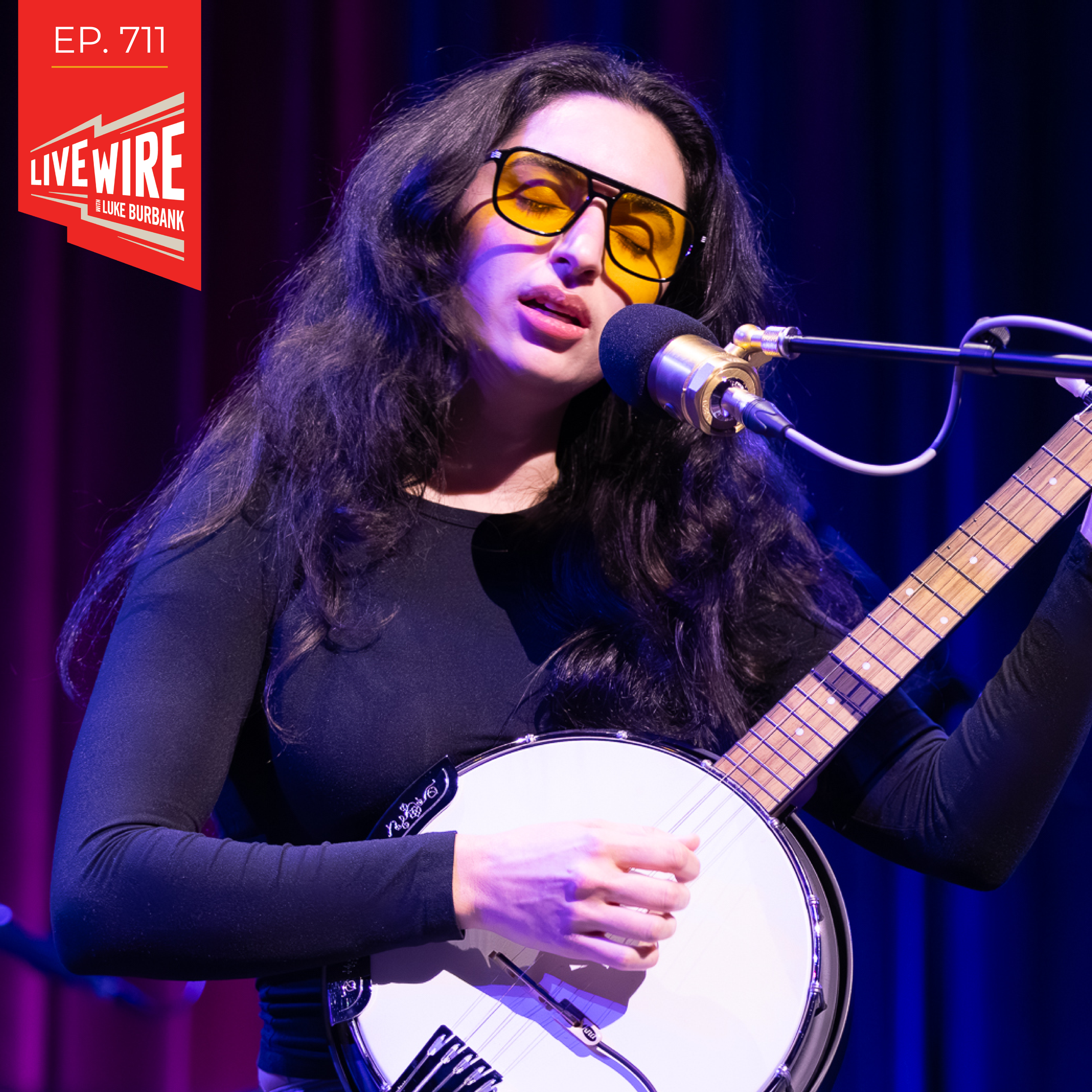
Georgia Maq
Americana Solo Artist
Georgia Maq served as the trailblazing frontwoman of the punk trio Camp Cope for 8 years, confronting music industry sexism with fierce indie rock and earning international acclaim before their 2023 farewell show at the Sydney Opera House. Now based in LA, Maq continues opening up on her vulnerabilities and heartbreaks in her solo career. Her latest release, God's Favourite EP, marks a shift toward soulful Americana ballads, mining themes of romantic and self-love and growing far beyond her Melbourne punk origins.
Show Notes
Best News
Elena’s story: “Music's Most Famous Phone Number, 867-5309, Will Now Direct Callers to a Cancer Helpline”
Luke’s story: “The Lancashire 'toad patrols' stopping the amphibians getting squashed”
Julian Brave NoiseCat
Julian’s new book is “We Survived the Night: An Indigenous Reckoning.”
The cover art is Coyote Sees The World Clearly (charcoal on paper) by American artist Jaune Quick-to-See Smith.
Julian is a part of the Salish peoples of the Pacific Northwest Coast.
Guy Branum
Guy does stand-up about being a “bear,” flying fat on a plane, among other things.
Guy plays Stewart, a recurring character on the TV show Platonic.
On Instagram, Guy has a series called “Only The Old Gays Remember,” an idea that was inspired by fellow comic Tori Piskin. In those videos, Guy references some queer cultural touchstones, including:
The character Calista from the 1992 TV movie, The Secret Life of Mary-Margaret: Portrait of a Bulimic
Meredith Baxter from the TV show Bridget Loves Burney
Actress and singer Anne Jillian (whom Luke compares to Kim Catrall)
Check out Manitoba!
Georgia Maq
Georgia performs her 2026 single, “Tropical Lush Ice.”
Her newest release is God’s Favourite EP.
-
Elena Passarello: From PRX, it's... Live Wire! This week, comedian and writer Guy Branum!
Guy Branum: Jeopardy is old magic like Jeopardy is from when you were 10 and you were like those people are amazing I can do that and it's like well, maybe you can do that.
Elena Passarello: With writer Julian Brave NoiseCat.
Julian Brave NoiseCat: One of the interesting things about Jews and Salish people is that we both love smoked fish. We come by our gastrointestinal issues, honestly. [Luke: Nice, nice.]
Elena Passarello: And music from Georgia Maq and our fabulous house band. I'm your announcer, Elena Passarello, and now the host of Live Wire, Luke Burbank.
Luke Burbank: All right, thank you. My goodness, we have got, we have a lot of shows for you this week. It's gonna be a good one, but of course we've got to kick things off the way we always do with a little segment we call The Best News We Heard All Week. All right, here is how this works. The news is generally speaking, not great, but with enough time and dedication and combing through the, I mean, the far back reaches of the news, there is good news out there and we've found some of it this week. We'd like to present it to you. Elena, what's the best news you heard all week?
Elena Passarello: My best news starts with a question. What is the most famous phone number in America, Gen X? My people.
Luke Burbank: We did not rehearse that for the record
Elena Passarello: My people. I just got goose bumps. Anybody know the name of the band? Tommy Two Tone.
Luke Burbank: Oh, okay. I did not know that part.
Elena Passarello: So I think that song, Jenny, 8-6-7-5-3-0-9, came out in the very early 80s. And apparently it was a real menace for anyone in the country who had the phone number 8- 6-7 5-3 0-9. Apparently there was a North Carolina middle school that had to just go dark because they were getting so many calls. Alabama, Ohio, lots of people. One person said, I'd like to choke that guy who wrote that song. That guy's name was Tommy Heath. He's the co-writer of the song for his band, Tommy Two Tone. He's still touring at 78. [Luke: Wow.] One of the reasons is because he's got loyal fans like y'all who love that song. And recently, a healthcare marketing agency got in touch with him, and they did so on behalf of a global non-profit company called the Cancer Support Community, and also Gilda's Club. And so these are two nonprofits dealing with cancer research, cancer support, Gilda's Club, named after the great comedian, my favorite comedian of all time, Gilder Radner. They purchased CSC, which is I think like 247 or something like 242, 8675309. And now, when you call that number any time, day or night, you will be connected to trained professionals who can give you support. As you go through your cancer journey. Isn't that amazing? [Luke: Yes.] It's just so cool. It's the opposite of what happened at that poor middle school in North Carolina. From what I understand it, you know, when families and people are going through cancer journeys, they often need support at hours, you know, in which they're not in a doctor's office or they're not with their people. But it just seems like such a perfect use for this, like, it's a 24-7 situation where you just might need to reach out and get some kind of information or care or emotional support or conversation. And Tommy Heath, who wrote it, said, you know, like the reason that I'm touring at 78 is because of y'all and giving back to the community that supported me is the least I could do. So that's the best news I heard all week.
Luke Burbank: That's amazing.
Elena Passarello: Really though? Really though, the best news I heard all week is y'all knowing that just from one single question. Thank y'all very much.
Luke Burbank: I couldn't tell you one person's phone number who I've met in the last 15 years, but I could tell you, I don't know many of my siblings' birthdays, but I know 867-5309, so that's very smart. That's very smart.
Elena Passarello: Five eight eight, two three hundred.
Luke Burbank: Three hundred empire. We'd like to welcome new sponsor Empire Carpets, home of a cartoon guy who does the entire carpet in your house with one swipe.
Elena Passarello: Love that guy.
Luke Burbank: The best news that I heard this week takes us over to England, to Northwest England, to an area called Lancashire, and specifically a little town called Dolphin Home, where a woman named Claire Adamson lives. And about three years ago, Claire was driving home was a very rainy night, and she noticed that there had been a ton of frogs and toads that had been trying to get across this rainy roadway and had, let's just say, been unsuccessful. And as she said to the paper, I'm a massive lover of animals. I don't like to see anything getting squished on the roads. So she called up some of her friends and she said, we're starting something called Toad Patrol.
Elena Passarello: Toad Patrol!
Luke Burbank: And only four of them said, okay, I'm gonna help you with Toad Patrol. It was not widely embraced early on. This was a few years ago. And what she and her four friends did is they went out and you know, like reflective stuff about sunset on rainy nights. And they would basically stand at their flashlights and make sure that toads and frogs were getting to the other side. They're trying to go to their spawning pools a lot. And so they, when it's raining out, they just, they tend to move across the roads. This year now, she's got 50 people volunteering to do this. They think they've, they estimate that they've saved, already this year, 700 migrating toads have been carefully helped across the road. This is some advice from Claire, which I'm gonna be honest with you. It seems fairly intuitive on how to help get an amphibian across the road. If you spot a toad, you walk up to it, you check that there are no cars coming because you don't want to put yourself at risk. She said, you pick up the toad. You check what direction it was facing. And you move it to the side of the road that is the direction it was facing.
Elena Passarello: Yeah, that's all it takes.
Luke Burbank: Can you imagine being a toad who was almost to your destination. And Claire just sets you back by like three hours.
Elena Passarello: Yeah, great.
Luke Burbank: I find this story sort of like so lovely because, as you know, I suffer from a self-diagnosed condition I call intrusive animal empathy. I think about animals a lot. And in fact, maybe four nights ago, you know it was crazy rainy around here. I was driving home and I was driving on the kind of road back to my house and it was very wet. And there was a frog in the middle of the road. And I stopped my car and I put my hazards on. I did not pick it up because I do think they're kind of gross. But I was just there with the hazards on, ready to beep at anybody who came the other direction until he got to the other side, which he did.
Elena Passarello: Did it take a while?
Luke Burbank: It took longer than I was expecting. I thought that that was insane behavior, but Claire is clearly much more insane than me when it comes to amphibious transportation across the roads. So the fact that Claire and her friends are over there in Lancashire getting the frogs and toads safely across the road, that is the best news that I heard all week, my friends. Dear Listen to the Live Wire from PRX, our first guest is a writer, Oscar-nominated filmmaker and champion powwow dancer. His work has appeared in a bunch of places, including the New York Times, the Washington Post, and the New Yorker. His documentary film, Sugarcane, premiered at the Sundance Film Festival, where it won the directing award in the US documentary category. And he's got a book out. It's titled We Survived the Night, which weaves together an oral history with journalism and a deeply personal father and son story. All into a searing portrait of indigenous survival, love, and resurgence. Please welcome Julian Brave NoiseCat to Live Wire. Julin, welcome to Live Wire.
Julian Brave NoiseCat: So good to be here.
Luke Burbank: Julian let's, if we could, let's start at the place that you're not supposed to start with the book, which is the cover.
Julian Brave NoiseCat: The cover artwork is actually a painting by Jaune Quick-to-See Smith, who is one of the most significant American painters of the last century. And I say that in part because she was one of the more significant artists to represent the figure who's on the cover of the book, the trickster coyote. And that painting is actually a painting called Coyotes Sees the World Clearly. And there's this kind of crazy story that I tell to open up my book talks about how I got the permission to use that painting on the cover of the book. And then three weeks later, actually, Jaune passed away, she died. And then fast forward to May of 2025, I found myself in New York City on the first Thursday of a month. And so I wandered down to the gallery district to catch a show. And as I was walking out of that show, I turned left and I looked to my left and what was on at the Garth Greenin, but a retrospective by none other than. Jaune Quick-to-See Smith. And so of course I walked in and I was greeted by not one but two of her artworks representing the trickster coyote. So I went up to the guy who looked like he probably owned the place. And I told him like, you know, this is who I am and this is how I'm related to Jaune and her artwork. And he looked at me like I was absolutely bonkers. And then he said, that's crazy. Before Jaune died, she used to joke that she was gonna visit me from the beyond.
Luke Burbank: You kind of alluded to it there, but I mean, the trickster coyote is sort of the third character, if I think maybe of you and your father, and then also your sort of stepfather, Coco. Like, the coyote is a huge part of this story, and you sort of jump between styles of writing, between your story and the coyotes' stories. Why did you choose that format?
Julian Brave NoiseCat: So to write We Survived the Night, I did a really sexy thing for, at the time, a 28-year-old bachelor who'd been living on the East Coast for the last decade of his life. And that was I decided to move back in with my dad. A man who had left when I was about six, seven. We had a complicated history. I'm a child of two worlds. My name might be Julian Brave NoiseCat, and I look the way I look. But my mom's actually an Irish-Jewish New Yorker. So to write this book, which I knew would have a lot to do with my ancestry, with my relationship to my dad, with sorting out those things, I decided to move back in with him. And my dad is a visual artist, so while I would be sort of hunched over my laptop with terrible posture trying to figure out how to write a book, my dad would be out in the garage, which doubled as his carving studio, like leaned over a log, jamming out to Zeppelin, taking rips from the bong. I had this notion that I was gonna ornament the text with stories about the trickster coyote, who was the trickster ancestor of my people who was sent to the earth by the creator to set things in order, but who was a trickster. And so, while he did some good, he was often up to no good. And this began as a very small idea and I actually had not really heard any of these stories told in my life ever before. No, we don't really tell these stories anymore. So to learn them, I had to read them in like old PDFs of ethnographic text that I was finding on like Google Scholar and JSTOR and stuff, you know, learning about my Indian ancestry through the internet. And you know I was reading in the PDF that the trickster coyote was this creator, destroyer, deadbeat dad, survivor. And then I was looking out at the garage carving studio, my father... And then I was looking back at the PDF, and back out at the carving studio, and back at a PDF, and all of a sudden it hit me. I was like, oh my God, my father is the trickster coyote. And that, Ed, yeah, and that insight fundamentally transformed the book I was writing and made me ask a question that I'd never seen asked of narrative nonfiction before, which is what would it be to take these stories, which my own ancestors always considered to be nonfiction, seriously as nonfiction.
Luke Burbank: We're talking to Julian Brave NoiseCat about his new book, We Survived the Night. You're listening to Live Wire from PRX. We're at the Reser in Beaverton, Oregon this week. We're gonna take a quick break, but much more with Julian in just a moment. Stay with us. This is Live Wire. Welcome back to Live Wire from PRX. I'm Luke Burbank here with Elena Passarello. We're at the Reser Center for the Arts in Beaverton this week. We're talking to Julian Brave Noiseat about his book, We Survived the Night. This book is a bunch of things, but at its core it's really the story of you and your dad, Ed Archie NoiseCat. He grew up on the, is it Canim Lake. [Julian: Canim.] Canim Lake Indian reserve. And the fact that he even lived. Was able to live there was an absolute miracle. Can you kind of talk about his early life and how that place shaped him?
Julian Brave NoiseCat: Yeah, so my father was born on August 16, 1959, in the evening and found minutes later in the trash incinerator at St. Joseph's Mission, which is the Indian residential school that my family was sent to, to unlearn our Indian ways, essentially, which was the policy in Canada, as it was here in the United States, by the night watchman who described my father's cries for life as sounding like the noise of a cat. In the local Williams Lake Tribune newspaper, which is kind of crazy, because I mean, you know, my last name is NoiseCat. And it actually only became NoiseCat because the missionaries wrote it down wrong. So it's actually properly pronounced, I guess, Noiskit would be the way that the ancestral name was said. So when they colonized us, you know, and baptized us when we get married, they'd give us Christian names, Catholic names. And so, ways back, my family got the name Archie, which, not a native name. And so basically, when my dad got married to my mom, my father decided that he was gonna reclaim his ancestral name, Noiskit, but at that point in time, it had already kind of transformed into NoiseCat, not knowing. That there was this whole story about his survival that we only learned because I set out to tell the story of his cries for life sounding like the noise of the cat. So in there, there's something about, you know, Indian names and the meaning of that name finding itself in the story of his survival.
Luke Burbank: I was wondering what it was like for you to go between sort of white spaces and native spaces I know that a lot of people because your mom is white as you mentioned your dad is a native a lot of folks that are in that situation have They're often trying to figure out what their identity is and where they fit in and don't fit it It sounds like your mom was very committed to maintaining the native connection in your life What was it like for your to go in between those worlds though?
Julian Brave NoiseCat: You know, some people sometimes ask me about my connection to my Irish ancestry or my Judaism, about my mother. You know one of the interesting things about Jews and Salish people is that we both love smoked fish. We come by our gastrointestinal issues honestly. [Luke: Nice, nice.] You know sometimes people ask me like, well how Jewish are you? Well. Like the night after We Survived the Night came out. I was up late arguing with my buddy David about like left-wing politics so I'm like about like that Jewish and then the next. You know, the next day I went up to Zabars to get like, you know, lox with lox bagel with schmear. And then, you know, people don't usually see me as Irish, but actually three out of eight of my great grandparents were Irish Catholics. And you know here I am doing an Irish thing. You like writing and I learned to write partly because my mother encouraged me to write, and my mother also did a lot to keep me connected to my indigenous family and ancestry. In a lot of ways, the book is also about her and the decisions that she made to keep me connected, but also about some of the kind of crazy decisions she made about people who she was romantically involved with, such as my father.
Luke Burbank: I grew up in the Northwest and heard about the Salish people and the Salish Sea, but I don't know if I have a, until I was reading this book, a conception of actually the geographic scope of the Salist people. Can you describe for folks that wouldn't know where this actually occurs and who these folks were and are?
Julian Brave NoiseCat: Yeah, so the Salish peoples are, we're like a large set of languages. We're an ethno-linguistic group, I guess you could describe us as, in the Pacific Northwest. According to archeologists and linguists and sort of our own oral histories, our people probably originated around the lower Fraser River region, near what is now present-day Vancouver and spread out from there. There are Salish-speaking peoples all the way from Belakula, British Columbia. Historically down all the way to here in the Portland area, all the across to Montana, and there are many different branches and families within our language, which tells linguists and archeologists that we've been here for a really long time. And there are also a lot of interesting sounds in our languages. The language that itself transforms as you speak it. Which is interesting because a lot of our stories are about transformers, like the trickster Coyote himself is a shape-shifter. And also the study of our languages actually helped develop a lot of concepts in linguistics. So basically the way that they are able now to study how languages change over time and diverge was premised on the study of the Salish languages.
Luke Burbank: We're talking to Julian Brave NoiseCat here on Live Wire. His book is We Survived the Night. You were a champion powwow dancer, and this book really kind of delves into that world and all of the artistry and athleticism that goes on with that. What was it about that sort of lifestyle, I guess, that appealed to you? Because it really was a significant portion of your life, right, in your teens and early 20s?
Julian Brave NoiseCat: I've always liked fry bread.
Luke Burbank: That's the only way you get your hands on some.
Julian Brave NoiseCat: No, you know, I grew up in Oakland, California. And every Thursday night, there was powwow drum and dance practice at the Intertribal Friendship House, which is the third oldest urban Indian community center in the country. It was founded in the 50s. And it was a big part of our community that we would all gather around the all-nation singers and practice the American Indian movement song. And also, you know, learn how to dance. And after a number of years when I was a little kid, you know watching everybody else dance because I was too scared to get out there. I mean, you it's like a scary thing to do when you're a little kids. I decided that I was gonna get out and do it and I was encouraged to do so by among other people, a figure who's fairly important in the book, a guy who was kinda like my second dad after my first one.
Luke Burbank: Trickstered out
Julian Brave NoiseCat: Yeah, and his name was Coco, and he taught me how to do the men's traditional dance, which is usually considered kind of like the oldest of the powwow dance styles, because it's based on dances of the hunt and the war. So you got a picture like little chubby cheeked Salish kid in East Oakland, but you know, like tracking like an elk on like cracked vinyl, you know tiles. Like that's kind of what it was to be a native in the late 90s, early 2000s Oakland, California.
Luke Burbank: One of the things about this book that really struck me was how unsparingly honest it is about your life, about your father's life, and about elements of your mom's life. I'm just wondering what was their reaction?
Julian Brave NoiseCat: You know, it's a really scary thing to write non-fiction and also to make a documentary. I feel like I've flown close to the sun with so much intense personal history of my own, of my family's, and somehow I have managed not to get burned so far by it. You know my dad, my mom, my family has all been incredibly supportive of the work that I've done. After reading We Survived the Night, my dad apologized to me for the very first time in his life for the pain that he put me through. He said, I finally understand it a bit. That was after he lost the first copy of the book that I gave him. And, you know, my mom, my mom has been a really, has been also incredibly supportive. She's still my first reader, she's my first editor. So she had to process all that while also like reading as I was figuring it out. And I think that she has bought into the idea that I think is maybe a kind of crazy idea that a lot of non-fiction writers share in, which is like that we can tell hard stories in a way that creates the possibility for reconciliation, which maybe current events in the broader world are suggesting that that is not possible. But I think as non-fiction writers in particular, but hopefully as people who. Who value complicated, hard, contradictory stories about the real truth that's out there in the world, not some like black and white thing that we consume through our phones, is actually something that we can grapple with and reconcile and figure out a way to move forward through these messy things.
Luke Burbank: It is a phenomenal book. We Survive the Night. It's by Julian Brave NoiseCat. Julian, thanks for coming on Live Wire. Thanks, Chad. Thank you. That was Julian Brave NoiseCat recorded live at the Patricia Reser Center for the Arts in Beaverton, Oregon, his incredible book. We Survived the Night is out and available right now. Hey there, Live Wire listeners. It's Luke letting you know that we will be back at the Alberta Rose Theatre in Portland, Oregon on April 9th with New York Times bestseller and all around legend, Cheryl Strayed, plus the creators of Ear Hustle, the podcast that was created and produced in prison, amazingly, plus comedy from Kyle Kinane and music from Patterson Hood of the Drive By Truckers. Get your tickets at livewireradio.org. We'll see you April 9. You're tuned to Live Wire from PRX. Many people may know our next guest as the self-described staff homosexual from Chelsea Lately. Others may be as No More Mr. Nice Gay from his time on Totally Biased with W. Kamau Bell. Then there are those who just know him as the brilliant comedy writer for Mel Brooks' History of the World Part II and The Mindy Project and the show Hacks. We just know as our pal, Guy Branum, who stopped by the Patricia Reser Center for the Arts in Beaverton, Oregon to delight us.
Guy Branum: I am a gay guy, but I am not one of the normal ones. I am what's known as a bear. And what that means is that I am bigger than most gay guys, I am hairier than most guys, and I enjoy mulling hikers in national parks. And I love picnic baskets. The scariest thing about being a very fat person is when you have to fly on a plane, because some people are very upset when they have to sit next to a fat person on a plane. Not so long ago, I was on a flight and a woman sat down next to me and she refused to make eye contact with me, but she called over the stewardess and she said that she refused to put on her seatbelt because she needed to be moved to another seat so she wouldn't have to be next to be. Our arms were kind of touching. Here's the thing. You're being transported across a continent. There might be some inconveniences involved. You might have to take your shoes off at security. You might touch a fat person's upper arm. You know, I want you to think about what that person, I mean, she's crossing a, people used to die of dysentery on the Oregon Trail to go half that distance. And she is being magically transported. In the course of two romantic comedies. I want you to think about what that woman would have had to do to take that same flight 500 years ago. She would have to sign her name in the devil's book. She would've had to locate an unbaptized baby, render down its fat and rub it all over her naked flesh so that she could frolic with her sister-wives of Satan in the moonlight. This lady just had to go have a credit card and go to a website. That joke never does as well as I want it to. Because I hear my audiences are not as familiar with Wiccan flying spells as I would have liked. I was in Portland, I had my hopes. It's too late. But before I go, anyone in the audience have pets? Who here posts photos of their pets on Instagram. You people need to calm down. I am so tired of people posting photos of their stupid apartment dog on Instagram and expecting me to care. It's your dog, it's your deal. Don't involve me in that process. And people treat me like I'm a cruel and unloving person because they don't care about their stupid apartment dog. Here's the thing, I love animals. I grew up on a farm, I loved animals. Real animals with genitals and a job. Oh, but Guy, but guy, we had to have him fixed. If we don't have him fix, you'll just hump the ottoman all around the apartment. Let's hump the ottoman all around apartment. If someone trapped you in a 20 foot by 20 foot room for the rest of your life with no members of your own species and no opposable thumbs, you might develop some interesting masturbatory habits too. Oh, he's so stupid. Oh, Dong is so stupid, he just stares out the window all day long. Your dog isn't stupid. Your dog is very good at something. I don't know what it is. Maybe it is herding sheep. Maybe it's keeping a Chinese empress' feet warm. Maybe it finding dead birds and bringing dead birds back to you, but your dog has a skill. You won't let him do it. You take him to the park two times a week for 20 minutes. You act like you're doing him a favor. Your dog isn't staring out the window. Because he's stupid. Your dog is staring out the window because he is a housewife in 1963 with a journalism degree from Wellesley and two crying kids in the next room. Your dog isn't staring out the window because he's stupid. Your dog is staring out the window cause he's wondering where it all went wrong. Thank you very much. I'm Guy Branum. Guy Branum, right here.
Luke Burbank: On Live Wire. Thank you so much for coming out to Beaverton for this.
Guy Branum: Thank you for having me, Luke. I'm sorry that I called it Portland and not Beaverton. I should have been more specific about it.
Luke Burbank: Before, I was surprised, I didn't know this about you, but before you got into comedy, you were an attorney actually. What kind of law did you practice and did you like it?
Guy Branum: So I went to law school and I only briefly worked as an attorney and my only job was for an insurance defense firm. So I was essentially the bad people in Aaron Brockovich. Not the ones that you see, but the ones behind them who are trying to keep people who have been the victims of a toxic tort from receiving money for their very real health problems. And I just had binders across from me with various kinds of cancer. And I was like, I need to not do this.
Luke Burbank: Really? Were you were you already interested in comedy at that point in writing? What were you what was your creative life like?
Guy Branum: Yeah, I had, I was an undergrad at Berkeley in my last year at Berkeley. I was friends with the guy who'd run the campus paper and he was just like, you should write a humor column for the paper and I did and I really enjoyed that and I had a little bit of stand up and then I went to law school and did nothing fun for three years and was like, I'm miserable and then, I came out of the closet because I thought that that would help. It did not. I mean, in a larger sense, yes, but I was just sort of like, ah. What do I want to do with my life? And I was trying to just point myself back at the last thing I remembered that was good or fun, and that was stand-up.
Luke Burbank: That column that you were writing at Cal Berkeley did, if Wikipedia is to be believed, at some point involved the secret service showing up at your apartment.
Guy Branum: Yes. I said a mean thing about Chelsea Clinton. What? It got improv. I said Chelsea Clinton represents the Stanford ethos of establishment worship, which must be subverted and destroyed. And that was quoted by the Associated Press as Chelsea Clinton dot dot dot must be destroyed. And so the Secret Service came to my house and searched it. And to this day, I'm not allowed around anyone the Secret Service protection. Like, the Kelly Clarkson show last year was like, we're doing a game with Michelle Obama, come host it. And I was like sure. And then the Secret Service was like no. Whoa, you're on the no fly list? Yes, I am on the No Fly List. I can't hang around with any of our living presidents.
Luke Burbank: Wait, so even though obviously they were misconstruing the nature of what you wrote, is there no more due process in America?
Guy Branum: There is no more due process in America. I think we've learned that. Yeah. We have a Supreme Court who essentially has just said, no, he's in charge for the last couple of years.
Luke Burbank: You and Elena share something in common, which is you have both been on Jeopardy. We have. Which I'm endlessly impressed by. I once went and watched it being filmed. I wasn't on it, but just the watching of it, I was breaking out in hives. It seems so hard to do that in real time.
Guy Branum: As I understand it, we both came in a brave second, right?
Elena Passarello: Oh, first place losers, yay! What was your Final Jeopardy about?
Guy Branum: Oh, my Final Jeopardy was about Nobel prizes, and I did get it right. So the thing is, I ended up, I, Elena, am now in the new era when they bring back First Losers for second chances. And so the one thing I am able to say with pride is I managed to get all four of the Final Jeopardies that I came up against.
Luke Burbank: So you've actually done Jeopardy four times.
Guy Branum: Yes. So the thing is, I have been on television a fair amount. I've been on live television a fair amount, and I'm a person who is no longer scared of live television. And I went to Jeopardy and I assumed that some of my comfort being on television would allow me to have more clarity. [Elena: Yeah.] And the answer is no, because Jeopardy is old magic. Like Jeopardy is from when you were 10 and you were like, those people are amazing. I can do that. And it's like, well, maybe you can do that.
Luke Burbank: What were your anecdotes?
Guy Branum: Oh, my anecdotes were about how when I was in kindergarten, my middle name is Michael, and I had been called Mikey my entire life. And then I showed up to kindergarten and there were five Michaels because it was the height of Gen X. And my teacher was like, well, we can't call you Mikey as well, so we're gonna call you Guy. And I was like first of all, that's not a name. Second of all, it's certainly not mine. So it was that. And then my other anecdote was the fact that a show that I am on after I was put in the Jeopardy contestant pool. The show where I'm a recurring character was going to do a plot line at Jeopardy and I had to be there and I was like, is this going to ruin my eligibility because I am like, you know, violating the game show rules by being around them. So Ken is somebody I knew from like College Quiz Bowl and stuff like that. Ken Jennings. Ken Jenning's. And so when when the cast of Platonic showed up to the set, Ken came over to greet me and I yelled, I'm in the contestant pool. No fraternization and ran away. He was understanding, you know?
Luke Burbank: You have launched this incredible project on Instagram. It's a series that's called Things Only the Old Gays Remember. Do you feel the young gays are unaware of some important history? Who are you educating with this?
Guy Branum: Yeah, I mean, it's primarily just to open up the window of, you know, like, people have different windows of knowledge. People have different things that they understand. You know, if you were born in 1975, you were exposed to a number of bulimia TV movies that children born in 2006 don't know about. They don't remember Calista. They don't remember Meredith Baxter Birney. It all came from, there's a very funny comic named Tori Piskin who helps me with my videos and we were doing like man on the street stuff in West Hollywood and I was stopping her to tell her an important piece of gay cultural information every five minutes and she is not a younger gay person. But she was like, you have to do a thing that's called only the old gays remember and then so many people, after I did a couple of them, my friend Ray in Toronto was just like, I was just trying to explain to a bunch of younger gay people who Anne Gillian is. I know
Luke Burbank: Can you enlighten these folks? You describe her as the better Kim Cattrall.
Guy Branum: Yes, which is maybe unfair to Kim Cattrall. Kim Cottrall is amazing on her own terms. Understanding that before Kim Cotrall, we had this amazing platinum blonde shag out there who could sing and deliver jokes and was amazing. And people need to understand her journey and her arc because these are important treasures of queer culture that could be lost.
Luke Burbank: What about the greatest drag performance of all time, featuring Tandi Andrews? Can you describe this a bit?
Guy Branum: Okay, so this is not something I knew about. It's been really wonderful. If any of you guys have things that you want the old gay to remember. Middle-aged, okay? The middle-aged gay to remember.
Luke Burbank: At Guy Branum on Instagram.
Guy Branum: Yes, please message me. But there was a guy I don't know who was just like, hey, you need to know about this drag performance. And it was in the mid-90s. And Tandi Andrews was a trans woman who was HIV positive and had AIDS and was trying to win all of the national drag pageants in the same year. But one of them didn't allow you to compete in another when you had already won one. And so they disqualified her. And she did the greatest love of all. And when in the song it says no matter what they take from me, they can't take away my dignity, she had her national crown on and she un-pinned it and threw it to the side. And it was just this magnificent moment of ownership and artistry in the face of her own mortality. And it really encapsulates the magnificence of what drag can be.
Luke Burbank: It was so incredibly affecting, that moment of taking the crown off. I watched it, it's in your video too, you get to see an example of what you're talking about.
Guy Branum: But it was really cool, the guy who had recommended it, he said that the YouTube video of Tandi had gotten 10,000 new views since that video came out. And, you know, like, our history isn't official or respectable. That's part of what's great about it. But it is something that needs to be communicated because when you're queer, you don't have queer parents. You don't people there who are there to acculturate you. And over the last couple of years, intergenerational contact between queer people politicized and stigmatized in a way that makes people uncomfortable to have these conversations. And also, Gen Z just loves staying at home. But there are conversations that you need to have in the back of a gay bar with an older gentleman or lady or somewhere in between who has a couple of drinks in.
Luke Burbank: Can you talk about the fact that, in your opinion, cigarettes used to be cell phones?
Guy Branum: Oh, I mean, this is one of the videos I did for Only the Old Gays Remember. We were just shooting a bunch of them, and then the woman who lived next door to the girl who was shooting it was outside smoking a cigarette, and I was just nostalgic for like my first days in gay bars, where when you wanted to look cool and not be talking to anyone, you just smoked a cigarette in the middle of the bar in Minneapolis. And now you have to look at your cellphone.
Luke Burbank: I mean i think there's a lot of data that the cell phones are not good for us, maybe not in the same way physically but certainly like mentally and spiritually.
Guy Branum: Cellphones are awesome. I think that they are great and they allow us to stay in contact with other people and information is magical. But I also think, like right now, you can go on your phone and check a piece of information. Elena and I have trained ourselves to be repositories of information so we can buzz in and answer questions. The thing is, it's like, you're like.
Luke Burbank: Cause you did college bowl and everything. This has been a lifestyle for you.
Guy Branum: And it's like, well, why do you need to memorize who all of the best supporting actress nominees of all time are? You could just look at it on your phone. But the thing is, is that on your phone you only find what you look for. And there's something so beautiful about the way that you used to find things that you weren't looking for. Ladies and gentlemen, I once, while just scrolling through an encyclopedia, came upon an entry for a state that did not exist. And I was like, what's going on? Is this fan fiction? And the answer was yes, it was Manitoba. And it opened me up to an entirely different world.
Luke Burbank: For me, I think the main thing that maybe the younger generations have lost with the phones and all the information we have, at least something that was big for me was the only reason that we went anywhere when I was in high school was on the off chance that the person we had a crush on would be at the thing we were going to. And now you can just know if they're going to be at that thing or not very easily.
Guy Branum: Can I respond to that with a semi-salty story? Absolutely. Okay, once I was at Breakfast Republic in West Hollywood and the host was kind of hot and he told me his first name and I put it into Instagram and then the fourth entry down was him and then from there I found his OnlyFans and that's something that was not possible in 1987.
Elena Passarello: Ha ha ha ha!
Luke Burbank: I have to say, you're so funny, but you're also so smart that legitimately, this series on Instagram, I've been watching it and I've learning so much. I wanna recommend to everybody, check out Guy Branum's series, Only the Old Gays Remember. Thank you. Go to school, people. Educate yourselves.
Guy Branum: It's fun school. It's a fun school where I curse and I say things that I shouldn't and you might get mad at me. I said some questionable things about Madonna, and then all of the gay guys with cheek implants came after me. Yeah. Guy Branham, everyone, here on Live Wire.
Luke Burbank: That was Guy Branum recorded live at the Patricia Reser Center for the Arts in Beaverton, Oregon. Make sure to check out Guy's Instagram page. Things only the old gays remember. It's really a treasure trove of a fun and fascinating culture. We've got to take a quick break here on Live Wire, but stick around. Now, I know I always say that, but I actually mean it this time because coming up on the other side of the break, we've got a song from the singer songwriter, Georgia Maq, that is going to give you goosebumps. Or stop you in your tracks, or maybe make you pull over your car, which is just the safest option. And maybe you should do that just as a precaution right now. And then join us here in a moment when we come back with more Live Wire. Welcome back to Live Wire, I'm Luke Burbank. Okay, before we get to this week's musical performance from Georgia Maq, a little preview of what we are doing on the show next week. We're gonna talk to the author and Pulitzer Prize finalist, Karen Russell, about her latest novel. It's The Antidote. It's sort of Grapes of Wrath meets The Wizard of Oz meets Hoosiers. It also features a talking cat. Then we're gonna get some standup comedy from Sam Miller. Sam is a really interesting guy. I started following him on TikTok. And he is very upfront about the times that he has been to jail, which is like several times in his life and what he learned from that. The guy is really one of a kind. Can't wait for you to hear him. Then we're going to have a musical performance from Austin based singer, songwriter, David Ramirez. He's got this soulful kind of gut wrenching vocal style that is really something else. It's intense, but in a really good way. So make sure you tune in for next week's episode of Live Wire in the meantime. Okay. We've made you wait long enough for this. Our musical guest this week served as the trailblazing frontwoman of the Australian punk trio Camp Hope for eight years, earning international acclaim before their 2023 farewell show at the Sydney Opera House. Now these days she's based in Los Angeles and she's a solo artist. She's continuing to write music that really lays bare her vulnerabilities and her heart breaks in some really relatable ways. Her latest release, God's Favorite, marks a shift towards soulful Americana ballads and they're really incredible. Take a listen to Georgia Maq who recorded this live at the Alberta Rose Theatre right here in Portland, OR.
Georgia Maq: Hello.
Luke Burbank: Hello. So Georgia, you're in Los Angeles these days?
Georgia Maq: Yes, I've been here for three years.
Luke Burbank: How's it treating you so far?
Georgia Maq: I really miss free healthcare, but it rocks here. It's so much fun. Everyone's really kind and it's a really strange place to be.
Luke Burbank: Yeah.
Georgia Maq: As someone from the bottom of the earth, this place is pretty cool.
Luke Burbank: I was reading some of your bio and were you in nursing school or about to enter nursing school when Camp Cope really took off?
Georgia Maq: Um, I'd just finished nursing school and then I played in Camp Cope for like five years and the pandemic happened. And then I became a nurse and worked, um, all through the pandemic.
Luke Burbank: So you went through all of that and became basically a nurse, got all that training, but then still decided you weren't done with your sort of musical journey.
Georgia Maq: Yeah, I don't think I'll ever be done with music. It's like a, just a lifelong burden, I guess, that I love so much.
Luke Burbank: Well, what song are we gonna hear?
Georgia Maq: Okay, this song we put out a few years ago but then recently put out the full band version as in like last week and this is my maybe like third time like playing it on the banjo but it's called Tropical Lush Ice and it's just about being a girl. Being a girl in LA, I guess, and no longer smoking cigarettes. Doing something way worse.
Luke Burbank: This is Georgia Maq here on Live Wire.
Georgia Maq: [Georgia Maq performs "Tropical Lush Ice"]
Luke Burbank: Thank you so much. That's Georgia Maq here on Live Wire with Daniel Fox.
Georgia Maq: Thank you.
Luke Burbank: That was Georgia Maq recorded live at the Alberta Rose Theatre in Portland, Oregon. Her EP God's Favorite is available. Well, that is gonna do it for this week's episode of Live Wire. Boy, that flew by. A huge thanks to our guests, Guy Branum, Julian Brave Noiseat, and Georgia Maq.
Elena Passarello: Laura Hadden is our executive producer, Heather de Michele is our Executive Director, and Melanie Sevcenko is our producer and editor. Eben Hoffer is our Technical Director, Tré Hester is our Assistant Editor, Valentine Keck is our Operations Manager, and Ashley Park is our marketing manager.
Luke Burbank: Our house sound is by D. Neil Blake And Aaron Tomasko. And our house band is Ethan Fox Tucker, Ben Grace, Jacob Miller, Alex Radakovich, and A. Walker Spring, who also composes our music. This show was mixed by Eben Hoffer and Tré Hester.
Elena Passarello: Additional funding provided by the Oregon Arts Commission, a state agency funded by the State of Oregon and the National Endowment for the Arts. Live Wire was created by Robyn Tenenbaum and Kate Sokoloff.
Luke Burbank: This week, we'd like to thank members Doug Johanson of Portland, OR and Carol Ford of St. Helens, Oregon. For more information about our show or how you can listen to our podcast, head on over to LiveWireRadio.org. I'm Luke Burbank for my pal, Elena Passarello, and the whole Live Wire team. Thank you for listening, and we'll see you next week.
PRX.
Staff Credits
Laura Hadden is our Executive Producer, Heather de Michele is our Executive Director, and our Producer and Editor is Melanie Sevcenko. Eben Hoffer is our Technical Director, and Tré Hester is our Assistant Editor. Our house sound is by D. Neil Blake and Aaron Tomasko. Valentine Keck is our Operations Manager, Ashley Park is our Marketing Manager, and Andrea Castro-Martinez is our Marketing Associate. Our house band is Ethan Fox Tucker, Ayal Alves, Ben Grace, Sam Pinkerton, Jacob Miller, Alex Radakovich, and A. Walker Spring, who also composes our music. The show was mixed by Eben Hoffer and Tré Hester. Additional funding provided by The Oregon Arts Commission, a state agency funded by the State of Oregon and the National Endowment for the Arts. Live Wire was created by Robyn Tenenbaum and Kate Sokoloff. This week we’d like to thank members Doug Johanson of Portland, OR and Carol Ford of St. Helens, OR.
