Episode 709
Reginald Dwayne Betts, Annabelle Gurwitch, and Max Gomez
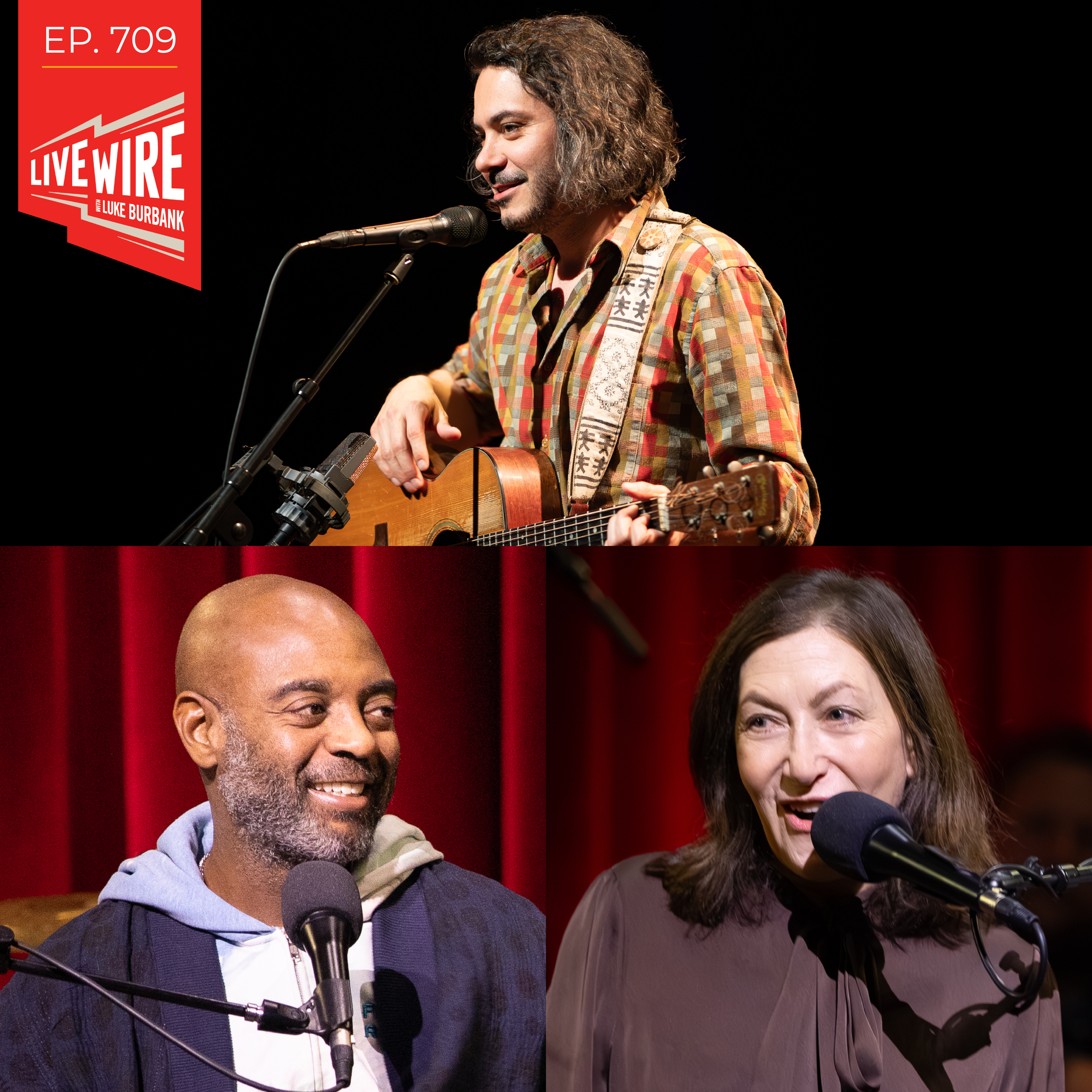
Acclaimed poet Reginald Dwayne Betts explains how dogs of all types found their way into his newest collection Doggerel, as well as his own dogged efforts to build libraries in prisons across America; actor and writer Annabelle Gurwitch reflects on her shocking cancer diagnosis and how she carpe diem(ed) until she found the beauty in the ordinary; and Americana musician Max Gomez gets the crowd singing along to a protest song about his home state of New Mexico, off his latest album Memory Mountain.
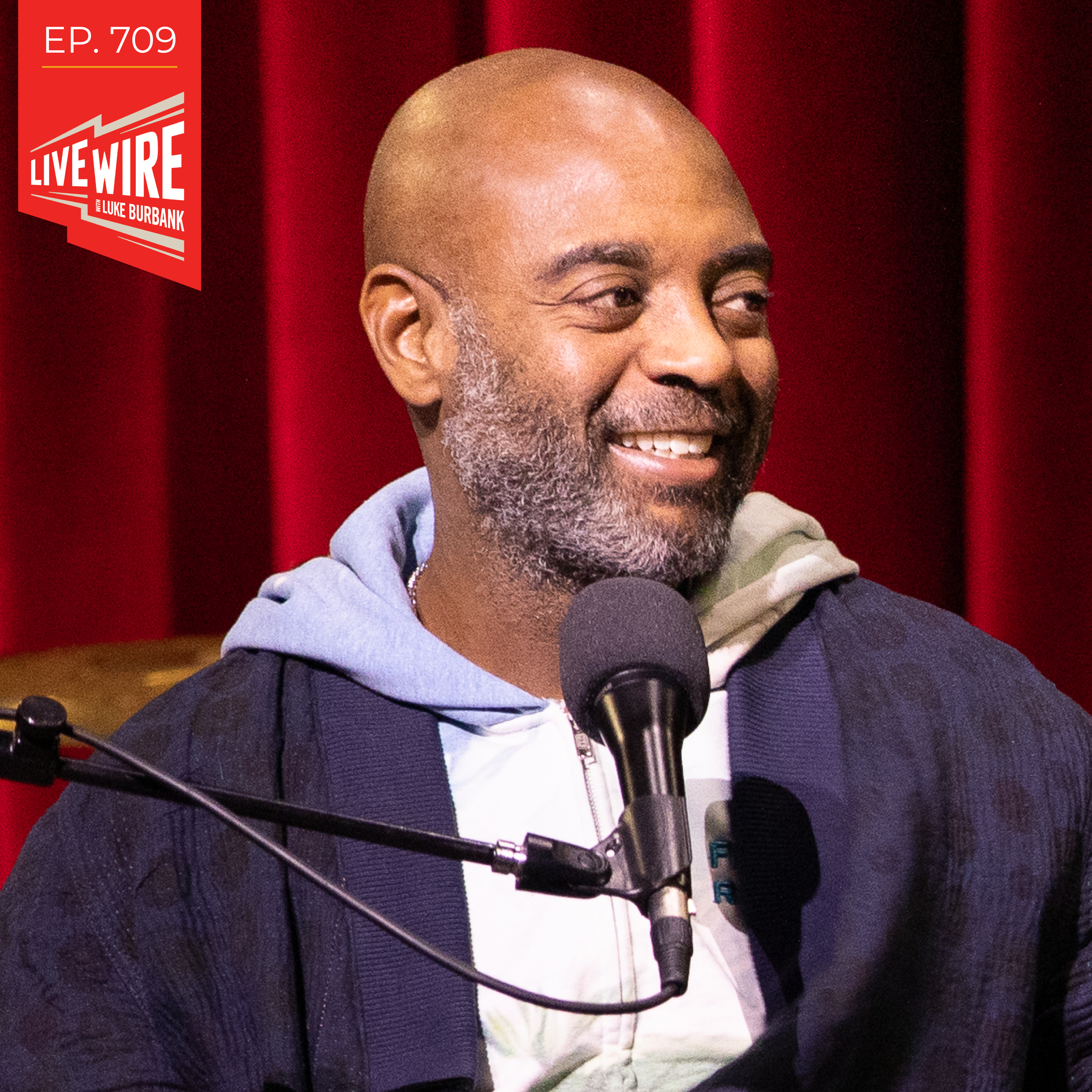
Reginald Dwayne Betts
Poet, Lawyer, and Prison Reformer
Reginald Dwayne Betts is the author of three books of poetry, a lawyer, the founder and CEO of Freedom Reads, as well as a former MacArthur Fellow (2021). His most recent collection. Doggerel, is a majestic new volume of poetry that marks a transformative stage in his life and career. This resplendent tableau ruminates on dogs and the ostensibly trivial joys that transform us—peonies blooming, a “symphony” of wine glasses, father-son bike rides, basketball, seeing and being seen, surrendering to a lover’s touch. Channeling dogs both literally and metaphorically, these poems trace everything from the companionship of Betts’s own Jack Russell Terrier to the ways we are dogged by our deepest desires for connection, love, and repair.
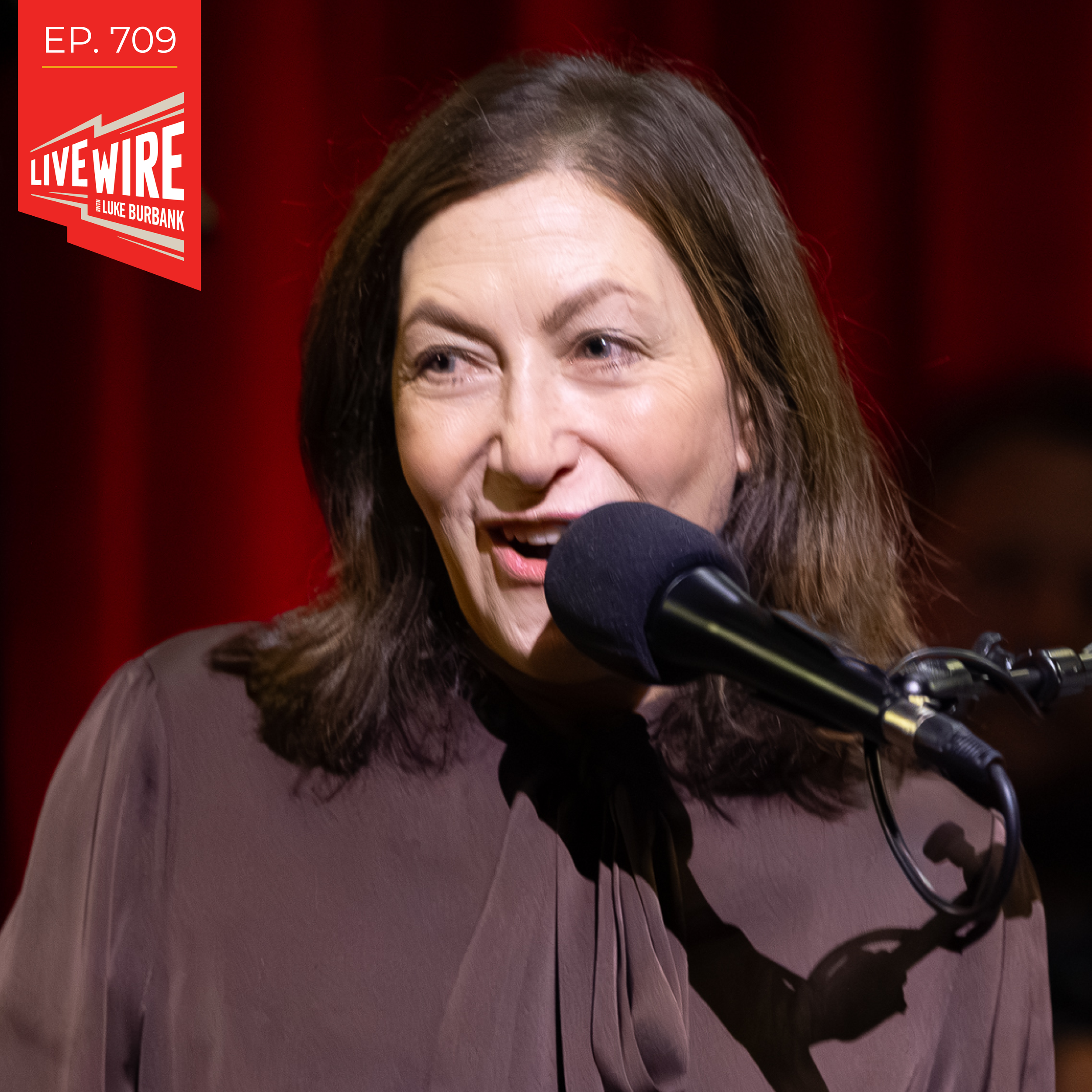
Annabelle Gurwitch
Writer, Actress, and Former Dinner and a Movie Co-Host
Annabelle Gurwitch is an actress, activist, and New York Times bestselling author of six books and a two-time finalist for the Thurber Prize. Her writing has appeared in The New Yorker, The New York Times, The Washington Post, Boston Globe, Wall Street Journal, and Haaretz, amongst other publications. The long-time co-host of Dinner and a Movie on TBS, the most popular cable show on Friday nights during her stint, a regular commentator on NPR, her acting credits include Seinfeld, Dexter, Better Things, and movies Daddy Day Care, The Shaggy Dog, and Ambulance. A long-time activist, she is a frequent contributor to the Economic Hardship Reporting Project, founded by her friend and mentor Barbara Ehrenreich. She is a breast and lung cancer survivor.
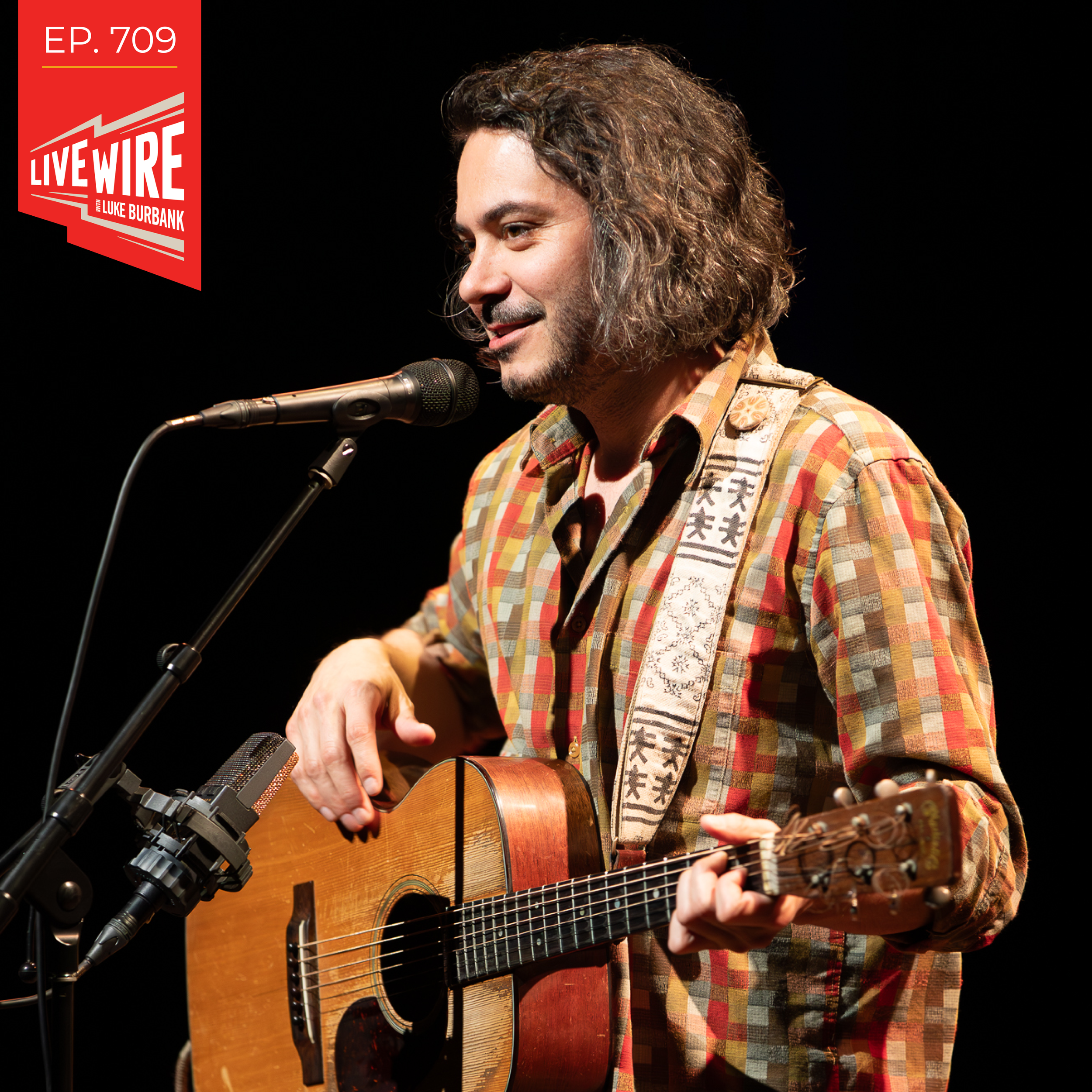
Max Gomez
Singer-Songwriter
Singer-songwriter Max Gomez grew up in Taos, New Mexico, where he fell under the influence of country blues early on and developed a songwriting style that was uniquely his. He received critical acclaim upon the release of his debut album Rule The World (2013, New West Records); and his subsequent EP, Me and Joe (2017, Brigadoon Records), contained a freshly minted classic, “Make It Me,” which has gained over 4 million listeners on Spotify alone. He has shared billing on hundreds of stages with stalwarts of the genre like James McMurtry, Buddy Miller, John Hiatt, Patty Griffin, Tommy James & The Shondells, and Jeff Beck. His forthcoming album, Memory Mountain, will release this summer.
Show Notes
Best News
Elena’s story: “United Airlines passengers must follow headphone requirement to avoid being removed or banned”
Luke’s story: “Punch the monkey is finally making friends and fitting in”
Reginald Dwayne Betts
Reginald reads “On Joy” from his new book of poetry, Doggerel: Poems.
Reginald talks about his experience in prison, and his organization Freedom Reads, which provides libraries for incarcerated people, transforming lives through community and the written word.
Anabelle Gurwitch
Annabelle’s new book is The End Of My Life Is Killing Me.
Max Gomez
Max plays “New Mexico” from his 2025 album, Memory Mountain.
-
Elena Passarello: From PRX, it's... Live Wire! This week poet, Reginald Dwayne Betts.
Reginald Dwayne Betts: I like to double down on a bad idea, so the next thing I know I had like 400 poems about dogs.
Elena Passarello: Actress and writer Annabelle Gurwitch.
Annabelle Gurwitch: I attempted to steal a painting from the wall of the hospital where I'm treated. And it was in the basement. I thought, I'll be liberating it for the people.
Elena Passarello: With music from Max Gomez and our fabulous house band. I'm your announcer, Elena Passarello, and now the host of Live Wire, Luke Burbank.
Luke Burbank: Thank you so much, Elena Passarello. Hey, thanks everyone for tuning in for Live Wire from all across the country this week. We have a phenomenal show in store for you, I promise. First though, we've got to kick things off the way we always do with the best news we heard all week. This is our little reminder that there is good news. Some weeks it's harder than others, Elena, to do this little preamble part. But yes, there is news happening out there in the world, we promise, and we've found some of it for you. Elena, what's the best news you heard all week?
Elena Passarello: Well, my best news is a little bratty.
Luke Burbank: We'll accept it.
Elena Passarello: It's good news for folks who like peace and quiet or as much peace and quiet as possible when they fly on airplanes.
Luke Burbank: Okay, what's going on?
Elena Passarello: According to this article that I read in Yahoo Travel, United Airlines is now making a hard fast rule that you have to use headphones on the plane with all of your devices that are making noise. And you could even get kicked off a flight or even barred from the airline if you don't comply with this now official rule. Well, what was the rule before? I think it was an encouragement. It's a rule on Southwest and an encouragement on Delta, and it was an encouragement on United, but now they're going full-on rule, buddy. So that's good news for me.
Luke Burbank: The fact that this was previously on those airlines just encouraged, excuse me.
Elena Passarello: Yeah, you know, I try to be an open-minded person and a generous person, but there's something about not hearing other people's TikTok scrolls and infomercial ads. It just really helps me to, and you know I have noise-canceling headphones, so I don't even know why this is such a big deal for me. Maybe I just like it when people have to be forced to be considerate.
Luke Burbank: There is something that is, and science should study this, there's something that's uniquely jarring about hearing someone else's phone full speaker when you're on the airplane. I don't know what it is. Also, by the way, I don't have the confidence for other people to hear what I'm looking at on my phone.
Elena Passarello: Ha, yeah, nobody wants to listen to what I'm listening to.
Luke Burbank: I'm probably scrolling TikTok. I'm doing something kind of mindless, but if other people were gonna be hearing what's coming out of my phone, I mean, that also would just be, on both ends of the possible experience, I'd like us to all be wearing headphones. And now that we have the full force of the law, I'm gonna start harrumping even more sort of emphatically. The best news. That I've heard all week takes us over to Ichikawa, Japan, not too far outside of Tokyo, where things seem to be looking up for our friend Punch the Monkey. [Elena: Oh, Punch.] Now, if you're one of the three people hearing this who is not up to speed on the plight of Punch the Monkey, Punch is a little baby macaque monkey at this zoo near Tokyo who was rejected by his mother. Which did you hear about the reasoning they think why the mother rejected him? I didn't know this was a factor for monkeys. They think one, it was her first baby monkey. So sometimes that can be, I guess, traumatizing. And it was a very hot day when Punch was born.
Elena Passarello: I was my mother's first child and I was born on a very hot day, so this is explaining a lot.
Luke Burbank: Uh-huh. I thought wouldn't it be interesting if this is how human childbirth went like the particular day might affect the rest of the relationship so punch was rejected unfortunately and sadly by by his mother And so the zookeepers at this zoo in Japan gave punch a like orangutan stuffed animal That was from Ikea by the way. I'm like it's like The and so Punch was having a hard time making friends and didn't have a maternal figure and so would just kind of like drag this Ikea stuffed animal, which is like four times Punch's size, around the enclosure. And then when the other monkeys would bully Punch, which was happening sometimes, Punch would then run and hide kind of, you know, kind of all pushed up against this orangutan. And this, of course, captivated really the world. The lines at this particular zoo have become, you know, like hours long to get in to see Punch. Well, amazing news, Elena. Punch is now made friends with some of the other monkeys in the enclosure. Punch was recently seen riding around on the back of a monkey. [Elena: Yay!] And not being kicked off.
Elena Passarello: Good.
Luke Burbank: He's using the Ikea stuffed animal less and less as like a kind of a security blanket. And is even now becoming kind of sort of a celebrity destination. This is how you know you've really made it. Lisa from Blackpink, which is a very popular K-pop band, visited Punch the other day. So that was like huge. In fact, there seems to be a whole thing with musicians now really getting bought into the experience of Punch. Apparently Noah Kahan the singer that everybody loves David Byrne has been weighing in on Punch's, um, uh, sort of plight. In fact, Rob Halford from Judas Priest has been filmed with his Punch merch that once you get the guy from Judas Priest on your side, the other monkeys are really going to leave you alone. I would not, I would not mess with a monkey that has Rob Halfords backing him. So Punch seems to be adjusting, you know, better than was expected and is doing fine. And also it means a lot of new revenue for this zoo. So presumably all the animals are going to be doing better. So like Punch going from like rejected to embraced to actually being this like real kind of boon for this zoo. That is the best news that I heard all week. All right, let's get our first guest over here. He's a lawyer, writer, and MacArthur Genius Award winner who spent 20 years using his writing to explore the world of prison and its effects on American society. His latest collection of poetry, Doggerel, was published on the 20th anniversary of his own release from prison, where he served over eight years, much of that time in solitary confinement. The book is a meditation on dogs, hence the name, Doggerel. The literal and kind of metaphorical variety, and it is really an incredible read. This is Reginald Dwayne Betts, who we talked to at the Alberta Rose Theatre in Portland, Oregon. This was part of the Portland Book Festival. Take a listen. Hello Reginald, welcome to Live Wire.
Reginald Dwayne Betts: You know, I've never been on anything like this before. I'm, I'm. Thank you for welcoming me.
Luke Burbank: Well, we're so glad to have you here. I've been a fan of your work and I've been super fascinated by your story for all these years. So it's really exciting to have you here on the stage with us. I'm wondering, did you realize that you were writing a book that was going to feature as many references to dogs as you did when you were working on Doggerel? Or did you just look down and go, I got like 10 poems that seem to have a theme here?
Reginald Dwayne Betts: No, no, honestly, what happened was I probably had like 10 poems, 11 poems that had a theme. But I still didn't know I had a thing. And my friend, Lloyd Groom, was like, you know, I think that you have something going with these poems about dogs. What if you started paying more attention to dogs? And I like to double down on a bad idea. So the next thing I know, I had like 400 poems about dogs.
Luke Burbank: But I wanna be clear to the audience here and also to the radio listeners that like just to say that this book is about dogs would be really under describing it. It's not like a bunch of cutesy poems that like, you know, rhyme with Fido. There is a whole universe of experiences in this book. It just so happens that there also are some references to your dog, Tay-Tay.
Reginald Dwayne Betts: Well, yeah, but you know, interestingly enough, I mean, I think that most people recognize their relationships with their pets as one of the most serious and important relationships they have. But going into poetry, the impulse was that if you want to write poems about this, it can't be taken seriously. And so I wrote the poems out of need at first. I wasn't writing them to be a book. I wasn't writing them, to even share them with anybody outside of the few close friends that I was writing poems for. And then I started thinking, wait a minute. I never saw strangers in the street and thought they wanna hear a poem. But when I started walking dogs and strangers started talking to me about my dogs, it empowered me. So now I'm writing these poems and I'm thinking, oh, this poem is about Tay-Tay. This person is walking a Jack Russell Terrier. We basically cousins.
Luke Burbank: It is like... a lot of this book takes place when you were in Italy, I believe, and you had your sons there. What was the story of that trip?
Reginald Dwayne Betts: I had gotten a fellowship to go to live in a castle for two weeks and write poetry.
Elena Passarello: Oh, sorry.
Reginald Dwayne Betts: It was the most depressing time of my life. Now, you know, honestly, what happened was they set me up in a castle when I happened to be going through a really tragic experience in my life, and I was depressed and I was sad, but I also was getting reconnected to my body in ways that I had never done before. So I started biking, and was having to bike a mile, two, three miles just to get to town. And I would bike and just listen to strangers talk and the cacophony of noises that I couldn't decipher allowed me to get closer to the sounds in my own head. That I could learn to make sense of. And so for me, the rush that became the book didn't even happen at the castle. It happened at the coffee shop. It happened while riding my bike. And the poems in this book, the people that populate this book are people that I met on an Italian countryside. They're the dogs that I meet. It's the restaurant. It's literally the names of two different restaurants that I was, I was. Frequenting that have become the substance of this book. But I appreciate you saying that it's not just about dogs, because I have never written a book in my life that I will say every single page is about me. And every single page in this book is about my, which means that when I stand in front of you and I talk about it, which mean that when I read the poems to people, which means that, when I hand that book to somebody, I know that I'm giving them a piece of my life. And I know that it is a joyous. Beautiful, reflective piece of my life, more so than anything I've written. And so, yeah, I'm happy to talk.
Luke Burbank: On the subject of which, could we could we hear a poem from the book? Could we hear on joy?
Reginald Dwayne Betts: This is the great setup because it's going to be like, I thought it was a good book. On joy. You ask me how. And I realized there are not enough words for joy in this language. Not like in German, where a man can whisper a phrase for relief that roughly translates to, it felt like a stone falling from a heart. The gods must not know the things I've wanted in this world. In prison, a letter is called a kite, as if words alone can gift a man wings. And I want to tell you that my body is a kite swept into the wind. To say some days my heart is the wildest, hungriest thing I know. Whatever about choices. Follow me now, the erratic thing that knocks against my ribcage says, and I have everywhere. Off cliffs and cities whose names I cannot pronounce. In the prisons to walk in Alec in a park with Debbie, to my son's basketball games, to weeping and to down on my knees. To something I've never actually called joy, but just might be. That remembering of all the things I believe needed letting go, only to learn the raft on which I ride into my todays was built with.
Luke Burbank: This is Live Wire from PRX. We are talking to the poet and activist, Reginald Dwayne Betts, about his latest collection, Doggerel. We have to take a very quick break, but when we come back, Reginald is going to talk about this amazing work that he's been doing to build libraries in prisons across America. You don't wanna miss it. We've got much more Live Wire coming your way in just a moment. Welcome back to Live Wire. I'm your host, Luke Burbank, here with Elena Passarello. We are talking to the poet Reginald Dwayne Betts. He joined us as part of the Portland Book Festival, talking about his journey from incarceration to becoming an award-winning poet, to building libraries and prisons all over America. This is through his organization, Freedom Reads. Let's take a listen to that conversation with Reginal Dwayn Betts, recorded at the Alberta Rose Theatre. You know, a big part of your story was your incarceration, and then after that, all the work that you've done for incarcerated people around access to books. And I hope that this question doesn't sound disrespectful to the experience of folks who are incarcerated, but I have friends that have done some fairly long bids. And what they've said is, there's a surprising amount of joy in prison as well. I mean, it's some of the worst experiences and some of their best experiences were happening in there. Were there moments of joy when someone handed you this book of poetry? If I understand right, you were in solitary, and someone gave you a book of poetry. Did that feel like joy to you?
Reginald Dwayne Betts: Yeah, no, and honestly, man, I think that it's something that is so seductive, not about sorrow, but about feeling wretched, that you begin to believe that that's the thing that you should hold on most from your experience. And so I was writing these poems about prison. And what I wasn't talking about was those moments of joy. What I wasn't talking about with the sheer audacity and creativity that comes with saying, if somebody calls out for a book. And I do not know the person's name. And I just say, what cell are you in? And I slide the book that I have to them, like the creativity, the audacity, the belief that what you have matters to somebody else. And that's how I became a poet. I'm in solitary confinement. I call out for a book. And somebody slides, deadly randals, the black poets under my cell door. And I discover poetry. And I'm literally not here in front of you today if that doesn't happen. But there were other moments of joy. I mean, look, yo, I was just in Puerto Rico last week. And I was in a prison in Puerto Rico. And I had translated poems from this book into Spanish. And I read for 25 minutes. And I told jokes in Spanish. But the only reason that I was able to do that is because when I was 16 years old, sent to the county jail with a bunch of adults, somebody was picking on me. And it was a guy that was El Salvadorian. Who likely got deported after his sentence was over, who was an MS-13, who didn't know my name or my mother's name, stood up for me. And when I tried to kick it with him and his homies, I couldn't kick it his homie's because they only spoke Spanish. So I told myself, I'm going to teach myself Spanish. Five years later, I finally got around to it. But the point is, it was real joy. That whole process of learning was joy. I'm talking about, it took me two weeks to learn how to do this. Oh, dude. Thank you. Like, you know, and my homie.
Luke Burbank: I would walk around, I committed to trying to learn Spanish, and I had a decent amount of vocab and a little bit of ability to conjugate, and what I could never get over was rolling my R's. It's the reason to this day.
Reginald Dwayne Betts: You gotta go to prison.
Luke Burbank: Well, when Donald Trump hears this, it could happen, you never know. We're talking to Reginald Dwayne Betts about his latest book of poetry, Doggerel. You started a project called Freedom Reads that works too, I mean, and your story, as you just illustrated, your ability to access the written word was everything to you when you were incarcerated. Can you tell me what Freedom Reads does and why that is so important to the folks that is trying to help?
Reginald Dwayne Betts: Outside of my two sons, I think Freedom Reads is the reason why I have to cop the bin easily, one of the top three luckiest people alive on this planet. I was asked, what would you do for people in prison if money wasn't an issue? And I said, we put millions of people in a prison. I will put millions books in a person. And then that conversation ended up becoming a $5 million grant from the Mellon Foundation. And it ended up becoming a Freedom Reeds organization. We build libraries in prison. They're handcrafted. Bookcases, 44 inches high, it's about waist high, maple, oak, walnut, cherry. The beautiful thing about books is that it helps you transform your life. But the challenge about books is if you only do it inside of the cell, then it doesn't become a locus of community. It doesn't becomes a symbol. So by building a freedom library that lives in the space, in the cell block, so when you walk out of your cell, when you roll off your bunk, you see it every day, it transforms the experience. And we went from an idea to building the first Freedom Library at Angola and at MCI Norfolk, two of the two most notorious prisons in the country. To now we've opened over 550 Freedom Libraries in 17 states. I went from a team of just me to a team of roughly 20. Seven of us have served time in prison. And I can say that I've been in more prisons. I've in three prisons in a week. I've been in more prisons than I ever expect to go to. But to go inside and open sometimes 10, 15,000 books in one day and put them on bookshelves in communities with people whose names we never expected to know has been one of the greatest joys of my life.
Luke Burbank: Have you found it challenging to work with the administrations of these prisons?
Reginald Dwayne Betts: I mean, I was in solitary confinement 45 days before I came home, you know, so I don't have a good working relationship. And we have had no trouble. [Luke: Wow.] One, we built a freedom library for the staff, too. The people working at the Department of Corrections are often, they have high rates of alcoholism, they have higher rates of suicide, they have a high rates at domestic violence. Nobody grows up and says the top five jobs that I could get, one of them includes being a CO. And so I carjacked somebody. I refused to walk into a room and act as if I'm holier than thou, or my enemies are the people that work in the Department of Corrections. I think the people who work in the Department of Correction are facing the same kind of challenges everybody else is facing. And we think about how to work with them. And it hasn't really been a challenge, to be perfectly honest. It has been a challenging sometimes because they're overburdened, because they don't have funding, because they don't resources. Because they don't trust me, why would they not trust me? I have no idea. But you know, but I mean, we have worked closely with them, and they have been some of our staunchest supporters. And more importantly, I am going to spend more of my time getting to success than begrudging the impediments of that success. Because every time we open up a library, we're helping upwards of 200 people incarcerated and their families and the people that work in prisons with every single library.
Luke Burbank: How do you decide on the books, exactly?
Reginald Dwayne Betts: I'm telling you, it's not easy. And you gotta figure 500 books is a whole world. It is a world. Sir Walter Riley wrote a history of the world with 500 books. That's why I chose 500 books, so I can have some symbolism in there. Nice. Oh. You know, we think about it as a browsing library. We think about having it contain poetry, fiction, fantasy. We gotta contain that. You gotta have the classic sci-fi, but you also gotta have, you know, N.K. Jemisin. And then you've got to have that first Raymond Chandler. You've got have Walter Mosley. You've gotta have those first run of the detective books. But then you got to had a history of science. Because I'm saying, if you don't know Coon, you don't know Coong. And so we talked to a lot of people. Jill Lepore was here. We literally talked to Jill Lopore. She gave me a great history book that few people ever heard of. So basically, we tried to stretch the whole spectrum and recognize one thing. The Freedom Library is like a river. You can step in the same river, but you can't step in a same place in the river twice. Sometimes books go out of print. 15% of our books are in Spanish. And so a lot of those go out a print, because there's just not a lot to print it. A lot of poetry books aren't printed, so we put some poetry books out of the print. I feel like I should get more claim from my poets for putting their books out print.
Luke Burbank: Yeah right. When you were incarcerated, could you have ever imagined this world that you would be able to create for yourself and that you put out a book that would reference your Jack Russell terrier named Tay-Tay as much as it does? Could you have expected this?
Reginald Dwayne Betts: Nah, you know, my judge told me I'm under no illusion that sending you to prison would help. But you could get something out of it if you want.
Luke Burbank: And this is your 16 years old?
Reginald Dwayne Betts: I'm 16 years.
Luke Burbank: The judge is telling you, I know this is going to be dangerous and bad for you, but I'm doing it to you.
Reginald Dwayne Betts: Yeah, and he's telling me you can get something out of it if you want. And I just realized this recently. I went into the holding cell after that. And I said, what are you going to do when you get home? I said I'm going to be a writer. And I had never thought about being a writer in my life. But the strange thing about it, and I realize, is that you get to choose if you speak life and possibility into somebody's life, or if you speak deaf, and when a judge said you can get something out of it if you want, the wild irony is that the very next decision I made was about getting something out a prison. And I didn't know I was responding to the judge. But I went in the holding cell. And was like, I'm gonna be a writer. Having never in my life thought of being a writer, not knowing what it was to be a write. So it's not just that I couldn't fathom this. That's one version of it that I can fathom this. But the other version of was it was absolutely necessary when I was 16 to imagine something that mattered ended up on the other side of it. And I'm just grateful that this is the thing that ended up the other of believing that I could make my life matter after I shattered. Hopes of so many people who cared about me.
Luke Burbank: Well, it matters a lot and we're really glad to have you here. Reginald Dwayne Betts, the book is Doggerel. Thank you for coming on Live Wire. That was Reginald Dwayne Betts here on Live Wire, his latest poetry collection, Doggerel, is available right now. Hey there listeners, wanted to let you know that we will be back at the Alberta Rose Theatre on March 19th with the hilarious comedian and internet sensation, Atsuko Okatsuka. We'll also talk to Daisy Hernández about her new book and we will hear some music from one of our very favorites, the folk artist, Laura Gibson. You can get tickets and more information at LiveWireRadio.org and we'll see you March 19. You're tuned in to Live Wire. All right, our next guest is an actress who you've probably seen on Seinfeld or Dexter or the show Better Things. She's also a New York Times bestselling author of six books and was the co-host of the hit TBS show Dinner and a Movie. Now, here's where things get a little more serious. Her new book is titled The End of My Life is Killing Me and it chronicles her life after being diagnosed with stage four metastatic lung cancer. Of course, everybody would react differently to that sort of diagnosis. But for Annabelle Gurwitch, her reaction involved working as the merch girl for a heavy metal band in a European van tour being run by her boyfriend. And you know, just generally learning that sometimes you can, in fact, carpe too much diem. This is our conversation with Annabelle Gurwitch recorded live at the Alberta Rose Theatre in Portland, Oregon.
Annabelle Gurwitch: Gosh, it's nice to be back here.
Luke Burbank: Yeah, welcome back to the show.
Annabelle Gurwitch: Thank you so much.
Luke Burbank: It's so nice to see you. You and I go way, way back in our public radio lives. And when I heard that you'd written a new book, I was very excited. When I heard the topic matter, I was less excited for you. I'm wondering, how was it that you first had a sense that you may have had cancer? If I understand right from the book, the news was delivered from a doctor that you thought might have been trying to ask you out.
Annabelle Gurwitch: Yes. The entire diagnosis came about because I thought that this very cute, you know, Dr. McDreamy guy might have a thing for older women. I had gone to get a COVID test with my son, it was living the dream, having just graduated college at home quarantining with mom. In your childhood bedroom, fantastic. And I was so fortunate enough to be the person in a position where during COVID, I was like, okay, it's my personal boot camp right now. I was hiking every day, felt great. So I was really asymptomatic when this happened. I did not know I was at risk for this disease. And we'd gone for a COVID test. And like I said, Dr. McDreamy. Said, you should get an x-ray. And I was like, I know what this is. Then my life turned into a zombie apocalypse movie.
Luke Burbank: Well, let me just ask this, did he literally come back to you in person and say, oh, you're fine. You're all clear.
Annabelle Gurwitch: Yes, exactly. Fine, no problem, you're going your way. We get on the freeway and there are no cars. Okay, first sign of a zombie apocalypse. During COVID, there were no cars in the free way in Los Angeles. Then the car breaks down. AAA doesn't come. The phone rings, it's Dr. McDreamy. And I turn to my son and I say, still got it. And he says... Um, can you take this call alone or are you in front of your son? I'm like, Oh yeah, this is, I mean, come on, right. It's all happening. So exciting. And, uh, he, I said, no, no. It's fine. So it is like a parent's worst nightmare was that he said, I read the wrong scan results. We spent the next month trying to figure out if I had like some kind of pneumonia, but no, in fact, I had this terrible. What is an incurable disease, and what's been this crazy way, again, like a zombie apocalypse of like your life turning upside down situation is that I was told, and the statistics for how long you can live with this, it is so variable depending upon the particular genetic makeup you have and whether you respond to these new drugs. New drugs have been developed. That turn off one gene in your body. And I thought I was going to die within possibly months. But here I am, five years later, stabilized because of science. Yay, science, and you know, I still have stage four cancer. One day my medication will not work anymore, I'll have to switch to new treatments, but I made of pharmaceuticals and caffeine and I'm really happy about it.
Luke Burbank: But also, as you kind of write about in the book, by the way, we're talking to Annabelle Gurwitch about her new book, The End of My Life is Killing Me, is that's a real like a whipsaw on a person to go from, I feel that I'm perfectly healthy to, I feel I may only have months to live to, actually, I could live longer than that. Did you do crazy stuff in the window of time when you thought you weren't gonna be alive for very long, and then did you have to backtrack any of that?
Annabelle Gurwitch: I did crazy things so I really thought you know okay so here I am what is this opportunity my fingerprints disappeared was a side effect of the medication I emailed friends and said who needs someone murdered but you know only for a really good reason and then I attempted to steal a painting from the wall of the hospital where I'm treated. Because I really love this painting and it was in the basement, I thought, I'll be liberating it for the people. And I thought what's the worst that can happen? Like a life sentence? Ha! I mean, I really and truly went crazy. Then I thought okay, this Carpe Diem thing, I was like, okay, maybe I should have sex. If it's gonna be the last time in my life.
Luke Burbank: Yeah a lot of guys, we're coming out of the woodwork!
Annabelle Gurwitch: Well, you would think, you know, who would want to get into something with someone who's got like a ticking time bomb? Someone with commitment issues. You can't believe the amount of propositions I got. I came forward in the New York Times to write about the diagnosis because I wanted to encourage people to start going back to their doctors during COVID. A nurse wrote me saying she'd marry me and had a great health plan. I've saved her email. Our old boyfriends were coming out of the woodwork. It was so quick. Then I decided, wait a minute. I know who I should see. Someone who also has cancer. So then I looked up cancer dating on the internet, and I found a site for cancer, and I find out that there were 870 cancers in my neighborhood, and it took me a couple hours before I figured out it was cancer, the astrological side. Oh. Ah! So, yeah, I mean, you know, the metric is just different when you think, you know, I'm gonna die. And then I actually started seeing someone. [Luke: Jeremy?] Jeremy, who has a very good sense of humor about, you know, get involved with a writer and your life is over.
Luke Burbank: Your life of privacy is over.
Annabelle Gurwitch: Your life of privacy is over, and I started seeing Jeremy and this man who I had known when we both were married, and he made a proposition to me within three months of seeing each other. He asked me if I wanted to go on a whirlwind trip to Europe, and it's something I write about in the book. So I'm thinking bucket list. He's like, oh, I'm going to go to London and the Netherlands in Paris. And I agreed to go on this trip. We hadn't spent 24 hours together. We'd never farted in front of each other.
Luke Burbank: Thankfully you weren't on any kind of medication that made you need to fart constantly though, right?
Annabelle Gurwitch: I absolutely was. [Elena: Oh, no.] So I said yes to this trip. And then he tells me, you know, I manage bands. And I am going to be driving the van for a heavy metal band that I manage. That's what this trip is. You can come tag along on this low rent van tour if you'll agree to sell merch.
Luke Burbank: Now can we mention the name of the band? It's in the book.
Annabelle Gurwitch: Yes, well the name of the band was Dead Poet Society. Now I had been watching the movie Dead Poets Society with Robin Williams who kept saying seize the day, Carpe Diem, so I'm like oh my God, yes I'm gonna go. I had no idea. I mean this is the dream of a 20-year-old. This is not the dream someone in their 60s. I land in England and I realize and I see the van and it looks smaller than I expected. He opens up the door to the van. The band is sleeping off a hangover they had been playing the night before and out comes like a bag of empty chips, a beer bottle, dirty socks. No one had bothered to clean it up and he says, welcome to your home away from home.
Luke Burbank: Would you have had that sort of equanimity with the whole thing before your diagnosis?
Annabelle Gurwitch: Oh, God, no. You know the thing was it was a sort of a liminal space and from the moment I landed there was there was like two choices: go home immediately or give in to the situation and Every... Well, what was so funny is that every moment I was a reminder that I was the least important person in the van. All of these guys, they were 27. And they were on a trip that they hoped would change their life. And the crazy thing is that their indifference turned out to be the greatest gift for me. Because what I realized that cancer had taken from me was the ability to be ordinary, to be myself in a way that wasn't living through some extraordinary situation. What I say about the band and the book is that I sold $1400 of their merch and they me the gift of indifference. Changed my approach. I let go of the, this is when I realized you can car pay too much diem, right? And so, after that story in the book, the rest of the book is about reframing something that Georges Pareck, the French philosopher, has written about, about elevating the infra-ordinary, looking for the beauty that lies just below the ordinary in your life. Well, it became like a daily, I hate the word practice, but I'm going to say practice.
Elena Passarello: Something I could call it a practice after George Perek.
Annabelle Gurwitch: A practice of looking for ways to change the way I experience my daily life, my ordinary life, without these bucket list things, without being held onto the extraordinary. And so one of the things I started to do was make regular dates with friends. This is like a German concept called the Stammtisch. We make regular dates. I'm a secular person, so I don't have a church community. But I have a friend community and I made these regular dates. I started taking ukulele lessons with two of my friends. You know, I really reject that phrase, you know, cancer can be a teacher because anything cancer has to teach me I'd like to learn in a different way.
Luke Burbank: I wish for you that it didn't take these particular circumstances for you to get to write this book, but I'm glad that it's in the world. And what I would recommend to folks is to get the book, to read the book afterward is really powerful because it's a real kind of sort of how-to for folks that find themselves in this position that you did because it is obviously such a confusing and scary world.
Annabelle Gurwitch: I really appreciate that. You know, this is a little bit of, I don't wanna say self-help. Just education. But strategy and education that I've.
Luke Burbank: Well, it's an incredible book. We're so glad to hear that you're doing well, Annabelle. And we look forward to having you back for the next book.
Annabelle Gurwitch: Thank you. Annabelle Gurwitch, everyone, here on Live Wire. Thank you, everybody.
Luke Burbank: That was Annabelle Gurwitch recorded live at the Alberta Rose Theatre here on Live Wire. Her book, The End of My Life is Killing Me is out and available right now. You're tuned in to Live Wire, okay, we've got to take a very quick break, but do not go anywhere. When we return, we are going to hear some music from the singer-songwriter Max Gomez. He's kind of got some John Prine vibes happening, which if you know me, is like the highest compliment that I can pay a musician. He's going to sing us a song about his home state of New Mexico, which ended up turning into like a sing-along with the crowd. It was actually really, it was a blast and I know you are going to enjoy it too. So stick around, we'll hear it right after this quick break on Live Wire. Welcome back to Live Wire from PRX. I'm Luke Burbank here with Elena Passarello. OK, before we get to this week's musical performance from Max Gomez, a little preview of next week's show, we are going to be talking to the writer and podcaster Kelsey McKinney about her book, You Didn't Hear This From Me. Mostly true notes on gossip. Now, Kelsey was the founding host of the hit podcast Normal Gossip. And from that, she's kind of become like a go to expert on the topic. Then we're going to talk to the award-winning author, Omar El Akkad, about his work of nonfiction. It was titled, One Day, Everyone Will Have Always Been Against This. It actually won the 2025 National Book Award. It's part memoir, it's part manifesto, part breakup letter with the West. Then we are going to hear some really fun music from the Seattle-based indie folk band, Kuinka. So make sure you tune in next week for Live Wire. Meanwhile, this week... Our musical guest grew up in Taos, New Mexico, where he says he fell under the influence of country blues, which is a musical style, not a mental health issue, at least in his life. His debut album, Rule the World, came out in 2013 to all kinds of critical acclaim. And his 2018 song, Make It Me, has been streamed over four million times on Spotify alone. He has played with the likes of John Hyatt, Patty Griffin, and Jeff Beck, before joining us at the Patricia Reser Center for the Arts in Beaverton, Oregon. This is Max Gomez right here on Live Wire. Check it out. Max, welcome to the show!
Max Gomez: Thanks.
Luke Burbank: Your new album is Memory Mountain, which I have absolutely loved. I've been listening to it. Like, it's like, when I first put it on, I think it was maybe Monday of this week, and I thought, oh, this is a perfect Monday morning record. And then I put it in on Tuesday. I was like, actually, this a good Tuesday album. And then, like, I was listening to to it today, and I was like this is perfect for today. Like, do you think about, like when you're, like, writing and recording this music, do you about where and when in time people will be listening to it?
Elena Passarello: No.
Luke Burbank: He's not he's nodding no this is his first time on the radio.
Max Gomez: We you know we did think maybe if maybe this is a road trip record You know those those are kind of like my favorite records a lot of my favorite. Yeah, road trip records.
Luke Burbank: What was the sort of story of the creation of this album? Like, where did the songs come from? Where were you at?
Max Gomez: Well, it's my first ever independent venture. I've long been cast and tattooed and teased as a one-album artist, branded a one album artist for good reason, only had one album.
Luke Burbank: Oh, that was why they said that.
Max Gomez: But I stand before you today and I'm speaking to you out there in Radioland, a two album artist.
Luke Burbank: Yes. That's what they call him.
Max Gomez: Thank you. And yeah, Memory Mountain is the second album and it's out now and you can find it, you know, wherever you may listen and dream. And of course on my websites and things like that, MaxGomezMusic.com.
Luke Burbank: Hey, what song are we going to hear?
Max Gomez: I want to sing you a song about my home state. It's a bit of a protest song. It's a bit of a country song that sort of stands up. For the modern history books here. And it's sort of a sing-along, and I'd really love it if the crowd would cheer a little bit and sing it with me. What do you say, would you sing it with me and cheer a bit?
Max Gomez: [Max Gomez performs "New Mexico"]
Max Gomez: Thank you very much. Thank you, Luke. Thank you Live Wire.
Luke Burbank: That is Max Gomez right here on Live Wire.
Luke Burbank: That was Max Gomez recorded live at the Patricia Reser Center for the Arts in Beaverton, Oregon. His album, Memory Mountain, is out and available now. All right, and that is going to do it for this week's episode of Live Wire. A huge thanks to our guests, Reginald Dwayne Betts, Annabelle Gurwitch, and Max Gomez. Plus, a special thanks this week to Amanda Bullock and the Portland Book Festival, and to Tobey Fitch, who is now Board Chair Emeritus of Live Wire. After 15 years of service to the show, we would not be here without Tobey Fitch. So thank you so much, Tobey.
Elena Passarello: Laura Hadden is our Executive Producer, Heather de Michele is our Executive Director, and Melanie Sevcenko is our Producer and Editor. Eben Hoffer is our Technical Director. Tré Hester is our Assistant Editor.
Luke Burbank: Our house sound is by D. Neil Blake and Aaron Tomasko. Our show was mixed by Eben Hoffer and Tré Hester.
Elena Passarello: Additional funding provided by the City of Portland's Office of Arts and Culture. Live Wire was created by Robyn Tenenbaum and Kate Sokoloff.
Luke Burbank: This week, we'd like to thank members Ariene Clark of Corvallis, OR and Edwin Baiye of Brooklyn, New York. For more information about our show or how you can listen to our podcast, head on over to LiveWireRadio.org. I'm Luke Burbank for Elena Passarello and the whole Live Wire crew. Thank you for listening and we will see you next week.
PRX.
Staff Credits
Laura Hadden is our Executive Producer, Heather de Michele is our Executive Director, and our Producer and Editor is Melanie Sevcenko. Eben Hoffer is our Technical Director, and Tré Hester is our Assistant Editor. Our house sound is by D. Neil Blake and Aaron Tomasko. Valentine Keck is our Operations Manager, Ashley Park is our Marketing Manager, and Andrea Castro-Martinez is our Marketing Associate. Our house band is Ethan Fox Tucker, Ayal Alves, Ben Grace, Sam Pinkerton, Jacob Miller, Alex Radakovich, and A. Walker Spring, who also composes our music. The show was mixed by Leona Kindermann, Eben Hoffer, and Tré Hester. Additional funding provided by the City of Portland's Office of Arts & Culture. Plus, a special thanks this week to Amanda Bullock and the Portland Book Festival, and to Tobey Fitch, who is now Board Chair Emeritus of Live Wire. After 15 years of service to the show, we would not be here without Tobey Fitch. So thank you so much, Tobey. Live Wire was created by Robyn Tenenbaum and Kate Sokoloff. This week, we'd like to thank members Ariene Clark of Corvallis, OR and Edwin Baiye of Brooklyn, NY.
