Episode 703
Tara Roberts, Ivan McClellan, and Danielia Cotton
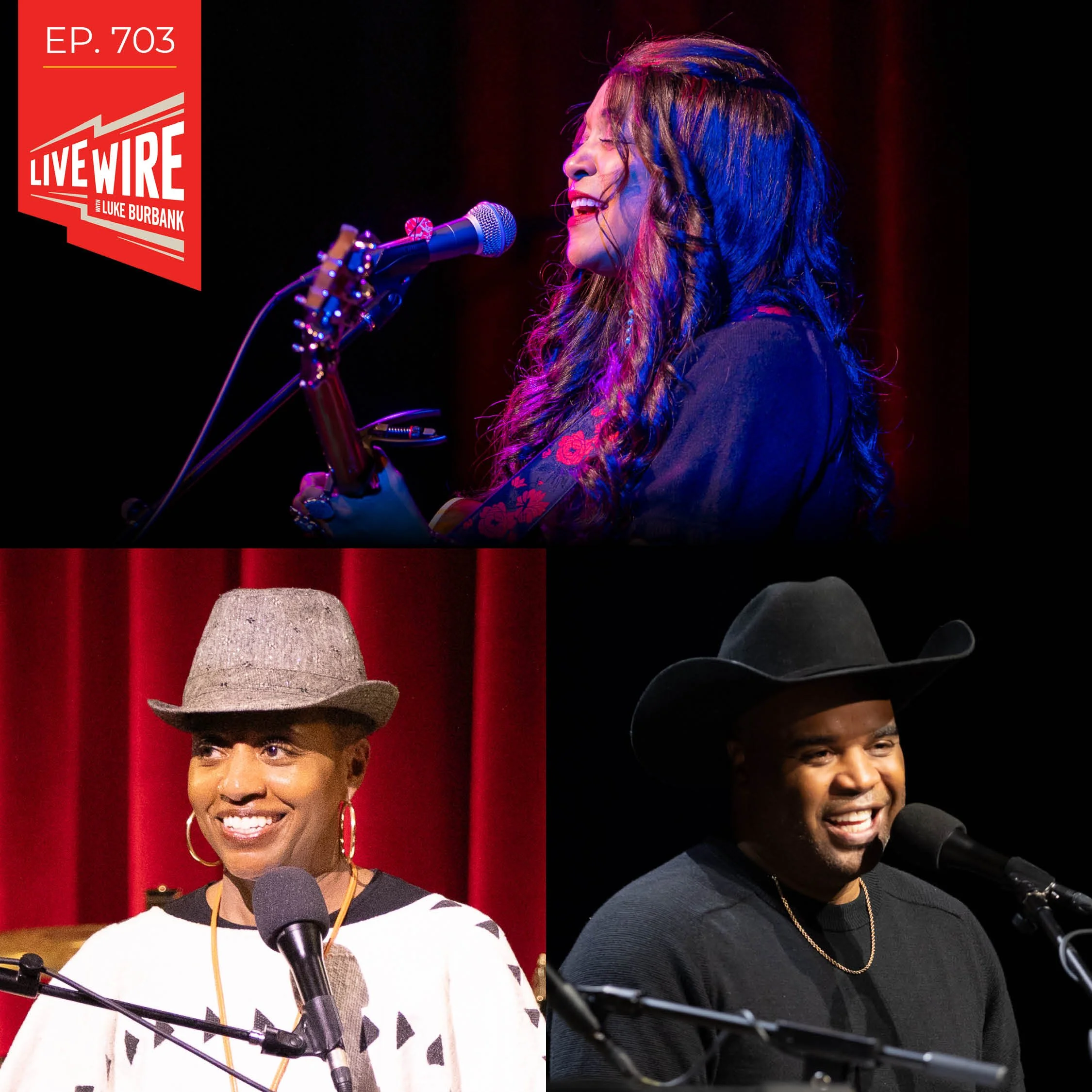
Live Wire celebrates Black History Month with a special episode. Writer and explorer Tara Roberts takes a deep dive into her project and now memoir, Written in the Waters, which follows a group of Black scuba divers dedicated to uncovering shipwrecks from the transatlantic slave trade; photojournalist Ivan McClellan takes us to the dusty trails and discusses his book Eight Seconds, a photographic exploration of Black rodeo culture in America; and singer-songwriter Danielia Cotton chats about her tribute album to Black country star Charley Pride, before performing her own track "Bring Out The Country (In Me)."
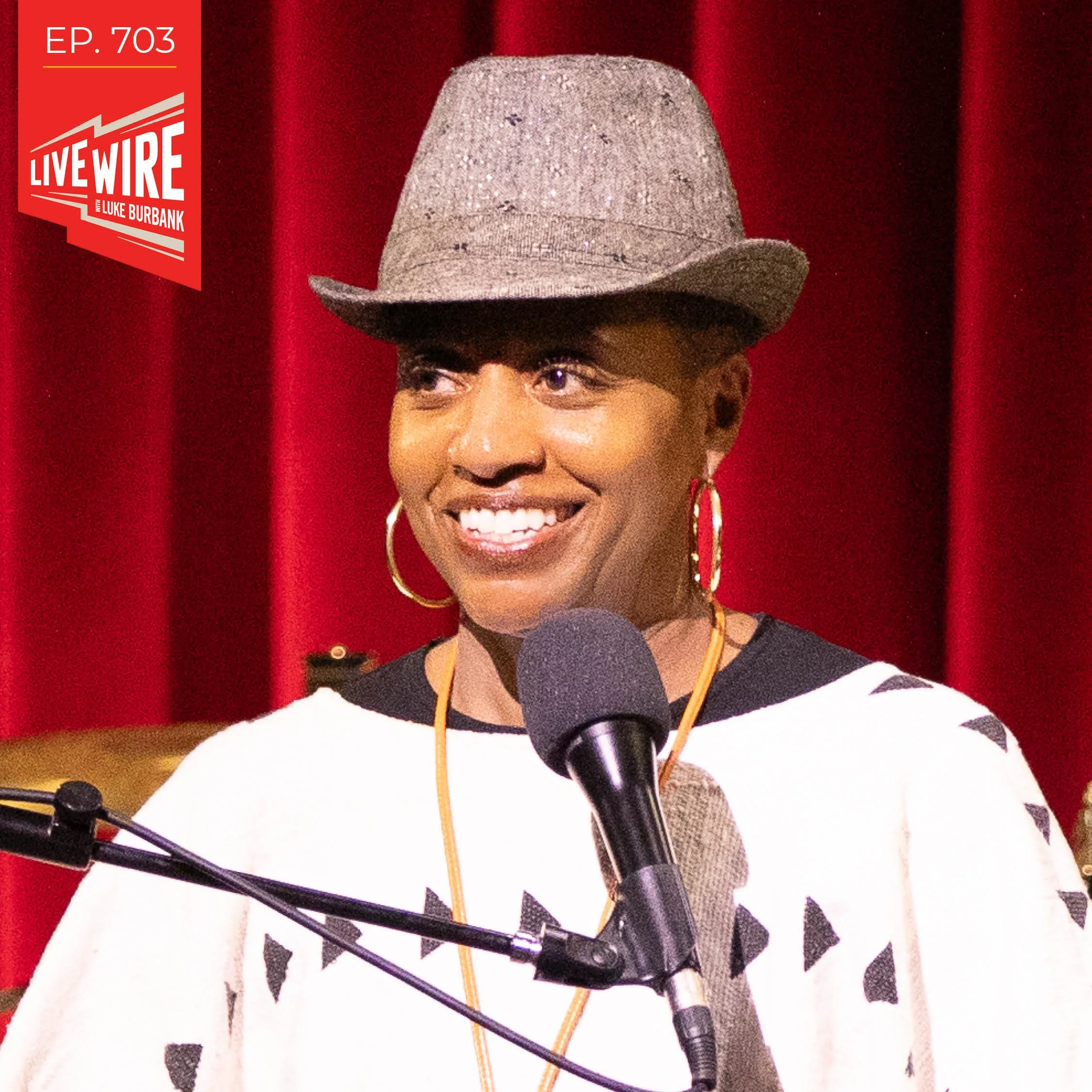
Tara Roberts
Explorer and Writer
Tara Roberts spent the last seven years following, diving with, and telling stories about Black scuba divers as they searched for and helped document slave shipwrecks around the world. Her journey was turned into an award-winning National Geographic-produced podcast called “Into the Depths” and featured in the March 2022 issue of National Geographic magazine. She became the first Black female explorer ever to be featured on the cover of the magazine. That same year, she was also named the Rolex National Geographic Explorer of the Year. Currently, Tara is an Explorer in Residence at the National Geographic Society. Her latest book is Written in the Waters: A Memoir of History, Home and Belonging. Tara is also a former magazine editor and indie publisher, a nonprofit communications director, and editor of several non-fiction books for girls. She calls Atlanta home but loves to hit the road. Her motto is: “Have suitcase, will travel.”
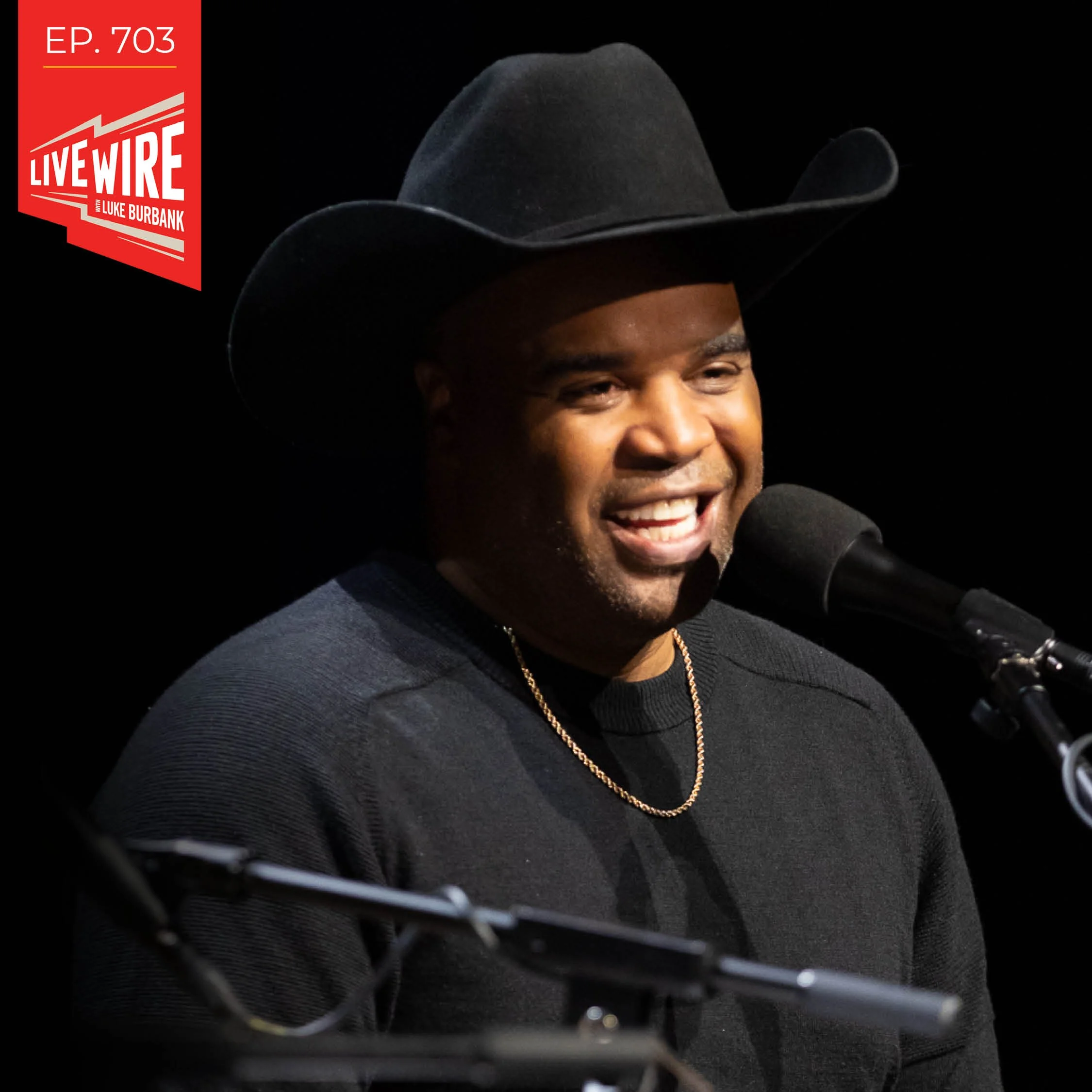
Ivan McClellan
Photojournalist and Designer
Ivan McClellan is a photojournalist and designer whose work has been featured in ESPN’s The Undefeated, GQ, Atmos, Elle, W Magazine, The New York Times, Juxtapoz, and displayed in museums and galleries across the country including Buffalo Bill Center of the West, Booth Museum, and Griffin Museum of Photography. His current project, Eight Seconds, is an exploration of Black cowboy culture around America, in which he reveals the connection between Black folks, the land, and animals, creating a rich narrative and disrupting myths and stereotypes about contemporary Cowboys. His personal connections to the subjects in his photography offer a glimpse into a reality seldom presented by popular media.
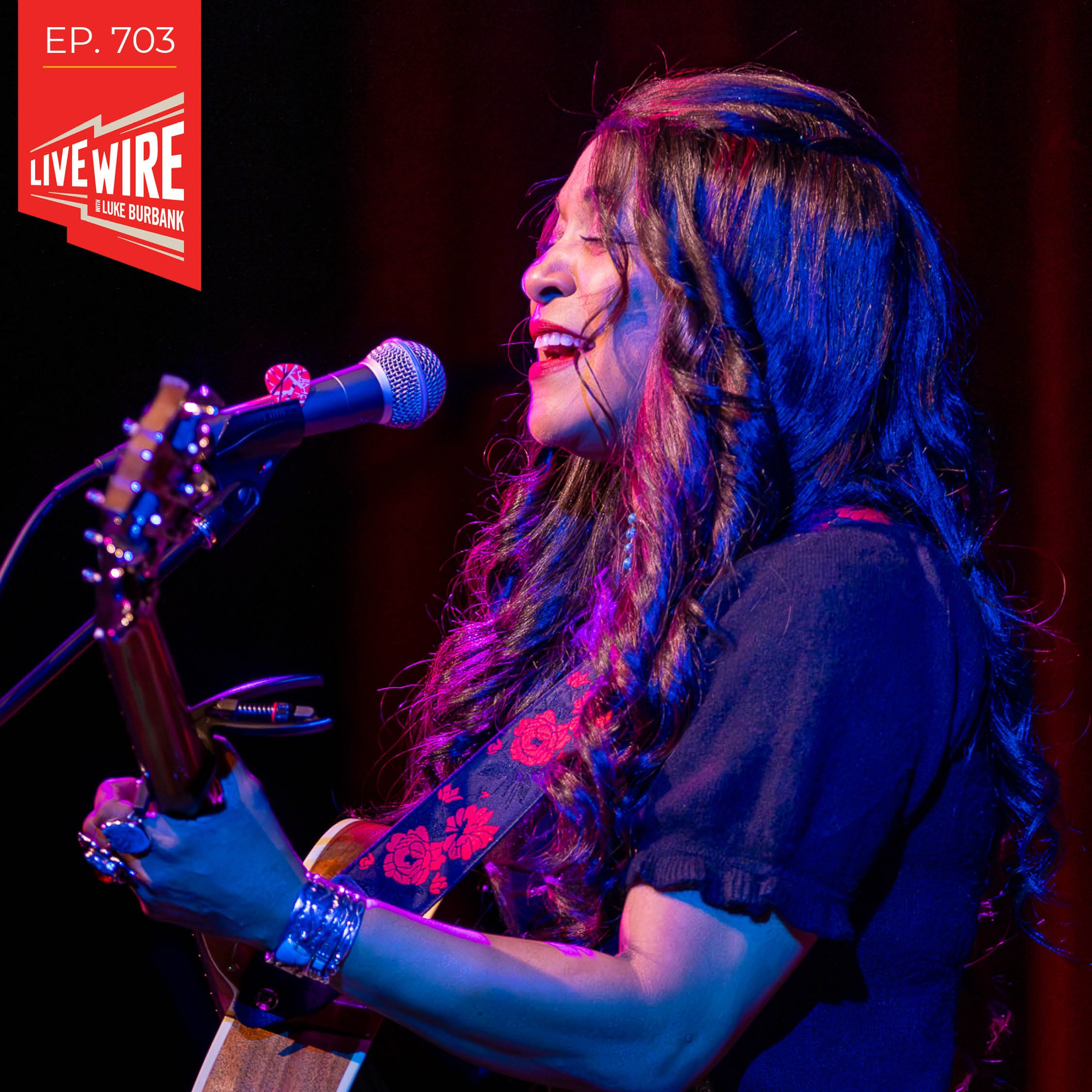
Danielia Cotton
Comedian, Actor, and Writer
Danielia Cotton is no stranger to reinventing herself. Growing up in Hopewell, NJ, Danielia was raised on a steady diet of classic rock behemoths like AC/DC, Led Zeppelin, and the Rolling Stones. With a powerful first album that launched her career, Small White Town, Danielia was selected as “Artist to Watch” by WXPN out of Philadelphia. Danielia's latest project, Charley's Pride: A Tribute to Black Country Music, pays homage to trailblazer Charley Pride—the first Black American voted into the Country Music Hall of Fame—while infusing the songs with a fresh, modern approach that is all her own.
Show Notes
Tara Roberts
Tara’s book is Written in the Waters: A Memoir of History, Home, and Belonging.
Around 2016, Tara visited the National Museum of African American History in D.C. (which she likes to call the “Blacksonian”) and discovered a photograph that made a lasting impression on her.
This specific photo highlighted Black women in wetsuits, as a part of the scuba and underwater archaeology group called Diving With a Purpose (DWP).
She immediately wanted to be a part of it. Tara is now a member of the group.
Tara talks about the legendary marine scientist Dr. Albert Jose Jones, who founded the first Black Dive Club in the United States and later the National Association of Black Scuba Divers.
She also talks about the significance of the Henrietta Marie, the first ever slave ship to be found and documented in 1972, after it sunk around 1700. This groundbreaking discovery ended up being the impetus for the formation of Diving With a Purpose.
A story of survival that Tara mentions inspires her is about two Danish shipwrecks off the coast of Costa Rica, the Fridericus Quartus and Christianus Quintus, which disappeared in the early 1700s.
Ivan McClellan
Ivan’s book of photographs is Eight Seconds: Black Rodeo Culture.
His Instagram account, @eightsecs, was the initial phase of the project that culminated in the book.
Ivan’s first ever rodeo experience was at the 2015 Roy LeBlanc Invitational Rodeo in Okmulgee, OK.
The making of Charles Perry’s The Black Cowboy Documentary is mentioned as a part of that story.
Ivan is the founder and CEO of the 8 Seconds Juneteenth Rodeo—which is considered the first black rodeo in the Pacific Northwest and takes place here in Portland, OR. Learn more about it here.
Danielia Cotton
Danielia performs "Bring Out The Country (In Me)" from her special album dedicated to country music's first Black superstar, Charley's Pride: A Tribute to Black Country Music.
-
Elena Passarello: From PRX, it's... Live Wire! This week, writer and explorer Tara Roberts.
Tara Roberts: There's so many stories around the trade and they're not just stories of tragedy and trauma. They're also stories of rebellion.
Elena Passarello: Photographer and rodeo boss, Ivan McClellan.
Ivan McClellan: It is awe-inspiring to see a black man or woman on horseback. It symbolizes freedom, independence, and living on your own terms.
Elena Passarello: With music from Danielia Cotton and our fabulous house band. I'm your announcer, Elena Passarello, and now the host of Live Wire, Luke Burbank.
Luke Burbank: Hey, thank you so much, Elena Passarello. Thank you everyone for tuning in from all over America to this week's Live Wire. We have a special episode of the show this week. We're celebrating Black History Month and we're gonna be sort of breaking up our normal format because we have so much show. We gotta get to it right now because we've got some incredible guests for you this week. Our first guest spent the last seven years on an epic journey alongside a group of black scuba divers. Searching for the remnants of shipwrecks around the world. These were ships that had been transporting enslaved people. And she turned that journey into an award-winning podcast. It's called Into the Depths. And it's also a critically acclaimed memoir now called Written in the Waters, a memoir of history, home, and belonging. She's also an explorer in residence at the National Geographic Society. This is Tara Roberts, who joined us at the Alberta Rose Theatre in Portland, Oregon, back in November. Take a listen.
Tara Roberts: Thank you.
Luke Burbank: Tara Roberts, welcome to Live Wire.
Tara Roberts: Thank you! Thank you for having me!
Luke Burbank: So this story for you starts when you were in the National Museum of African American History in D.C., which you call...
Tara Roberts: Blacksonian.
Luke Burbank: You're at the Blacksonian.
Tara Roberts: Thank you.
Luke Burbank: This was in about 2017, I think.
Tara Roberts: Yeah, 2016, 2017.
Luke Burbank: And you write that it was, in ways, a difficult visit to that museum because there is so much pain and there's so much history that is being displayed, but also you saw this photograph that just like stopped you in your tracks.
Tara Roberts: Literally. So here's the story. I go to the museum, and I take my time. It's a big museum. I don't know if any of you have been. Yeah, it's an incredible space. I take time going through the museum and I end up on the second floor. And it's this quiet floor that lots of people skip because it's in archival floor. But I end up there, and I see this picture. Of a group of primarily black women in wetsuits on a boat. That's all it was. But I had never seen a picture of a group of black women and wetsuit on a vote before. So it touched me. And I say this in the book. It's a little extra, the way that I say it. But it really felt like, I don't know, like the clouds parted in that moment. In. Angels started singing and there was like a spotlight on that picture that just stopped me. I was mesmerized by it. And I think that's partly because it took me back to my childhood. I grew up in Atlanta and my mom was a reading teacher. It was just me and my Mom. She used to bring these books home for me to read all the time and I loved them. But the books that I loved most were fantasy and sci-fi books. I love stories with magic and dragons and unicorns and heroes on adventures and on quests. So when I saw this picture, it made me connect to it. And it made me want to be a part of it.
Elena Passarello: And you didn't know what they were diving for, what they were doing, if they were on vacation. You had no context for the photo, but you just knew that the photo was speaking to you.
Tara Roberts: Right, well, you know, for the first couple of seconds. And then I read. [Luke: Right. You read about?] I found out who they were.
Luke Burbank: And one of them is this guy, Dr. Albert Jose Jones, AKA Doc Jones, who I love, there's a line that says, Jacques Cousteau was the white Doc Jones.
Tara Roberts: Yeah.
Luke Burbank: Tell me this guy's story.
Tara Roberts: Oh, Doc Jones is a legend in the black scuba diving world. So one, there's a black scuba diving world. Woo-hoo!
Tara Roberts: Yes, yes!
Tara Roberts: And Doc Jones is credited as having founded the very first Black Dive Club in the United States. And this is what's amazing, is that that club was founded over 60 years ago. Yeah, right? And then he also founded the National Association of Black Scuba Divers, which to date has about 3,000 divers around the world. And I think he's clocked in. Don't quote me on this, but I feel like it's over 10,000 dives. He's in the scuba diving hall of fame. He's incredible.
Luke Burbank: Can you tell me about the Henrietta Marie sort of where the book starts in a way?
Tara Roberts: Yeah, so the Henrietta Marie, it's an English ship that made several journeys. It is, I think, an important ship because it was the very first slave ship to be found and to be documented. What's really beautiful about this ship is that the group, so these women, are all a part of a group called Diving With a Purpose. And this is what they do. And so, actually, the Henrietta Marie happened before this group was officially formed. But it was the impetus for the forming of Diving With a Purpose. And what's amazing is that Doc Jones and the National Association of Black Scuba Divers raised money to actually put a plaque down at the site. That's like an incredible, like, one of the first... Memorials to this history. And here's a little context just to get, I feel like this is a crowd that appreciates stats. Thank you, Mike.
Tara Roberts: I feel like, yeah, some stats would be good. So just two stats. And I always share these because I think they help contextualize the trade and they help to contextualize this work. So the first stat I want to share is that there were approximately 12,000 ships that brought 12.5 million Africans to the Americas. So 12,000 ships. But the thing that amazes me the most about this, this is what I realized when I learned this, is that when I was growing up, I couldn't tell you the name of a single one of those ships. But yet I could tell you about the Mayflower, I could tell you about the Titanic, but I didn't know a single name of one of the ships. The second stat that is, like this is the one that really sits heaviest on my heart. I learned that there were approximately 1.8 million Africans who died in the crossing from Africa to the Americas. And I always say this, we're not talking about the number of people who died on the march to the ships or the number people who died once the ships arrived and they were enslaved. Just in the ocean. It's 1.8 million people. I think those people deserve to be acknowledged. They deserve to mourned.
Luke Burbank: And something that you write about in the book is that very, very few, I think it's like maybe less than 20 of the possible thousands of ships that were slave ships that sunk have actually been located because there's not a huge financial incentive. They're not necessarily full of treasure or, so this horror that was the slave trade is sort of compounded by the fact that there's not Interest or enough interest in going and trying to find and honor the people who were who were part of it And this is obviously what Diving With a Purpose is trying to In a small way rectify but it's such a huge job and there's so much about The diving part of It that I like did not know about till I read this book first of all What was your like level of scuba diver? Ability before you fell in with this group of people Tara Roberts: Zero.
Luke Burbank: For the radio listeners, Tara is making a double zero. That'd be none. So you had to like, and it's not like just, you're not in like the swimming pool at the Y like you're in the ocean, right? To get, to get certified, like you have to do ocean dives, right.
Tara Roberts: I'm from Atlanta. But Atlanta is very landlocked. I love to swim. I grew up in pools, but I didn't know anything about the ocean. So I had to learn.
Luke Burbank: And what was that like? Was it scary? Because honestly, I'm fairly comfortable in the water. I've never been to any depth in the ocean like you had to do for the book and also just for the training of it. Is it messed with your mind to actually be down there?
Tara Roberts: Yeah, but I will say this for me, like it's different for everyone and I bet we got scuba divers in the room. Yes, there's some scuba-divers in the rooms. For me, I really love water. I took to scuba diving completely. Like to me, it's almost like I got introduced to this magical, beautiful world that I didn't know. There's something that is so meditative and just calming to me about diving that it wasn't scary at all. Like I will never, I won't say never, but likely I will not be an astronaut in this lifetime.
Luke Burbank: Wait till Jeff Bezos' next divorce.
Tara Roberts: Oh, okay. [Luke:That's my plan.] Well, I will say, there's something about scuba diving that makes me imagine what it's like to be an astronaut. I feel like when I'm below the water or below the surface, I feel I'm flying. You know, it is just so freeing and beautiful, so I love that. And the thing that we're learning with Diving With a Purpose, we become, when we do their training. We become underwater archeology advocates. So we're down there below the water with clipboards and Mylar paper and pencils and measuring tape. And we're measuring the artifacts on the ground. So it is work where we are bringing back into history or back into memory history that is missing and that has been lost. And that just feels amazing. So it's not just the diving, but it's also the work that we're doing that just is so fulfilling.
Luke Burbank: This is Live Wire from PRX, we are talking to Tara Roberts about her memoir, Written in the Waters, a memoir of history, home and belonging. We've got to take a very quick break here, but stay with us more with Tara in just a moment here on Live Wire. Welcome back to Live Wire. I'm your host, Luke Burbank, here with Elena Passarello. We are celebrating Black History Month this week on the show and chatting with Tara Roberts about her memoir, Written in the Waters, a memoir of history, home, and belonging. The book traces her experience with other black scuba divers as they searched for sunken slave ships around the world. Let's get back into that conversation. As you describe in the book, the shipwrecks don't often look like we think a shipwreck might. You think you're going to go down there and it's going to be perfectly preserved. And it's like you're looking for these very, sometimes very small little indications of where stuff has built up. And I mean, the technical precision that's necessary, like you said, that all of the geography and geometry of it is very, very calculated and scientific.
Tara Roberts: Yeah, absolutely. The search for slave shipwrecks in particular doesn't start in the ocean. There's likely, there's probably no way that you would be able to just go for a dive and happen upon a ship. And that's because most of them were made out of wood. They were built in the 1500s, 1600s, 1700s. So when they wreck, they splinter on the ocean floor. And then over time, the ocean reclaims them. So now they are parts of reefs, or they're parts of marine life, they're part of homes of marine life. So you don't just find one. The work for diving or finding a slave shipwreck, it starts in the archives first. So historians do the work of combing through the records to see where ships went down. And there are a lot of records, and that's because. The transatlantic slave trade was big business, and a lot of money was made off of it. So a lot the ships were insured, and then if they wreck, a lot of these financial backers file claims because they want to get paid. And so all of that is recorded. You know, when you have an insurance claim, the insurance company is like, well, we're gonna check out everything.
Tara Roberts: It's the same case with these ships. So they check it out. And then once the historians have located a possible location, then the mowing the lawn comes into effect. And they use all sorts of equipment to go up and down the ocean over a particular area looking for anomalies. And then, once they find that, then the scuba divers go down to actually put eyes on it and to see what it is. And then they test those things with the archeologists.
Luke Burbank: There, I didn't realize this, but there were also rebellions that went on on these ships. And in fact, they were often led by women.
Tara Roberts: Yeah, but I think the biggest point is that there's so many stories around the trade that are unknown and that deserve to be known. And they're not just stories of death and tragedy and trauma. They're also stories of rebellion, of survival, of creativity. And yes, it was the status that one out of every 10 ships experienced a rebellion. And often those rebellions were put down pretty brutally. But you had people on there who were not passive, people on there who were resisting. They were people. They were more than just victims or more than statistics. So what we're doing with this work is trying to bring these stories. Back into memory, we're trying to reduce the trade to human scale so that you're actually thinking about people versus this horrible thing that you don't wanna think about. And all the stories, again, they are not just stories of death. Like there are a number of stories that they survived these wrecks.
Luke Burbank: Those are the like the Christianus and the Fredericus, right? [Tara: Yes.] Tell us about that.
Tara Roberts: Ok, Ok. So that's a great story. It's two Danish ships that went down in Costa Rica in the early 1700s. And I mean, it's a fascinating story, because we've got a little bit of time. But the crew actually mutinied on those two ships. And they took over the ships. Because they didn't appreciate the direction of the captain. And they also, they got lost. So they didn't make it where they were trying to go, and they ended up in Costa Rica. And when the crew mutinied, they decided to let all of the captive Africans in the cargo hold go. And so those people were let go on the shores of Costa Rica, and they disappeared into the hills. And then there are all kinds of stories in Costa Rica about what happened to them.
Luke Burbank: And you went and talked to folks who were descendants of those people.
Tara Roberts: Yes, and the amazing thing about the Costa Rica story is that the people who found the pieces of the ship were young people between the ages of 14 and 18. So these young people who find the evidence and who end up getting the community excited about this find. And then the community decides to invite the archeologists in to explore. A lot of times it's just the opposite, where archeologists go into communities and they tell the community what's important, they do the studies, and then they leave and they take their information with them. But in this case, the community was like, oh no. This is ours, and you're going to acknowledge the young people, we want them credited. So it's quite an inspiring story in Costa Rica.
Luke Burbank: One of the big themes in this book seems to be your journey of wanting to understand this history, but also wanting to not be re-traumatized to a point where you might not be able to come back from it. Because as you mentioned, these were three-dimensional human beings who lived all kinds of lives and it's not just their story of sadness, but for you as a black person to really sit with that information and the other Diving With a Purpose folks talking about. Unfog their diving masks from tears. I guess my question is, now that you know so much more about this and the Middle Passage than you did back when you were in the Blacksonian all those years ago, do you feel informed, traumatized, all of it?
Tara Roberts: This might be a little bit of a surprising answer. I think what I feel more than anything, being a part of this work, is I feel a profound sense of joy. Because I realized that I have, we have these other divers, these historians, these archeologists, we have raised our hands and we have said, we're not gonna wait for anyone else to prioritize this history. We're gonna volunteer our time to go down and to bring it up from the depths. That means that I can say to the ancestors who were lost, I see you. I haven't forgotten about you, and I'm gonna help tell your story, because the thing is, I always say this, the transatlantic slave trade is one of the most monumental events in human history. It changed everything. 400 years of ships traversing the Atlantic created wealth, it destroyed wealth, it changed landscapes, it created trade routes that we still use today. It changed everything, and yet we don't study it. It is not black history, or it's not just black history. It's not American history. It's global history. Europe, Africa, North America, South America, and the Caribbean would not be what they are today if not for the trade. So it is my deepest joy to help bring this history back into memory because I also believe that the trade served not only those things. But it served to connect us. There is a way. Europe, Africa, North America, South America, the Caribbean, we are a part of each other. If you just think about the transfer of cultures, of ideas, of religions, of goods, of people, we are part of of each that we can't undo. So I always... Imagine this, and I always ask this question, if we could see that connection, if we can see, truly lean into how we're connected to each other, could that change how we think we're responsible for each other? So to me. To me, this work is all about healing and honoring. And that gives me a great sense of joy to be a part of it.
Luke Burbank: Well for folks who, like me, did not know nearly enough about the specifics of this, a really good place to start is this book, written in the waters, a memoir of history, home, and belonging. Tara Roberts, thank you so much for coming on Live Wire.
Tara Roberts: Thank you. Thank you!
Luke Burbank: That was Tara Roberts right here on Live Wire, her book, Written in the Waters, a memoir of history, home and belonging is available now. This is Live Wire, all right, our next guest is a photojournalist and designer whose work has been featured in ESPN, GQ, and the New York Times. His book of photography, Eight Seconds, explores black cowboy culture in America through photos. It's a culture that has been around for a long time. It even predates Beyonce, making it cool if you can believe that. He's also the rodeo boss. That's the real name for the job. Of the eight seconds Juneteenth rodeo here in Portland. Take a listen to this, it's Ivan McClellan. We recorded this at the Reser Center for the Arts in Beaverton back in May of 2024. Ivan, welcome to the show.
Ivan McClellan:Yeah, thanks for having me on here.
Luke Burbank:This book is phenomenal. I mean, just the photography in it is incredible, the subjects, the subject matter, which I think a lot of people maybe aren't as aware of. I'm curious, growing up, what was your sense of the existence of black cowboy culture?
Ivan McClellan: I grew up in Kansas City, Kansas. There were black cowboys around, but I didn't really think of them as cowboys because my mom took us to see Tombstone and there were no black people in that movie at all. No extras. I don't even think there was a black horse in that movie. It was just, it is pristine white. And so watching that and the Beverly Hillbillies and Bonanza reruns and Gunsmoke and stuff like that. I thought, well, Mr. Wills down the street has cows, but he's not a cowboy, because that's what white guys do. We would go to church on Sundays and we would stop by a place called Benjamin Ranch and we were ride horses in our church clothes every once in a while. I'm surprised. Every once in a while.
Luke Burbank: I'm surprised that you were allowed to do that.
Ivan McClellan: Yeah, grandma would let us do it every once in a while. We couldn't do it every Sunday. It was something that I enjoyed. Whenever we'd have like the church picnic, they would have pigs and cows. So we were like country and we kind of thought of our upbringing like that. But but cowboy and really wasn't wasn't anything that I recognized or identified with.
Luke Burbank: Because the pop culture of it was so dominantly white.
Ivan McClellan: Yeah, there was you know, I didn't see any any black country singers I didn't see you know You we would see like you would see a black man in a cowboy hat But that was like in in in blazing saddles Sheriff Bart smart. Or Pee Wee's Playhouse. [Elena: Cowboy Curtis.] Cowboy Curtis Yeah, was on there. And so it was just sort of like a joke, like what if a black guy was a cowboy? Wouldn't that be funny? Was sort of the thinking that I had, but I didn't know anything about the history and really didn't identify the people around me like that.
Luke Burbank: How did you then end up at the Roy LeBlanc Invitational?
Ivan McClellan: So I left Kansas City, Kansas, I moved to New York City, started a design career, ended up getting a job out in Portland in 2011. At the companies that I worked for, there would be like 200 people there and I'd be the only black person. So I felt really uncomfortable. I had imposter syndrome and was just sort of wearing chinos and nobody knew who Luther Vandross was and it was just like, sort of like, like awkward. So, I was at a party one day, and this filmmaker came up to me, and I turned around, he's a black guy. Tall black guy, salt and pepper Afro. His name's Charles Perry. I asked him what he was working on, and he said, I'm working on a movie about black cowboys. I said, oh, like a western. He said, no, a documentary. And I think I laughed at him, because I was like, where did you find these black cow boys at to do your documentary? And he was like well, come with me to Okmulgee, Oklahoma. This summer, there's a black rodeo down there. I want you to come down and take pictures and see it for yourself. And I went, it was 105 degrees down there, it was 100% humidity. There were grasshoppers jumping on my clothes. I was wearing my work chinos and I was wearin' wingtips with no socks. And there were like chiggers biting my ankles. It was pretty rough. But there were thousands of black cowboys. Thousands of them and they were. Doing the Cupid Shuffle in their boots, and they were riding horses in Jordans with no shirt and chains, and you know, women were riding the barrels with their braids blowing behind them, and their acrylic nails clutching the reins, and it was just like this beautiful mixture of Western culture with Black culture that I was familiar with.
Luke Burbank: We're talking to Ivan McClellan about his new book, Eight Seconds: Black Rodeo Culture. When did you start to think, okay, this actually should be a book?
Ivan McClellan: You know, it was years. I mean, this was 2015 that I went to my first rodeo. And I kept going back year after year just to be immersed in the culture. Because I loved it. I loved the fashion. I loved to smoke turkey legs. I loved all of it. Just being there was like a vacation for me. So I ended up going to like 10 of these rodeos a year around the country.
Luke Burbank: Oh wow.
Ivan McClellan: Um and really didn't do anything with the photos for a long time my wife eventually was like hey this is kind of expensive what are you doing what's the what's the move and um I started an Instagram account and started posting the photos on there and people were really receptive a lot of people were like oh I didn't know anything about this either black folks and white folks alike so that started moving it was really during the pandemic that I was like I think got something here. Portland was shut down. Everybody was double masked when they were like running. It was like, it was like the apocalypse here. Oklahoma, nope, the pandemic didn't happen there for some reason, like it was, it was completely open. People were eating at Chili's like, and they were having like these rodeos with people on top of each other. So I was like taking pandemic vacations down to Oklahoma and really, really got into the work during that period and it started to get, started to develop into a book around then.
Luke Burbank: There's a foreword in this book that's written by the bull rider, happens to be a black man, Charlie Sampson. And it's kind of charming because he's, you know, complimenting you and how he felt really connected to you when he met you, but also that you did not know your way around a horse. He was calling you out for being a bit of a tenderfoot or whatever.
Ivan McClellan: In my own book. Yeah.
Luke Burbank: Yeah, right. And you included it. I wonder what that was like for you to to immerse yourself in this culture where there's a real value in knowing how to ride a horse, knowing your way around the scene. And you must have not known your way around the scene at all when you started. Was that intimidating?
Ivan McClellan: Yeah, absolutely. Like, I mean, the first thing you do is, when you meet someone is you shake their hand. And, you know, I met a guy named Robert Kriff and he had hands like 12 grit sandpaper. And my hands are like dragonfly wings because I work in tech and design. And, it's just like the minute that you meet someone they know that you're not of the culture. But that's okay, that's completely fine because they're just as curious about me as I am about them and they want to know why I'm there and why I am interested in it.
Luke Burbank: When did you add the cowboy hat to the fit?
Ivan McClellan: So I was dressing like this, shooting these rodeos and somebody came up to me and they were like, you can't be up on the buck and chutes, you cant be hanging out on fences dressed like that, you gotta dress the part if you're gonna be here. And so the next rodeo I came back I was wearing jeans and belt and boots and a hat. Um, the first time I wore my hat, I had it on backwards.
Ivan McClellan: And somebody. It's really difficult. [Luke:I mean, like, you know, honestly.] [Elena: That looks fine.] [Luke: That looks exactly the same.] But somebody came up to me and was like, hey, that looked better if you wore it the other way. And I was like oh, man. I'm out of control. But you know, now I've got my hat shaped. You know, I've got it together. I wear it a specific way. I always double check and make sure I'm wearing it the correct way when I put it on. But it's really like at my rodeo and other rodeos, it's the expectation that I have this thing on.
Elena Passarello: Does it change the way you take pictures when you're dressed like full out versus the Kansas City Royals hat and the linen shirt?
Ivan McClellan: Yeah, yeah, I think so. It's actually a lot less comfortable, you know, than like showing up and shooting a rodeo and sneakers and sweatpants. And sometimes you got to get out of the way. I will shoot in the dirt while somebody's riding a bull. And when they get off, the bull is, you just looking for anybody to take revenge on. And so I've had to jump over fences and boots are not the right thing to be jumping over fence in, you know, I'd rather have on some cleats or something like that.
Elena Passarello: Plus you look more like the dude that pissed him off. You know, if you're aware of the Kansas City Royals, you might want to go back.
Luke Burbank: Go back to the chinos, the bull will be like, that wasn't the guy that did this to me.
Ivan McClellan:That's somebody's grandpa.
Luke Burbank:I was wondering if you wouldn't mind reading from the book. It's a book of photography, but there is this letter that you've kind of written to the idea of black cowboy culture and why you've become so attached to it. Would you mind reading that?
Ivan McClellan: Yeah, absolutely. March 27th, 2023, 3.05 p.m. To the cowboy culture that has taken hold of me and changed my life. As I sit down to pen these words, my heart fills with admiration for everything you represent. You're not just a way of life, but a symbol of resilience, courage, and determination. For centuries, you have braved the harsh conditions of the open range, tamed wild horses, and herded cattle across vast stretches of land. You have faced the unpredictable forces of nature and humankind and embraced a changing world, all while never losing your spirit. From the first shutter click, I knew there was something special. The first day in Okmulgee, Oklahoma in 2015, I entered Oz and was transfixed. Hundreds of black people were already there, sitting in a shade, conversing with each other, having beers, barbecuing. And listening to gospel, R&B, and hip hop. It had the atmosphere of a family reunion, a church fundraiser, and a party all rolled into one. People were selling bedazzled cowboy hats. Women were braiding hair out in the lawn. It was black culture, and it was cowboys. Your embodiment of camaraderie and solidarity reflects a hallmark passed down through generations. It's not uncommon to see cowboys saddling up each other's horses, helping friends into the shoot. And tightening bull ropes, loaning a vest or holding each other's hats. The cowboy culture fosters a natural willingness to lend a helping hand, but it's not just a sense of community that makes you unique. There is a certain romance and beauty to your way of life that many people can only dream of. The vast open spaces, the endless blue skies, and the quiet solitude of loping in a ring. It is awe-inspiring to see a black man or woman on horseback. It symbolizes freedom, independence, and living on your own terms. Cowboy culture has always been synonymous with hard times, and I have seen it firsthand in my journey with you. Losing friends and acquaintances along the way, sometimes taking the last photo of people before they were killed or arrested. Their life attracts folks with a grit to push past the odds and continue despite their trauma and pain. When I was young, I could never envision myself as an old man. But now, I can quite clearly see myself as an old rodeo boss perched on a fence, drenched in sweat under the blazing sun. As I pass on this legacy to my children, I'm humbled by the realization that it's a treasure trove that I never knew I had the right to possess. I'm overjoyed that when my kids color a cowboy in, their coloring book, they color him brown. As the culture continues to grow and evolve. I still preserve the essence of the past, the fire in a cowboy's heart, the determination to succeed, the willingness to take risk and chase dreams remains the same. Rodeo embodies everything magnificent about the cowboy culture, and it's an honor to contribute to its preservation for generations to come. I hope my work has done you justice. You're more than a way of life. You're a symbol of wealth, prosperity, and for me, home. I'll always hold you close to my heart, Ivan.
Luke Burbank: That's Ivan McClellan reading from his new book. It's a book primarily of photos, Eight Seconds: Black Rodeo Culture here on Live Wire Radio. The photos in this book are just so spectacular, but the cover photo you were telling me backstage, it looks the way that it does because of the particular camera that you're using to take these pictures, which then when you explained it to me, sounded like you're making your life intentionally, way harder.
Ivan McClellan: Yeah, I shoot with a medium format camera, which anybody that does photography knows that is the exact wrong camera to shoot action with. But when you get a photo right, you get it really right. It's really beautiful. Every other photographer that's at the rodeo has got a long lens and a really fast Canon or a Nikon. And they see me with a short lens, a 35 millimeter lens and this giant camera. And, they're like, what are you doing?
Luke Burbank: Because at it's most rapid you can only take a picture every three seconds something like that Yeah, and the entire ride is eight seconds if it goes well.
Ivan McClellan: Yeah, so you got two chances to get a photo right, but I evolved into this because a lot of what I shoot is behind the scenes. I shoot a lot of portraits, there's a lot pictures of just people standing with their horse in the book, but then the rodeo happens and I don't really have anything to do, so I would go in the arena and start taking photos with the same camera and sometimes I would get it right and it was just magical.
Luke Burbank: It feels like you have gone from being somebody that wasn't particularly familiar with this world to being very, very kind of enmeshed in it to the degree that you're now the rodeo boss for this Juneteenth rodeo that's happening in Portland. What does that actually involve you doing?
Ivan McClellan: I own the rodeo, I'm the founder and CEO of the 8 Seconds Juneteenth Rodeo. It's the first black rodeo in the Pacific Northwest.
Elena Passarello: Wow!
Ivan McClellan: Thank you. Yeah. So, you know, there's a lot of pride in the community here. It's a gathering of the black community. Everybody's welcome. We're going to celebrate the legacy of black cowboys in the Pacific Northwest. But then we also have a heck of a time. I think we're going to play the entire Beyonce album this year.
Elena Passarello: Oh, yeah.
Luke Burbank: I just have to say the book is incredible. I'm so excited. I'm picking up a copy after the show because it just, it portrays a version of life that so many people like me and that look like me maybe haven't considered fully. And to just see how varied people's experiences are and how nothing is what you expect it to be or whatever your idea of who is a cowboy and who isn't or how people are living. This just blows a lot of that up and it's just a really, really special piece of work.
Ivan McClellan: Yeah, much appreciated. It's a real point of pride. And I'm just really excited. You know, Instagram is a horrible place as a photographer. Because the whole job is to get someone to stop. They're scrolling, they're scrolling. They see something interesting. They double tap, they move on. This book allows you to meditate and really take your time. And it allowed me to kind of put photos that I love, but that don't get people to stop. There was just like a picture of a church with a septic tank in front of it. It's really not that interesting, but it's a place and it sets up the rhythm of the book.
Luke Burbank: Well, congratulations on it and good luck with the rodeo coming up. Ivan McClellan, everyone, right here on Live Wire. That was Ivan McClellan here on Live Wire, recorded live at the Reser Center in Beaverton, Oregon. Ivan's book, 8 Seconds, is available right now. You are tuned in to Live Wire. We're gonna take a very quick break, but stay where you are when we come back. We've got some music and a chat with Danielia Cotton. Don't go anywhere. Welcome back to Live Wire. I'm your host Luke Burbank here with Elena Passarello. We are celebrating Black History Month this week on the show. All right, our musical guest this week is a powerhouse indie rocker who hails from Hopewell, New Jersey, where she was raised on a steady diet of ACDC, Led Zeppelin, and the Rolling Stones. Now, when she launched her career with the release of her first album, she was selected as an artist to watch by WXPN in Philadelphia. And her latest project shows kind of a whole other side of her musical upbringing. It's called Charley's Pride: A Tribute to Black Country Music, which pays homage to the trailblazer Charley Pride. He was the first black American voted into the country music hall of fame while infusing the songs with a fresh modern approach that's all her own. Take a listen to this. It's Danielia Cotton recorded live at the Reser Center for the Arts in Beaverton, Oregon. Who recorded this back in November of 2024. Hey there, welcome to Live Wire.
Danielia Cotton: Thank you.
Luke Burbank: Thanks for traveling all the way out here to do this. We really appreciate it. Did I read correctly that this project started out with you finding a Charley Pride album that belonged to your 101 year old grandmother?
Danielia Cotton: No, but she's 103, and she would kill you for those two years. It actually belonged to my grandfather, who's her husband, who's no longer with us. And he hid it under the bed because he was like a closeted country fan. And when it all came out, she was like, it was my album, and he took it.
Luke Burbank: I stand by my initial statement that this was your grandmother's record. Why was it the case that when I was reading this interview with you talking about it, it was news to me that as a black person in America at a certain point, to like country music was something that you might have to keep from the wider world.
Danielia Cotton: They moved to Hopewell in about, like, 1941. And it wasn't like black men were all over the country. Yeah, Giddy up, yo. And he was a quiet man. And very much, I mean, the similarity between him and Charley Pride's story, he was just, he didn't think about Hopewell as a white town. He just saw 10 acres he wanted to buy and raise his kids. And, you know, I think Charley Pride didn't think, oh, this is a white genre. I just like this genre. So they're sort of, they're in that way, and then they were both like regal, quiet men, and yeah, and they earned the respect, Charley Pride earned the respect in his genre, and my grandfather, everyone loved him. He was quite a person, yeah.
Luke Burbank: How do you take your particular style of music and then take the music of Charley Pride and interpret it in a way that is yours but still also honoring him?
Danielia Cotton: I think that's a good question, because I think a lot of artists that are going into country, I don't like when certain people say it should all be just one genre. I think there is value to all the genres being what they are. But I believe if you go into a genre, you have to tip your hat somewhat to what it is. You can't recreate it. I mean, you can, but it's not, I think it's the way to go in with respect.
Luke Burbank: I see.
Danielia Cotton: You know, and I think then you're not really doing country music. You have to, to some degree, put a little bit, you know, in there. Yeah, I think that that's important and it shows respect and honor for where you're about to go.
Luke Burbank: We, actually here at this very stage, we talked to the photographer, Ivan McClellan some months ago about his beautiful book of photography taken at Black Rodeos. Obviously, Cowboy Carter, Beyonce's record, has been this smash hit. Do you have any sense that the black country and black cowboy experience is starting to, at least in some small way, get its due?
Danielia Cotton: I do. I absolutely do. I had done this project, but she opened a door. And there's still, I mean, we still have to, as a race, we're still fighting for equality, really, on all levels. And so every once in a while, when a door is open, in some respect, where we couldn't get in, as many of us try to run through as possible, because it will shut again. But I think that I have to give it to her. She opened that door wider. And then. There were many that were there, but they got the light shown on them at that point. So you can't, you know, a lot of people are like, ah, she done wasn't doing it country. You know, I mean, her popularity and her stature allowed a whole bunch of people to be seen. I gotta give that to her. That's just yeah.
Luke Burbank: Well, we're excited to hear some music. What song are we gonna hear?
Danielia Cotton: This is called Bring Out The Country (In Me), and it's basically, it's the only original from the album. I wanted to put one on that was just mine. And it's, basically, when I moved to the city, I could not be me. Like, growing up, you know, my other half was born and raised there. And so he was like, why are you, you don't wave to people. Like, look down. Like, it was difficult for me, but I stayed me. It actually made me more me. You're you. I'm like, authentically Danielia, no matter where I am.
Luke Burbank: Alright! It's Danielia Cotton here on Live Wire.
Danielia Cotton: [Danielia Cotton performs “Bring Out The Country (In Me)”]
Luke Burbank: That was Danielia Cotton, recorded live at the Reser Center for the Arts in Beaverton, Oregon. All right, that is going to do it for this week's episode of Live Wire. A huge thanks to our guests, Tara Roberts, Ivan McClellan, and Danielia Cotton. Special thanks this episode to Amanda Bullock and the Portland Book Festival.
Elena Passarello: Laura Hadden is our executive producer, Heather de Michele is our Executive Director, and our producer and editor is Melanie Sevcenko. Eben Hoffer is our Technical Director with support from Leona Kinderman, and Tré Hester is our Assistant Editor.
Luke Burbank: Valentine Keck is our operations manager, and Ashley Park is our marketing manager. Our house sound is by D. Neil Blake and Nate Zwainlesk. And our house band is Sam Pinkerton, Ayal Alves, Ethan Fox Tucker, and A. Walker Spring, who also composes our music. This show was mixed by Eben Hoffer and Tré Hester.
Elena Passarello: Additional funding provided by The James F. and Marion L. Miller Foundation. Live Wire was created by Robyn Tenenbaum and Kate Sokoloff This week we'd like to thank members David R. Gross of Seattle, Washington and Frank Hood of Portland, Oregon.
Luke Burbank For more information about our show or how you can listen to our podcast, ski-daddle on over to LiveWireRadio.org. I'm Luke Burbank. For Elena Passarello and the whole Live Wire crew, thank you for listening and we will see you next week.
PRX.
Staff Credits
Laura Hadden is our Executive Producer, Heather de Michele is our Executive Director, and our Producer and Editor is Melanie Sevcenko. Eben Hoffer is our Technical Director with support from Leona Kinderman, and Tré Hester is our Assistant Editor. Valentine Keck is our Operations Manager, Ashley Park is our Marketing Manager, and Andrea Castro-Martinez is our Marketing Associate. Our house sound is by D. Neil Blake and Nate Zwalinsk. Our house band is Ethan Fox Tucker, Ayal Alvez, Sam Pinkerton, and A. Walker Spring, who also composes our music. This show was mixed by Eben Hoffer and Tré Hester. Special thanks to Amanda Bullock and the Portland Book Festival. Additional funding provided by The James F. and Marion L. Miller Foundation. Live Wire was created by Robyn Tenenbaum and Kate Sokoloff. This week, we'd like to thank members David R. Gross of Seattle, WA and Frank Hood of Portland, OR.
