Episode 694
Tamara Yajia, Susan Rice, and Anna Tivel

Comedy writer Tamara Yajia unpacks her memoir Cry for Me, Argentina, which follows her unorthodox upbringing between the U.S. and Argentina while attempting to become a child star; stand-up comedian Susan Rice comments on life as a woman in her 70s... which includes a dating service called SilverSingles; and indie folk artist Anna Tivel explains how traveling by train across North America has inspired her songwriting, before performing her tune "California Zephyr."

Tamara Yajia
Comedy Writer and Ex-Child Star
Tamara Yajia is an Argentine writer, comedian, and ex-child star who authored the 2022 poetry collection Poems I Wrote While Taking A Shit, as well as her new memoir, Cry for Me, Argentina: My Life as a Failed Child Star. She also wrote and starred in a one-woman show, Cumming of Age. Tamara has written for ClickHole, Funny or Die, and several comedy series, including Acapulco, This Fool, and the upcoming Netflix series Strip Law. Currently, she's developing a show for Apple. She lives in Los Angeles with her husband and her dog Odie, who just pooped in the living room.
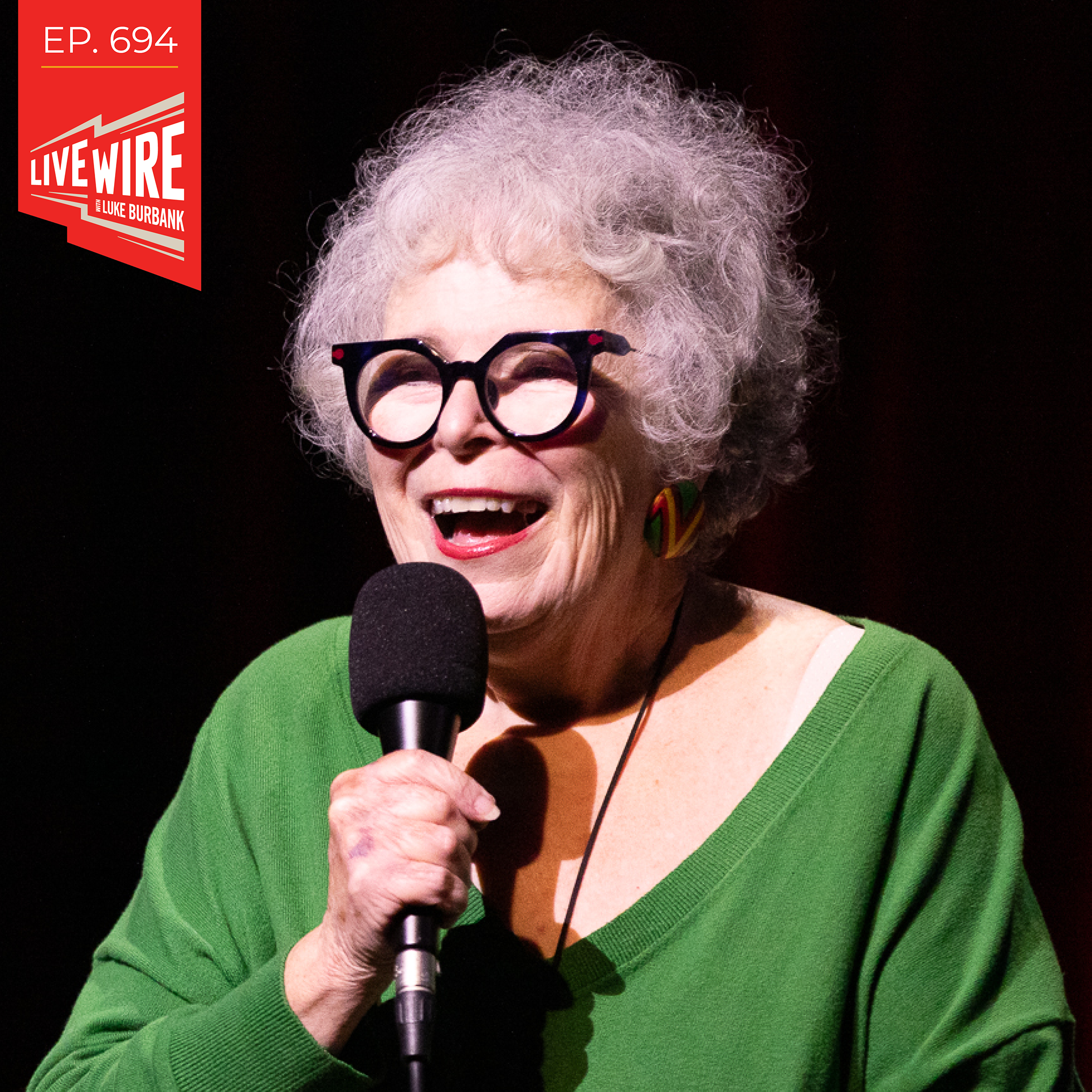
Susan Rice
Stand-Up Comedian
For over 42 years, Susan Rice has been making people laugh. After nine years as a professional actress, she discovered stand-up in 1983 and soon moved to Los Angeles, performing at top comedy clubs nationwide. As she aged out of the comedy clubs, Rice found a new rhythm performing at charity fundraisers, corporate events, and community shows. During the pandemic, she produced the St. Johns Comedy Festival in both 2021 and 2022—giving talented local comics a stage after more than a year of shutdown. In 2024, her viral Don't Tell Comedy set led to America's Got Talent and her first special, Silver Alert. Rice never expected this late-career resurgence—but she's thrilled to still be doing what she loves: making people laugh.

Anna Tivel
Singer-Songwriter and Folk Musician
Recorded live in a circle with some of her dearest friends, acclaimed singer-songwriter Anna Tivel has released her 7th studio album, Animal Poem, on Fluff and Gravy Records. The album came to life through intimate conversation—and it is an attempt to explore the mystery, rawness, and inherently indescribable nature of the human experience. How does our attention shape the way we touch the natural world? In the face of endless avarice and cruelty, how do we talk about the realness of love? Known for her introspective and narrative-driven folk music, Anna writes songs that often focus on vignettes of ordinary people's lives and struggles, drawing inspiration from small, everyday stories. No Depression praises her as "one of the finest storytellers modern folk music has to offer" while NPR Music’s Ann Powers calls her “unmatched as an empath among her folk-leaning peers… [with] the voice of a wobbly angel and a gift for making the poetic palpable.”
Show Notes
Best News
Elena’s story: “A Couple Screamed into a Lake to Release After a ‘Tough Week.’ Now, They Do It with Over 200 People”
Luke’s story: “As milk prices dropped, these Minnesota farmers put their cows out to cuddle”
Tamara Yajia
Tamara’s new book is Cry for Me, Argentina: My Life as a Failed Child Star.
Live Wire Listener Question
What was your most memorable experience performing as a child?
Susan Rice
Susan performs a stand-up set.
Check out her new comedy special, Silver Alert.
Anna Tivel
Anna performs an unreleased song called “California Zephyr.”
Listen to her latest studio album, Animal Poem.
-
Elena Passarello: From PRX, it's… Live Wire! This week, comedy writer Tamara Yajia.
Tamara Yajia: She said, “Ugh I'm talking to the failed child star again.” And I was like, wow, she's so right. I was a failed child star. And I suddenly—all the wheels started turning in my head.
Elena Passarello: And comedian Susan Rice.
Susan Rice: Honest to God, I spent three days on the phone with my Medicare provider just trying to sign up for hospice, for God's sake.
Elena Passarello: With music from Anna Tivel and our fabulous house band. I'm your announcer, Elena Passarello, and now the host of Live Wire, Luke Burbank.
Luke Burbank: Thank you so much, Elena Passarello. Thank you, everyone, for coming out to the Alberta Rose Theatre. We have an absolutely fabulous show in store for you this week, but we've got to kick things off the way that we always do with a little segment we call the best news we heard all week. Here's the premise of this segment. It's that most of the time the news is absolute trash and we would like to remind folks here at the Alberta Rose Theatre and out in listener land that there is in fact good news happening in the world. Some weeks it's harder than others. This week we didn't have to dig as deeply, okay.
Elena Passarello: No, no.
Luke Burbank: But we wanted to present a couple of good news stories too. Elena, what is the best news you heard all week?
Elena Passarello: Okay, I wanna tell you a little story about a gentleman named Manny Hernandez, a recent… [audience cheers] yeah.
Luke Burbank: Yes, I see we have some Hernandez heads here.
Elena Passarello: It would be really cool if that was true. But Manny is a life coach and a breathwork practitioner in Chicago. Had a kind of a tough summer and knew from his work in holistic healing that sometimes it feels good just to kind of get that emotion out.
Luke Burbank: Yeah.
Elena Passarello: Get it off your chest. And so he and his partner, whose name is Elena Soboliva, they went down to Lake Michigan with a couple of friends one Sunday and just screamed. They just let it rip. And they were like, Oh, that feels really good. Why don't we do this again next Sunday? One Sunday after another, Sunday after another. They have invented this thing called Scream Club. It is now a, it's like a club that you can buy a charter for in your town. There are scream clubs that meet weekly in California, Michigan, Wisconsin, Iowa, Georgia, Florida, Tennessee, Colorado, Texas, and Arizona. The closest one is in Seattle in Lincoln Park.
Luke Burbank: Okay.
Elena Passarello: But that's a little far. I was thinking maybe we could start Scream Club here, but no no no. I went on the the website and it cost two hundred fifty dollars to charter your membership.
Luke Burbank: We're not allowed to start our own scream club without paying the proper fees.
Elena Passarello: Yeah. To be official. And there's also a really lengthy vetting process. But I know how good this feels. I know how good it feels to scream. I know how good it feels to let something off of your chest. Even though in these austere times, our public radio show cannot pony up the $250 for a charter membership. I have invented something called the Shouting Society.
Luke Burbank: Okay, that's–
Elena Passarello: And I think, you know, this is our first streaming show ever. It's the anniversary of the first time I ever screamed on Live Wire. I feel like we all need to have just like a five-second collective shout for the shouting society. [Luke: Okay.] And just to see how that makes us feel. [Luke: Okay.] So when I say I'll say one, two, three, and then we'll all just let it out. Sound good? Yeah? All right. Everybody at home listening, hopefully you're shouting too. Here we go. Shouting society commences. One, two, three.
[Live Wire Audience screams collectively.]
Luke Burbank: Well does anybody have a cigarette?
Elena Passarello: I feel better. I don't know about you. I feel much better.
Luke Burbank: Wow, that was very that was very freeing, very cathartic.
Elena Passarello: Excellent shouting, Portland.
Luke Burbank: Wow.
Elena Passarello: We're gonna get that charter soon enough.
Luke Burbank: The best news I heard all week actually, I I read about it at the website of Minnesota Public Radio, by the way. Shout out to our network in Minnesota that plays the show, the MPR news site, talking about the town of Corcoran, Minnesota. [Elena: Okay.] Where back in nineteen fifty-eight there was a guy who started a small family dairy farm. He had like, I think he had twenty cows and a horse, but he loved it. He just loved the dairy farming lifestyle. And so when he eventually couldn't do it any longer, he gave it to his kids, and then they gave it to their kids, and their kids are named Quincy Schmidt and her brother Caleb Sherber. They've grown the operation to like about 120 cows. They say they're not in it for the money. They just like they love, again, being part of the dairy community. There is a problem though, which is that there is apparently the price of milk is cratering right now. You have more milk than than people need for some reason. So there's more supply than there is demand, which I mean the price goes down. They talked in this MPR story to an economist at the agriculture department at Cornell University, a guy named Christopher Wolf. He said, inflation is still being kind of stubborn, and everything that's happening right now doesn't look like it's going to do much for curbing inflation. To which I say, no s***, Sherlock. Like I could be an economics professor at Cornell with that kind of incredible insight. [Elena: Yeah.] What they're doing right now is not curbing inflation. So they were trying to figure out what to do because they were they don't want to lose the family dairy farm. It's been in the family for generations. And so they were, according to this article, reading a dairy newspaper recently. [Elena: Yeah.] Which is the first time hearing of that.
Elena Passarello: That's that sounds very Minnesota like.
Luke Burbank: What is the sports section of the dairy newspaper?
Elena Passarello: Probably something involving like a pasture, like a bingo card, and where the cow poops.
Luke Burbank: I'd read that. They were reading in a dairy newspaper and there was a dairy farmer in New York who had gotten this idea for how to like supplement the income while the price of milk is down. And what this a guy had done is he'd turn his calf nursery into a cow cuddling business.
Elena Passarello: Yeah.
Luke Burbank: Which is exactly what Quincy and Caleb have decided to do with their four of their cows that are, I believe calves actually. May, Mandarin, Zaley, and then Maui. I believe we have a photograph [Elena: Maui the cowie?] of Maui. For twenty-five dollars, you can cuddle Maui for thirty minutes.
Elena Passarello: That's it? That's less than a dollar a minute.
Luke Burbank: Also, there's a group, there is a group rate for one hundred dollars. It's all the cuddling you can do.
Elena Passarello: Ooh.
Luke Burbank: For thirty minutes, all the people that you can bring, the cuddle Maui or one of the other cows, you can brush them, you can feed them hay. Apparently, a cow's heartbeat is much slower than ours, and they think that there is something about putting your head kind of against the cow and its heartbeat kind of regulating you a little bit that people find very comforting.
Elena Passarello: I love that your story about coping in these hard times is about cuddling a big soft mammal, and mine is about screaming your head off.
Luke Burbank: You know, we all process trauma in different ways, Elena. [Elena: That's right, that's right.] For me, cow cuddling in the Midwest, that is the best news that I heard all week. All right. Our guests' journey to this stage this week. It kind of sounds like a fever dream, but it is all very true. A grandfather who sold recreational drugs, multiple moves between the US and Argentina, and then successfully pulling off a jaw-dropping Madonna tribute performance in front of an audience of rabbis. And this was all before the age of twelve. It's all detailed in her fascinating and very funny memoir, Cry for Me, Argentina: My Life as a Failed Child Star. Booklist calls it crass, cringe, and absolutely hilarious. Please welcome Tamara Yajia to Live Wire. Tamara, welcome to Live Wire.
Tamara Yajia: Thank you. I'm so happy.
Luke Burbank: I'm so happy that you're here. I have, I started following you on Twitter long, long ago. Back when it was still called Twitter officially. [Tamara: Yeah.] And I just thought you were so funny. And then backstage we were talking and you said that basically your Twitter following and your work on Twitter is sort of how you got the book deal.
Tamara Yajia: Yeah, a literary agent found me because I would tweet a lot about my family. I have a very strange family. And I would say things like, My dad's hemorrhoid this or my mom... Well we'll get into my mom later. But he was like, You have a story to tell. And I was like, I do?And we sold the book about my life because of tweets.
Luke Burbank: I mean, it is such a fun read and I mean I grew up in a pretty, not as chaotic as yours, but a fairly chaotic family environment. So there's so much in here that really resonates with me. Let's kind of start though at the beginning of the book. You write that you had like just you were about to turn forty, maybe, and you're sort of struggling with this question of like, do you want to become a parent or not? And so your like rich aunt says, I have a great therapist for you, but she is in Argentina and she is in her mid eighties and has a very limited understanding of how Zoom works.
Tamara Yajia: But the sessions were only twenty dollars per session because she was in Argentina and the currency exchange and on Zoom, and I was like, let's do it. She can help me figure out if I wanna have offspring.
Luke Burbank: But she also, did she really at one point, 'cause she didn't really understand the mute function on Zoom, she said to her husband, No, I'm talking to the failed child star.
Tamara Yajia: Yeah. She fully talked s*** about me without muting. And then she said, Ugh I'm talking to the failed child star again. And I was like, Wow, she's so right. I was a failed child star. And I suddenly all the wheels started turning in my head. And then like the next session, I heard a big fall, like a thump.
Luke Burbank: Uh-oh.
Tamara Yajia: And I was like, what was that noise? Someone is screaming. And she was like, my husband fell in the bathtub and he's bleeding. And then she left for twenty minutes. And it was just me staring at my own reflection on Zoom. And at that moment I was like, aww you're cute. I was like, maybe you should have kids.
Luke Burbank: You were born in Buenos Aires, but then you moved to the US you were about how old?
Tamara Yajia: The first time six.
Luke Burbank: And what were your impressions of the place? You landed in like Northridge or something?
Tamara Yajia: Yeah, first we lived we moved to California. My parents had no money and we didn't know anybody except there was this one guy and he was in West Hollywood. So we moved to a motel in West Hollywood. It was like sex workers and then me and my parents. And then we got an apartment and we slowly built our lives in yeah, the valley in Northridge.
Luke Burbank: But then like after you get this apartment in Northridge, your grandparents move from Argentina into the apartment next to the one that your parents are in?
Tamara Yajia: Yeah, I mean this book is really about crazy families. So if you have a crazy family, you will relate to this. My grandparents have had absolutely no boundaries whatsoever. And there's a reason my parents, outside from the economic issues in Argentina that they wanted to leave because we had no money, they also wanted to get away from their parents who were– I loved them because they were my grandparents, but they were psychotic. I mean, my grandmother on her honeymoon, because my grandfather was going gambling too much and leaving her alone in the hotel room, he came back one day and she had shaved half her head because she was mad and she was like, and if you keep gambling, I will shave the other half.
Luke Burbank: Honestly that might be an improvement at that point. I would take fully dealt with them.
Elena Passarello: Send them straight back to the casino.
Luke Burbank: Right, seriously. We gotta take a very quick break. When we come back, we're gonna talk more to Tamara Yajia about her really funny, really interesting book, Cry for Me, Argentina, My Life as a Failed Child Star. We'll get into the failed child start part as well. Here on Live Wire, stay with us much more in just a moment. Welcome back to Live Wire from PRX. I'm Luke Burbank. That's Elena Passarello. We are at the Alberta Rose Theatre in Portland, Oregon this week, and we're talking to Tamara Yajia about her book Cry for Me Argentina: My Life as a Failed Child Star. You write in the book that your family really loves malls. Like it's [Tamara: Yes.] really your happy place. And so much so that that your parents, during one of your rounds of sort of being in the US, started this like a food cart kind of a thing in a mall called, what was it called again?
Tamara Yajia: Sexy chicken.
Luke Burbank: What was the concept exactly?
Tamara Yajia: We didn't, we had saved some money to start a business and they were like, Well what it what should it be? And and I was like, I love El Pollo Loco. Does El Pollo Loco exist here?
Luke Burbank: No, not enough of them.
Tamara Yajia: It's, it's chicken.
Luke Burbank: Yes. Well it's chicken that's dealing with mental health issues.
Elena Passarello: It's a little–
Tamara Yajia: Yeah. It's an unwell chicken. But I related and I was like, we were at a mall, I was like, I want el pollo loco and there's no el pollo loco here. And my parents were like, well maybe let's bootleg it. So they–
Luke Burbank: But we'll make it sexier.
Tamara Yajia: But we'll make it sexy. Because they were like, but what will sell sex?
Luke Burbank: Yeah. Did it sell?
Tamara Yajia: No, it went bankrupt after like two months.
Luke Burbank: So then you, you go back to Argentina and you and your family kind of like to get resettled, you end up I think sort of semi temporarily in a place that is called Yiddish Land?
Tamara Yajia: I love Yiddish Land. It was a retirement community for Jews over the age of sixty-five. So we were like illegally there. And it was called Yiddish Land.
Luke Burbank: And it was somebody in your family like an apartment had been left to somebody in your family?
Tamara Yajia: Yeah, I think somebody had died, and my grandma had inherited it, and we didn't have money to get our own place in the city yet. So my grandma was like, stay here until you know my dad found a job.
Elena Passarello: And that's how you met your best friend.
Tamara Yajia: My best friend, Babala. She had boobs that were, I don't know the size, but they were like a quadruple G. Like this. And I had no friends because I was a seven-year-old or eight-year-old at this senior retirement home, and I was just walking around bored until I met Babala. And she just took me under her wing, her breast. She taught me how to play Roomy Cube. And we would go to the community screening room where we would watch really uplifting films like Yentel and Sophie's Choice.
Luke Burbank: Some real kid friendly stuff. About what time did you sort of discover your love for Madonna?
Tamara Yajia: I became obsessed with Madonna when I was like eight or nine. I was really sick with a really, really bad fever. And I awoke from a fever dream where I remember God in the dream. God asked me to count all the human beings on earth.
Luke Burbank: In the dream.
Tamara Yajia: In the dream. So I kept counting, counting, counting, but then people would would immigrate so I could couldn't keep track. So I woke up from the that dream of counting people and I projectile vomited and then in the background was MTV playing Madonna La Isla Bonita, which was a music video that was like, she was singing in English and Spanish, which was like, oh, it's the bridge of my two cultures, America and the US. And she then had just released Erotica, her album. So they were having like a Madonna-only music video day. So it was just all the Madonna videos. And I just I found my guiding light.
Luke Burbank: But then you decided to interpret that guiding light to a like Hebrew school type of atmosphere, a bunch of rabbis, where you did like a lip sync, a really intense lip sync version of like a prayer?
Tamara Yajia: Yeah.
Luke Burbank: Take me through that.
Tamara Yajia: It was my chance to stand out in the school. I had no friends because we had just moved back to Argentina. And Like a Prayer happened to be my favorite Madonna song. It was something in the lyrics, really, because I'm Jewish and it's not like the imagery, right? Like but I was like, I love the song, so I got Babala, my big breasted friend, to– She was a seamstress and I was like, Babbala, let's talk about what I'm gonna wear. And she was like, I got you, girl. She and yeah, the day of the performance I stripped down at a temple in.
Luke Burbank: And you, again remind me you're how old here?
Tamara Yajia: I was eight or nine. And like I did the whole thing of like I started with a big black overcoat and then I took out a knife from my pocket and I pretended to cut my hand like to do the stigmata thing.
Elena Passarello: Like she does in the video.
Tamara Yajia: She does that in the video. And then when the choir kicks in, the big part, I– Babala had sewn Velcro strips onto the side of my t-shirt and I pulled them off and underneath I'm wearing a garter belt. There was a rabbi in the front row, I remember, Rabbi Groissman. And he was like this.
Luke Burbank: For the radio listeners, Tamara's making a horrified look. I do feel like you only got away with this because it was Hebrew school and not Catholic school. Because everything the Madonna's pushing back against is Catholicism. But it wasn't like from a sort of religious standpoint, it was this was mostly not related to what was going on in Hebrew school, right?
Tamara Yajia: One hundred percent and also because no one really understood the lyrics because they were in Argentina, but like they did see the strip tease, so. I had to, I was forced to write an apology letter. And Babala wrote it for me.
Luke Burbank: Dude. Babala was ride or die.
Elena Passarello: Yeah, shout out.
Tamara Yajia: She was. I have to tell you something that's so funny. I'm trying to have kids right now. And so I set up this sort of–
Luke Burbank: So the therapy works.
Tamara Yajia: It did. So except now I have to, have them. And it's been hard because I'm 41. So I was like, you know, I'm gonna set up a shrine of all of my ancestors because I'm obsessed with my grandparents and with Babala. So behind my bed I hung like 20 pictures of Babala and my grandparents and all. And so as me and my husband go to town, he's gotta look at them. Which may be why it's not happening. Now I'm realizing.
Luke Burbank: Now, I mean, you talk about being in therapy and you talk in the book about all of this conversation that was always going on that would be considered maybe inappropriate or just like oversharing within the family. And yet it also helped you develop your sense of humor. There's a lot about it that has maybe made you like a more open minded, less fearful person. I don't know. How do you feel like it came out for you? Are you glad you were raised in that kind of home or do you wish that they would have ha been a little less sort of oversharing about that stuff?
Tamara Yajia: There's nothing I would take back, you know. It was what it was. It made me who I am today. Now here's the difference. I won't do that with my kids. Right. [Luke: Yeah.] Like it's okay that it happened to me and that I had the insight to make changes and to get therapy and to analyze. Like this was inappropriate, that was inappropriate. You know, it's crazy because I just went through IVF and it's a very taxing thing on your body, your boobs grow, your whatever. And–.
Luke Burbank: Shout out Babala.
Tamara Yajia: Shout out Baba. I'm becoming. I'm becoming. But like I saw my dad, and as a joke, he was like, your tits are huge. And I went, I don't like that.
Luke Burbank: Yeah.
Tamara Yajia: I don't like that you're saying that. And I told him. And he was like, Oh, you're suddenly so serious. And I said, No, I'm not suddenly so serious. I have the insight now to pinpoint when something, before I didn't as a kid. That's the kind of stuff that will piss me off sometimes or make me kind of, you know, just angry about the way I was raised, but I also wouldn't take it back.
Luke Burbank: Mm-hm. 'Cause it makes us who we are.
Tamara Yajia: Yeah.
Luke Burbank: And you know, like I don't know, I don't want to imagine a different version of me if I didn't like in my case, think that the world could end at any moment because of the rapture. So my parents telling us that the earth was six thousand years old and could end at any point. Like I I don't love that about my childhood, but like here I am making jokes about it. So ain't life grand.
Tamara Yajia: Sure.
Luke Burbank: This book is so it's so funny and also so human. I'm so glad you wrote it. The book is Cry for Me, Argentina: My Life as a Failed Child Star by Tamara Yajia. Tamara, thank you so much for coming on Live Wire. That was Tamara Yajia right here on Live Wire. Her hilarious, and I say this in all sincerity, unforgettable memoir. There are passages from the memoir I can't forget even if I wanted to, Elena.
Elena Passarello: Yeah, same.
Luke Burbank: It's available now. It's called Cry for Me, Argentina: My Life as a Failed Child Star. Live Wire is brought to you by Powell's Books, a Portland institution since 1971. Powell's offers a selection of new and used books in stores and online at Powell's.com. Hey there, it's Luke. Did you know that Live Wire is also available as a podcast? Of course it is. Everything's a podcast now. And our podcast features the same engaging conversations, live music, original comedy, and all the stuff that you love about the Live Wire radio show. But now you can listen when you want to, where you want to.
Elena Passarello: What was your most memorable experience performing as a child? Oh Lord, where do I start?
Luke Burbank: I mean, I think you and I could fill this whole segment out ourselves. Of course the idea is to hear from the Live Wire listeners, but [Elena: Yeah.] let's just say hysterically laughing as Moses. In a kindergarten play at a church school called Pillar of Fire Elementary School.
Elena Passarello: Pillar of Fire.
Luke Burbank: That tells you everything you need to know. I could not contain my giggles and I laughed for probably five straight minutes in the production.
Elena Passarello: Laughing Moses.
Luke Burbank: That's right. All right. What are the listeners saying about memorable performances as children?
Elena Passarello: Marcus says that my grandmother drove three hours to watch me play trumpet in the school band and I played every single note wrong. She told me it was beautiful anyway.
Luke Burbank: I always wonder where the line is of between being supportive of our children and then maybe launching them on a career path that makes no sense. Like does is Marcus' email signed professional trumpet player? Currently out of work, professional trumpet player Marcus.
Elena Passarello: Do you remember that spelling bee documentary from about fifteen years ago?
Luke Burbank: I sure do.
Elena Passarello: This kid went to the nationals and he got out and his dad was like, I still think he spelled it right.
Luke Burbank: Love it.
Elena Passarello: That support.
Luke Burbank: That's a kid who knows his parents are in his corner. What's another memorable childhood performance one of our listeners wants to talk about?
Elena Passarello: How about this one from Natalie? In eighth grade, I played Jesus in my Catholic school Stations of the Cross. I was secretly an atheist, but man, I put my all into that performance. Hey man, commit to the bit, right?
Luke Burbank: That's acting right there. That's what it's all about. How about you? You you know, you're actually a very, very talented actor in adult life, but like were you in any kid productions that were memorable?
Elena Passarello: Like millions of them. My poor parents were always having to go to, and then I would put them on at home too. So it was always a performance. I did a magic show for my family once, and the magic trick book said that you should take slivers of carrots and put them in your goldfish bowl, and then it would look like you were eating the goldfish, but I didn't have any goldfish, so I just got a bowl and put a bunch of shaved carrots in it, and then just kind of like ate them in front of my family with a top hat on that I'd made out of some poster board.
Luke Burbank: Did you charge admission for this show?
Elena Passarello: Absolutely. Absolutely.
Luke Burbank: Right. That's, I feel like you get two kinds of kids. You get the lemonade stand kid and you get the we're putting on a show kid when somebody wants to come up with a couple of dollars of loose change. We were always putting on little performances when I was a kid and it was always there was a charge for admission.
Elena Passarello: Yeah, pay your artists.
Luke Burbank: And by the way, nothing has changed. Here we are doing Live Wire, our show, where we sell tickets to our little program. Okay, one more memorable kid performance before we move on.
Elena Passarello: Olivia says I had one line as villager number three in the school play. The crops are failing. And I screamed it like I was announcing the apocalypse. My dad still quotes it at Thanksgiving.
Luke Burbank: The crops are failing. Does seem like a big deal though. Like, you what do you want someone in the town, in this village, to just be like, hey, by the way, low key, the crops are failing? No, that needs to be screened. This is a big event.
Elena Passarello: That's a screamable line. Totally. I understand your vision, Olivia, and I would like to belatedly reward you for your commitment to the character.
Luke Burbank: Absolutely. And also we'd like to thank everyone who sent in their response of memorable childhood performances. We really do appreciate it. Live Wire is supported by Literary Arts, which presents the Moth Main Stage in Portland, December 9th. Curated true stories told live. Learn more at literary-arts.org. You're listening to Live Wire. Our next guest could have been forgiven for thinking she knew how her comedy career was going to go. Okay, she started off in the 1980s and she performed at clubs with the likes of Jerry Seinfeld and Sam Kinnison. But the comedy industry sort of changed and evolved over 40 years, and so she started focusing more on hosting charity events and creating comedy opportunities for other comedians. And then Elena, at the tender age of 72, that all changed when one of her comedy clips went viral, as they say. That led to America's Got Talent, and then to her debut comedy special, Silver Alert. And now here she is, living proof that the best punchlines come with the experiences to back them up. Take a listen to Susan Rice, recorded live at the Alberta Rose Theatre in Portland, Oregon.
Susan Rice: Really want to say thank you for coming out and choosing to entertain yourself to laugh and to be entertained and be part of something because we've been so depressed, you know. Honest to God, I spent three days on the phone with my Medicare provider just trying to sign up for hospice, for God's sake. Evidently there's criteria. They're coming after our social security. I'm gonna have to sell my eggs. There's got to be a couple out there, don't you think? Everybody likes a good devil's egg. Anyway, so I don't have kids that I know of. Well the eighties are a little hazy. Anyway, yeah, at least we had a choice. Anyway, I know I'm in Oregon. I said that in Alabama. Not so much of a response. Anyway. So I love my nieces and my nephews. They take care of me. They're– I'm that auntie. Is anybody else an auntie? Yeah, yeah. Yeah, I'm that auntie. I'm the one that they whisper about in the kitchen now, you know. She is not living with us. I am not wiping one thing on that woman. They're always trying to help me out. I mean they were over the other day. And I I came into the kitchen and I go, What are you doing? They they took out all my plastic, all my Tupperware, it was all in the garbage. And I go, What are you doing? And they go, Suze, microplastics. I said, What? You can eat microplastics. It's bad for you. I said, you know, I used to follow the mosquito fogger truck on my bike, okay? One of the things my nieces did during COVID is, you know, and I was so glad to come out of COVID, but I kind of missed some of that, being quiet and stuff, you know. You didn't have to go do stuff that you didn't want to do and stuff like that. And I cleaned out drawers. That was the only reason I COVID was great for cleaning out drawers. Did you yeah, you did that, didn't you? Yeah, I called it shopping. I did, I took out stuff from the drawers and just saved it and wrapped it up at Christmas and sent it to my nieces and nephews. My nephew called me up, he goes, I got a dental bridge. It's vintage, it was your grandfather's. And baby pictures. I found, you know, back in the day, the people used to send you your baby pictures in the mail with Christmas parts and stuff you get. Now the internet you don't have to do that, but I found like two and a half inches of baby pictures in a drawer. I don't know who they are. I don't. I thought I should get rid of these in case there's a felony conviction or something. Too many questions, not enough answers. I threw some out, I saved some, and I put some in Christmas cards to old boyfriends, you know. This is Timmy, he's 42. During COVID, I got calls from each of my nieces and nephews three times a day from each of them. It was like, it was going I was going crazy. They started signing me up for stuff. I started getting emails from YouTube that I was taking a macrame class. Oh, don't laugh. You know, I– Portland, you know what the hell macrame is. Don't give me that. You just tie crap together and hang your dignity from it. It's like– Anyway. They worry about me. And I, you know, God love my so glad to have somebody worry about me. But you know, they sign me up for, they signed me up for the silver singles. Yeah, see well, yeah, they're ups– I'm not in a relationship according to the restraining order. Couple of late night calls, a couple drive-by, suddenly I'm the bad guy. Anyway, you know there's a really fine line between stalking and caring. And they sign me up for the silver singles and I didn't know it. All of a sudden I start getting emails from sweet, desperate old gentleman. And I, I don't know if this guy likes me or he just had a tremor and swiped right. You know, I don't know. Yeah, that deserves so much more than you gave me on that joke. I'm gonna tell you that right now. And you know they, and you know, they don't you want to get married. No, no. Nobody gets married for the first time at seventy. Not without, you know, a verified pension and a diagnosis. And so. And they, they're starting to worry about what's gonna happen to me. And we had a big dinner party not long ago and I was sitting across the table from my niece, my oldest niece, and she goes, Suze, we need to ask you something. I said, Okay, honey, what what do you need? Suze, we need to know what you want. Well, I'd like some more gravy. No, Suze, you you have to, you're getting so old we don't know what to do with you after you die. Do you want to be buried? Do you want to be cremated? Do you want to be composted? I want to be pickled. I remember having that conversation with my mom and dad. I was my mom and dad's– we have caregivers here? Yeah, a lot of you yeah. It's hard. It's a very difficult position to be. I took care of my mom and dad for eleven years. I wasn't good at it, they died. But– I tried. One is invariably one of them is in, is always easier than the other one. My father was anything, okay, honey, whatever you want, you know. Your mother's a different story. I mean, and let me just tell you this right now. My mom and dad lived to be very old. My dad was just shy of 99, my mom was 97, they died two months apart. Yeah, they held hands everywhere they went for 40. People would say that, and I would laugh because I knew the truth. If one's going down, they're taking the other one with them. Nobody gets out alive. They never developed dementia, either one of them, neither one of them. They were there. They were there every day. They were there. They just woke up happy. They woke up, you know. What are we doing today? We're going to Costco. They're having a two for one coffins. Let's measure. You guys, I gotta go. Thank you so very, very much.
Luke Burbank: That was Susan Rice, recorded live at the Alberta Rose Theatre. Her comedy special, Silver Alert, is streaming right now. Or you can see where she's performing by going to SusanRiceComedy.com. This is Live Wire Radio. We have to take a very quick break, but stay where you are. When we return, we're going to hear from singer-songwriter Anna Tivel. Stay tuned. More Live Wire in a moment. Welcome back to Live Wire. I'm your host, Luke Burbank, here with Elena Passarello. Before we get to this week's musical performance from Anna Tivel, a little preview of what we're doing on the show next week. We are gonna be talking to Ken Jennings, who you probably know as the host of Jeopardy. All he had to do to get the job was win the show seventy-four times in a row. I mean a glide path really. You've been on Jeopardy, Elena, you know how hard it is.
Elena Passarello: I was on it seventy three fewer times than Ken Jennings.
Luke Burbank: It turns out Ken is also a writer, and his latest book is called 100 Places to See After You Die, A Travel Guide to the Afterlife. And then speaking of writers, we're also going to talk to the writer Erica Barry about wolves, both the ones that live in nature and also the ones that live in our minds. And then we're going to wrap things up with some music from the incredible international rock and roll band. They're called Making Movies. It's going to be a fun, funny, interesting show next week, so make sure you tune in for that. For this week, our musical guest grew up in LaConner, Washington, learning fiddle and violin before heading on down here to Portland at the age of 18 to write and play her own tunes. And they are some really good tunes. NPR Music's Ann Powers calls her unmatched as an empath among her folk-leaning peers with the voice of a wobbly angel and a gift for making the poetic palpable. Her seventh studio album, Animal Poem, continues to explore the mystery, rawness, and inherently indescribable nature of this thing that we call the human experience. Here is Anna Tivel, recorded live at the Alberta Rose Theatre in Portland, Oregon. Anna, welcome back to Live Wire.
Anna Tivel: Oh hello, thank you for having me.
Luke Burbank: It's nice to have you here. What have you been up to?
Anna Tivel: I've been roaming, I've been roaming all over the country on tour all over the states and Canada mostly. Driving many miles in a minivan.
Luke Burbank: I follow you on Instagram and I have to be honest, like I feel exhausted when I see how much like ground you've covered in a twenty four hour period. 'Cause I'm going like she was there and now she's at this place. Man, that seems like a long drive. How do you like, what do you do to get through that part of being a touring musician? Just the the distances.
Anna Tivel: I think I love it. I think I'm a, I'm an introverted person. I mean, besides that it makes me into it's like the most rickety van shaped human. I think it's such time to kind of just watch the world go by, watch the country go by. And you're sort of thinking your thoughts and you're having all these experiences at rest stops and gas stations and weird little diners and bookstores. And it kind of makes the world feel tangible and tasteable 'cause you're just in it and you can't get out of it. And there's waffles and bed bugs and.
Luke Burbank: Oh my.
Anna Tivel: Exactly.
Luke Burbank: Do you, does it work its way into the music, into the writing of songs? 'Cause it definitely seems like, you know, you're generating new content.
Anna Tivel: It does. It, yeah. I did a tour in the spring all by train, started in Portland and took the Empire Builder over to Chicago and then the California Zephyr back under and the Coast Starlight back up to Portland. It was all shows in people's living rooms and bakeries and libraries and visited schools during the day and kind of slept sitting up on the train and which I don't know if you guys are train people, but it's sort of like a joyful mobile DMV. It's just like everyone from everywhere is on the train and they're coming and going and they're it's beautiful and gritty and wonderful and there's microwaveable hamburgers.
Luke Burbank: Yeah.
Anna Tivel: Yeah, you can kinda sit there in your in your chair and write and listen. The Wi-Fi isn't good on the train and so everyone's talking and they're you know, for better or for worse, they're arguing with each other over whose seat is whose seat and they're telling long winded stories about their divorce and.
Luke Burbank: See, I've monetized that. Made that the radio show. It's working so far. Well tell me about the song that we're gonna hear.
Anna Tivel: Oh, in the spirit of of that, I'll play this this song I wrote most of it on the train. Yeah, sort of a song about traveling across this country as it, as it does what it's up to and meeting people and kind of watching the landscape go by and feeling, feeling the way we're all sort of in this interwoven story interacting in this moment, but also with what the country has been and will be all at once.
Luke Burbank: All right, this is Anna Tivel here on Live Wire.
[Anna Tivel performs an unreleased song, “California Zephyr.”]
Luke Burbank: That was Anna Tivel, recorded live at the Alberta Rose Theatre. Her album, Animal Poem, is available right now. You have to go get it. It's incredible. All right, that's gonna do it for this week's episode of Live Wire. A huge thanks to our guests, Tamara Yajia, Susan Rice, and Anna Tivel.
Elena Passarello: Laura Hadden is our Executive Producer, Heather de Michele is our Executive Director, and our Producer and Editor is Melanie Sevcenko. Eben Hoffer is our Technical Director, with assistance from Leona Kindermann. Our house sound is by D. Neil Blake and Steffan Soulak.
Luke Burbank: Valentine Keck is our Operations Manager, Ashley Park is our Marketing Manager, and Tiffany Nguyen is our Intern. Our house band is Danny Aley, Ethan Fox Tucker, Ayal Alves, and A. Walker Spring, who also composes our music. This show was mixed by Eben Hoffer and Tre Hester.
Elena Passarello: Additional funding provided by the Marie Lamfrom Charitable Foundation. Live Wire was created by Robyn Tenenbaum and Kate Sokoloff. This week, we'd like to thank members Chad Snyder of Minneapolis, Minnesota, and Pat Blumenthal of Portland, Oregon.
Luke Burbank: For more information about our show or how you can listen to our podcast, head on over to LIVE WIRE RADIO DOT ORG. I'm Luke Burbank, for Elena Passarello and the whole Live Wire Crew, thank you for listening, and we will see you next week.
PRX.
Staff Credits
Laura Hadden is our Executive Producer, Heather de Michele is our Executive Director, and our Producer and Editor is Melanie Sevcenko. Eben Hoffer is our Technical Director, with assistance from Leona Kindermann. Our house sound is by D. Neil Blake and Steffan Soulak. Valentine Keck is our Operations Manager, Ashley Park is our Marketing Manager, and Tiffany Nguyen is our Intern. Our house band is Danny Aley, Ethan Fox Tucker, Ayal Alves, and A. Walker Spring, who also composes our music. This show was mixed by Eben Hoffer and Tré Hester. Additional funding provided by the Marie Lamfrom Charitable Foundation. Live Wire was created by Robyn Tenenbaum and Kate Sokoloff. This week, we'd like to thank members Chad Snyder of Minneapolis, MN, and Pat Blumenthal of Portland, OR.
